Introduction: Nigeria’s institutions face the test of results
Nigeria’s major public decisions are often announced through official statements, legislative milestones and court proceedings. But the significance of those developments depends on what they establish, what they change and whether their results can be demonstrated. In the 24-hour review period ending at 8:43 a.m. on 27 October 2026, that distinction runs through five important areas of Nigerian public life: civilian security, policing reform, electoral administration, criminal procedure and economic governance.
The reported extension of a security designation in Taraba State has renewed questions about the protection of communities affected by violence, while reported progress towards state police raises difficult questions about constitutional procedure, funding and accountability. Preparations for the 2027 general elections have brought voter-register access and judicial conduct into focus. In Abuja, a ruling in Nasir El-Rufai’s wiretapping trial has moved the proceedings to the defence stage without determining his guilt. Meanwhile, the Federal Government is considering a framework intended to improve continuity in economic policy.
These developments are not evidence of one shared cause. They involve different institutions and responsibilities. Yet each illustrates a common public-interest question running through Nigeria news today: how can Nigerians distinguish a stated intention from a completed action, and a procedural milestone from a demonstrated result?
The answer depends on clear records, transparent processes, fair enforcement and evidence that the public can assess. Each development leaves important questions to be answered.
Nigeria News Today: Taraba Security Crisis Raises Questions About Civilian Protection
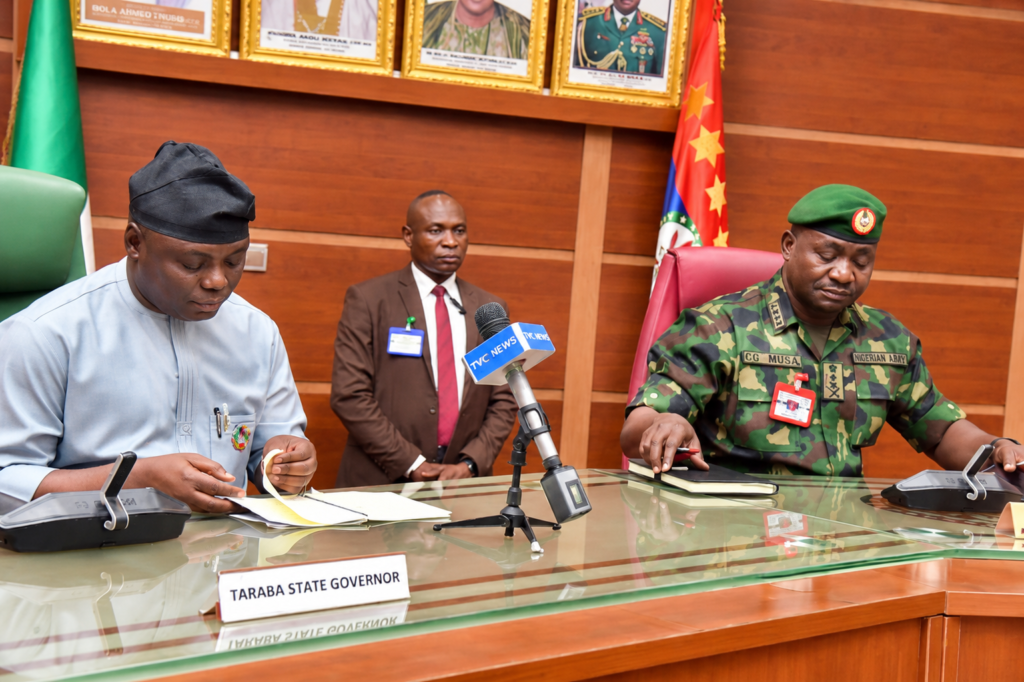
The reported extension of Karim Lamido Local Government Area’s designation as an area of particular security concern has renewed attention on the response to the deadly attack on Binnari community in Taraba State. Reports published on 27 October said Governor Agbu Kefas had extended the designation for another six months.
The attack itself occurred on 23 October, outside the 24-hour reporting window for this edition. The current development is the reported extension of the security designation and the associated response, not a claim that the attack happened on 27 October.
According to the supplied presenter script, the governor reportedly directed relevant authorities to account for missing people, investigate the attackers’ movements and possible motives, and coordinate protective measures for Binnari and neighbouring communities. Those instructions identify priorities for the response. They do not, on their own, establish that missing people have been accounted for, that the investigation has been completed or that additional protection is already in place.
The casualty figures remain a central unresolved issue. An early Premium Times report said police had confirmed 10 deaths. Channels Television subsequently reported a community estimate of 50. A later Premium Times report cited a police-reported toll of 58, including 15 people said to have drowned while fleeing in an overloaded canoe.
These figures come from different accounts and have not been reconciled into one confirmed total in the supplied reporting. They should not be added together or presented as if they were separate, independently established counts. The final death toll, the number of people still missing and the full sequence of events remain important questions.
The Northern Senators Forum also called for an investigation and stronger security measures. That call demonstrates concern and a demand for action, but it does not prove that requested deployments or other measures have taken place.
The Taraba security crisis therefore raises two connected accountability questions. First, can authorities establish what happened, including the human toll and the circumstances in which people were killed or went missing? Second, can the security response reduce the danger faced by residents of Binnari and nearby communities?
A designation that identifies an area as a particular security concern is an official administrative response. Its practical value depends on the measures attached to it and whether those measures work. The supplied information does not establish the specific operational changes made under the extension or demonstrate its effectiveness.
For affected residents, the relevant evidence will include reliable information about missing people, the findings of the investigation and clearly identified protective measures. Those are more meaningful indicators than the announcement alone.
What to watch: Confirmation of the casualty figures, an account of missing people, findings from the investigation and verified information about the protective measures being implemented. Until those details are established, the scale of the loss and the effectiveness of the response remain unresolved.

State Police Reform: Nigeria Reports Progress Towards a New Policing Structure
Nigeria’s proposed state police system reached another reported legislative milestone, with the Senate maintaining its ambition to complete the process before the end of 2026. Punch Newspapers reported on 27 October that 24 state Houses of Assembly had approved the proposed constitutional amendment. Ondo State’s Assembly was also reported to have approved the relevant measure on 26 October.
The developments indicate reported progress towards a possible restructuring of policing responsibilities. They do not establish that the constitutional process has been completed or that state police forces are already operating.
The legal work remains an important part of the process. According to reporting on the Presidential Working Group’s update, the draft National Policing Bill and 29 related amendment bills were undergoing legal review and validation at the Federal Ministry of Justice. The reported target was for the reviewed drafts to be returned by 30 October for further consideration.
That date is a target, not confirmation that the review has been completed. The formal legislative records, the text of the proposed amendment and the remaining legal steps require confirmation before the status of the reform can be stated conclusively.
State police reform would change how policing responsibilities are distributed between federal and state institutions. Supporters argue that state-level policing could improve the use of local intelligence and make security responses more responsive to conditions in individual states. Those are potential benefits, however, rather than demonstrated results of a system that has not been established as operational in the supplied account.
The design of the system will matter as much as the decision to pursue it. Important questions include who would exercise command authority, how officers would be recruited and trained, how state police would be funded, what professional standards would apply and how complaints of misconduct would be investigated. Safeguards against political interference would also be significant to public confidence.
These questions concern both the authority of government and the rights of citizens. A more locally responsive police structure could only deliver its intended benefits if its officers were able to perform their duties lawfully, professionally and fairly. A change in institutional structure would not, by itself, guarantee better security or accountability.
There is also a difference between legislative approval at one stage and completion of a constitutional process. Reported approvals by state assemblies, legal review of bills and a Senate timetable describe different parts of a wider process. They should not be collapsed into a statement that state police have been legally established.
The Senate’s reported year-end target and the working group’s 30 October target provide milestones against which subsequent developments can be assessed. The next evidence needed is formal confirmation of the relevant approvals, the status of the draft legislation and the remaining steps required before any new structure could operate.
What to watch: The reviewed National Policing Bill and related amendment bills, official records of the constitutional process, the Senate’s subsequent actions and the proposed safeguards governing recruitment, command, funding and complaints. Until the legal steps are confirmed, state police reform remains a proposal in progress rather than an operational reality.
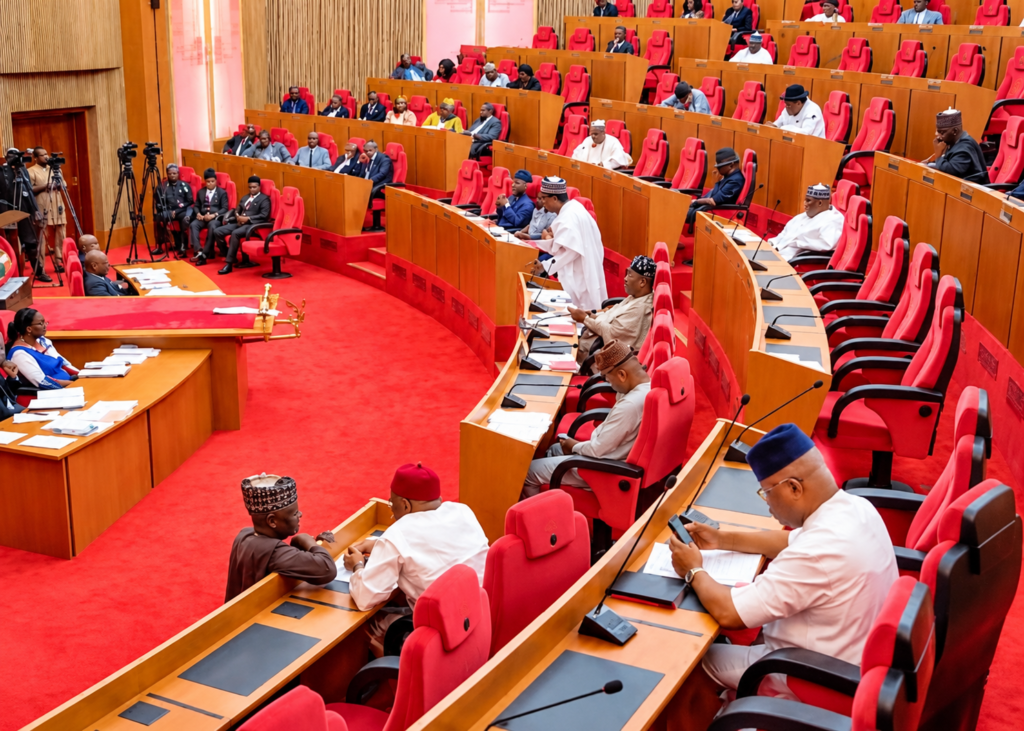
2027 Nigeria Elections: Voter-Register Access and Judicial Credibility
Two separate developments on 26 October placed electoral administration and judicial procedure in focus as Nigeria prepares for the 2027 general elections. The Independent National Electoral Commission announced that the preliminary voter register would be available online through INEC’s voter-register platform following a nationwide physical display exercise held from 9 to 15 October, as reported by Channels Television. Separately, Chief Justice of Nigeria Kudirat Kekere-Ekun warned judges and heads of courts against practices that can undermine the administration of justice.
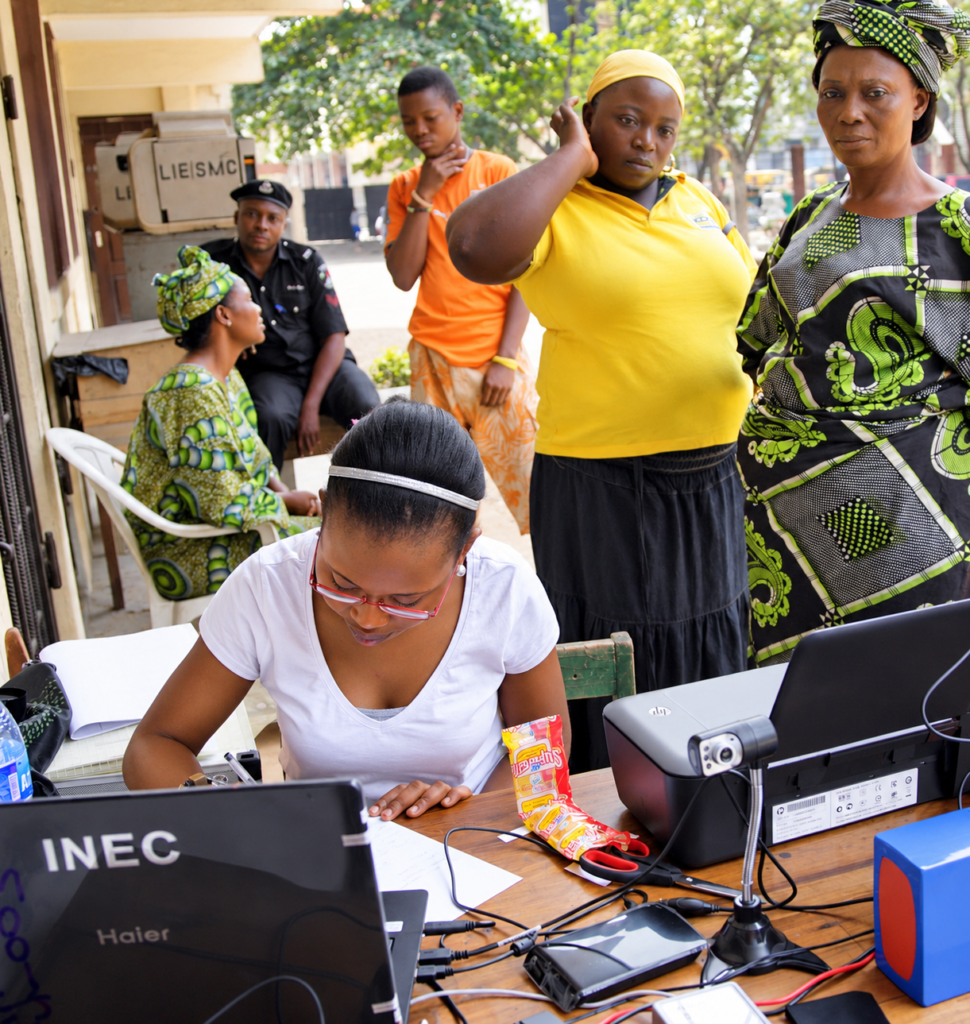
The voter-register process is an important part of electoral preparation because it gives voters an opportunity to inspect their details and identify possible errors. According to the supplied report, INEC was processing claims and objections before certification, with publication of the final register expected on 15 December 2026. That timetable should be checked against the commission’s current official notice before being treated as definitive.
The announcement of online access is not, by itself, proof that every voter can use the service successfully or that all errors have been corrected. The practical value of the exercise depends on whether voters can locate their records, understand how to report inaccuracies and receive decisions on their claims or objections within the applicable period.
For election administration, the relevant test is not simply whether a register is published. It is whether the process gives eligible voters a meaningful opportunity to check the information and whether identified problems are handled transparently. The supplied account does not establish the number of voters who accessed the online register, how many errors were reported or how many claims had been resolved.
The judiciary has a different responsibility. At a National Judicial Institute roundtable in Abuja on 26 October, Chief Justice Kekere-Ekun warned against forum shopping, concealment of related proceedings and attempts to obtain conflicting court orders, according to Punch Newspapers’ report. The report also said she addressed concerns about delays and court scheduling.
Forum shopping can involve seeking a more favourable outcome by approaching different courts or venues. When courts issue conflicting orders in related matters, parties and public institutions may face uncertainty about which decision should be followed. Such practices can weaken confidence in the fairness and consistency of judicial proceedings.
The Chief Justice’s remarks were a general warning about judicial procedure. They do not establish wrongdoing by a particular judge or litigant. Nor does the fact that the warning was issued establish that court delays have since declined or that conflicting orders have been prevented.
The two developments should not be treated as directly connected. INEC is responsible for administering electoral records, while courts resolve disputes within their jurisdiction. Both nevertheless matter to public confidence in the electoral process: voters need accessible and accurate records, and litigants need fair, impartial and timely hearings.
As the 2027 Nigeria elections approach, clear procedures and reliable information will be essential. Voters need to know how to check and correct their details. The commission needs to communicate the process and timetable accurately, while the judiciary must continue to apply fair procedures when electoral or other disputes come before it.
What to watch: INEC’s current official notice on online access and the final-register timetable, the handling of claims and objections, and any subsequent evidence about the implementation of judicial guidance. The next reported register milestone is 15 December 2026, subject to confirmation against the commission’s official schedule.
El-Rufai Wiretapping Trial: A Procedural Ruling, Not a Finding of Guilt
A ruling by the Federal High Court in Abuja has moved former Kaduna State governor Nasir El-Rufai’s wiretapping trial to the defence stage. Punch Newspapers reported that Justice Joyce Abdulmalik rejected a no-case submission by the defence in a case concerning the alleged unlawful interception of telephone conversations linked to National Security Adviser Nuhu Ribadu.
The case involves a five-count amended charge, according to the supplied report. The prosecution reportedly called two witnesses before closing its case. The defence argued that the evidence was insufficient to require El-Rufai to present a defence, while the prosecution maintained that its oral and documentary evidence justified the next stage of the proceedings.
A no-case submission is an application asking a court to find that the prosecution’s evidence is insufficient to require the defendant to answer the charge. Rejecting such an application means the proceedings continue to the next stage; it does not mean the court has convicted the defendant.
That distinction is essential. The reported ruling does not establish that the alleged interception occurred or that El-Rufai committed an offence. The allegations remain before the court, and the presumption of innocence remains relevant while the case is unresolved.
The case raises questions about privacy, lawful interception of communications, criminal accountability and the right to a fair hearing. These issues need to be assessed through the actual charges, the evidence presented and the court’s reasoning. They cannot be resolved simply by the political prominence of the defendant or by the seriousness of the allegation.
The supplied reporting does not include the full amended charge sheet or the written ruling. Those documents would be needed to establish the precise offences alleged, the statutory provisions relied on and the detailed reasons behind the judge’s decision. Without them, the ruling should be described in procedural terms rather than as a definitive legal finding on the underlying allegations.
The next stage gives the defence an opportunity to respond within the court process. How the case develops will depend on the proceedings and the evidence considered by the court. It would be premature to predict the outcome.
Punch reported 25 November 2026 as the next hearing date. That date should be confirmed against the current court schedule before being relied on as a settled listing.
The public-interest significance of the case extends beyond the identity of the defendant. Allegations involving intercepted communications raise questions about the legal limits on obtaining private communications and the standards required to establish criminal responsibility. A fair process must examine those questions through evidence and applicable law, while protecting the rights of the person charged.
What to watch: Confirmation of the next hearing date, the defence proceedings, and access to the charge sheet and written ruling where officially available. The reported decision allows the trial to proceed; it should not be presented as a final judgment on guilt.

Nigeria Economic Reforms: Can a Policy Framework Deliver Continuity and Accountability?
The Federal Government is considering a framework intended to make economic policy more consistent across successive administrations. Finance Minister Taiwo Oyedele discussed the proposal at the 32nd Nigerian Economic Summit in Abuja on 26 October, according to TheCable’s report on the proposed framework.
Oyedele said the government was considering legislation to protect economic reforms from being reversed by future administrations. The proposed Nigeria Economic Policy Framework would cover areas including taxation, tariffs, subsidies, investment and industrial development.
The framework was described in the reporting as a consultation draft; the Federal Ministry of Finance has published the Nigeria Economic Policy Framework consultation materials. It is not an approved government policy or an enacted law on the basis of the supplied information. The distinction matters because a draft can outline objectives and proposed mechanisms without creating binding obligations or proving that any policy has been implemented.
Among the proposed measures are policy impact assessments and an annual economic scorecard. An impact assessment would examine the likely costs and benefits of a major intervention, who might benefit or bear the costs, and how long the effects might last. The proposed scorecard could track indicators such as real wages, productive employment and poverty.
If developed and implemented transparently, these mechanisms could provide a more structured way to assess policy decisions. But their value would depend on the quality of the data, the clarity of the indicators, the publication of results and whether the findings influence subsequent decisions. A scorecard that exists only on paper would not demonstrate that living standards had improved.
The reported consultation deadline is 27 November 2026. After consultation, the framework was expected to proceed to the Federal Executive Council for consideration and the National Economic Council for endorsement. These are planned steps, not completed decisions. The supplied account does not establish that the consultation has concluded or that either institution has approved the draft.
Policy continuity can help businesses plan, particularly where investment decisions require a long-term view of taxation, trade, subsidies or industrial policy. Abrupt changes may make it harder to anticipate costs and returns. Yet continuity is not automatically a sign of good policy. A measure that is ineffective, poorly designed or producing unintended harm may need to be reviewed or changed.
The central policy challenge is therefore how to balance predictability with accountability. A durable framework would need to explain which policies are subject to assessment, how evidence is gathered, who evaluates performance and how government responds when results fall short of stated objectives. Future administrations would also need a way to respond to new evidence and changing public priorities.
President Bola Tinubu separately described his administration’s reforms as restoring confidence and supporting growth, according to Punch Newspapers’ report. Those remarks represent the government’s assessment; they do not independently establish that household living standards have improved because of the reforms.
For Nigerians, the relevant indicators include real wages, productive employment, poverty and the cost of meeting basic needs. Those measures should be presented with clear definitions and methods so the public can assess whether announced objectives are translating into demonstrable results. The supplied information does not provide measured outcomes establishing the effect of the proposed framework, which remains under consideration.
What to watch: The consultation process and its 27 November deadline, any published revision of the draft, and subsequent decisions by the Federal Executive Council and National Economic Council. The framework’s significance will depend on its final legal status, its evaluation mechanisms and the results that can eventually be demonstrated.
Conclusion: Public decisions must be measured by evidence
The five developments reviewed in Nigeria news today show why public announcements and institutional milestones need to be assessed carefully. In Taraba, the priority is to establish the human toll of the Binnari attack, account for missing people and demonstrate effective protection. In policing reform, reported progress must be followed by confirmation of the legal process and clear safeguards for any future system.
Ahead of the 2027 elections, voters need workable procedures for checking their records, while the judiciary must uphold fair and timely processes. In Nasir El-Rufai’s case, a ruling that requires the defence to respond must not be confused with a conviction. In economic governance, a proposed framework for policy continuity must be judged by its eventual status, transparency and measurable results—not by its stated ambitions alone.
These stories do not share one cause, and their outcomes will be determined by different institutions and processes. Their common public-interest lesson is that announcements, proposals and procedural decisions are not substitutes for completed action or proven performance.
The next milestones are concrete: clarification of the Taraba casualty figures and investigation, official progress on the policing legislation, INEC’s register timetable, further court proceedings and the consultation and review of the economic framework. Each requires reliable information before conclusions can be drawn.
For Nigerians, accountability begins with knowing what has been decided, what remains pending and what evidence will show whether an institution has fulfilled its responsibilities. That is the central test: not only what public authorities say they intend to do, but what can ultimately be established about the consequences for people’s lives.
RECOMMENDED ARTICLES
1. Global News Analysis: Elections, AI and Investment
Explore major global developments, from Brazil’s presidential election and political change in Serbia to an AI copyright lawsuit and Audi’s planned US investment. This analysis examines what the available evidence establishes—and what remains uncertain.
Category: Global News Analysis
2. Africa News Review: Ebola Preparedness, Regional Security and Political Accountability
Read about Uganda’s Ebola-related precautions, Algeria’s approved military deployment to Niger, Somalia’s political dialogue and a deadly road crash in Kenya. The report examines public safety, regional cooperation and the need to verify official actions.
Category: Africa News Review
3. Nigeria Daily News Review: State Police, Inflation, Ebola and 2027 Politics
Catch up on Nigeria’s latest developments in security reform, economic policy, public health, cybercrime enforcement and preparations for the 2027 elections. Discover what has been reported, what remains unresolved and what Nigerians should watch next.
Category: Nigeria News Review
4. Global News Review: October 19–25, 2026
Review the major international developments from the week and understand the political, economic and technological issues shaping the global agenda. This weekly roundup offers a broader perspective on the events and decisions making headlines around the world.
Category: Global Weekly Review
5. Africa News Review: Ebola Concerns, Conflict, Power Challenges and Political Decisions
From public-health concerns and conflict-related civilian risks to infrastructure ambitions and political decisions, this Africa review explores the developments influencing the continent. It separates reported claims from established facts and examines what needs to happen next.
Category: Africa Weekly Review
6. Nigeria’s Week in Review: Election Politics, Economic Pressure, Security Reform and Floods
Get a wider view of Nigeria’s week, including President Bola Tinubu’s campaign launch, labour tensions, economic uncertainty, proposed state-police reform, public-health concerns and flooding. The review explains the issues behind the headlines and the evidence needed to assess government responses.
Category: Nigeria Weekly Review
About the Author