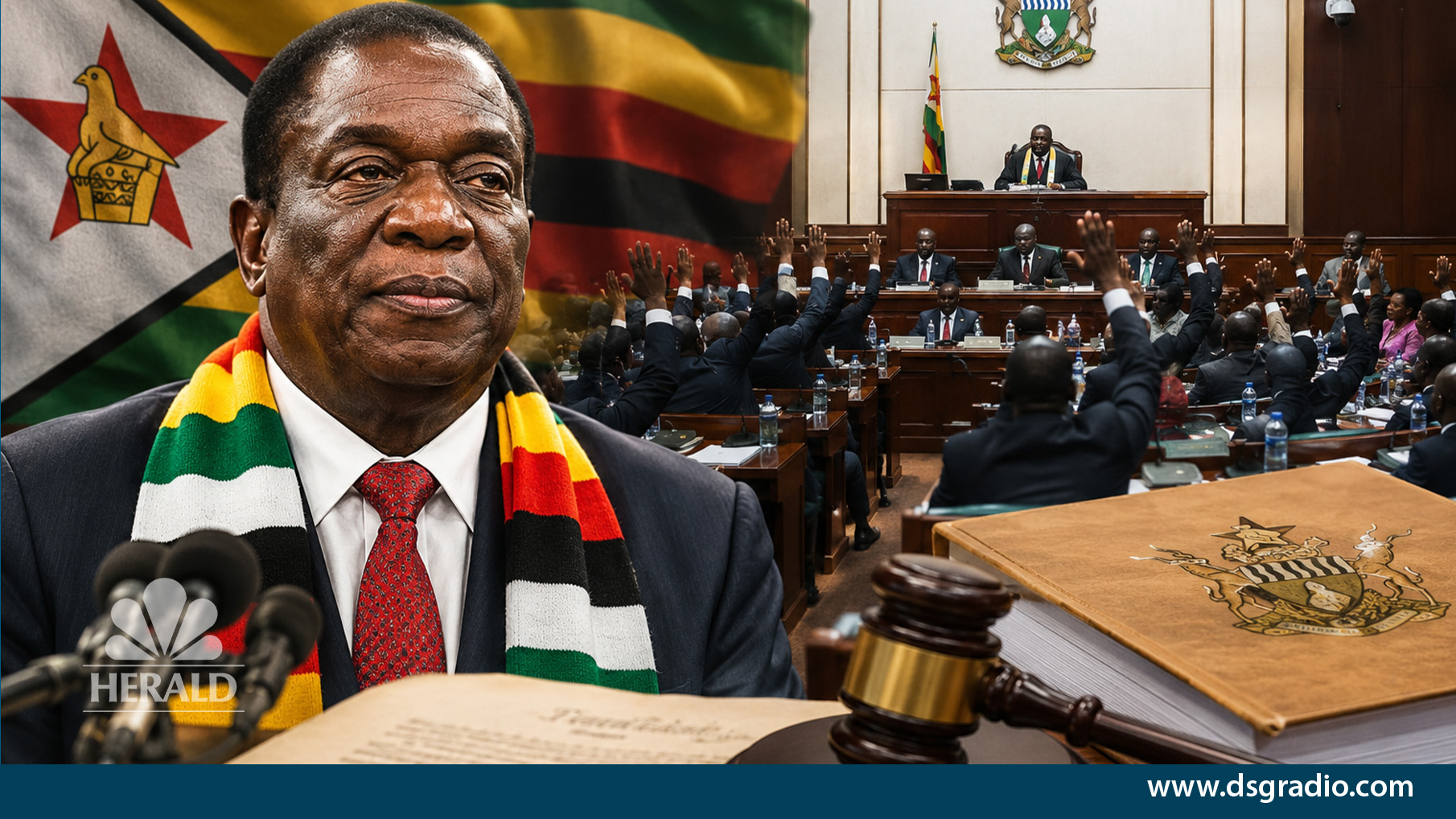
Zimbabwe Constitutional Amendment Could Redefine Democracy Until 2030
Zimbabwe’s Senate has approved a sweeping constitutional amendment, dramatically extending presidential and parliamentary terms and reshaping how future leaders are chosen. In a 75–4 vote on June 24, 2026, Zimbabwe’s upper house cleared a bill that pushes the next presidential election from 2028 to 2030 and makes every new term seven years long. In effect, the reform prolongs 83-year-old President Emmerson Mnangagwa’s current tenure by two years, keeping him in office until 2030. At the same time, the amendment ends Zimbabwe’s system of direct popular votes for president – instead empowering Parliament to elect the head of state.
These changes have turned a routine legislative session into a defining moment for Zimbabwe’s democracy. For ordinary Zimbabweans, the implications are profound. The gap between elections will grow from five years to seven, meaning citizens will have only two votes from now until 2030. Under the new rules, Zimbabweans will no longer cast ballots for their president at all; only members of the national legislature will choose the chief executive. The balance of power in government is shifting decisively: the ruling ZANU-PF party’s majority in Parliament will determine the presidency, effectively sidelining the popular vote in national leadership contests.
Key Provisions of the Amendment:
- Term Extension: Presidential and parliamentary terms are lengthened from five to seven years.
- Election Delay: The next general election is postponed from 2028 to 2030.
- Abolishing Direct Vote: Future presidents will be elected by Parliament, not by a popular vote.
- Expanded Executive Powers: The president gains authority to appoint ten additional senators (as set out in the bill text).
These proposals were enshrined in the Constitution Amendment Bill No. 3 (CAB3), gazetted by the government in February 2026. With the Senate’s vote, the amendment has passed both houses of Parliament and now awaits President Mnangagwa’s signature to become law.
Supporters’ Arguments: Stability and Continuity
Zimbabwe’s ruling party and government officials defend the amendments as a legitimate exercise of legislative authority aimed at stability and development. The government insists that no term limits are being removed – the two-term cap remains – so Zimbabweans will not lose any formal rights. Instead, they say, extending each term will reduce the frequency of highly contested elections and allow ongoing projects to be completed. “The primary objective is to enhance political stability and ensure policy continuity,” Information Minister Nick Mangwana told reporters. He emphasized that elections under the new system would be less “highly contested, polarising” affairs.
ZANU-PF has openly embraced the amendments. Party leaders resolved in 2025 that Mnangagwa’s tenure should be prolonged, and the Cabinet formally backed the bill in February 2026. In Parliament, government speakers have argued that longer terms and fewer elections can help Zimbabwe achieve long-term development goals without the disruption of frequent national campaigns. They note that most legislative safeguards — such as judicial independence and the two-term limit — remain in place, and they portray the changes as a routine adjustment of the electoral calendar.
According to the Associated Press, ZANU-PF supporters point out that each presidential term will still count as one of only two allowed by the 2013 constitution, even if that term now lasts seven years. In their view, the amendments simply align the political cycle with stability needs rather than remove democratic checks. The government also argues that direct public election of the president can be a source of tension and should give way to parliamentary selection to reduce polarization. Mnangagwa himself has said he will sign the bill into law once it reaches his desk, calling the parliamentary process “legitimate” and urging critics not to undermine the state.
Importantly, proponents emphasize that most of the constitution’s “foundational” elements are unchanged. The two-term limit is still technically intact, and opposition parties will still exist. The official line is that Zimbabweans have not been stripped of formal rights: they will still elect their MPs, who in turn will choose the president, and the other branches of government remain subject to constitutional rules. “To characterize this [amendment] as a ‘coup’ is not only factually incorrect but deeply disrespectful,” Mangwana said in an interview. The ZANU-PF camp has asked supporters to view the bill as a legal update for long-term governance, not as any anti-democratic power grab.
Opposition: “A Constitutional Coup”?
Critics vehemently reject the government’s framing. Across Zimbabwe and beyond, opposition politicians, lawyers, activists and human rights groups have described the amendments as an outright “constitutional coup” aimed at cementing ZANU-PF’s dominance. They argue that Parliament has overstepped the proper limits for changing a country’s fundamental law, especially on issues so central to popular sovereignty.
Opposition leaders note that the 2013 constitution requires a referendum for any amendment that extends presidential tenure. Lawyers cite Section 328(7), which explicitly prohibits altering term limits to benefit the incumbent without a vote of the people. From their perspective, the way the government has interpreted this clause is a legal fiction. By calling the bill an “election cycle adjustment,” the Justice Minister has tried to argue that term limits aren’t technically being lifted. But critics counter that the amendments plainly override the spirit of that “no-benefit” clause, since only Mnangagwa stands to gain.
Constitutional experts highlight that the amendments would, as one analyst put it, “roll back key features protecting Zimbabwe’s democracy”. The proposed changes amount to a fundamental reordering of the system: presidential authority would be boosted while popular participation is sharply curtailed. The ConstitutionNet analysis warns that the bill represents “executive consolidation through constitutional disruption,” accelerating Zimbabwe’s “trajectory of democratic regression”.
Among opposition figures and civil society groups, the anger is palpable. Makomborero Haruzivishe of the Constitutional Defenders Forum denounced the amendment as “a calculated constitutional coup against the people of Zimbabwe,” noting that it “strips citizens of the fundamental right to directly elect their president”. His point echoes a common criticism: what Zimbabweans are losing is not legal paperwork but their voice. In the words of a UK parliamentarian speaking on the matter, “the people of Zimbabwe will no longer elect their president” under the new rules. Even a symbolic red card once used by protesters under Mugabe’s rule has resurfaced as citizens express that now the game will be played by different rules.
Critics also question the motive behind linking term extension and election delay. While government spokesmen stress stability, opponents see the combination as self-serving. They note that Mnangagwa, who won 52.6% in the disputed 2023 election, is already on his second term and had publicly committed to stepping down in 2028. Extending both his term and that of the legislature removes any immediate check on his power. The fear is that after 2030, a sitting president could again seek to amend the rules. In fact, critics argue, this change effectively rewrites the timeline of Zimbabwean democracy until at least that year.
Political and Legal Reactions
International legal observers point out that Zimbabwe’s constitution has a built-in safeguard against this exact scenario. The 2013 charter includes a “poison pill” provision — a no-benefit rule — which was meant to make it impossible for a sitting president to amend term limits in his own favor. Under that rule, any amendment that increases the tenure of the current president should not apply to him at all, preserving the original end date of 2028 for Mnangagwa. By seeking to override that clause via parliamentary vote, the bill challenges a hallmark of the constitution. As one commentary noted, these amendments “would even formally contravene the constitution” if the no-benefit rule is taken at face value.
Opposition parties and legal activists in Zimbabwe have already taken the issue to court. Several constitutional petitions have been filed, but as of late June all have been dismissed or stalled, owing largely to the ruling party’s control of the judiciary. For example, Constitutional Court judges have yet to rule against the amendment, and lower courts have not blocked parliamentary proceedings. Critics say the judiciary itself is under threat: one Zimbabwean lawmaker told The Guardian that under the amendment “judicial appointments will become very unsafe” and other democratic safeguards are being eroded.
Nevertheless, opposition voices remain defiant. Some of them have organized petitions and protests, even as the authorities tighten security. They argue that continued domestic pressure might still force a referendum or reversal in the future. “We will keep fighting this as long as it takes,” said a campaigner from the Constitutional Defenders Forum. For now, however, the parliamentary path is nearly complete, and their hopes are fading.
Human Rights and Civil Liberties Concerns
The constitutional debate has unfolded amid widespread reports of intimidation and rights abuses. Lawyers and activists say the government has been using harassment to pre-empt opposition to the bill. In recent months, there have been multiple incidents of police or unidentified forces breaking into the offices of prominent opposition figures. For example, lawyer and opposition politician Tendai Biti reported that his office was invaded six times by security agents between October 2025 and March 2026. These raids and the arrest of other critics occurred despite court orders and public scrutiny.
Human rights organizations have condemned the climate of fear surrounding the bill’s passage. In March 2026, Human Rights Watch issued a statement saying that Zimbabwean authorities were actively using “violence and intimidation” to silence opponents of the amendments. It reported incidents of beatings, threats, and detentions targeting anyone who spoke against CAB3. The Al Jazeera report likewise noted that “intimidation and violence” have been used to deter public dissent. These accounts mirror the concerns raised by domestic NGOs, such as the joint statement by Zimbabwean women’s groups and ACTSA, which called out an atmosphere of “shrinking civic space” and warned that the amendment process lacked “inclusive and meaningful public participation”.
The activists’ joint statement on May 15 explicitly accused the government of “advancing amendments…without a referendum and without a safe, inclusive civic space,” in violation of constitutional safeguards. They also pointed out that scrapping direct elections was a blow to democratic accountability, and that longer terms reduce the citizens’ opportunity to hold leaders to account. In short, civil society in Zimbabwe sees the amendment not as a neutral reform but as a power grab enabled by forceful tactics. The growing number of reports about arrests of protest leaders and the suspension of open debate have exacerbated concerns that the amendments are being imposed undemocratically.
Meanwhile, press freedom advocates warn of related crackdowns. Zimbabwe’s security agencies temporarily shut down several independent radio and TV stations earlier in 2026, citing “security concerns” during the amendment debate. Observers note that this media blackout has made it harder for citizens to get balanced information about the process. As one NGO put it, the constitutional overhaul is proceeding in a context of “intimidation and shrinking civic space”, undermining the very notion of public consent the constitution was designed to ensure.
What Happens Next?
With Senate approval secured, the bill now goes to President Mnangagwa for final assent. Since the ruling party controls both chambers of Parliament and the presidency, it is widely expected that Mnangagwa will sign the amendment into law in July 2026. Once enacted, the changes will take effect immediately, although the exact start date of the new seven-year “cycle” is not spelled out in the text. Government statements suggest the transition is meant to be retroactive from Mnangagwa’s last swearing-in, effectively making his second term span 2023–2030. After that, under the new rules, parliamentary elections will be held every seven years and each new Parliament will choose the president.
For now, the nearest scheduled national poll is in 2030. Observers note that there will be no regular presidential election before then – by design – which gives Mnangagwa’s administration a long window of unchallenged governance. In practical terms, this means Zimbabweans will not go to the polls for over a decade (the last presidential vote was in 2023). In exchange, ZANU-PF promised earlier to respect the two-term limit, so 2030 theoretically would be the end of Mnangagwa’s second term. However, political analysts fear that once the electoral cycle is extended, future leaders may seek further amendments. If Mnangagwa or his successor attempted to run beyond two terms (for example, by resetting the count), that would likely require another constitutional change or referendum.
The constitutional amendment does not explicitly dictate who will succeed Mnangagwa, but it reshapes the succession landscape. ZANU-PF’s internal rules and the newly empowered Parliament will play a key role in any leadership transition. Should Mnangagwa step aside around 2030, the next leader would most likely be chosen by ZANU-PF in Parliament rather than by a popular campaign. Opposition parties worry that this makes it virtually impossible for a non-ZANU-PF candidate to win, unless there is a major split within the ruling party. For the moment, no credible alternative path has emerged. Zimbabwe’s aging president has hinted at a successor (some speculation pointed to Vice President Constantino Chiwenga), but with the timeline extended he could remain involved behind the scenes well into the 2030s.
Legally, the window for stopping the amendment is nearly closed. The few court cases lodged so far have not yielded injunctions, and the Constitutional Court declined emergency hearings. The opposition could still petition international bodies after the fact – for example, invoking Zimbabwe’s commitments under the African Charter on Democracy or the SADC principles – but enforcement by those bodies is limited. In practice, the amendment will stand unless political pressure at home forces a change of course, which seems unlikely given ZANU-PF’s parliamentary dominance.
Regional and International Response
So far, the international reaction has been largely muted, but observers warn that Zimbabwe’s move clashes with regional norms. Southern African leaders have generally avoided public confrontation, though opposition groups are calling on entities like the Southern African Development Community (SADC) and the African Union (AU) to step in. For example, Zimbabwean NGOs have explicitly urged “regional and international partners, including SADC and the African Union, to support constitutionalism and raise concerns where processes undermine democratic norms”. Similar appeals have come from the UK government and diplomats, who have reminded Harare that freedom of assembly and public participation are key democratic principles.
Within Africa, the amendment has drawn parallels to other countries’ constitutional maneuvers. Some analysts compare Zimbabwe to Uganda or Congo, where presidents likewise rewrote the rules to extend their stays in power. They note that most of Zimbabwe’s neighbors still hold regular elections, so this shift isolates Harare. SADC’s own treaty calls for multiparty democracy and periodic elections, and Zimbabwe’s reversal on direct voting is at odds with those commitments. If SADC or the AU chooses to weigh in, it could do so by invoking its normative charters or by issuing stern statements. So far, however, neither body has taken any formal action.
Western governments have quietly expressed disapproval. For instance, the UK Parliament debated the issue in April, with lawmakers warning that Zimbabwe’s amendments would undermine democratic accountability and the rule of law. One British lord even asked why “our ambassador will speak out more strongly against the tyranny of the ZANU-PF regime” if the changes are enacted. The US and EU have not yet imposed new sanctions, but human rights groups are pressing them to consider doing so if political space continues to shrink. The United Nations has not commented officially, but diplomats say Harare may face increasing isolation in multilateral forums unless it restores some measure of electoral legitimacy.
Globally, the story feeds into a broader narrative about eroding term limits. Observers point out that Zimbabwe is now among a small set of countries changing their constitutions to allow presidents to remain in office longer or eliminate elections. (By comparison, most established democracies keep shorter terms and direct votes.) In that sense, Zimbabwe’s move resonates with recent developments from Russia to Uganda. It also raises questions for foreign investors and partners, who often view stable democracy as a sign of a reliable business environment. Until now, Mnangagwa had courted investment with promises of reform; this constitutional overhaul may undermine international confidence that Zimbabwe will honor the rule of law.
Future Outlook: Legal and Political Challenges
Looking ahead, the big question is whether this constitutional overhaul will hold beyond 2030. Many Zimbabweans and regional experts remain skeptical. Opponents hope that a future court or legislature might revisit the issue, especially if political power shifts. Zimbabwe’s constitution does allow for referenda and parliamentary votes to amend itself again – but any attempt to shorten terms or restore direct voting would likely face the same political obstacles. In practice, a change of heart would probably require either a new legislative supermajority or a referendum, both of which are highly improbable under the current regime.
Another potential flashpoint is voter sentiment. If Zimbabwe’s economy falters or living conditions worsen, popular pressure could build against the ruling party. Some observers suggest that civil discontent might explode in post-2030 election campaigns, forcing a reckoning. However, the government may also tighten security laws or manipulate future electoral rules (for example, by gerrymandering or controlling the election commission) to stay in power. In essence, extending terms buys time for ZANU-PF, but it also sets up a reckoning later: an entrenched system of long terms with no direct mandate could prove explosive if economic or social crises arise.
For now, Zimbabwe’s democracy is taking a very different path. Rather than open contest and turnover, the new framework points to a more managed form of governance. As one analyst summarized, these amendments “fundamentally reshape the political landscape”. For Zimbabweans who remember regular elections and hope for change, the coming years may feel like a pause in their political voice. For the ruling party, it represents a consolidation of power that could stabilize the regime or push it toward greater isolation.
Regardless, the constitutional referendum’s outcome is now set: Mnangagwa is poised to govern until 2030 under the new rules, with the presidency chosen by Parliament rather than by the ballot box. How this affects Zimbabwe’s society and its relations with the world will become clear only over time. Critics warn that without direct elections, checks on leadership will weaken, while supporters believe it will spare Zimbabwe needless conflict. What is certain is that the questions raised by this amendment – about democracy, accountability and the will of the people – will haunt Zimbabwe’s politics well beyond the 2030 horizon.
For background analysis on the political context, see DSG Herald’s coverage Mnangagwa Term Extension Sparks Democracy Debate.
Recommended Coverage
- Yahaya Bello Trial Highlights Governance Challenges in Nigeria: An update on the Kogi State governor’s trial underscores Nigeria’s own struggle with corruption and the rule of law. This connects to Zimbabwe’s story by highlighting the importance of legal accountability and democratic norms in African governance.
- Boko Haram Attack in Chad Exposes Regional Security Gaps: A recent Boko Haram assault illustrates the broader West African security crisis. It contrasts with Zimbabwe’s focus on constitutional reform, but both issues illustrate how governments under pressure may use strongman tactics to maintain control.
- Africa Media Convention 2026 Pushes Press Freedom Agenda: The African Media Convention’s emphasis on press freedom is timely, given Zimbabwe’s recent media shutdowns. Debates from the convention echo calls for open civic space and government transparency that critics are demanding in Harare.
- US-Iran Strategy Timeline Reveals Foreign Policy Contradictions: This analysis of US-Iran relations highlights how international agreements can be reshaped as political agendas shift. Similarly, Zimbabwe’s constitutional overhaul shows how domestic legal frameworks can be rewritten by those in power.
- Nigeria Coup Plot Trial Exposes Corruption Networks: Coverage of a Nigerian coup plot trial delves into illicit funding and power struggles. It parallels Zimbabwe’s situation by underlining how internal security and political conspiracies influence constitutional changes and governance in Africa.
About the Author