Okrika Oil Siphoning Tragedy: 43 Feared Dead
A reported 43 people are feared dead after toxic fumes overwhelmed an alleged illegal petroleum-siphoning operation at Okari Jetty in Okrika Local Government Area of Rivers State, turning a midnight attempt to transfer fuel into a mass-casualty incident involving deaths, suspected drownings and several missing people.
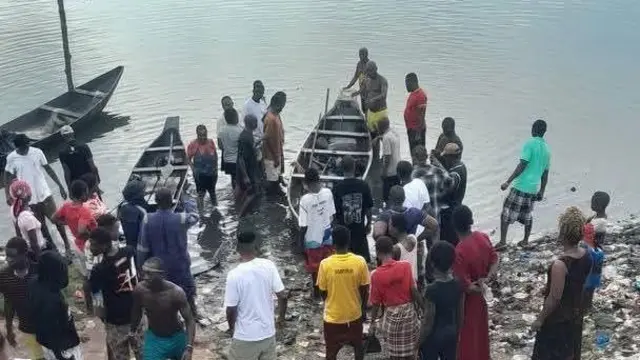
The incident reportedly occurred around midnight on Thursday, September 3, 2026, when more than 200 youths from Okrika and surrounding communities arrived at the jetty in wooden boats and allegedly attempted to siphon petroleum products from an illegally tapped pipeline. As the operation progressed, witnesses said the fumes became intense, causing several people to collapse, while some reportedly fell into the river.
But the exact scale of the tragedy remains unresolved.
Community sources have put the death toll at 43, with 37 victims reportedly identified as Okrika indigenes and six others still unidentified. Several people are also said to be missing.
The Rivers State Police Command, however, has not confirmed 43 as the final casualty figure. Police said investigations were ongoing to establish what happened and determine the actual number of casualties.
That distinction is central to understanding the developing story. The reported death toll has generated alarm across the community, but the final number of people who died, those who survived and those still missing will require further verification.
The tragedy has therefore raised two immediate concerns: what exactly happened at Okari Jetty that night, and how did an alleged illegal petroleum operation escalate so quickly into a deadly emergency?
What Happened at Okari Jetty?
The reported incident unfolded at a location where petroleum products were being transported through pipeline infrastructure connected to the wider oil and gas network in Rivers State.
According to accounts cited by Daily Post and TheCable, more than 200 youths from Okrika and neighbouring communities arrived at the jetty in wooden boats. They were allegedly attempting to siphon petroleum products through an illegal connection made to a pipeline.
The operation reportedly took place while a vessel was loading petroleum products for export.
That detail is significant because it places the alleged illegal activity alongside an active petroleum-transfer operation.
According to Fyneface Dumnamene Fyneface, executive director of the Youths and Environmental Advocacy Centre (YEAC-Nigeria), the alleged tapping point was connected to a pipeline transporting petroleum products from the Indorama Eleme Petrochemicals area through the Port Harcourt refinery corridor towards vessels loading the products for export.
Fyneface said the youths allegedly connected a pipe to the tapping point and began transferring the product into boats waiting at the location.
The operation reportedly exposed those involved to fumes from the petroleum product.
At some point, according to community accounts, the concentration of fumes became intense.
Several people reportedly lost consciousness.
Others reportedly escaped with serious breathing difficulties, while some fell into the river.
The sequence is still being investigated, but the available accounts point to a rapidly developing emergency in which those at the scene were exposed to multiple dangers at once.
There was the alleged exposure to petroleum fumes.
There was the presence of high-pressure petroleum infrastructure.
And there was the immediate danger posed by the surrounding water.
Once people began collapsing, anyone who fell from a boat or the jetty into the river faced a separate risk of drowning.
The Moment the Operation Turned Deadly
The most critical unanswered part of the incident is what happened during the moments when the fumes reportedly became overwhelming.
Witness accounts indicate that the change was sudden enough to catch people at the scene off guard.
Several people reportedly collapsed after inhaling the fumes, while others were said to have experienced severe breathing difficulties.
Some reportedly fell into the river.
That combination of toxic exposure and open water made the situation particularly dangerous.
A person affected by intense fumes may become disoriented or lose consciousness. In a location surrounded by water, the consequences of suddenly losing consciousness can be fatal.
However, the available reports do not establish the precise medical cause of death for each victim.
This is an important distinction.
The reports attribute the incident to exposure to intense petroleum fumes, but they do not provide toxicological findings identifying the specific substance responsible for individual deaths. Nor do they establish how many victims died directly from inhalation and how many may have drowned after falling into the river.
Those questions will require medical, forensic and investigative evidence.
Until that evidence becomes available, the circumstances surrounding individual deaths should remain described as reported rather than definitively established.
The tragedy nevertheless illustrates how quickly an uncontrolled petroleum operation can become life-threatening.
The people reportedly involved were not operating within a conventional, regulated petroleum-loading environment. They were allegedly using an illegal connection to transfer petroleum products into waiting boats.
That meant the operation was taking place outside the safety controls normally associated with regulated petroleum handling.
The precise safety arrangements at the site that night remain unclear from the available reports.
It is also unclear whether anyone at the scene recognised the danger before people began collapsing, whether warnings were issued, or how quickly rescue efforts began.
Those are among the details that investigators will need to establish.
Why the 43-Death Figure Remains Uncertain
One of the most important elements of the story is the difference between the reported casualty figure and the official position.
Community sources have reported 43 deaths.
YEAC-Nigeria also reported at least 37 suspected deaths in its initial account.
The police, however, said they were still investigating to establish the actual number of casualties.
These figures should not automatically be treated as contradictory.
In the immediate aftermath of a mass-casualty incident, information can emerge from several channels at different times. Community leaders, relatives, hospitals, rescuers, advocacy organisations and law-enforcement agencies may have access to different pieces of information.
The presence of unidentified bodies and missing people can make the situation even more difficult.
In this case, reports indicate that 37 victims had been identified as Okrika indigenes, while six others remained unidentified.
Several people were also reportedly missing.
That means the investigation must go beyond counting bodies recovered from the scene.
Authorities will need to determine who was present, who escaped, who was taken to hospitals, who remains missing and who has been identified among those recovered.
The final casualty figure should emerge from that process.
For news organisations covering the incident, the distinction is equally important.
Reporting “43 feared dead” accurately reflects the current state of the information.
Reporting “43 confirmed dead” would go beyond what the police position supports.
That difference may appear small, but it is fundamental to responsible journalism, particularly when families are still searching for relatives.
Who Were the Victims?
The reports suggest that many of those involved came from Okrika and neighbouring communities.
Community sources said 37 of the reported victims had been identified as Okrika indigenes.
The six remaining victims had not been identified at the time of the reports.
Beyond those figures, little verified personal information about the victims has been made public.
Their ages, occupations, family circumstances and individual identities were not comprehensively provided in the source material.
That absence is significant.
Behind the reported number are individual families dealing with deaths, uncertainty and missing relatives.
Some families may be waiting for confirmation that a missing person survived.
Others may be waiting for the identification of a recovered body.
And survivors who escaped the incident reportedly required medical attention after experiencing breathing difficulties.
The human dimension of the tragedy therefore cannot be measured by the headline figure alone.
A final official account should ideally provide clarity on the identities of those who died, the number of people hospitalised, the number still missing and the circumstances surrounding the deaths.
Several People Are Still Reportedly Missing
The reports of missing people add another layer of uncertainty to the tragedy.
Some people who were reportedly present during the operation have not been accounted for.
That makes the river an important part of the ongoing response.
Fyneface said some bodies had reportedly been sighted floating on the river, while several others remained unaccounted for.
The reports do not establish the precise number of missing people.
That figure should therefore not be estimated.
Search and recovery efforts, identification of bodies and information from families will be necessary before the scale of the missing-persons situation becomes clear.
For investigators, this could also help reconstruct the events.
Knowing who was present at the jetty, who boarded which boat and who was recovered or transported for treatment could provide a clearer picture of what happened when the fumes reportedly became overwhelming.
It could also help determine whether the final casualty figure is higher or lower than the initial community reports.
The Pipeline Connection at the Centre of the Investigation
The alleged illegal tapping point is likely to be one of the central subjects of the investigation.
Fyneface said the youths had connected a pipe to a tapping point on a pipeline carrying petroleum products from the Indorama Eleme Petrochemicals area through the Port Harcourt refinery corridor towards export vessels.
He said the product was being transported under high pressure when the youths began transferring it into boats.
The supplied reports do not independently establish every technical detail of the pipeline system or confirm the precise pressure at the time of the incident.
Those matters will need to be established by investigators and relevant technical authorities.
What is clear from the available accounts is that the alleged illegal connection occurred around active petroleum infrastructure.
That creates important questions about how the tapping point was accessed and how the operation continued without being stopped before the reported exposure occurred.
The answers could have implications for both security and safety around petroleum facilities in the region.
But conclusions about responsibility should wait for the investigation.
The available evidence does not establish that any specific operator or organisation caused the deaths.
Nor does it establish whether there were failures in surveillance, security or emergency response.
Those are questions to be investigated rather than assumptions to be made.
A Wider Warning for the Niger Delta
The Okrika oil siphoning tragedy has brought the dangers of illegal petroleum activities into sharp focus.
The Niger Delta remains one of Nigeria’s most important oil-producing regions and contains an extensive network of pipelines, terminals, refineries and other petroleum infrastructure.
Communities living around that infrastructure can consequently find themselves close to both the economic benefits and the risks associated with the oil industry.
Illegal tapping and bunkering introduce another layer of danger.
People involved in such operations can encounter petroleum products without the safety systems, equipment and controlled procedures associated with regulated facilities.
The Okari Jetty incident demonstrates the consequences that can follow when such an operation goes wrong.
But it also highlights a deeper policy challenge.
Stopping illegal oil activities requires more than identifying individuals after a tragedy.
It requires securing infrastructure, improving surveillance, enforcing petroleum regulations and addressing the economic incentives that sustain illegal activities.
YEAC-Nigeria has argued that sustainable livelihood opportunities could form part of that response.
The organisation has advocated measures including modular refineries, formalisation of artisanal refining and wider industrial development in the Niger Delta.
Those proposals represent the organisation’s policy position and should not be presented as established solutions.
What the incident does establish, however, is that the human consequences of illegal petroleum activity can be severe.
The investigation into Okari Jetty will determine the facts of this particular case.
The broader policy challenge is how to prevent future incidents.
The Investigation Must Establish What Happened
The immediate priority following the Okrika oil siphoning tragedy is establishing a reliable account of what happened at Okari Jetty and determining the final number of people affected.
The Rivers State Police Command has said investigations are ongoing. That means several of the most important questions surrounding the incident remain unanswered.
Investigators will need to reconstruct the timeline, establish who was at the jetty, examine the alleged illegal connection to the pipeline and determine how the exposure occurred.
They will also need to establish the circumstances surrounding the people who reportedly fell into the river.
The distinction between those who died from exposure to fumes and those who may have drowned will be particularly important in determining the causes of death.
Medical and forensic findings could therefore become central to the final account.
The identification of victims is another priority.
Community sources reportedly identified 37 of the deceased as Okrika indigenes, while six others remained unidentified. Several people were also reportedly missing.
A complete investigation should reconcile those categories and determine whether people initially listed as missing were among those recovered or treated at hospitals.
Until that process is completed, the reported figure of 43 should remain qualified.
YEAC-Nigeria Calls for Joint Investigation
YEAC-Nigeria has called on NOSDRA to participate in a joint investigation into the incident.
The organisation said an investigation was necessary to establish the circumstances surrounding the reported deaths and determine what caused the incident.
Its call comes amid concerns over the alleged illegal tapping of petroleum infrastructure.
Fyneface also urged operators of oil and gas facilities to strengthen surveillance and security around their infrastructure to prevent pipeline vandalism and illegal bunkering.
His warning reflects one of the wider consequences of the incident.
An unauthorised connection to a petroleum pipeline is not simply a matter of theft. It can expose people at the site to hazardous petroleum products and create risks for other activities taking place around the infrastructure.
The reports indicate that a vessel was loading petroleum products for export at the time of the alleged siphoning operation.
That makes the investigation into the relationship between the illegal tapping and the legitimate petroleum operation particularly important.
The available reports, however, do not establish that the vessel, its operators or any particular oil company was responsible for the deaths.
Such conclusions would require evidence from the investigation.
The Security Challenge Around Oil Facilities
The incident also highlights the continuing challenge of protecting petroleum infrastructure in the Niger Delta.
Pipelines and other oil facilities can stretch across large and difficult-to-monitor areas, creating security challenges for operators and authorities.
Where illegal tapping occurs, the consequences can extend beyond the loss of petroleum products.
There can be risks of fire, explosions, toxic exposure, environmental damage and disruption of legitimate petroleum operations.
The Okari Jetty incident illustrates another possibility: a large number of people can become exposed to danger within a short period.
Reports say more than 200 youths arrived at the location in wooden boats.
That scale is significant because it means the alleged operation was not a small, isolated activity involving only a handful of individuals. A large number of people were reportedly present when the emergency developed.
Yet the available reports do not establish how long the operation had been taking place, whether security personnel were aware of the gathering or whether previous incidents had occurred at the location.
Those are questions that could become relevant to a wider assessment of security around the facility.
Why Livelihoods Are Part of the Debate
The response to the Okrika oil siphoning tragedy is also likely to involve a debate that has persisted across the Niger Delta for years: whether enforcement can succeed without addressing the economic incentives behind illegal oil activity.
YEAC-Nigeria has called for sustainable livelihood opportunities across the region.
The organisation specifically mentioned modular refineries, the formalisation of artisanal refining and greater industrial development.
Its argument is that alternative economic opportunities could reduce dependence on illegal oil-related activities.
That is a policy position rather than an established finding from the Okari Jetty incident.
The available reports do not establish why each person involved in the alleged operation participated or what economic circumstances influenced them.
Nevertheless, the question of livelihoods remains relevant to the wider regional context.
Oil has generated enormous economic value for Nigeria, while communities in producing areas have long been part of debates over environmental protection, employment, infrastructure and access to economic opportunities.
Illegal petroleum activities exist within that wider environment.
The policy challenge is consequently complex.
Authorities must prevent theft and protect critical infrastructure, but communities also require legitimate economic opportunities that can compete with dangerous informal activities.
The tragedy at Okari Jetty demonstrates the human consequences when people become involved in an unregulated petroleum operation.
The Human Cost Extends Beyond the Death Toll
A final casualty figure will eventually provide one measure of the disaster.
It will not, however, capture the full human impact.
Every confirmed death represents a family that has lost a relative. Every unidentified body represents a family waiting for certainty. Every missing person represents another unresolved case.
Survivors reportedly taken to hospitals after experiencing breathing difficulties may also face medical consequences from the incident.
The available reports do not provide enough information to establish the number of survivors who required treatment or the severity of their conditions.
That information will be important as the authorities compile a complete account.
The response must therefore include not only investigation but also identification, family notification, medical care and assistance to affected communities.
These details are often less visible than the initial death toll, but they become increasingly important as a tragedy moves from the breaking-news phase into the recovery phase.
What Remains Unanswered
Several major questions remain open.
How many people actually died?
The reported figure is 43, but the police have not yet established the final casualty figure.
How many people are missing?
Reports say several people remain unaccounted for, but no verified number has been provided.
What exactly caused the toxic exposure?
The reports attribute the incident to intense petroleum fumes, but the specific chemical composition and medical cause of individual deaths have not been established in the available material.
How was the pipeline allegedly tapped?
The reports describe an illegal connection, but the technical circumstances surrounding the tapping point remain unclear.
What happened after people began collapsing?
The available accounts describe people falling into the river and others escaping, but they do not provide a complete timeline of the rescue and recovery operation.
Were there previous security concerns at the location?
The supplied reports do not establish this.
What will the investigation find?
That remains unknown.
These unanswered questions should remain at the centre of subsequent coverage.
They also provide an important reason to resist premature conclusions.
A Developing Story With Wider Implications
The Okrika oil siphoning tragedy is more than a report about a single incident at a Rivers State jetty.
It has brought together several of the most difficult issues surrounding Nigeria’s petroleum economy: illegal oil activity, pipeline security, public safety, community livelihoods and the management of petroleum infrastructure.
But the facts of this particular incident must remain separate from broader assumptions.
What is currently reported is that an alleged illegal petroleum-siphoning operation took place at Okari Jetty; that people were reportedly exposed to intense fumes; that some reportedly collapsed and others fell into the river; that community sources put the number of deaths at 43; that several people were reportedly missing; and that police investigations were continuing.
Everything beyond those established or attributed facts requires further evidence.
That is particularly important when assigning responsibility.
The investigation may eventually identify specific failures, individuals or organisations whose actions contributed to the tragedy. Until then, those conclusions cannot responsibly be drawn from the available reports alone.
The role of regulators will also become clearer as more information emerges.
A joint investigation involving relevant authorities could help establish what petroleum product was involved, what happened at the alleged tapping point and whether the infrastructure complied with applicable safety and security requirements.
The Bigger Question for the Niger Delta
For the Niger Delta, the tragedy comes against the backdrop of a petroleum economy that remains economically important but increasingly under pressure to address security, environmental and social concerns.
The solution cannot be reduced to one intervention.
Pipeline surveillance can help prevent illegal tapping.
Law enforcement can investigate and prosecute criminal activity.
Regulators can examine safety and environmental concerns.
Oil and gas operators can strengthen infrastructure security.
And governments can pursue legitimate employment and industrial opportunities for communities.
Each addresses a different part of the problem.
The argument advanced by YEAC-Nigeria for alternative livelihoods reflects the belief that communities need economic choices beyond participation in dangerous informal oil activities.
Whether such measures can significantly reduce illegal oil operations would depend on their implementation, scale and economic viability.
But the underlying issue remains clear: preventing another tragedy requires understanding both the immediate mechanics of an incident and the conditions that allow dangerous activities to continue.
What Happens Next?
The next stage of the Okari Jetty story should provide greater clarity.
Police investigators will need to establish the circumstances of the incident and the final casualty figure. Missing people will need to be accounted for, while recovered bodies will need to be identified.
Any regulatory investigation should establish the nature of the petroleum product involved and examine the alleged tapping of the pipeline.
The findings could determine whether additional security, safety or regulatory measures are required around the facility and similar petroleum infrastructure.
For the families affected, the most urgent need is certainty.
For authorities, the priority is evidence.
And for the wider Niger Delta, the incident is another warning of what can happen when people, petroleum infrastructure and illegal oil activities collide outside a controlled safety environment.
The reported 43 deaths may ultimately prove to be the final figure, or the number may change as investigators complete their work.
What should not be lost in that uncertainty is the central fact of the tragedy: people reportedly went to Okari Jetty during the night to participate in an alleged illegal petroleum operation, and before the operation ended, dozens were feared dead, others were reportedly missing and survivors were being treated for breathing difficulties.
The final investigation must answer not only how many people died, but how this tragedy was allowed to unfold and what must change to prevent another one.
Recommended Coverage
Disaster Risks: 5 Lessons From Colombia
You can also explore five lessons from Colombia that could help Nigeria strengthen disaster preparedness, emergency response and public safety.
Dangote Petrol Price, Naira Sales
Check out how petrol prices, crude supply and naira sales are reshaping Nigeria’s petroleum economy and energy landscape.
Nigeria’s Budget Spending
You can also explore how Nigeria’s budget priorities and public spending affect the resources available for development, safety and vulnerable communities.
About the Author