US Iran Ceasefire Declared Over as Strait of Hormuz Crisis Fuels Fears of Wider Middle East Conflict
The US Iran Ceasefire has effectively collapsed after President Donald Trump declared that the fragile truce between Washington and Tehran was “over,” following a fresh wave of military confrontation that has heightened fears of a broader conflict across the Middle East.
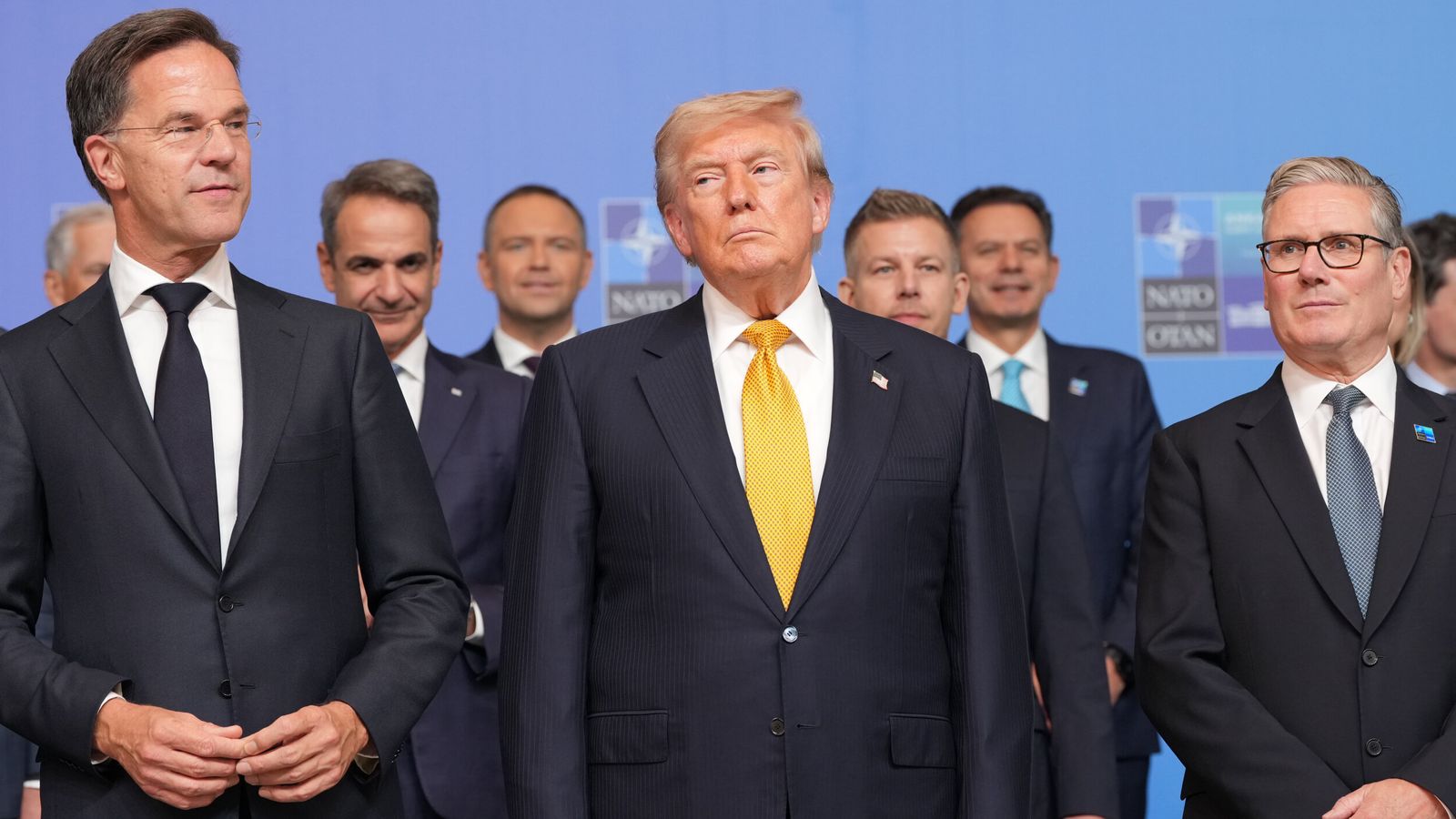
Speaking on Wednesday, July 8, on the sidelines of the NATO Summit in Ankara, Turkey, Trump dismissed further direct engagement with Iran’s leadership, describing continued negotiations as “a waste of time.” His comments came after both countries exchanged military strikes, ending weeks of uneasy calm established under the June 17 Memorandum of Understanding.
The latest escalation began after Iran allegedly targeted three commercial oil tankers navigating the Strait of Hormuz, one of the world’s most strategically important maritime trade routes. The attacks prompted a swift military response from the United States.
According to Reuters, U.S. Central Command (CENTCOM) carried out more than 80 precision strikes targeting Iranian air defence systems, coastal radar installations and vessels linked to the Islamic Revolutionary Guard Corps (IRGC). Iran responded overnight by launching drones and missiles at U.S. military facilities in Bahrain and Kuwait, significantly raising regional tensions.
Addressing reporters during the NATO gathering, Trump made it clear that he no longer considers the ceasefire arrangement viable. While he acknowledged that other U.S. officials could continue diplomatic contacts if they wished, he insisted such efforts would achieve little under the current circumstances.
The diplomatic breakdown was accompanied by renewed economic pressure. The United States revoked a key general licence that had temporarily allowed limited Iranian oil exports during the ceasefire period, signalling a return to a tougher sanctions policy.
The renewed hostilities immediately reverberated across global energy markets. Concerns over the security of shipping through the Strait of Hormuz—through which a substantial share of the world’s crude oil passes—pushed Brent crude prices up by more than five per cent, with traders anticipating possible disruptions to global supply chains.
International reactions have reflected growing concern over the risk of a wider regional conflict. NATO Secretary General Mark Rutte defended the U.S. military response, describing it as a necessary reaction to what he characterised as Iran’s violation of the ceasefire agreement. China, meanwhile, called on both nations to exercise restraint and return to diplomatic engagement in an effort to prevent further escalation.
Security analysts warn that continued military exchanges could threaten commercial shipping throughout the Persian Gulf while increasing instability across neighbouring countries that host American military assets. The developments also raise concerns about rising fuel costs, inflationary pressures and wider economic uncertainty should the conflict intensify.
For African economies, including Nigeria, prolonged instability in the Gulf region could produce mixed effects. Higher crude oil prices may strengthen revenues for oil-exporting countries, but they could also increase transportation costs, place additional pressure on inflation and create fresh uncertainty in international trade and investment.
The collapse of the ceasefire marks another setback for diplomatic efforts aimed at reducing tensions between Washington and Tehran. With military operations continuing and both sides adopting increasingly hardened positions, the prospect of a quick return to negotiations appears increasingly remote.
As governments around the world closely monitor developments, attention is now focused on whether further diplomatic intervention can prevent the crisis from expanding into a broader regional confrontation.
US Iran Ceasefire Ends as Trump Warns of Wider Gulf Conflict
The US Iran Ceasefire has effectively come to an end after President Donald Trump declared that Washington no longer considers the agreement with Iran to be in force, following a sharp escalation of military exchanges in the Persian Gulf. The announcement, made on Wednesday, July 8, during the NATO Summit in Ankara, Turkey, signals a major setback for diplomatic efforts aimed at preventing a wider regional conflict.
Trump’s remarks came after both nations exchanged military strikes in one of the most dangerous confrontations since the ceasefire framework was reached in June. The renewed hostilities have already rattled global energy markets, heightened concerns over maritime security in the Strait of Hormuz, and intensified fears that the conflict could spread across the Middle East.
The latest developments underscore how quickly fragile diplomatic agreements can unravel when military tensions persist. They also reinforce the strategic importance of the Gulf region, where security concerns have immediate consequences for international trade, oil supplies and global economic stability.
US Iran Ceasefire Unravels After Fresh Military Escalation
The latest crisis follows the breakdown of the June 17 Memorandum of Understanding, which had temporarily reduced direct military confrontation between Washington and Tehran.
According to the information available, the ceasefire began to collapse after Iran allegedly targeted three commercial oil tankers transiting the Strait of Hormuz, a narrow waterway regarded as one of the world’s most critical energy corridors.
The waterway carries a significant share of global crude oil exports every day, making any security threat there an international concern rather than simply a regional dispute.
The reported attacks prompted an immediate response from the United States.
According to Reuters, U.S. Central Command (CENTCOM) launched more than 80 precision strikes against Iranian military assets, including air defence systems, coastal radar installations and fast attack boats linked to Iran’s Islamic Revolutionary Guard Corps (IRGC).
The military operation represented one of the largest coordinated U.S. strike campaigns in the region since tensions between the two countries intensified.
Iran responded within hours.
The IRGC reportedly launched waves of drones and missiles targeting U.S. military installations in Bahrain and Kuwait, extending the conflict beyond Iranian territory and raising concerns among neighbouring Gulf states that host American military personnel.
The rapid sequence of attacks effectively destroyed the confidence that had sustained the fragile ceasefire.
Trump Signals End of Direct Diplomacy
Speaking to journalists on the margins of the NATO Summit, President Trump adopted a confrontational tone, making it clear that he believes further direct negotiations with Tehran would produce little progress.
While acknowledging that other American officials could continue diplomatic contacts if they chose to do so, he said he personally regarded further engagement as ineffective.
His comments marked one of the strongest public indications yet that the White House has shifted away from the diplomatic approach adopted only weeks earlier.
The statement also coincided with renewed economic pressure on Iran.
The United States reinstated tougher restrictions by revoking a general licence that had temporarily permitted limited Iranian oil exports during the ceasefire period.
The move is widely viewed as part of a broader strategy combining military pressure with economic sanctions to increase pressure on Tehran.
Why the Strait of Hormuz Matters
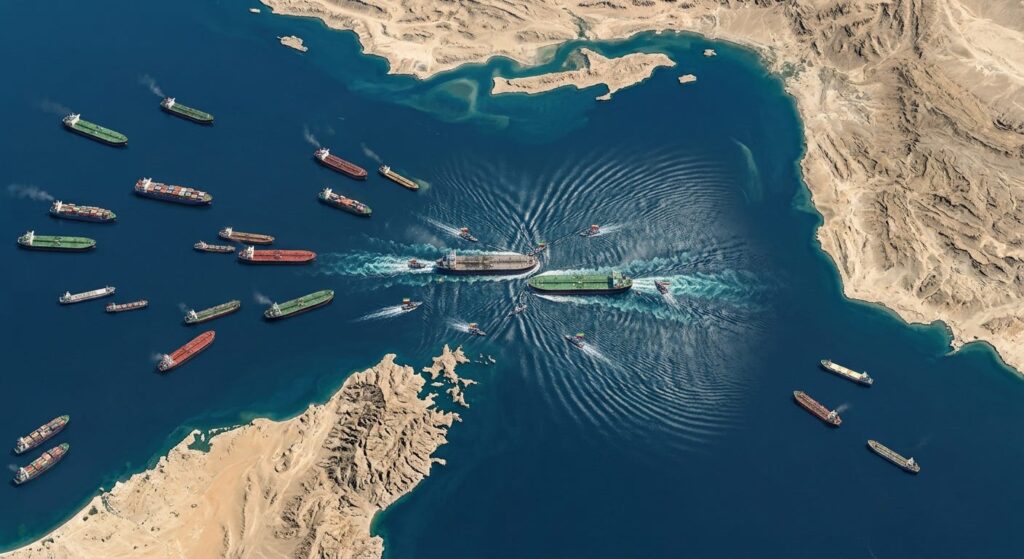
Although the latest confrontation centres on military operations, the broader significance lies in the location where the crisis unfolded.
The Strait of Hormuz is widely recognised as one of the world’s most strategically important maritime routes.
It connects the Persian Gulf to international waters and serves as a vital passage for oil exports from major producers including Saudi Arabia, Iraq, Kuwait, the United Arab Emirates and Iran.
Any disruption to shipping through the narrow channel has the potential to affect global energy supplies within days.
For that reason, even relatively limited military incidents in the area often trigger immediate reactions in international financial and commodity markets.
Security experts have repeatedly warned that prolonged instability around the Strait could increase shipping insurance costs, delay commercial cargo movements and place additional pressure on global inflation.
The latest escalation has renewed those concerns, particularly as military activity expands beyond isolated incidents into coordinated exchanges between state forces.
Global Markets React to Rising Uncertainty
Financial markets responded almost immediately to the renewed conflict.
Brent crude oil futures climbed by more than five per cent as traders assessed the growing risk of prolonged disruption to shipping through the Gulf.
Energy analysts note that oil prices often react sharply whenever tensions rise in the Strait of Hormuz because of the route’s central role in global petroleum exports.
Beyond energy markets, investors are also closely monitoring broader economic implications, including higher transportation costs, increased insurance premiums for commercial vessels and renewed inflationary pressure in countries heavily dependent on imported fuel.
For businesses and consumers alike, the geopolitical crisis is becoming an economic issue with potentially global consequences.
International Reactions Reflect Deepening Global Concern
The collapse of the US Iran Ceasefire has drawn swift responses from governments and international organisations, highlighting growing concern that the latest confrontation could trigger a wider security crisis across the Middle East.
At the NATO Summit in Ankara, Secretary General Mark Rutte publicly defended the United States’ military response, describing the retaliatory strikes as a necessary reaction to what he characterised as Iran’s breach of the ceasefire framework. His remarks signalled continued support from key Western allies for Washington’s position while underscoring NATO’s concern about regional stability.
China adopted a markedly different tone. Beijing called on both Washington and Tehran to exercise restraint and return to dialogue, warning that further military escalation could threaten international peace and disrupt global economic recovery. Chinese officials urged both parties to honour the principles that had guided the original ceasefire arrangement and avoid actions that could worsen an already volatile situation.
Although no emergency United Nations resolution had been announced at the time of reporting, diplomatic observers expect the Security Council to closely monitor developments should hostilities continue. Previous confrontations involving the United States and Iran have frequently prompted urgent international consultations because of their potential impact on regional security and global trade.
Why the Crisis Matters Beyond the Middle East
While the immediate military exchanges remain concentrated in the Persian Gulf, their implications extend well beyond the region.
The Strait of Hormuz serves as one of the world’s busiest energy corridors, with millions of barrels of crude oil and petroleum products passing through the narrow waterway each day. Any prolonged disruption to maritime traffic could tighten global energy supplies and influence fuel prices across multiple continents.
Shipping companies may also face higher insurance premiums and increased security costs if attacks on commercial vessels continue. These additional expenses are often passed along supply chains, contributing to higher transportation costs and inflation in importing countries.
Financial markets typically respond quickly to uncertainty surrounding the Strait of Hormuz because even temporary disruptions can affect investor confidence and commodity prices worldwide.
The renewed military confrontation therefore represents not only a geopolitical challenge but also an economic concern with implications for businesses, governments and households around the globe.
What the Escalation Could Mean for Africa and Nigeria
For many African countries, the consequences of the latest developments will be felt primarily through energy markets and international trade.
Oil-producing nations such as Nigeria could experience higher export earnings if crude prices remain elevated. Increased revenues may provide short-term fiscal relief for governments dependent on petroleum exports.
However, higher global oil prices can also create challenges.
Countries that rely heavily on imported refined petroleum products may face rising fuel costs, increased transportation expenses and additional inflationary pressure. Businesses could encounter higher operating costs, while consumers may ultimately bear the impact through more expensive goods and services.
Beyond energy markets, any prolonged instability in the Gulf region could disrupt international shipping schedules, affecting imports, exports and supply chains that connect African economies to Asia, Europe and North America.
For Nigeria, developments in the Persian Gulf are often monitored closely because fluctuations in oil prices influence government revenue projections, foreign exchange earnings and broader economic planning.
A Fragile Diplomatic Window Appears to Be Closing
The latest escalation highlights the persistent difficulty of sustaining diplomatic agreements between Washington and Tehran.
Although ceasefires can temporarily reduce hostilities, they often remain vulnerable when underlying political disagreements and security concerns remain unresolved.
The June agreement had offered cautious optimism that both countries might reduce direct confrontation. However, the renewed exchange of attacks demonstrates how quickly confidence-building measures can unravel once military incidents occur.
Diplomatic channels have not been formally closed, but President Trump’s latest remarks suggest that prospects for high-level engagement have diminished significantly.
Whether lower-level negotiations continue or new international mediation efforts emerge remains uncertain.
For now, military developments appear to be driving events more rapidly than diplomacy.
Global Markets Will Be Watching the Next Moves
Investors, policymakers and security analysts are expected to closely monitor several key developments over the coming days:
- Whether additional military operations are launched by either side.
- The security situation in the Strait of Hormuz and surrounding Gulf waters.
- Any further changes to U.S. sanctions targeting Iran.
- Diplomatic initiatives by regional powers or international organisations.
- The response of global energy markets if tensions persist.
Each of these factors could influence not only regional security but also international trade, inflation and economic growth.
Conclusion
The declaration that the US Iran Ceasefire is effectively over marks another turning point in the long-running tensions between Washington and Tehran.
What began as a fragile diplomatic breakthrough has rapidly deteriorated into renewed military confrontation, with consequences extending far beyond the battlefield. Rising oil prices, heightened security risks in the Strait of Hormuz and increasing international concern demonstrate that the crisis has become a global issue rather than a purely bilateral dispute.
While world leaders continue to call for restraint, the immediate outlook remains uncertain. The coming days will determine whether diplomatic efforts can regain momentum or whether the region moves closer to a broader and potentially more dangerous conflict.
As events continue to unfold, governments, financial markets and millions of people around the world will be watching closely, aware that developments in the Gulf can have far-reaching political, economic and humanitarian consequences.
Recommended Coverage
Trump Iran Strike Delay Sparks Fears of Wider Middle East Crisis
Discover the chain of events that intensified tensions between Washington and Tehran before the ceasefire collapsed. The report provides essential context to understand how the current crisis unfolded.
Iran-US Peace Deal Signals End to Months of Conflict
Explore the agreement that briefly raised hopes for peace and compare it with the dramatic breakdown now reshaping security across the Middle East. It offers valuable background on the failed diplomatic effort.
US-Iran Strategy Timeline Reveals Contradictions
Follow the key decisions, policy shifts and strategic turning points that have defined US-Iran relations. This timeline helps explain why tensions have repeatedly escalated despite multiple diplomatic initiatives.
About the Author