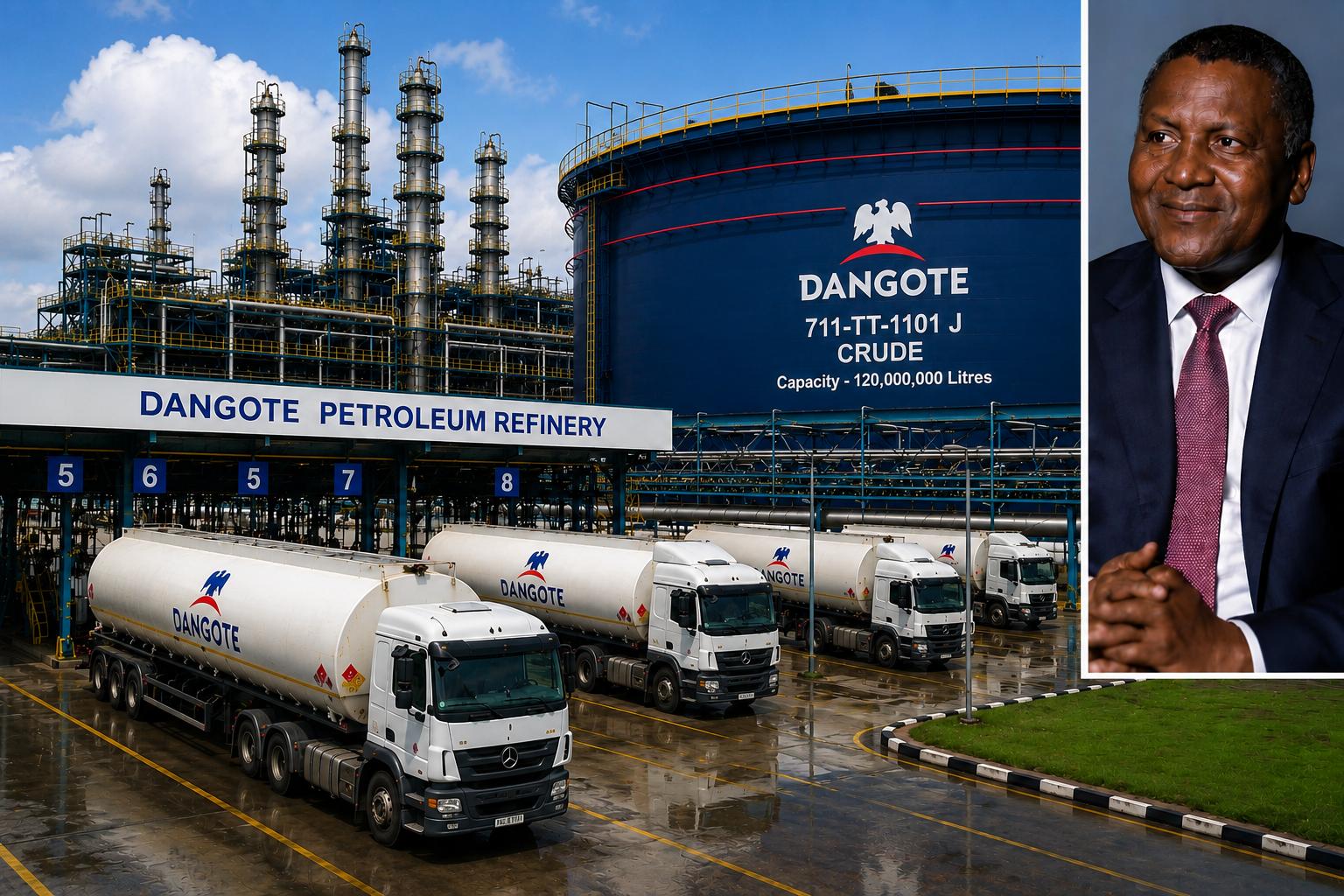
Dangote Petrol Price Rises After Naira Sales Resume
What the Higher Dangote Petrol Price Means for Nigerians
Although the return to naira transactions removes one major hurdle for petroleum marketers, it does not automatically translate into lower prices at filling stations. The refinery’s revised ex-depot price of ₦1,215 per litre means marketers will now calculate their operating costs from a higher base before accounting for transportation, storage, distribution and retail margins.
For motorists, this raises the possibility of another upward adjustment in pump prices, particularly in locations where logistics costs are already high. While some regions may experience slower price increases due to competition among marketers, others could see a quicker pass-through of the higher depot price.
The development also has broader implications for businesses that rely heavily on petrol-powered operations.
These include:
- Commercial transport operators
- Ride-hailing services
- Small and medium-sized enterprises
- Manufacturers using petrol-powered equipment
- Retail businesses dependent on daily product distribution
Any sustained increase in fuel costs often feeds into transport fares, food prices and the overall cost of living.
Although the refinery’s return to naira may reduce the immediate foreign exchange burden on marketers, consumers are likely to judge its success by one key question: Will fuel become more affordable or continue to rise?
How Marketers Could Benefit from the Policy Reversal
For petroleum marketers, the restoration of naira-denominated transactions removes one of the biggest operational challenges created by the refinery’s brief dollar-pricing regime.
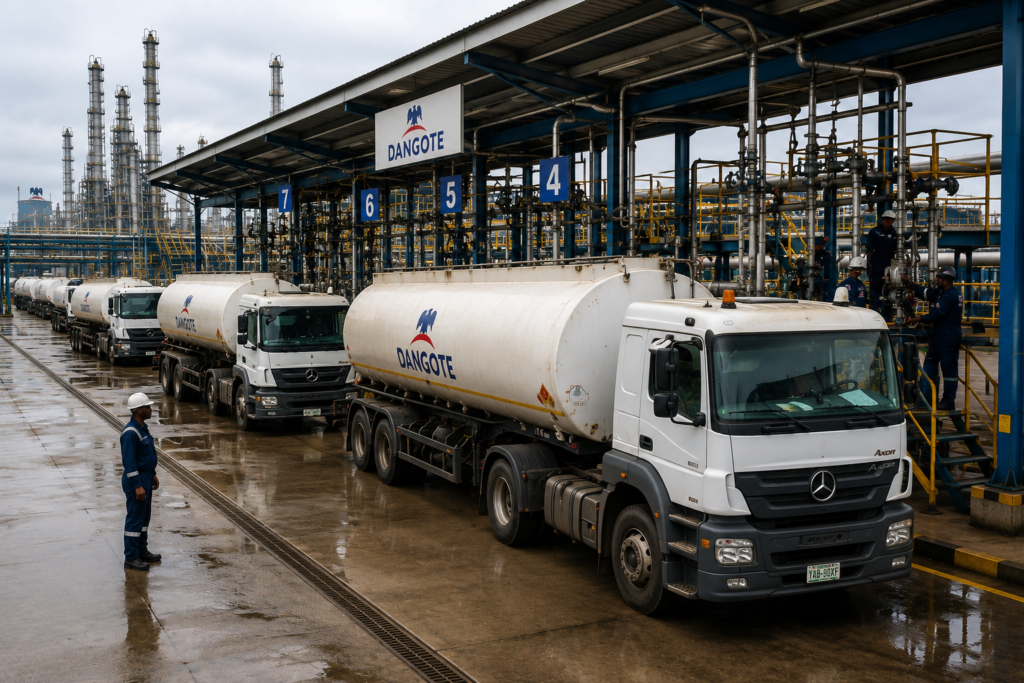
During that period, marketers purchasing directly from the refinery were expected to source foreign currency before lifting products. Many independent operators argued that obtaining sufficient US dollars within the required timeframe was both costly and difficult, leading some to suspend purchases altogether.
By allowing transactions to resume in naira, the refinery has reduced the immediate pressure associated with foreign exchange procurement.
Industry participants expect the change to:
- Simplify payment processes.
- Improve product lifting from the refinery.
- Reduce delays in fuel evacuation.
- Restore confidence among independent marketers.
- Improve product availability across distribution networks.
However, these operational improvements may still be offset by the higher acquisition cost of petrol.
Marketers must now determine whether consumers can absorb higher retail prices without significantly reducing demand.
Industry Response: Relief Mixed with Fresh Concerns
The refinery’s latest announcement has generated mixed reactions across Nigeria’s downstream petroleum industry.
On one hand, the decision to abandon dollar transactions has been viewed as a welcome relief for marketers who feared prolonged pressure on foreign exchange availability.
According to Petroleumprice.ng, marketers have already been informed that gantry operations have resumed under the revised naira pricing structure, confirming that domestic transactions are once again being conducted in the local currency.
On the other hand, industry operators remain concerned about the impact of the higher depot price.
They warn that unless competition among marketers intensifies or international crude oil prices decline, consumers may eventually experience another round of increases at filling stations.
Some analysts also believe the refinery’s pricing decision reflects the continuing challenge of balancing commercial sustainability with public expectations in a fully deregulated downstream petroleum market.
The Bigger Picture: Why the Naira-for-Crude Talks Still Matter
Although the latest announcement centres on petrol pricing, the underlying issue extends beyond today’s price adjustment.
At the heart of the discussion is the Federal Government’s naira-for-crude arrangement, an initiative designed to enable local refiners to purchase crude oil using Nigeria’s domestic currency instead of US dollars.
The refinery previously explained that inadequate crude supplies under that arrangement forced it to source additional crude from international markets using dollars, increasing production costs and contributing to the temporary switch to dollar-denominated sales.
Government officials have since engaged with the refinery while discussions continue over the future of the arrangement.
The outcome of those negotiations could influence:
- Future refinery pricing.
- Stability in domestic fuel supply.
- Foreign exchange demand.
- Refinery operating costs.
- Long-term affordability of petroleum products.
For policymakers, the challenge lies in supporting domestic refining while maintaining a commercially viable environment that encourages continued investment.
Key Numbers at a Glance
| Indicator | Figure |
|---|---|
| Previous depot price | ₦1,075/litre |
| New depot price | ₦1,215/litre |
| Increase | ₦140/litre |
| Percentage increase | 13.02% |
| Previous private depot average | About ₦1,075/litre |
| Peak private depot average | About ₦1,275/litre |
| Estimated daily petrol consumption | About 50 million litres |
| Estimated daily forex demand under dollar sales | About $40 million |
| Estimated annual forex requirement | More than $14 billion |
Figures are based on information contained in the supplied source material.
Why This Matters
Beyond the immediate price adjustment, the refinery’s latest decision highlights the increasingly important role domestic refining plays in Nigeria’s energy security.
A stable refining sector can help reduce dependence on imported petroleum products, shorten supply chains and improve product availability. However, refinery operations remain closely tied to crude oil procurement costs, exchange-rate movements and broader economic conditions.
The return to naira transactions removes one immediate pressure point, but it does not eliminate the commercial realities facing refiners operating in a deregulated market.
Ultimately, Nigerians will measure the success of the latest policy not by the currency used for payment, but by whether it leads to:
- More stable fuel supplies.
- Predictable pricing.
- Reduced pressure on transport costs.
- Improved business confidence.
- Lower inflationary risks over time.
What Happens Next?
Attention now shifts to two key developments.
The first is whether marketers pass the higher depot price on to motorists through increased pump prices.
The second is the outcome of ongoing discussions between the Dangote Group and the Federal Government regarding the naira-for-crude arrangement, which remains central to the refinery’s long-term operating model.
Industry observers say the return to naira sales should help restore normal product evacuation after the week-long disruption. However, they caution that retail prices will continue to reflect broader market conditions, including crude oil costs, exchange-rate movements and competitive pricing among fuel marketers.
For consumers, the coming weeks will provide the clearest indication of whether the latest adjustment represents a temporary market correction or the beginning of another sustained period of higher fuel prices.
Conclusion: A Policy Shift That Eases One Pressure but Creates Another
Dangote Petroleum Refinery’s decision to resume petrol sales in naira marks an important turning point for Nigeria’s downstream petroleum market, ending a brief experiment with dollar-denominated transactions that raised concerns about foreign exchange demand and fuel distribution. For marketers, the return to local currency payments removes a significant operational obstacle and is expected to improve product lifting from the refinery.
However, the simultaneous increase in the depot price to ₦1,215 per litre means the broader question of fuel affordability remains unresolved. While the policy may help restore supply stability, consumers and businesses will be watching closely to see whether marketers absorb part of the additional cost or pass it on through higher pump prices.
The coming weeks will therefore be critical. The direction of petrol prices will depend not only on the refinery’s pricing decisions but also on the outcome of ongoing discussions between the Dangote Group and the Federal Government over the naira-for-crude arrangement, international crude oil prices and market competition among fuel marketers.
For now, the refinery’s latest move offers a measure of stability for the industry, but it also serves as a reminder that in a deregulated petroleum market, pricing decisions are increasingly shaped by commercial realities as much as public expectations.
Frequently Asked Questions (FAQs)
Why did Dangote Refinery return to naira sales?
According to the source material, the refinery resumed naira-denominated transactions after a brief period of dollar pricing that generated concerns among marketers over foreign exchange availability and fuel supply. Government discussions with the refinery also followed complaints from industry stakeholders.
Why did the petrol price increase despite the return to naira?
The refinery increased its ex-depot price while changing the payment currency. Returning to naira affects how marketers pay, whereas the revised depot price reflects the refinery’s current commercial pricing. The source attributes earlier pricing pressures to crude procurement costs and challenges surrounding the naira-for-crude arrangement.
Will motorists pay more for petrol?
The source indicates that industry operators believe the higher depot price could lead to increases in retail pump prices unless market competition or lower international crude oil prices moderate the impact. It does not confirm that pump prices will definitely rise.
What is the new Dangote petrol depot price?
The refinery has fixed its gantry (ex-depot) price for Premium Motor Spirit (PMS) at ₦1,215 per litre, effective 22 July 2026.
Why is the naira-for-crude arrangement important?
The source explains that the refinery previously cited inadequate crude supplies under the Federal Government’s naira-for-crude initiative as a reason for sourcing additional crude in US dollars. The outcome of ongoing discussions on the arrangement may influence future pricing and supply stability.
Key Takeaways
- Dangote Refinery has resumed petrol sales in naira after temporarily adopting dollar-denominated transactions.
- The refinery has increased its ex-depot price to ₦1,215 per litre.
- Marketers no longer need to purchase petrol from the refinery in US dollars.
- Industry operators expect fuel distribution to improve following the return to naira sales.
- The higher depot price may still place upward pressure on retail pump prices.
- Discussions over the Federal Government’s naira-for-crude arrangement remain ongoing.
Recommended Coverage
Nigeria’s Economy: Tinubu Administration Progress or Crisis?
Fuel prices are closely tied to inflation, the value of the naira and economic policy. Explore how the Tinubu administration’s economic reforms are shaping the financial realities facing Nigerians today.
FAAC Allocation Hits ₦2.257 Trillion in April
As fuel prices continue to influence government revenue and public spending, this report explains how rising national allocations could affect infrastructure, state finances and economic development.
Tinubu’s ₦516m Loan Seeks Senate Approval
Nigeria’s fiscal policies and borrowing decisions have direct implications for economic stability, energy investment and the country’s long-term growth strategy. Find out what’s behind the proposed loan and why it matters.
About the Author