Black Sea Shipping Crisis Raises Fresh Concerns Over Global Trade and Food Security
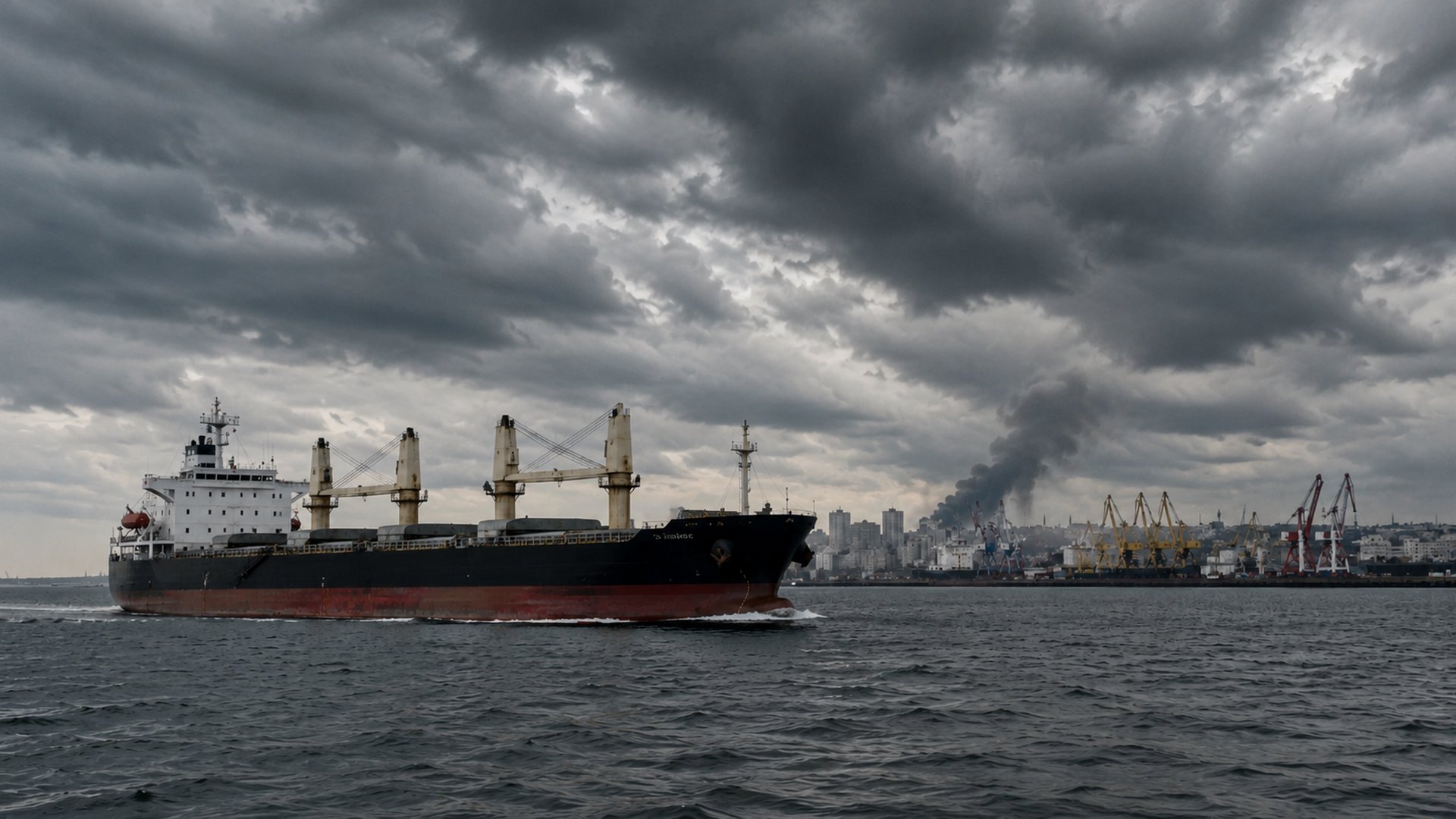
The Black Sea shipping crisis has entered a more dangerous phase as intensifying Russian strikes on Ukraine’s southern ports and Kyiv’s expanding drone campaign against Russian maritime assets disrupt one of the world’s most important trade corridors. The latest escalation has forced some commercial shipowners to temporarily suspend calls at Ukrainian Black Sea ports during the peak agricultural export season, raising concerns about grain supplies, shipping costs and global food security. The developments also signal that the maritime dimension of the Russia-Ukraine war is becoming increasingly significant, with consequences extending well beyond the battlefield.
According to the supplied source material, Ukrainian officials say commercial vessels have halted arrivals at ports used to export agricultural products following intensified attacks on port infrastructure and civilian shipping. President Volodymyr Zelenskyy warned that Russia could escalate strikes further in an effort to disrupt Ukraine’s principal grain export corridor, while Moscow maintains that its operations target infrastructure and vessels it says support Ukraine’s military.
Rather than representing an isolated disruption, the latest incidents illustrate how commercial shipping, grain exports and maritime logistics have become central fronts in a conflict now stretching well beyond traditional military engagements. For countries that depend on Black Sea grain—including many across Africa, the Middle East and Asia—the consequences could become increasingly significant if instability persists.
The Black Sea Has Become More Than a Battlefield
The Black Sea has long served as one of the world’s most strategic maritime corridors, linking Eastern Europe with global markets through the Bosporus and Mediterranean Sea. Before the war, Ukraine ranked among the world’s leading exporters of wheat, maize, sunflower oil and other agricultural products, with much of that trade moving through ports in the Odesa region.
Those export routes remain essential not only to Ukraine’s economy but also to international food supply chains. Agricultural exports continue to generate a substantial share of Ukraine’s foreign exchange earnings, making uninterrupted maritime access a strategic priority for Kyiv. At the same time, Russia also relies heavily on Black Sea ports—including Novorossiysk—for grain, oil and other exports, highlighting the importance of maritime infrastructure for both countries.
This dual dependence means that military operations increasingly target not only armed forces but also the logistics systems that sustain national economies.
Commercial Shipping Finds Itself Caught Between Two Campaigns
The current Black Sea shipping crisis differs from earlier stages of the war because commercial vessels are now facing heightened risks from actions undertaken by both sides.
The supplied reports indicate that Russia has intensified missile and drone strikes on Ukrainian ports such as Odesa and Chornomorsk, damaging logistics infrastructure and commercial vessels. Ukrainian officials also reported that a missile strike on a grain-carrying ship killed ten people, most of them foreign nationals, highlighting the growing dangers facing civilian crews operating in the region.
Meanwhile, Ukraine has expanded long-range drone operations targeting Russian maritime logistics around occupied Crimea and the Sea of Azov. According to Ukrainian military claims contained in the supplied material, these operations have struck numerous maritime targets in recent weeks as Kyiv seeks to disrupt Russian supply routes and reduce Moscow’s operational flexibility. Some of these battlefield claims could not be independently verified, as noted in the source material.
The result is an increasingly complex security environment in which commercial shipping companies must navigate military risks originating from both sides of the conflict.
For more information on international maritime safety standards, visit the International Maritime Organization (IMO).
Why Shipowners Are Becoming More Cautious
For shipping companies, commercial decisions increasingly depend on risk rather than simply market demand.
Every voyage into an active conflict zone carries potential threats ranging from missile attacks and drone strikes to navigation restrictions and sharply rising insurance premiums. Even when governments do not officially close ports, private shipowners may independently determine that the commercial risks outweigh potential profits.
Ukraine’s Agriculture Minister, Taras Vysotskyi, stated that the Ukrainian government itself had not imposed restrictions on shipping. Instead, he explained that shipowners had voluntarily suspended vessel arrivals because of deteriorating security conditions. He also encouraged exporters not to panic, arguing that temporary interruptions would not necessarily affect annual export volumes and pointing to alternative export routes through Danube ports and rail connections that remain available but are not yet fully utilised.
This distinction is significant. Rather than a government-imposed blockade, the disruption reflects market reactions to growing security concerns—an important indicator of how conflict can influence international trade even without formal restrictions.
Maritime Infrastructure Is Becoming a Strategic Target
Modern conflicts increasingly focus on logistics rather than territorial gains alone, and the Black Sea offers a clear example of that evolution.
Ports, warehouses, grain terminals, fuel depots and shipping lanes now play roles almost as strategically important as conventional military installations. Disrupting these facilities can weaken an opponent’s economy, reduce export revenues and complicate military supply chains without requiring direct confrontation on land.
The supplied material notes that Russia says its strikes are directed at infrastructure supporting Ukraine’s military, while Ukrainian officials argue that civilian shipping and export facilities have increasingly come under attack during the country’s critical harvest period. Ukraine has characterised the strikes as deliberate attacks on economic infrastructure and has requested an emergency meeting of the United Nations Security Council to discuss the situation.
Regardless of competing narratives, the practical outcome is the same: commercial maritime operations have become more difficult, more expensive and considerably more dangerous.
Ukraine’s Expanding Drone Strategy
Alongside defending its ports, Ukraine has broadened its offensive strategy at sea.
According to the supplied reports, Ukrainian drone units have increasingly targeted vessels, floating cranes and logistical facilities connected to Russian operations around occupied Crimea. Ukrainian commanders described the campaign as part of a broader effort to undermine Russia’s maritime dominance while reducing its ability to sustain military operations through the peninsula. Reuters, cited within the source material, noted that it could not independently verify several battlefield claims made by Ukrainian forces.
Military analyst Sidharth Kaushal, quoted in the supplied material, described the maritime campaign as a logical continuation of Ukraine’s broader strategy of disrupting Russian logistics after earlier operations targeting roads, bridges and rail networks connecting Crimea with mainland Russia.
From Kyiv’s perspective, weakening maritime supply routes complements earlier efforts to complicate Russia’s logistical operations. From Moscow’s perspective, however, such attacks reinforce the strategic importance of strengthening security around critical ports and maritime infrastructure.
A Conflict Increasingly Measured by Economic Pressure
Nearly four and a half years into the war, the struggle for control of the Black Sea demonstrates that modern warfare is no longer defined solely by territorial advances.
Economic resilience, export capacity, maritime logistics and supply chains have become equally important measures of national strength. Every interrupted cargo shipment, damaged grain terminal or delayed export affects not only wartime finances but also broader international markets that depend on reliable access to agricultural commodities.
As commercial operators reassess the risks of entering conflict zones, governments and international organisations face growing pressure to preserve safe maritime trade routes while preventing further disruption to global food supplies.
Black Sea Shipping Crisis Puts Global Grain Markets Under Pressure
Although the immediate disruption is centred on Ukraine’s southern coastline, the consequences extend far beyond the Black Sea. Ukraine remains one of the world’s major exporters of wheat, maize, sunflower oil and other agricultural products, making uninterrupted maritime trade essential not only for its economy but also for countries that rely heavily on imported food.
The supplied source material states that traders and analysts estimate Ukraine has already lost about one-third of its grain export capacity through Black Sea ports because of repeated attacks on port infrastructure. During the current harvest period, any prolonged reduction in export capacity could create additional uncertainty across international agricultural markets.
For commodity traders, uncertainty often matters almost as much as actual supply shortages. Delays in cargo movements, increased insurance premiums and changing shipping routes can all influence prices before any measurable reduction in exports occurs.
That uncertainty has become one of the defining features of the current Black Sea shipping crisis.
Why Food Security Has Become Part of the Conflict
One of the strongest themes emerging from the supplied reports is that the conflict is no longer viewed solely through a military lens.
Ukraine’s acting Foreign Minister, Andrii Sybiha, described the attacks on port infrastructure during the harvest season as a threat to global food security, arguing that continued strikes could increase food prices across Africa, Asia, the Middle East and Latin America. Ukraine has requested an urgent meeting of the United Nations Security Council to discuss the latest developments.
These statements reflect Kyiv’s broader diplomatic effort to frame maritime attacks as an international concern rather than a purely bilateral military issue.
Russia, however, maintains that it is targeting infrastructure used to support Ukraine’s military operations rather than civilian trade. The competing narratives illustrate how the Black Sea has become not only a theatre of military operations but also a battleground for international opinion.
Regardless of these differing positions, commercial operators continue making business decisions based primarily on security risks rather than political arguments.
Africa Could Feel the Effects Long Before the War Ends
Although the conflict is taking place thousands of kilometres from Africa, many African economies remain closely connected to Black Sea agricultural exports.
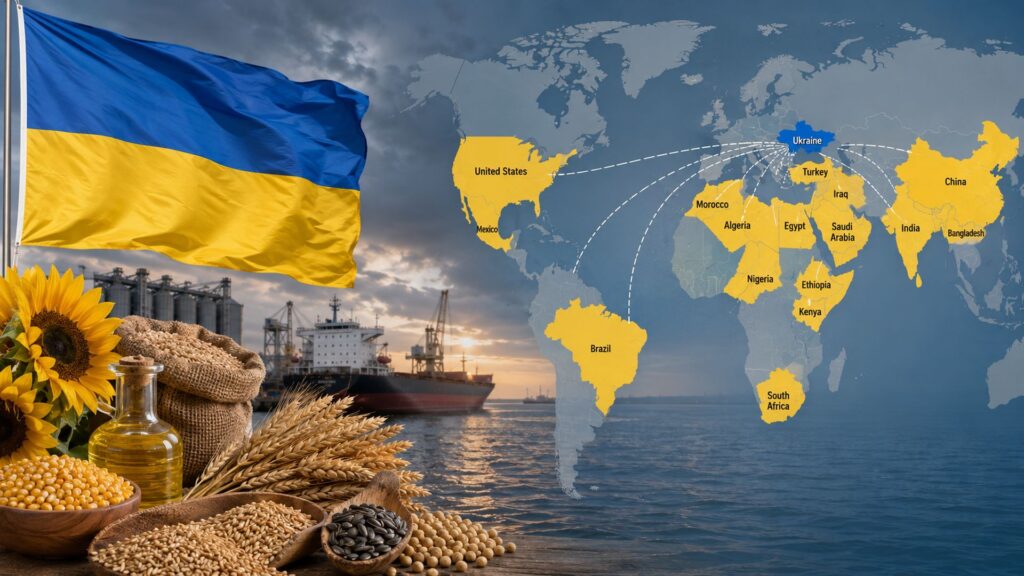
Several countries across North, East and West Africa have historically imported wheat and other food commodities from both Ukraine and Russia. While governments have diversified some supply sources since the war began, the Black Sea remains one of the world’s most important agricultural export regions.
Any prolonged disruption to maritime exports could therefore place additional pressure on import costs, particularly for countries already managing inflation, currency fluctuations or food insecurity.
For consumers, the impact may not appear immediately on supermarket shelves. Instead, higher shipping costs, increased insurance expenses and delayed cargo movements may gradually feed into wholesale prices before affecting household food bills.
Although the supplied source material does not quantify potential price increases, it repeatedly highlights growing concerns that prolonged disruption could affect global food markets.
Why Nigerians Should Pay Attention
For Nigerian readers, developments in the Black Sea may appear geographically distant, yet they have important economic implications.
Nigeria imports significant quantities of wheat used in bread, noodles, pasta and other staple foods. Global grain prices influence the cost of those imports, while higher freight charges can further increase overall import expenses.
The current reports do not suggest that Nigeria faces immediate supply shortages. However, if maritime disruption continues for several months—as Ukraine’s Agriculture Minister warned would have a greater impact than short-term interruptions—the resulting pressure on international grain markets could indirectly affect import-dependent economies, including Nigeria.
For policymakers, food manufacturers and importers, the evolving security situation in the Black Sea therefore remains an issue worth monitoring closely.
Alternative Export Routes Offer Some Relief
Despite the disruption at Black Sea ports, Ukraine says it retains alternative export options.
According to Agriculture Minister Taras Vysotskyi, exporters can continue using Danube River ports and rail-based “dry ports,” both of which remain underutilised. He urged agricultural producers not to rush sales, arguing that temporary interruptions should not automatically be interpreted as a collapse in annual export capacity.
These alternative corridors have become increasingly important since the full-scale war began, reducing—but not eliminating—Ukraine’s dependence on its traditional Black Sea gateways.
Nevertheless, rail transport and inland waterways cannot fully replace the efficiency and capacity of deep-water seaports such as Odesa.
Russia Also Faces Growing Maritime Challenges
The latest developments demonstrate that maritime pressure is affecting both sides of the conflict.
The supplied material notes that Russia has introduced temporary restrictions on vessel movements at Novorossiysk—its largest port by cargo volume—following Ukrainian drone attacks. Reports also indicate that additional security measures have been introduced around other Russian maritime facilities in response to expanding Ukrainian operations.
Ukraine’s military campaign has increasingly targeted shipping routes supporting Russian operations around occupied Crimea and the Sea of Azov. Ukrainian officials argue these attacks are intended to weaken Russian military logistics, while several battlefield claims regarding the scale of the operation could not be independently verified, according to Reuters as cited in the source material.
The result is an increasingly contested maritime environment in which neither side enjoys complete operational freedom.
Shipping Companies Face Difficult Commercial Decisions
For global shipping companies, the Black Sea now represents one of the world’s most complex operational environments.
Commercial operators must weigh multiple factors before accepting cargo bookings, including:
- Security risks to crews and vessels.
- Rising war-risk insurance premiums.
- Potential delays caused by military activity.
- Port accessibility and navigation restrictions.
- The availability of alternative routes.
The supplied reports also note that Maersk has suspended feeder operations through Chornomorsk Fishing Port, redirecting cargo through Romania’s Constanța port while offering customers alternative transport arrangements into Ukraine.
Such decisions illustrate how logistics companies are adapting to an evolving security landscape rather than waiting for formal government restrictions.
International Attention Is Expanding Beyond the Black Sea
The maritime dimension of the conflict is attracting growing international attention beyond Eastern Europe.
According to the supplied material, European governments have expanded enforcement efforts against vessels suspected of belonging to Russia’s so-called “shadow fleet,” authorising additional maritime operations beyond the Black Sea. EU foreign policy chief Kaja Kallas stated that enforcement measures are intended to complement sanctions by increasing pressure on illicit shipping activities.
These developments suggest that maritime security linked to the Russia-Ukraine conflict is becoming an increasingly global issue, extending into other strategic waterways and shipping routes.
The Black Sea Conflict Is Redefining Modern Maritime Warfare
Perhaps the most significant lesson emerging from recent events is that modern warfare increasingly targets the infrastructure supporting national economies.
Rather than focusing exclusively on territorial control, both Russia and Ukraine are devoting considerable effort to disrupting logistics, ports, transport networks and supply chains.
The Black Sea shipping crisis therefore represents more than a temporary interruption to commercial trade. It reflects a broader transformation in the nature of conflict, where economic resilience, maritime access and international supply chains have become critical components of national security.
As governments, shipping companies and commodity markets adapt to these realities, the outcome will shape not only the future of the Russia-Ukraine war but also the resilience of global trade in an increasingly uncertain geopolitical environment.
What This Means
The immediate consequence of the Black Sea shipping crisis is increased uncertainty for commercial shipping companies, exporters and commodity markets. However, the broader implications extend much further.
If attacks on ports, shipping lanes and maritime infrastructure continue, several developments could follow:
- Commercial vessels may continue avoiding high-risk ports.
- War-risk insurance premiums could rise further.
- Shipping companies may increasingly divert cargo through alternative ports.
- Grain exports could become slower and more expensive.
- Food-importing countries may experience renewed pressure on import costs.
- International diplomatic efforts to secure maritime corridors may intensify.
None of these outcomes is guaranteed, but together they illustrate why developments in the Black Sea are closely monitored by governments, financial markets and humanitarian organisations.
What’s Next to Watch
Several developments are likely to shape the next phase of the crisis.
1. United Nations Response
Ukraine has requested an urgent United Nations Security Council meeting following the latest attacks. Any resolutions or diplomatic initiatives could influence future negotiations over maritime security. The supplied source material does not indicate what decisions, if any, will emerge from that meeting.
2. Security Around Odesa
Odesa remains Ukraine’s most important maritime export hub.
Whether commercial shipping resumes at previous levels will depend largely on security conditions around the port and confidence among international shipowners.
3. Russian Maritime Restrictions
Russia has already introduced temporary restrictions around Novorossiysk following Ukrainian drone attacks.
Any expansion of these measures could affect Russian exports alongside Ukrainian shipments, further increasing pressure on regional maritime logistics.
4. Alternative Export Routes
Ukraine says Danube River ports and rail-based export corridors remain available.
The extent to which these routes can compensate for disruptions in the Black Sea will become clearer over the coming months.
5. Global Commodity Markets
International grain markets will continue monitoring:
- Export volumes
- Shipping costs
- Freight insurance
- Wheat prices
- Port operations
- Harvest logistics
Even modest disruptions can influence market sentiment when they involve one of the world’s largest grain-exporting regions.
Key Facts
Black Sea Shipping Crisis at a Glance
- Commercial shipowners have temporarily suspended some arrivals at Ukrainian Black Sea ports because of security concerns.
- Ukraine says intensified Russian strikes have damaged ports and civilian vessels.
- Russia says it targets infrastructure supporting Ukraine’s military.
- Ukraine has expanded drone operations targeting Russian maritime logistics around occupied Crimea.
- Ukraine requested an emergency United Nations Security Council meeting.
- Alternative export routes through Danube ports and rail links remain available.
- Russia has introduced temporary movement restrictions at Novorossiysk following Ukrainian drone attacks.
- Global grain markets are closely monitoring developments because Ukraine remains a major agricultural exporter.
Why This Story Matters Beyond Europe
The Black Sea may appear geographically distant from many readers, but its importance reaches across continents.
From wheat imports in Africa and the Middle East to shipping insurance markets in Europe and commodity exchanges in North America and Asia, disruptions in this maritime corridor can ripple through global supply chains.
The conflict also demonstrates how modern wars increasingly extend beyond traditional battlefields. Ports, cargo terminals, merchant vessels and transport infrastructure have become strategic assets capable of influencing both military operations and economic resilience.
For governments, businesses and consumers alike, the stability of international trade routes has become inseparable from broader questions of global security.
Frequently Asked Questions (FAQ)
1. What is the Black Sea shipping crisis?
The Black Sea shipping crisis refers to the growing disruption of commercial maritime traffic caused by intensified military operations between Russia and Ukraine. Recent attacks on ports, vessels and maritime infrastructure have increased risks for shipping companies and threatened one of the world’s most important grain export routes.
2. Why are commercial ships avoiding Ukraine’s Black Sea ports?
According to Ukrainian officials cited in the supplied source material, some shipowners have temporarily suspended vessel arrivals because of escalating Russian missile and drone attacks on ports and civilian ships. Ukraine says it has not imposed restrictions itself; rather, commercial operators are making risk-based decisions.
3. Why is the Black Sea important to global trade?
The Black Sea is a critical shipping corridor connecting Eastern Europe with global markets. It is a major route for exporting Ukrainian grain, vegetable oil and other agricultural products, as well as Russian grain, oil and metals. Disruptions in the region can affect international supply chains and commodity markets.
4. How could the crisis affect global food security?
Ukraine has warned that continued attacks on ports and grain export infrastructure could reduce agricultural exports and contribute to higher food prices, particularly in countries that rely heavily on imported grain across Africa, Asia and the Middle East.
5. What is Russia’s position on the attacks?
According to the supplied reports, Russia says it is targeting infrastructure and vessels that support Ukraine’s military operations, rather than civilian trade. Ukraine disputes that position, arguing that commercial shipping and export facilities have increasingly come under attack.
6. How is Ukraine responding to the maritime attacks?
Ukraine has expanded its long-range drone campaign against Russian maritime logistics around occupied Crimea and the Sea of Azov. Ukrainian officials say the strategy aims to disrupt Russian supply routes and reduce Moscow’s operational capabilities. Some battlefield claims cited in the source material could not be independently verified.
7. Are there alternative routes for Ukraine’s grain exports?
Yes. Ukraine says exports can continue through Danube River ports and rail-based “dry ports.” However, officials acknowledge that these alternatives cannot fully replace the capacity of major Black Sea ports such as Odesa.
8. Could this crisis affect Nigeria and Africa?
Although the conflict is taking place in Eastern Europe, prolonged disruption to Black Sea grain exports could increase global shipping costs and place upward pressure on food prices. Import-dependent countries, including many in Africa, are therefore closely watching developments. This broader economic implication is an analytical conclusion drawn from the supplied material.
9. What happens next?
Key developments to watch include the outcome of Ukraine’s request for a United Nations Security Council meeting, future security conditions around Odesa and other Black Sea ports, the effectiveness of alternative export routes, and whether commercial shipping resumes normal operations.
10. Why should readers follow this story?
The Black Sea shipping crisis is no longer just a regional conflict story. It has become a global issue affecting maritime trade, grain exports, food security and international supply chains. Decisions made in the coming weeks could influence commodity markets, shipping networks and diplomatic efforts well beyond Europe.
Conclusion
The Black Sea shipping crisis represents far more than a temporary interruption to maritime commerce. It reflects the increasingly complex relationship between warfare, global trade and economic security.
As Russia intensifies strikes on Ukrainian ports and Ukraine expands drone operations against Russian maritime logistics, commercial shipping companies are being forced to make increasingly cautious decisions that could influence agricultural exports and international food markets.
Although Ukraine maintains that alternative export routes remain available and short-term disruptions need not determine annual export performance, the situation remains fluid. Likewise, Russia’s temporary restrictions around key ports illustrate that maritime pressures are affecting both sides of the conflict.
For now, the world’s attention remains fixed on the Black Sea—not only because of its military significance, but because the region has become one of the most important indicators of how regional conflicts can reshape global commerce.
Whether through diplomacy, improved maritime security or changes in shipping patterns, the coming months will determine whether this critical trade corridor stabilises or becomes an even more contested arena in one of the world’s most consequential conflicts.
Recommended Coverage
G7 Summit 2026 Dominated by Iran, Ukraine Talks
The Black Sea crisis is part of a much larger geopolitical struggle. Discover how world leaders are responding to the Ukraine conflict and the growing security challenges shaping global diplomacy.
Putin-Xi Meeting Highlights Growing China-Russia Power Alliance
As Russia deepens strategic ties with China, the global balance of power is shifting. Learn how this partnership could influence the Ukraine war, sanctions and international trade.
Russia-Africa Strategy: Ethiopia Alliance
Russia’s influence extends beyond Europe. Explore how Moscow’s growing engagement in Africa could affect diplomacy, food security and economic partnerships across the continent.
About the Author