
An illustration of how FAAN's proposed V-Pass system could allow passengers to verify their identities using facial recognition instead of physical ID cards.
FAAN V-Pass: How Facial Recognition Will Change Domestic Air Travel in Nigeria
Nigerian air travellers may soon be able to board domestic flights without presenting physical identity cards as the Federal Airports Authority of Nigeria (FAAN) prepares to introduce FAAN V-Pass, a biometric facial recognition system designed to modernise passenger verification, strengthen airport security and improve the overall travel experience. Although the authority has unveiled the technology and outlined how it will work, it has yet to announce when the system will be rolled out nationwide or when passenger enrolment will begin.
The proposed system marks one of the most significant digital changes to Nigeria’s domestic aviation sector in recent years. Rather than being just another airport technology upgrade, V-Pass represents a shift towards biometric identity verification that could fundamentally change how passengers move through airport terminals—from check-in to boarding.
If successfully implemented, the initiative could reduce waiting times, improve operational efficiency, strengthen identity verification and align Nigeria more closely with the growing global adoption of biometric airport technologies.
What Is FAAN V-Pass?
FAAN V-Pass is a biometric identity verification platform that uses facial recognition technology to confirm a passenger’s identity instead of relying on traditional physical identity documents during domestic air travel.
According to information released by FAAN, passengers will complete a one-time enrolment process before using the service. Once registered, the system will recognise their facial biometrics at designated electronic gates installed within domestic airport terminals. This means travellers who have successfully enrolled will no longer need to repeatedly present physical identity cards at various checkpoints during the airport journey.
The authority describes the initiative as part of its broader digital transformation programme aimed at making Nigerian airports more efficient while improving passenger convenience and aviation security.
Why FAAN Is Introducing the New System
Airports around the world face increasing pressure to process growing numbers of passengers without compromising security. Traditional identity verification often involves multiple document checks that can contribute to long queues, delays and operational bottlenecks, particularly during busy travel periods.
FAAN believes biometric technology offers an opportunity to modernise these processes.
By allowing facial recognition to serve as the primary means of identity verification, the authority expects to:
- Reduce passenger processing time.
- Improve airport security.
- Simplify identity verification.
- Minimise human error during manual checks.
- Enhance passenger convenience.
- Improve operational efficiency across domestic terminals.
The initiative also reflects a broader trend within the aviation industry, where digital technologies are increasingly being adopted to streamline airport operations while maintaining robust security standards.
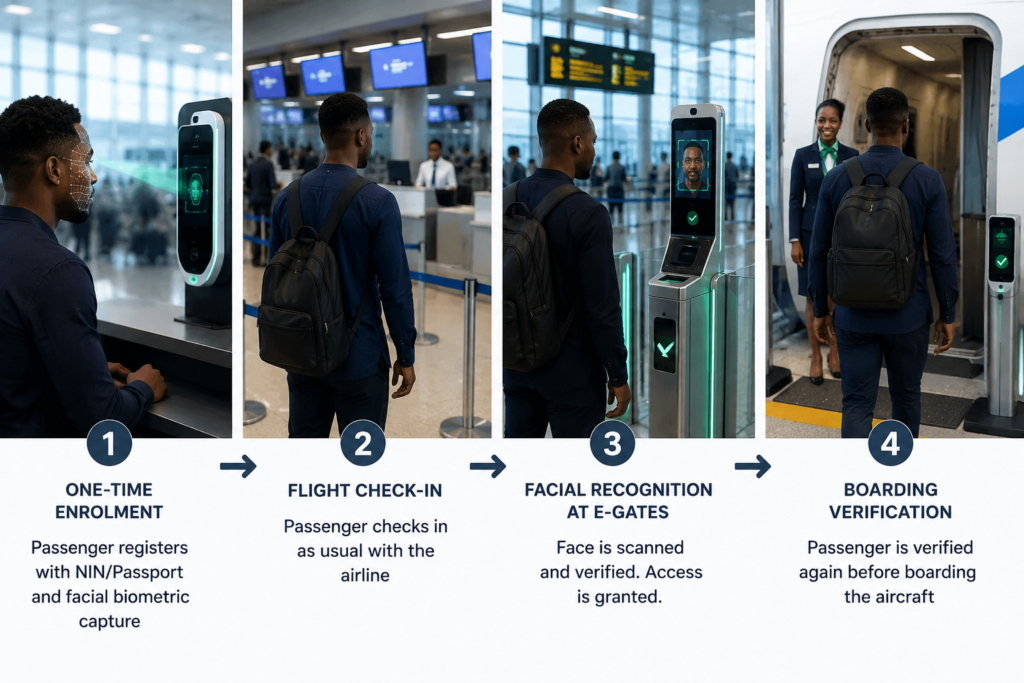
How FAAN V-Pass Will Work
Unlike conventional airport identification procedures, V-Pass is designed to create a digital identity that passengers can use repeatedly after completing a single registration.
Based on details released by FAAN, the process is expected to follow these steps:
Step 1: One-Time Enrolment
Passengers will first register on the V-Pass platform by providing the required identification details and completing facial biometric capture.
According to the supplied source material, Nigerian citizens will register using their National Identification Number (NIN) alongside facial biometric capture, while foreign passengers will enrol using their international passports through Optical Character Recognition (OCR) and biometric authentication.
Step 2: Flight Check-In
Travellers will continue to check in for their flights through the normal airline process.
However, instead of repeatedly producing physical identification documents throughout the airport journey, the biometric profile created during enrolment becomes the primary verification tool.
Step 3: Facial Recognition at E-Gates
Once passengers approach designated electronic gates, specialised cameras will scan their faces and compare the captured image with the biometric data already stored within the V-Pass system.
If the identity is successfully confirmed, access is granted automatically.
Step 4: Boarding Verification
The same biometric verification process can also be used during boarding, helping ensure that the person entering the aircraft is the same individual who completed the initial verification process.
According to FAAN, this dual verification process is intended to improve both security and passenger convenience.
No More Forgotten Identity Cards?
One of the most practical changes highlighted by FAAN is the possibility that enrolled passengers may no longer need to worry about forgetting physical identity cards before travelling.
Speaking on the initiative, FAAN’s Director of Commercial and Business Development, Adebola Joy Agunbiade, explained that once travellers have been successfully registered on the V-Pass platform, their facial biometrics become their means of identification during airport processing.
She said that passengers would no longer need to present physical identity cards during check-in or boarding once they had completed the enrolment process, emphasising that facial recognition would perform the identity verification function.
For many frequent domestic travellers, this could eliminate one of the common frustrations associated with airport travel—discovering that an identity document has been misplaced or forgotten shortly before departure.
What Benefits Could Passengers Experience?
If implemented as described, FAAN V-Pass could offer several practical advantages for domestic travellers.
Faster Passenger Processing
Biometric verification generally reduces the time spent manually checking identification documents.
Instead of airport personnel examining physical documents, facial recognition technology performs identity verification almost instantly after successful enrolment.
Shorter Queues
Long queues remain one of the most common complaints among airport users.
Automated electronic gates could help improve passenger movement through security checkpoints and boarding areas by reducing manual processing requirements.
Improved Convenience
Passengers who have completed registration may no longer need to carry physical identity cards specifically for airport verification, provided they remain enrolled on the platform.
Enhanced Security
Facial recognition technology provides another layer of authentication that may help reduce identity fraud and impersonation within airport environments.
Better Passenger Experience
FAAN says the overall objective is to make domestic travel more seamless by combining convenience with stronger security measures.
Strengthening Airport Security Through Biometrics
Beyond passenger convenience, airport security remains one of the central objectives behind the V-Pass initiative.
The supplied source material indicates that biometric verification will occur before passengers enter restricted airport areas and again before boarding aircraft. This dual-verification approach is intended to reduce the risks associated with unauthorised access, impersonation and identity fraud while giving security agencies greater confidence in passenger authentication.
According to the information released by FAAN, the platform will also support airport management by helping maintain more comprehensive passenger records and improving operational oversight across Nigeria’s domestic airport network.
While these capabilities could strengthen airport management, the authority has not yet provided detailed information regarding implementation timelines, airport-by-airport deployment or future expansion plans.

Data Privacy and Passenger Information
As with any biometric system, questions about privacy and data protection are likely to feature prominently as V-Pass moves closer to implementation. Facial recognition technology relies on sensitive personal information, making public confidence in data security essential to the programme’s success.
FAAN has stated that data privacy was a key consideration during the development of the platform. According to the authority, the V-Pass system complies with the provisions of the Nigeria Data Protection Regulation (NDPR), which establishes standards for the collection, processing and protection of personal data.
The information released by FAAN and its technology partner also indicates that passenger biometric data will not be stored on self-service kiosks or handheld devices used during airport processing. Instead, the platform is expected to operate through a central management system designed to manage identity verification while supporting airport operations.
For many passengers, however, compliance with data protection regulations will be only one part of the conversation. Public understanding of how biometric information is collected, stored, accessed and protected will likely influence the level of confidence in the new system. Recognising this, FAAN has disclosed plans for a nationwide public awareness campaign before the platform becomes operational. According to the source material, the campaign will include television, radio, social media, airport announcements and airline advisories to explain how V-Pass works and what travellers should expect during enrolment.
How Airlines and Airport Operations Could Benefit
While passengers stand to gain from shorter queues and faster identity verification, the V-Pass platform is also expected to enhance airport operations behind the scenes.
According to FAAN, the system will enable domestic airlines to securely access operational information such as passenger manifests, flight schedules and boarding statistics through a digital platform. At the same time, FAAN’s Central Management System is expected to support passenger movement tracking, operational analytics and future integration with other airport technologies.
If implemented effectively, these capabilities could help airports allocate resources more efficiently, monitor passenger flow and improve decision-making during peak travel periods. Automated identity verification may also reduce dependence on manual document inspections, allowing airport personnel to focus on security oversight and customer assistance.
Part of Nigeria’s Aviation Digital Transformation
The introduction of FAAN V-Pass reflects a broader effort to modernise Nigeria’s aviation infrastructure through digital technology.
Across the aviation industry, airports are increasingly investing in automation, biometric identity verification and self-service technologies to improve efficiency while maintaining high security standards. Electronic boarding gates, digital check-in systems and biometric verification are becoming more common in many parts of the world as passenger numbers continue to grow.
FAAN has described V-Pass as part of its ongoing digital transformation agenda, aimed at improving passenger facilitation and strengthening aviation security across domestic airports. Rather than replacing existing aviation security procedures entirely, the platform is expected to complement them by introducing an additional layer of secure digital identity verification.
How Other Countries Use Biometric Airport Technology
Biometric airport systems are no longer experimental in several parts of the world.
Airports in countries including the United States, the United Kingdom, Singapore and the United Arab Emirates have introduced various forms of facial recognition technology to streamline passenger processing and strengthen identity verification. Depending on the airport, biometric systems may be used for check-in, immigration, security screening or boarding.
Although implementation models differ from country to country, the overall objective is similar: reduce waiting times while maintaining robust aviation security.
FAAN’s planned rollout places Nigeria within this wider international trend towards digital identity verification in air travel. However, the long-term success of the initiative will depend not only on the technology itself but also on public acceptance, operational reliability and consistent implementation.
Questions That Still Remain
Although FAAN has outlined how V-Pass is expected to operate, several important details have yet to be announced.
Among the questions still awaiting clarification are:
- Which domestic airports will receive the technology first?
- When will passenger enrolment officially begin?
- What is the nationwide implementation timetable?
- Will participation be voluntary during the initial rollout?
- When could the technology be extended to international terminals, if at all?
The authority has not yet provided answers to these questions in its public announcements.
What This Means for Nigerian Travellers
For frequent domestic travellers, V-Pass could represent a significant improvement in convenience. The possibility of moving through airport checkpoints without repeatedly presenting physical identity documents may help reduce travel stress while improving passenger flow.
For airport operators, the platform offers opportunities to strengthen operational efficiency, improve passenger analytics and enhance security oversight through modern biometric verification.
However, successful implementation will depend on more than advanced technology. Public education, reliable infrastructure, transparent data governance and consistent system performance will all play important roles in determining whether travellers embrace the new approach.
Looking Ahead
The unveiling of FAAN V-Pass signals Nigeria’s ambition to modernise domestic air travel through digital innovation. By combining facial recognition technology with automated access control, the initiative has the potential to reshape passenger verification while supporting broader improvements in airport operations.
Even so, the project remains in its early stages. While FAAN has explained the concept and its intended benefits, rollout dates and implementation schedules have not yet been announced. Until those details become available, passengers can only prepare for a future in which biometric identity verification may become a routine part of domestic air travel.
As Nigeria’s aviation sector continues its digital transformation, the success of V-Pass will ultimately be measured not only by technological capability but also by passenger trust, operational efficiency and the authority’s ability to deliver a secure, reliable and user-friendly travel experience.
Frequently Asked Questions (FAQ)
What is FAAN V-Pass?
FAAN V-Pass is a biometric facial recognition system designed to verify the identities of passengers travelling through Nigeria’s domestic airports without relying on physical identity documents.
Will passengers still need physical identity cards?
According to FAAN, passengers who have completed the one-time enrolment process will be identified through facial recognition at designated airport e-gates, reducing the need to present physical IDs during check-in and boarding.
When will V-Pass begin operation?
FAAN has not announced an official rollout date or the commencement of passenger enrolment.
Is passenger biometric information protected?
FAAN says the platform complies with the Nigeria Data Protection Regulation (NDPR) and has been developed with data privacy as a priority.
Will every Nigerian airport use the system?
The authority has announced the initiative for domestic airports but has not yet released a detailed implementation schedule showing which airports will receive the technology first.
Conclusion
FAAN V-Pass has the potential to become one of the most important technological upgrades in Nigeria’s domestic aviation sector in recent years. By replacing repeated physical identity checks with biometric facial recognition, the initiative promises faster passenger processing, stronger airport security and a more seamless travel experience.
While many operational details remain to be announced, the project reflects Nigeria’s broader commitment to digital transformation in aviation. If implemented successfully—with strong data protection, effective public engagement and reliable infrastructure—V-Pass could redefine how millions of passengers experience domestic air travel in the years ahead.
Recommended Coverage
China Boosts AI and Tech Innovation With New Government Plan
Explore how governments are embracing AI and digital innovation to modernise public services and critical infrastructure worldwide.
https://dsgheraldnews.com/tinubu-security-strategy-targets-terror-with-ai/
See how artificial intelligence is becoming central to Nigeria’s evolving security strategy beyond airports and aviation.
Big Tech Investigation Sparks Nigeria Media Fight
Find out why the rapid expansion of digital technology is raising new questions about regulation, innovation and public trust in Nigeria.
About the Author