Middle East War Sends New Shock Through Global Energy Markets
The expanding conflict is disrupting energy markets and shipping routes, raising concerns over inflation, energy security and wider economic consequences.
The expanding Middle East conflict is increasingly moving beyond the battlefield and into the global economy, with disruption to energy infrastructure and international shipping routes creating renewed concerns about oil supplies, transportation costs and inflation.
The latest escalation has placed particular attention on two of the world’s most strategically important maritime chokepoints — the Strait of Hormuz and Bab el-Mandeb. Both are important routes for the movement of energy and other commodities, meaning prolonged disruption could transmit the effects of the conflict well beyond the Middle East.
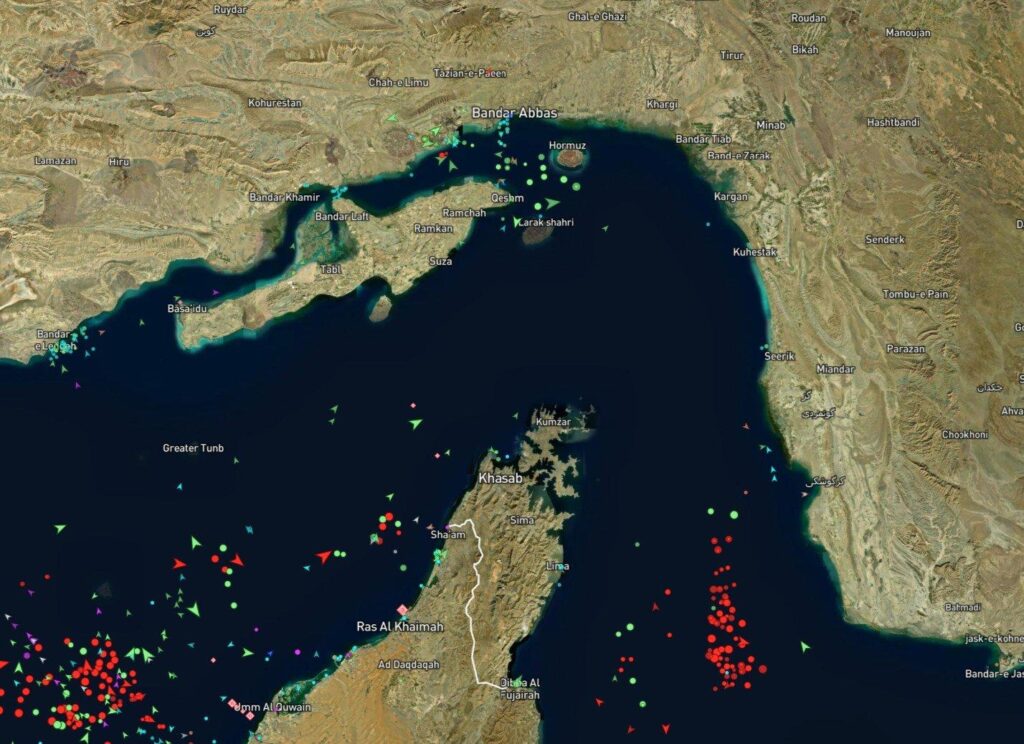
Recent reporting shows that vessel traffic through the Strait of Hormuz has fallen sharply. Reuters reported on September 21 that only 17 commodity vessels crossed the strait over the weekend, compared with 37 the previous week and a pre-war average of about 125 vessels a day. Traffic through Bab el-Mandeb has also declined.
The developments have increased the sensitivity of global energy markets to every new military or shipping-related incident.
Why the Strait of Hormuz Matters
The Strait of Hormuz is one of the world’s most important energy chokepoints.
Its strategic importance comes from geography. The narrow waterway connects the Persian Gulf with the Gulf of Oman and the wider Arabian Sea, making it a major route for oil and other energy shipments leaving the Gulf.
When traffic through such a route is disrupted, the immediate problem is not necessarily that all oil production stops.
The problem can instead be that the available transportation routes become more difficult, more expensive or more dangerous.
That distinction is important.
Global energy markets depend not only on how much oil is produced, but also on whether producers can move that oil reliably to buyers.
Recent developments illustrate that vulnerability.
Reuters reported that Saudi Arabia has been increasing exports through the Strait of Hormuz after attacks affected its East-West pipeline and disrupted alternative export arrangements. The report said 22 tankers carrying 42 million barrels left through the strait during the week beginning September 13.
That means the same route that is under strategic pressure can simultaneously become more important as an alternative pathway for energy exports.
Bab el-Mandeb Adds Another Layer of Risk
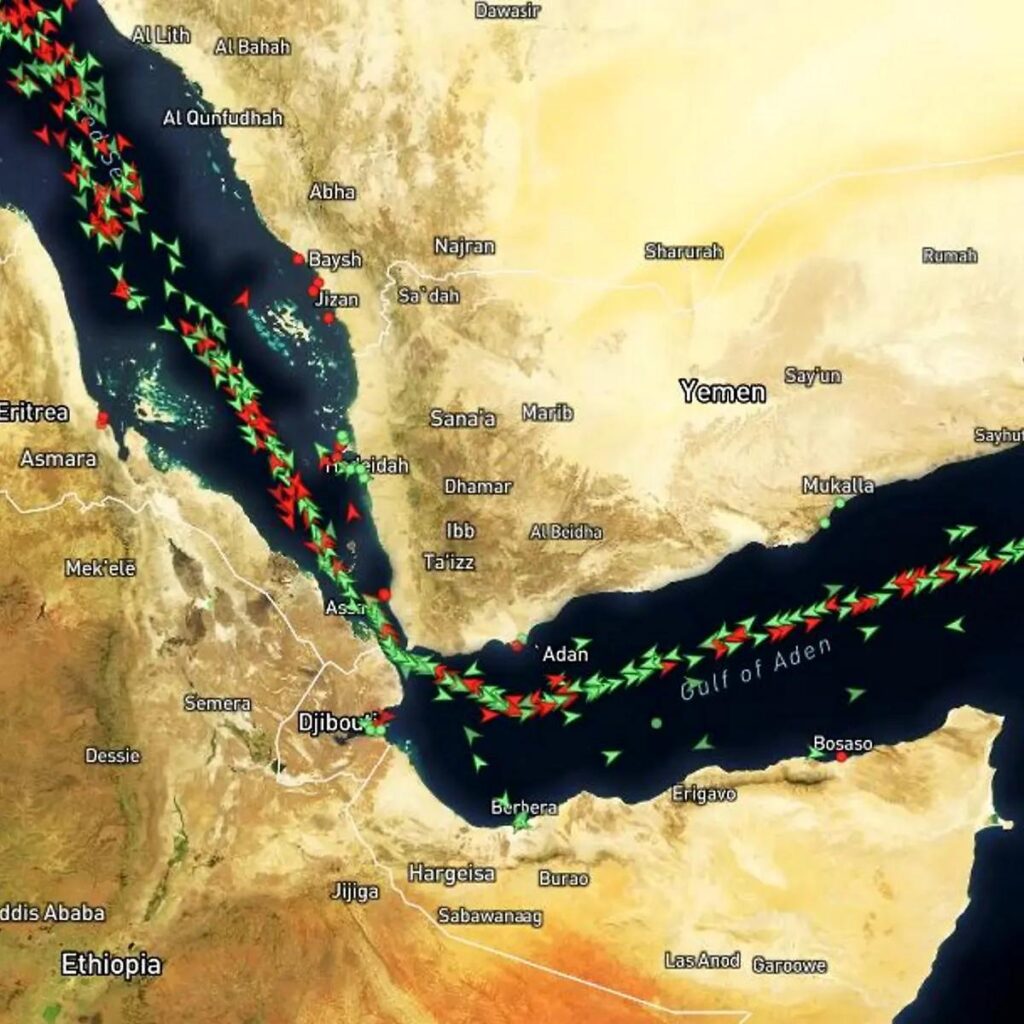
The second major chokepoint is Bab el-Mandeb, connecting the Red Sea with the Gulf of Aden.
Its importance extends beyond Middle Eastern oil.
The route is part of the maritime corridor linking Europe and Asia through the Red Sea and Suez Canal. Disruption there can force vessels to take longer routes, increasing voyage times, fuel consumption, insurance costs and logistical uncertainty.
Recent reporting has described an increasingly difficult environment around the route as Houthi forces expand their control and Saudi Arabia responds militarily.
The consequences therefore extend beyond the countries directly involved in the fighting.
A shipping company facing greater security risks has to consider whether a particular route remains commercially viable.
A longer alternative route can mean higher costs.
Those costs can eventually enter supply chains.
And supply-chain costs can ultimately reach businesses and consumers.
Saudi Oil Shipments Come Under Pressure
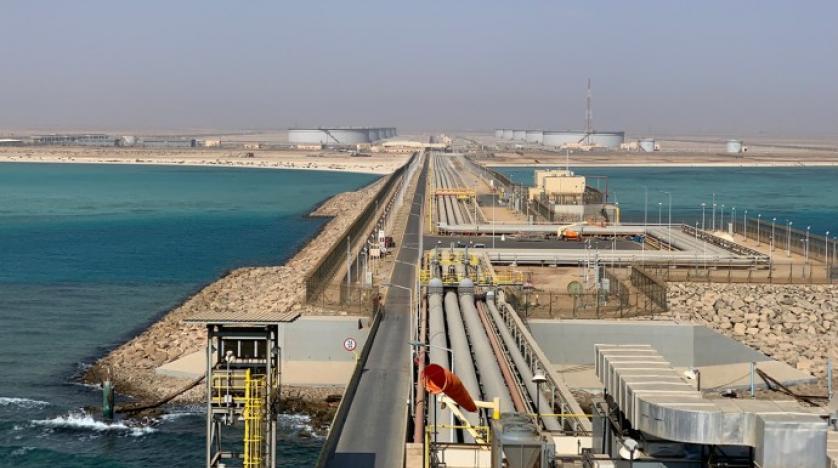
Saudi Arabia has faced a separate disruption to its oil-export infrastructure.
Reuters reported on September 15 that Saudi Arabia had informed European customers that some late-September crude cargoes would be cancelled following an attack on its East-West pipeline. The disruption also affected the Yanbu export route.
The significance of the development lies in the interaction between infrastructure and maritime security.
Saudi Arabia has historically possessed multiple routes and infrastructure systems designed to provide flexibility in moving crude to international markets.
But when one route is disrupted while another is exposed to heightened security risks, the margin for manoeuvre becomes narrower.
That can increase the market’s sensitivity to additional disruptions.
It can also increase the premium that buyers are willing to pay for immediately available crude.
This is one reason oil prices can rise sharply even before there is a complete physical shortage.
Markets price risk as well as current supply.
Oil Prices Reflect the Risk
The supplied source reported a sharp rise in North Sea Forties crude, with prices reaching $136.75 a barrel, while some physical cargoes in Europe moved above $130.
The broader recent market picture has been volatile.
Reuters reported earlier in September that Brent prices approached $108 after Saudi cargo disruptions, while physical crude prices in Europe reached about $122.
By September 21, however, Brent crude had fallen to around $100.50, according to Associated Press reporting, as concerns over disrupted oil flows eased somewhat and markets watched for possible diplomatic progress.
The movement demonstrates an important characteristic of oil markets during geopolitical crises.
Prices do not necessarily move in one direction.
They can rise sharply when traders anticipate shortages, then fall when shipping conditions improve, diplomatic signals emerge or fears of a prolonged disruption decline.
That volatility itself can become economically significant.
Businesses that rely heavily on fuel cannot always immediately adjust their operations when prices change.
Airlines, shipping companies, manufacturers, logistics operators and agricultural producers can all be exposed to energy costs.

From Oil to Inflation
The broader concern is what happens after the initial oil-price movement.
Energy is an input into almost every modern economy.
Fuel is required to transport goods.
Electricity and gas are important to manufacturing.
Petroleum products are used directly and indirectly throughout agriculture, construction and industry.
When energy costs rise, businesses can absorb some of the increase.
They can also pass some of it to consumers.
That is how an external energy shock can become an inflation problem.
The effect is particularly important when inflation is already elevated.
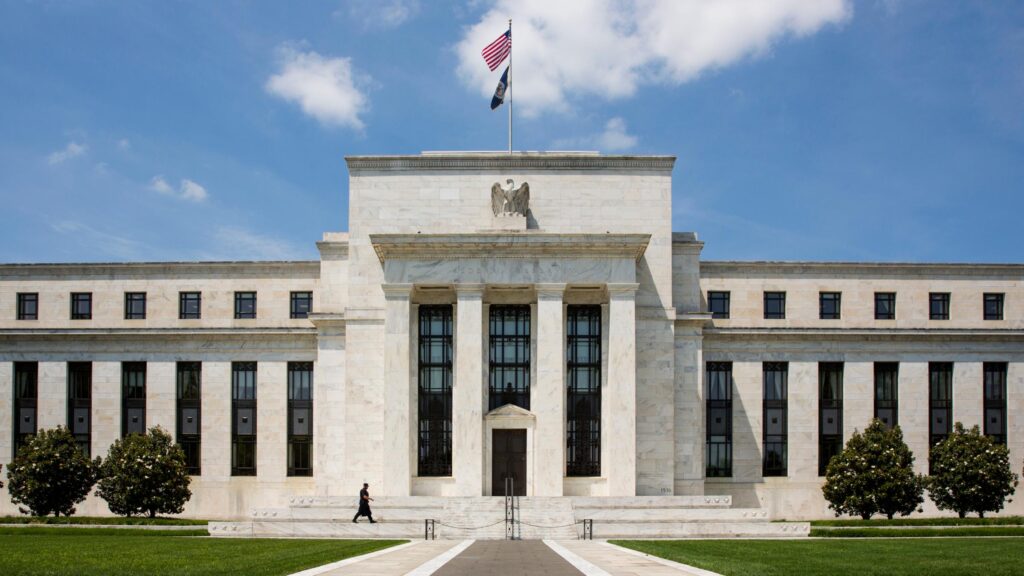
The United States Federal Reserve raised the federal funds target range by 25 basis points on September 16, taking it to 3.75%–4%. The Federal Open Market Committee said inflation remained elevated and that uncertainty remained high, including because of geopolitical developments.
The Fed’s decision cannot be attributed solely to the Middle East conflict.
Its monetary-policy statement cited a broader range of domestic and international economic considerations.
But the policy environment illustrates why a new energy shock matters.
Central banks are forced to balance inflation control against economic growth.
A prolonged rise in energy prices can make that balance more difficult.
The Economic Transmission Mechanism
The key issue is not simply whether oil becomes expensive.
It is how the increase travels through the economy.
The first channel is transportation.
Higher fuel costs can increase the cost of moving people and goods.
The second is manufacturing.
Factories using energy-intensive production processes may face higher operating costs.
The third is agriculture.
Farm machinery, irrigation, transportation, fertiliser production and food distribution all have energy components.
The fourth is household consumption.
When fuel and transport costs rise, households can have less money available for other goods and services.
The fifth is monetary policy.
If an energy shock pushes inflation higher, central banks may have less room to reduce interest rates or may have to maintain tighter monetary conditions for longer.
The effects therefore move through several stages.
Conflict → shipping disruption → energy risk → higher costs → inflation pressure → monetary-policy challenge.
The length and intensity of each stage will determine the ultimate economic impact.
Why Shipping Is as Important as Oil Production
It is easy to frame an energy crisis entirely in terms of barrels produced.
But modern energy markets also depend on shipping.
Oil that cannot reach a refinery or buyer on time is not economically equivalent to oil that can move freely.
This is why the fall in vessel traffic through Hormuz is significant.
Reuters reported that traffic had dropped far below normal levels, while some tankers continued to move through the route under increasingly difficult conditions.
Shipping disruptions can also produce secondary consequences.
Insurance premiums may rise.
Vessels may require additional security measures.
Ships may wait longer before entering exposed waters.
Companies may reroute cargo.
All of these factors add costs.
Those costs do not necessarily appear immediately at the petrol station.
They can first appear in freight rates, contracts and commodity markets before eventually affecting consumers.
The Conflict Is Also a Saudi Security Problem
The developments are particularly important for Saudi Arabia because the country occupies a central position in global energy markets.
Recent attacks have demonstrated the vulnerability of both infrastructure and export routes.
Associated Press reported that Saudi Arabia confirmed an attempted Houthi ballistic-missile attack on Riyadh on September 19, while the Houthis also claimed attacks involving infrastructure in several Saudi locations. Some of those claims were not independently verified.
The security situation therefore affects more than the battlefield.
It affects the ability of one of the world’s major oil exporters to maintain reliable export flows.
That creates a direct connection between regional security and global energy security.
Why Consumers Outside the Middle East Should Pay Attention
For consumers in countries far from the conflict, the most important question is often practical:
What does this mean for everyday life?
The answer depends heavily on duration.
A short-lived disruption may produce a temporary increase in oil prices that eventually reverses.
A prolonged disruption could be different.
If shipping remains constrained for an extended period, transport costs can remain elevated.
If crude supplies become materially restricted, refinery input costs can rise.
If fuel prices remain high, businesses may adjust prices.
And if inflation becomes more persistent, central banks may maintain tighter monetary policies.
The impact will also vary between countries.
Oil-importing economies are particularly exposed to higher international energy prices.
Oil-producing countries may receive higher export revenues, although they can still face higher domestic fuel and transportation costs.
Countries dependent on imported manufactured goods may also experience indirect pressure through freight and production costs.
Africa Is Not Isolated From the Shock
African economies are particularly relevant to the global energy story because many depend on imported refined petroleum products even when they are themselves oil producers.
That creates a complicated situation.
A country can export crude oil while simultaneously importing refined fuel.
Such economies can therefore be exposed to international shipping and refining conditions even when domestic crude production remains stable.
Higher global oil prices can also affect currencies, government budgets, transportation costs and inflation.
For African households, the consequences can appear through petrol prices, public transportation, food distribution and the cost of imported goods.
The effect is not automatic or uniform.
It depends on each country’s fuel-subsidy system, exchange rate, refining capacity, import dependence and fiscal position.
But a prolonged global energy shock would create another external pressure for many African economies.
The Bigger Global Economic Question
The Middle East conflict is therefore becoming an example of how geopolitical instability can move through the architecture of the global economy.
The first layer is military.
The second is maritime.
The third is energy.
The fourth is inflation.
The fifth is monetary policy.
The sixth is household and business activity.
Each layer is connected to the one before it.
That does not mean the world is necessarily heading toward a global economic crisis.
The available evidence does not establish that outcome.
Indeed, oil prices have already shown that markets can move rapidly in both directions as expectations change.
The more immediate issue is uncertainty.
Businesses cannot easily plan when shipping routes are changing.
Energy buyers cannot easily forecast prices when military developments can affect supply expectations within hours.
Governments must prepare for scenarios ranging from temporary disruption to prolonged supply pressure.
Central banks must assess whether energy-driven inflation is temporary or persistent.
What Happens Next?
Three developments will be especially important.
The first is the security of the Strait of Hormuz.
If shipping through the strait continues to fall sharply, the pressure on global energy markets could increase.
The second is Bab el-Mandeb.
Continued disruption there could increase shipping costs and complicate trade between Europe, Asia, Africa and the Middle East.
The third is Saudi Arabia’s ability to maintain reliable oil exports.
Any further damage to export infrastructure or sustained disruption to shipping could increase pressure on international crude markets.
Diplomacy will also matter.
A reduction in military tensions could quickly lower some of the risk premium embedded in oil prices.
Conversely, a wider regional confrontation could produce another sharp repricing.
A Regional War With Global Economic Consequences
The central significance of the Middle East conflict is therefore no longer confined to the question of who controls territory or what happens on the battlefield.
The conflict is increasingly testing the resilience of the global economic system.
Oil markets are responding to perceived supply risks.
Shipping companies are dealing with dangerous or disrupted routes.
Governments are preparing for higher energy costs.
Businesses are watching fuel and transportation expenses.
Central banks are monitoring inflation.
And consumers remain exposed to whatever portion of those costs eventually reaches the wider economy.
The world economy remains deeply interconnected.
That means a conflict thousands of kilometres away can affect the price of moving goods, operating factories, transporting food and powering homes.
The immediate question is whether the disruption around the region’s critical energy and shipping routes remains contained.
The longer-term question is more consequential: how much economic pressure can the global system absorb before a regional conflict becomes a broader inflation and growth problem?
For now, the evidence points to heightened risk rather than a settled global economic crisis.
But as long as major energy routes remain under pressure, the Middle East war will continue to be watched not only by military and diplomatic leaders, but also by oil traders, shipping companies, central banks, businesses and households around the world.
Trump Iran Threat Sparks Heightened Security Measures
US Iran Ceasefire Collapses, Raising New Fears of Gulf War
US Iran Peace Deal Under Pressure as Weekend Clashes Threaten Ceasefire
About the Author