INTRODUCTION
Five developments across different parts of the world have raised important questions about political accountability, international diplomacy, humanitarian protection and regional security.
In Indonesia, Vice-President Gibran Rakabuming Raka submitted his resignation amid a continuing controversy over his educational qualifications and two separate court proceedings. In the Russia–Ukraine war, US-mediated negotiations in Abu Dhabi produced an agreement in principle on a prisoner exchange, although the central disagreements between the countries remained unresolved.
In Gaza, a strike on Nasser Hospital in Khan Younis brought renewed attention to the protection of medical facilities during armed conflict. Meanwhile, the Group of Seven expressed concern about China’s maritime activity around Taiwan, raising questions about freedom of navigation and regional security. In Saudi Arabia, authorities reported the interception of two ballistic missiles, with debris falling at two locations in the wider Mecca region.
These developments are different in their immediate circumstances, but each demonstrates why major international stories require more than a headline or an official statement.
A resignation does not automatically explain its motive. A diplomatic commitment does not mean a peace agreement has been achieved. A military explanation does not settle the legal assessment of an attack. A warning about a potential blockade does not establish that one is under way. And the location where missile debris falls does not necessarily reveal the intended target.
This global affairs analysis examines what was reported, what the available evidence establishes, why the developments matter and what remains unresolved. The objective is not to manufacture connections between unrelated events, but to understand the institutional decisions, competing explanations and consequences behind five major international stories.
STORY 1: INDONESIA — THE CONSTITUTIONAL QUESTIONS BEHIND THE VICE-PRESIDENT’S RESIGNATION
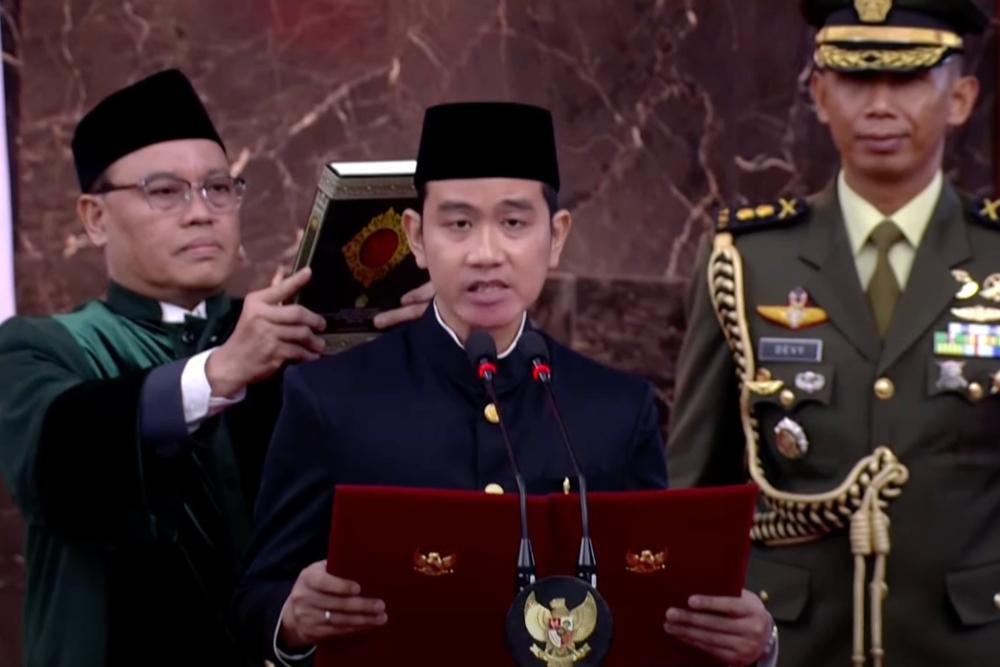
Indonesia’s political landscape entered a new period of uncertainty on 12 November 2026 after Vice-President Gibran Rakabuming Raka formally submitted his resignation.
President Prabowo Subianto confirmed that Gibran had visited him at the Merdeka Palace at 10:15 a.m. local time and submitted a letter declaring his intention to leave office. Gibran subsequently met the leadership of the People’s Consultative Assembly (MPR) and submitted the resignation letter there as well.
The development attracted attention because it involved one of the country’s highest constitutional offices and followed a continuing controversy over Gibran’s educational qualifications.
According to MPR Speaker Ahmad Muzani, the resignation letter did not provide a specific reason for the decision. Its language referred to the interests of the nation and the smooth functioning of government.
The Indonesian government’s official statement confirmed President Prabowo’s receipt of the letter, while ANTARA News reported Gibran’s subsequent meeting with MPR leaders.
That distinction is significant. Although the resignation followed a period of legal and political pressure, the available information does not establish that the educational qualification controversy was the specific reason for his decision.
Two court proceedings with different legal questions
The controversy goes back to an educational equivalency certificate issued in 2019. The document became the subject of legal challenges concerning the qualification framework under which Gibran contested and assumed the vice-presidency.
The first major judicial development came from Indonesia’s Constitutional Court on 6 October 2026.
In Decision No. 01/PHPU.PRES-XXIV/2026, the Court’s published account said the proceedings had not produced convincing evidence of the relevant overseas qualification.
However, the Court dismissed the petition because the petitioners lacked legal standing. It also said it could not disqualify Gibran through that particular proceeding.
The distinction matters because a court’s discussion of evidence must not be confused with the legal order it ultimately makes.
The Constitutional Court’s decision should not be represented as an order removing Gibran from office. Nor should it be simplified into an automatic finding that disqualified him.
A separate development came from the Supreme Court.
On 30 October, the Supreme Court decided administrative case No. 742 K/TUN/2026. Reports reproducing the decision said the Court ordered the 2019 equivalency certificate declared void and withdrawn.
However, the full original Supreme Court judgment had not been directly examined in the research informing this programme. Its precise reasoning, scope and legal consequences therefore require further examination.
The two proceedings cannot be treated as interchangeable. One concerned a petition before the Constitutional Court; the other concerned the administrative validity of an educational equivalency certificate.
The wider constitutional question is how a decision affecting an administrative qualification document relates to an election that has already taken place and an elected official who has already assumed office.
That question cannot be answered simply by placing the two court decisions side by side.
Political pressure and the question of succession
The legal controversy also unfolded against a background of parliamentary pressure. Indonesian media reported that lawmakers were seeking to pursue an accountability or impeachment process.
According to The Jakarta Post’s reporting, more than 100 lawmakers had signed a petition challenging Gibran’s continued eligibility before his resignation was formally submitted.
The resignation introduces another institutional question: what formal steps are required to recognise the departure, establish its effective date and address the resulting vacancy?
Indonesia’s constitutional succession arrangements provide for the president to nominate two candidates, with the MPR responsible for selecting a replacement within the applicable constitutional timeframe.
For Indonesian voters, the significance extends beyond the immediate political future of one office-holder. The controversy raises questions about the credibility of candidate qualifications, the authority of administrative institutions and the capacity of the legal system to resolve eligibility disputes.
The next developments to watch include formal action by the presidency and the MPR, publication and examination of the full Supreme Court judgment, and clarification of the constitutional succession process.
The central issue is not simply who leaves office or who may replace him. It is whether the institutions responsible for elections, certification and constitutional accountability operate through clear and enforceable rules.
STORY 2: RUSSIA–UKRAINE — WHAT HAVE THE LATEST PEACE NEGOTIATIONS ACTUALLY ACHIEVED?
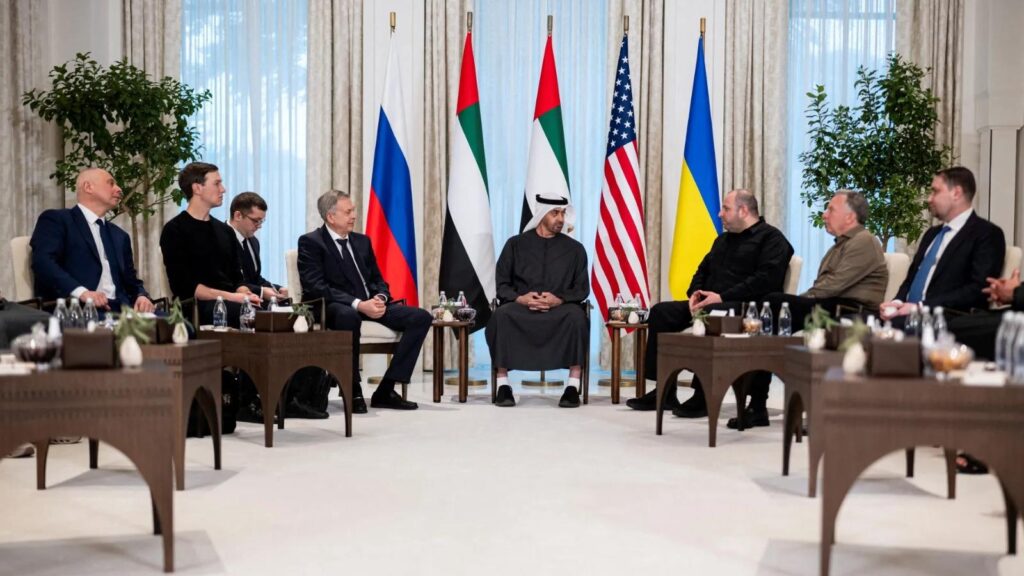
While Indonesia faced questions about constitutional accountability, diplomatic efforts to address the Russia–Ukraine war continued through US-mediated negotiations in Abu Dhabi on 10 and 11 November 2026.
The discussions produced an agreement in principle on a major prisoner exchange. This represented a potentially important humanitarian development, but it did not establish that a comprehensive peace agreement had been reached or that the war was approaching an immediate end.
Ukraine’s chief negotiator, Rustem Umerov, described a prisoner exchange as the main outcome of the discussions. He also acknowledged that significant differences remained between the parties.
Russia’s chief negotiator, Vladimir Medinsky, separately announced a large-scale exchange.
According to Reuters’ report on the Abu Dhabi negotiations, the two countries agreed in principle to exchange prisoners of war, with the final numbers still to be determined.
That distinction is important. An agreement in principle is not the same as an exchange that has actually taken place.
The difference between a humanitarian commitment and a peace settlement
Prisoner exchanges can have substantial consequences for people directly affected by the war. If implemented, an exchange could bring relief to prisoners of war and their families.
But the humanitarian significance of such an arrangement should not be confused with the political and security questions that have kept the conflict unresolved.
The wider negotiations still face difficult issues, including territorial control, security guarantees, the monitoring of any ceasefire, enforcement arrangements, reconstruction and the role of European governments in a future settlement.
These are not minor technical details. They concern the conditions that would determine whether an agreement could be implemented and sustained.
A ceasefire, for example, would require more than an announcement that fighting should stop. The parties would need clarity about the terms, the areas covered, how violations would be identified and what mechanisms would respond to breaches.
Security guarantees would also require agreement about the commitments being made, who would provide them and how they would operate if fighting resumed.
Territorial control remains another central disagreement. The available material does not establish that Russia and Ukraine have accepted a common framework for resolving their competing positions.
Washington’s continuing diplomatic involvement
The diplomatic effort continued with US envoys Steve Witkoff and Jared Kushner preparing to travel to Moscow for discussions with Russian President Vladimir Putin.
Further engagement with Ukrainian President Volodymyr Zelenskyy was also reported as planned. Its outcome must not be presented as completed without confirmation.
The involvement of US representatives demonstrates the continuing diplomatic effort to facilitate negotiations. However, the presence of envoys at meetings does not, by itself, establish that the parties have reached agreement on the central issues.
The G7’s November declaration also reaffirmed support for Ukraine’s sovereignty and territorial integrity. This provides relevant diplomatic context, but it does not establish that Russia and Ukraine have accepted a shared settlement framework.
The next test is implementation
The clearest reported outcome from Abu Dhabi was the commitment in principle to a prisoner exchange. The practical test is whether the arrangement is implemented, what its final terms are and whether subsequent negotiations produce concrete proposals on territory and security.
The number of diplomatic meetings held is not the most reliable measure of progress. What matters is whether the parties make verifiable commitments and carry them out.
For now, the reported prisoner-exchange commitment represents limited diplomatic progress with potential humanitarian value. The larger political disagreements remain unresolved.
STORY 3: GAZA — WHO PROTECTS HOSPITALS DURING WAR?
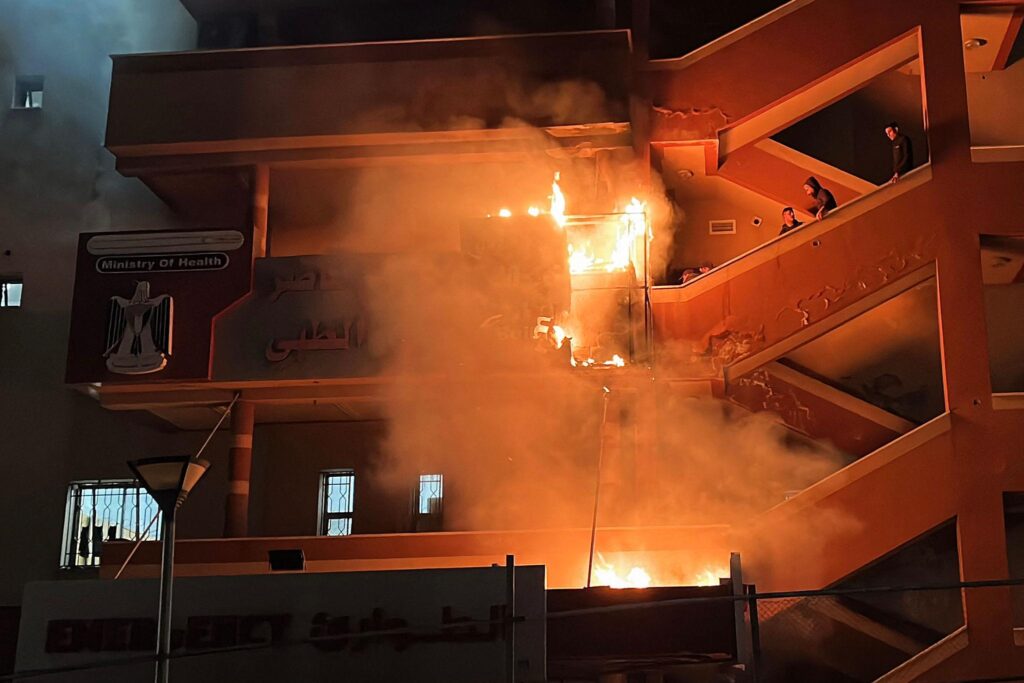
A strike on Nasser Hospital in Khan Younis early on 12 November brought the protection of medical facilities during armed conflict into renewed focus.
According to contemporaneous reporting by international news organisations, the strike hit the hospital’s surgical wing and reportedly killed six people.
The casualty figures, however, require careful examination because the reported number of wounded differed between news organisations.
Reuters reported six deaths and 20 people wounded, citing Gaza Civil Defence. The Associated Press reported six deaths and at least 28 wounded, citing Gaza’s Health Ministry.
Both accounts reported six deaths. Their injury figures differ, and the discrepancy had not been reconciled in the material available for this programme.
The Associated Press identified surgeon Rizk Abu Shaira among those killed.
Reporting also described damage to parts of the hospital, including the surgical wing and other areas. A British volunteer surgeon, Goher Rahbour, described the blast and smoke and said he had worked alongside Abu Shaira hours earlier.
Reuters video from inside the hospital showed debris, damaged ceilings and people being moved through affected corridors. Such footage provides contemporaneous visual material, but original files, metadata and precise location verification would still be required before it could be treated as forensic evidence establishing the full circumstances of the strike.
Israel’s military explanation and the evidence question
Israel said it had targeted a Hamas commander and other militants. The Israeli military also alleged that Hamas had a presence in the hospital complex.
This is the military’s stated explanation.
The Associated Press account reported that Israel’s military said it targeted a Hamas commander and militants, while noting that the military had not provided supporting evidence in the statement reviewed.
The research informing this programme had not obtained the targeting records, intelligence material or independently verified evidence needed to assess the claim.
This distinction is essential. An official military explanation is a relevant position that must be reported, but it does not independently establish every factual circumstance of an attack.
The question of whether military activity occurred within the hospital complex, what the intended target was and what information was available to those responsible for the strike requires evidence beyond competing public statements.
What international law says about hospital protection
International humanitarian law provides special protection for medical facilities during armed conflict.
Article 19 of the Fourth Geneva Convention addresses the protection of civilian hospitals. It provides for circumstances in which that protection may cease if a hospital is used, outside its humanitarian duties, to commit acts harmful to the enemy. It also includes requirements concerning warnings.
But Article 19 is not the entirety of the legal assessment.
An examination of a particular attack must also consider the applicable rules of distinction, proportionality and precautions. The relevant facts, the nature of any alleged military activity, warnings given and the circumstances of the attack all matter.
An allegation that a hospital was being used for military purposes does not, by itself, settle whether an attack was lawful.
Equally, the fact that a hospital was struck does not, without a full examination of the circumstances, provide every answer required for a legal verdict.
This is why the Nasser Hospital incident requires further evidence and specialist legal examination.
Investigators would need to establish the exact rooms and areas affected, the circumstances of the strike, whether a warning was issued and whether military activity was taking place at the facility.
They would also need to examine the Israeli military’s supporting evidence, hospital records, casualty documentation, witness accounts and original photographs or video.
The difference between the Reuters and Associated Press injury figures also needs reconciliation through the relevant medical and civil authorities.
The consequences extend beyond the casualty figures
A hospital is not simply a building. It is part of the system that provides emergency treatment, surgery, recovery and continuing medical care.
Damage to its facilities can affect patients who were not involved in the incident, as well as medical personnel and families who depend on its services.
The Associated Press reported that the strike damaged several floors and disrupted surgical, radiology and laboratory services, further limiting care at one of Gaza’s few functioning hospitals.
The incident also illustrates the difficulty of assessing attacks on medical facilities when the available information includes conflicting casualty figures, competing explanations and incomplete operational evidence.
The evidence available to the programme supports that Nasser Hospital’s surgical wing was struck and that six people were reported killed. The injury figures differ: 20 in the Reuters account citing Civil Defence, and at least 28 in the Associated Press account citing the Health Ministry.
Israel provided a military explanation involving an alleged Hamas target, but the supporting operational evidence had not been independently examined in the supplied research.
The legal assessment remains open. It would therefore be premature to declare the incident lawful, unlawful or a war crime.
STORY 4: TAIWAN — IS CHINA’S MARITIME ACTIVITY CHANGING INDO-PACIFIC SECURITY?
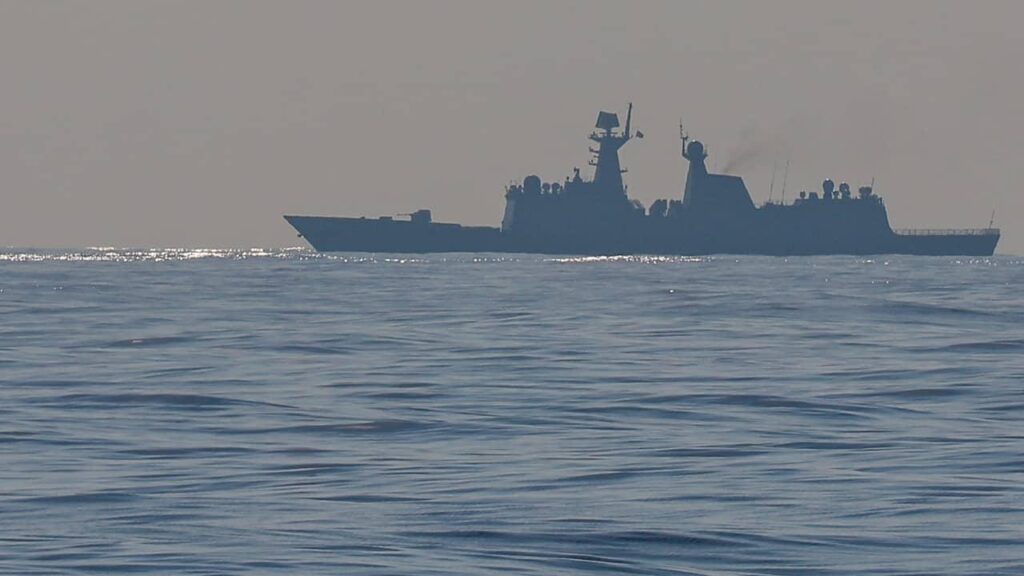
The Group of Seven expressed concern about China’s maritime activity in waters east of Taiwan following a meeting of foreign ministers in Paris on 9 and 10 November.
The joint declaration was issued on 11 November and raised concerns about regional stability, freedom of navigation and the safety of international shipping. It also opposed unilateral attempts to change the status quo through force, coercion or threats.
The official G7 joint declaration published by France’s Ministry for Europe and Foreign Affairs specifically referred to China’s increasingly assertive activities in waters east of Taiwan.
The declaration is important because it records the diplomatic position of the G7. It reflects concern among major industrialised democracies about developments in a strategically important region.
However, a diplomatic declaration is not the same as an independent record of vessel movements.
Taiwan welcomes the statement; China rejects it
Taiwan welcomed the G7 declaration and said it would strengthen its self-defence and resilience.
China rejected the G7 position, describing it as interference in its internal affairs and an example of bloc politics.
The competing responses reflect the wider political dispute surrounding Taiwan.
Beijing claims Taiwan as part of China and has not renounced the use of force to achieve unification. Taiwan’s government rejects Beijing’s sovereignty claim.
The G7 declaration expresses concern about coercion and regional stability, but it does not resolve the underlying political dispute.
What does the evidence say about a possible blockade?
Taiwan has said Chinese coast guard patrols have been regular since June 2026 and has raised concerns that the activity could represent preparation for a potential blockade.
That assessment deserves attention, particularly because maritime activity around Taiwan has implications for regional security. But it must be identified as Taiwan’s security interpretation, not presented as an independently established operational finding.
To determine whether maritime activity has materially changed, researchers would need a consistent record of vessel movements over time.
This would require examining the number and type of vessels, their locations, the duration and frequency of patrols, and whether coast guard, naval and civilian assets are operating in a coordinated pattern. Researchers would also need to compare the reported activity with earlier periods.
There is a significant difference between routine patrols, coercive maritime activity, military exercises and an actual blockade. Each has different operational, legal and strategic implications.
A blockade is not established simply because patrols are taking place or because a government warns that preparations may be under way.
The research informing this edition did not contain an independent maritime dataset establishing a sustained change in patrol patterns or demonstrating that a blockade was under way.
Why the issue matters beyond Taiwan
The wider concern involves more than the immediate relationship between Beijing and Taipei.
An escalation could create uncertainty for international shipping operators and businesses dependent on regional trade and technology supply chains.
The safety of commercial shipping and freedom of navigation are therefore important considerations in the G7’s position.
However, the material informing this programme does not establish a specific shipping disruption or quantify the potential economic impact of the reported activity.
Such conclusions would require shipping records, trade data and clearly defined analysis of possible scenarios.
The next developments to watch include further official statements, independently verified vessel-tracking records, maritime safety notices and any documented interference with commercial shipping.
The distinction remains important: diplomatic concern is documented, but an active blockade has not been established by the evidence available to this edition.
STORY 5: SAUDI ARABIA — WHAT DOES THE MISSILE INCIDENT REVEAL ABOUT REGIONAL SECURITY?
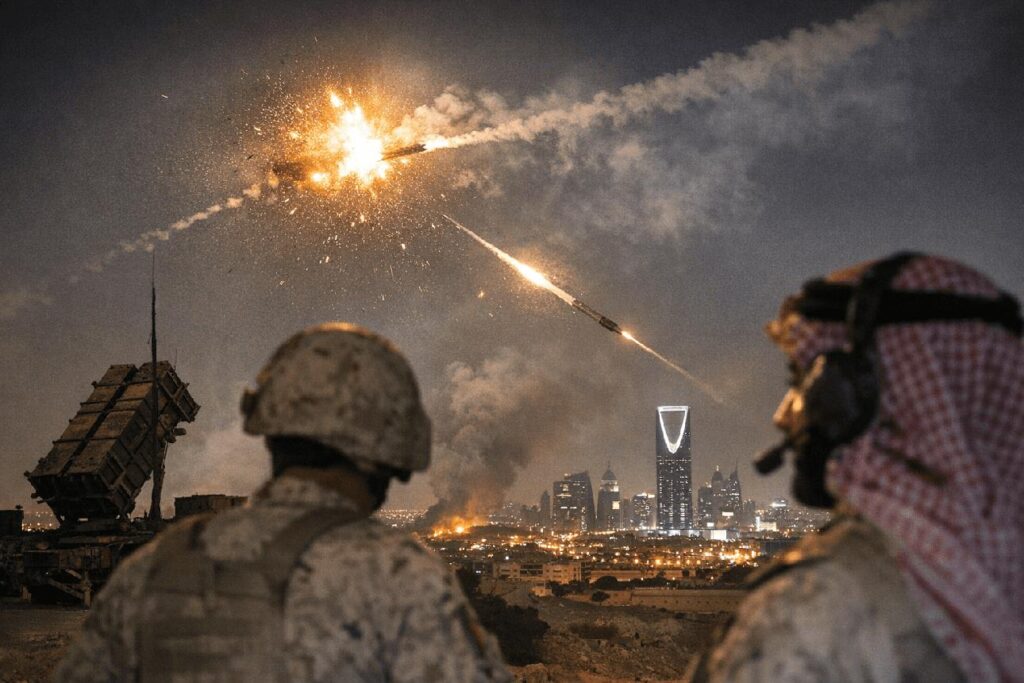
Saudi authorities reported that two ballistic missiles were intercepted and destroyed on 11 November, with debris falling at locations in the Mecca region.
Saudi state television identified the locations as Sabuhah village, approximately 35 kilometres northeast of the Grand Mosque, and Wadi al-Maghmas, approximately 21 kilometres east.
Reuters reported the interception and the locations where debris was found.
The geographical distinction is important. The reported debris locations were in the wider Mecca region. The available information did not establish that Mecca itself was the intended target.
The interception report identifies the reported missiles and debris locations, but it does not independently establish the missiles’ launch origin, intended targets, trajectories or full interception circumstances.
Two missiles and a separate report of nine threats
Saudi Gazette separately reported a wider sequence of nine intercepted threats across several regions: two ballistic missiles, three cruise missiles and four drones, citing coalition spokesperson Turki al-Maliki.
That wider account must be kept separate from the two ballistic missiles associated with debris in the Mecca region.
They are not interchangeable figures, and the nine-threat report should not be presented as though all nine threats were part of the Mecca-region incident.
The distinction is important for accurate security reporting. Different reports can cover different geographical areas, time periods and categories of threats. Combining their figures without explaining their scope can create a misleading impression of what happened at a particular location.
The wider Yemen conflict
The reported interceptions form part of a wider regional security environment shaped by the Yemen conflict.
The Houthis seized Yemen’s capital, Sanaa, in 2014. A Saudi-led intervention began in 2015 in support of Yemen’s internationally recognised government. A United Nations-brokered truce in 2022 largely halted hostilities, but did not produce a comprehensive political settlement.
The Red Sea and Bab el-Mandeb remain strategically important maritime routes. Their significance is relevant to the wider regional security picture, particularly where military tensions could affect commercial movement.
However, the strategic importance of these shipping routes does not prove that the particular missile incident disrupted commercial traffic.
The research informing the programme did not establish any direct shipping disruption resulting from this incident. Such a conclusion would require maritime notices, vessel records or statements from shipping operators.
Reuters also reported that the Houthis had previously denied targeting Mecca or Medina, saying their operations focused on military and strategic targets elsewhere in Saudi Arabia.
The supplied research did not confirm a specific Houthi response to the latest incident. It would therefore be inappropriate to assign responsibility for the reported missiles as an independently established fact.
What an interception report can establish
An interception report can provide information about what authorities say their air-defence systems engaged. It does not automatically establish where a missile was launched, what its intended target was or whether debris locations reveal the intended destination.
Those questions require additional technical evidence, including debris analysis, trajectory information and independently verifiable interception records.
The next developments to watch include further Saudi statements, any specific Houthi response, technical analysis of debris and independently verifiable records of the reported interceptions.
The central point is straightforward: an interception report does not establish that a missile reached its intended destination. Likewise, the place where debris falls does not necessarily identify the intended target.
CONCLUSION
The five developments examined in this global affairs analysis reveal different challenges facing political institutions, diplomatic efforts and regional security systems.
Indonesia’s vice-presidential resignation has raised questions about judicial decisions, candidate qualifications and constitutional succession, but the specific reason for the resignation and its formal legal consequences remain to be clarified.
The Russia–Ukraine negotiations produced a reported prisoner-exchange commitment, yet the central disagreements over territory and security remain unresolved.
In Gaza, the strike on Nasser Hospital has renewed attention to the special protection afforded to medical facilities. The reported casualties require further reconciliation, while the military circumstances and legal assessment remain open to examination.
Around Taiwan, the G7’s diplomatic concern is documented, but the available evidence does not independently establish an active blockade. In Saudi Arabia, authorities reported missile interceptions in the Mecca region, but the intended targets and launch origin have not been independently established.
These developments demonstrate why international reporting must distinguish between official statements, attributed claims, documented decisions and conclusions supported by independent evidence.
Understanding global affairs requires more than knowing what happened. It requires examining what can be established, what remains disputed and which consequences are supported by the available information.
The facts matter. So do the limits of the evidence.
That is the purpose of BEYOND THE HEADLINES: to look beyond immediate announcements, examine the context and help readers understand the bigger story.
About the Author