INTRODUCTION
Africa news 11 November 2026 brings five major developments into focus, highlighting the political, security and humanitarian challenges shaping the continent. From Nigeria’s growing displacement crisis and renewed tensions in Ethiopia’s Tigray region to a deadly attack in Kenya, rising migration across the Atlantic and preparations for The Gambia’s December presidential election, these stories reveal important developments affecting African governments and communities.
In northern Nigeria, insecurity forced tens of thousands of people to seek refuge across international borders, placing additional pressure on neighbouring Niger and Benin. In Ethiopia, unresolved political and territorial disputes continued to undermine the prospects of lasting peace in Tigray, where displaced families remain uncertain about returning home.
Kenya recorded a deadly ambush on a road construction team near its border with Somalia, while Spain’s Canary Islands experienced a sharp increase in migrant arrivals along the Atlantic route. In The Gambia, opposition leader Ousainou Darboe submitted his presidential nomination papers ahead of the country’s December election, bringing the electoral process into focus.
Although these developments have different causes, they raise important questions about civilian protection, humanitarian responsibility, peacebuilding, migration management and the credibility of public institutions across Africa.
Here are five major stories shaping the continent.
STORY 1: NIGERIA’S INSECURITY DRIVES 66,000 PEOPLE ACROSS BORDERS AS HUMANITARIAN NEEDS GROW
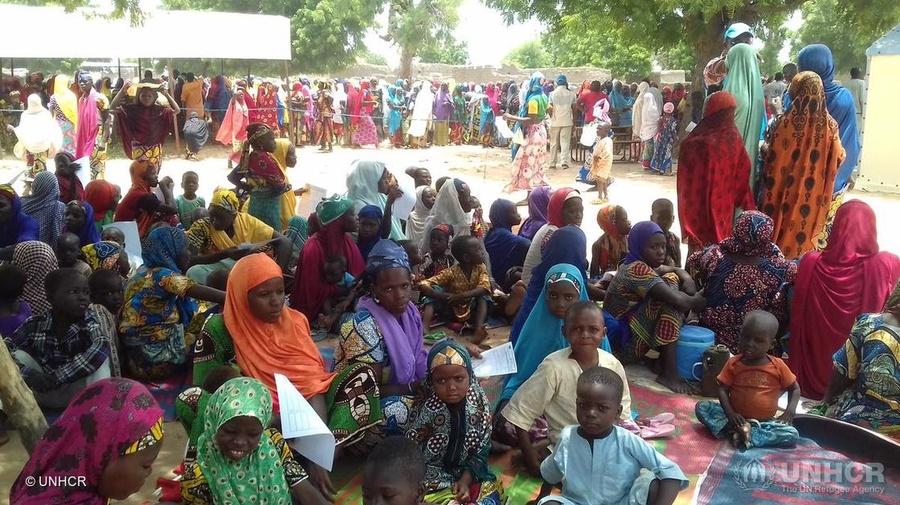
Nigeria’s continuing insecurity is generating humanitarian consequences beyond its national borders, with approximately 66,000 Nigerians reportedly fleeing into neighbouring Niger and Benin since the beginning of 2026.
The United Nations High Commissioner for Refugees (UNHCR) raised the alarm during a press briefing in Geneva on 10 November, warning of a deepening humanitarian and protection emergency affecting Nigeria and its neighbours. In its 10 November briefing note on Nigerians fleeing violence, the agency described the growing humanitarian needs in the region.
According to the agency, escalating violence in northern Nigeria has forced families to leave their communities in search of safety. The movement has placed additional pressure on neighbouring countries that are already dealing with displacement, insecurity and limited humanitarian resources.
The situation is particularly concerning in Niger’s Diffa region, where approximately 23,000 people were reported to have arrived since the beginning of the year. More than two-thirds of these arrivals are children, with some reportedly suffering from severe malnutrition.
The humanitarian challenges extend beyond food shortages. During the UN Geneva press briefing, UNHCR described difficulties accessing clean water, with displaced families sometimes having to walk long distances to obtain supplies. The quantities available were also reported to be inadequate for household needs.
The figures illustrate how insecurity within one country can create wider responsibilities for neighbouring governments. Niger and Benin must respond to the needs of people arriving across their borders while also supporting their existing populations and displaced communities.
Understanding the displacement figures
The overall estimate of approximately 66,000 people requires an important qualification.
During the Geneva briefing, UNHCR referred to Nigerians who had fled into Niger and Benin. However, when asked about the country-by-country breakdown, a representative indicated that between 62,000 and 64,000 people had reached Niger, while approximately 4,000 were estimated to have arrived in Benin. The representative also indicated that the Benin figure required further checking.
The overall estimate therefore needs to be distinguished from the less certain breakdown between the two receiving countries.
The briefing also highlighted the funding required to strengthen the humanitarian response. UNHCR said it needed approximately $11.4 million to support its response across Niger, Nigeria and Benin. It separately identified $2 million for immediate needs within that broader funding requirement.
These figures represent different funding scopes. The $2 million is not the total regional funding requirement.
The agency’s warning reinforces the importance of protecting displaced people, particularly children and other vulnerable groups, while addressing the conditions that are forcing families to leave their homes.
The displacement crisis also raises difficult questions for Nigeria’s security response. While neighbouring countries and international humanitarian organisations can provide assistance, long-term progress depends on improving civilian protection and addressing the insecurity driving families across borders.
The central issue is no longer only how many people have fled Nigeria. It is whether the countries involved can provide adequate protection, shelter, food, healthcare and clean water while working towards conditions that allow displaced families to live safely.
What happens next?
The scale of the reported movement places pressure on Nigeria, Niger and Benin to strengthen cooperation. Humanitarian agencies will also need resources to respond to immediate needs while monitoring new arrivals and protection risks.
For Nigeria, the continuing displacement is another indication that insecurity has consequences extending beyond its territory.
STORY 2: TIGRAY’S UNFINISHED PEACE — RENEWED FIGHTING DEEPENS DISPLACEMENT AND HUMANITARIAN PRESSURES
In Ethiopia’s northern Tigray region, the formal end of the country’s two-year war has not translated into a lasting return to normal life for thousands of displaced families.
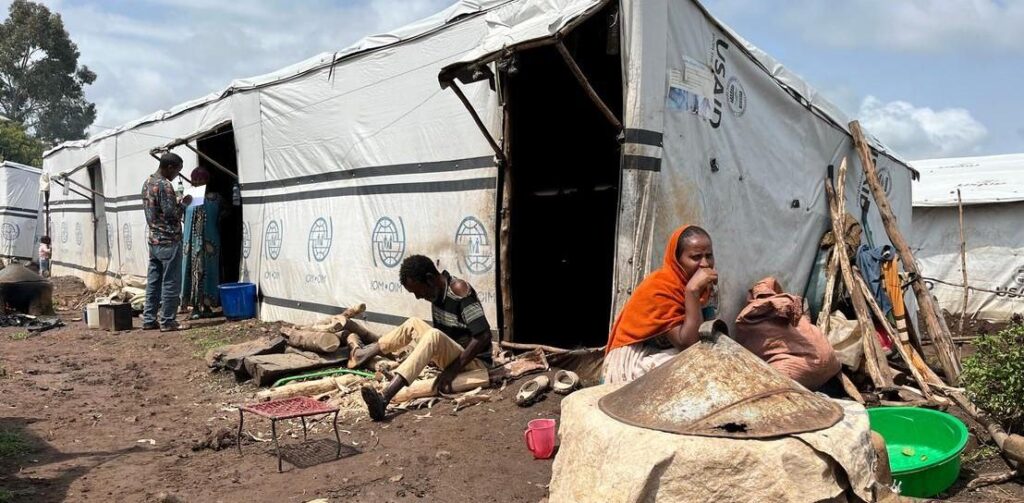
An Al Jazeera report published on 11 November described families from Western Tigray still living in former school buildings converted into shelters in Abi Adi.
Classrooms that were once used for education have become living spaces for families who fled their communities during the conflict. The report described shortages of food, clean water and essential medicines, with children growing up away from their former homes and communities.
The situation reflects unresolved problems following the conflict between Ethiopia’s federal government and the Tigray People’s Liberation Front (TPLF).
The war began in November 2020. In November 2022, both sides signed the Pretoria agreement, formally bringing large-scale fighting to an end.
However, the agreement did not resolve every political and territorial dispute. Western Tigray remains a particularly contentious issue, with the return of displaced residents among the major unresolved questions.
Renewed fighting raises fresh concerns
The security situation deteriorated again in September 2026.
According to the chronology reported by Al Jazeera, fighting escalated on 22 September. TPLF forces launched an offensive and seized Mekelle airport the following day. Federal forces and allied fighters retook Mekelle on 4 October, although fighting continued elsewhere in the region.
The parties disputed responsibility for the renewed escalation.
It is important to distinguish these developments from the earlier full-scale war. The reporting available during the review period did not establish that Ethiopia had returned to the same level of conflict experienced between 2020 and 2022.
Nevertheless, the renewed insecurity has deepened uncertainty for displaced communities and raised questions about the durability of the peace process.
The humanitarian consequences remain serious. Displaced residents interviewed by Al Jazeera described years of waiting, while medical personnel at Ayder Referral Hospital in Mekelle reported shortages of essential medicines. Some patients reportedly had to seek supplies outside the hospital.
The earlier war was estimated to have caused approximately 500,000 deaths, a historical estimate relating to the 2020–2022 conflict rather than a newly confirmed casualty figure from the renewed fighting.
Rehabilitation and the challenge of recovery
There have also been reported efforts to help former combatants return to civilian life.
Ethiopia’s National Rehabilitation Commission reportedly said on 5 November that approximately 5,500 former Tigrayan fighters were receiving rehabilitation training in Mekelle. However, the extent and effectiveness of the programme still require independent assessment.
Allegations of forced recruitment, including involving children and previously demobilised fighters, have also been reported. These remain allegations requiring corroboration and responses from the parties concerned.
A six-month caretaker administration was intended to govern Tigray, restore public services and prepare the region for elections. But establishing an administration does not automatically guarantee security, humanitarian access or the return of displaced residents.
The unresolved question of peace
The central question is whether the Pretoria agreement can deliver more than an end to large-scale fighting.
Can the unresolved territorial disputes be addressed? Can healthcare, education and other public services recover? Can displaced families return home safely and voluntarily?
These questions go to the heart of peacebuilding.
A peace agreement can establish a political framework, but lasting recovery requires more than the signing of a document. It requires civilian protection, functioning institutions, access to essential services and a credible process for resolving disputes.
For families who have spent years in temporary shelters, the measure of peace is whether they can return to their communities and rebuild their lives without fear.
STORY 3: EIGHT KILLED IN AMBUSH ON ROAD CONSTRUCTION TEAM IN KENYA’S MANDERA COUNTY
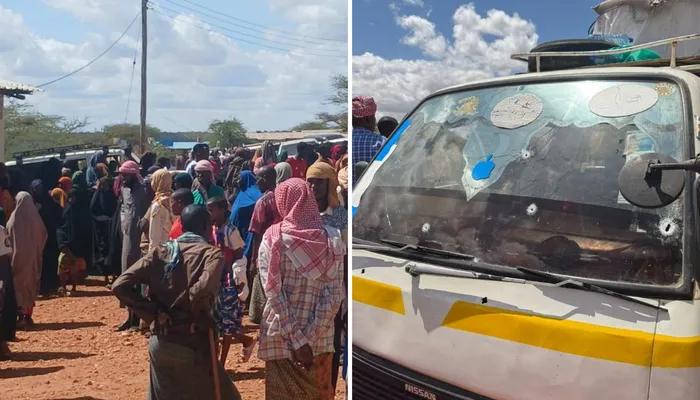
Kenya recorded a deadly security incident on 10 November after eight people were killed in an ambush along the Arabiya–Lafey road corridor in northeastern Mandera County, close to the country’s border with Somalia.
The victims were two National Police Reservists, five construction workers and one driver.
The attack occurred in the Hagarso area, where the team was involved in work connected to the ongoing road construction project.
Initial reports placed the death toll at seven. However, the number later increased to eight after the driver died from his injuries while receiving medical treatment.
Kenya News Agency’s initial report said Mandera County Police Commander Robinson Ndiwa confirmed the incident and announced the deployment of a multi-agency security team to pursue the attackers and establish what happened.
The operation involved several security units, reflecting the seriousness of the incident and the security challenges facing the region.
Al-Shabaab suspicion remains unconfirmed
Kenyan authorities suspected possible involvement by the armed group Al-Shabaab. However, the available reporting during the review period did not conclusively establish the identity of the attackers.
Their number, motive and any confirmed cross-border movement remained under investigation.
In its 10 November report on the attack, Reuters also reported the deaths, identifying the victims as two police reservists, five construction workers and a driver. The suspected involvement of Al-Shabaab was attributed to authorities rather than presented as an independently established conclusion.
The distinction is important. Suspicion of responsibility is not the same as confirmed attribution, particularly while investigations are ongoing.
The security of infrastructure workers
Beyond the immediate loss of life, the attack has raised concerns about the protection of civilian workers involved in infrastructure projects in vulnerable border areas.
Road construction is intended to improve connectivity, access and economic activity. However, workers, contractors and people travelling to project sites may face serious risks when security arrangements are inadequate.
Five construction workers were among those killed, alongside two police reservists and a driver. The incident therefore affected not only security personnel but also civilian workers and their families.
Several questions remained unanswered during the reporting period: who carried out the attack, whether the construction team was deliberately targeted, what security arrangements were in place and whether the incident would affect the road project.
The supplied reporting did not establish whether construction work had been suspended or whether the project’s timetable had changed.
Kenya’s multi-agency response will be important in establishing responsibility and preventing further attacks. The investigation will also need to clarify the circumstances surrounding the ambush and the security arrangements for people working along the corridor.
The confirmed facts remain the attack and the eight deaths. Responsibility and motive were unresolved in the reporting reviewed.
STORY 4: NEARLY 6,000 MIGRANTS REACH CANARY ISLANDS IN TEN DAYS AS EL HIERRO FACES HUMANITARIAN PRESSURE
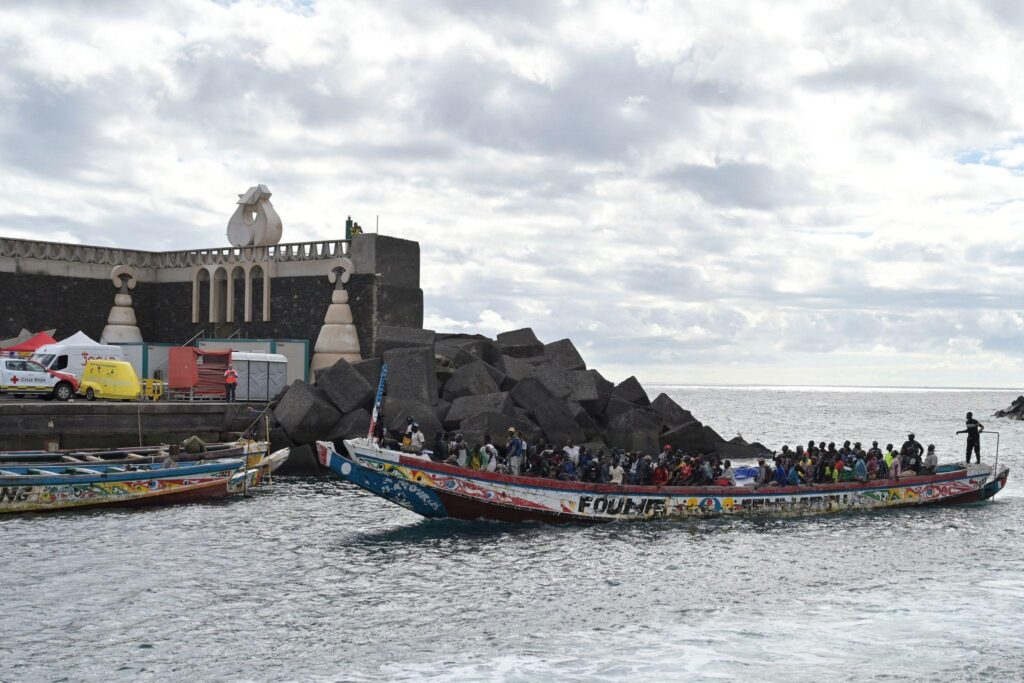
The Atlantic migration route came under renewed attention after nearly 6,000 migrants reportedly reached Spain’s Canary Islands during the first ten days of November 2026.
The figure was reported by Le Monde, drawing on information from the Spanish news agency EFE.
The arrivals included people from Senegal, Morocco, The Gambia and Mali. One of the islands particularly affected was El Hierro, which has a population of approximately 12,000 people.
Local authorities declared a social emergency and sought additional support to manage the arrivals, highlighting the pressure that sudden increases in migration can place on small receiving communities.
The figures show a sharp increase
According to Spanish Interior Ministry data cited by Le Monde, 5,592 arrivals had been recorded in the Canary Islands between 1 January and 15 September 2026.
By 11 November, arrivals for the whole of 2026 had reportedly exceeded 19,000. This was already higher than the 17,788 recorded during the whole of 2025.
A separate UNHCR briefing provided further context. During its Geneva press briefing on 10 November, the agency reported that 6,200 people had arrived aboard 65 boats during October.
UNHCR said the October figure represented a 417 per cent increase compared with October of the previous year and was the highest monthly number of arrivals recorded in the Canary Islands since 2024.
These figures refer to different reporting periods. The 6,200 October arrivals should not be added to the nearly 6,000 reported during the first ten days of November as though they were one undifferentiated figure.
The dangers of the Atlantic crossing
The increase in arrivals also highlights the continuing dangers of the journey.
Le Monde cited the organisation Caminando Fronteras, which recorded at least 635 deaths along the Atlantic route between January and May 2026. The organisation’s Monitoring the Right to Life report for the first five months of 2026 documents the deaths and disappearances recorded along migration routes.
UNHCR separately reported a boat tragedy on 6 November in which at least 35 people, primarily Senegalese, were reported dead.
That tragedy was not part of the Canary Islands arrival count, but it illustrated the dangers faced by people attempting the crossing.
Pressure on both sides of the route
For migrants, the journey can involve exposure to dangerous sea conditions, exploitation and the risk of death. For receiving communities such as El Hierro, sudden arrivals place additional pressure on accommodation, healthcare, transport and local administration.
Frontex, the European Border and Coast Guard Agency, attributed the renewed activity partly to favourable autumn sea conditions and changes in smuggling networks. Other explanations, including tighter controls on alternative routes, were also discussed in the reporting.
However, these factors were not established as the only causes of the increase.
The available figures also did not establish the exact proportion of arrivals from each country or the individual circumstances that led every person to leave.
The development raises questions about cooperation between African departure countries, Spain and European institutions. That cooperation involves border management, rescue operations, trafficking and smuggling, as well as the economic, political and security conditions influencing dangerous migration journeys.
The challenge is not simply to record the number of people arriving. It is to protect human lives, reduce deaths at sea and ensure that communities receiving migrants have the resources needed to respond.
STORY 5: OUSAINOU DARBOE SUBMITS PRESIDENTIAL NOMINATION PAPERS AHEAD OF THE GAMBIA’S DECEMBER ELECTION
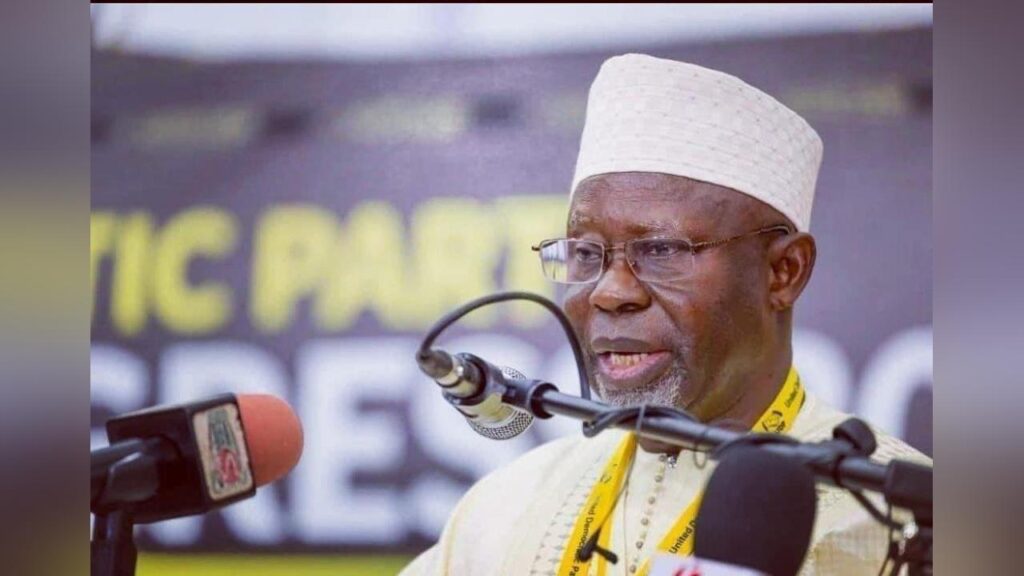
In The Gambia, opposition leader Ousainou Darboe submitted his presidential nomination papers on 9 November, taking an important step towards contesting the country’s presidential election scheduled for 5 December 2026.
Darboe, who leads the United Democratic Party (UDP), submitted the documents to Independent Electoral Commission Chairman Joseph Colley.
According to Voice of Nigeria’s report on Darboe’s nomination, the documents included proof of citizenship, income tax clearance receipts, an asset declaration, an educational profile, a nomination deposit and 5,000 nominee signatures.
At 78, Darboe is a veteran figure in Gambian politics. He previously contested presidential elections in 1996, 2001, 2006, 2011 and 2021.
His political history also includes serving as foreign minister and vice-president under President Adama Barrow before their political relationship broke down in 2019.
His submission therefore represents a significant development in the preparations for the December election and the wider competition involving the country’s political parties.
Submission is not the same as approval
An important distinction remains: submitting nomination papers does not automatically mean that a candidate has been officially cleared to contest.
The Independent Electoral Commission’s official nomination schedule, published on 30 October, established the nomination period from 3 to 14 November 2026.
The commission’s 3 November update on presidential election preparations also confirmed that the nomination exercise would run during that period.
Voice of Nigeria reported that the IEC chairman said aspirants would be notified of the outcome of their applications by 16 November.
At the time covered by this edition, the final list of approved candidates had not been established in the supplied reporting.
What Darboe’s entry means for the election
Darboe’s submission is important for opposition politics, but it does not by itself establish how competitive the election will be.
The wider candidate field, campaign platforms and the conduct of the electoral process will all influence the election.
Darboe has spoken about corruption and the economic and social conditions driving young Gambians to attempt dangerous journeys to Europe. These are his political positions and campaign claims; their scale and how voters rank these issues require independent examination.
The next important milestones identified during the review period were the close of nominations on 14 November, the communication of the electoral commission’s decisions and the presidential election scheduled for 5 December.
The key question is whether the electoral process will apply its rules clearly and consistently and provide Gambian voters with a credible choice.
The submission of nomination papers is an important step, but the electoral commission’s decision remains essential.
THE BIGGER PICTURE: ARE AFRICAN INSTITUTIONS DELIVERING?
The five developments reviewed in this edition illustrate different forces shaping Africa’s political, security and humanitarian landscape.
Nigeria’s insecurity has created humanitarian responsibilities beyond its borders, demonstrating how domestic security challenges can affect neighbouring countries. Ethiopia’s continuing displacement crisis shows the difficulty of translating a formal peace agreement into lasting recovery.
Kenya’s Mandera attack highlights the dangers facing civilians and infrastructure workers in a vulnerable border region. Along the Atlantic migration route, rising arrivals have placed pressure on receiving communities while exposing the continuing dangers of irregular sea crossings.
In The Gambia, the presidential nomination process has brought attention to the importance of transparent electoral institutions and the credibility of the rules governing political competition.
These developments have different causes and should not be treated as one continental crisis. However, they raise a common question about the practical performance of public institutions.
Are governments and institutions delivering the security, protection, opportunity and confidence that their citizens need?
The real value of a security response is measured by whether communities become safer. A peace agreement matters when displaced families can return home and rebuild their lives. Humanitarian commitments matter when food, water, shelter and protection reach the people who need them.
Similarly, infrastructure development must account for the safety of workers and communities, while migration policies must recognise both the responsibilities of receiving authorities and the dangers faced by people undertaking difficult journeys.
Electoral procedures also matter because they determine whether political competition is conducted under clear and credible rules.
The developments of 10–11 November therefore offer an important reminder: the effectiveness of public policy and institutional action should ultimately be measured by its practical impact on people’s lives.
CONCLUSION
Africa’s defining developments are not simply about political announcements, security incidents or changing statistics. They are about the people and communities affected by decisions, conflicts and institutional responses.
The displacement of Nigerians into neighbouring countries, the continuing uncertainty facing families in Tigray, the loss of lives in Kenya’s Mandera County, the dangers of Atlantic migration and the electoral preparations in The Gambia all demonstrate the importance of accountable institutions and effective public action.
The questions raised by these stories remain significant beyond the reporting period.
Can governments protect civilians and prevent further displacement? Can peace agreements deliver lasting recovery? Can infrastructure workers operate safely? Can migration be managed without neglecting human lives? And can electoral institutions provide a transparent and credible process?
These are among the issues that will continue to shape Africa’s future.
This is Africa in Motion from DSG HERALD NEWS — reporting the changes shaping Africa and its future.
Stay informed. Stay ahead.
Visit DSG HERALD NEWS for more African, Nigerian and global news coverage.
About the Author