Nigeria Daily News Review – Friday, 20 November 2026
Nigeria news today is dominated by five major developments with implications for the country’s political climate, electoral credibility, economic stability, industrial investment and education sector. From an attack on an All Progressives Congress campaign convoy in Gombe State to renewed concerns about the proposed use of artificial intelligence in election result processing, the latest developments highlight issues that will shape public debate ahead of the 2027 general elections.
The economy is also facing renewed pressure as the naira weakens and Nigeria’s foreign reserves record a monthly decline. Meanwhile, strong investor demand for the Dangote Petroleum Refinery’s initial public offering has prompted discussions about a possible additional share sale, while the Academic Staff Union of Polytechnics has directed members in four South-West states to embark on industrial action over unpaid allowances.
Here are the five major stories shaping Nigeria news today.
STORY 1: Gombe APC Convoy Attack Raises Concerns Over Political Violence Ahead of 2027
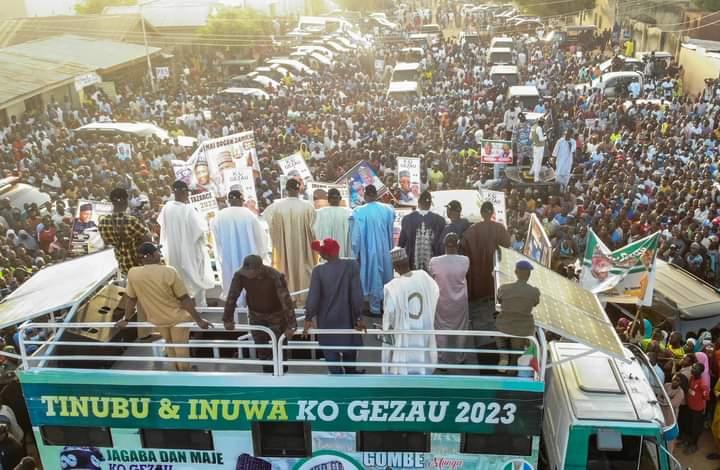
Political tension has come into focus in Gombe State following an attack on an All Progressives Congress campaign convoy in Kwarge, Balanga Local Government Area, during the party’s campaign tour ahead of the 2027 general elections.
According to a report by The PUNCH on the Gombe APC convoy attack, the confrontation reportedly followed the appearance of youths chanting the anti-APC slogan, “Bamayi”, as the campaign convoy travelled from Cham to Bambam.
The incident occurred at about 5 p.m. on Wednesday, November 18, during the second day of the party’s campaign activities in Balanga.
The report said five Gombe Line buses conveying APC supporters were damaged during the confrontation, while several party supporters sustained injuries. No death was reported.
“Bamayi” is described in the report as a local expression of rejection, disagreement or lack of support. The slogan reportedly triggered a tense exchange between youths in the community and people accompanying the campaign team before the situation escalated into violence.
The identities of those responsible for the attack and the full circumstances surrounding the confrontation had not been established in the report.
Political intolerance and the 2027 election environment
The incident raises concerns about the safety of political campaigns and the ability of parties to engage voters peacefully as political activities gather momentum ahead of the next general elections.
Campaigns and political rallies are important parts of democratic participation. Citizens must be free to express support for or opposition to political parties without fear of intimidation, violence or retaliation.
Political disagreement, including the use of slogans and public criticism, should not become a justification for physical attacks.
The Gombe incident also highlights the responsibility of political parties to manage their supporters and campaign activities in a way that does not encourage confrontation. Security agencies have a duty to protect all participants, regardless of their political affiliations.
The attack is particularly significant because the 2027 elections are approaching, and incidents of political violence can deepen mistrust, discourage participation and create an atmosphere of fear among voters.
Although the report did not establish who organised or initiated the violence, the authorities should investigate the incident, identify those responsible and ensure that anyone found culpable is dealt with under the law.
The protection of political freedom must apply equally to the ruling party, opposition parties and independent political actors.
For Nigeria news today, the Gombe incident is a reminder that electoral credibility depends not only on the conduct of voting and the announcement of results but also on the safety and freedom of political participation before election day.
STORY 2: Atiku Demands Independent Audit of INEC’s Proposed AI System Ahead of 2027 Elections
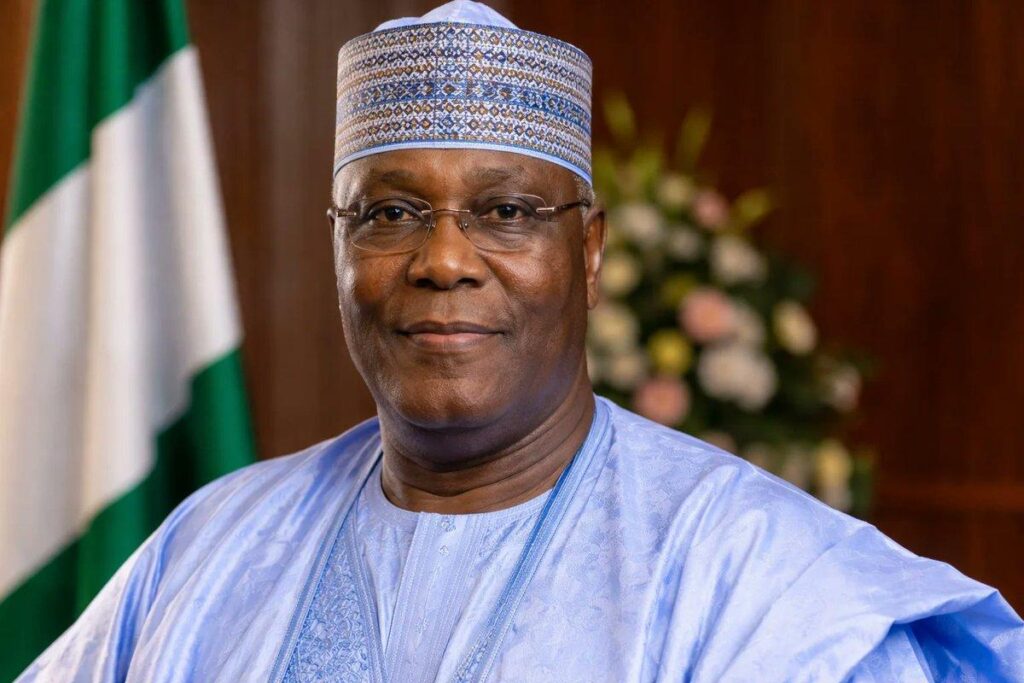
Former Vice-President Atiku Abubakar has called on the Independent National Electoral Commission to subject its proposed artificial intelligence system to an independent audit before deploying the technology in the processing of results for the 2027 general elections.
The demand has brought renewed attention to the relationship between electoral technology, transparency and public confidence in Nigeria’s democratic process.
According to The PUNCH report on Atiku’s demand for an independent audit, the African Democratic Congress presidential candidate wants INEC to disclose the technical and operational details of the proposed system, including its source code, training data, discrepancy-detection criteria and the identities of the developers and third-party vendors involved.
Atiku’s position is that Nigerians should understand how the technology will operate and what safeguards will prevent it from interfering with valid polling-unit results.
A report by Premium Times further stated that the petition was addressed to INEC Chairman, Joash Amupitan, on behalf of the ADC and allied democratic stakeholders.
The petition reportedly followed INEC’s plans to integrate artificial intelligence and intelligent document-processing technology into the process connecting its Data Verification and Authentication System (DIVAS) with the INEC Result Viewing portal, known as IReV.
Why Atiku wants the system audited
Atiku argues that an automated system must not be allowed to delay, reject, alter or permanently block valid election results without transparent procedures and human oversight.
One of the concerns raised relates to the possibility that the technology could incorrectly flag genuine result sheets because of poor image quality, unfamiliar handwriting or worn-out paper.
Such technical limitations, he argues, should not become grounds for withholding results that have been properly completed and signed at polling units.
He has therefore called for independent cybersecurity experts, political party technology representatives and civil society technologists to be granted access to relevant technical materials and decision logs for a comprehensive audit.
The demand also includes clear procedures for reviewing results flagged by the system, identifying officials responsible for such reviews, notifying political parties and allowing errors to be challenged promptly.
Atiku further insists that the physical polling-unit result sheet, Form EC8A, must retain its legal status and that INEC should explain how any disagreement between the physical document and an AI assessment would be resolved.
He has also called for real-time monitoring access for political parties and urged the National Assembly to summon INEC leadership and its ICT Directorate to explain the technology’s design and safeguards.
The wider electoral credibility question
The debate is not simply about whether artificial intelligence should be used in elections. It is about how technology can be introduced without weakening transparency, accountability and the authority of legally recognised election records.
Artificial intelligence can support administrative processes, identify inconsistencies and improve the handling of large volumes of documents. However, its effectiveness depends on the quality of the data, the reliability of the system, the transparency of its operation and the availability of human review.
INEC will need to address public concerns with clear explanations of the technology’s purpose, limits and safeguards. The commission’s communication will be particularly important as preparations for the 2027 elections continue.
Premium Times reported that Atiku wants the audit completed before INEC’s nationwide mock accreditation exercise scheduled for November 28, 2026.
For Nigeria news today, the controversy places electoral technology under public scrutiny and raises a fundamental question: can Nigerians trust a digital election process if the rules governing how their results are processed are not sufficiently transparent?
STORY 3: Naira Weakens as Nigeria’s Foreign Reserves Lose $406 Million
Nigeria’s currency has come under renewed pressure as the naira weakened against the United States dollar while the country’s gross external reserves declined by $406 million over approximately one month.
The development has revived concerns about foreign-exchange supply, market confidence and the strength of Nigeria’s external financial position.
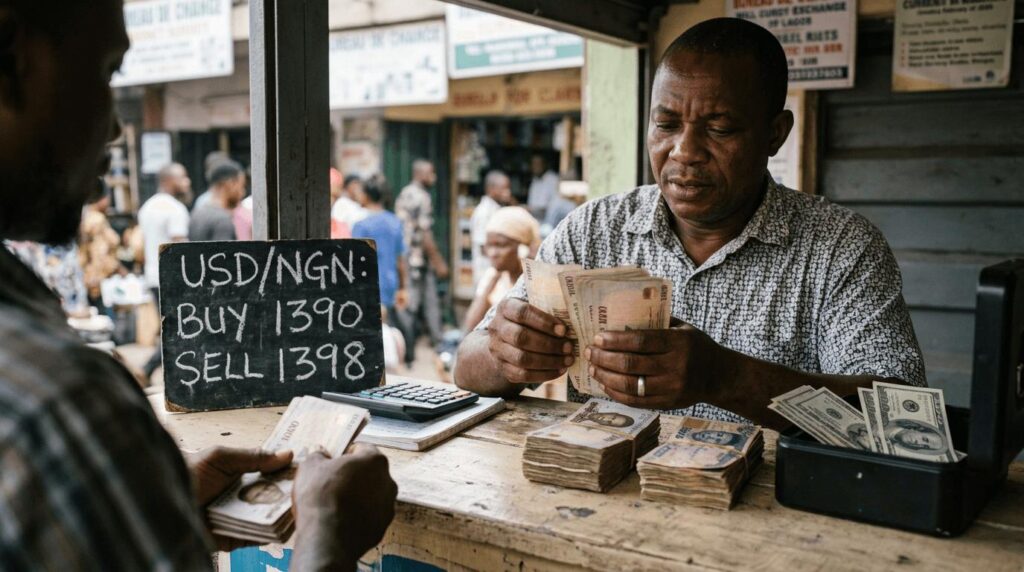
According to The PUNCH report on the naira and foreign reserves, Central Bank of Nigeria data showed that the naira closed at ₦1,388 per dollar at the Nigerian Foreign Exchange Market on Thursday, November 19.
This represented a decline from ₦1,333.50 per dollar recorded on October 19, a depreciation of ₦54.50 over the one-month period.
The currency also weakened by ₦8.01 on Thursday, closing at ₦1,388 per dollar compared with ₦1,379.99 recorded on Wednesday.
The report further stated that Nigeria’s gross external reserves declined from $55.119 billion on October 19 to $54.713 billion on November 18, representing a reduction of $406 million.
The headline figure of ₦1,440 per dollar refers to the parallel-market rate cited in the report, while the official Nigerian Foreign Exchange Market closing rate on Thursday was ₦1,388 per dollar. The two rates should not be confused.
What is driving the pressure?
The weakening currency and declining reserves have raised questions about the availability of foreign exchange in the market.
The PUNCH report quoted economic observers who identified lower inflows from exporters, investors and other sources as possible factors reducing dollar supply. Demand for foreign currency to finance imports and international transactions also continues to put pressure on the market.
Chief Executive Officer of the Centre for the Promotion of Private Enterprise, Dr Muda Yusuf, identified domestic economic and political factors, including policy uncertainty and capital movements, as possible influences on the currency and reserves.
However, these explanations should be treated as possible contributing factors rather than a definitive finding about the cause of the decline.
Foreign reserves are important because they provide a buffer for a country’s external payments, support confidence in its currency and help the monetary authorities manage periods of foreign-exchange pressure.
A sustained decline can raise concerns about the country’s ability to meet external obligations and maintain adequate liquidity, although the significance of any movement depends on the level of reserves, foreign-exchange inflows, import requirements and broader economic conditions.
Implications for businesses and households
Currency depreciation can increase the cost of imported goods, industrial machinery, raw materials, pharmaceuticals and other products priced in foreign currencies.
Businesses that depend heavily on imported inputs may face higher operating costs, potentially passing some of those costs to consumers.
Households can also feel the impact through higher prices for imported products and goods whose production depends on imported materials.
For manufacturers, exchange-rate instability makes planning and pricing more difficult. Investors may also become cautious when uncertainty increases around access to foreign exchange and the direction of monetary policy.
The latest figures do not, on their own, establish that Nigeria is facing a foreign-exchange crisis. They do, however, highlight the importance of monitoring the direction of reserves, the supply of dollars and the stability of the official exchange-rate market.
For Nigeria news today, the central economic question is whether the authorities can strengthen foreign-exchange inflows, sustain market confidence and prevent renewed currency pressure from feeding into the cost of living.
STORY 4: Dangote Considers Secondary Share Sale After Refinery IPO Attracts ₦5.85 Trillion in Applications
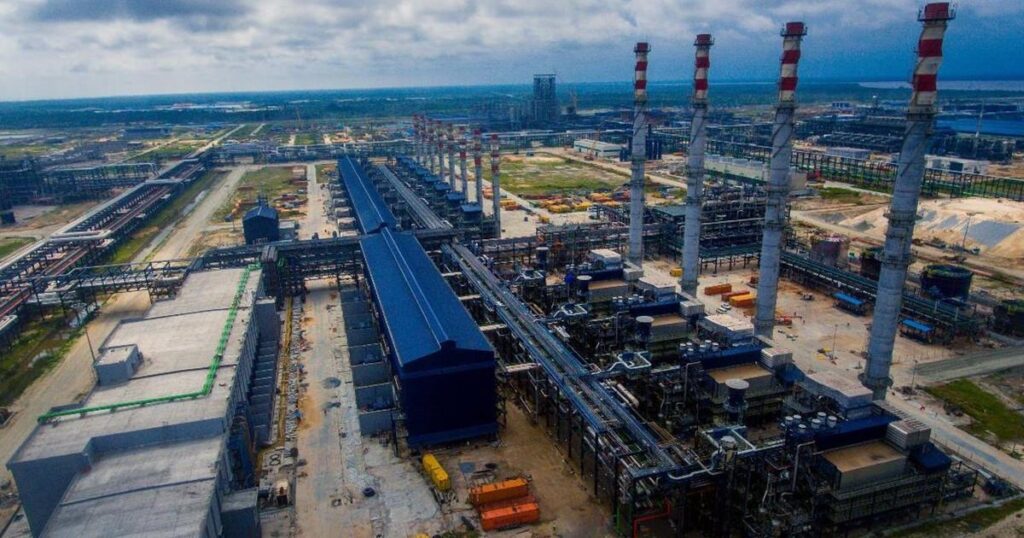
The proposed public listing of the Dangote Petroleum Refinery has attracted significant investor interest, with applications reportedly reaching approximately ₦5.85 trillion, equivalent to about $4.3 billion.
The strong demand has led to discussions about a possible secondary share sale involving part of Aliko Dangote’s personal stake in the refinery.
According to THISDAY’s report on Dangote’s discussions with the Securities and Exchange Commission, the billionaire is in talks with the Securities and Exchange Commission over a proposed sale of some of his personal shares to accommodate institutional investors whose applications may not be fully satisfied through the initial public offering.
The proposed transaction is intended to make additional shares available to investors after demand exceeded the amount initially offered.
The refinery’s IPO reportedly attracted almost four million unique subscriptions from investors in 120 countries, with the offer remaining open for six weeks until October 27.
The company is seeking to raise between $1.6 billion and $2.1 billion through the offer, which could become Africa’s largest initial public offering to date.
The report said the base offer represents approximately 3.3 per cent of the refinery, potentially rising to about 4.25 per cent if the over-allotment option is fully exercised.
Dangote currently holds approximately 87.3 per cent of the refinery, according to the figures reported by THISDAY.
What the proposed secondary sale means
An initial public offering involves a company offering shares to investors, while a secondary share sale involves an existing shareholder selling part of an already-held stake.
In this case, the proposed arrangement would involve Dangote selling some of his personal holdings rather than relying solely on the refinery issuing additional shares.
The distinction matters because the transaction, if approved and completed, would provide additional investment opportunities without necessarily representing a new capital-raising exercise by the refinery itself.
The report said the SEC was processing the IPO allotments and that approval would be granted when all regulatory requirements had been met.
A spokesperson for Dangote declined to comment on the proposed secondary sale, while the allotment announcement had reportedly been postponed to allow the regulator to consider the proposal.
It is therefore important to distinguish between discussions about a possible transaction and a completed, approved sale. The proposed secondary offer should not yet be presented as a concluded deal.
What the development means for Nigeria’s industrial sector
The strong investor response is significant for Nigeria’s capital market and the country’s broader industrial ambitions.
The Dangote Petroleum Refinery is one of the largest industrial projects in Africa. Its ability to attract substantial investor interest from domestic and international markets demonstrates the scale of attention surrounding the facility and its potential role in the energy sector.
A successful listing could broaden ownership, deepen the capital market and give investors an opportunity to participate in a major Nigerian industrial enterprise.
However, investor enthusiasm must ultimately be supported by transparent corporate governance, reliable financial disclosures, operational performance and a clear regulatory framework.
The refinery’s long-term contribution to Nigeria will also depend on its ability to operate sustainably, meet domestic petroleum demand and compete effectively in regional and international markets.
For Nigeria news today, the Dangote share-sale discussions represent an important development in the relationship between large-scale industrial investment and the Nigerian capital market.
STORY 5: ASUP Declares Strike Across Polytechnics in Four South-West States Over Unpaid Allowances
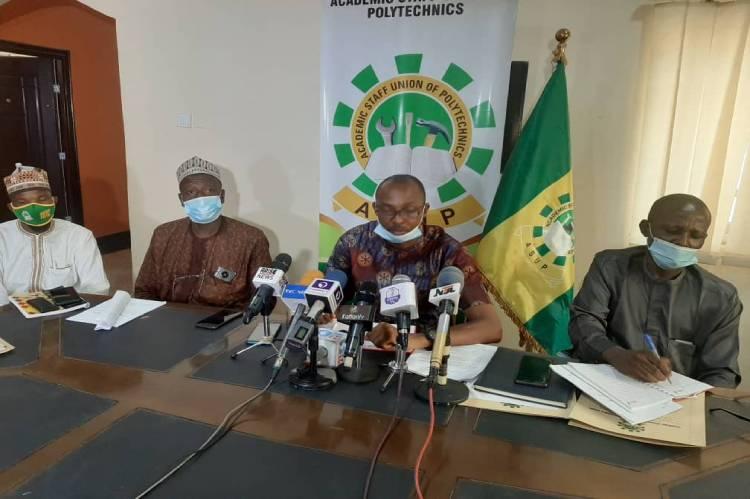
Academic activities in state-owned polytechnics and related institutions across Ogun, Oyo, Osun and Ekiti states are facing disruption following an industrial strike directed by the Academic Staff Union of Polytechnics, Zone C.
The union is protesting the failure of the affected state governments to implement and pay two allowances: the Consolidated Academic Tools Allowance (CATA) and the Earned Academic Allowance (EAA).
According to Premium Times’ report on the ASUP strike, the union’s Zone C coordinator, Adekunle Masopa, announced the action at a news conference held at the ASUP secretariat at The Polytechnic, Ibadan, on Thursday, November 19.
The strike took effect from Monday, November 16, following the expiration of a 15-day ultimatum issued to the affected state governments.
The directive covers ASUP chapters in state-owned polytechnics, colleges of technology and monotechnics in Ogun, Oyo, Osun and Ekiti states.
What the union is demanding
ASUP says the allowances form part of the 2025/2026 agreement reached following the renegotiation of the 2009/2010 Federal Government-ASUP agreement.
The union stated that the Federal Government had commenced implementation of CATA and EAA for academic staff in federal institutions operating under the CONPCASS salary structure.
However, it accused the governments of Ogun, Oyo, Osun and Ekiti of failing to implement the same provisions for staff in their state-owned institutions.
The union said it had written to the governors on August 10, 2026, requesting implementation of the agreement, and sent a reminder on September 21.
According to the report, the union subsequently resolved at its 118th National Executive Council meeting in Abuja, held between October 23 and 24, to issue a 15-day ultimatum to the defaulting state governments.
The ultimatum expired on November 10.
ASUP’s demands include immediate implementation of the two allowances and payment of accumulated arrears dating back to January 1, 2026.
The union commended Ondo State as the first and only state in its zone to implement the 2025/2026 agreement, while criticising the governments of the four affected states for their failure to act.
Implications for students and the education sector
The strike could disrupt lectures, academic assessments, administrative activities and other essential services in affected institutions.
Students may face uncertainty over academic calendars, examinations and graduation timelines, particularly if the industrial dispute continues without a negotiated settlement.
The situation also raises wider questions about the funding and management of state-owned tertiary institutions.
Polytechnics play an important role in developing technical, vocational and professional skills needed by the Nigerian economy. Their ability to deliver quality education depends partly on adequate staffing, stable academic calendars and the welfare of lecturers.
When industrial disputes persist, students are often among the most affected, losing valuable learning time and facing uncertainty about their academic progress.
The affected state governments will need to engage the union and explain their positions on the allowances. A sustainable resolution will require attention to the financial implications of the agreement, the legal and administrative obligations of the parties, and the need to protect students from prolonged disruption.
For Nigeria news today, the ASUP strike is another reminder that industrial relations and the welfare of academic staff remain important challenges for the country’s education system.
CONCLUSION: Five Developments Shaping Nigeria’s Political and Economic Outlook
The five major stories in Nigeria news today reveal a country confronting interconnected political, economic and institutional challenges.
The attack on the APC convoy in Gombe highlights the importance of protecting political participation and preventing violence as the 2027 elections approach. Atiku Abubakar’s demand for an independent audit of INEC’s proposed AI system raises important questions about transparency, electoral technology and public confidence.
On the economic front, the naira’s depreciation and the reported $406 million decline in foreign reserves underline the need for stronger foreign-exchange inflows and sustained economic stability. Meanwhile, the proposed secondary share sale involving the Dangote Petroleum Refinery illustrates the growing interest in large-scale Nigerian industrial investments and the importance of regulatory oversight.
In education, the ASUP strike across four South-West states demonstrates how unresolved labour issues can affect students, institutions and the delivery of tertiary education.
Taken together, these developments point to the importance of accountable leadership, credible institutions, economic stability and constructive engagement between government, political parties, investors, labour unions and citizens.
As Nigeria moves closer to another election cycle, the decisions taken by public institutions and political leaders will have significant consequences for public confidence and the country’s development.
This is Nigeria Daily News Review for Friday, 20 November 2026, bringing together the major developments shaping the country’s political, economic and social landscape.
About the Author