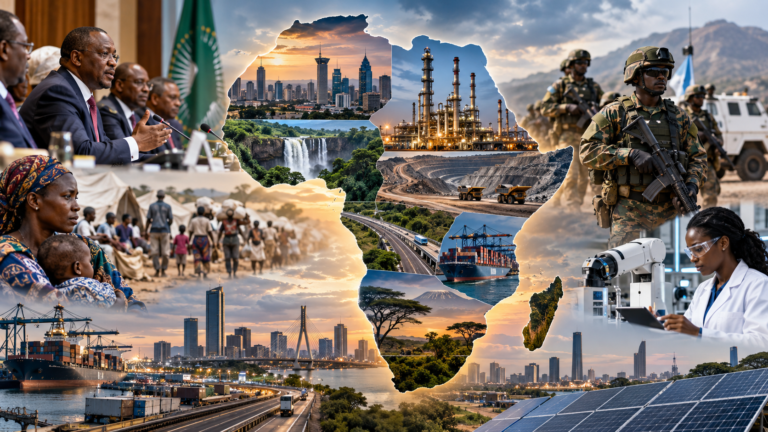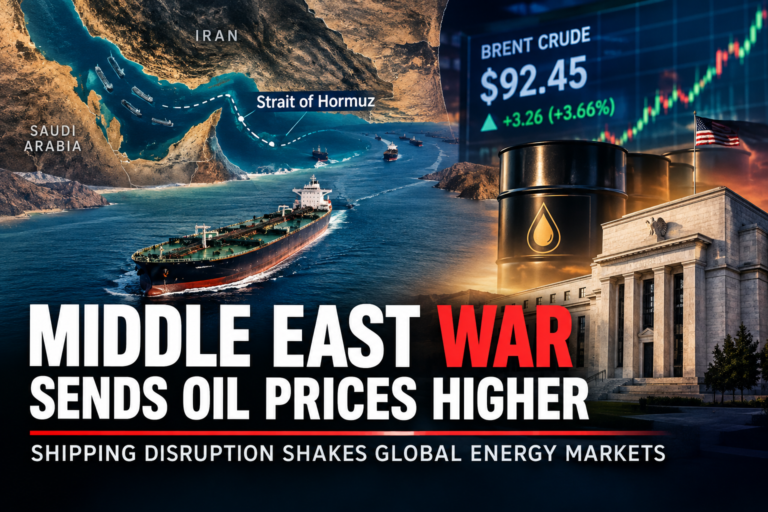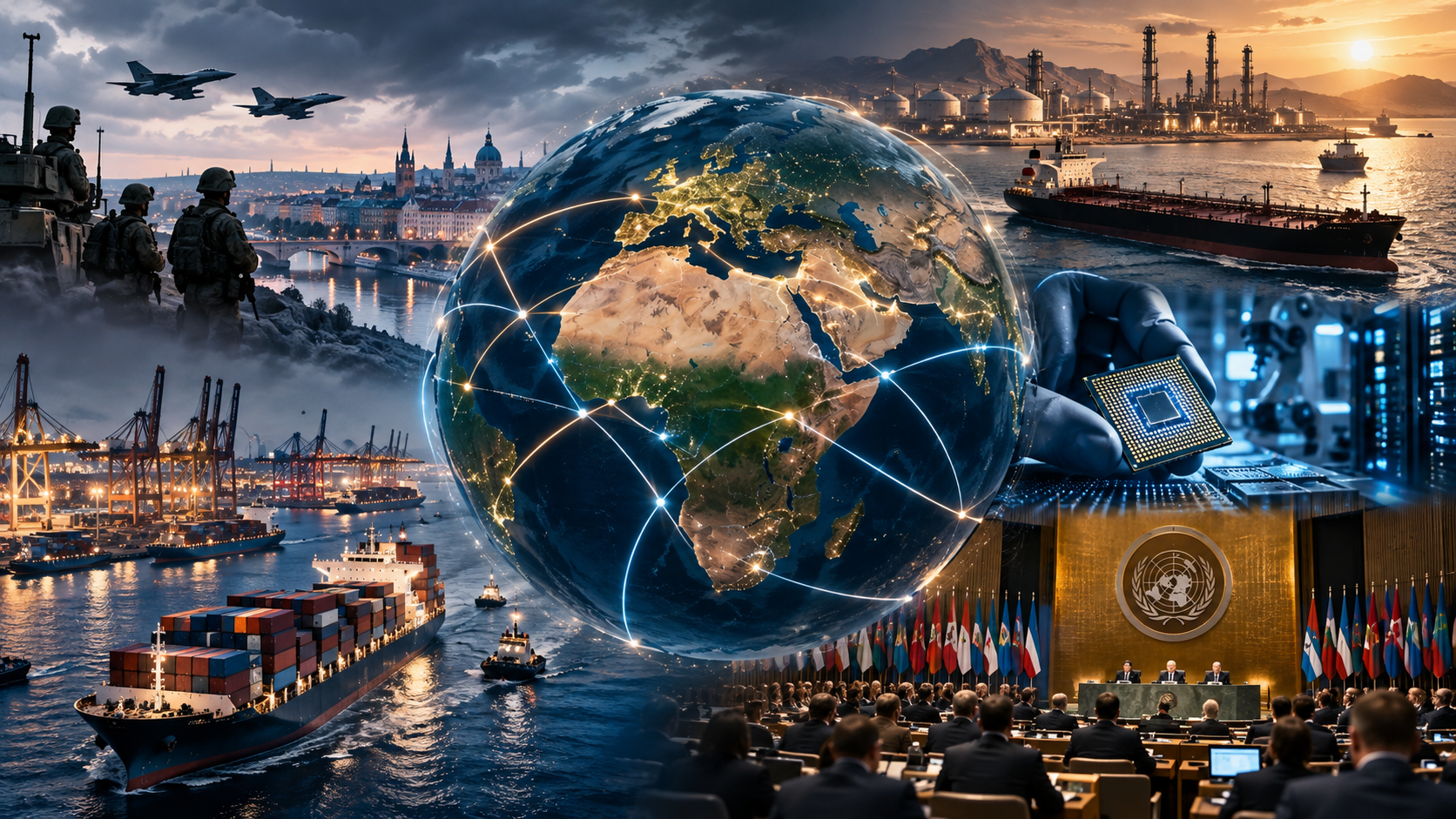
A cinematic representation of the global pressures shaping international affairs, from Middle East energy markets and European security to trade, technology competition and multilateral diplomacy.
Global News: War, Economic Pressure and Technology Competition Reshape the International System
The week of September 13 to 20, 2026, showed how developments in one part of the world can increasingly transmit pressure across borders, markets and institutions.
The week’s global news was dominated by five interconnected developments: the widening economic consequences of the Middle East war; Europe’s reassessment of its security environment as the Russia–Ukraine conflict continues; growing fragmentation in international trade; an intensifying United States–China contest over technology and strategic industries; and mounting pressure on the multilateral institutions responsible for managing global cooperation.
These developments are different, but they increasingly intersect. Conflict is affecting energy markets and shipping. Energy pressures can feed into inflation and economic policy. Trade competition is becoming tied to sanctions, supply chains and strategic resources. Technology is increasingly treated not simply as an economic sector but as an element of national security. And the international institutions expected to coordinate responses are operating in an environment of increasingly competing strategic interests.
The result is not evidence that the international system has collapsed. Rather, the week’s global news points to a system being reorganised under pressure.
The most important question is therefore not whether the world is becoming interconnected or divided. It is how those two forces are operating simultaneously—and how governments, businesses and international institutions respond.
Global Economy: Middle East War Becomes a Wider Economic Shock
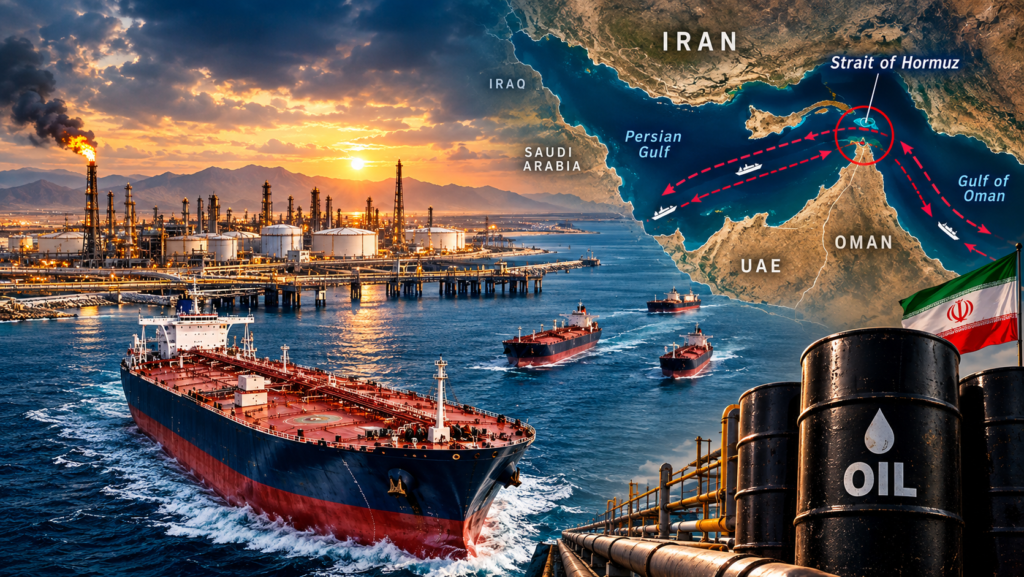
The consequences of the expanding Middle East conflict are increasingly extending beyond the battlefield, with energy markets and international shipping emerging as major channels through which a regional security crisis can affect the wider global economy.
Houthi attacks have expanded into Saudi Arabia, while disruption risks around two of the world’s critical maritime routes—the Strait of Hormuz and Bab el-Mandeb—are placing additional pressure on energy supply chains. The developments have been closely watched because disruption around major shipping and energy routes can affect the movement and pricing of commodities far beyond the immediate conflict zone.
Oil prices responded sharply during the week. North Sea Forties crude reached $136.75 a barrel, while some physical cargoes in Europe moved above $130. Saudi Arabia also cancelled some late-September cargoes.
The significance of the energy shock extends beyond crude prices themselves. Energy is an input into transportation, manufacturing and other parts of the economy, meaning sustained increases can transmit pressure into production costs and household expenses.
The source also records a 25-basis-point interest-rate increase by the United States Federal Reserve, taking its target range to between 3.75% and 4%. In Syria, meanwhile, fuel prices have risen sharply since February, contributing to additional economic pressure and public protests.
Taken together, these developments illustrate an important feature of the week’s global news: a military conflict can become an economic transmission mechanism.
The connection works through several stages. Disruption risks can push up energy prices. Higher energy costs can increase transportation and production expenses. Those pressures can then contribute to broader inflation, creating a difficult policy environment for governments and central banks.
The source does not establish that the Middle East conflict will necessarily produce a prolonged global inflationary crisis. The outcome depends on how long disruptions persist, whether shipping routes remain affected and how governments and markets respond.
For now, three questions stand out. Will disruption around major maritime routes widen? Will elevated oil prices persist? And can governments prevent an energy shock from developing into a broader inflation problem?
Those questions matter because the economic consequences of conflict can often travel much farther than the conflict itself.
And as energy markets respond to instability, another part of the international system is undergoing its own reassessment: Europe’s security architecture.
International Security: Europe Reassesses Its Strategic Environment
The Russia–Ukraine war continues to shape European security calculations, but the week’s international security story was broader than another exchange of military attacks.
Ukraine launched a major drone attack during the week, while Russia reported intercepting more than 1,600 drones, including approximately 450 that it said were directed toward Moscow. Russia also reported two deaths and damage to a refinery.
Those developments form part of a wider European debate over defence capacity and long-term security planning.
European governments are continuing to assess their military capabilities and strategic requirements amid uncertainty over the future shape of transatlantic relations. The war has forced European states to consider more closely questions surrounding defence capacity, strategic autonomy and their relationship with the United States.
The source also records a security agreement between the United States and Denmark concerning Greenland. Germany’s state elections took place within a broader European political environment in which defence and security have become increasingly prominent concerns.
However, the material reviewed contains an important qualification: there is no established United States withdrawal from Europe. NATO remains intact. The issue is European reassessment and planning under uncertainty rather than a confirmed American departure.
That distinction matters because the global news picture can easily become distorted when strategic uncertainty is presented as an established policy change.
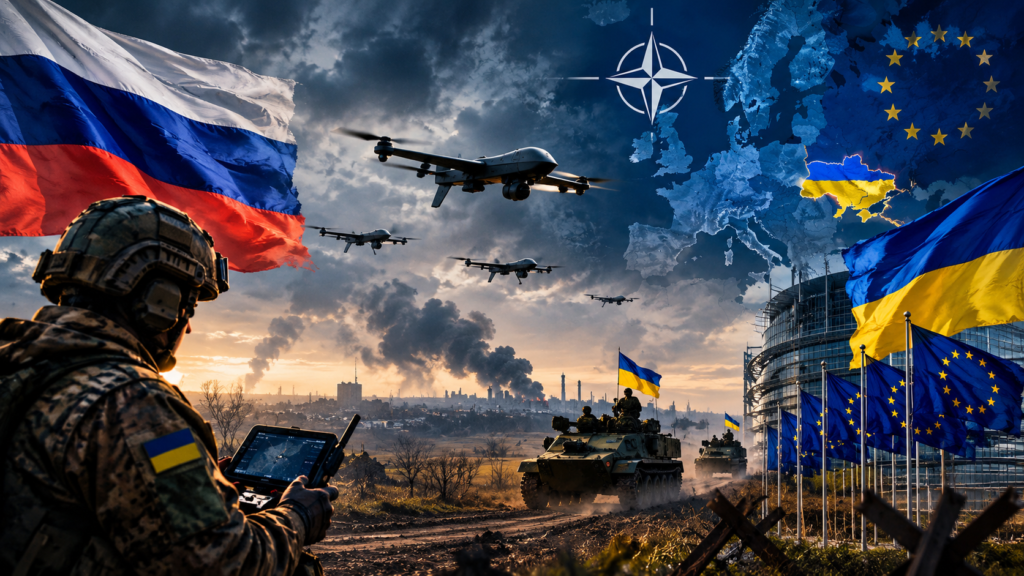
The Russia–Ukraine war has nevertheless changed the way European governments approach security planning. Questions about defence capacity, strategic autonomy and transatlantic relationships have become more prominent as the conflict continues.
Security, however, is no longer being considered solely through the military lens.
Economic resilience has become part of strategic planning as well. Countries are increasingly concerned about supply chains, access to strategic resources, energy security, technology and the economic consequences of geopolitical confrontation.
That connection helps explain why the week’s security developments cannot be separated entirely from the economic developments occurring elsewhere.
The Middle East conflict is demonstrating how security disruptions can affect energy markets. The Russia–Ukraine war is influencing European defence planning. Meanwhile, growing competition between major economic powers is changing the structure of international trade.
The central issue is therefore not simply what happens on the battlefield. It is how prolonged geopolitical uncertainty changes the calculations governments make about defence, economic resilience and strategic dependence.
That same strategic logic is increasingly visible in the international trading system.
Global Trade: Economic Relationships Are Becoming More Strategic
For decades, globalisation was built around increasingly integrated trade relationships. But the week’s global trade developments point toward a more fragmented system in which governments are paying greater attention to strategic interests, supply-chain resilience and economic security.
The World Trade Organization has warned about the consequences of a more divided global trading system. One WTO model estimated that severe fragmentation could reduce global GDP by approximately 5.1% and exports by 18.6% by 2050. A more severe scenario estimated GDP losses of about 6.9%, with export losses approaching 27%.
These figures require an important qualification. They are modelled scenarios, not forecasts of what will definitely happen.
What is more clearly visible is the growing emphasis governments are placing on strategic economic relationships.
The United States continues to develop sanctions policy toward Russia. The European Union and Canada are strengthening economic links. BRICS countries are developing alternative economic relationships. The United States and China remain major economic competitors, while India and New Zealand are also developing closer trade arrangements.
These developments do not establish that globalisation has ended.
Instead, they point toward the possibility of globalisation being reorganised around competing strategic relationships.
For governments and companies, that can mean greater attention to the resilience of supply chains, sanctions exposure, access to strategic resources, technology restrictions and the ability to operate across different markets.
The significance of the shift is that economic decisions are increasingly being viewed through a security lens.
A supply chain is no longer simply a commercial network. Access to certain resources can become strategically important. Technology restrictions can affect industrial capacity. Sanctions can reshape trading relationships. And political tensions between major powers can influence where companies manufacture, source components and seek markets.
This is particularly visible in the relationship between the world’s two largest economic powers.
The United States and China remain major competitors, and their competition increasingly extends beyond conventional trade disputes into technology, semiconductors, artificial intelligence, cybersecurity and strategic manufacturing.
That means the future of global trade cannot be considered separately from technological competition.
The emerging question is whether countries can maintain the benefits of international economic integration while simultaneously building greater strategic independence.
That tension is becoming one of the defining features of the current international system.
And nowhere is the connection between economics, security and technology becoming more visible than in the expanding United States–China technology race.
Global News and Technology: The US-China Competition Moves Beyond Chips
The competition between the United States and China is increasingly extending beyond conventional semiconductor production into artificial intelligence, memory technology, cybersecurity, critical minerals and strategic manufacturing.
China’s CXMT is moving into mass production of advanced memory technology. A company claim involving approximately 11.95-nanometre feature spacing and potentially around 50% more dies per wafer illustrates the intensity of competition within the semiconductor industry.
The development is significant within the broader global news picture because advanced semiconductor technologies are becoming increasingly connected to economic competitiveness and national security.
At the same time, Google’s Gemini system reportedly performed strongly in a controlled cybersecurity evaluation, where it compromised three companies in the test environment. The European Union is also developing safeguards around artificial intelligence, while SK Hynix and Intel have been linked to potential production developments in the United States.
These developments represent different parts of a rapidly expanding technology competition.
The semiconductor industry remains central, but the strategic contest increasingly encompasses the systems and infrastructure that depend on advanced computing.
Artificial intelligence is becoming part of national economic strategy. Cybersecurity is becoming increasingly important as digital systems expand. Critical minerals are gaining strategic significance because they support technologies and industrial processes. Semiconductor manufacturing remains essential to many advanced technological systems.
The broader question is therefore not simply which country produces the fastest chip.
It is who controls the technologies and industrial capabilities that will shape the next generation of economic and security power.
The source also provides an important caution. The developments reviewed should not be interpreted as evidence that a final United States–China technology agreement has already been reached. The material does not establish such a finalized deal.
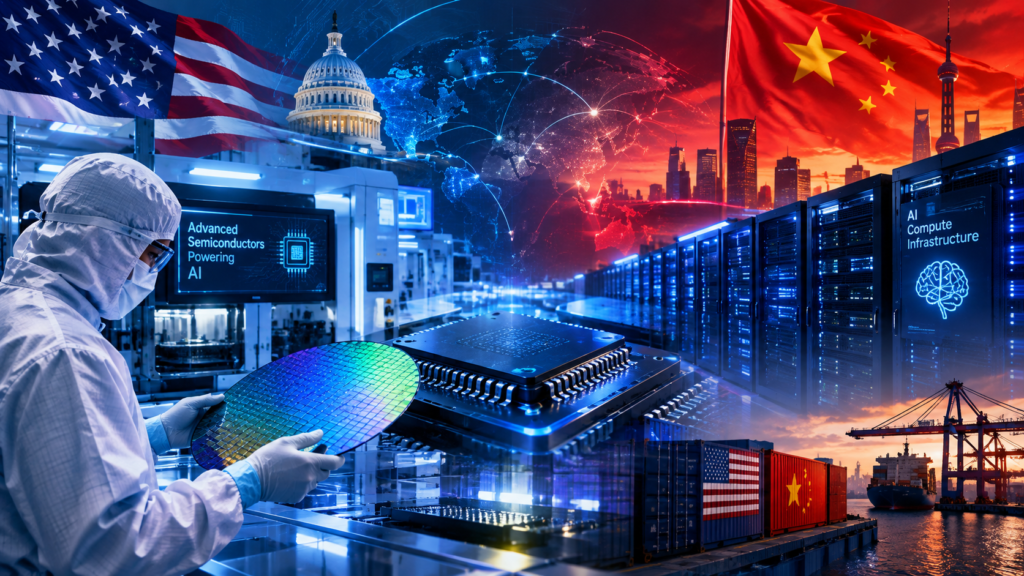
What it does demonstrate is a technology race becoming increasingly connected to national security and economic strategy.
This matters because technological competition can reinforce the same fragmentation already visible in trade.
Restrictions on technology can influence supply chains. Competition over critical minerals can affect industrial strategy. Artificial intelligence can become part of national security planning. Cybersecurity can become an element of economic resilience.
The result is a world in which economic, technological and security policies increasingly overlap.
But the more fragmented the international system becomes, the greater the importance of institutions designed to coordinate cooperation.
That creates the final major question of the week: whether existing multilateral institutions can adapt to a world in which their members increasingly have competing strategic interests.
International Security and Global Trade: Multilateral Institutions Face a Fragmented World
The pressure visible in trade, security and technology is also being felt by the institutions created to facilitate international cooperation.
The World Trade Organization has 166 members, NATO has 32, and the United Nations continues to operate in an increasingly complicated geopolitical environment.
The selection of the next United Nations Secretary-General also remained unresolved in the material reviewed. Recent informal diplomatic polling showed different levels of encouragement and discouragement for potential candidates, including Rebeca Grynspan and Carolyn Rodrigues Birkett.
Those figures require caution. They represent informal diplomatic assessments rather than a formal election result.
The larger issue extends beyond the leadership selection process.
International institutions were created to help countries coordinate around shared challenges. But the strategic environment has changed.
Global trade is becoming more fragmented. Security relationships are being reassessed. Technology is increasingly treated as a strategic asset. Access to critical resources is becoming more closely connected to national power.
These developments do not establish that international institutions are collapsing.
They do, however, demonstrate the environment in which those institutions must operate.
The WTO must address a trading system in which countries are increasingly concerned about strategic dependence. NATO members are dealing with changing security calculations and the continuing effects of the Russia–Ukraine war. The United Nations is operating amid geopolitical disagreements over conflicts, security and international responsibility.
The challenge is therefore one of adaptation.
Can institutions designed to facilitate cooperation continue to coordinate responses when the countries within those institutions increasingly have competing strategic interests?
That question does not have a settled answer in the source material.
What the week’s international security and global economic developments do show is that cooperation and competition are now operating simultaneously.
Countries continue to trade, negotiate agreements and participate in multilateral organisations. At the same time, they are developing alternative partnerships, strengthening national capabilities and seeking greater control over strategic technologies and resources.
The international system is therefore not simply moving from cooperation to confrontation.
It is becoming more complicated.
The same country can cooperate with another government in one area while competing with it in another. Countries can remain members of international institutions while pursuing increasingly independent strategic policies.
That complexity is likely to shape the next phase of global affairs.
The central challenge will be whether international institutions can remain effective enough to manage problems—conflict, trade disruption, energy shocks, technological competition and economic instability—that no single country can easily solve alone.
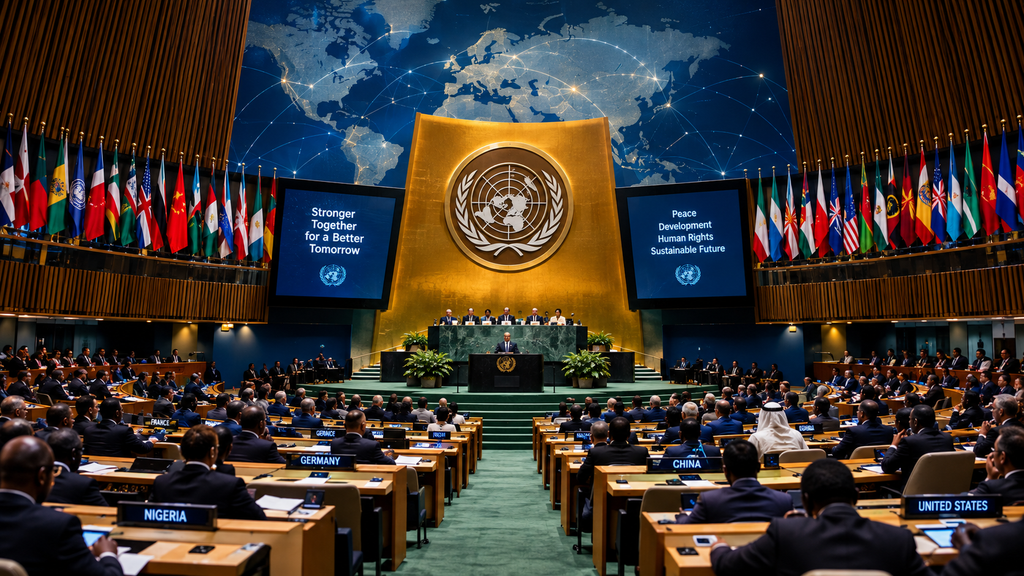
CONCLUSION
The week of September 13 to 20, 2026, revealed a world in which conflict, economics, technology and international institutions are increasingly connected.
The Middle East war demonstrated how a regional security crisis can transmit pressure into energy markets and global shipping. The Russia–Ukraine conflict continued to influence European defence planning and wider strategic calculations. At the same time, the structure of global trade is being reconsidered as governments place greater emphasis on strategic relationships, supply-chain resilience and economic security.
Technology has become another major arena of competition. The United States–China rivalry increasingly extends into semiconductors, artificial intelligence, cybersecurity and critical resources, making technological capability an increasingly important element of national power.
Behind all these developments is the same institutional question: how effectively can existing international mechanisms manage a world in which cooperation remains necessary but strategic competition is becoming more pronounced?
The week’s global news does not provide a simple answer.
Instead, it shows an international system being reshaped simultaneously by conflict, economic pressure, technological competition and institutional adaptation.
What comes next will depend on how governments respond to those pressures—and whether international institutions can continue providing mechanisms for cooperation in an increasingly fragmented strategic environment.
GPT-6 Astra Safety: The New AI Oversight Risk
G7 Summit 2026 Dominated by Iran, Ukraine Talks
About the Author