Introduction
Nigeria Weekly News Review for 2–8 November 2026 examines five major developments shaping the country’s political, security, economic, petroleum and sporting landscape.
The week was marked by a Federal High Court judgment affecting the African Democratic Congress and Atiku Abubakar, INEC’s review of 268 flagged voter records, and renewed debate over the proposed introduction of State Police. Security concerns also featured prominently following a deadly attack on a police convoy in Zamfara State and continuing court proceedings involving six alleged coup plotters.
On the economic front, government revenue fell below its first-quarter target as debt servicing consumed a substantial share of collections. The petroleum industry attracted attention through NNPC’s proposed share offering, reported crude oil theft, changing petrol prices and preparations for a new licensing round.
Amid these political, security and economic challenges, Nigeria’s Flamingos delivered a historic achievement by defeating Japan 2–1 to become the first African champions of the FIFA U-17 Women’s World Cup.
These five stories capture the major developments that shaped Nigeria’s news agenda during the week.
Story 1: Nigeria Politics — Courtroom Decisions, Electoral Integrity and the Approaching 2027 Contest
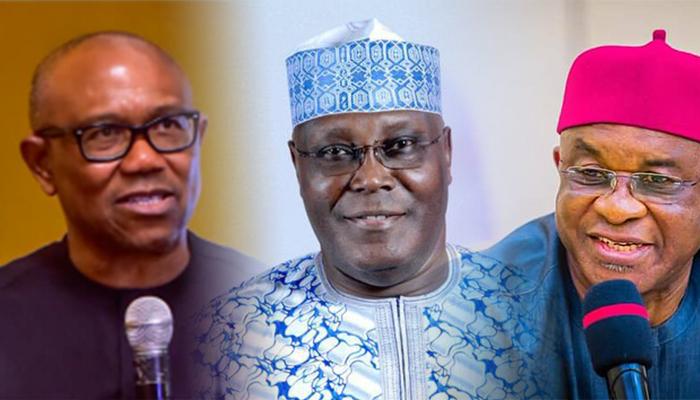
Nigeria’s political environment moved into another consequential phase during the week after a Federal High Court judgment affecting the leadership of the African Democratic Congress (ADC) and Atiku Abubakar’s presidential nomination. The decision brought renewed attention to party organisation, internal political disputes and the legal questions that may influence preparations for the 2027 general election.
The ADC leadership dispute and Atiku Abubakar’s nomination
On Thursday, 5 November, the Federal High Court nullified the process that produced the David Mark-led leadership of the ADC, as well as Atiku Abubakar’s presidential nomination.
The judgment raised questions about the party’s leadership structure and the legal basis of its preparations for the next general election. For a political party seeking to compete nationally, uncertainty over its recognised leadership can affect internal coordination, decision-making and the management of party structures.
The ADC rejected the judgment and indicated that it would appeal. The party subsequently announced that it had filed an appeal against the ruling. The dispute was therefore not conclusively resolved during the review period. The outcome of further proceedings will be important in determining the legal position and the party’s ability to organise around its preferred leadership and candidates.
The case also illustrates the role of the courts in resolving disputes within political parties. Internal party disagreements can have consequences beyond the individuals involved, particularly when they affect the selection of candidates and the organisation of parties ahead of an election.
The judgment should not be treated as the final word on the dispute while the announced appeal remains outstanding.
INEC flags 268 voter records for review
Another development concerned the integrity of Nigeria’s voter register.
The Independent National Electoral Commission disclosed that 268 voter records had been flagged over suspected irregularities. Among the concerns were photographs believed to have been generated using artificial intelligence. Channels Television reported INEC’s explanation of the 268 records flagged by its automated biometric identification system.
INEC said the records were under review. This distinction matters: the flagged records were not automatically confirmed as fraudulent registrations. The commission’s review process is necessary to establish whether irregularities occurred and what action, if any, should follow.
The issue highlights the administrative challenges facing electoral authorities as they manage voter information and digital records. A credible register depends on accurate data, appropriate verification procedures and the ability to identify questionable entries without wrongly excluding legitimate voters.
The commission’s handling of the 268 records will therefore be important to public confidence. Clear communication about the findings and any resulting action will help distinguish confirmed irregularities from cases that were simply selected for further examination.
Tinubu defends economic reforms
The political conversation also included President Bola Tinubu’s defence of his administration’s economic policies during a visit to Akwa Ibom on Friday, 6 November.
The President defended the removal of the fuel subsidy and the foreign-exchange reforms, maintaining that his administration would not reverse the subsidy decision. He also cited an exchange rate of approximately ₦1,300 to the dollar while making his case for the direction of the reforms. Channels Television reported the President’s remarks during his visit to Akwa Ibom.
The remarks placed economic performance firmly within the political debate. Fuel subsidy removal and foreign-exchange management remain central elements of the administration’s economic programme. Their effects on household spending, transport costs and business operations are also important considerations for Nigerians assessing government performance.
As the 2027 election approaches, political competition will involve more than party leadership and candidate selection. Economic conditions and the practical effects of government policies are also likely to influence public debate.
The ADC judgment, INEC’s review of flagged voter records and the President’s defence of his reforms represent different aspects of the political environment. Together, they underline the importance of party organisation, credible electoral administration and public confidence in government institutions.
The next significant developments will include the ADC’s appeal, further judicial proceedings and INEC’s conclusions concerning the flagged voter records.
Story 2: Nigeria Security — State Police Debate and Continuing National Security Threats
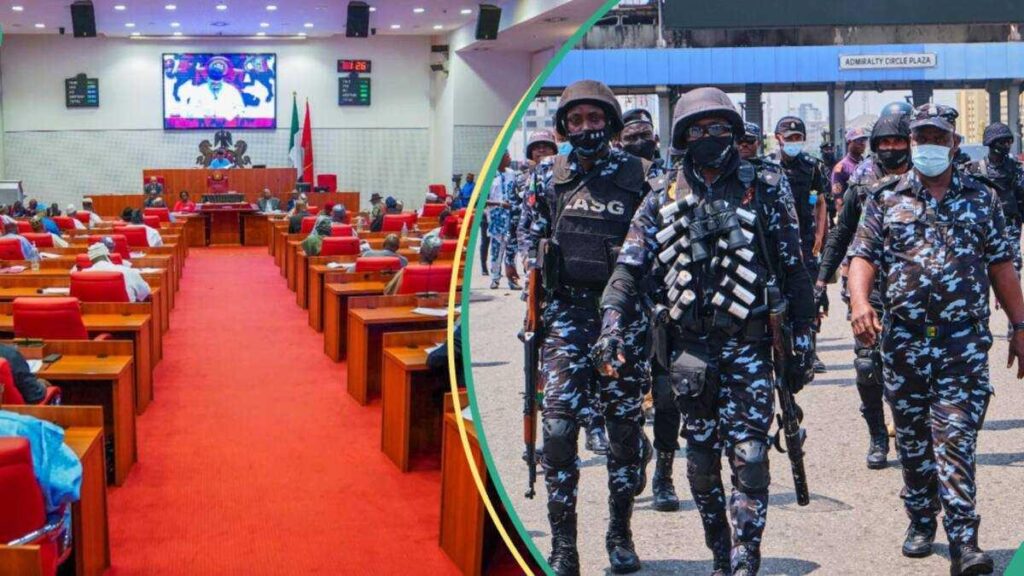
Nigeria’s security debate recorded an important constitutional development during the week as the reported number of state assemblies supporting the proposed introduction of State Police increased. However, a deadly attack on a police convoy in Zamfara State and continuing court proceedings involving six alleged coup plotters demonstrated that security concerns extend beyond the constitutional debate.
State Police amendment reaches reported legislative threshold
The National Assembly initially announced that 28 state assemblies had approved the proposed constitutional amendment to introduce State Police. The Senate subsequently reported that the number had increased to 30. The Federal Ministry of Information and National Orientation reported the Senate’s announcement that 30 state assemblies had approved the proposal.
The reported constitutional threshold is 24 state assemblies. On the figures announced during the period, the proposal had therefore secured the required level of approval among state legislatures.
However, meeting the state-assembly threshold does not mean State Police have already been established. Further constitutional procedures remain necessary before the proposed arrangement can become an operational policing structure.
The distinction is important because the proposal concerns a significant change to Nigeria’s policing framework. Its supporters argue that state-level policing could improve the ability of authorities to respond to local security conditions. But implementation would require a clear legal framework defining responsibilities, powers, funding and operational boundaries.
Accountability would also be central. Any state-level police structure would need safeguards against political interference and mechanisms for addressing misconduct. Without effective oversight, changing the structure of policing would not necessarily guarantee better security outcomes.
The constitutional process is therefore only one part of a wider question about how Nigeria can organise, fund and supervise policing across its different levels of government.
Zamfara convoy attack leaves security personnel dead
The constitutional debate unfolded against the background of continuing attacks on security personnel.
On Tuesday, 3 November, gunmen attacked a police convoy near Gidan-Giye in Tsafe Local Government Area of Zamfara State.
The police confirmed that five officers were killed. Reuters reported a wider death toll of at least eight security personnel, including community protection personnel. Reuters’ report on the Zamfara convoy ambush provides the wider casualty account, while TheCable’s report also describes the police-confirmed deaths and the additional community protection personnel.
The figures refer to different accounts and should be attributed separately. The police-confirmed figure concerns five officers, while the Reuters report described at least eight security personnel killed overall.
The attack highlighted the risks faced by security personnel operating in parts of Zamfara State, where armed violence continues to threaten communities and those responsible for protecting them.
It also demonstrates why constitutional discussions about policing must be considered alongside the immediate operational challenges confronting existing security agencies. A new policing structure, if eventually established, would not automatically resolve the problems of intelligence gathering, personnel protection, operational coordination and the security of vulnerable communities.
Trial of six alleged coup plotters continues
A separate security-related development concerned the trial of six alleged coup plotters.
During the week, a Federal High Court admitted interrogation statements and video recordings involving the defendants. The defendants had challenged the materials, alleging that they were obtained through coercion and torture.
The court’s decision concerned the admissibility of the evidence. It did not establish the guilt of the defendants, and the trial remained ongoing during the review period. Further proceedings were listed for 7 and 10 December.
The allegations concerning how the statements and recordings were obtained remain important to the proceedings. The defendants’ claims must be considered through the judicial process, just as the prosecution’s case must be tested in court.
The State Police amendment, the Zamfara attack and the alleged coup plotters’ trial are separate developments. They should not be presented as connected events. However, they illustrate different responsibilities within Nigeria’s security environment: the structure of policing, the protection of security personnel and the defence of constitutional order.
Story 3: Nigerian Economy — Revenue Shortfalls, Debt Servicing and the Pressure to Control Public Spending
Nigeria’s public finances came under renewed scrutiny during the week after figures showed that Federal Government revenue in the first quarter of 2026 fell substantially below its prorated target. The shortfall, combined with the amount spent on debt servicing, raised questions about the government’s capacity to meet its financial obligations and sustain public programmes.
Revenue falls below first-quarter target
The Federal Government generated approximately ₦5.08 trillion in revenue during the first quarter, against a prorated target of ₦9.22 trillion.
The difference was approximately ₦4.14 trillion, representing a shortfall of about 44.93 per cent below the target. BusinessDay’s report on the first-quarter revenue figures examined the gap between the government’s prorated target and actual collections.
The figures reveal a significant gap between expected and actual collections. Revenue targets are important to government planning because they inform decisions about public expenditure, infrastructure projects and the delivery of government services.
When collections fall below expectations, the government faces pressure to reassess its spending plans, improve revenue generation or consider additional financing.
The figures do not, by themselves, establish which specific government programmes were reduced or delayed during the quarter. They do, however, highlight the importance of matching expenditure commitments with realistic revenue expectations.
Debt servicing absorbs about 91 per cent of collections
The pressure becomes clearer when revenue is considered alongside debt servicing.
Debt servicing during the same quarter amounted to approximately ₦4.63 trillion. According to BusinessDay’s analysis, this represented about 91 per cent of the revenue collected during the period. The publication’s analysis of federal revenue and debt-servicing figures provides the basis for this comparison.
The 91 per cent figure refers to debt servicing as a share of revenue collected, not as a share of total government expenditure.
In practical terms, the amount spent on servicing debt was close to the total revenue collected in those three months. This places the relationship between revenue generation and existing debt obligations at the centre of the fiscal discussion.
Debt servicing covers payments associated with government borrowing. It is a financial obligation that must be met alongside other public responsibilities. When a substantial share of revenue is absorbed by these payments, the amount of internally generated resources available for other priorities becomes an important concern.
The figures underline the need for sustainable revenue performance and careful management of public borrowing.
Tinubu submits revised borrowing request
Against this background, President Bola Tinubu submitted a revised external borrowing request to the National Assembly on Wednesday, 4 November.
The revised proposal amounted to $7,707,404,882.49, or approximately $7.7 billion. It replaced an earlier request involving $20.52 billion and €1.05 billion. Reuters reported the revised $7.7 billion external borrowing proposal, while Premium Times provided details of the request submitted to the National Assembly.
The revised request had not been approved or disbursed during the review period. It therefore remained a proposal awaiting legislative consideration, rather than money already received by the Federal Government.
The National Assembly’s consideration will be important in determining the next stage of the proposal. The intended projects, financing terms and repayment obligations are all relevant to assessing the implications for public finances.
Borrowing can provide financing for government programmes, but it also creates obligations that must be managed over time. In the context of the first-quarter revenue figures, the relationship between additional borrowing, existing debt servicing and future revenue performance deserves close attention.
FG warns against inflated public contracts
The week also brought attention to the management of government expenditure.
On Monday, 2 November, Secretary to the Government of the Federation George Akume warned public institutions against inflated contracts and violations of procurement regulations. PUNCH reported the Federal Government’s warning on inflated public contracts and procurement violations.
The directive reminded government institutions of their responsibilities under the Public Procurement Act of 2007.
Public procurement governs how public funds are committed to contracts, goods, services and infrastructure projects. Compliance is important because it helps establish whether public resources are being spent according to the required procedures and whether government receives value for money.
The warning against inflated contracts raises questions about institutional oversight, compliance and the responsible use of public funds.
Revenue performance, debt obligations and procurement discipline are separate aspects of public financial management, but all are relevant to the government’s ability to meet its responsibilities. Improving collections without controlling wasteful expenditure may not be sufficient. Equally, procurement oversight cannot replace the need for a sustainable revenue base.
Further quarterly revenue and debt figures, as well as the National Assembly’s consideration of the revised borrowing request, will provide additional information about the direction of fiscal policy.
Story 4: Nigeria’s Oil Industry — Investment, Crude Oil Theft, Fuel Prices and the Push for Transparency
Nigeria’s petroleum industry recorded several significant developments during the review period. These included a proposed NNPC share offering, figures on crude oil theft, changing petrol prices and preparations for a new oil and gas licensing round.
The developments raised questions about investment, resource protection, regulatory performance and the cost of fuel in the domestic market.
NNPC considers a five to ten per cent share offering
NNPC Limited’s chief executive, Bashir Bayo Ojulari, disclosed that the company was considering a public share offering involving between five and ten per cent of its shares. Reuters reported Ojulari’s comments on a possible NNPC initial public offering.
The proposed primary listing would be in Nigeria, with possible secondary listings in London or New York.
If pursued, the proposal could represent an important change in the company’s relationship with public investors. A public share offering would bring questions about valuation, financial disclosure, corporate governance and shareholder protection into sharper focus.
However, the proposal remained under consideration during the review period. It should not be described as an IPO that had already been approved or launched. No final listing timetable or completed transaction was established.
Any eventual offering would require clarity about the shares being offered, the company’s financial position and the information made available to prospective investors.
NUPRC reports 3.33 million barrels of crude oil theft
The Nigerian Upstream Petroleum Regulatory Commission reported that approximately 3.33 million barrels of crude oil were stolen in 2025. PUNCH’s report on the NUPRC annual figures details the reported volume of crude oil theft and the commission’s revenue collections.
Its report also showed that the commission’s revenue collections declined from ₦12.56 trillion in 2024 to ₦10.42 trillion in 2025, representing a reported reduction of 17.03 per cent.
The reported volume of crude oil theft highlights the scale of resource losses identified in the regulatory report. It also reinforces the importance of protecting petroleum infrastructure, monitoring production and improving systems for accounting for the country’s oil resources.
The decline in NUPRC collections is another important indicator of the sector’s financial position. However, the two figures should not be treated as proof that crude oil theft alone caused the reduction in collections. Establishing the reasons for the decline would require a fuller examination of the relevant revenue components and other contributing factors.
Petrol prices move during the week
Fuel prices remained an important concern for households and businesses.
Reports during the week indicated that Dangote Refinery’s petrol gantry price had moved down to between ₦1,210 and ₦1,215 per litre before subsequently rising towards ₦1,300. Naira Energies reported the initial gantry-price reduction and later reported the movement back towards ₦1,300 and changes in Lagos pump prices.
In Lagos, reported retail pump prices ranged from approximately ₦1,349 to ₦1,370 per litre.
These figures describe reported market prices during the period, not a uniform national price. Retail prices can differ across locations and outlets.
It is also important to distinguish between a refinery’s gantry price and the pump price paid by motorists. The gantry price relates to the price at which fuel is supplied from the refinery, while the retail price reflects what consumers pay at filling stations.
Changes in petrol prices can affect transport operators, logistics businesses and companies involved in distributing food and other goods. For households, fuel costs can influence everyday spending. For businesses, they can form part of the operating expenses involved in moving products and providing services.
NUPRC prepares 2026 licensing round
The NUPRC also scheduled the opening of its 2026 oil and gas licensing portal for 20 November. The exercise is expected to offer 40 oil and gas blocks to potential investors. The commission’s official announcement of the 2026 licensing round confirms the planned portal opening and the 40 blocks on offer.
The licensing round is intended to provide an opportunity for investment in the upstream petroleum sector. However, the scheduled opening of the portal does not mean that the blocks have already been awarded or that investment agreements have been concluded.
The proposed NNPC share offering, the reported crude oil losses, changes in petrol prices and the upcoming licensing round represent different aspects of the petroleum industry’s position.
The sector faces questions about how to attract investment while improving transparency, protecting national resources and maintaining effective regulation. It also remains important to consumers because changes in domestic fuel prices can affect transport and business costs.
The scheduled licensing portal opening and any further decisions by NNPC on its proposed share offering will be important developments to follow.
Story 5: Nigeria Football — The Flamingos Make History as Africa’s First U-17 Women’s World Cup Champions
Nigeria’s Flamingos delivered one of the most significant sporting achievements of the review period, defeating Japan 2–1 in the final of the FIFA Under-17 Women’s World Cup in Rabat, Morocco, on Saturday, 7 November. FIFA’s official match report confirmed the result, the goalscorers and Nigeria’s historic achievement.
The victory made Nigeria the first African country to win the competition, giving the national team a historic title and marking a major milestone for women’s youth football on the continent.
How Nigeria defeated Japan
Nigeria took the lead in the 39th minute when Awawu Bashiru scored against Japan. The goal gave the Flamingos an advantage before half-time.
The Nigerian side extended that lead shortly after the break. Oluebube Umejiaku scored in the 47th minute, putting Nigeria two goals ahead.
Japan responded in the 80th minute through Fuki Ito, reducing the deficit to one goal. The Flamingos, however, held on for the remainder of the match and secured a 2–1 victory.
The result delivered Nigeria its first title in the competition and made the country the first African nation to lift the FIFA Under-17 Women’s World Cup trophy. The Confederation of African Football’s report on Nigeria’s victory also recognised the achievement as a first for the continent.
A milestone for Nigerian and African women’s football
The achievement extends beyond the final score. It represents a major milestone for Nigerian football and for women’s youth football across Africa.
The Flamingos’ victory places their achievement within the wider history of African participation in international women’s football. It also provides an opportunity to recognise the contribution of young female athletes and the importance of creating conditions in which their abilities can develop.
Winning an international tournament is one achievement; sustaining the progress of players beyond a youth competition requires continued opportunities for development.
Quality coaching, suitable facilities, education, medical support and pathways into higher levels of competitive football are among the areas that can support young athletes. These are important considerations for the future, but they should not be confused with confirmed government or football authority commitments announced as a direct result of the victory.
What is clear is that the Flamingos achieved something historic. Their 2–1 win over Japan gave Nigeria its first title in the competition and made an African team champions for the first time.
The result offered a moment of national celebration during a week dominated by political disputes, security concerns and economic pressures. It demonstrated the ability of young Nigerian athletes to compete successfully on an international stage.
The next challenge is to ensure that the recognition generated by the victory is matched by sustained opportunities for young female footballers to develop their careers.

Conclusion
The week of 2–8 November 2026 presented Nigeria with important questions about institutional credibility, national security, public finance and the management of its natural resources.
The court judgment affecting the ADC, INEC’s review of flagged voter records and President Bola Tinubu’s defence of his economic policies placed political organisation and the approaching 2027 election in focus. The State Police debate, the Zamfara convoy attack and the trial involving six alleged coup plotters highlighted different dimensions of the country’s security responsibilities.
The revenue shortfall, debt-servicing burden and revised borrowing proposal raised further questions about fiscal sustainability and the management of public funds. Developments in the petroleum industry highlighted the continuing importance of investment, resource protection, regulation and fuel-price stability.
Yet the Flamingos’ historic World Cup victory offered a powerful reminder of Nigeria’s sporting potential.
The week’s developments were not necessarily connected by a single cause. Each requires its own response from the relevant institutions. What links them in the national conversation is the importance of effective institutions, responsible management and opportunities that translate national potential into lasting results.
For Nigeria, the challenge remains turning policy decisions, institutional processes and individual achievements into measurable progress for its people.
About the Author