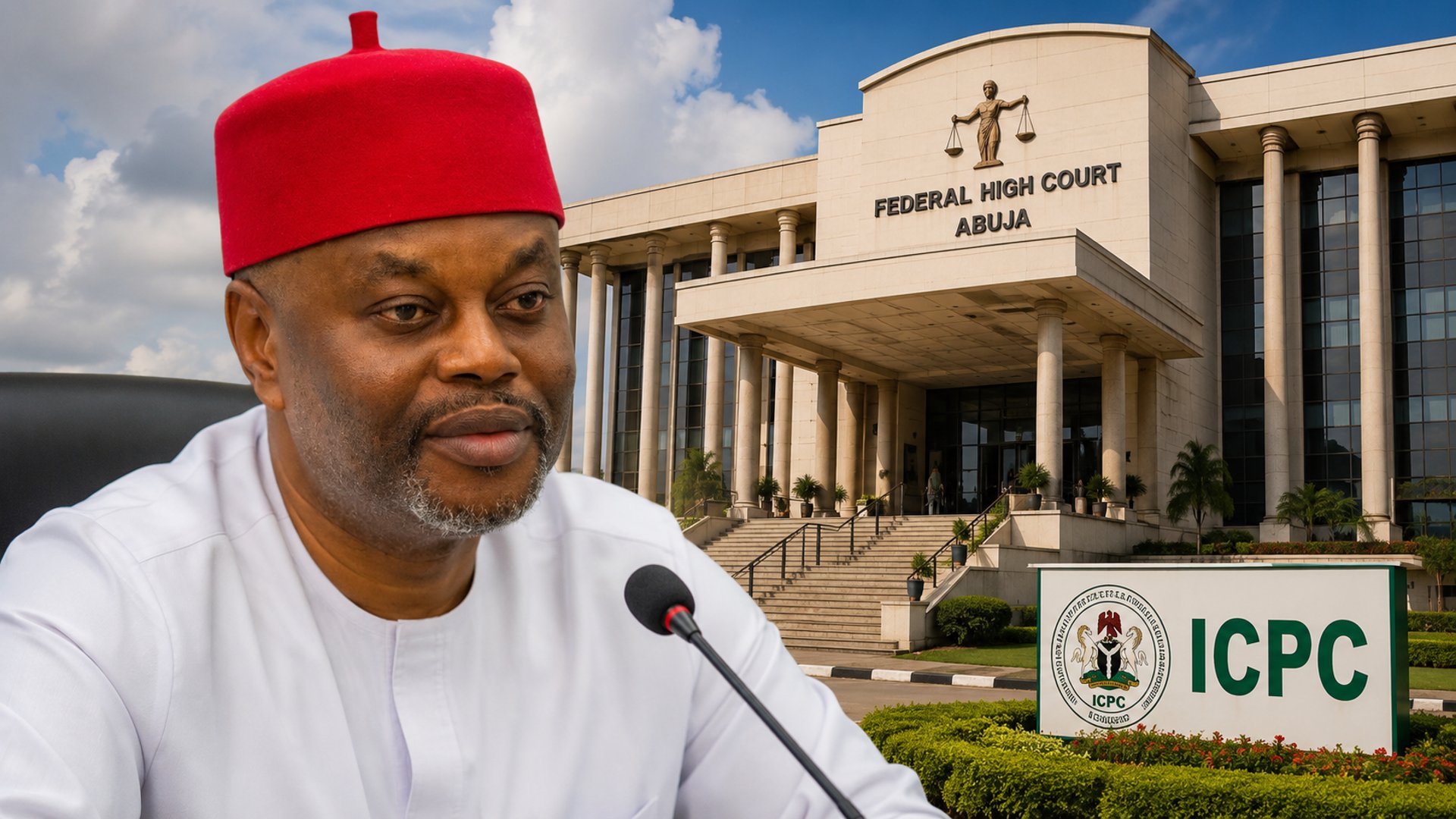
Uche Nnaji Trial: Court Grants Former Minister ₦20m Bail After Not Guilty Plea
Federal High Court sets September trial date as former minister denies certificate forgery, false salary claims and money laundering allegations
ABUJA, Nigeria — The Uche Nnaji trial formally commenced on Monday after a Federal High Court in Abuja granted the former Minister of Innovation, Science and Technology bail in the sum of ₦20 million following his not guilty plea to a six-count criminal charge brought by the Independent Corrupt Practices and Other Related Offences Commission (ICPC).
Justice Joyce Abdulmalik admitted the former minister to bail after hearing submissions from both the prosecution and defence. The ruling came shortly after Nnaji denied allegations bordering on certificate forgery, false salary claims and money laundering, setting the stage for what is expected to be a closely watched legal battle involving a former member of Nigeria’s Federal Executive Council.
The court also fixed September 21, 2026, for the commencement of trial, signalling the transition of the case from preliminary proceedings into a full judicial examination of the evidence.
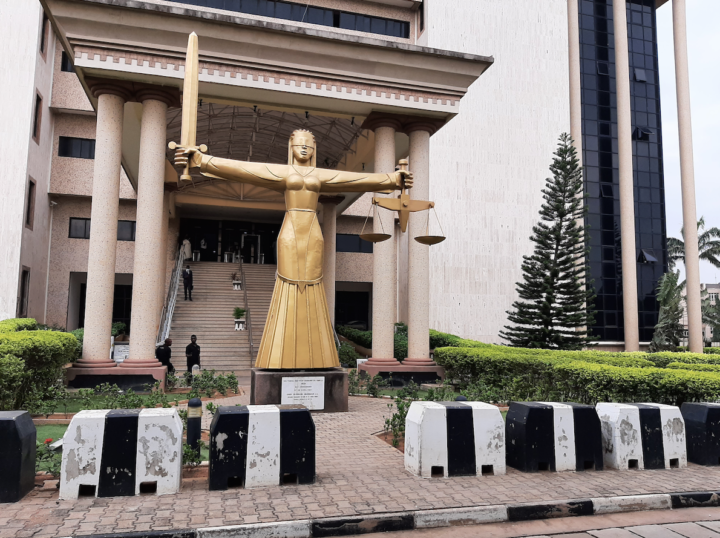
The proceedings mark another significant chapter in Nigeria’s ongoing efforts to strengthen accountability in public office while reinforcing the constitutional principle that every accused person remains innocent until proven guilty by a competent court.
Court Proceedings Take Centre Stage in Uche Nnaji Trial
Unlike many high-profile criminal cases that focus primarily on the allegations themselves, Monday’s proceedings centred largely on procedural issues, particularly the defendant’s arraignment, plea, bail application and preparations for trial.
The ICPC arraigned Nnaji before the Federal High Court on a six-count charge arising from allegations that he submitted forged academic credentials during his ministerial screening process in 2023.
According to the prosecution, the disputed credentials include a degree certificate allegedly issued by theUniversity of Nigeria, Nsukka (UNN) and aNational Youth Service Corps (NYSC) discharge certificate.
Beyond the forgery allegations, prosecutors accused the former minister of unlawfully receiving approximately ₦29.5 million in salaries and official emoluments under false pretences. The charge sheet also includes allegations relating to money laundering.
When the charges were read in open court, Nnaji entered a plea of not guilty to all six counts.
His plea means the prosecution must now prove each allegation beyond reasonable doubt during the substantive trial.
Defence Seeks Bail as Prosecution Indicates Readiness for Trial
Immediately after the arraignment, counsel to the defendant, Senior Advocate of Nigeria Ogwu Onoja, informed the court that a formal application seeking bail had already been filed.
The defence urged the court to exercise its discretion in favour of granting bail pending trial.
On its part, the prosecution stated that it was prepared to proceed with the matter and disclosed that three witnesses were available to testify.
However, prosecutors did not oppose the defendant’s request for bail, leaving the final decision entirely to the court.
The absence of opposition simplified one of the day’s major procedural issues, allowing Justice Abdulmalik to focus on determining appropriate bail conditions that would guarantee the defendant’s appearance throughout the trial.
Court Grants ₦20 Million Bail with Strict Conditions
After considering submissions from both parties, Justice Abdulmalik admitted Nnaji to bail in the sum of ₦20 million with one surety in like sum.
The court imposed several conditions designed to ensure compliance with the judicial process.
Among them:
- The surety must be a Federal Civil Service officer not below Grade Level 15.
- The surety must have maintained a fixed residence for at least four years.
- Documentary evidence of employment must be submitted.
- The surety is required to produce recent salary slips.
- The relevant government authority must verify the surety’s employment status before approval.
In addition, the court directed the former minister to surrender his international passport and any other travel documents pending the conclusion of the proceedings.
Such conditions are commonly imposed in criminal matters where courts seek to minimise the risk of flight while respecting the constitutional rights of defendants awaiting trial.
Why the Bail Conditions Matter
Although bail is not an acquittal, it plays a vital role in Nigeria’s criminal justice system by balancing the rights of an accused person with the interests of justice.
The court’s decision allows Nnaji to remain out of custody while preparing his defence, provided he complies fully with every condition attached to the bail order.
Legal experts generally note that courts consider several factors before granting bail, including:
- The seriousness of the allegations.
- The likelihood that the defendant will appear for trial.
- The possibility of interfering with witnesses or investigations.
- The constitutional presumption of innocence.
In this instance, the prosecution did not oppose the application, a factor that likely influenced the court’s decision to grant conditional bail.
Nevertheless, failure to satisfy any of the conditions could result in the bail being revoked or delayed until compliance is achieved.
Trial Scheduled for September
With the arraignment concluded and bail granted, attention now shifts to the substantive hearing fixed for September 21, 2026.
At that stage, the prosecution is expected to begin presenting documentary evidence and witness testimony in support of the six-count charge.
The defence will also have the opportunity to challenge the prosecution’s evidence through cross-examination and, where necessary, present its own witnesses and documentary evidence.
The outcome of the trial will ultimately depend on the evidence presented before the court rather than the allegations made outside it, reinforcing the principle that judicial proceedings—not public opinion—determine criminal liability.
How the ICPC Investigation Led to the Uche Nnaji Trial
Although Monday’s court appearance focused on arraignment and bail, the case has its roots in an investigation that began months earlier into the authenticity of credentials allegedly presented by Uche Nnaji during his ministerial screening process.
According to the Independent Corrupt Practices and Other Related Offences Commission (ICPC), investigators examined documents said to include a degree certificate purportedly issued by the University of Nigeria, Nsukka (UNN) and a National Youth Service Corps (NYSC) discharge certificate.
The anti-corruption agency alleges that both documents formed part of the credentials submitted during Nnaji’s appointment process in 2023.
Those allegations eventually resulted in a six-count criminal charge that now forms the basis of the ongoing court proceedings.
Beyond the disputed certificates, the ICPC also accuses the former minister of receiving approximately ₦29.5 million in salaries and official emoluments under false pretences, in addition to allegations relating to money laundering.
The commission bears the legal responsibility of proving each allegation during the trial.
Arrest Followed Court-Approved Investigation
The ICPC has maintained that Nnaji’s arrest followed established legal procedures rather than an administrative decision by the commission alone.
According to the agency, it had earlier issued formal invitations requesting the former minister to appear before investigators.
Those invitations, the commission said, were delivered to his known addresses in Abuja and Enugu and were also transmitted through his electronic mail address.
The ICPC stated that after the invitations allegedly went unanswered, it sought and obtained a court order authorising further legal action.
On July 1, 2026, the commission confirmed that Nnaji had been arrested following the execution of a bench warrant issued by the Federal High Court.
The arrest took place at the Nnamdi Azikiwe International Airport, Abuja, shortly after his arrival, with assistance from operatives of the Department of State Services (DSS).
Following the arrest, the former minister was transferred to the ICPC headquarters in Abuja, where investigators continued their inquiries before filing the charges now before the court.
The commission has consistently stated that its actions were carried out in accordance with judicial authorisation and existing legal procedures.
Resignation Came Months Before Arraignment
The legal proceedings also revive public attention on Nnaji’s resignation from the Federal Executive Council in October 2025.
His decision to step down came after allegations concerning his academic credentials gained widespread media attention.
At the time, Nnaji insisted that leaving office should not be interpreted as an admission of wrongdoing.
Instead, he described the move as a personal decision intended to protect the integrity of public institutions while allowing the judicial process to proceed without interference.
He argued that remaining in office during an active legal dispute could become a distraction from the work of the ministry and the broader objectives of the Federal Government.
The former minister also expressed confidence that the courts would eventually determine the facts surrounding the allegations.
Former Minister Continues to Reject Allegations
Throughout the controversy, Nnaji has consistently denied allegations that he falsified his academic records.
He has maintained that he graduated from the University of Nigeria, Nsukka, while rejecting suggestions that he knowingly submitted false credentials.
In previous public statements, he characterised parts of the controversy as a politically motivated campaign designed to damage his reputation.
He further argued that his resignation reflected respect for due process rather than acceptance of the allegations made against him.
Those assertions remain part of his public position, while the prosecution continues to pursue its case before the Federal High Court.
Ultimately, it will be for the court to evaluate the evidence presented by both sides and determine whether the prosecution has proved its case beyond reasonable doubt.
Why Credential Verification Matters in Public Office
Although the allegations against Nnaji remain before the court, the case has renewed discussion about credential verification for individuals nominated to occupy senior public offices.
Academic qualifications and statutory documents such as NYSC certificates often form part of the documentation required during appointments into federal positions.
Consequently, questions surrounding the authenticity of such records can have significant legal, administrative and political implications.
The case also highlights the role of institutions responsible for verifying official credentials before appointments are finalised.
Governance experts have long argued that stronger verification systems reduce the likelihood of disputes emerging after appointments have already been made.
Regardless of the eventual outcome of the trial, the proceedings are likely to contribute to ongoing conversations about transparency, institutional due diligence and public confidence in Nigeria’s appointment process.
A Test of Nigeria’s Anti-Corruption Institutions
The Uche Nnaji trial also places attention on the institutions responsible for enforcing accountability within Nigeria’s public sector.
The ICPC, established to investigate and prosecute corruption-related offences, has increasingly handled cases involving allegations against present and former public officials.
For the commission, successfully presenting evidence in court is as important as conducting investigations, since criminal liability can only be established through judicial proceedings.
Likewise, the Federal High Court serves as the independent forum where evidence is tested, witnesses are examined and legal arguments are evaluated.
This distinction is important because investigations, arrests and public allegations do not by themselves establish guilt.
Instead, Nigeria’s justice system requires prosecutors to satisfy the evidentiary threshold prescribed by law before any conviction can be secured.
Public Interest Extends Beyond One Individual
The significance of the case extends beyond the legal fortunes of one former minister.
It has become part of a wider national conversation about ethical leadership, public accountability and confidence in government institutions.
Cases involving senior public officials often attract heightened public attention because they raise broader questions about integrity in public administration and the effectiveness of oversight mechanisms.
At the same time, legal experts continue to emphasise that public interest should never replace the judicial process.
Every defendant is entitled to a fair hearing, while prosecuting agencies remain under an obligation to prove allegations using credible and admissible evidence before the court.
That balance between accountability and due process is expected to remain central as the Uche Nnaji trial progresses in the coming months.
What Happens Next in the Uche Nnaji Trial?
With the arraignment completed and bail granted, attention now turns to September 21, 2026, when the Federal High Court is expected to commence substantive hearing in the case.
During that phase of the Uche Nnaji trial, prosecutors from the Independent Corrupt Practices and Other Related Offences Commission (ICPC) are expected to present documentary evidence and call witnesses in an effort to prove the six-count charge beyond reasonable doubt.
The defence will, in turn, have the opportunity to cross-examine prosecution witnesses, challenge documentary evidence and present its own witnesses if necessary.
Like every criminal proceeding before Nigerian courts, the outcome will depend entirely on the evidence admitted during trial and the legal arguments advanced by both parties.
Until then, Nnaji remains entitled to the constitutional presumption of innocence.
Why the Case Is Being Closely Watched
The trial has attracted significant public interest because it involves a former cabinet minister whose appointment placed him among the country’s highest-ranking public officials.
Cases involving alleged forgery of academic credentials often generate widespread attention because educational qualifications remain an important requirement for many public appointments.
Beyond the allegations themselves, the proceedings are expected to test the effectiveness of Nigeria’s legal institutions in handling high-profile cases involving influential public figures.
For anti-corruption agencies, such cases are opportunities to demonstrate that investigations can progress through the judicial system irrespective of a suspect’s previous position in government.
For the judiciary, they reinforce the importance of conducting proceedings transparently, independently and strictly within the confines of the law.
Governance and Public Confidence
The Uche Nnaji trial also underscores broader conversations about accountability and institutional credibility.
Public confidence in government is strengthened when allegations involving public office holders are investigated through lawful procedures and resolved in court rather than through speculation or media narratives.
Similarly, effective credential verification remains an important safeguard in public administration.
Many governance experts have argued that stronger pre-appointment verification processes could help reduce disputes over qualifications before appointments are finalised.
While the present case is still before the courts, it has already renewed debate about the need for robust screening mechanisms, accurate record-keeping and cooperation between educational institutions, statutory agencies and appointing authorities.
Such discussions are likely to continue regardless of the eventual outcome of the proceedings.
The Importance of Due Process
One of the defining features of the case has been the emphasis placed by both the court and the parties on due process.
The prosecution has maintained that its investigation and subsequent arrest of the former minister followed court-approved legal procedures.
On the other hand, Nnaji has consistently denied wrongdoing and has argued that the allegations should be determined solely through judicial proceedings.
This distinction is fundamental within Nigeria’s justice system.
An arrest, investigation or criminal charge does not amount to a finding of guilt.
Likewise, a not guilty plea does not determine innocence.
Only the court, after hearing all admissible evidence and legal arguments, can reach a final verdict.
That principle remains central to the administration of criminal justice and protects both the rights of defendants and the integrity of judicial institutions.
Broader Lessons for Public Institutions
Regardless of how the case ultimately ends, it has highlighted several issues that extend beyond one individual.
Among them are:
- The importance of rigorous verification of academic and statutory credentials before public appointments.
- The need for stronger institutional collaboration between regulatory agencies and educational bodies.
- Continued public demand for transparency and accountability in government.
- Respect for the rule of law and judicial independence in resolving high-profile disputes.
The proceedings also serve as a reminder that allegations involving public officials can carry significant political, administrative and reputational consequences long before a court delivers its final judgment.
For that reason, legal experts frequently caution against drawing conclusions before the judicial process has run its full course.
Conclusion
The opening of the Uche Nnaji trial marks the beginning—not the conclusion—of a legal process that could have important implications for public accountability, governance and confidence in Nigeria’s institutions.
Monday’s proceedings were primarily procedural, with the court granting the former minister ₦20 million bail after he pleaded not guilty to allegations relating to certificate forgery, false salary claims and money laundering.
The substantive issues in dispute remain to be tested through evidence and witness testimony when the trial begins on September 21, 2026.
Until then, the prosecution carries the burden of proving its case, while Nnaji retains his constitutional right to be presumed innocent unless and until a competent court rules otherwise.
As the proceedings continue, DSG Herald News will follow developments and provide factual, balanced and context-rich reporting focused on the legal process, institutional accountability and the wider public interest.
Recommended Coverage
Yahaya Bello Trial Faces Fresh School Fees Controversy
Another high-profile corruption trial is unfolding in Nigeria’s courts. Explore how the legal proceedings compare and what they reveal about accountability for former public officials.
Saleh Mamman Arrest Signals Tougher Anti-Corruption Push
Discover how recent anti-corruption investigations are reshaping public accountability in Nigeria and why enforcement agencies are facing growing public scrutiny.
Appeal Court Rebukes Judge in ADC Deregistration Case
Read how another landmark court decision highlights the judiciary’s role in protecting due process, fairness and the rule of law in politically sensitive cases.
About the Author