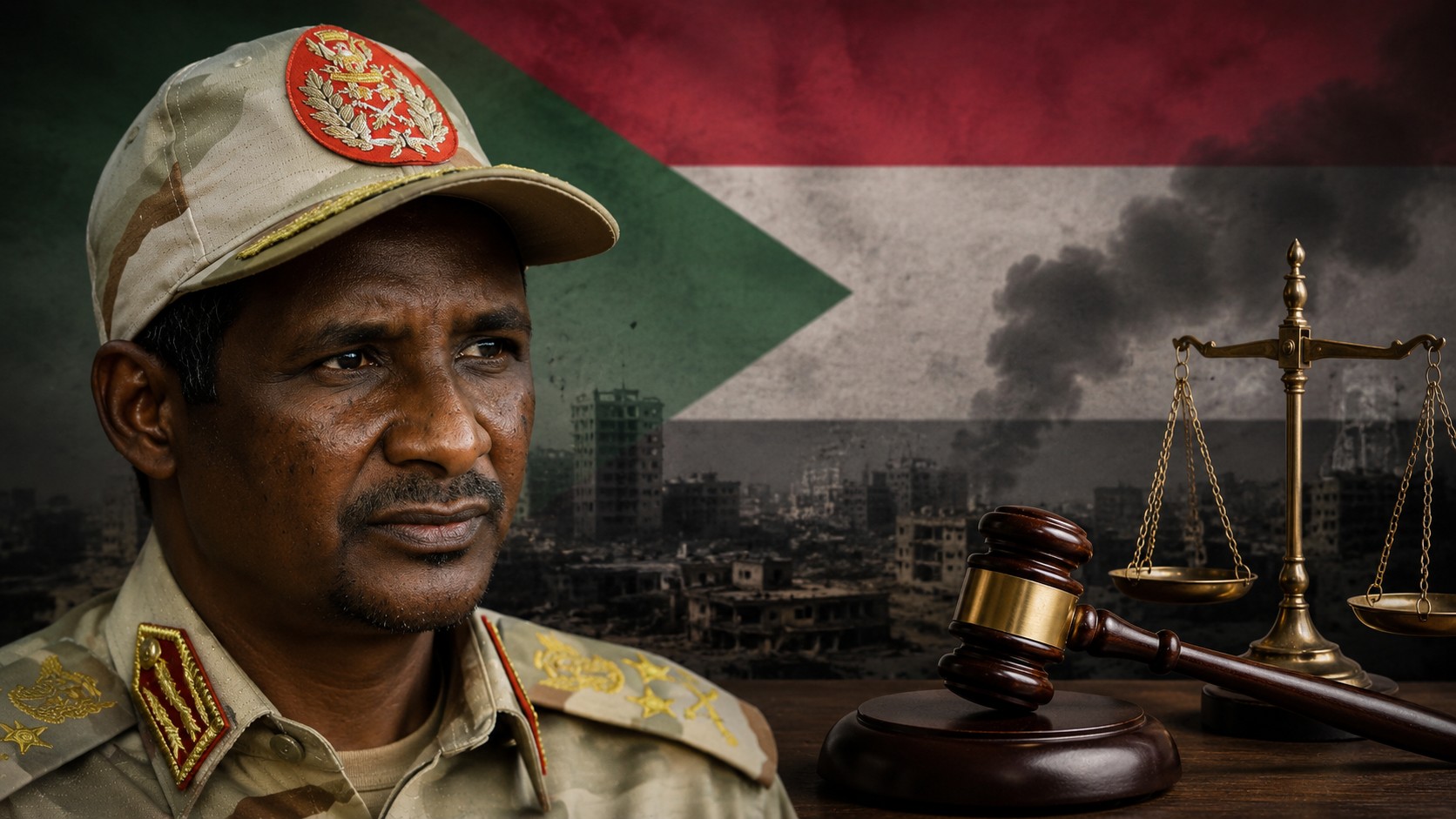
Sudan RSF Death Sentence Marks Historic Court Milestone
PORT SUDAN, Sudan — A Sudanese court has handed down its first major judicial ruling against the leadership of the Rapid Support Forces (RSF) since the country’s devastating civil war began, sentencing RSF commander Mohamed Hamdan Dagalo, popularly known as Hemedti, and 15 other senior figures to death in absentia over atrocities allegedly committed in the western Darfur region.
The verdict, delivered by the Anti-Terrorism and Crimes Against the State Court sitting in the army-controlled city of Port Sudan, represents a significant legal milestone in Sudan’s efforts to hold senior RSF officials accountable for some of the worst violence recorded during the conflict.
Although the ruling cannot immediately be enforced because the defendants are not in government custody, legal observers say the judgment carries considerable symbolic and political weight. It is the first time Sudan’s judiciary has formally convicted the top echelon of the RSF over allegations of war crimes, crimes against humanity and genocide linked to the conflict in Darfur.
The case will now move to Sudan’s Supreme Court for procedural review, a standard legal step before the verdict becomes final under Sudanese judicial procedures.
A Landmark Legal Blow Against the RSF Leadership
Rather than being viewed simply as another development in Sudan’s civil war, the Sudan RSF death sentence marks what many analysts consider the country’s strongest domestic legal response yet to allegations of atrocities committed during the conflict.
Since fighting erupted in April 2023 between Sudan’s Armed Forces (SAF), led by General Abdel Fattah al-Burhan, and the RSF commanded by Hemedti, both sides have faced allegations of serious violations of international humanitarian law. However, this is the first occasion on which Sudan’s courts have imposed capital punishment on members of the RSF leadership.
The judgment also reflects the Sudanese government’s attempt to demonstrate that domestic institutions remain capable of prosecuting alleged perpetrators despite the country’s ongoing instability.
Whether that objective succeeds, however, depends largely on future political developments and the practical possibility of bringing the convicted individuals into custody.
Who Is Mohamed Hamdan Dagalo?
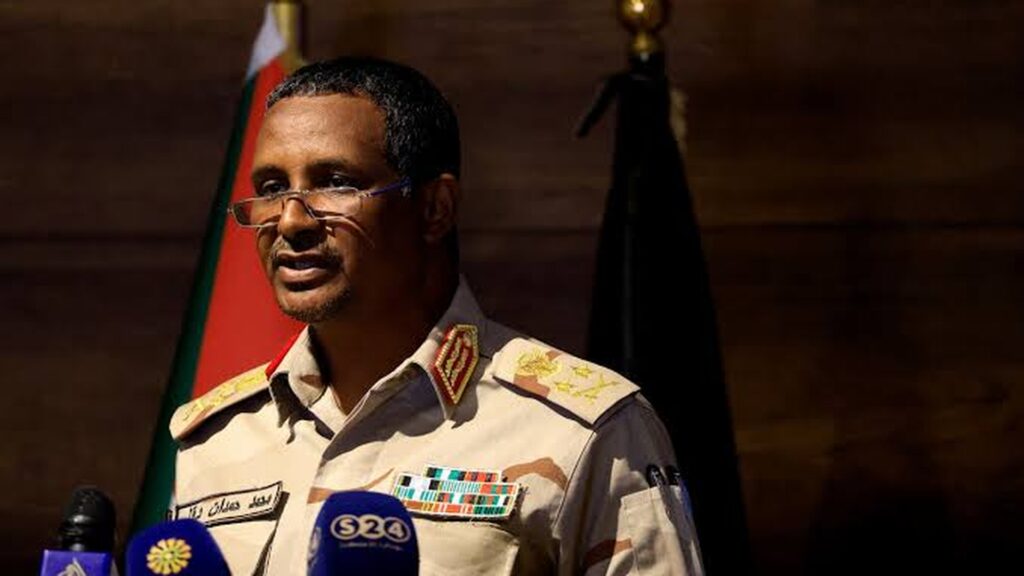
Mohamed Hamdan Dagalo, widely known as Hemedti, rose from commanding Darfur’s Janjaweed militias to become one of Sudan’s most powerful military figures.
Following the overthrow of former President Omar al-Bashir in 2019, Hemedti became Deputy Chairman of Sudan’s Transitional Sovereignty Council and emerged as one of the country’s most influential political and military leaders.
His Rapid Support Forces evolved from a paramilitary organisation into a heavily armed force with significant economic and military influence across Sudan.
Relations between Hemedti and Sudanese army chief General Abdel Fattah al-Burhan deteriorated sharply over disagreements concerning military integration, ultimately triggering the nationwide conflict that has continued for more than three years.
Today, Hemedti remains one of Africa’s most closely watched military figures, with international attention focused on his role in the ongoing conflict.
Court Details and Why the Verdict Was Issued in Absentia
The Anti-Terrorism and Crimes Against the State Court delivered the sentences from Port Sudan, which has served as Sudan’s de facto administrative capital since Khartoum became one of the principal battlefields of the conflict.
Because neither Hemedti nor the other defendants are under government control, the court issued the judgments in absentia, meaning the accused were tried without being physically present.
Such rulings are permitted under Sudanese law under specific circumstances, particularly where defendants remain outside the reach of state authorities.
While an in absentia conviction establishes the court’s legal findings, enforcing the sentences depends entirely on whether those convicted are eventually arrested or surrender to Sudanese authorities.
For that reason, legal experts note that the immediate significance of the ruling lies less in the prospect of executions and more in its symbolic value as an official declaration of criminal responsibility.
The Crimes Behind the Convictions
According to Sudan’s official Sudanese News Agency (SUNA), prosecutors accused Hemedti and his co-defendants of orchestrating widespread violence during attacks on West Darfur in 2023.
The court found them guilty over several major allegations, including:
- The assassination and mutilation of West Darfur Governor Khamis Abkar in June 2023 after he publicly accused the RSF of committing genocide.
- Coordinating attacks on El Geneina, where thousands of civilians—primarily from the Masalit ethnic community—were reportedly killed.
- Committing acts amounting to genocide.
- Crimes against humanity.
- War crimes committed during military operations in Darfur.
The judgment concluded that Hemedti personally planned and directed the operations, while other senior commanders were convicted for planning, coordinating or participating in the attacks.
Senior RSF Figures Also Sentenced
The court’s ruling extended beyond Hemedti to several prominent members of the RSF command structure.
Those sentenced include:
- Abdel Rahim Hamdan Dagalo, Hemedti’s brother and deputy commander of the RSF.
- Algoney Hamdan Daglo Musa, another senior member of the Dagalo family.
- Abdel Rahman Juma, an influential RSF commander in West Darfur.
- Al-Tijani Al-Tahir Karshoum, described as a tribal leader allied with the paramilitary group.
The convictions indicate that prosecutors sought to establish responsibility across the RSF’s command hierarchy rather than focusing solely on its leader.
By targeting senior commanders alongside Hemedti, Sudanese authorities appear to be signalling that accountability extends to those alleged to have planned, coordinated and executed military operations linked to atrocities in Darfur.
Why This Verdict Matters Beyond Sudan
The Sudan RSF death sentence is significant not only because of the punishments imposed but because it represents one of the clearest attempts by Sudan’s domestic judicial system to address allegations of mass atrocities during an active armed conflict.
Legal accountability has become one of the central issues surrounding Sudan’s civil war, with international organisations repeatedly documenting allegations of attacks on civilians, ethnic violence and widespread human rights abuses.
Although international bodies—including the United Nations—have conducted investigations into alleged abuses in Darfur, this ruling demonstrates that Sudan’s own courts are also attempting to pursue criminal responsibility.
Whether those efforts ultimately contribute to justice or become part of broader political disputes remains to be seen.
Understanding the Darfur Atrocities at the Centre of the Case
The convictions stem from events that unfolded in West Darfur, particularly in and around the city of El Geneina, which became one of the bloodiest theatres of Sudan’s civil war.
The violence intensified in mid-2023 as fighting spread beyond Khartoum and into Darfur, a region that has endured decades of armed conflict, ethnic violence and humanitarian crises. Reports from international organisations, humanitarian agencies and independent investigators described widespread attacks on civilians, large-scale displacement, destruction of homes and allegations of ethnically targeted killings.
One of the most significant incidents referenced in the court proceedings was the killing of Khamis Abdallah Abkar, the Governor of West Darfur.
Shortly before his death in June 2023, Abkar publicly accused the RSF and allied armed groups of carrying out acts of genocide against the Masalit community. Hours later, he was abducted and later killed. Images and videos circulated widely online, prompting condemnation from governments, the United Nations and human rights organisations.
The Sudanese court concluded that the governor’s assassination formed part of a broader campaign of violence that also included attacks on civilians across El Geneina.
The Alleged El Geneina Mass Killings
Among the most serious allegations examined during the trial were attacks on El Geneina, the capital of West Darfur State.
According to the prosecution’s case, large numbers of civilians—many from the Masalit ethnic group—were killed during coordinated assaults on the city.
Independent international organisations have previously documented widespread destruction, reports of mass graves, sexual violence, looting and forced displacement in the area. While casualty figures vary among different investigations, the court proceedings cited allegations that approximately 15,000 people were killed during the attacks.
The RSF has consistently denied responsibility for genocide and other alleged war crimes in Darfur, maintaining that it has been unfairly blamed for violence involving multiple armed actors. Those denials remain part of the broader international debate surrounding accountability for the conflict.
Why the Verdict Is Being Closely Watched
The significance of the ruling extends well beyond the courtroom.
Legal experts say judgments against senior military leaders during an ongoing civil war are relatively uncommon, particularly when the accused continue to command armed forces outside government control.
For Sudan’s military-backed authorities, the ruling projects an image of institutional resilience despite the country’s fractured political landscape. It also reinforces the government’s longstanding position that the RSF should be held criminally responsible for atrocities committed during the conflict.
However, critics are likely to question whether a court operating under an administration aligned with one party to the conflict can be viewed as entirely independent. Such concerns have surfaced in previous discussions surrounding wartime prosecutions in Sudan, although the court maintains that its proceedings are based on domestic law and available evidence.
Ultimately, the credibility of the ruling will depend not only on legal procedures but also on whether due process is seen to have been respected and whether future judicial reviews uphold the convictions.
What Does ‘In Absentia’ Mean?
A key feature of the case is that every sentence was delivered in absentia, a legal term meaning that the defendants were not physically present during the proceedings.
This does not necessarily invalidate a judgment. Many legal systems permit trials in absentia under specific conditions, particularly when defendants cannot be located or deliberately avoid appearing before the court.
In Sudan’s case, the court proceeded because Hemedti and the other convicted individuals remain outside areas controlled by the Sudanese government.
The practical challenge, however, lies in enforcement.
Unless those sentenced are arrested or surrender, the death sentences cannot be carried out. Instead, the ruling functions primarily as a formal judicial determination of criminal responsibility and could influence future legal proceedings, diplomatic negotiations and international accountability efforts.
The Road to Sudan’s Supreme Court
Following the judgment, the case will move to Sudan’s Supreme Court, where judges will conduct a procedural review before any sentence becomes final.
This stage does not automatically reopen the factual findings of the trial but examines whether legal procedures were properly followed.
Possible outcomes include:
- Upholding the convictions and sentences.
- Ordering aspects of the trial to be reconsidered.
- Modifying elements of the judgment if procedural issues are identified.
The review process is expected to attract close attention from legal observers both within Sudan and internationally.
A Civil War That Continues to Devastate Sudan
The court ruling comes against the backdrop of one of the world’s worst humanitarian crises.
Since fighting erupted in April 2023, Sudan has witnessed widespread destruction of infrastructure, economic collapse and the displacement of millions of people.
Entire communities have been uprooted as fighting spread across Khartoum, Darfur, Kordofan and several other regions. Schools, hospitals and public institutions have either been destroyed or forced to suspend operations, while humanitarian agencies continue to warn about worsening food insecurity.
International relief organisations estimate that more than 12 million people have been displaced during the conflict, with millions seeking refuge in neighbouring countries including Chad, South Sudan, Egypt, Ethiopia and the Central African Republic.
The humanitarian emergency has also been compounded by disease outbreaks, disrupted agricultural production and restricted humanitarian access to conflict-affected communities.
For many Sudanese civilians, daily survival remains a far more immediate concern than courtroom proceedings, even as the search for justice continues.
The International Response
The conflict in Sudan has drawn sustained concern from the United Nations, the African Union, the Intergovernmental Authority on Development (IGAD) and numerous humanitarian organisations.
International actors have repeatedly called for:
- An immediate ceasefire.
- Protection of civilians.
- Independent investigations into alleged atrocities.
- Unrestricted humanitarian access.
- Renewed political dialogue between the warring parties.
Several governments have also imposed sanctions on individuals accused of contributing to the violence, while international human rights organisations continue to document alleged violations by multiple parties to the conflict.
The latest court ruling adds another layer to these international efforts by introducing a domestic judicial process that seeks to establish criminal responsibility for some of the conflict’s gravest allegations.
What the Verdict Means for Sudan’s Search for Justice
The Sudan RSF death sentence is unlikely to bring an immediate end to the country’s conflict, but it marks an important moment in Sudan’s pursuit of legal accountability.
For victims and families affected by the violence in Darfur, the ruling represents official recognition by a domestic court that serious crimes were committed and that senior military leaders should be held responsible. Whether those convictions ultimately lead to arrests or punishment remains uncertain, but the judgment establishes a legal record that could influence future prosecutions and transitional justice efforts.
Legal analysts note that many post-conflict societies begin rebuilding public trust through judicial processes, even when those processes face practical obstacles. In Sudan’s case, the challenge will be ensuring that legal accountability is accompanied by political reconciliation, institutional reform and meaningful protection for civilians.
Could the Verdict Affect Peace Negotiations?
One of the major questions arising from the ruling is whether it will complicate ongoing diplomatic efforts to end Sudan’s civil war.
Peace negotiations often require the participation of leaders from all sides of a conflict. A death sentence against the head of one of the principal armed factions may make future talks more difficult, particularly if the RSF views the judgment as politically motivated.
On the other hand, supporters of the ruling argue that lasting peace cannot be achieved without accountability for alleged atrocities. They contend that ignoring accusations of genocide, crimes against humanity and war crimes would undermine any future political settlement and deny justice to victims.
This debate reflects a broader dilemma seen in many conflict zones: balancing the pursuit of justice with the practical demands of negotiating an end to violence.
Why the Darfur Conflict Continues to Draw Global Attention
Darfur has long been associated with one of Africa’s most enduring humanitarian crises.
The region first gained international attention in the early 2000s following widespread reports of ethnic violence, mass displacement and attacks on civilians. Those events prompted investigations by international bodies and led to global campaigns calling for greater protection of vulnerable communities.
More than two decades later, renewed fighting has once again placed Darfur at the centre of international concern.
The latest court ruling reinforces the region’s significance in Sudan’s conflict, with prosecutors linking many of the most serious allegations against the RSF leadership to events in West Darfur and El Geneina.
For humanitarian organisations, the priority remains ensuring civilian protection and expanding access to aid for communities affected by ongoing violence.
Regional and African Implications
Sudan’s instability extends well beyond its borders.
Neighbouring countries, including Chad, South Sudan, Egypt, Ethiopia and the Central African Republic, continue to experience the effects of refugee movements, disrupted trade and regional security concerns linked to the conflict.
The African Union and regional organisations have repeatedly urged Sudan’s rival military factions to resume negotiations and protect civilians, warning that prolonged instability could undermine security across the Horn of Africa and the Sahel.
The court’s decision may also influence discussions within African legal and political institutions about how domestic courts can address alleged war crimes during active conflicts.
What This Means for Nigeria and the Wider African Audience
Although the fighting is taking place thousands of kilometres from Nigeria, developments in Sudan remain important for the continent as a whole.
Nigeria has historically supported peacekeeping operations and diplomatic initiatives across Africa through the African Union and the Economic Community of West African States (ECOWAS). The humanitarian crisis in Sudan also underscores broader continental challenges surrounding conflict prevention, civilian protection and post-conflict reconstruction.
For African policymakers, the ruling highlights the growing expectation that those accused of serious international crimes should face legal scrutiny, whether through domestic courts or international mechanisms.
The judgment therefore contributes to wider conversations about governance, accountability and the rule of law across Africa.
Media Coverage and the Challenge of Reporting Wartime Justice
Reporting on legal proceedings arising from armed conflicts requires careful distinction between judicial findings, allegations and independently verified facts.
While the Port Sudan court has convicted Hemedti and his co-defendants, the RSF has consistently denied committing genocide, war crimes or crimes against humanity in Darfur. International organisations, including United Nations experts and human rights groups, have documented extensive allegations of abuses, but many aspects of the conflict remain contested and difficult to investigate because of ongoing fighting.
As reported byAnadolu Agency and regional media, the court’s decision now enters a new phase with Supreme Court review, while the broader conflict continues without a comprehensive political settlement.
Conclusion
The Sudan RSF death sentence represents far more than a headline about capital punishment.
It is the first major attempt by Sudan’s domestic judicial system to hold the leadership of the Rapid Support Forces legally responsible for alleged atrocities committed during one of Africa’s most destructive ongoing conflicts.
Whether the sentences are ever enforced remains uncertain. The defendants remain outside government custody, and the case must still undergo review by Sudan’s Supreme Court. Yet the ruling has already become a landmark moment in the country’s legal history, signalling that accountability is becoming an increasingly prominent element of Sudan’s response to the civil war.
For millions of Sudanese civilians displaced by violence, however, the ultimate measure of success will not rest solely on court judgments. It will depend on whether the country can achieve lasting peace, deliver justice for victims, rebuild shattered communities and prevent future atrocities.
As Sudan’s conflict enters another critical phase, the court’s decision is likely to shape legal, political and diplomatic discussions both within the country and across the international community for months to come.
Recommended Coverage
Somaliland Recognition Reshapes Horn of Africa Politics
Discover how shifting alliances and political recognition are transforming the Horn of Africa, a region where Sudan’s conflict is already reshaping regional security and diplomacy.
Understanding these geopolitical changes provides deeper context to Sudan’s ongoing instability and its wider impact on Africa.
Russia-Africa Strategy: Ethiopia Alliance Signals New Power Shift
Explore how global powers are expanding their influence across Africa as conflicts and political instability redefine strategic partnerships.
The report explains why Sudan remains central to a rapidly changing geopolitical landscape on the continent.
DR Congo Constitution Row Fuels July Protest Plan
Across Africa, courts and political institutions are increasingly shaping national crises. See how legal battles and governance disputes are unfolding in another major African nation.
The story offers valuable perspective on the growing role of judicial decisions in resolving—or intensifying—political conflicts.
About the Author