INTRODUCTION
When international institutions fail to agree, military conflicts continue, digital financial systems come under attack and transport disasters claim lives, the consequences reach far beyond the immediate headlines. The week of 26 October to 1 November 2026 brought several such developments into focus, raising questions about the ability of governments and institutions to manage risks and protect people.
This Global news review examines five major narratives from the reporting period. International diplomacy faced difficulties in Atlanta and at the United Nations Security Council, while diplomatic engagement involving Iran and the United States continued without a comprehensive agreement. The Russia-Ukraine war remained a source of civilian casualties and international security concerns, even as Washington approved a potential $2.1 billion sale of Patriot missile interceptors to Kyiv.
Digital financial security also came under scrutiny following a reported cryptocurrency theft valued at approximately $6.3 billion. Elsewhere, biodiversity commitments and climate-related health risks highlighted the gap between international policy and practical implementation. In Spain, a high-speed train collision near Urda caused a major loss of life and prompted questions about railway safety.
These developments have different causes and require different responses. Their wider significance lies in what they reveal about diplomacy, security, institutional responsibility and the practical consequences of decisions made by those entrusted with public protection.
STORY 1: INTERNATIONAL DIPLOMACY — G20 DIVISIONS AND UN DISAGREEMENTS EXPOSE GLOBAL CHALLENGES
International diplomacy faced a difficult test during the week as major powers struggled to reach common positions on conflicts, territorial disputes and security concerns. Two developments illustrated the challenge: the failure of G20 foreign ministers to issue a joint communiqué after their meeting in Atlanta and the inability of the United Nations Security Council to adopt either of two competing draft resolutions concerning Western Sahara.
Both outcomes involved different institutions and political questions. However, they highlighted a shared difficulty in international relations: governments can participate in the same diplomatic process without reaching agreement on the decisions before them.
G20 foreign ministers leave Atlanta without a joint communiqué
G20 foreign ministers met in Atlanta on 30 and 31 October. The meeting ended without a joint communiqué, with the United States issuing a chair’s statement instead. The Associated Press reported that ministers concluded the talks without consensus on major security issues.
The distinction is important. A joint communiqué represents an agreed position among participating members. A chair’s statement, by contrast, communicates a statement issued by the chair of the meeting and should not be mistaken for a consensus document.
The G20 brings together 19 countries and two regional organisations: the European Union and the African Union. It is an important platform for discussions on global economic and political challenges, providing a forum where major economies and regional institutions can engage on issues that cross national borders.
However, the existence of a common platform does not guarantee agreement. Governments may recognise the importance of discussing international challenges while disagreeing over priorities, proposed responses and the language used to describe those issues.
The Atlanta meeting demonstrated this difficulty. Participants were unable to reach a common position on major international issues, leaving the United States to issue a chair’s statement.
The absence of a joint communiqué does not mean that the meeting produced no discussions or diplomatic engagement. It does, however, indicate that participants did not reach the level of agreement required for a collective statement.
Attention will now turn to preparations for the G20 leaders’ summit scheduled for December. Whether further discussions can produce greater agreement remains an important question for international diplomacy.
Western Sahara disagreement leaves MINURSO mandate questions unresolved
A similar diplomatic challenge emerged at the United Nations Security Council.
On 30 October, the Council failed to adopt either of two competing draft resolutions concerning the future of MINURSO, the United Nations peacekeeping mission in Western Sahara. Security Council Report’s briefing outlined the competing US and Russian drafts, while Reuters reported that neither secured adoption.
The United States and Russia backed different proposals, but neither draft was adopted. The disagreement left the immediate mandate situation unresolved.
MINURSO is an established United Nations mission in Western Sahara. Decisions concerning its mandate are important to the international arrangements surrounding the territory. However, the failure to adopt a new resolution should not automatically be interpreted as evidence that the mission ceased operating.
The episode illustrates how disagreements among influential Security Council members can complicate decisions concerning international peacekeeping arrangements. It also highlights the difference between disagreement over a mission’s mandate and the operational status of the mission itself.
For the Council, the challenge is to find a position that can secure sufficient support among its members. Where competing proposals cannot gain the necessary backing, the immediate diplomatic outcome may remain uncertain.
Qatar remains involved in Iran–United States diplomatic contacts
Diplomatic engagement involving Iran and the United States also continued during the week, with Qatar remaining involved in the contacts.
However, accounts of the proposals and their terms differed, and no comprehensive agreement was announced.
Diplomatic engagement does not necessarily mean that the parties have reached an understanding. Contacts may continue even when governments maintain different positions on the issues under discussion.
Qatar’s involvement placed the country within the continuing diplomatic effort, but the absence of a comprehensive agreement means the outcome remained unresolved during the reporting period.
Other developments add to international security concerns
The United Nations confirmed the death of its employee, Mohammad el Shami, while in Houthi custody. He had been detained since June 2024. The circumstances surrounding his death remained unclear.
In Asia, North Korean state media reported tests involving cluster-bomb warheads for tactical missiles. Reuters’ report attributed the test details to state media, while Yonhap also reported the announcement. Claims about the weapons’ performance have not been independently verified and should be treated as statements made by North Korean state media rather than independently established assessments.
China also reported coast guard patrols around Taiwan. Reuters reported that Beijing described the activity as routine law enforcement, while Taiwan’s authorities rejected China’s jurisdictional claims and viewed the increased maritime presence as pressure.
These developments concern different countries and security issues. They should not be treated as parts of a single coordinated event. Nevertheless, they illustrate the range of diplomatic and security challenges confronting the international community.
The week’s developments leave important questions about the capacity of international institutions to manage disagreements and maintain effective cooperation. Preparations for the December G20 leaders’ summit, further discussions at the United Nations and continuing diplomatic engagement involving regional tensions will remain important areas to watch.

STORY 2: RUSSIA-UKRAINE WAR — MILITARY STRIKES AND DEFENCE ASSISTANCE KEEP INTERNATIONAL SECURITY IN FOCUS
The Russia-Ukraine war continued to exact a human cost during the week, with Russian strikes causing casualties in Ukrainian cities while the United States approved a potential $2.1 billion sale of Patriot missile interceptors to Ukraine.
The developments highlighted two major aspects of the conflict: the continuing vulnerability of civilians and the international effort to strengthen Ukraine’s air defence capabilities. The security of Black Sea shipping also remained an important concern, given the wider commercial implications of disruptions to the route.
Russian strikes cause casualties in Kharkiv and Pavlohrad
On 26 October, Reuters reported that Russian strikes hit the Ukrainian city of Kharkiv, killing two people and injuring four, according to the city’s mayor, Ihor Terekhov.
Reuters also reported that Ukrainian regional authorities recorded casualties following a separate drone strike in Pavlohrad. The regional governor’s account said one person was killed and ten others injured.
The two attacks occurred in separate locations and should be understood as distinct incidents. Together, however, they illustrate the continuing danger facing communities in Ukraine as the war persists.
The impact of military operations is not limited to the forces directly engaged in combat. Civilians in affected areas face the immediate consequences of attacks, while local authorities must respond to casualties and the wider disruption caused by continuing hostilities.
The reports from Kharkiv and Pavlohrad therefore form part of the wider picture of civilian vulnerability during the conflict. They also underline why the protection of population centres remains central to discussions about Ukraine’s defence requirements.
United States approves potential $2.1 billion Patriot sale
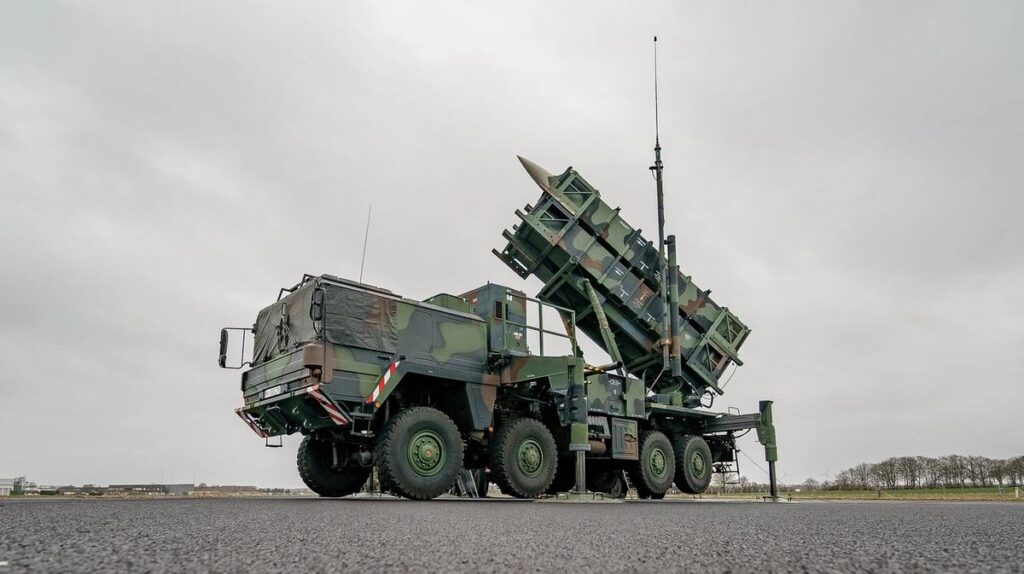
A major development in military assistance came with the United States’ approval of a potential sale of 500 Patriot PAC-3 missile interceptors to Ukraine, valued at an estimated $2.1 billion, according to The Associated Press.
The Patriot system is designed to defend against incoming aerial threats, including ballistic missiles. Additional interceptors could strengthen Ukraine’s ability to protect its cities and critical infrastructure against such threats.
The approval represents an important development in the discussion about Ukraine’s military support. However, the distinction between approval and delivery is essential.
Approval of a potential sale does not mean the missiles have already been delivered or deployed. The practical effect will depend on delivery arrangements, timing and the eventual availability of the interceptors.
This matters when assessing the immediate consequences of international military assistance. A government may approve a sale or supply arrangement, but the equipment must still reach the intended recipient before it can be used.
The $2.1 billion decision should therefore be understood as approval of a potential sale, not proof that Ukraine has received the full quantity of interceptors or that its air defence capacity has already changed by the same amount.
Future attention will focus on the arrangements for the sale and the timing of any deliveries.
Black Sea shipping remains an important concern
The conflict also continued to influence international economic and security considerations, particularly around the Black Sea.
A limited proposal intended to protect grain and energy shipments received attention during the week. The Black Sea is an important commercial route, and disruptions to shipping can affect trade beyond the countries directly involved in the war.
This makes maritime security an issue with wider international implications. Commercial activity depends on the ability of vessels to move through important routes, while conflict-related risks can create uncertainty for shipping arrangements.
However, no confirmed acceptance of the proposal by Russia and Ukraine was established during the reporting period. It should not be described as a comprehensive ceasefire or a settlement of the war.
A limited arrangement intended to protect specific shipments would not, by itself, resolve the wider conflict or establish a general end to hostilities. Its practical significance would depend on the terms, acceptance and implementation of any agreement.
Military assistance and diplomacy remain separate challenges
The week’s developments show that the Russia-Ukraine war continues to present challenges on several fronts.
Military pressure remains a reality inside Ukraine. International partners continue to consider measures intended to strengthen its defence, while diplomatic discussions also address the protection of commercial shipping.
These issues are related to the wider conflict but require different responses. Military assistance concerns Ukraine’s capacity to defend against attacks. Shipping arrangements concern the security of commercial routes. Neither should be mistaken for a resolution of the war itself.
The next developments to watch include delivery arrangements for the approved Patriot interceptors, further decisions on military assistance and any confirmed agreement concerning Black Sea shipping.
As conventional military conflict continues, another area of international security has drawn attention: the protection of digital financial systems against sophisticated cyber operations.
STORY 3: CYBERSECURITY THREATS — REPORTED $6.3 BILLION CRYPTOCURRENCY THEFT RAISES DIGITAL SECURITY CONCERNS
A reported cryptocurrency theft valued at approximately $6.3 billion placed digital financial security under renewed scrutiny during the week.
The incident was reported by Binance, one of the world’s major cryptocurrency platforms. The United States Federal Bureau of Investigation attributed the operation to North Korea’s TraderTraitor activity, according to Elliptic’s updated analysis.
The reported scale of the theft and the subsequent efforts to freeze assets have drawn attention to the financial exposure facing digital asset platforms and the challenges confronting institutions investigating cyber-related financial crimes.
Binance and Elliptic report different estimates
Binance’s security update put the loss at approximately $6.3 billion. Elliptic’s analysis estimated the stolen cryptoassets at about $6.43 billion and reported its own verified frozen-asset figure.
Although the figures are close, they are separate estimates from different organisations and should be presented as such. They should not be combined into a single total.
The difference also demonstrates why the source of a financial estimate matters. A company reporting an incident and an independent analytics firm may use different methods or assessments when calculating the value of stolen assets.
The reported scale of the incident is significant because it highlights the financial exposure facing digital asset platforms and the potential consequences of sophisticated cyber operations.
Cryptocurrency platforms operate across national borders, while digital assets can move through networks that make tracing and recovery difficult. This creates a complex security environment for companies and law-enforcement agencies investigating large-scale thefts.
Frozen funds are not necessarily recovered funds
Another important aspect of the incident concerns the value of cryptocurrency reportedly frozen during the response.
Binance reported that around $3 billion had been frozen. Elliptic, meanwhile, said it had independently verified approximately $2.85 billion in frozen assets.
These figures should remain separate. More importantly, frozen assets must not be confused with recovered funds.
Freezing an asset does not necessarily mean that the funds have been returned to their rightful owner or that the recovery process has been completed. A frozen asset may be prevented from moving while investigations and other procedures continue.
Recovery is a separate outcome and should not be assumed simply because funds have been frozen.
The reported figures therefore describe estimates of assets frozen during the response, not confirmed totals of recovered cryptocurrency. This distinction is necessary to avoid overstating the success of the response or giving readers an inaccurate picture of how much of the reported theft has been recovered.
FBI attribution places the incident within wider cyber-security concerns
The United States Federal Bureau of Investigation attributed the operation to North Korea’s TraderTraitor activity.
That attribution places the incident within the wider debate about state-linked cyber threats and the use of digital attacks to obtain financial resources. However, it remains important to identify the FBI as the source of the attribution rather than presenting it as a conclusion independently established by every organisation reporting on the incident.
The case also raises broader questions about the security of digital financial infrastructure.
Cryptocurrency platforms depend on systems that allow digital assets to be held and transferred across networks. When those systems are targeted, the consequences can extend beyond the immediate company involved.
The movement of digital assets across borders can complicate efforts to trace transactions, identify recipients and recover stolen funds. For investigators, the challenge includes following the movement of assets and determining whether additional funds can be frozen or recovered.
For companies operating digital asset platforms, the incident reinforces the importance of protecting financial systems against sophisticated attacks. It also demonstrates why cybersecurity has become an important part of the wider financial security discussion.
Separate technology and security developments
Other technology and security developments also emerged during the week.
The United States considered a proposal concerning Chinese telecommunications access to US phone-number resources. There was also reporting about China’s development of ship-based stealth drones.
These developments involve separate technology and security concerns. No direct connection between them and the Binance cryptocurrency theft has been established. They should not be presented as consequences of the reported theft or as parts of a single operation.
The wider significance of the week’s digital security developments lies in the growing range of challenges involving technology, communications and financial infrastructure.
Attention will now focus on the progress of the investigation, efforts to trace the stolen assets and whether additional funds can be frozen or recovered. The incident demonstrates how the security of modern financial systems increasingly depends on the ability of companies and law-enforcement agencies to respond to threats operating across national borders.

STORY 4: INTERNATIONAL ENVIRONMENTAL CHALLENGES — BIODIVERSITY COMMITMENTS AND CLIMATE-RELATED HEALTH RISKS
Environmental protection remained an important international issue during the week, with developments involving biodiversity policy, climate-related health risks and severe flooding in eastern Syria.
The issues are distinct, but they highlight two important responsibilities: translating international environmental commitments into practical action and strengthening the ability of institutions to respond to risks affecting communities.
COP17 adopts the Yerevan Pathway
At COP17, governments adopted the Yerevan Pathway, providing a framework for advancing international commitments on biodiversity. The United Nations reported that countries agreed on a roadmap to accelerate action for nature.
The adoption represents a policy development in the continuing effort to protect ecosystems, species and the communities that depend on them.
However, adopting a framework does not mean that global biodiversity targets have already been achieved. The effectiveness of such commitments depends on what governments do after reaching an agreement.
Policy decisions must be translated into measurable action if they are to produce practical results. This makes implementation the central challenge following the adoption of the Yerevan Pathway.
Governments will need to demonstrate how commitments are being put into practice. The distinction between adopting a policy framework and achieving its objectives is important: an agreement can establish a basis for action, but its success depends on subsequent implementation.
Attention will therefore turn to how governments advance the commitments associated with the Yerevan Pathway.
Lancet Countdown highlights the health burden associated with heat
The health consequences of environmental change were also highlighted by findings from the 2026 Lancet Countdown.
The World Health Organization’s summary of the 2026 Lancet Countdown reports an estimate of approximately 710,000 heat-associated deaths in 2023 and says more than 70 per cent of that burden was attributable to human-caused climate change.
The timeframe is important. The estimated 710,000 deaths relate to 2023. They are not deaths recorded during the week of 26 October to 1 November 2026, nor are they a 2026 death toll.
The findings provide a broader picture of the health risks associated with heat and climate change. The attribution of more than 70 per cent of the deaths to human-caused climate change is the report’s assessment and should be presented as such.
The figures also demonstrate why climate-related health concerns extend beyond environmental policy discussions. The issue involves the health and safety of populations exposed to heat-related risks, and the findings place importance on the ability of governments and public institutions to recognise and respond to environmental pressures affecting human health.
Severe flash floods cause deaths in eastern Syria
Meanwhile, severe flash floods in eastern Syria caused deaths and triggered rescue operations.
The Syrian Arab News Agency reported seven drowning deaths, including five children, and one additional death in a traffic incident. It also reported that 60 people had been rescued, while four remained missing at the time of reporting.
The figures describe the human consequences of a severe weather disaster and the emergency response that followed. However, the number of people rescued and the number reported missing must be understood within the timeframe of the original reporting. They should not automatically be treated as final figures without subsequent confirmation.
It is also important not to attribute the specific flood event to climate change without evidence establishing that connection. Severe weather disasters can have immediate humanitarian consequences, including deaths, injuries and the need for emergency rescue operations. Reporting on such events must distinguish the confirmed consequences from broader explanations of their causes.
In this case, a direct causal link between climate change and the specific flooding event has not been established.
The challenge of turning environmental commitments into practical protection
The environmental developments during the week point to different but important responsibilities.
The first is the implementation of international commitments designed to protect biodiversity. The Yerevan Pathway provides a framework, but its effectiveness will depend on measurable action.
The second is the need to strengthen public-health and emergency responses to environmental risks. The Lancet Countdown findings highlight the health burden associated with heat, while the flooding in Syria demonstrates the immediate human consequences of severe weather events.
These developments should not be treated as evidence of a single cause or connected incident. They represent different dimensions of the wider environmental challenge.
The next developments to watch include the implementation of the Yerevan Pathway, continued monitoring of climate-related health risks and confirmed updates on the humanitarian situation following the floods in Syria.
While environmental policy and emergency preparedness remain important international concerns, a railway collision in Spain brought public safety and accountability into sharp focus during the same week.

STORY 5: SPAIN RAILWAY DISASTER — DEADLY COLLISION RAISES QUESTIONS ABOUT TRANSPORT SAFETY AND ACCOUNTABILITY
A high-speed train collision near Urda, in Spain’s Toledo province, on 28 October caused a major loss of life and triggered an investigation into the circumstances surrounding the disaster.
The collision involved two trains operating on the Madrid-to-Seville route. As emergency operations continued, casualty figures changed, and investigators began examining the circumstances surrounding the incident, including signalling and operational decisions.
The disaster became one of the week’s most serious public safety developments, raising questions about railway safety, infrastructure and the need for accountability based on evidence.
Changing casualty figures highlight the importance of official updates
Initial reports gave different casualty totals as emergency operations continued.
Spain’s Interior Ministry subsequently announced 74 deaths, but that figure was later revised. EFE reported that the railway accident investigation commission corrected its figure to 69, while ABC News reported the earlier Interior Ministry announcement of 74. The later official figure reported for this review was 69 deaths. The sequence of official updates should be checked against the latest Spanish authority notice before publication.
The change illustrates the difficulty of reporting casualty figures during major emergencies, particularly when rescue and recovery operations are continuing and information is still being updated.
It also underlines the importance of distinguishing preliminary figures from later official updates. For news organisations, the responsibility is not simply to report the first available number. It is to follow developments, identify the authority responsible for updated information and make clear when a previously announced figure has been revised.
The earlier announcement of 74 deaths remains part of the chronology of how casualty information changed, but the two figures should not be presented as separate confirmed death tolls.
The later figure of 69 deaths is the figure reported for this review. It requires confirmation against the latest official update before publication or broadcast.
Investigation examines signalling and operational decisions
Investigators have been examining the circumstances surrounding the collision, including signalling and operational decisions. EL PAÍS’s reporting on the crash provides additional reporting on the collision and the early investigative questions.
These are areas of investigation, not established explanations of what caused the crash. The presence of a particular issue within an investigation does not prove that it caused the disaster.
A credible investigation must establish the sequence of events and determine what evidence supports its conclusions.
Important questions remain about how the two trains came to collide, whether relevant safety procedures were followed and what changes may be necessary to prevent a similar disaster.
Until the findings are established, assigning responsibility would be premature.
The distinction between an investigative line and a confirmed cause is essential. Reporting that investigators are examining signalling or operational decisions does not establish that either factor caused the collision.
The wider public safety implications
The consequences of the collision extend beyond the immediate emergency response. Families have lost loved ones, survivors have been injured, and the public needs a credible account of how the disaster occurred.
The incident has also placed attention on transport safety, infrastructure and accountability.
For affected families, establishing what happened is central to understanding the circumstances surrounding the loss of life. For the wider public, the investigation matters because its findings may identify whether changes to safety procedures or other arrangements are necessary.
The Spanish authorities have committed to establishing the cause of the disaster. Findings from the railway accident investigation, together with confirmed information from the relevant ministries, railway operators and infrastructure manager, will be important in determining what happened.
However, the process must be allowed to establish the facts before conclusions are drawn. The investigation must distinguish between the known outcome, the issues being examined and the conclusions that have yet to be established.
Accountability must follow the evidence
The railway disaster raises important questions about public protection and the responsibilities of institutions involved in transport operations.
Those questions cannot be answered through speculation. The investigation must establish the sequence of events, examine the relevant operational and signalling issues and determine what the evidence shows.
Any safety measures that follow should be based on those findings.
For now, the priority remains establishing the facts, providing reliable information and ensuring that responsibility is not assigned before the evidence is available.
The disaster reinforces the importance of credible investigations and effective public safety arrangements, particularly when failures can have devastating consequences for passengers and their families.

CONCLUSION: THE CHALLENGE OF TURNING DECISIONS INTO ACTION
The five major developments reviewed during the week reveal different pressures facing governments, international organisations, businesses and public institutions.
Diplomatic disagreements in Atlanta and at the United Nations demonstrated the difficulty of building common positions among major powers. The Russia-Ukraine war continued to cause civilian casualties, while military assistance and efforts to protect Black Sea shipping remained important international concerns.
In digital finance, the reported cryptocurrency theft highlighted the challenges of protecting assets and investigating cyber operations that cross national borders. Environmental developments raised questions about whether biodiversity commitments can be translated into practical action and how institutions respond to climate-related health risks and severe weather emergencies.
In Spain, the railway collision reinforced the need for transparent investigations, reliable information and accountability based on evidence.
These developments have different causes and require different responses. Their common significance lies in the responsibility of institutions to manage risks, cooperate where necessary and deliver practical results.
The week’s global news review points to a central challenge: decisions and commitments matter, but their real value depends on what follows. Whether in diplomacy, military assistance, cybersecurity, environmental protection or public infrastructure, progress will ultimately be measured by actions taken, evidence established and results delivered.
RECOMMENDED ARTICLES
Explore more in-depth reports, weekly reviews and analysis from DSG HERALD NEWS.
1. Nigeria News Today: Education Funding, Workers’ Welfare and Election Readiness Under Scrutiny
A closer look at Nigeria’s education funding, proposed transport support for federal workers, preparations for the 2027 elections, military operations and startup investment. The report examines public accountability and the difference between government announcements and measurable results.
2. Africa News Review: Gabon Rig Disaster, Russia Summit and Mining Investment
From the fatal offshore drilling rig disaster in Gabon to Russia–Africa cooperation, South Africa’s anti-corruption reforms and proposed US$2 billion mining investment, this review examines important developments shaping the continent.
3. AI Investment, Global Finance and Oil Risks: What the Headlines Reveal
How much will artificial intelligence investment cost, and will the returns justify it? This analysis explores AI regulation, global capital movements, oil-market uncertainty and foreign investment in Indian government bonds.
4. Nigeria’s Week in Review: Election Politics, Economic Pressure, Security Reform and Floods
A five-narrative review of the developments that shaped Nigeria between October 19 and 25, 2026, covering election politics, labour tensions, economic pressures, security reforms, public health and flood-related displacement.
5. Africa News Review: Ebola Concerns, Conflict, Power Challenges and Political Decisions
A weekly examination of major African developments, including Ebola concerns, regional security challenges, civilian casualties, infrastructure ambitions and political decisions. Discover the issues shaping the continent and the questions that remain unresolved.
6. Global News Review: Ukraine War, Middle East Security, AI and Climate Challenges
A review of five major global narratives from October 19–25, 2026, examining the Russia–Ukraine war, Middle East security, artificial intelligence, environmental emergencies and protests in Europe.
About the Author