Why Senegal Sacked Pape Thiaw After 2026 World Cup Collapse
A dramatic World Cup exit exposed deeper problems that ultimately forced Senegal’s football federation to begin a new chapter.
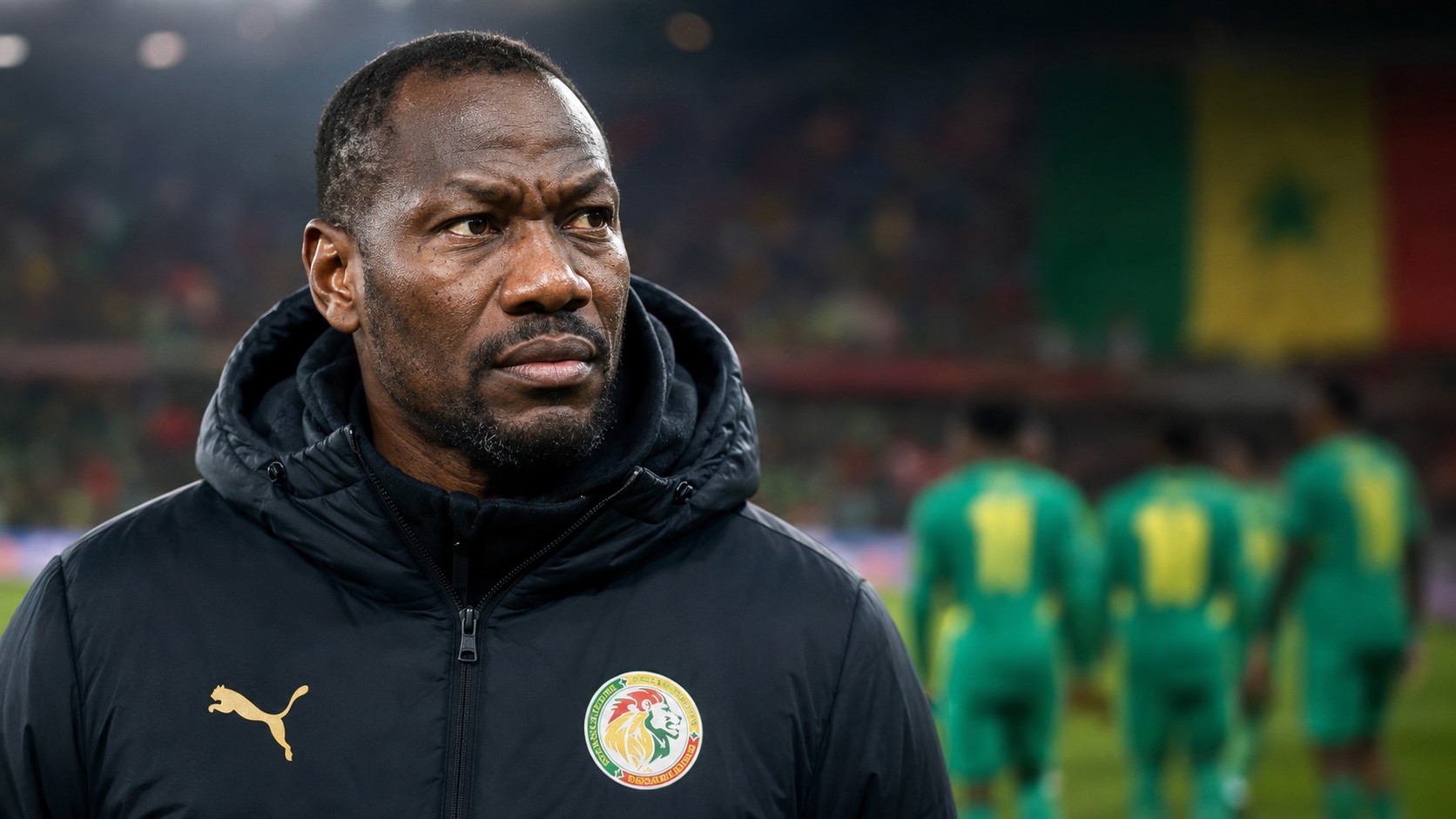
The Senegalese Football Federation (FSF) has dismissed head coach Pape Thiaw and his entire technical staff after the Teranga Lions’ disappointing campaign at the 2026 FIFA World Cup, bringing an abrupt end to a tenure that lasted just 19 months.
The federation said its decision followed a comprehensive assessment of the national team’s recent performances and future ambitions, concluding that a change in leadership was necessary to protect the long-term interests of Senegalese football.
While the Round of 32 defeat marked the immediate trigger for the decision, the coaching overhaul reflects a broader effort to address sporting setbacks, internal disagreements and growing concerns that had developed throughout the tournament.
The move also signals the beginning of what could become one of Senegal’s most significant rebuilding phases since the nation emerged as one of Africa’s strongest football powers over the past decade.
Pape Thiaw Sacked After World Cup Campaign Falls Apart
For many supporters, Senegal entered the 2026 FIFA World Cup carrying enormous expectations.
The Teranga Lions had established themselves among Africa’s elite national teams through consistent performances in recent years, including winning the Africa Cup of Nations and becoming regular contenders on the world stage.
However, those expectations quickly began to fade as the tournament unfolded.
Senegal opened its campaign with a 3-1 defeat against France before suffering another narrow loss to Norway.
Those two setbacks immediately placed the team under pressure and left little room for further mistakes.
Although Senegal revived its hopes by defeating Iraq 5-0 in its final group-stage fixture, qualification for the knockout phase came only because the team advanced as one of the tournament’s lower-ranked third-placed finishers.
Instead of restoring confidence, the difficult qualification highlighted concerns about the team’s overall consistency.
The Belgium Match Became the Defining Moment
If Senegal’s group-stage performances raised questions, the Round of 32 encounter with Belgium ultimately answered them in the most painful manner.
The Teranga Lions appeared to have one foot in the next round after establishing a comfortable 2-0 advantage.
With only minutes remaining in normal time, progression seemed almost certain.
Instead, Belgium mounted a dramatic comeback.
Two late goals erased Senegal’s lead before Belgium completed the turnaround with another strike during extra time, eliminating the African side in heartbreaking fashion.
For supporters, it represented one of the most painful collapses in recent World Cup history.
For the federation, it became the moment that accelerated discussions about the future of the coaching staff.
Results Were Only Part of the Problem
Although tournament results often determine the future of international coaches, reports suggest Senegal’s decision involved much more than what happened on the pitch.
Throughout the competition, concerns reportedly emerged over internal management, player morale and organisational issues.
These developments created an environment that increasingly challenged confidence in the technical team’s leadership.
According to reports, frustrations had been building long before the final whistle against Belgium.
The World Cup defeat merely exposed issues that were already affecting the squad behind the scenes.
Dressing-Room Tensions Added Pressure
One of the most significant developments following Senegal’s elimination came from within the squad itself.
Midfielder Pape Gueye, who plays club football for Villarreal, publicly criticised aspects of the team’s management following the Belgium defeat.
He reportedly questioned tactical decisions, particularly late substitutions, before announcing that he would step away from international football until changes were made to the technical staff.
Such public criticism from an established international player represented an unusual development for one of Africa’s most respected national teams.
Whether or not Gueye’s comments directly influenced the federation’s decision, they added to growing public scrutiny surrounding the coaching setup.
Administrative Challenges Also Emerged
Reports from Senegal’s World Cup camp suggested the team also dealt with logistical and administrative problems during the tournament.
Among the issues reported were:
- Delays involving squad bonus payments.
- Questions surrounding the finalisation of Pape Thiaw’s own coaching contract.
- Complaints regarding accommodation arrangements.
- Reports that players occasionally relied on outside catering instead of official team services.
Although none of these issues alone necessarily determine a coach’s future, together they painted the picture of a tournament campaign that extended beyond football results.
The combination of sporting disappointment and organisational challenges increased pressure on football authorities to reassess the team’s direction.
CAF Suspension Added to Mounting Pressure
As the federation evaluated the team’s future, another issue was reportedly looming over Pape Thiaw.
The coach was expected to begin serving a five-match suspension imposed by the Confederation of African Football (CAF) following an incident during the Africa Cup of Nations (AFCON) final against Morocco. Reports indicated that the disciplinary case stemmed from an occasion in which Thiaw instructed one of his players to leave the field during the match.
Although the suspension was separate from Senegal’s World Cup performance, it threatened to complicate preparations for future international fixtures. For a federation already weighing the costs and benefits of retaining its coach, the prospect of beginning another campaign without its manager on the touchline may have strengthened the case for a fresh start.
Taken together, disappointing results, internal unrest and disciplinary concerns created a challenging environment for any long-term rebuilding effort.
Why the Federation Decided Change Was Necessary
In announcing the dismissal, the Senegalese Football Federation said the decision followed a detailed review of the national team’s sporting performances and future prospects. According to Reuters, the federation concluded that a change in leadership was necessary after assessing the team’s recent results and future ambitions.
That wording suggests the federation was looking beyond one tournament defeat. Instead, officials appear to have concluded that the national team required renewed leadership capable of restoring confidence, rebuilding unity and preparing for the next cycle of continental and global competitions.
National football federations often face difficult choices after major tournaments. While continuity can provide stability, poor performances combined with internal divisions frequently lead governing bodies to pursue new leadership in an effort to reset the team’s direction.
For Senegal, the federation has opted for the latter approach.
Patrick Vieira Emerges Among Early Candidates
Attention has already begun shifting from the outgoing coach to his potential successor.
According to Sport News Africa, former France international and World Cup winner Patrick Vieira has emerged as one of the leading candidates to replace Thiaw.
Vieira’s connection to Senegal extends beyond football. Although he represented France during his playing career, he was born in Dakar before moving to Europe as a child. That personal link has naturally fuelled speculation over whether he could return to his birthplace in a managerial capacity.
His résumé includes coaching roles with New York City FC, OGC Nice, Crystal Palace and Strasbourg, giving him experience across different football cultures and competitive environments.
At the time of reporting, however, the Senegalese Football Federation had not officially announced a replacement or confirmed that Vieira had been approached.
The Challenge Facing Senegal’s Next Coach
Whoever eventually takes charge will inherit one of Africa’s most talented national squads—but also one facing significant expectations.
The next coach will likely be expected to:
- Restore confidence within the dressing room.
- Rebuild relationships between players and management.
- Prepare the team for upcoming CAF competitions.
- Improve tactical consistency against elite opponents.
- Maintain Senegal’s position among Africa’s leading football nations.
The challenge extends beyond winning matches. Modern international football increasingly demands strong leadership, effective communication, organisational discipline and the ability to manage high-profile players under intense public scrutiny.
What This Means for African Football
Senegal’s coaching change also reflects a broader trend across African football.
National federations have become increasingly willing to make swift managerial decisions when performances fail to match expectations. With greater investment in football, expanding commercial opportunities and rising international visibility, pressure on coaches has never been higher.
Success is no longer measured solely by qualification for major tournaments. Supporters and administrators now expect teams to compete consistently against the world’s strongest nations while maintaining professional standards behind the scenes.
That evolving landscape means coaching appointments are increasingly judged on leadership, planning and squad management as much as tactical ability.
Lessons from Senegal’s World Cup Experience
The Teranga Lions’ campaign illustrates how quickly momentum can shift in tournament football.
A single dramatic defeat may capture headlines, but deeper structural issues often develop over time. Strong governance, transparent administration and unity within the squad are essential ingredients for sustained international success.
For football federations across Africa, Senegal’s experience may serve as a reminder that elite performance depends on more than technical quality alone. Preparation, organisation and trust between players and coaching staff remain equally important.
African and Nigerian Perspective
Across Africa, Senegal has long been regarded as one of the continent’s benchmark football nations. Its recent success inspired many federations seeking to build competitive national teams capable of challenging Europe’s and South America’s traditional powers.
For Nigerian football observers, the developments in Senegal also highlight the importance of long-term planning and institutional stability. Coaching decisions are rarely based on one result alone; they often reflect broader assessments of leadership, player management and organisational effectiveness.
As African football becomes increasingly competitive, federations will continue balancing immediate expectations with long-term development strategies.
Looking Ahead
Senegal now enters a crucial transition period.
The federation must appoint a coach capable of restoring belief while preserving the qualities that made the Teranga Lions one of Africa’s most respected teams. Supporters will expect lessons to be learned from the World Cup campaign, while players will look for renewed direction ahead of future qualifiers and continental tournaments.
Whether Patrick Vieira or another candidate ultimately takes charge, the appointment will represent more than a routine managerial change. It will shape Senegal’s ambitions for the next chapter of its football journey.
For now, one thing is clear: the decision to dismiss Pape Thiaw marks the end of one era and the beginning of another, as Senegal seeks to rebuild after a World Cup campaign that exposed both footballing and organisational challenges.
Recommended Coverage
2026 FIFA World Cup: Messi, Mbappé Rewrite History
Discover how football’s biggest stars shaped the 2026 FIFA World Cup and the historic moments that defined the tournament beyond Senegal’s campaign.
World Cup 2026 Semifinals: Elite Four Chase Glory
See how the race for football’s biggest prize unfolded after Senegal’s exit, as the world’s remaining giants battled for a place in the World Cup final.
FIFA Disciplinary Controversy Explained
Understand the disciplinary issues shaping modern football and why governance decisions continue to influence teams, coaches and major international tournaments.
About the Author