US-Saudi Nuclear Deal Raises Middle East Security Questions
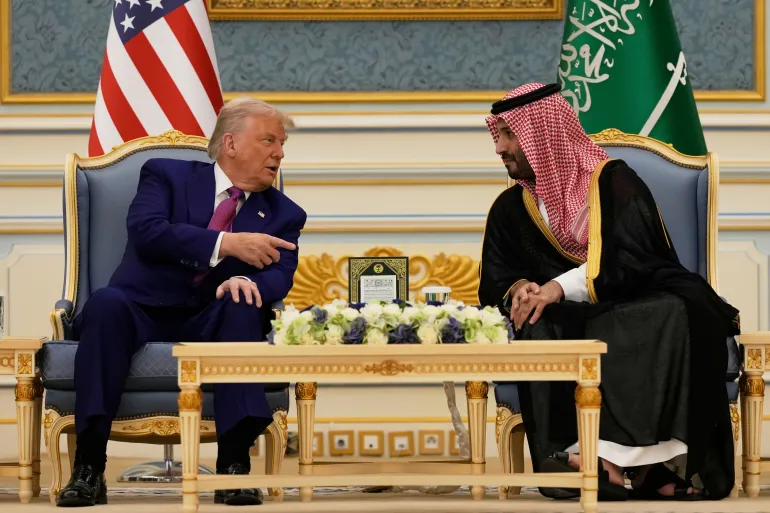
The US-Saudi nuclear deal marks one of the most significant geopolitical developments in the Middle East in recent years, extending far beyond energy cooperation. The United States and Saudi Arabia have agreed to establish a long-term civilian nuclear partnership that both governments say is designed to promote peaceful nuclear energy, strengthen economic ties and reinforce non-proliferation standards. Yet the agreement has also triggered intense debate among lawmakers, security analysts and regional allies over whether it could eventually alter the balance of power in one of the world’s most volatile regions.
Although many details remain undisclosed and the agreement still requires review by the US Congress, analysts already see it as a potential turning point in Washington’s Middle East strategy. Supporters argue it strengthens America’s strategic position while helping Saudi Arabia diversify its energy sector. Critics, however, warn that any future approval for uranium enrichment inside Saudi Arabia could increase long-term nuclear proliferation risks and encourage a regional arms race.
Why This Agreement Matters Beyond Energy
Major international agreements often carry implications that extend well beyond their stated objectives, and the new US-Saudi nuclear partnership appears to be one of them.
Officially, Washington describes the agreement as a peaceful civilian nuclear cooperation framework intended to deepen bilateral collaboration in energy development while creating new opportunities for American companies. Saudi Arabia similarly presents the partnership as an extension of existing cooperation between the two countries in the energy sector.
However, the broader significance lies in the timing.
The agreement arrives as geopolitical tensions continue to reshape the Middle East. The region remains affected by renewed confrontation involving the United States, Israel and Iran, while strategic competition among global powers—including China and Russia—continues to intensify.
Against this backdrop, energy policy has become inseparable from national security and international diplomacy.
Rather than representing a routine commercial agreement, the deal reflects changing alliances, evolving security priorities and a renewed contest for influence across one of the world’s most strategically important regions.
What the US-Saudi Nuclear Deal Includes
According to official statements cited in the source material, the agreement establishes the legal foundation for what officials describe as a decades-long, multi-billion-dollar partnership focused on civilian nuclear cooperation.
The agreement is expected to proceed under the framework of Section 123 of the US Atomic Energy Act, which governs civilian nuclear cooperation agreements between the United States and foreign partners.
The arrangement includes:
- A peaceful nuclear cooperation agreement.
- A bilateral safeguards agreement.
- Expanded opportunities for American companies in Saudi Arabia’s nuclear sector.
- Cooperation on nuclear safety and non-proliferation.
- Long-term technical collaboration between experts from both countries.
Officials from both governments have emphasised that the partnership is designed exclusively for peaceful nuclear purposes.
US Energy Secretary Chris Wright said the agreements uphold the highest standards of nuclear safety and non-proliferation while strengthening both American commercial interests and regional security.
Saudi Arabia also described the agreement as supporting cooperation in energy, advanced technology and sustainable development.
The Missing Details Fuel Global Debate
Despite the official announcements, significant elements of the agreement have not been made public.
One issue receiving particular attention concerns reports that Saudi Arabia could eventually be permitted to enrich uranium within its own territory after further joint studies.
That possibility has become the central issue in international debate.
Uranium enrichment serves legitimate civilian purposes by producing fuel for nuclear power stations. However, depending on enrichment levels, the same technology can also contribute to developing nuclear weapons.
For this reason, experts argue that uranium enrichment remains among the most sensitive aspects of civilian nuclear cooperation.
The source material notes that precise provisions regarding enrichment have not yet been officially confirmed, leaving considerable uncertainty surrounding the agreement’s future implementation.
Why Saudi Arabia Wants Civilian Nuclear Power
Saudi Arabia has sought access to advanced civilian nuclear technology for many years.
The kingdom continues pursuing an ambitious programme to diversify its economy while reducing long-term dependence on oil revenues.
Although Saudi Arabia remains one of the world’s leading oil producers, it also consumes substantial volumes of domestic oil and natural gas to generate electricity.
Expanding nuclear energy could help free additional oil for export while supporting growing electricity demand and broader industrial development.
The country’s long-term economic transformation strategy therefore places considerable emphasis on alternative energy technologies.
Several analysts quoted in the source material note that Saudi Arabia has genuine civilian reasons for pursuing nuclear energy, even as international attention remains focused on wider security implications.
Why Uranium Enrichment Remains the Biggest Concern
Much of the international debate surrounding the agreement centres on one question:
Could Saudi Arabia eventually enrich uranium itself?
The answer remains uncertain.
Reports cited in the source material suggest that American and Saudi officials may conduct further studies into whether a US-supported enrichment facility could eventually operate within Saudi Arabia.
Some reports describe the possibility of a facility remaining under American operational control, sometimes referred to as a “black box” arrangement.
However, security specialists caution that even such arrangements raise important questions.
Middle East expert Rosemary Kelanic describes the reported possibility as particularly significant because the United States has historically avoided helping another country establish uranium enrichment capability on its own soil.
Her concern reflects a long-standing principle within international non-proliferation policy: countries capable of producing their own nuclear fuel possess greater technical capacity should political circumstances ever change.
While no evidence suggests Saudi Arabia intends to develop nuclear weapons under the current agreement, analysts argue that future geopolitical developments could alter regional calculations.
The source material makes clear that this remains an area of debate rather than an established outcome.
Iran’s Nuclear Programme Shapes Every Discussion
It is difficult to understand the significance of the agreement without considering Iran.
For years, Iran’s nuclear activities have dominated security discussions across the Middle East.
The supplied source material explains that recent military confrontation involving the United States and Israel was largely justified by both governments as an effort to prevent Iran from developing nuclear weapons—an allegation Tehran continues to reject.
This broader regional context inevitably shapes perceptions of Saudi Arabia’s civilian nuclear ambitions.
Saudi Crown Prince Mohammed bin Salman previously stated that Saudi Arabia did not intend to pursue nuclear weapons but added that if Iran were ever to obtain one, Saudi Arabia would follow suit.
Although that statement dates back several years, it continues to influence international assessments of the kingdom’s long-term nuclear strategy.
As a result, every discussion surrounding the current agreement is viewed through the lens of regional deterrence and strategic competition rather than energy policy alone.
Israel’s Concerns Reflect Wider Regional Anxiety
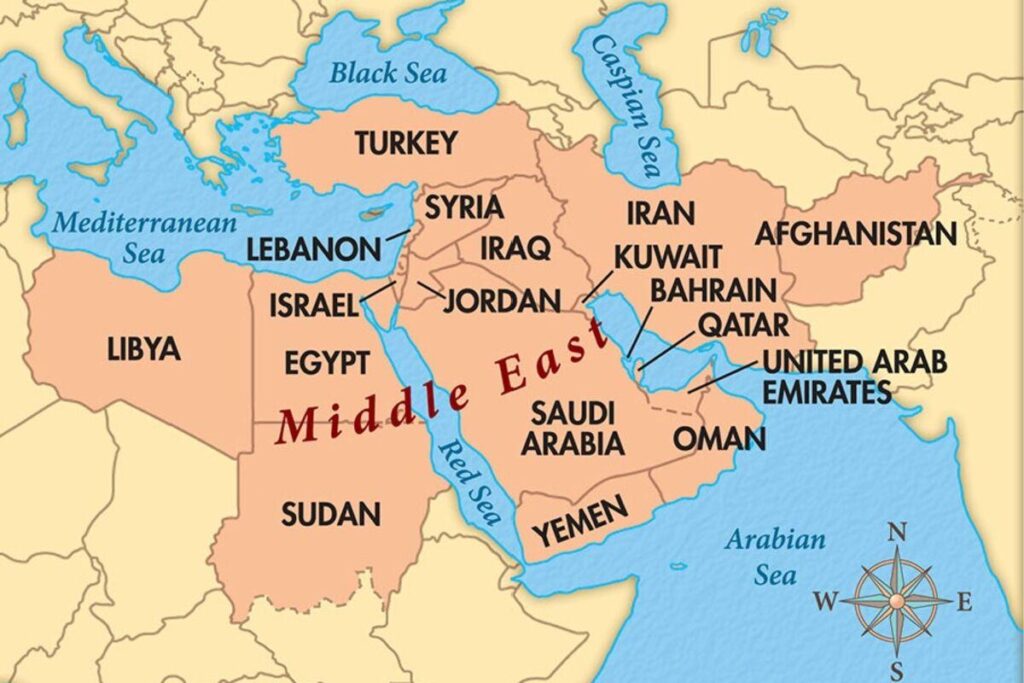
Israel has reacted cautiously to the agreement.
While some Israeli officials have indicated that peaceful civilian nuclear development could be acceptable under strict safeguards, others remain deeply sceptical about any arrangement that might eventually provide Saudi Arabia with sensitive nuclear technology.
Former Israeli officials and several security analysts cited in the source material argue that even peaceful programmes can create future strategic risks if political conditions change decades later.
Israel itself neither officially confirms nor denies possessing nuclear weapons, yet its long-standing security doctrine has consistently opposed the spread of nuclear capabilities elsewhere in the Middle East.
That position helps explain why developments surrounding the US-Saudi agreement are attracting such close attention across the region.
How the Deal Fits into America’s Wider Strategy
Beyond questions of nuclear technology, the agreement reflects a broader shift in US foreign policy towards the Middle East. Rather than tying civilian nuclear cooperation to wider diplomatic objectives—as previous administrations attempted—Washington appears to have prioritised strategic partnerships, economic competitiveness and regional influence.
Earlier negotiations had reportedly linked a potential nuclear agreement to Saudi Arabia recognising Israel and normalising diplomatic relations. According to the supplied source material, that condition appears to have been dropped, allowing the deal to move forward without progress on Israeli-Saudi normalisation.
Analysts cited in the source material suggest this reflects a more transactional approach to foreign policy, where economic and strategic interests take precedence over broader diplomatic goals. The agreement therefore represents not only an energy partnership but also an illustration of changing American priorities in a rapidly evolving geopolitical environment.
Competition with China and Russia
The agreement also carries implications beyond the Middle East.
Civilian nuclear technology has increasingly become an area of strategic competition among major powers, with countries seeking long-term partnerships that extend far beyond reactor construction.
According to the source material, China and Russia have both pursued similar opportunities in Saudi Arabia and elsewhere across the region. Russia has already participated in civilian nuclear projects in countries including Egypt and Türkiye, while reports suggested Beijing was also interested in expanding nuclear cooperation with Riyadh.
For Washington, securing a long-term partnership with Saudi Arabia means maintaining influence in one of the world’s most strategically important regions while ensuring American companies remain competitive in a global nuclear industry worth billions of dollars.
Supporters therefore view the agreement as strengthening both US commercial interests and broader geopolitical influence at a time when strategic competition with Beijing and Moscow continues to intensify.
Why Congress Still Has an Important Role
Although both governments have announced the agreement, it has not yet become fully operational.
Under US law, the deal must be transmitted to Congress for review before implementation.
The supplied source material notes that several Democratic lawmakers have already voiced strong objections, arguing that any arrangement allowing future uranium enrichment could weaken long-established non-proliferation safeguards. Senator Edward Markey and Representative John Garamendi are among those expressing concern that the agreement could increase long-term proliferation risks.
By contrast, Secretary of State Marco Rubio rejected suggestions that the United States would approve any arrangement capable of contributing to nuclear weapons development, insisting Washington would not enter into agreements that create proliferation risks.
While opposition is expected during congressional review, the source material also indicates that critics may lack sufficient votes to prevent the agreement from moving forward.
Experts Remain Divided
One striking feature of the debate is the absence of consensus among experts.
Some analysts argue that allowing Saudi Arabia greater access to civilian nuclear technology inevitably increases long-term security risks.
Others believe those concerns may be overstated.
Energy expert Bob McNally, quoted in the source material, argues that the United States has a strong record of helping partner countries develop civilian nuclear sectors responsibly. From this perspective, cooperation with trusted allies may actually reduce global risks by ensuring programmes operate under internationally recognised safeguards.
By contrast, Rosemary Kelanic and other analysts maintain that domestic uranium enrichment capability represents a fundamentally different level of technical capacity that could eventually become problematic if future political conditions change.
These contrasting assessments explain why the agreement has generated such intense international discussion despite the limited public information currently available.
What It Could Mean for Africa and Nigeria
Although the agreement focuses on the Middle East, its implications extend much further.
For African governments exploring civilian nuclear energy, the deal may influence future discussions about technology transfer, international safeguards and partnerships with major powers.
Several African countries are already expanding investments in electricity generation and considering advanced energy technologies to support industrialisation and growing populations. The evolving US-Saudi partnership could therefore become an important reference point for future negotiations involving civilian nuclear cooperation elsewhere.
For Nigeria, which continues to pursue long-term energy diversification alongside conventional power generation, the debate highlights the delicate balance between expanding energy infrastructure and maintaining international confidence in non-proliferation commitments.
While the agreement does not directly affect Nigeria, policymakers across Africa will likely monitor developments closely because they could influence future international approaches to civilian nuclear cooperation.
A Defining Moment for Middle East Politics
The agreement also illustrates how energy policy has become inseparable from regional security.
Every major decision involving nuclear technology now intersects with wider questions about military deterrence, diplomatic alliances, technological competition and economic development.
Whether the partnership ultimately becomes remembered as an energy success story or a catalyst for renewed regional rivalry will depend largely on how its safeguards are implemented over the coming years.
The fact that many technical details remain undisclosed means international scrutiny is unlikely to diminish soon.
Instead, congressional review, future negotiations and implementation measures will probably determine whether supporters or critics ultimately prove correct.
What Happens Next?
Several important developments remain ahead before the agreement reaches full implementation:
- US Congress will review the agreement before it can proceed.
- Further details regarding any uranium enrichment arrangements may emerge during future negotiations.
- Joint technical studies are expected to determine the practical requirements of Saudi Arabia’s civilian nuclear programme.
- International observers, including regional governments, will closely monitor implementation to assess compliance with non-proliferation standards.
- Any significant policy changes could influence broader diplomatic relations involving Iran, Israel and other Middle Eastern states.
The source material notes that several key details remain unclear and have not yet been officially confirmed, meaning future announcements could substantially shape international reactions.
Conclusion: More Than an Energy Agreement
The US-Saudi nuclear deal represents far more than a commercial partnership.
It reflects changing geopolitical priorities, increasing competition among global powers and continuing efforts to reshape alliances in the Middle East. Supporters believe it will strengthen energy security, deepen economic cooperation and reinforce America’s strategic position in the region. Critics, however, remain concerned that future uranium enrichment provisions could increase long-term proliferation risks and alter the regional security balance.
With congressional scrutiny still ahead and several technical details yet to be disclosed, the agreement is unlikely to end the debate anytime soon.
Regardless of its eventual implementation, the partnership has already established itself as one of the most consequential diplomatic developments in Middle East energy and security policy in recent years—one whose effects may shape regional politics, global nuclear governance and international strategic competition for decades to come.
Recommended Coverage
Iran-US Peace Deal Signals End to Months of Conflict
Discover how renewed diplomacy between Washington and Tehran reshaped tensions in the Middle East and why it provides crucial context for understanding the new US-Saudi nuclear partnership.
Trump Iran Strike Delay Sparks Fears of Wider Middle East Crisis
Explore the military and diplomatic events that heightened fears of regional conflict and see how today’s nuclear agreement fits into the broader Middle East security landscape.
The Historical Significance of Jerusalem: Roots of the Middle East Conflict
Understand the decades of political, religious and security tensions that continue to shape alliances, rivalries and major diplomatic decisions across the Middle East today.
About the Author