Tinubu South Africa Xenophobia Row Reaches AU
Nigeria has taken the South Africa xenophobia issue to the African Union, seeking collective action over recurring attacks against Africans and other nationals and asking that the matter be considered at the AU’s January 2027 summit.
President Bola Tinubu has formally raised Nigeria’s concerns over recurring xenophobic and Afrophobic attacks in South Africa before the African Union, moving the issue from a bilateral concern to a wider continental diplomatic agenda.
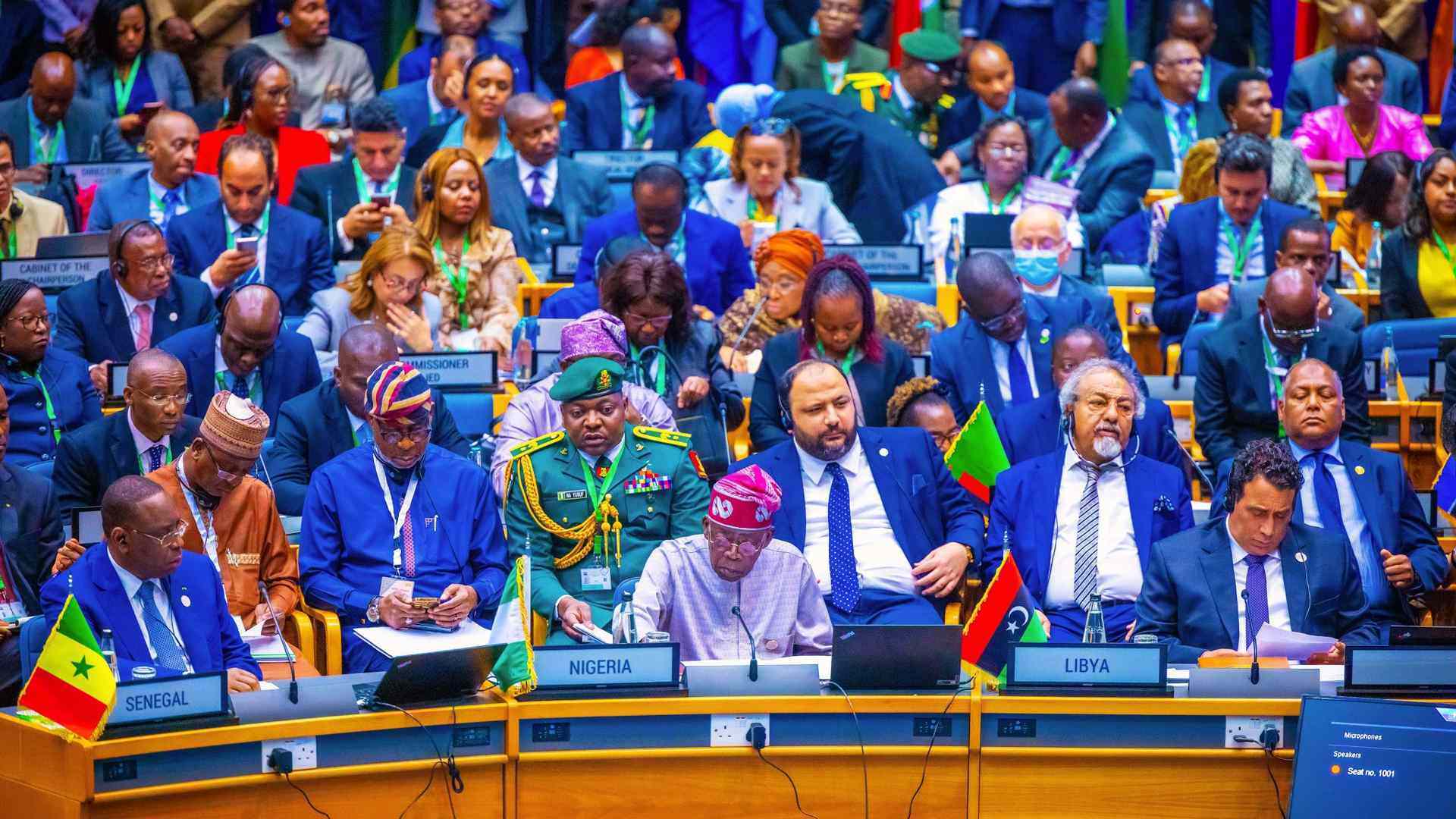
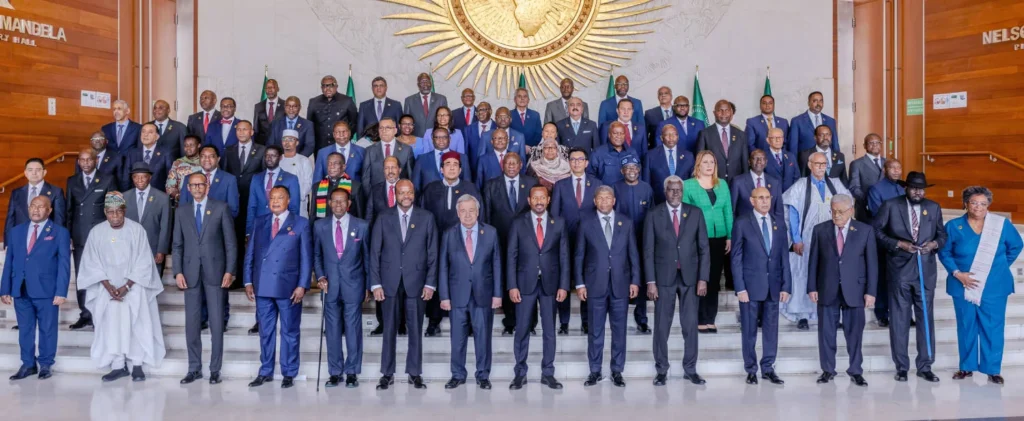
Tinubu made Nigeria’s position known through Vice President Kashim Shettima, who represented him at the 21st Extraordinary Session of the Assembly of the African Union in Luanda, Angola, on August 30, 2026.
Nigeria wants the African Union to place the issue on the agenda of its 40th Ordinary Session, scheduled for January 2027, where African leaders could consider a collective response.
The intervention comes against a background of recurring concerns over the treatment of African nationals in South Africa and raises a broader question about how the continent’s institutions should respond when migration tensions develop into xenophobic hostility and violence.
Nigeria Takes the South Africa Xenophobia Issue to the AU
Nigeria’s appeal is centred on what it describes as recurring xenophobic and Afrophobic attacks against Africans and other nationals in South Africa.
In his message delivered by Shettima, Tinubu called on African leaders to reaffirm their commitment to the safety, protection and dignity of African nationals.
The Nigerian president also made an important distinction in presenting Abuja’s position. Nigeria recognised South Africa’s sovereign right to enforce its immigration laws and acknowledged the country’s contributions to the continent.
However, Tinubu argued that attacks against Africans undermine African solidarity, unity and peaceful coexistence and therefore require urgent collective attention.
The request for AU consideration represents a significant change in the framing of the issue.
Rather than treating xenophobia solely as a domestic South African matter or a bilateral issue involving individual countries whose citizens may be affected, Nigeria is asking the continent’s principal political institution to consider it as a wider African concern.
That approach places responsibility not only on the country where attacks occur but also on African institutions committed to continental cooperation.
What Nigeria Wants the African Union to Do
At the centre of Nigeria’s position is a request for collective action.
Tinubu called for the South Africa xenophobia issue to be placed on the agenda of the AU’s 40th Ordinary Session in January 2027. He also urged stronger continental efforts against xenophobia and Afrophobia.
The Nigerian position places particular emphasis on three mechanisms:
- Dialogue
- Preventive diplomacy
- Collective action
The objective is not simply to condemn attacks after they occur but to strengthen mechanisms capable of preventing tensions from escalating.
That emphasis is consistent with the wider security message Tinubu delivered at the Luanda gathering.
Nigeria argued that conflict prevention is more cost-effective and sustainable than attempting to manage conflicts after they have already erupted.
Applied to xenophobia, the principle suggests that African institutions should seek to identify and address tensions before they become large-scale security or humanitarian problems.
The approach also places the issue within the broader question of whether the African Union has sufficient political influence and institutional capacity to respond consistently to crises involving African citizens.
South Africa’s Immigration Powers and the Xenophobia Question
The diplomatic sensitivity of Nigeria’s position lies partly in the distinction between immigration enforcement and xenophobic violence.
Every sovereign state has authority over its borders and immigration system. Tinubu explicitly recognised South Africa’s right to enforce its immigration laws.
The Nigerian argument is that such authority should not be confused with hostility or attacks directed at people because they are foreign nationals.

That distinction allows Nigeria to challenge xenophobic attacks without presenting its position as an attempt to deny South Africa control over its own immigration system.
It also creates space for the African Union to address the issue without necessarily turning the dispute into a confrontation between member states.
For the AU, however, the distinction may prove important if the issue reaches the January 2027 agenda.
Any continental response would have to balance national sovereignty with broader commitments to human dignity, peaceful coexistence and African solidarity.
Why the Issue Matters Beyond Nigeria and South Africa
The South Africa xenophobia dispute carries implications beyond the two countries.
Millions of Africans live, work, trade, study or maintain family connections outside their countries of citizenship. South Africa’s economic importance has made it a significant destination for migrants from across the continent.
Consequently, violence or hostility directed at foreign nationals can have diplomatic, economic and social consequences beyond the immediate location where it occurs.
For Nigeria, the issue also has a particular diplomatic dimension because Nigerians are among the African nationals who have established communities and economic interests in South Africa.
The supplied reports, however, do not provide figures on the number of Nigerians affected by the latest incidents, nor do they establish a specific casualty or displacement figure.
Those details should therefore not be presented as established facts in reporting on this particular development.
The broader principle remains central to Nigeria’s argument: African nationals should be able to expect protection and dignity when they live or travel elsewhere on the continent.
A Recurring Continental Problem
Nigeria’s decision to approach the AU comes against the backdrop of a recurring history of xenophobia in South Africa.
The issue has periodically generated violence, protests and diplomatic concern involving several African countries.
That history makes the Nigerian request different from an isolated diplomatic complaint.
The central concern is recurrence.
If incidents repeatedly emerge despite previous condemnation, the effectiveness of existing preventive mechanisms becomes an important part of the discussion.
The question for continental institutions is therefore not only how to respond to an individual incident but whether there are sufficient mechanisms to identify the social, economic and political pressures that can produce anti-migrant mobilisation.
That distinction is important for policy.
Condemnation may establish a diplomatic position, but preventing recurrence requires attention to the conditions that allow xenophobic narratives to gain influence.
Tinubu Connects Xenophobia to African Security
The South Africa xenophobia issue was part of a broader intervention by Tinubu on Africa’s security challenges.
Nigeria supported the adoption of the Luanda Action Plan as a practical roadmap for strengthening conflict prevention.
Tinubu argued that preventing conflicts is cheaper and more sustainable than managing them once violence has erupted.
The president also warned against fragmented peace initiatives and growing external involvement in African security through foreign military forces, mercenaries and private defence contractors.
According to Tinubu, increasing reliance on external actors risks weakening African institutions and the principle of African ownership.
That argument extends beyond traditional armed conflicts.
The underlying position is that African states and institutions need the capacity to identify and respond to threats before they become crises requiring extensive external intervention.
Within that framework, Nigeria’s decision to raise xenophobia at the continental level fits into a wider call for stronger African-led approaches to instability.
The Luanda Action Plan and Conflict Prevention
The Luanda meeting provided a broader institutional setting for Nigeria’s appeal.
Rather than treating peace and security as issues that begin only after violence breaks out, Tinubu argued for greater investment in prevention.
That principle has direct relevance to xenophobia.
Social tensions involving migration can develop through political rhetoric, economic grievances, misinformation, organised mobilisation and community-level disputes before turning into violence.
Early intervention can therefore be less costly than responding after businesses have been destroyed, people displaced or diplomatic relations damaged.
Tinubu’s support for the Luanda Action Plan reinforces Nigeria’s stated preference for preventive diplomacy and African ownership.
It also places pressure on African governments to strengthen the mechanisms they already possess rather than relying primarily on external actors once crises become severe.
Nigeria Raises Concerns Over External Security Actors
Tinubu’s wider message at the AU also focused on foreign involvement in African security.
He warned that fragmented peace initiatives and increasing reliance on foreign military forces, mercenaries and private defence contractors could weaken the AU’s conflict-prevention mechanisms.
The president argued that African institutions should retain ownership of the continent’s peace and security agenda.
This position is particularly significant because African states continue to face conflicts and security threats that sometimes attract intervention by foreign governments and private security actors.
Nigeria’s argument is that external assistance should not undermine African institutions.
The same principle informs its approach to the South Africa xenophobia question: African problems, including threats to African nationals, should receive stronger African institutional responses.
Arms Diversion and Terrorism
Another element of Tinubu’s intervention concerned the international arms trade.
The president called on arms-producing and exporting countries to strengthen cooperation with African states and prevent weapons and ammunition produced within their jurisdictions from being diverted to terrorists and other non-state armed groups.
The issue connects to Nigeria’s broader concern about conflict prevention.
Weapons can intensify conflicts after they begin, making prevention and control of arms flows important components of regional security.
Tinubu’s position was therefore broader than the South Africa xenophobia issue alone. His intervention presented a wider vision of African security based on prevention, institutional cooperation, responsible international engagement and stronger continental capacity.
The Challenge of African Ownership
The concept of African ownership is one of the strongest themes running through Nigeria’s intervention.
Tinubu maintained that the AU has mechanisms for preventing and resolving conflicts but that limited trust and inconsistent implementation weaken their effectiveness.
That observation points to an institutional challenge.
The continent does not necessarily lack frameworks, declarations or organisations designed to address security problems. The difficulty often lies in implementation, political commitment and financing.
Nigeria therefore backed sustainable and predictable financing for AU peace operations and called for the full operationalisation of United Nations Security Council Resolution 2719.
The objective is to strengthen the AU’s capacity to respond effectively to conflicts and crises.
For Nigeria, stronger financing and implementation are necessary if African countries are expected to take greater responsibility for their own security.
The Economic Dimension of Xenophobia
Xenophobia also has an economic dimension.
Foreign nationals participate in commercial activities and labour markets in countries across Africa. When political or social hostility targets migrant communities, businesses and livelihoods can be affected.
The consequences can extend beyond individual victims.
Businesses may close, investments may be disrupted and diplomatic tensions can affect commercial relationships between countries.
At the same time, economic hardship can become part of the rhetoric used to mobilise opposition to migrants.
Unemployment, pressure on public services and competition for economic opportunities can generate resentment, but attributing broad structural problems to foreign nationals does not by itself resolve those challenges.
For policymakers, this makes xenophobia both a security and governance issue.
Addressing the problem may require not only law enforcement but also stronger institutions, economic policies, public communication and political leadership capable of preventing migrants from becoming scapegoats for wider social problems.
The supplied reports do not provide economic data quantifying the financial impact of the latest xenophobic incidents. Such figures should therefore be treated separately from the facts established by the current diplomatic intervention.
Nigeria’s Diplomatic Balancing Act
Nigeria’s approach reflects the complexity of its relationship with South Africa.
Both countries are major political and economic powers on the continent, and both have historically played influential roles in African diplomacy.
A direct confrontation between them could therefore have consequences beyond the immediate xenophobia dispute.
Tinubu’s language appears designed to avoid that outcome.
Nigeria recognises South Africa’s sovereignty while arguing that attacks against African nationals require collective attention.
The diplomatic formula allows Abuja to defend the principle of protecting Africans while leaving room for dialogue with Pretoria.
The AU provides a further layer of diplomacy by moving the issue into a multilateral setting.
That could make it possible for African leaders to discuss the issue collectively rather than leaving affected countries to pursue separate bilateral responses.
What Could Happen at the January 2027 AU Summit?
Nigeria has identified the 40th Ordinary Session of the AU Assembly in January 2027 as the next significant point for the issue.
The immediate question is whether the matter will be placed on the agenda as requested.
If it is, African leaders could have an opportunity to examine the recurring nature of xenophobia and consider measures aimed at prevention, protection and continental cooperation.
The supplied material does not establish what specific measures the AU would adopt if the issue is placed on the agenda.
It would therefore be premature to predict sanctions, investigations or other particular outcomes.
What is clear is that Nigeria wants the issue discussed at the highest continental political level.
That alone changes the diplomatic scope of the dispute.
From Diplomatic Statement to Practical Action
The effectiveness of Nigeria’s intervention will ultimately depend on what follows the diplomatic statement.
Tinubu’s own comments on the AU’s security mechanisms acknowledge the difficulty of translating institutional commitments into consistent implementation.
That challenge applies directly to xenophobia.
African leaders can reaffirm solidarity, but the longer-term test is whether governments and continental institutions can establish responses capable of preventing attacks, protecting foreign nationals and addressing the conditions that encourage xenophobic mobilisation.
For Nigeria, taking the issue to the AU creates an opportunity to make xenophobia part of that wider institutional conversation.
It also gives other African countries an opportunity to contribute their own experiences and concerns.
The January 2027 summit could therefore become more than a discussion about South Africa.
It could become a broader examination of how African countries treat one another’s citizens and what continental solidarity should mean in practical terms.
A Continental Test for African Solidarity
Nigeria’s intervention has moved the South Africa xenophobia issue from the level of recurring incidents to the level of continental diplomacy.
The request for AU consideration in January 2027 gives African leaders an opportunity to examine whether existing mechanisms are sufficient to prevent the recurrence of attacks against African nationals.
The issue also intersects with wider debates about migration, sovereignty, security, economic pressure and African institutional capacity.
Tinubu’s broader message from Luanda was that African countries should strengthen home-grown solutions, improve cooperation and assume greater collective responsibility for the continent’s peace and security.
Applied to xenophobia, that principle carries a straightforward implication: African solidarity must extend beyond diplomatic declarations to the protection of Africans wherever they live on the continent.
Nigeria has now placed that principle before the African Union.
The next stage will be whether the continent can turn the call for collective action into a practical response.
Recommended Coverage
Tinubu Performance Review: Progress, Reforms and Prices
How has Tinubu’s presidency changed Nigeria beyond the headlines?
Explore the reforms, economic pressures and political record shaping his time in office.
Tinubu Certificate Petition and the 2027 Election Question
Questions about Tinubu’s past have not been limited to the U.S. courts.
Read how another document dispute became part of Nigeria’s 2027 political conversation.
Nigeria’s Economy: The Tinubu Administration — Progress or Crisis?
Beyond the courtroom, Tinubu’s presidency is being judged on a much bigger record.
Examine the economic choices, reforms and challenges defining his administration.
Conclusion
Nigeria’s decision to take the South Africa xenophobia issue to the African Union has broadened the dispute from a recurring national problem into a continental diplomatic question.
Tinubu is asking African leaders to confront the issue collectively while preserving the principle that South Africa retains the right to enforce its immigration laws.
The proposed January 2027 AU discussion will provide an opportunity to examine what stronger continental action could look like.
For Nigeria, the central message is that African solidarity should include the protection, safety and dignity of African nationals.
For the African Union, the challenge is whether that principle can be translated from a diplomatic commitment into a practical mechanism capable of preventing future attacks.
About the Author