US Troop Withdrawal Nigeria: 200 Exit Raises Security Risks
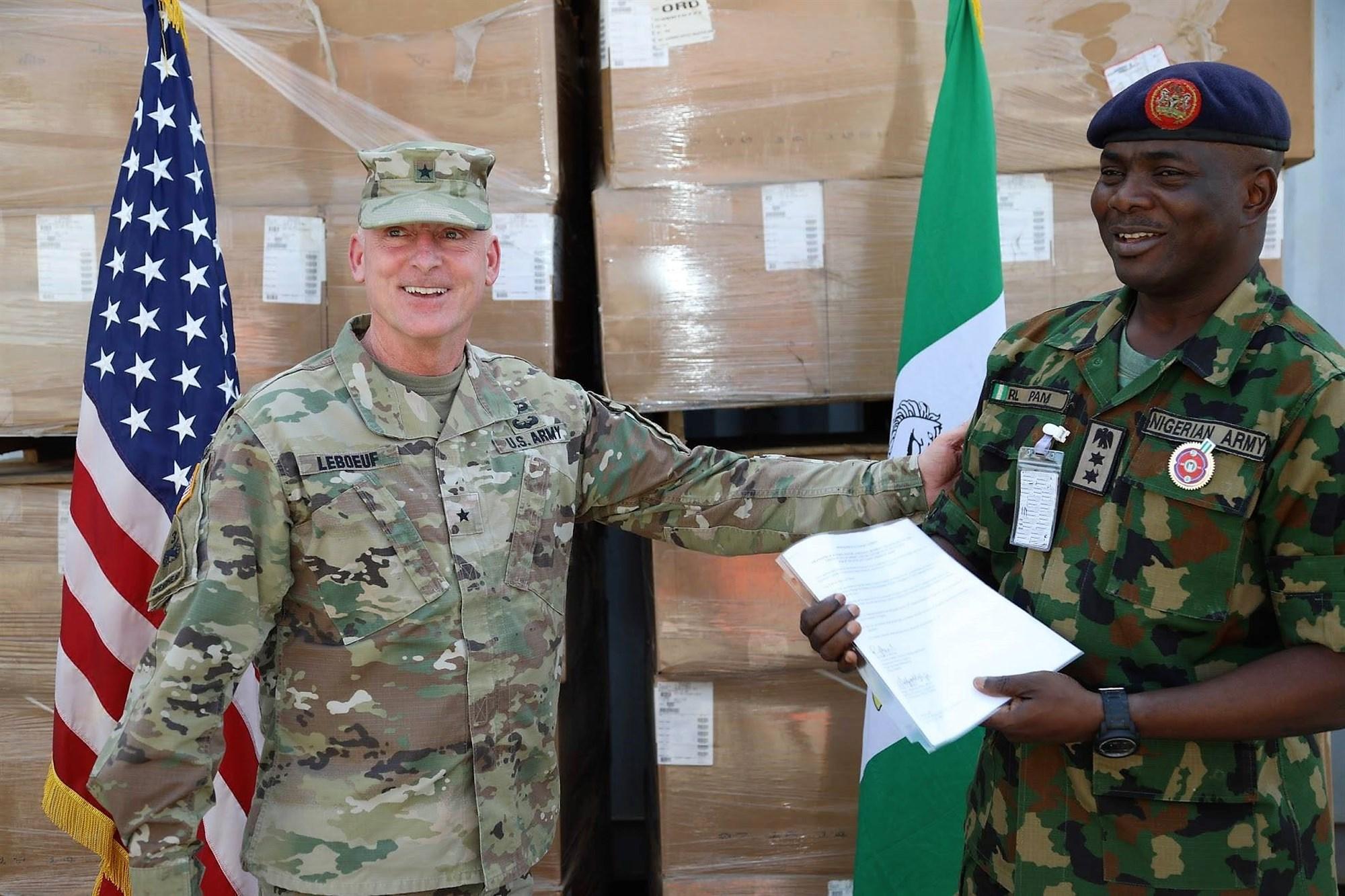
The planned US troop withdrawal from Nigeria will see about 200 American military personnel leave the country by late September, shifting greater responsibility for the long-term fight against terrorism to Nigerian security forces. The drawdown follows months of intensified intelligence sharing, military training and joint operations that produced significant counterterrorism gains, including the killing of senior Islamic State figure Abu-Bilal al-Minuki. But with terrorist attacks continuing across parts of the country, the withdrawal is also emerging as a test of whether Nigeria can sustain the capabilities developed during the partnership.
The departure will not amount to a complete end to American military involvement in Nigeria. US military officials say smaller teams of trainers and intelligence analysts are expected to remain after the larger contingent leaves. The continuing presence means Washington and Abuja will retain a security relationship, but the scale and character of the American contribution will change significantly.
The development therefore presents two realities at the same time. On one hand, American officials have pointed to the relatively small deployment as evidence that a limited, targeted military footprint can produce substantial operational results. On the other, continued attacks by terrorist and other armed groups show that tactical successes have not eliminated Nigeria’s broader security crisis.
What the US troop withdrawal means for Nigeria
The significance of the US troop withdrawal Nigeria is not simply the number of American personnel leaving. It is the reduction of a larger US military presence that had been assisting Nigerian forces with intelligence, training and counterterrorism operations.
The additional personnel were deployed to northeastern Nigeria in February, expanding an existing American military presence that had already been helping Nigerian forces identify potential terrorist targets through intelligence cooperation. The deployment followed heightened tensions over Nigeria’s security situation and President Donald Trump’s criticism of the Nigerian government’s handling of attacks against Christians.
The mission subsequently developed into closer operational cooperation between the two militaries. American and Nigerian forces worked together on intelligence-led operations against extremist targets, particularly in the northeast and the Lake Chad Basin.
That cooperation produced one of its most significant publicly reported results in May, when a joint operation killed Abu-Bilal al-Minuki. US officials identified him as a senior Islamic State figure and described the operation as a major blow to the group’s leadership.
US military officials subsequently said more than 200 additional militants were killed in airstrikes and ground operations involving American and Nigerian forces. The operations reportedly included MQ-9 Reaper drones and AC-130 gunships, illustrating the specialised capabilities available to the joint effort.
But the reported successes do not mean the security threat has disappeared.
The gains are significant, but terrorism has not stopped
The central contradiction surrounding the US troop withdrawal Nigeria is that the partnership appears to have produced operational successes while terrorist violence continues.
The New York Times reported that gunmen recently killed more than two dozen people, including an imam, in northwestern Nigeria, while at least 25 people were killed in an attack on a village in central Nigeria. The report also cited a major terrorist assault on a military base in northeastern Nigeria.
Those developments are important because they demonstrate the difference between weakening individual terrorist leaders and eliminating the networks that sustain armed violence.
Nigeria’s security environment is also broader than the Islamist insurgency targeted by the US-supported operation. Recent analysis cited by TheCable describes a complicated mix involving terrorism spilling over from the Sahel, banditry, Islamist militant groups, farmer-herder violence, cult groups and militias.
That distinction matters when assessing the results of the American deployment.
The joint operations may have weakened specific Islamic State structures, improved intelligence cooperation and increased the ability of Nigerian forces to conduct targeted operations. They cannot, by themselves, resolve every source of insecurity across Nigeria.
This is why the withdrawal should not automatically be interpreted either as evidence of failure or as proof that the security problem has been solved.
Instead, it represents a transition from a period of intensified American operational support towards a model in which Nigerian forces carry more of the responsibility.
Intelligence may be the most important part of the partnership
For Nigeria, one of the most consequential elements of the American presence may not have been the physical number of troops on the ground.
It was the intelligence capability behind military operations.
Identifying terrorist targets, understanding militant movements, locating leadership structures and determining when and where to conduct operations all depend heavily on timely and reliable intelligence.
The New York Times reported that senior US military officials regarded improved intelligence sharing and special forces training as among the more enduring achievements of the mission. Small teams of trainers and intelligence analysts are expected to remain after the larger contingent leaves.
That arrangement suggests that Washington does not regard the withdrawal as a complete disengagement.
Instead, the United States appears to be moving towards a smaller footprint centred on specialised assistance rather than a comparatively larger deployment.
For Nigerian forces, however, maintaining the benefits of that cooperation will require more than continuing to receive intelligence from the United States.
It will require the ability to absorb, analyse and act on intelligence effectively within Nigeria’s own security system.
Why Washington says the mission produced results
The American government has presented the Nigerian operation as an example of a limited military deployment producing substantial security benefits.
Col. Becky Heyse, a spokesperson for US Africa Command, described the Nigeria mission as evidence that a temporary American military footprint could produce significant security returns.
That assessment is supported by the reported killing of al-Minuki and subsequent operations against militant targets.
The mission also demonstrated the value of combining American technological and intelligence capabilities with Nigerian forces operating in their own environment.
The United States brought capabilities including advanced surveillance, specialised aircraft, drones, intelligence support and military training, while Nigerian forces remained central to operations on the ground.
The result was a partnership in which American capabilities could reinforce Nigerian military operations without creating a large permanent American combat force.
That model is particularly significant for Washington because the United States has been reconsidering the nature of its military presence in Africa.
A different US military model in Africa
The planned withdrawal also has implications beyond Nigeria.
The New York Times reported that American officials view the Nigerian deployment as a possible model for future operations in Africa. The approach would rely on limited deployments with specific objectives rather than maintaining large, permanent military footprints.
That represents a notable shift from the type of long-term American military presence previously maintained in parts of West Africa.
The change is particularly relevant following the US withdrawal from Niger, where the military was forced to leave after the country’s military junta took power. The United States subsequently handed over its $110 million drone base near Agadez.
Nigeria therefore offers Washington a different type of security relationship: one in which American forces can work with a major regional military while maintaining a relatively limited physical presence.
The Nigerian experience could consequently influence how Washington approaches counterterrorism cooperation with other coastal West African countries facing pressure from extremist organisations.
For Nigeria, however, the immediate concern is much closer to home.
Nigeria’s responsibility becomes greater
The reduction of American personnel will inevitably place greater emphasis on the capacity of Nigerian security agencies.
Nigeria already has the largest military and security apparatus among many of its regional neighbours, but the country’s long-running security challenges have demonstrated the difficulty of translating military resources into sustained control of affected areas.
The American partnership has provided additional intelligence, training and specialised capabilities.
The next phase will test whether Nigerian forces can maintain the operational tempo and targeting capabilities developed during that period.
Security analyst Malik Samuel said Nigerian forces had recorded successful operations, particularly in the northeast, since the killing of al-Minuki. He said targeted operations had denied Islamic State insurgents room to operate.
That assessment points to one possible outcome of the partnership: American assistance may have helped Nigerian forces improve their own operational effectiveness.
If those improvements are institutionalised, the departure of the larger US contingent could become a transition rather than a setback.
But if critical capabilities remain heavily dependent on American support, the reduction could create gaps.
The US relationship with Nigeria is not ending
One important point is that the US troop withdrawal Nigeria is not a termination of the security relationship between Washington and Abuja.
US military officials have made clear that smaller teams of trainers and intelligence analysts will remain.
The relationship has also continued at the diplomatic and strategic level.
President Trump and President Bola Tinubu exchanged letters in July expressing support for military cooperation. A senior Nigerian military delegation subsequently travelled to Washington on August 13 for discussions with American military officials on shared security priorities.
Those developments indicate that the two countries still see value in continued cooperation even as the larger deployment is reduced.
The shift is therefore better understood as a change in the form of cooperation than as an American exit from Nigeria.
From military presence to specialised support
The changing nature of the relationship is also visible in US-supported military training.
Recent reporting indicates that American personnel have continued specialised training activities for Nigerian forces, including areas such as tactical combat casualty care, weapons familiarisation, camouflage, water treatment, explosive ordnance disposal, small-unit tactics and unmanned aircraft systems.
The emphasis is significant.
Instead of relying primarily on American troops to conduct operations, the model places greater emphasis on building the capabilities of Nigerian personnel.
That approach aligns with the broader principle that Nigeria must ultimately provide the forces responsible for securing its territory.
American trainers can provide expertise and technical support. They cannot permanently substitute for the Nigerian security institutions responsible for the country’s internal security.
The withdrawal will therefore provide a practical test of whether the capacity-building element of the partnership has been effective.
The political background is important
The current security relationship did not emerge in isolation.
Relations between Washington and Abuja changed sharply after Trump publicly threatened military intervention over what he described as the killing of Christians by terrorist groups.
The issue generated significant controversy because Nigeria’s violence has affected both Christians and Muslims and has multiple causes. The New York Times reported that thousands of Nigerians from both religious communities have been killed by armed groups in recent years, with violence involving terrorism, land disputes, kidnappings, sectarian tensions and other factors.
The US military intervention therefore emerged from a politically sensitive environment.
The February deployment itself attracted divided reactions in Nigeria, with some analysts warning that increased American involvement could deepen existing tensions between communities.
However, the subsequent joint military operations appear to have reduced some of the initial scepticism, particularly after the killing of al-Minuki and other militant targets.
The political dimension remains relevant because the security partnership is taking place within a broader debate about how Nigeria’s violence should be understood and addressed.
What Nigeria needs to preserve
As the larger American contingent prepares to leave, the most important issue for Nigeria will be preserving the capabilities that proved useful during the partnership.
These include:
- Intelligence gathering and analysis
- Target identification
- Surveillance and reconnaissance
- Specialised military training
- Inter-agency coordination
- Rapid operational planning
- Use of unmanned systems
- Intelligence-led targeting
The continuation of smaller US teams should provide some support in these areas.
But Nigeria will increasingly have to ensure that those capabilities become part of its own long-term institutional capacity rather than remaining dependent on a temporary foreign deployment.
That will require sustained investment, effective coordination and the ability to translate intelligence into timely action.
The security challenge extends beyond the northeast
Another reason the withdrawal must be viewed carefully is that Nigeria’s security problem is geographically and organisationally diverse.
The US-supported campaign has focused heavily on Islamist militant threats in the northeast.
But violence elsewhere involves different actors and motivations.
Northwestern Nigeria has faced serious banditry and kidnapping. Central Nigeria has experienced deadly communal and farmer-herder conflicts. Other parts of the country face cult violence, militia activity and other forms of organised criminality.
This means that even a successful counterterrorism campaign cannot by itself resolve Nigeria’s wider insecurity.
The withdrawal therefore should not be judged solely by whether terrorist attacks increase or decrease immediately afterward.
A broader assessment will have to consider whether Nigerian security agencies can use the capabilities developed through the US partnership as part of a wider national security strategy.
A test of whether the gains can survive the withdrawal
The central issue surrounding the US troop withdrawal Nigeria is ultimately sustainability.
The United States has demonstrated that a relatively limited deployment can provide advanced capabilities and support targeted Nigerian operations.
The May operation against al-Minuki and subsequent operations are evidence of what the partnership achieved.
But the continuing attacks demonstrate the limits of tactical military victories.
A terrorist organisation can lose commanders without disappearing. A network can suffer casualties and still regenerate. A successful operation can weaken an armed group without eliminating the conditions that allow recruitment and violence to continue.
That is why the departure of the larger American contingent will be closely watched.
If Nigerian forces continue to conduct effective intelligence-led operations, maintain pressure on militant networks and prevent them from rebuilding their operational capacity, the withdrawal could demonstrate that the partnership succeeded in transferring meaningful capability.
If operational effectiveness deteriorates because critical intelligence or technical capabilities become less available, the reduction could expose the limits of the gains achieved.
What remains after September
The planned departure does not leave Nigeria without American support.
Small teams of trainers and intelligence analysts are expected to remain, while the two countries continue their broader security cooperation.
That continuing relationship could be particularly important as Nigeria assumes greater operational responsibility.
The smaller American presence could also allow Washington to maintain access to Nigerian security structures and intelligence networks without committing a larger force indefinitely.
For Abuja, the arrangement offers continued access to American expertise while preserving greater Nigerian ownership of combat operations.
The challenge will be ensuring that the transition does not create an intelligence or operational vacuum.
The next phase belongs largely to Nigeria
The US troop withdrawal Nigeria is preparing for represents a significant moment in the country’s evolving security relationship with Washington.
It follows a period in which American and Nigerian forces achieved notable operational successes, including the killing of a senior Islamic State figure and reported strikes against more than 200 additional militants.
At the same time, terrorist attacks and other forms of insecurity remain active.
That combination makes the withdrawal neither a simple victory nor an obvious setback.
It is a transition.
For Washington, it demonstrates a preference for limited, targeted military engagement built around specific objectives, intelligence cooperation and specialised training.
For Nigeria, it represents a test of institutional capacity.
The larger US contingent may leave by late September, but the capabilities and operational practices developed during the partnership will remain relevant long after the troops depart.
The decisive question will therefore be whether Nigeria can turn temporary foreign assistance into durable national capability.
The smaller US teams expected to remain can continue providing training and intelligence support. But the primary responsibility for Nigeria’s long-term security will increasingly rest with Nigerian institutions.
And with terrorist groups still capable of launching deadly attacks, the measure of success will not simply be whether American troops can produce short-term battlefield gains.
It will be whether Nigerian forces can sustain those gains after the larger American presence is gone.
Recommended Coverage
U.S. Military Trainers Arrive in Nigeria for Counterterrorism
Before the US begins drawing down its forces, it is worth understanding why American military trainers came to Nigeria in the first place.
Read how the US-Nigeria counterterrorism partnership began and what it was designed to achieve.
US-Nigeria ISIS Operation Kills Top IS Leader in Africa
The US deployment has already produced major counterterrorism successes, including the targeting of a senior Islamic State leader.
Read how the joint US-Nigeria operation delivered one of its most significant blows against ISIS in Africa.
Nigeria Security Crisis Deepens as Multi-State Attacks Spread
Nigeria’s security challenge extends far beyond one region, with armed attacks continuing across multiple states.
Explore the wider security crisis that Nigeria must confront as foreign military support is reduced.
About the Author