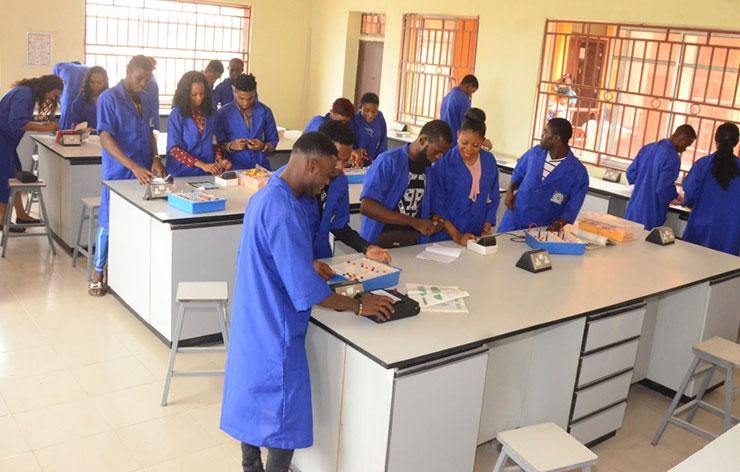
Polytechnic Reform Nigeria: 5 Key Facts for Students
Nigeria’s planned polytechnic reform is set to change the direction of technical education, but students currently enrolled in programmes such as Accounting, Business Administration and Mass Communication have not been ordered to abandon their studies. The Federal Government’s policy calls for a gradual reduction of non-technical programmes considered outside the statutory mandate of polytechnics, while institutions place greater emphasis on applied sciences, engineering, technology and practical skills.
The clarification from the National Orientation Agency is significant because the initial announcement generated questions over whether some programmes had already been cancelled. The agency said no definitive list of individual courses had been announced for immediate cancellation, meaning the reform should not currently be interpreted as a blanket ban on non-technical programmes.
The issue facing students, therefore, is less about an immediate disruption to existing studies and more about how the policy could gradually change what Nigerian polytechnics teach, how they design their curricula and which programmes they offer to future applicants.
What the Polytechnic Reform Means Right Now
The most immediate fact for students is that the government has announced a direction of reform, rather than an immediate mass cancellation of courses.
The National Orientation Agency said the policy is intended to reposition polytechnics around their technical mandate, with stronger emphasis on practical education, applied sciences, engineering, technology and innovation.
That distinction matters.
A student already enrolled in a non-technical programme should not interpret the announcement as an instruction to leave school. The supplied source material does not identify an order requiring current students to withdraw from their programmes.
Instead, the policy points towards a gradual restructuring of the system.
That could eventually affect the courses institutions offer, admission decisions, curriculum design and the skills students are expected to acquire.
For now, however, the available clarification does not establish that every non-technical programme in every Nigerian polytechnic has been cancelled.
Which Polytechnic Courses Could Be Affected?
The government’s language focuses on programmes considered to fall outside the statutory mandate of polytechnics.
But the latest clarification does not provide a definitive institution-by-institution list showing which courses will disappear.
That leaves an important implementation stage ahead.
Students currently studying Accounting, Business Administration, Mass Communication or other non-technical programmes therefore need to distinguish between the government’s policy direction and a formal decision affecting their particular institution or course.
Those are not necessarily the same thing.
A national policy can establish a direction while individual institutions and regulators work through the details of implementation.
For prospective students, this means future admission brochures and official programme lists could become increasingly important. A course that appears on an institution’s current admission list does not necessarily establish what that institution will offer several admission cycles from now.
The safest approach is therefore to rely on formal announcements from the relevant institution and the National Board for Technical Education when specific programme changes are announced.
Why Is Nigeria Changing Polytechnic Education?
At the centre of the FG polytechnic policy is a broader argument about the relationship between education and employment.
The government has said Nigeria’s education system needs to move beyond an excessive emphasis on certificates and place greater weight on practical, employable skills.
Under this approach, a graduate should not only possess evidence of completing a programme but also have the ability to apply knowledge to real-world problems.
That is particularly important for a technical institution.
Polytechnics were established to provide technical and practical education, and the government’s current direction seeks to strengthen that identity.
The policy therefore places emphasis on people who can build, operate, repair, automate and produce, while improving connections between education institutions and industry.
The intended result is a stronger pipeline between education and the workplace.
Whether that objective can be achieved will depend heavily on implementation, including curriculum development, equipment, lecturer capacity, industry partnerships and funding.
The Skills Likely to Gain More Attention
One of the clearest elements of the reform is the emphasis on emerging technologies.
The government wants technical education curricula to reflect changes taking place in modern industries.
Areas identified in the supplied material include:
- Artificial intelligence
- Automation
- Digital technologies
- Green technologies
- Advanced manufacturing
- Other Industry 4.0 competencies
This could represent a significant shift in the educational experience of future polytechnic students.
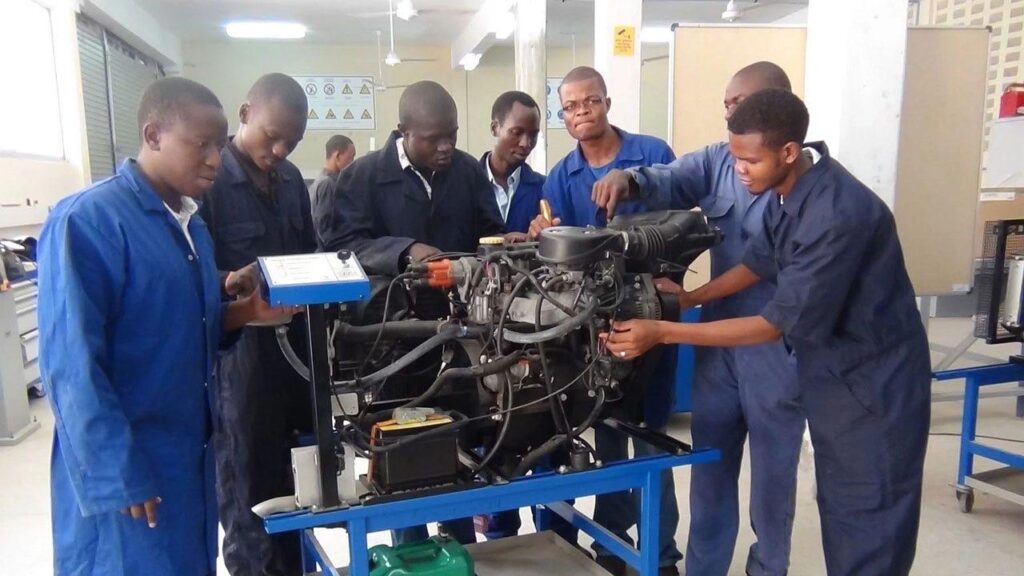
Instead of concentrating primarily on classroom-based theoretical learning, the reform envisages greater emphasis on what students can actually do with their knowledge.
That is the principle behind Outcome-Based Education, which the government wants incorporated into technical education.
Under such an approach, learning outcomes become closely connected to practical competence.
For a student, that could mean greater emphasis on laboratory work, technical projects, technology applications, problem-solving and industry-related competencies.
The policy’s success, however, cannot be measured simply by changing course titles or adding technology-related subjects to a curriculum.
A genuine transition would require institutions to have the equipment, facilities and skilled personnel needed to teach those competencies effectively.
What Does Industry 4.0 Mean for Polytechnic Students?
The reference to Industry 4.0 is particularly important because it places the reform within a much wider transformation of the global workplace.
Artificial intelligence, automation, advanced manufacturing and digital technologies are changing how many industries operate.
For Nigerian polytechnics, the challenge is to ensure that graduates are prepared for workplaces that increasingly require workers to interact with digital systems and automated technologies.
This gives the polytechnic reform Nigeria agenda a significance beyond the question of which courses may eventually disappear.
It is also about the type of graduate Nigerian technical institutions want to produce.
A student trained to understand emerging technology, operate modern equipment and solve practical industrial problems may have a different relationship with the labour market from one whose education is predominantly theoretical.
The government’s stated objective is to strengthen precisely that connection between education and employment.
What Should Current Students Do?
For students already enrolled, the most important message is to avoid making decisions based solely on headlines or social-media interpretations.
The available clarification does not instruct current students in non-technical programmes to abandon their studies.
Students should instead monitor formal communication from their institutions and relevant regulatory authorities.
They should pay particular attention to announcements concerning:
- Programme accreditation
- Curriculum changes
- Admission requirements
- New course offerings
- Programme restructuring
- Institutional directives
- Graduation requirements
Students should also keep their academic records and remain in contact with their departments.
If a specific institution announces a change affecting a programme, that announcement will carry greater practical significance for the students enrolled there than general interpretations circulating online.
The distinction between policy direction and institution-specific implementation is therefore crucial.
What Prospective Students Should Watch
For students preparing to apply to polytechnics, the reform could have more immediate implications over time.
Future applicants may encounter a changing programme landscape as institutions respond to the government’s direction.
Prospective students should therefore avoid selecting a course solely because it appears in an old admission guide or because it has historically been offered by a particular institution.
Official admission materials for the relevant academic session will become increasingly important.
Students should also consider the skills associated with their chosen discipline.
The reform signals that technical competence, digital literacy, applied knowledge and industry relevance are likely to become increasingly important within the polytechnic system.
That does not automatically make every traditional programme irrelevant.
Rather, it indicates that the government wants polytechnic education to become more closely aligned with its technical mandate and the changing needs of industry.
The Challenge Behind the Reform
Changing the curriculum may be the easiest part of the process.
The harder question is whether institutions can acquire the resources required to deliver the new model.
Teaching artificial intelligence, automation, advanced manufacturing and other Industry 4.0 competencies requires more than changing a syllabus.
Polytechnics need appropriate laboratories, workshops, computers, equipment, software, reliable infrastructure and lecturers capable of teaching modern technologies.
Industry partnerships can also become important because practical training is more effective when students understand how technologies are actually deployed in workplaces.
This means the outcome of the reform will ultimately depend on implementation.
If curriculum reform is accompanied by investment in facilities, lecturer training and industry collaboration, the policy could strengthen the technical identity of polytechnics.
If those elements do not keep pace, institutions could face difficulties translating the government’s ambitions into practical classroom experience.
From Certificates to Employable Skills
The government’s criticism of certificate-focused education also points to a longstanding debate about employability.
A certificate can demonstrate that a student has completed a course of study, but employers may also require evidence of practical competence.
The reform therefore attempts to put greater emphasis on what graduates are capable of doing.
That could make skills such as programming, automation, equipment operation, digital production, technical maintenance and applied problem-solving increasingly important.
However, technical education should not be reduced to a simple choice between certificates and skills.
A strong technical education system requires both.
Students need recognised qualifications, but they also need the competence to apply what they have learned.
The government’s proposed shift is therefore better understood as an attempt to strengthen the practical component of polytechnic education rather than simply eliminate academic learning.
What Happens to Non-Technical Programmes?
At present, the precise future of individual non-technical programmes remains dependent on implementation.
The National Orientation Agency’s clarification does not provide a definitive list of programmes that have already been cancelled.
That means claims suggesting that all Accounting, Mass Communication or Business Administration programmes in Nigerian polytechnics have already been banned would go beyond what the available information establishes.
The phrase “gradually phase out” is important.
It indicates a process rather than an immediate system-wide shutdown.
The eventual outcome could therefore vary depending on regulatory decisions, institutional implementation and subsequent government directives.
Students and parents should distinguish between what has been officially announced and what remains to be determined.
The Bigger Future of Nigerian Polytechnics
The reform could eventually reshape how Nigerians perceive polytechnic education.
For years, university education has often been viewed by many families as the preferred route to professional advancement, while technical and vocational education has sometimes received less attention.
A successful reform could strengthen the position of polytechnics as institutions that produce graduates with practical technical competencies.
That could matter for industries seeking workers capable of operating modern technologies and solving production-related problems.
It could also support entrepreneurship if students acquire skills that allow them to create businesses rather than depend entirely on conventional employment.
But that outcome will depend on more than policy statements.
The credibility of the reform will ultimately be judged by the quality of training students receive and whether employers recognise the value of the resulting skills.
What Students Should Watch Next
The next stage will be implementation.
Students will need clearer information about how the Federal Government, the National Board for Technical Education and individual polytechnics translate the policy into specific programmes and curricula.
The most important developments to watch will include formal programme lists, admission changes, curriculum revisions, accreditation decisions and institutional announcements.
Until those details emerge, students should be cautious about treating broad descriptions of the reform as definitive decisions about individual courses.
For current students, the available information does not require immediate withdrawal from existing programmes.
For prospective students, however, the direction is clearer: the future technical education Nigeria system is likely to place greater emphasis on practical skills, emerging technologies and industry relevance.
The polytechnic reform Nigeria agenda is therefore not simply a story about courses being removed from admission lists. It is a potentially wider attempt to redefine what Nigerian polytechnics are expected to produce.
The immediate question for students may be whether their particular course survives the transition. The longer-term question is whether the reform can produce a technical education system capable of preparing Nigerians for the workplaces of the future.
Recommended Coverage
₦120 Billion TVET Education Scheme: Nigeria’s Skills Revolution
Nigeria’s push toward technical and vocational education goes beyond changing polytechnic courses.
Read this to understand the wider investment and skills agenda behind the government’s TVET reform.
Calls for Curriculum Reform in Nigeria Grow Stronger
What Nigerian students learn is increasingly being questioned as employers demand more relevant, practical skills.
Explore this coverage to see why curriculum reform has become central to the future of education and employment.
Digital Economy Clusters in Nigerian Universities Launched
Technology is rapidly changing the skills Nigerian graduates need to compete in the modern economy.
Read how digital innovation and university-based technology programmes are helping shape the workforce of tomorrow.
About the Author