Nigeria’s major policy, security, economic and political developments in focus.
Nigeria Daily News Review: State Police, Inflation, Ebola and 2027 Politics
Nigeria’s latest developments raise important questions about the distance between official announcements and measurable results. From the proposed establishment of state police to the Federal Government’s ambition to bring inflation into single digits, the issues concern not only decisions made by public institutions but also how those decisions will be implemented and affect Nigerians.
This Nigeria daily news review covers the reporting window from 25 to 26 October 2026. It examines five major narratives: reported progress on the constitutional process for state police; the government’s inflation target; updates concerning Nigeria’s Ebola response; arrests reported in an international cybercrime operation; and campaign leadership appointments ahead of the 2027 general election.
The developments are different, and the available reporting does not establish that they share a direct cause. Their common public-interest value lies in the questions they raise about institutional responsibility, implementation and evidence. A legislative vote does not mean a new policing system is already operating. An inflation target is not an economic result. A report of no known active Ebola cases does not, by itself, establish that public-health monitoring has ended. Arrests do not establish guilt, and campaign appointments do not prove that a political organisation is operational nationwide.
For readers following Nigerian affairs, these distinctions matter. Understanding the news requires examining what has happened, what remains a proposal or claim, and which developments need further confirmation. This review retains those distinctions while explaining the significance of the five stories and the next questions that deserve attention.
1. State Police in Nigeria: Ondo Assembly Vote Adds to Constitutional Process
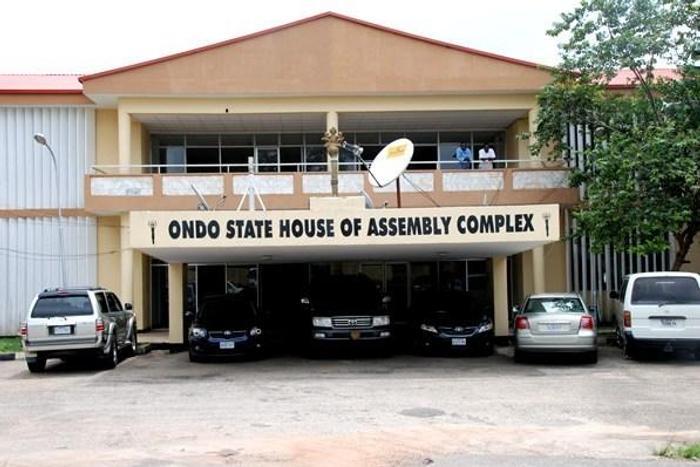
The reported passage of a constitutional amendment bill by the Ondo State House of Assembly on 26 October has added another development to the process surrounding the proposed establishment of state police in Nigeria. The vote represents legislative activity, but it should not be confused with the start of state police operations.
According to the approved daily reporting, the assembly passed the Constitution, Sixth Alteration Bill, 2026, at second and third readings. Speaker Olamide Oladiji directed the Clerk, Benjamin Jaiyeola, to transmit the bill to the National Assembly alongside the assembly’s observations. Majority Leader Olatunji Oshati was also identified among the principal assembly officials involved.
The reported vote forms part of a broader constitutional process. On 23 October, the Presidency’s working group on the National Policing Bill said that 24 of Nigeria’s 36 state assemblies had approved the amendment, meeting the two-thirds threshold cited in the reporting. The National Assembly was also reported to have passed the amendment in both chambers.
These developments indicate progress through the legislative process. However, the precise legal position and the steps still required must be distinguished from the practical establishment of state-level police services. The daily editorial review also reported that draft implementing legislation was undergoing review and validation, with a return expected by 30 October. That date was a planned milestone, not confirmation that the review had been completed.
The distinction matters because a constitutional change and the operation of a new policing arrangement are different stages. The legal framework must establish how responsibilities will be assigned, how the relevant institutions will function and what safeguards will apply. Until those processes are confirmed, it would be premature to describe state police as operational nationwide.
What could change for security and accountability?
The proposal could affect the way policing responsibilities are shared between federal and state authorities. Its eventual consequences may extend to local security arrangements, coordination between agencies, state budgets and the mechanisms available to citizens who want to report or challenge police misconduct.
But the practical effect will depend on the final legal arrangements and their implementation. A change in the level of government responsible for policing does not, on its own, guarantee improved security or accountability. The framework and the institutions applying it will matter.
Several questions therefore remain central to the debate. How will state police be funded? What safeguards will protect citizens against abuse? How will state-level forces coordinate with federal security agencies? And what mechanisms will allow misconduct to be investigated and addressed?
These are implementation questions, not evidence that the proposal has already succeeded or failed. They identify the issues that legislators and relevant authorities will need to resolve if the reform advances.
What to watch next
The immediate milestones identified in the reporting are the further handling of the constitutional amendment and the review of the draft implementing legislation, which was expected to return by 30 October. The completion of those steps should be confirmed rather than assumed.
The reported Ondo vote is one development in a wider process. The more consequential test will be whether the legal arrangements are finalised, the responsibilities of each level of government are clear, and effective safeguards and operational structures are established.
For now, the state-police process should be understood as a developing constitutional and policy matter—not as proof that a new policing system has already begun operating throughout Nigeria.
2. Nigeria Inflation Target: Government Sets Single-Digit Ambition for 2027
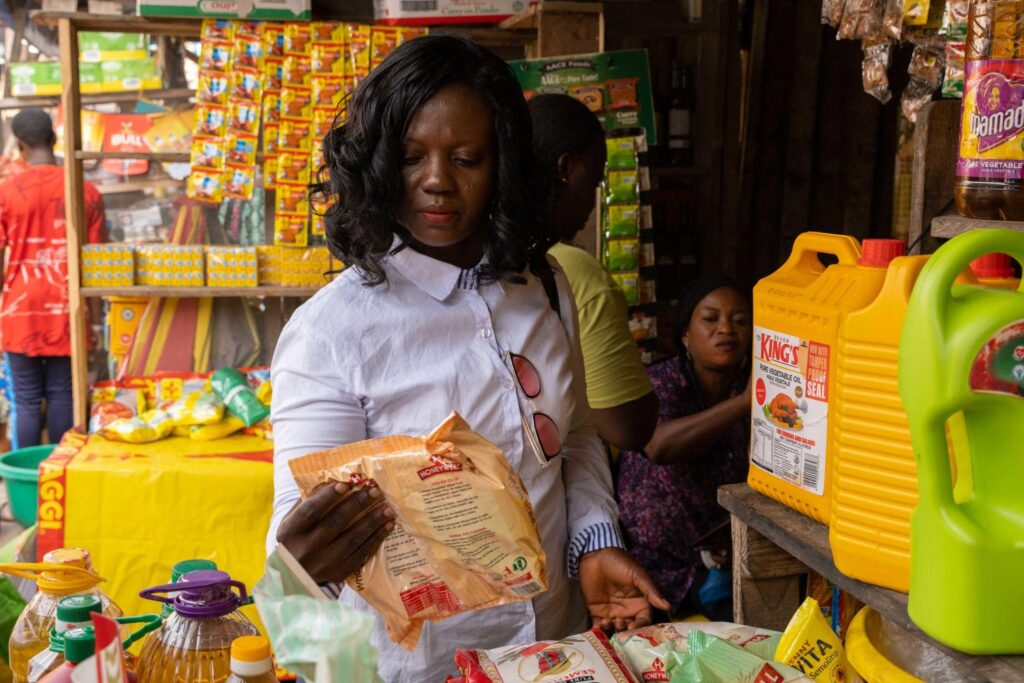
The Federal Government has reportedly set a target of bringing inflation into single digits before the end of 2027, placing the cost of living and the direction of economic policy at the centre of the latest Nigerian affairs review.
Finance Minister Taiwo Oyedele reportedly announced the target on 26 October at the 32nd Nigerian Economic Summit in Abuja. The reporting said he linked lower inflation to the prospect of cheaper borrowing, stronger investment and faster economic growth. The announcement establishes the government’s stated ambition; it does not establish that the target will be achieved.
The figures cited in the daily review provide a starting point for assessing that ambition. Nigeria’s headline inflation rate was recorded at 14.63 per cent in September, down from 15.39 per cent in August, according to the National Bureau of Statistics. DSG Herald News has also examined the gap between easing inflation and household poverty in its report, Nigeria’s poverty rate and the limits of falling inflation. The Central Bank of Nigeria’s monetary policy rate was reported at 23 per cent in September.
Those figures measure different things. Inflation tracks the rate at which the general level of prices is increasing. The monetary policy rate is a tool used by the Central Bank in managing monetary conditions. It is not automatically the interest rate that every household or business pays when borrowing money.
The distinction is important because the relationship between monetary policy, commercial lending rates, investment and household costs is not one-to-one. A change in one indicator does not establish an identical change in another.
Why a lower inflation rate does not necessarily mean lower prices
A falling inflation rate means prices are increasing more slowly than before; it does not necessarily mean that prices are falling. Food, transport, rent and other expenses can continue to rise even when the rate of increase moderates.
For households, the practical concern is purchasing power: whether earnings can keep pace with the prices people face. If prices continue to rise, even at a slower rate, families may still experience pressure on their budgets. The inflation rate alone does not tell the whole story of what an individual household can afford.
Businesses face a different but related challenge. More predictable prices can make planning easier and may support investment decisions. However, financing costs also influence whether firms can borrow to expand, buy equipment or maintain operations. A lower inflation rate would not automatically guarantee affordable credit.
Oyedele was also reported to have compared economic growth of 4.43 per cent with borrowing costs approaching 30 per cent. The daily editorial review identified these figures as requiring verification against their underlying data and definitions before they can support a broader comparison. They should therefore not be treated as independently established measures of the same period or economic conditions without further clarification.
The gap between a target and a policy roadmap
A numerical target provides a benchmark against which future performance can be assessed. But the announcement, as captured in the approved script, did not establish a complete, quantified roadmap containing clear milestones and assumptions for achieving single-digit inflation before the end of 2027.
That absence in the reviewed material should not be interpreted as proof that no policy work exists. It means the editorial record does not provide enough detail to describe a complete roadmap or assess whether the target is supported by specific measures.
A meaningful assessment will require subsequent inflation releases, relevant Central Bank decisions, evidence about actual lending rates and a clearer account of the policies intended to meet the deadline. It will also require careful attention to the difference between a target announced by government and a result measured in official data.
What Nigerians should watch
The Nigeria inflation target matters because inflation affects the purchasing power of households and the planning decisions of businesses. Yet its public significance will ultimately depend on the evidence emerging over time.
The relevant test is not whether the government has stated an ambitious goal. It is whether measurable progress is sustained, whether price increases become more manageable and whether financial conditions improve in ways supported by the data.
Until those outcomes are demonstrated, single-digit inflation remains a government target—not an achieved result.
3. Nigeria Ebola Response: Patient Evacuation Leaves Questions About Monitoring

Nigeria’s Ebola response entered a new phase following reports that a patient with Bundibugyo Ebola disease had been evacuated to Switzerland. The reporting also raised an important question: what was the latest official position on the case, the identified contacts and the public-health measures that remained in place?
According to the situation report cited in the daily editorial review, the Nigeria Centre for Disease Control and Prevention recorded confirmation of the case in the Federal Capital Territory on 20 October. An NCDC situation report dated 24 October listed 53 identified contacts. It also recorded a suspected case in Rivers State that tested negative.
On 26 October, the Associated Press reported that the patient had been evacuated to Switzerland with her husband. For wider outbreak context, the World Health Organization’s update on Bundibugyo Ebola disease described the regional situation as of 23 October. DSG Herald News has also covered related developments in its report on the Ebola outbreak in Congo and Africa’s health-system pressures. The report said Nigeria had no known active cases following the transfer and that 52 other contacts remained under monitoring.
The figures were reported at different times and have not been fully reconciled in the approved editorial material. The earlier NCDC report listed 53 contacts, while the later report referred to 52 other contacts. Without a current official explanation, the difference should not be resolved by assumption.
The report of no known active cases must likewise remain attributed to the Associated Press unless it is confirmed by an updated official statement. The material reviewed for this edition does not establish that Nigeria’s response was formally declared over.
Evacuation and contact monitoring are different matters
The evacuation changed the location of the patient’s care. It did not automatically establish that contact tracing, monitoring or other public-health measures had ended.
Contact monitoring is relevant because public-health authorities may need to follow people who have had a potentially significant exposure. Being identified as a contact does not mean a person has Ebola. It means that the person has been identified for assessment or follow-up under the response arrangements.
Clear communication about that distinction is important. Inaccurate or incomplete information can cause unnecessary alarm, while premature reassurance can obscure the need for continued monitoring where authorities consider it necessary.
The negative test reported for the suspected case in Rivers State is a separate detail. It should not be presented as evidence that every concern associated with the confirmed case has been resolved. Equally, the existence of identified contacts does not establish that they are infected.
Why an updated official position matters
The central outstanding need is a current update from the NCDC clarifying the case status, the number of contacts still being monitored and any remaining response measures. The source material does not supply that reconciliation, so the article cannot state that all monitoring has ended or that every aspect of the response has been formally closed.
The distinction between a media report and an official public-health update is particularly important when communicating the status of an infectious disease. Readers need to know which claims have been attributed to a news report and which have been confirmed by the responsible public-health authority.
What to watch next
The next relevant development is an authoritative update clarifying the latest case status and contact figures. Until then, the report of no known active cases should retain its attribution, and the difference between 53 contacts in the earlier report and 52 other contacts in the later account should remain unresolved.
For Nigeria’s public-health institutions, the issue is not only the movement of a patient to another country. It is also the clear communication of the status of the response and the measures still required to protect public health.
4. Nigeria Daily News Review: FBI Reports Nine Arrests in Cybercrime Operation
The Federal Bureau of Investigation reportedly announced nine arrests in Nigeria during Operation Blackout, alongside the seizure of 53 electronic devices, according to the U.S. Department of Justice’s announcement on the joint disruption operation. The operation was described in the approved daily script as part of a wider international effort involving law-enforcement agencies and private-sector partners.
The United States Department of Justice was reported to have described the broader effort as targeting schemes that included impersonation of law-enforcement authorities, digital extortion and cryptocurrency investment fraud. The FBI also identified US$11 million in funds that could potentially be frozen across multiple countries.
These figures describe different aspects of an investigation and must not be treated as interchangeable outcomes. The reported arrests concern people taken into custody. The seized devices are potential sources of evidence for investigators. The funds described as potentially freezable represent a possibility, not proof that the money had already been frozen, recovered or returned to victims.
An arrest is not a conviction. Nor does the seizure of a device, on its own, establish that its owner committed an offence. Questions of criminal responsibility must be determined through the applicable legal process.
Why cross-border cooperation matters
Cybercrime investigations can involve people, devices, financial accounts and alleged victims in different jurisdictions. That can require law-enforcement agencies to coordinate investigations, preserve digital evidence and follow the relevant legal procedures in each jurisdiction.
The reported international character of Operation Blackout is therefore significant as an enforcement development. However, the available script does not establish the precise evidence against each person arrested in Nigeria, the charges brought against them or the outcome of any court proceedings connected to the nine arrests.
Those limits matter for responsible reporting. A description of the wider operation does not necessarily establish that every offence mentioned in the operation’s broader scope is attributable to every person arrested in Nigeria.
The same care is required when discussing the reported US$11 million. The figure was described as funds that could potentially be frozen across multiple countries. It should not be presented as the value of money already recovered from the nine arrests or as a confirmed sum returned to victims.
The public-interest test
For Nigerians, the important questions extend beyond the number of arrests or devices seized. The eventual outcomes will help establish whether the investigation leads to lawful prosecutions, whether further fraud is prevented and whether funds linked to alleged offences are actually frozen, seized or returned to victims.
Those outcomes cannot be inferred from the initial enforcement figures. They depend on evidence, legal proceedings and verified financial developments.
The distinction is also important for public confidence. Reporting that accurately separates allegations from established findings helps readers understand what investigators have done without prejudging the people involved.
What to watch next
The approved editorial review did not establish the charges, court outcomes or amount of money actually recovered in connection with the nine arrests. Those details remain important follow-up questions.
Future reporting should distinguish among funds identified by investigators, funds subject to a confirmed freeze, assets formally seized and money ultimately returned to victims. Each describes a different stage, and evidence for one should not be used as proof of another.
The reported arrests and device seizures mark an enforcement development. The legal and financial results remain to be established.
5. Nigeria Daily News Review: NDC Campaign Appointments Raise Questions About Council Structure
The Nigeria Democratic Congress (NDC) reportedly announced campaign leadership appointments ahead of the 2027 general election, naming several political figures to positions within its campaign structure. The announcement provides an outline of the reported leadership arrangements, but the available reporting leaves questions about the precise size and composition of the council.
According to TheCable’s report on the 155-member council, Henry Seriake Dickson was named chairman of the campaign council and Peter Obi co-chairman. Rabiu Musa Kwankwaso was reported as co-vice-chairman, Cleopas Moses Zuwoghe as vice-chairman, Ikenna Enekweizu as council secretary and Ibrahim Hussain Abdulkarim as campaign director-general.
The report also included criticism from John Ughulu of the Obi-Kwankwaso movement, who reportedly questioned whether the council demonstrated sufficient grassroots strength. That is an attributed political assessment. It is not independent evidence that the party lacks grassroots support, just as the appointment of prominent figures does not independently prove that the party has an effective nationwide campaign network.
The distinction between political assessment and verifiable organisational information is important as parties prepare for an election. Leadership appointments can identify who is expected to hold particular responsibilities, but they do not by themselves establish the extent of an organisation’s activity or its reach across the country.
Conflicting reports about the council’s size
A separate issue concerns the number of people included in the campaign arrangements. TheCable described the body as a 155-member council. Premium Times reported a 118-member National Campaign Council while listing a separate 40-member advisory council and 37 state campaign coordinators.
The figures have not been reconciled in the approved editorial material. They may refer to different categories or organisational structures, but the available information does not establish the precise explanation. It would therefore be inappropriate to treat the totals as equivalent or simply add them together.
The distinction matters because a campaign council, an advisory body and state-level coordinators may serve different functions. A clear official list and explanation of the categories would allow readers to understand the structure without relying on conflicting descriptions.
The inauguration scheduled for 26 October also remained unconfirmed in the editorial review. The schedule should not be treated as proof that the inauguration took place.
What appointments can—and cannot—show
The reported appointments are relevant to understanding how the party says it is organising its campaign leadership. They do not establish that the council has begun operating, that all named positions have been formally activated or that state-level campaign structures are functioning.
Likewise, an assessment of grassroots strength would require evidence beyond the names on a list or the opinion of a political supporter or critic. The approved source does not provide independent evidence sufficient to reach a conclusion about the party’s nationwide organisational strength.
Maintaining that distinction is part of fair political reporting. The appointments can be reported as an announced development, while claims about political reach and effectiveness should remain attributed unless supported by additional evidence.
What to watch next
The immediate questions are whether the party has published a complete official list, how it distinguishes the campaign council from the advisory council and state coordinators, and whether the planned inauguration took place.
Clarification would resolve the numerical discrepancy and provide a more reliable account of the party’s reported structure. Further evidence would still be needed to assess how effectively that structure operates across the country.
For now, the appointments offer an outline of the NDC’s reported campaign leadership ahead of 2027. The exact composition and operational status of the council remain matters for confirmation.
Conclusion: Evidence Must Follow Announcements
The five developments in this Nigeria daily news review span constitutional reform, economic policy, public health, criminal investigation and election preparation. They do not share a single cause, but each demonstrates why public announcements must be examined alongside the evidence that establishes what has actually changed.
The reported progress on state police raises questions about the final legal framework, implementation and accountability safeguards. Readers can also see DSG Herald News’ earlier Nigeria review of Ebola, state police and public accountability for related background. The government’s inflation target will need to be assessed against official data and the policies intended to support it. Nigeria’s Ebola response requires a current official position on case status and contact monitoring. The cybercrime operation must be followed through the legal process and any verified financial outcomes. The NDC campaign appointments require clarification of the council’s composition and operational status.
In each case, the distinction between a stated intention and a demonstrated result is essential. Targets, legislative steps, media reports, arrests and appointments all provide information, but they do not automatically establish implementation or success.
For Nigerians following government decisions and public institutions, the next task is to look for the evidence that resolves these questions. Updated official information, transparent processes, clearly defined responsibilities and documented outcomes will help determine what the developments mean in practice.
The central lesson is straightforward: understanding Nigerian affairs requires more than knowing what was announced. It requires knowing what has been established, what remains uncertain and what evidence should be examined next.
About the Author