Nigeria’s week in review: five major narratives on politics, economic pressures, security, public health and flooding.
Five Developments that shaped Nigeria’s week
Nigeria’s news agenda between Monday, 19 October, and Sunday, 25 October 2026, was shaped by political campaigning, economic uncertainty, security concerns, public health preparedness and the continuing humanitarian consequences of flooding. Each development presented a different challenge, from the pressure on government to Developments that shaped Nigeria’s week
Nigeria’s news agenda between Monday, 19 October, and Sunday, 25 October 2026, was shaped by political campaigning, economic uncertainty, security concerns, public health preparedness and the continuing humanitarian consequences of flooding. Each development presented a different challenge, from the pressure on government to demonstrate results to the need for reliable information during emergencies.
The week’s political developments included President Bola Tinubu’s re-election campaign launch in Kaduna and renewed attention to workers’ demands, food affordability and public revenue. Reported movements in the naira and international oil prices also raised questions about the economic conditions facing households and businesses, although the precise effects of those movements require reliable comparative data.
Security remained another major concern. Reports of progress towards a state-police framework emerged alongside reports of deadly violence in Taraba State and court proceedings involving kidnapping suspects in Imo State. Meanwhile, the Federal Government’s reported confirmation of an imported case of Bundibugyo virus disease brought disease surveillance and emergency preparedness into focus.
Flood-related figures attributed to the National Emergency Management Agency added a further dimension to the week, highlighting the scale of displacement and loss of life reported across several states.
This Nigeria news review examines five major narratives from the period. They are distinct developments, not evidence of one coordinated national crisis. Their importance lies in what each reveals about public policy, institutional responsibilities and the need to distinguish announcements from measurable outcomes.
1. Nigeria politics: Tinubu’s 2027 campaign meets economic discontent
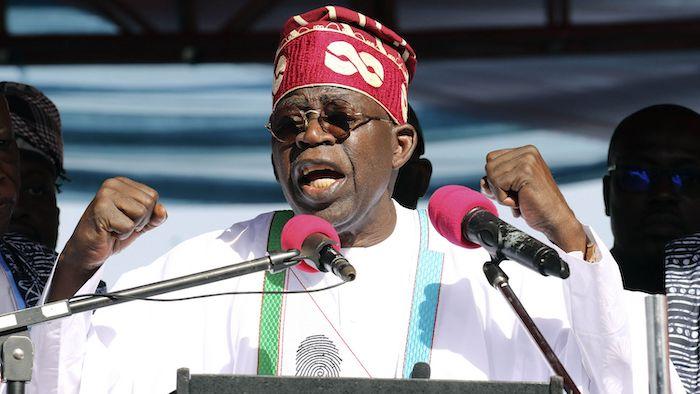
President Bola Tinubu launched his re-election campaign in Kaduna on 24 October, bringing Nigeria’s 2027 presidential contest into a more visible public phase. The campaign began against a backdrop of economic concerns, labour demands and continuing debate about government performance.
The political significance of the launch extends beyond the campaign event itself. The cost of living, workers’ conditions, food affordability and the management of public revenue are among the issues against which voters may assess the government’s record. Campaign promises can establish priorities, but their value ultimately depends on what can be demonstrated through policy implementation and measurable results.
Labour negotiations remain unresolved
During the review period, the Nigeria Labour Congress (NLC) and the Trade Union Congress (TUC) warned of possible nationwide industrial action after discussions with the Federal Government failed to resolve their demands.
The unions indicated that another meeting with the government was scheduled for 27 October, after the end of the period covered by this review. At the Sunday, 25 October, reporting cutoff, a nationwide strike had not been confirmed in the reporting reviewed for the programme.
The distinction between a warning and a formally declared strike is important. The unions’ position indicated continuing disagreement, but the outcome remained dependent on further negotiations. The scheduled meeting was therefore a development to watch rather than evidence that an agreement had been reached or that industrial action was inevitable.
The next stage of the negotiations would help clarify whether the parties could reach a resolution and what that resolution would mean for workers and the wider economy.
Food affordability plan raises implementation questions
The National Economic Council also endorsed a 90-day plan intended to improve food affordability and attract investment.
The endorsement represented an announced policy direction. It did not, by itself, establish that the plan had been fully funded, implemented or shown measurable results. Questions remained about the specific measures to be introduced, the institutions responsible for delivering them and the indicators that would be used to assess progress.
For households concerned about food costs, the practical test is whether the measures lead to a demonstrable improvement in affordability. An announcement alone cannot establish that prices have fallen or that households are spending less.
The plan’s effectiveness will therefore need to be assessed through implementation details and comparable evidence, rather than through the stated objective alone.
Disputed claim over NLNG dividends
Public revenue became another point of political disagreement after Oyo State Governor Seyi Makinde alleged that the Federal Government was withholding ₦250 billion in Nigerian Liquefied Natural Gas (NLNG) dividends for each state until after the 2027 elections.
The Presidency rejected the allegation. The claim remains disputed and should not be treated as proof that each state is owed the stated amount.
Resolving the issue would require relevant financial records and clear explanations from the institutions involved. Without that evidence, the allegation and the Presidency’s rejection must remain distinct positions in a public dispute.
What the developments mean for Nigeria politics
The campaign launch, labour negotiations, food-affordability plan and revenue dispute concern different aspects of governance. They should not be presented as a single coordinated process. However, each places attention on the relationship between political commitments and verifiable results.
For voters, the key question is whether campaign promises are followed by measurable outcomes. For workers, it is whether negotiations resolve their outstanding demands. For households, it is whether policy measures improve access to affordable food. For the public, it is whether contested claims about government revenue can be clarified through credible evidence.
The next developments to watch include the labour–government meeting scheduled for 27 October, further details on the 90-day plan and any documentary clarification of the NLNG dividend allegation.
The economic conditions surrounding these political developments formed another major part of the week’s news, with reported market movements prompting questions about costs and household welfare.
2. Nigerian economy: Naira movements and oil prices raise household cost concerns
Reported movements in Nigeria’s foreign-exchange and petroleum markets drew attention during the week, raising questions about the potential costs facing households, transport operators, traders and manufacturers.
Figures cited in the reporting showed the naira weakening from ₦1,337 per US dollar on 21 October to ₦1,365 on 22 October. That represents a movement of ₦28 per dollar in one day. For related coverage, see DSG Herald News’ Nigeria News Review on security, fuel and labour. The figures require confirmation against comparable exchange-rate data, including the market and measurement basis used for each quotation.
What a weaker naira can mean
Exchange-rate movements can affect the cost of imported goods, production inputs and foreign-currency obligations when measured in naira. Businesses that depend on imported materials may face higher local-currency costs, while traders and manufacturers may need to reassess purchasing arrangements and operating expenses.
However, a change in the exchange rate does not automatically establish the size or timing of a price increase for consumers. The eventual effect depends on factors such as existing inventories, purchasing arrangements, operating costs and whether businesses pass additional expenses on to customers.
Without comparable price data, the precise impact on household budgets cannot be quantified from the reported exchange-rate movement alone.
International oil prices and domestic petrol costs
Brent crude was quoted at $115.18 per barrel on 23 October, according to the figures cited in the newsroom reporting.
International crude prices are an important market indicator, but they are not a direct measure of what motorists pay for petrol in Nigeria. Domestic retail prices are a separate measurement and should be assessed using actual pump-price data.
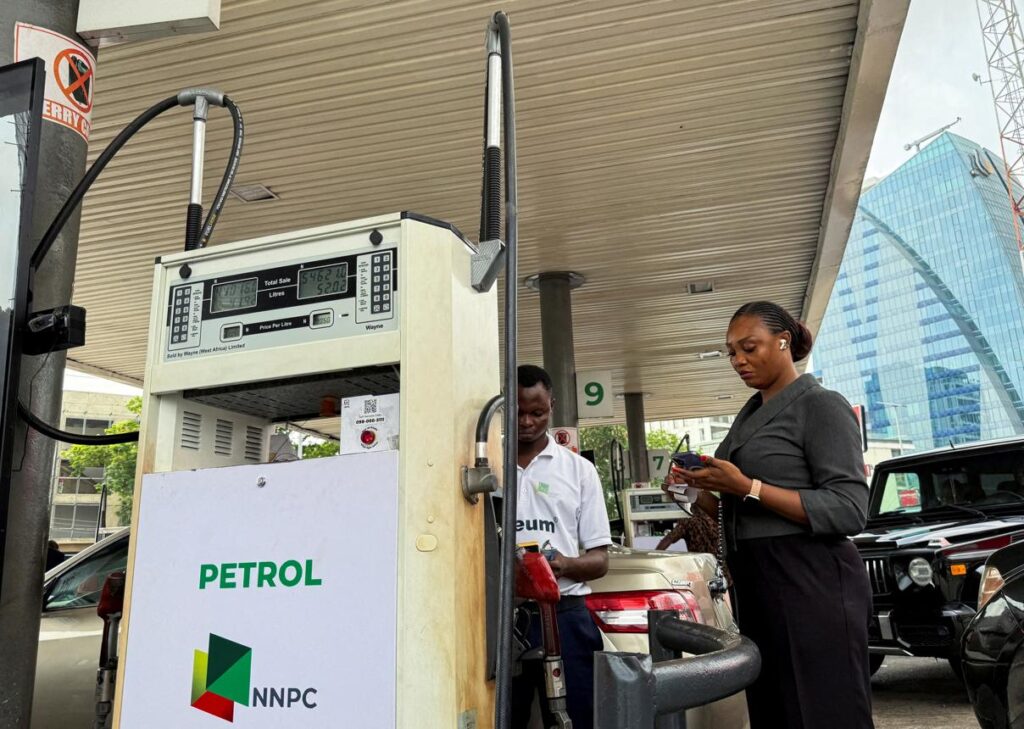
Reporting during the week also cited petrol gantry prices of approximately ₦1,350 per litre. That figure refers to a reported gantry price, not a confirmed nationwide retail pump price. It should not be presented as the price paid by every motorist or as evidence that all filling stations were charging the same amount.
Separate reports cited a 30 per cent decline in petrol imports and daily demand of 44.4 million litres. The comparison period and methodology behind those figures require verification before they can support a firm conclusion about supply trends.
These measurements describe different parts of the petroleum market. International crude prices, exchange rates, depot prices, retail prices, import volumes and estimates of daily demand cannot be treated as interchangeable indicators.
What the figures establish—and what they do not
The reporting cited for the week did not establish a new nationwide petrol-price increase or confirm a nationwide fuel shortage during the review period. Nor did it quantify a specific increase in household spending caused by the reported exchange-rate and petroleum-market movements.
That distinction does not make the potential economic effects unimportant. If businesses face higher input or distribution costs, some of those costs may eventually reach consumers. Transport operators, traders and manufacturers may all be affected, depending on their operating conditions and ability to absorb or pass on expenses.
For households, the practical concern is the combined effect of prices across essential goods and services. For businesses, it is whether changing costs can be managed without undermining operations. For policymakers and market observers, the challenge is to understand the relationship between market movements and the conditions people experience.
What to watch next
A clearer assessment requires updated exchange-rate figures, petroleum-market data and retail prices from different locations. The import and demand figures also need a defined comparison period and a transparent methodology.
The week’s economic reporting raised legitimate questions about the pressures facing Nigerian households and businesses, but the reported figures alone do not resolve them. Reliable, comparable data are essential to distinguishing a market signal from a demonstrated change in living costs.
Alongside these economic concerns, security developments highlighted the need to distinguish proposed institutional reform from the immediate challenge of protecting communities.
3. Nigeria security: State-police reform faces the test of violence and accountability
Nigeria’s security debate during the week combined reported progress towards a state-police framework with continuing concerns about deadly violence and kidnapping. These were distinct developments, highlighting both the process of institutional reform and the immediate need for public protection.
Proposed state-police framework
Reports indicated that at least 24 of Nigeria’s 36 State Houses of Assembly had approved a proposed constitutional amendment intended to establish a state-police framework. The Presidential Working Group reportedly announced that the required approval threshold had been reached.
The reported milestone was announced by the Presidential Working Group on the National Policing Bill. It should not be confused with the creation of an operational state-police system. A proposed constitutional amendment, the legal steps required to establish a new framework and the eventual operation of a policing system are separate stages.
The reporting also referred to a draft National Policing Bill and 29 related amendment bills undergoing legal review. The status of those bills and the expected timetable for completing the review require confirmation. The newsroom reporting identified 30 October as the expected completion date, but that deadline should be confirmed with the relevant authorities.
If the proposal advances, questions will remain about the division of responsibilities, funding, oversight and safeguards against abuse. The practical effect of any new arrangement will depend on the legal provisions adopted and how they are implemented. The reported approvals alone do not establish how those issues will be resolved.
Deadly attack reported in Taraba State
The constitutional debate unfolded alongside reports of deadly violence. Amnesty International reported that at least 40 people were killed in an attack in Taraba State on 23 October. Reuters reported the incident the following day.
The death toll should remain attributed to Amnesty International unless further reliable evidence confirms it. The identities of the attackers and their motive were not established in the reporting reviewed for this roundup.
Accurate attribution matters, particularly when reporting casualty figures and incidents in which responsibility has not been established. The number of reported deaths should not be used to infer the identity or motive of the attackers.
Kidnapping case proceedings in Imo State
In Imo State, five suspects were reportedly arraigned on 20 October over kidnapping cases that included the abduction of 20 prospective National Youth Service Corps members on 1 October. The victims were reported rescued on 7 October.
An arraignment is a step in judicial proceedings, not a conviction. The suspects’ reported court appearance does not establish guilt, and the allegations must be distinguished from any findings a court may eventually make.
The reporting also cited 653 convictions in terrorism-related prosecutions. That figure requires confirmation through a complete official breakdown, including the period covered, the nature of the cases and the basis for calculating the total.
The wider security challenge
The Taraba attack, the Imo court proceedings, the reported terrorism convictions and the state-police proposal should not be presented as connected incidents. Their shared relevance lies in broader questions about public safety, effective investigation, lawful prosecution and institutional accountability.
For communities facing insecurity, proposed reform is not a substitute for immediate protection. At the same time, any restructuring of policing requires a clear legal framework, appropriate resources and effective safeguards.
The next developments to watch include confirmation of the constitutional amendment process, the status of the draft bills, further reliable information about the Taraba attack and updates on the Imo proceedings. The reported terrorism-conviction figure and the 30 October legal-review deadline also require confirmation.
Public protection, however, extends beyond policing. The ability to identify and respond to infectious disease risks became another issue requiring attention during the week.
4. Nigeria public health: Imported Bundibugyo virus disease case raises preparedness questions
The Federal Government reportedly confirmed an imported case of Bundibugyo virus disease on 20 October, bringing attention to Nigeria’s public health surveillance and response arrangements.
The initial reporting stated that the patient had been isolated and was receiving medical care. It also reported that 44 contacts had been identified for monitoring.
The contacts should not be described as confirmed cases. Contact monitoring is a precautionary measure used to assess possible exposure and determine whether further action is needed.
Genomic findings and entry protocols
On 23 October, officials reportedly shared genomic findings indicating that the virus was genetically related to a virus identified in a case in Kenya. Authorities also called for strict compliance with Ebola entry protocols.
Genetic similarity does not, by itself, establish a direct epidemiological link between two cases. Such a conclusion would require additional supporting evidence. The reported genomic relationship should therefore not be presented as proof that the Nigerian case was directly linked to the case identified in Kenya.
The reporting reviewed for this roundup did not establish wider community transmission in Nigeria. Confirmation of an imported case is not the same as confirmation of sustained community transmission, and the identification of contacts does not mean those individuals have contracted the disease.
Questions about preparedness and monitoring
The case raised questions about disease surveillance, laboratory investigation, contact tracing and communication by public health authorities. Identifying a case, isolating a patient, investigating possible exposure and monitoring contacts are relevant parts of the response.
The reference to Ebola entry protocols requires additional precision. Authorities reportedly called for strict compliance, but the reporting did not establish the precise nature or scale of any protocol breaches. It also did not establish that a particular breach caused the confirmed case.
It would therefore be premature to attribute the case to a failure at a specific entry point or to conclude that an institution had failed in its responsibilities. Such claims would require evidence about the circumstances of the case, the procedures followed and any findings by the responsible authorities.
The patient’s subsequent clinical condition was not established in the reporting cited for the review. The status of contact investigations and whether additional cases were confirmed after the 23 October update also require clarification.
For official context, consult the Nigeria Centre for Disease Control and Prevention’s update and the World Health Organization’s report on Nigeria’s imported Bundibugyo virus disease case. The Nigeria Centre for Disease Control and Prevention and the Federal Ministry of Health and Social Welfare are the relevant official institutions from which an updated account should be obtained before publication. Any update should clarify the status of the response and distinguish confirmed findings from matters still under investigation.
Why clear public communication matters
Public health reporting must balance the need to communicate risks with the responsibility to avoid unnecessary alarm. Inaccurate descriptions may create confusion, while incomplete updates can leave important questions unanswered.
The response should be assessed through reliable information about surveillance, investigation, contact monitoring and the clarity of official communication—not through speculation about the origin of the case or unverified claims about protocol failures.
The next developments to watch are official updates on the patient, the contacts under monitoring, the genomic findings and any additional confirmed cases. Until those details are established, the case should be reported with clear qualifications.
The same need for accurate assessments and evidence of action applies to another major public concern: the humanitarian consequences of flooding.
5. Nigeria flood disaster: Displacement figures highlight the humanitarian challenge
Flooding remained a major humanitarian concern during the week, with figures attributed to the National Emergency Management Agency (NEMA) indicating extensive impacts across Nigeria.
According to the reported NEMA figures, the situation as of 20 October involved 673,350 people affected, 214,997 displaced and 245 deaths, across 28 states and 134 local government areas. The figures were also reported in Punch’s coverage citing NEMA. The updated figures were reported on 23 October.
These totals describe different aspects of the humanitarian situation. The number of people affected is not the same as the number displaced, and neither figure alone establishes the conditions facing individual households.
The figures also represent a snapshot of the situation at a particular point in time. They should not be presented as the final flood toll for 2026. Assessments can change as authorities collect further information or update their records.
Understanding the humanitarian impact
National totals provide an overview of the reported scale of flooding, but they cannot establish how many people remain displaced, which communities have the most urgent needs, whether people have returned home or how much assistance has reached affected households.
For people forced to leave their homes, immediate concerns may include shelter, food, safe water, healthcare, education and the recovery of livelihoods. The extent of these needs in particular communities must be established through updated assessments and reliable reporting, rather than assumed from the national figures alone.
The geographical spread reported by NEMA—28 states and 134 local government areas—also highlights the importance of location-specific information. Conditions and needs can differ between communities, making updated local assessments essential for understanding where support is required.
From reported figures to relief delivery
NEMA reportedly called for stronger coordination among agencies and improved preparedness. Those calls identify areas of concern, but they are not evidence that particular measures have been funded or implemented.
Assessing the response requires information about actual relief activities, the locations covered, the support delivered and the needs that remain unmet. The original NEMA report, updated state-level assessments and verified details of relief operations would help establish the position more clearly.
Accounts from affected communities could also help show whether assistance is reaching people and whether there are gaps in the response. Any such reporting should distinguish official totals from independently gathered figures and explain material differences where they arise.
The distinction between planning and delivery is essential. An announced response demonstrates an intention to act; evidence of implementation requires details of measures actually taken. Similarly, the number of people reported as affected does not establish how many have received assistance or whether the support provided meets their needs.
Why the reporting date matters
The reported figures describe the situation as of 20 October, with the update reported on 23 October. Keeping these dates clear helps readers understand what the numbers cover and avoids presenting them as a final annual assessment.
The figures attributed to NEMA establish the reported scale of the impact, subject to confirmation against the original report. They do not, on their own, explain the conditions of every displaced person or quantify the assistance delivered.
Further reporting should establish the latest displacement figures, the needs of affected communities and the extent of relief and recovery operations. That would provide a clearer basis for assessing how emergency-response institutions are meeting their responsibilities.
Flood-related humanitarian reporting must therefore answer two distinct questions: how extensive is the impact, and what has been done to assist those affected? Reliable figures help answer the first. Verified information about relief delivery and continuing needs is essential to answer the second.
Conclusion: Accountability remains the central test
The developments of 19–25 October 2026 presented Nigeria with several distinct challenges. President Bola Tinubu’s campaign launch brought the 2027 election into sharper focus, while labour negotiations and the food-affordability plan raised questions about how public commitments would translate into results.
Economic reporting highlighted the need for reliable exchange-rate and petroleum-market data. The reported figures prompted questions about household and business costs but did not, by themselves, establish a nationwide petrol-price increase, a fuel shortage or the precise impact on living expenses.
Security developments underscored the distinction between progress towards a proposed policing framework and the immediate need to protect communities. The imported Bundibugyo virus disease case placed public health preparedness under scrutiny, while flood figures attributed to NEMA highlighted the need to connect humanitarian assessments with verified information about relief and recovery.
These developments do not share a single established cause. Their common importance lies in the need for clear facts, responsible reporting and measurable results. Proposals must be distinguished from implementation, allegations from findings, and preliminary figures from confirmed outcomes.
As the next stages unfold, the value of these developments will depend on what can be demonstrated—not only what is announced. Continue following DSG Herald News for further Nigeria news updates. For citizens, journalists and public institutions, accountability begins with reliable evidence and continues with clear explanations of what has changed, what remains unresolved and what action has actually been
About the Author