Introduction
Nigeria’s public-health preparedness, proposed security reforms, fuel-cost relief and institutional accountability featured prominently in the daily Nigerian affairs review covering 20–21 October 2026. The developments ranged from the confirmation of an imported Ebola Bundibugyo case in Abuja to the movement of proposed state-policing legislation into legal review. Reports of high petrol prices in parts of Anambra State also raised questions about the practical reach of a temporary relief measure announced by the Federal Government.
The same review examined a legal challenge involving former Central Bank of Nigeria Governor Godwin Emefiele and a reported diplomatic milestone in Reno Omokri’s appointment to Mexico. These were separate developments, but each highlighted the importance of distinguishing official announcements and procedural steps from outcomes that can be demonstrated.
This Nigeria news review looks beyond the immediate headlines to explain what the reports established, what the developments mean for public institutions and ordinary Nigerians, and which questions remained unresolved at the close of the reporting period. The Ebola response calls for accurate public-health communication; state-police reform requires constitutional progress and safeguards; petrol-price relief needs to be assessed against its actual terms and consumer prices. The court appeal and diplomatic accreditation likewise require careful attention to legal and procedural distinctions.
The central editorial question is straightforward: what had changed, what evidence supported the reported developments, and what still needed confirmation?
Story 1: Ebola Case in Abuja: Public Health Response and Unanswered Questions
Nigeria confirmed an imported case of Ebola Bundibugyo virus disease in the Federal Capital Territory on 20 October, placing public-health surveillance and the communication of reliable information at the centre of the response. Read the Federal Ministry of Health’s official announcement.
Health authorities reported that the patient was a woman who arrived in Nigeria on 5 October. She reportedly developed symptoms on 7 October and sought medical attention at a private health facility in Abuja on 11 October. Laboratory confirmation followed on 20 October.
At the time of the announcement, the patient was reported to be isolated and receiving medical care. Authorities also said that 44 contacts had been identified for monitoring.
The distinction between a confirmed case and identified contacts is important. The 44 contacts were people being followed up because of possible exposure. The figure did not mean that 44 additional people had tested positive for Ebola.
Contact tracing is an important part of a public-health response because it allows health authorities to identify potentially exposed individuals, monitor their health and respond if symptoms develop. Its effectiveness depends on timely identification, appropriate follow-up and reliable communication between public-health teams and the people being monitored.
The source of the infection remained under investigation in the reporting covered by this edition. The patient’s reported travel history should not be treated as proof of where the infection occurred. Establishing the source requires evidence from the investigation rather than assumptions based on a travel timeline.
What the reported case establishes
The confirmation established that an imported Ebola Bundibugyo case had been reported in Abuja. It also established that health authorities had identified contacts for monitoring. These are significant public-health developments, but they do not, by themselves, establish widespread community transmission or prove that the situation has been contained.
That distinction matters for public communication. Exaggerating the meaning of contact-tracing figures can create unnecessary alarm, while presenting an initial response announcement as proof of containment can give the public unwarranted reassurance.
The immediate priorities identified in the review were patient care, contact monitoring, infection prevention in healthcare facilities and the provision of reliable information. The public also needs clear updates about whether additional cases have been confirmed and whether the investigation has established the source of exposure.
For a Nigeria news review focused on public safety, the central issue is not simply that a case was confirmed. It is whether the response can identify and monitor potential exposures, provide appropriate care and communicate changes accurately.
What remains unresolved
At the close of the reporting period, the questions requiring updated official information included the patient’s latest condition, the progress of contact monitoring, whether additional cases had been confirmed and what investigators had established about the source of infection.
Those questions should not be answered through speculation. A confirmed imported case requires attention and a careful response, but the available account does not establish that widespread transmission occurred. Equally, the initial announcement alone cannot establish that the risk has passed.
The public-interest test is whether subsequent official updates provide clear evidence about the response and any change in the situation.

Story 2: State Police Reform in Nigeria: Legal Review, Constitutional Thresholds and Safeguards
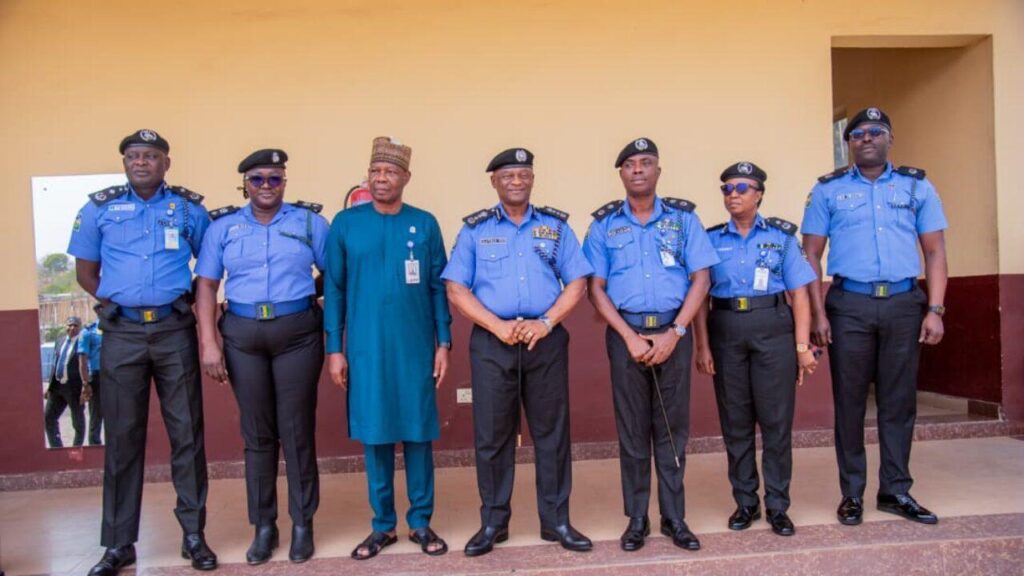
Nigeria’s proposed state-policing framework moved another step forward after a draft National Policing Bill, 2026, and 29 consequential amendment bills were submitted for legal review. The State House said the Presidential Working Group submitted the documents to the Federal Ministry of Justice on 19 October, with the ministry expected to return validated drafts by 30 October. Read the Premium Times report on the draft National Policing Bill.
The proposal envisages a Federal Police Service alongside State Police Services. However, submission of draft legislation for legal review is not the same as completing the constitutional amendment process. Nor does it mean state police are already operating nationwide.
That distinction is central to understanding the status of state police reform in Nigeria. A draft bill represents a stage in a legislative process; it does not, by itself, establish that all legal requirements have been fulfilled or that the proposed institutions have begun operating.
The approval figures remain disputed
The presenter script identifies a threshold of at least 24 of Nigeria’s 36 state assemblies approving the relevant constitutional amendment. However, reports published around the review period differed on the number of states that had approved the proposal.
Premium Times reported that Nasarawa had become the twelfth approving state, while The Guardian reported 13 approvals. The discrepancy means that neither figure should be presented as definitive without checking official state resolutions and records.
The difference is not merely a reporting detail. The number of approving assemblies matters when assessing progress towards the identified constitutional threshold. A reliable assessment requires an authoritative state-by-state record rather than an unqualified repetition of one reported total.
The Ministry of Justice’s expected review of the draft legislation by 30 October was the next milestone identified in the source script. The actual draft bill and an authoritative approval record would help clarify both the proposed arrangements and the status of the process.
What the proposed framework would need to address
Supporters of decentralised policing argue that services closer to communities may respond more effectively to local security threats. Whether that potential is realised would depend on the legal framework, institutional oversight and implementation.
Several questions remain important to any assessment of the proposed system. Who would supervise state police? What rules would govern recruitment, training and professional conduct? How would funding be arranged? What safeguards would prevent political interference, and how would citizens be protected from abuse?
These questions go beyond the administrative design of police services. They concern the balance between public safety, institutional authority and citizens’ rights.
A reform proposal should therefore be assessed not only by its stated objectives but also by the safeguards and accountability mechanisms contained in the eventual legal arrangements. The source script does not establish the final answers to these questions, so they should be treated as issues requiring examination rather than as evidence that the proposed system will succeed or fail.
What the next stage means for Nigerians
For communities concerned about security, the significance of state police reform lies in whether the final framework can improve policing while protecting citizens. That outcome cannot be established simply by the submission of draft legislation.
The next steps identified in the review were legal examination of the proposed bills and clarification of the state-by-state approval figures. The contents of the draft legislation and the progress of the constitutional process also need to be established through authoritative records.
The central question is therefore not only whether the proposal advances through the legislative process. It is whether the final arrangements define responsibilities clearly, establish effective oversight and protect the public against misuse of police authority.
Until those details are confirmed, state police reform in Nigeria remains a proposal moving through a process—not a completed nationwide change in policing.
Story 3: Petrol Prices in Nigeria: What the Temporary Relief Measure Actually Covers
Reports of petrol prices reaching approximately ₦1,450 to ₦1,500 per litre at some locations in Anambra State raised questions about the practical reach of the Federal Government’s temporary fuel-cost relief initiative. Punch reported the prices on Monday and Tuesday, alongside pressure on transport fares.
The issue was not simply the price reported at individual stations. It was how those prices compared with the government’s announced measure and what consumers could reasonably expect from it.
On 8 October, the Federal Government announced that NNPC Retail would temporarily forgo its retail profit margin. The Presidency illustrated the arrangement by saying that if the landing cost of petrol were ₦1,300 per litre, NNPC Retail would sell at that cost. Read the State House announcement on the NNPC Retail margin measure.
NNPC subsequently clarified that the initiative did not restore a blanket fuel subsidy and did not establish one uniform pump price across Nigeria. The company said the measure applied at NNPC Retail stations and was intended to continue until 31 October.
Margin relief is not a universal price cap
The distinction between a retailer giving up its margin and a national price cap is important. The initiative described in the source script concerned NNPC Retail’s margin at its stations. It was not presented as a binding national price ceiling for every independent fuel marketer.
Prices can differ between locations and retail operations. Consequently, reports of prices at some Anambra stations raised a legitimate question about the initiative’s practical application, but they did not, by themselves, establish that every station breached the scheme’s terms or that the policy had failed nationwide.
A sound assessment of petrol prices in Nigeria must distinguish the announced mechanism from the prices consumers actually paid. It must also identify the stations where the measure applied and establish whether the relevant prices were recorded under comparable conditions.
The source script identified the need for direct price checks at named NNPC Retail stations and relevant independent stations. It also called for clarification from NNPC about the applicable terms and responses from the retailers concerned.
Without those checks, the reported prices are evidence of the cost consumers were facing at the specified locations, not a complete national assessment of the relief initiative.
Why the issue matters beyond the filling station
Petrol costs affect transport operators, commuters, traders and businesses that depend on road transport. When fuel costs remain high, pressure may extend to fares and the cost of moving goods and services.
The source script described pressure on transport fares in connection with the reported Anambra prices. It did not establish a nationwide measurement of the initiative’s economic effects, so the consequences should not be quantified beyond the evidence supplied.
For households and businesses, the practical question is whether a relief measure changes the amount people pay. An announcement alone does not establish the extent of any benefit, just as a price observed at selected stations does not establish the outcome across the entire country.
What needs to be established
The initiative was intended to continue until 31 October, according to the company’s stated position in the source script. The review therefore identified a clear set of questions for further assessment: which stations applied the measure, what prices they charged, what terms governed the initiative and whether consumers received the intended relief.
These questions are particularly important when a policy is temporary and its application is limited to specified retail operations. Clear terms and verifiable station-level information are necessary to assess its reach.
The available account supports neither a conclusion that the initiative succeeded nationwide nor a conclusion that it failed nationwide. The defensible assessment is narrower: prices reported at some Anambra locations raised questions that require direct verification.
For petrol prices in Nigeria, the essential distinction is between a government’s announced relief mechanism and its demonstrated effect on consumers. The measure’s real value must be assessed through its terms and the prices people actually paid.

Story 4: Emefiele’s Appeal: Judicial Recusal, Fair Hearing and Legal Accountability
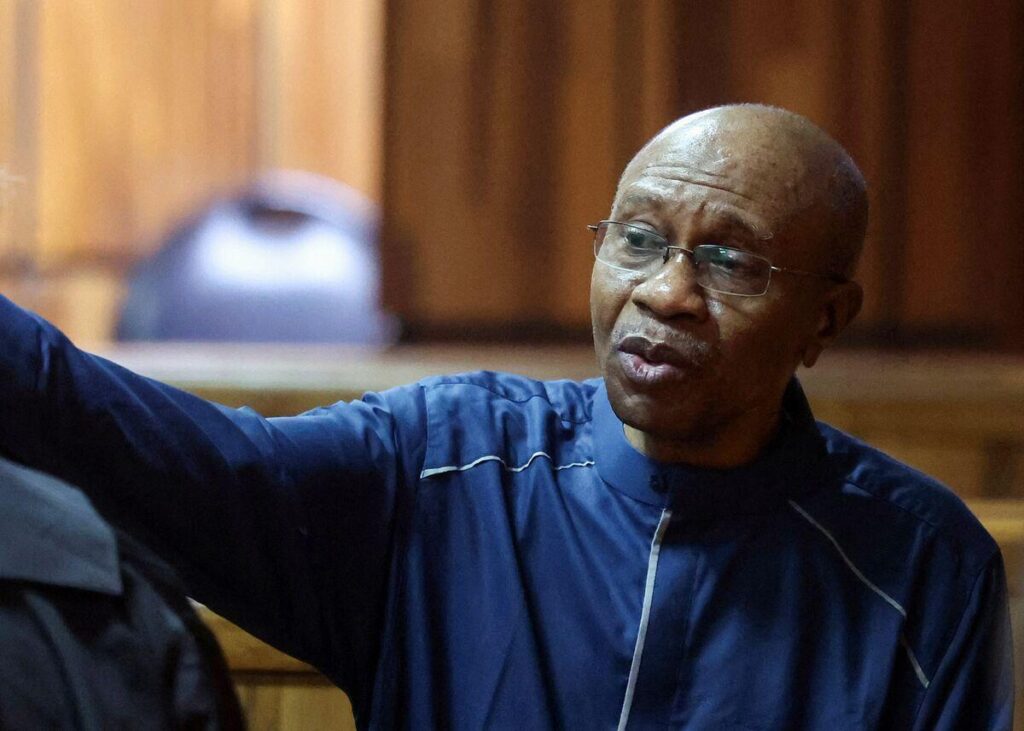
The Court of Appeal in Lagos reportedly heard an appeal on 20 October by former Central Bank of Nigeria Governor Godwin Emefiele, who challenged a trial judge’s refusal to withdraw from his criminal trial. According to Punch, a three-member panel led by Justice Biobele Georgewill heard the appeal and reserved judgment. Read the Punch report on Emefiele’s appeal.
The application concerned Justice Rahman Oshodi, who reportedly dismissed Emefiele’s request to recuse himself on 26 February 2025. Emefiele’s lawyers argued that the judge’s handling of a leading question during a prosecution witness’s testimony created an impression that the case had been prejudged. The Economic and Financial Crimes Commission opposed the appeal, according to the report.
The central issue was whether the trial judge should have recused himself. That is a procedural question concerning the conduct of the proceedings and the challenge raised by the appellant.
An allegation is not a judicial finding
The distinction between an argument presented by a party and a finding made by a court is essential. Emefiele’s lawyers argued that the judge’s conduct created an impression of prejudgment. That position should not be reported as proof that the judge was biased.
Similarly, the appeal must be distinguished from the underlying criminal allegations, which include a disputed allegation involving 400,000 US dollars. The reported hearing and reservation of judgment do not establish guilt or innocence.
This separation is important to responsible coverage of judicial proceedings. An appeal can raise a question about procedure without deciding the underlying criminal case. A party’s submission can explain why that party wants a decision changed without establishing that the submission is correct.
The Court of Appeal’s actual ruling, if delivered, would be necessary to establish the outcome of the recusal challenge and its implications for the trial.
What the reported hearing established
The source script reported that the appeal was heard on 20 October and that judgment had been reserved. At the close of the reporting period, the next question was whether the court had subsequently delivered its decision.
That follow-up matters because a reserved judgment is not the same as a final ruling. The outcome must be established from a report of the decision itself, rather than inferred from the fact that the hearing took place.
The wider public-interest issue is confidence in fair judicial proceedings. Courts must determine disputes according to the applicable law and evidence, while reporting must distinguish clearly between allegations, arguments, procedural developments and findings.
For a Nigeria news review examining institutional accountability, the significance of this case lies in the importance of fair procedure and precise reporting. It would be inaccurate to treat the appeal as a finding of bias, or to suggest that a decision on recusal would itself determine the underlying criminal allegations.
The immediate unresolved question is the outcome of the appeal and what the court’s decision says. Until that ruling is confirmed, the proper account remains that the appeal was reportedly heard and judgment was awaited at the time of the report.
Story 5: Reno Omokri’s Reported Agrément: What Mexico’s Consent Means
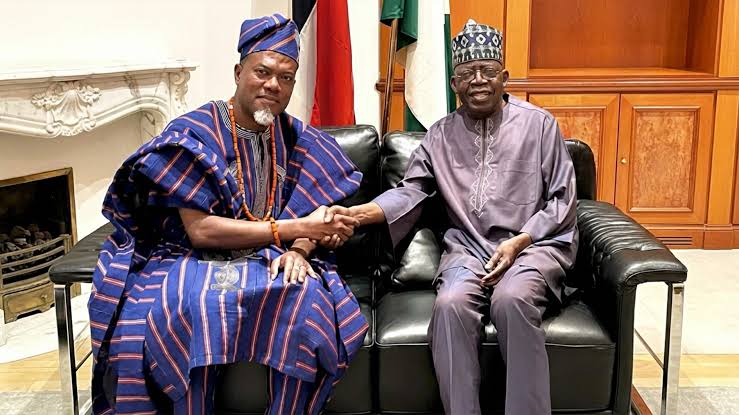
Mexico has reportedly granted agrément for Reno Omokri to serve as Nigeria’s ambassador. Punch reported on 21 October that Mexico’s chargé d’affaires in Abuja, José Manuel Briseño Flores, delivered the agrément to Nigeria’s Ministry of Foreign Affairs. The report also referred to concurrent accreditation to Guatemala, Honduras and Nicaragua. Read the Punch report on Mexico’s approval of Reno Omokri.
Agrément is the receiving country’s formal consent to accept a proposed ambassador. It is an important stage in a diplomatic appointment, but it is distinct from the initial decision to nominate or post an ambassador and from confirmation that the ambassador has begun official duties.
The reported development must therefore be understood as a diplomatic milestone within an appointment process, rather than proof that every remaining formal step has been completed.
The appointment and the reported acceptance
The State House had previously announced on 6 March 2026 that President Bola Ahmed Tinubu had approved 65 ambassadorial postings: 31 career ambassadors and 34 non-career ambassadors. Omokri was assigned to Mexico City in that announcement.
Punch’s subsequent report about Mexico’s agrément concerned the receiving country’s formal consent. That is a different stage from the earlier announcement of the posting.
The distinction helps explain why diplomatic appointments may involve several separate milestones. An announcement by the sending country identifies its intended appointment; agrément concerns the receiving country’s consent. The commencement of official duties is a further matter that requires its own confirmation.
The source script does not establish the date on which Omokri would assume duty or whether all remaining formal requirements had been completed. It also identifies the reported concurrent accreditation to Guatemala, Honduras and Nicaragua as a detail requiring confirmation from the relevant diplomatic authorities.
What remains to be confirmed
The reported agrément would represent progress in the appointment process, but it should not be confused with confirmation that the ambassador has commenced work.
Confirmation from Nigeria’s Ministry of Foreign Affairs or Mexican diplomatic authorities would help establish the details of the accreditation, including the reported concurrent appointments and arrangements for assumption of duty.
The significance of the appointment ultimately depends on the work carried out through the diplomatic mission. Diplomatic engagement, consular assistance and the development of bilateral relations are relevant measures of a mission’s activities, but the source script does not provide evidence of outcomes in these areas.
For this Nigeria news review, the key point is procedural accuracy: the reported consent is a meaningful milestone, but it is not the same as confirmation of the start of official duties or evidence of the mission’s subsequent performance.
The next step is to establish the remaining appointment details through authoritative confirmation. Until then, the reported agrément should be described as a development in the diplomatic process, not as proof that all formalities have been completed.
Conclusion
The five developments in this Nigeria news review illustrate why public announcements and procedural milestones need to be assessed against evidence and outcomes.
The confirmed imported Ebola case in Abuja placed the importance of public-health surveillance, contact monitoring and accurate communication in focus. The state-policing proposal advanced into legal review, but its constitutional progress, final safeguards and implementation remained distinct questions. Reports of high petrol prices in Anambra raised questions about the reach of NNPC Retail’s temporary margin relief without establishing the measure’s nationwide success or failure.
In the judiciary, Emefiele’s reported appeal highlighted the need to distinguish a party’s arguments from a court’s findings and a procedural challenge from the underlying criminal allegations. In diplomacy, Mexico’s reported agrément for Reno Omokri marked a stage in the appointment process, while the commencement of official duties remained a separate question.
Across these stories, the central responsibility is to establish what happened, identify who is accountable for the next step and distinguish confirmed outcomes from unresolved issues. The value of public policy, judicial procedure and diplomatic appointments cannot be assessed solely through announcements. Their practical significance depends on what the evidence ultimately demonstrates.
For Nigeria, the questions that remain important are concrete: whether public-health monitoring progresses, whether security reform establishes effective safeguards, whether fuel-cost relief reaches consumers, what the court decides and when the diplomatic appointment formally takes effect. Those answers will provide a clearer basis for understanding the developments beyond the headlines.
About the Author