INTRODUCTION
The international news cycle between 16 and 17 November 2026 was marked by escalating military confrontation, difficult diplomatic negotiations, renewed competition over advanced technology and growing disagreements about the responsibilities of governments in addressing global challenges.
In Eastern Europe, Ukraine launched what Russia described as its largest overnight drone attack since the beginning of the full-scale invasion in 2022. The reported offensive targeted locations across several Russian regions, including infrastructure connected to the Crimean Peninsula. Meanwhile, Russian forces struck two major bridges in Kyiv, with the city’s mayor reporting disruption to essential services.
In the Middle East, a tanker was attacked near Oman’s Khasab as insecurity around the Strait of Hormuz continued to threaten commercial shipping. At the same time, the United States tightened restrictions on remote access to advanced American computing technology, adding another dimension to its strategic competition with China.
At COP31 in Türkiye, negotiators released a draft agreement exposing disagreements over fossil fuels and climate finance. In another major international development, five European countries announced plans to establish a migrant return hub in Rwanda for certain rejected asylum-seekers.
This edition of the Global Daily News Review examines five developments, separating confirmed announcements from official claims and exploring what they could mean for international security, diplomacy, economic stability and human welfare.
STORY 1: Ukraine Launches Record Drone Offensive as Russian Strikes Hit Kyiv Bridges
The war between Russia and Ukraine entered another intense phase after Ukraine launched what Russian military authorities described as the largest overnight drone attack against Russian territory since the full-scale invasion began in February 2022.
According to a Reuters report published on 16 November, Russia’s Defence Ministry said its air-defence forces had intercepted or brought down 1,336 Ukrainian drones across 16 regions.
The reported figure exceeded the previous record of 1,254 drones, which Russian authorities said had been intercepted on 29 October.
Moscow Mayor Sergei Sobyanin separately said approximately 600 Ukrainian drones had been directed towards the Moscow region since Sunday evening, with 191 reportedly brought down.
The scale of the reported offensive illustrates the growing importance of long-range unmanned aerial systems in the conflict. Both countries have increasingly used drones and missiles to attack military, industrial, energy and other strategic infrastructure.
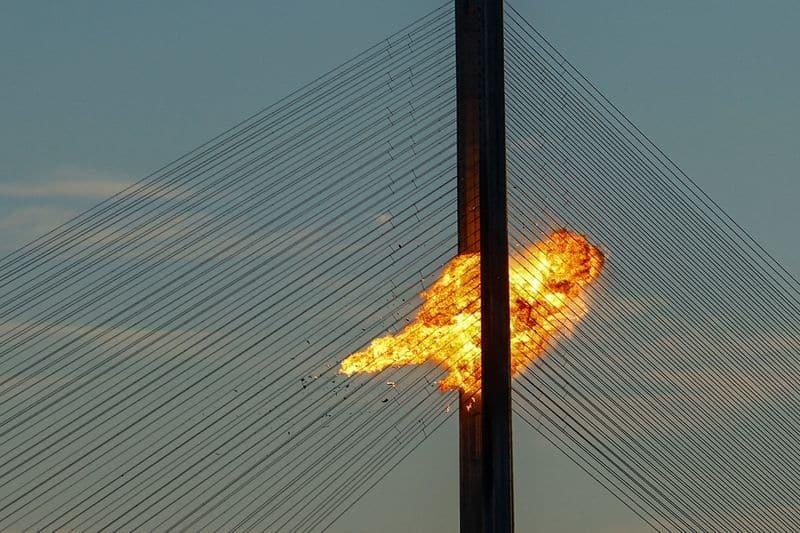
One of the reported targets was the road-and-rail bridge connecting Crimea with Russia’s Krasnodar region. The structure is strategically important because it links the Russian mainland with the Crimean Peninsula, which Russia annexed in 2014.
Russian-backed Crimean Governor Sergei Aksyonov said the bridge had been struck. The Kremlin described the damage as minor, while road traffic was temporarily suspended during repairs. Rail services reportedly continued.
The attacks also affected industrial locations. Officials in Russia’s Rostov region reported fires at four industrial sites, while a separate fire was reported at an industrial facility in Ilsky, an area with an oil refinery. Falling drone debris reportedly injured six people, including children.
Ukraine has increasingly targeted Russian oil-refining infrastructure. President Volodymyr Zelenskyy claimed that recent attacks had disabled more than half of Russia’s refining capacity. Reuters said it could not independently verify that figure.
Two industry sources previously cited by Reuters estimated that renewed Ukrainian attacks had reduced Russian refining capacity by approximately 30 per cent.
The distinction between these figures is important. The Ukrainian president’s statement is an official claim, while the 30 per cent estimate came from industry sources. Neither should be treated as a fully established independent assessment of the total impact.
Russian attacks on Kyiv
The escalation was not limited to Russian territory.
Reuters separately reported that Russian forces struck two bridges crossing the Dnipro River in Kyiv late on Monday, according to the city’s mayor, Vitali Klitschko.
The reported strikes affected the North and South bridges and other infrastructure. Klitschko said parts of the capital experienced water and electricity disruptions.
The attacks also formed part of a wider wave of Russian drone and missile operations against Ukrainian locations.
These developments demonstrate the reciprocal nature of the current war. Ukraine has expanded its ability to strike targets deep inside Russian territory, while Russia continues to use missiles and drones against Ukrainian infrastructure.
What does this mean for peace negotiations?
The renewed attacks came despite recent diplomatic engagement in Abu Dhabi, where Russian, Ukrainian and American representatives held talks.
The discussions produced an agreement on a major prisoner exchange, but Reuters reported that there was no significant breakthrough on key political questions, particularly territorial disputes.
The latest military escalation therefore raises an important question: can diplomatic negotiations make progress while both sides continue to intensify military pressure?
The conflict is no longer defined exclusively by movements along the front line. Energy infrastructure, transport networks, industrial facilities and strategic bridges have become important elements of the wider confrontation.
For civilians, the consequences include damage to essential services, displacement, economic disruption and continuing insecurity.
For Europe and the wider international community, the war continues to raise questions about defence spending, energy security, military assistance and the future relationship between Russia and Western countries.
The next developments to watch include the extent of damage to critical infrastructure, further Ukrainian and Russian attacks, the implementation of the prisoner exchange and whether another round of negotiations can address the fundamental disagreements.
The record drone offensive does not establish that either side is close to victory. It demonstrates the expanding scale of the confrontation and the continuing difficulty of translating diplomatic engagement into a reduction in hostilities.
STORY 2: Tanker Attack Near Oman Raises Fresh Concerns Over Strait of Hormuz
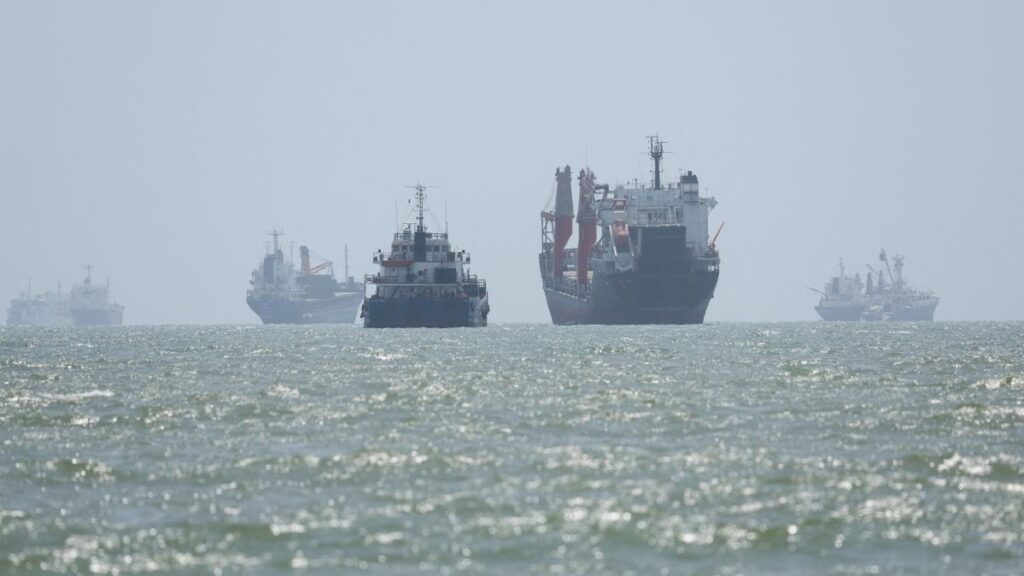
Maritime insecurity around the Strait of Hormuz intensified after a tanker travelling through the strategic waterway was attacked approximately seven nautical miles north of Khasab, Oman.
According to a Reuters report published on 17 November, the United Kingdom Maritime Trade Operations agency, known as UKMTO, received information about an attack involving a tanker that was reportedly disabled and suffered a fire in its engine room.
The crew were reported safe. However, the extent of damage to the vessel and the possibility of environmental consequences had not been established at the time of the report.
The incident adds to concerns about the safety of commercial vessels operating around the Strait of Hormuz, one of the world’s most important maritime routes. The UK Maritime Trade Operations incident updates provide information on reported maritime security incidents affecting commercial shipping.
The waterway connects the Persian Gulf with the Gulf of Oman and the Arabian Sea. Its strategic importance comes from the volume of oil and other energy products transported through it.
Any sustained disruption could affect shipping schedules, insurance costs, energy transportation and international trade.
Why the Strait of Hormuz matters
The Strait of Hormuz is particularly important to global energy markets because major oil-producing countries in the Persian Gulf depend on it to transport supplies to international customers.
A prolonged disruption could therefore have consequences far beyond the Middle East.
Countries that import petroleum products may face higher transportation and energy costs. Shipping companies may also have to reconsider routes, insurance arrangements and operational risks.
For oil-producing countries, the effect is more complicated. Higher international oil prices can increase export earnings, but instability in maritime transportation can also create economic uncertainty and affect the cost of imported goods and services.
The military and diplomatic dimension
The tanker incident occurred amid the continuing conflict involving Iran, the United States and Israel.
The wider confrontation has included attacks on military and strategic infrastructure, maritime restrictions and diplomatic efforts involving regional governments.
The presence of American military forces in the region has also attracted attention. Reports indicated that the arrival of another US aircraft carrier would increase American carrier presence in the Middle East to three.
However, a larger military presence does not automatically establish that a new offensive is imminent. Military deployments can serve several purposes, including deterrence, protection of forces and maritime security.
Iran’s position and the responses of regional governments remain central to the situation.
United Nations Secretary-General António Guterres has called for a serious diplomatic process to address the conflict, warning that the continuing state of confrontation has consequences for the global economy. Related diplomatic reporting is available in this Reuters report on international denuclearisation efforts.
The situation also raises questions about the protection of civilian shipping. Commercial vessels and their crews can become exposed to military confrontation even when they are not directly involved in the conflict.
What remains unresolved?
The reported tanker attack does not, by itself, establish who was responsible.
The available report attributed the incident information to UKMTO, which cited a third-party report. The crew’s safety was reported, but the full damage assessment and environmental impact remained unknown.
The identities of those responsible, the circumstances of the attack and the possible connection to the wider conflict require further investigation.
For international markets, the central concern is whether maritime incidents remain isolated or develop into a sustained threat to shipping through the waterway.
For governments, the challenge is to protect commercial navigation without further escalating the military confrontation.
The Strait of Hormuz remains a reminder that a regional conflict can quickly become an international economic concern when it affects a critical route for global trade.
STORY 3: COP31 Releases First Draft Agreement as Countries Clash Over Fossil Fuels and Climate Finance
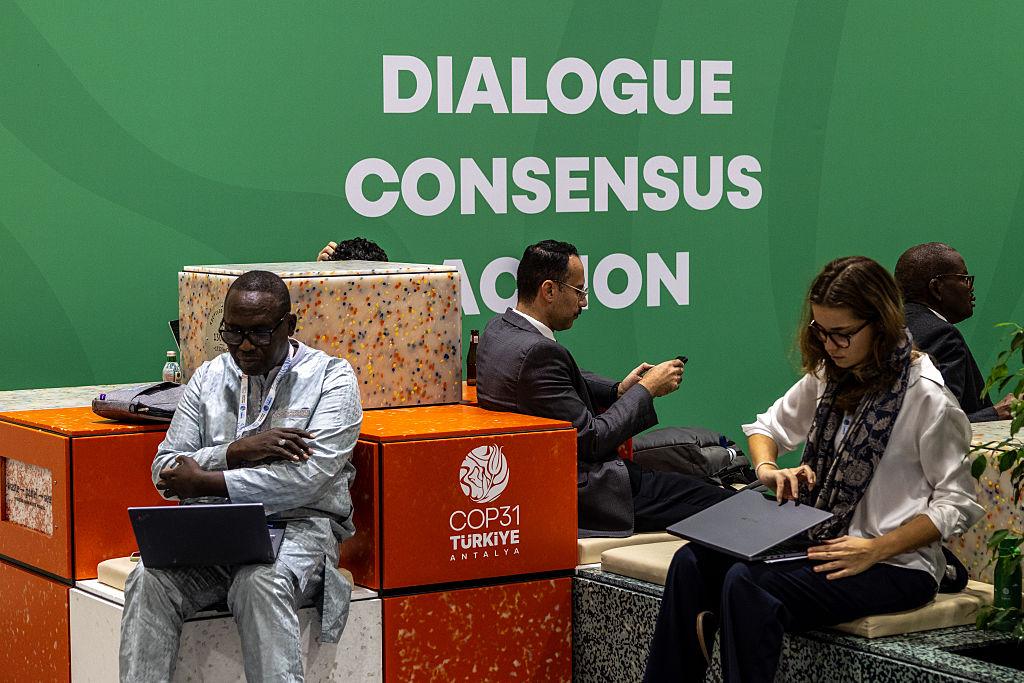
The United Nations climate negotiations in Antalya, Türkiye, entered a difficult phase after negotiators released an 18-page draft agreement intended to narrow disagreements among participating countries.
The draft, published on Monday, 16 November, sets out areas where governments are divided as they work towards a final agreement expected by the end of the conference.
According to Reuters’ coverage of the first COP31 draft, the negotiations involve nearly 200 countries and address several major questions, including the future of fossil fuels, financial support for developing countries and how governments should respond to rising global temperatures.
The release of the draft is significant because it places the disagreements into a formal negotiating document. It does not mean that the participating countries have reached a final agreement.
The United Nations Framework Convention on Climate Change (UNFCCC) provides official information on the international climate process and negotiations.
The disagreement over fossil fuels
One of the most contentious issues concerns the language that should be used to describe the future of fossil fuels.
The draft contains two possible approaches.
One refers to the language agreed at the 2023 climate conference, calling for a transition away from fossil fuels.
Another proposes more ambitious wording referring to a phase-out.
These expressions have different political implications.
A transition away from fossil fuels can allow for a broader range of approaches and timelines. A phase-out language would represent a more direct commitment to ending dependence on coal, oil and gas.
However, the draft does not guarantee that either wording will survive into the final agreement.
Australia’s climate negotiator Chris Bowen said some provisions had already been rejected by certain countries. He argued that the purpose of including disputed language was to encourage negotiations rather than limit discussions to issues on which governments already agree.
The debate reflects the different economic and energy circumstances of participating countries.
Some governments are pushing for stronger commitments to reduce fossil-fuel use, while others remain concerned about energy security, development needs and the economic consequences of a rapid transition.
Climate finance remains a major obstacle
Another important disagreement concerns financial support for developing countries.
Many developing economies face serious climate-related challenges, including floods, droughts, rising sea levels, extreme heat and damage to infrastructure.
Their governments argue that climate adaptation requires substantial financial resources and that wealthier countries have a responsibility to support vulnerable economies.
The disagreement is not simply about how much money should be provided. It also concerns who should contribute, how funding should be delivered and whether financial support will be accessible to the countries that need it.
For countries with limited fiscal capacity, climate finance can determine whether governments are able to strengthen infrastructure, protect vulnerable communities and improve disaster preparedness.
Türkiye’s electrification target
The draft also addresses Türkiye’s proposal to increase electricity’s share of global energy consumption to 35 per cent by 2035.
The proposal has generated differing responses among countries.
Electrification can support the transition to cleaner energy, but its climate benefits depend on how electricity is generated.
If additional electricity comes mainly from fossil-fuel sources, the environmental benefits may be limited. If it is supported by renewable energy, storage and modern power networks, it could contribute more significantly to emissions reduction.
The debate therefore involves both the expansion of electricity use and the transformation of the systems that generate and distribute power.
Artificial intelligence enters the climate discussion
Beyond the formal climate negotiations, Türkiye also launched a voluntary pledge encouraging the sustainable development and use of artificial intelligence.
The initiative reflects growing concerns about the environmental costs of expanding AI infrastructure.
Large data centres require electricity, cooling systems, land and water resources. Their expansion could increase pressure on energy systems and contribute to emissions if the electricity supply remains heavily dependent on fossil fuels.
Reuters reported that only nine of the nearly 200 countries represented at the conference had signed the AI pledge at the time of publication.
That limited initial support raises questions about how quickly international cooperation can develop around the environmental implications of artificial intelligence.
What should the world watch next?
COP31 is scheduled to continue until 20 November, with negotiations expected to address the disputed provisions before a final agreement is reached.
The most important indicators will be whether countries can agree on the language surrounding fossil fuels, establish clearer commitments on climate finance and develop practical arrangements for implementation.
The publication of a draft agreement is an important negotiating step, but it is not a final climate commitment.
The outcome will depend on the willingness of governments to compromise and the extent to which the final text translates broad climate ambitions into measurable responsibilities.
STORY 4: United States Tightens AI Technology Restrictions on China Amid Growing Strategic Competition
The United States has introduced new restrictions intended to prevent Chinese companies from accessing advanced American computing technology through overseas data centres and remote computing arrangements.
The measures, announced by the Trump administration on Monday, 16 November, extend Washington’s efforts to limit China’s access to advanced artificial-intelligence chips.
According to the Associated Press report on the new restrictions, the new rules require overseas data centres serving companies in countries including China, Russia, Iran and Cuba to identify their end users.
The regulations also introduce additional licensing requirements for certain chip sales involving Indonesia, Malaysia, Singapore, Thailand and Brazil.
American authorities have identified these countries as locations presenting a higher-than-normal risk of technology diversion to unauthorised destinations.
Why is Washington concerned?
The United States already restricts the direct sale of its most advanced AI chips to China.
However, American policymakers have become increasingly concerned that Chinese companies could obtain access to computing power indirectly by renting capacity from data centres located in other countries.
This creates a potential gap in traditional export controls.
A company may not physically import restricted chips into China but could still access computing resources powered by those chips through overseas cloud infrastructure.
The new measures are intended to address that possibility by strengthening requirements around customer identification and licensing.
The Associated Press reported that the rules took effect immediately.
The Megaspeed investigation
The announcement comes amid scrutiny of Singapore-based Megaspeed International, which is suspected of helping divert advanced Nvidia chips to Chinese companies through data-centre arrangements in Southeast Asia.
The US Departments of Commerce and Justice said their investigation into Megaspeed began in 2024.
According to their joint statement, the Commerce Department later requested records from Nvidia relating to sales to the company.
Nvidia subsequently placed Megaspeed on its no-sell list, while American investigators and Singaporean law-enforcement authorities conducted checks.
Singapore and Malaysia have also been investigating possible irregularities involving the movement or re-export of servers and chips.
These investigations are important because they illustrate the difficulty of enforcing technology restrictions across international supply chains.
However, allegations of diversion must remain distinct from established criminal findings. The investigations do not, by themselves, establish that every company or individual involved has committed an offence.
China’s response
China criticised the new American restrictions.
Foreign Ministry spokesperson Guo Jiakun accused Washington of interfering with China’s trade and technological cooperation with other countries and suppressing the development of Chinese high-tech industries.
He described the measures as economic coercion and said China would take necessary steps to protect its interests.
The disagreement illustrates the growing importance of artificial intelligence in international economic and strategic competition.
Advanced chips are central to training and operating sophisticated AI systems. Access to computing capacity can therefore influence the ability of companies and countries to develop competitive technologies.
What does this mean for the global technology industry?
The new rules could affect businesses operating data centres and technology infrastructure across Southeast Asia and other regions.
Companies may face additional compliance requirements, licensing procedures and scrutiny of their customers.
For countries such as Singapore and Malaysia, the issue also presents a challenge. They seek to attract investment in data centres and technology services while maintaining compliance with international export-control regulations.
The wider question is whether technology restrictions will increasingly divide the global AI industry into competing systems shaped by national security policies.
The restrictions do not mean that China has lost access to all foreign computing technology. Nor do they establish that American companies will automatically maintain a permanent technological advantage.
They demonstrate that access to advanced AI infrastructure has become a major instrument of international economic and strategic policy.

STORY 5: Five European Countries Announce Rwanda Migrant Return Hub Plan
Five European countries have announced plans to establish a migrant return hub in Rwanda, in a move that could reshape aspects of European migration and deportation policy.
The countries involved are Denmark, Austria, Germany, the Netherlands and Greece.
According to the Associated Press report on the proposed Rwanda centre, the governments intend to establish a facility in Rwanda where certain rejected asylum-seekers could be transferred from 2027.
The announcement was made as European governments continue efforts to strengthen migration controls, increase deportations and reduce irregular migration into the European Union.
The proposal has already attracted criticism from human-rights organisations, which have raised concerns about the treatment of migrants and the legal implications of transferring people outside Europe.
Who would be affected?
The proposed arrangement is intended for people whose asylum applications have been rejected and who are subject to enforceable return decisions.
The countries involved have indicated that minors will be excluded.
Each participating government is expected to apply its own criteria when determining who could be transferred to the facility.
The initial hub is expected to be relatively small, with capacity for approximately 100 people at a time.
According to Euronews’ report on the five-country proposal, those transferred would be permitted to move around Rwanda and would be expected to rebuild their lives there or voluntarily return to their countries of origin or another country where they have the legal right to reside.
The precise arrangements, including the length of stay and implementation procedures, were still being negotiated.
The European Union’s border agency Frontex is not expected to participate in deportations during the initial phase.
Why Rwanda?
Rwanda has previously been involved in European migration-policy discussions.
The country has become an important partner in debates about arrangements for receiving migrants transferred from European countries.
The latest proposal represents a new attempt by several European governments to develop an external return arrangement.
For Rwanda, participation could bring diplomatic and financial implications, but the full terms of the proposed partnership and its operational responsibilities require further clarification.
The announcement should not be interpreted as evidence that deportations have already started.
The governments are proposing a facility expected to begin operating in 2027, subject to the completion of negotiations and implementation arrangements.
Human-rights and legal questions
The plan has generated concerns about the rights of people who may be transferred.
Human-rights organisations have questioned whether migrants would have adequate access to legal representation, fair procedures, protection from harm and the opportunity to challenge decisions affecting them.
There are also questions about the practical responsibilities of the countries involved.
Which government would be responsible for monitoring conditions in the facility? What happens if a person refuses to remain in Rwanda? How would disputes over legal status be resolved? What safeguards would apply to vulnerable individuals?
These are not minor administrative details. They go to the heart of whether an external return arrangement can operate in a way that respects international obligations and individual rights.
The countries involved will need to clarify these issues before the proposal becomes operational.
What does this mean for Africa?
The development is particularly significant for Africa because it places an African country at the centre of a European migration-management strategy.
It also raises wider questions about the relationship between African governments and European countries on migration, development cooperation and the treatment of displaced people.
For African governments, the challenge is to ensure that any partnership involving the transfer of migrants includes clear legal responsibilities, adequate protection and transparent arrangements.
For European governments, the proposal represents an attempt to increase the effectiveness of deportation policy.
For migrants, the consequences could be substantial, particularly if they are transferred to a country where they have no previous family, social or economic connections.
The next developments to watch include the final agreement, the legal framework, the criteria for selecting individuals, Rwanda’s operational responsibilities and the safeguards that will apply to people transferred.
The announcement is a policy proposal, not a completed deportation programme. Its actual implications will become clearer only when the participating governments publish the final arrangements and begin implementation.

CONCLUSION
The developments examined in this Global Daily News Review reveal a world facing multiple pressures, from military escalation and maritime insecurity to climate negotiations, technological competition and the changing politics of migration.
Ukraine’s expanding drone operations and Russia’s attacks on Kyiv demonstrate that diplomatic engagement has not ended the military confrontation. The tanker attack near Oman reinforces the vulnerability of international shipping routes during regional conflicts. At COP31, governments are still struggling to reconcile fossil-fuel commitments with the financing needs of developing countries.
Meanwhile, Washington’s new restrictions on advanced AI technology demonstrate how computing infrastructure has become an important part of international strategic competition. Europe’s proposed migrant return hub in Rwanda raises difficult questions about sovereignty, international cooperation and the rights of people seeking protection.
These developments are not parts of one coordinated crisis. Each has its own causes, actors and consequences. But all demonstrate why international announcements must be examined carefully.
A military claim is not necessarily an independently verified assessment. A draft agreement is not a final commitment. A proposed policy is not an implemented programme. And a diplomatic announcement does not automatically resolve the underlying dispute.
Understanding these distinctions is essential to understanding the world.
This has been the Global Daily News Review from DSG HERALD NEWS.
Look closer. Question the obvious. Understand the bigger story.
DSG HERALD NEWS — BEYOND THE HEADLINES.
About the Author