INTRODUCTION
Nigeria News Today — 17 November 2026: Nigeria’s major developments brought renewed attention to the country’s security architecture, public-sector accountability, democratic processes, economic pressures and public safety. From the reported approval of the proposed state police constitutional amendment by all 36 state assemblies to questions surrounding government expenditure in Lagos, the day’s events highlighted important issues confronting public institutions and the citizens they serve.
Security remained a central national concern. The reported approval of the state police amendment marked a significant development in the constitutional reform process, even as a fresh attack in Zamfara State left one security guard dead and five members of a family abducted. Meanwhile, the Inspector-General of Police ordered the redeployment of 128 senior police officers, bringing renewed attention to the organisation and effectiveness of Nigeria’s security response.
Questions of institutional accountability also featured prominently. A Lagos State budget performance report showed that ₦120.8 billion had been recorded under professional fees expenditure between January and September 2026, raising questions about the services provided, the recipients of the payments and the value delivered. In Delta State, a Federal High Court issued a Form 48 notice to the Attorney-General of the Federation over alleged non-compliance with an earlier order concerning five Okuama community leaders.
In politics, opposition parties began preparations for a proposed alliance ahead of the 2027 general elections, while INEC responded to claims about the remote operation of its Bimodal Voter Accreditation System. The Court of Appeal also warned election tribunal officials against bribery and manipulation, placing further attention on electoral integrity and public confidence in the judicial process.
The economic and public-welfare situation remained another important theme. Despite slower inflation and the arrival of a new harvest season, food affordability continued to trouble Nigerian households, with concerns about insecurity, transportation costs, agricultural inputs and food distribution. In Lagos, a filling-station fire along Ekoro-Ajasa Road destroyed seven classrooms and damaged other property, raising questions about fuel-handling procedures and safety around public facilities.
These five developments form the central themes of this Nigeria news review. Beyond the individual headlines, they raise a broader question: how effectively are Nigeria’s institutions responding to the country’s security challenges, protecting public resources, strengthening democratic processes and improving the everyday lives of citizens?
STORY 1: ALL 36 STATES APPROVE STATE POLICE CONSTITUTIONAL AMENDMENT
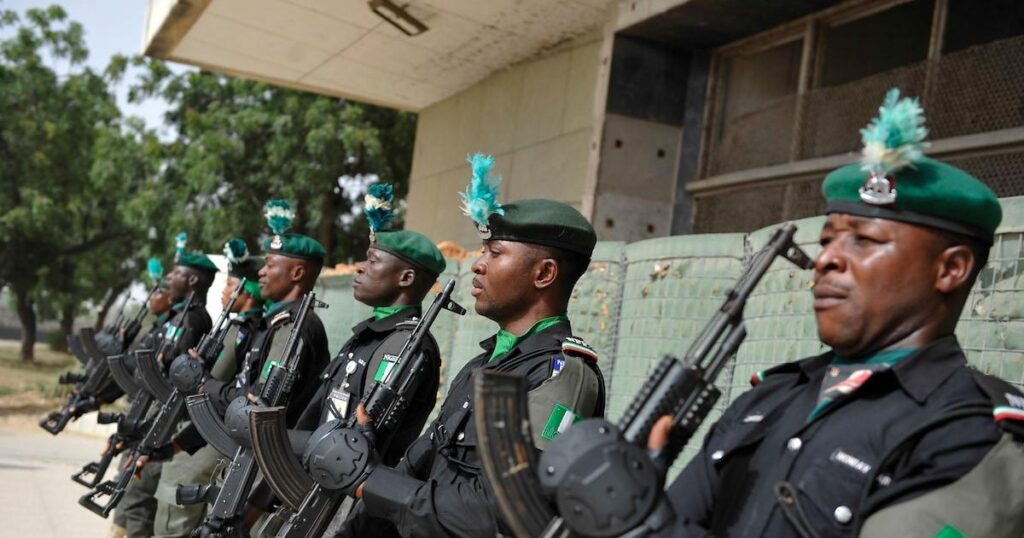
Nigeria has moved closer to establishing state police following confirmation that all 36 state Houses of Assembly have approved the proposed constitutional amendment.
The Clerk to the National Assembly, Kamoru Ogunlana, announced on November 16 that every state legislature had submitted its approval, completing the state-assembly stage of the process. The development was reported by Channels Television and Premium Times.
Under Section 9(2) of Nigeria’s 1999 Constitution, constitutional amendments require approval from at least two-thirds of the state assemblies, representing 24 of the 36 states. The reported unanimous approval therefore exceeds the required threshold.
The next stage involves transmission of the bill to President Bola Tinubu for assent and completion of the remaining constitutional procedures. However, the approval does not mean state police are already operational.
Supporters argue that decentralised policing could improve local intelligence, strengthen community security and allow faster responses to threats. However, concerns remain about political interference, human rights protection, funding, recruitment standards and independent oversight.
The urgency of the security debate is reflected in Zamfara State, where a fresh attack in Sabuwar Kaura, Kaura-Namoda, reportedly left one security guard dead and five members of a family abducted, according to The Punch.
Meanwhile, Inspector-General of Police Olatunji Disu has ordered the redeployment of 128 senior officers, comprising 22 Commissioners of Police and 106 Assistant Commissioners, in a nationwide shake-up reported by The Punch.
The proposed reform will ultimately depend on its implementation framework, particularly how federal and state police authorities will share responsibilities and remain accountable.
The central question is whether the proposed decentralisation will deliver safer communities while protecting citizens from political and institutional abuse.
STORY 2: LAGOS ₦120.8 BILLION PROFESSIONAL FEES SPENDING RAISES QUESTIONS
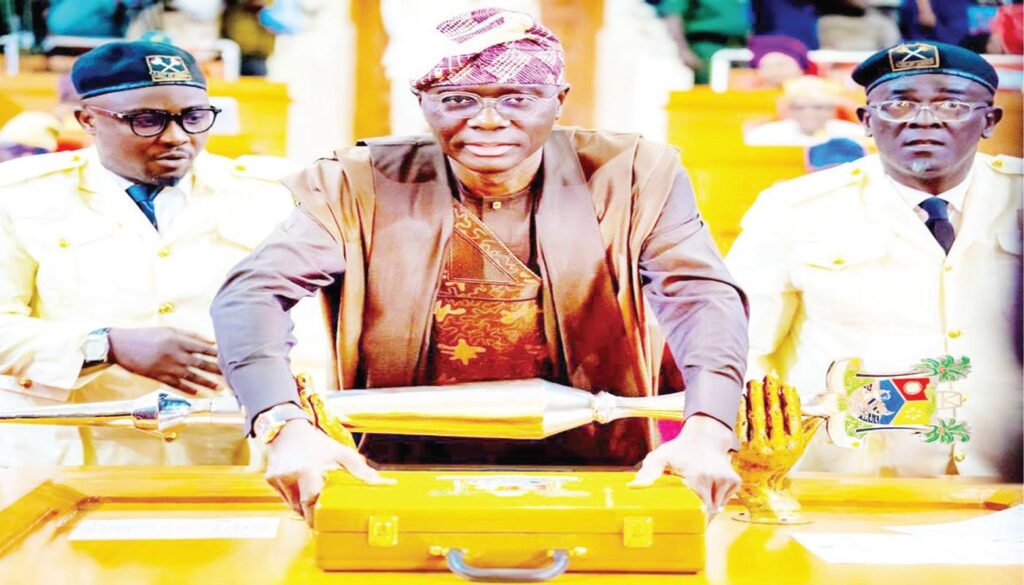
A Lagos State budget performance report has drawn attention to the government’s expenditure on professional fees.
According to the state’s third-quarter 2026 budget performance report, Lagos recorded approximately ₦120.8 billion in professional fees between January and September. The expenditure was also examined in a report by The Punch.
The figure represents a substantial portion of the ₦227.3 billion annual allocation for the expenditure category, raising questions about the scale and nature of the professional services commissioned by the state government.
The report has drawn attention to the consultants and firms involved, the projects covered by the payments and whether the services delivered can be independently assessed. It also raises questions about procurement procedures and the level of public disclosure surrounding such expenditure.
The published figures, however, do not by themselves establish financial misconduct. The key issue is transparency: whether the government can provide detailed information showing how the money was spent, who received it and what value was delivered to the state.
Meanwhile, a Federal High Court in Warri has reportedly issued a Form 48 notice to the Attorney-General of the Federation over alleged failure to comply with an earlier order concerning five Okuama community leaders, according to The Punch’s court report.
The notice is a formal warning of possible contempt proceedings if the alleged non-compliance continues. It is not a conviction for contempt. The development raises further questions about compliance with court orders and the enforcement of judicial decisions by government authorities.
STORY 3: OPPOSITION PARTIES PLAN ALLIANCE AHEAD OF 2027 ELECTIONS
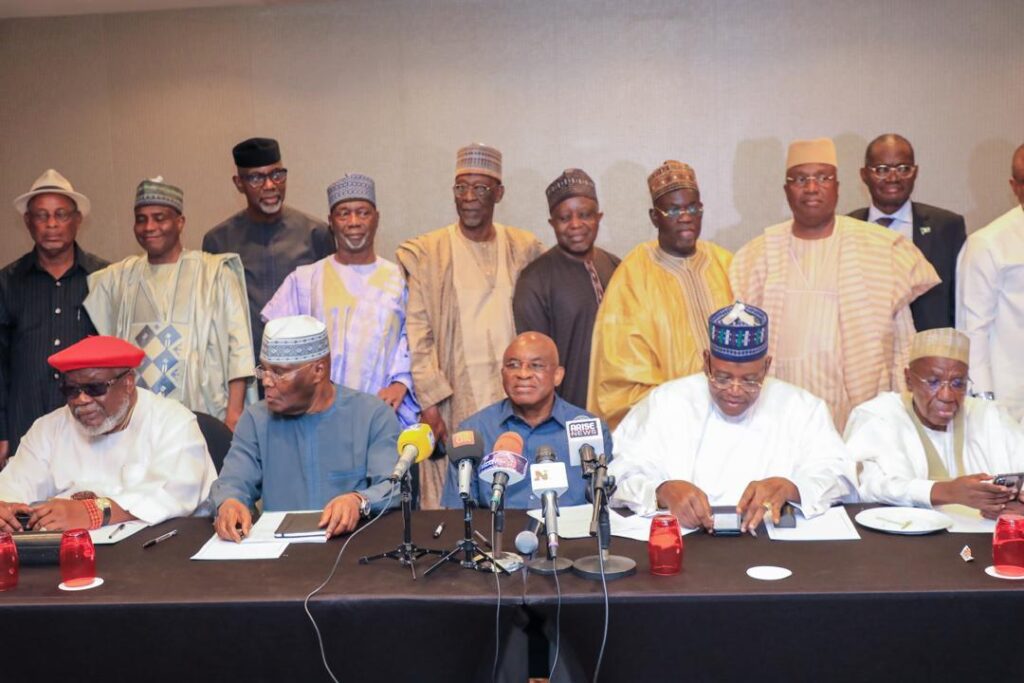
Nigeria’s political landscape is beginning to take shape ahead of the 2027 general elections, with opposition parties reportedly planning a new political alliance.
The Coalition for Democracy says opposition parties are expected to meet in Abuja on November 23 to consider a proposed National Covenant for Democratic Renewal. The announcement and planned summit were reported by TheCable and Channels Television.
The parties reportedly involved include the African Democratic Congress, the Peoples Democratic Party, the Social Democratic Party, the Nigeria Democratic Congress, the Allied Peoples Movement and the Peoples Redemption Party.
The proposed agreement is intended to encourage cooperation among opposition forces, potentially providing a framework for joint political engagement and coordination ahead of the elections. However, the details of the arrangement, its signatories and whether it will produce a common presidential candidate remain unclear.
Meanwhile, the Independent National Electoral Commission has rejected a viral claim that its Bimodal Voter Accreditation System can be remotely logged out during voting.
INEC says only the presiding officer, using authorised credentials, can log in or out of the system. It also says the electronic results viewing platform can store information offline and transmit them when connectivity becomes available. The commission’s explanation was reported by The Punch.
The clarification followed a viral video in which a man claiming to be a former presiding officer questioned the security of BVAS and offline result uploads. INEC explained that the offline feature was introduced after network challenges during the 2023 elections, allowing results to remain stored securely until transmission becomes possible.
The Court of Appeal has also warned election tribunal officials against bribery and manipulation, stressing the need to protect the integrity of election petitions. The warning was delivered by the court’s President, Justice Monica Dongban-Mensem, during a capacity-building workshop for tribunal secretaries and registry staff in Abuja, as reported by The Punch.
The court emphasised that officials must handle petitions, documents, hearing notices and records professionally, warning that anyone found compromising the judicial process would face sanctions.
Together, these developments highlight the growing importance of political cooperation, electoral technology and public confidence as Nigeria approaches another election cycle.
STORY 4: FOOD PRICES REMAIN HIGH DESPITE SLOWER INFLATION
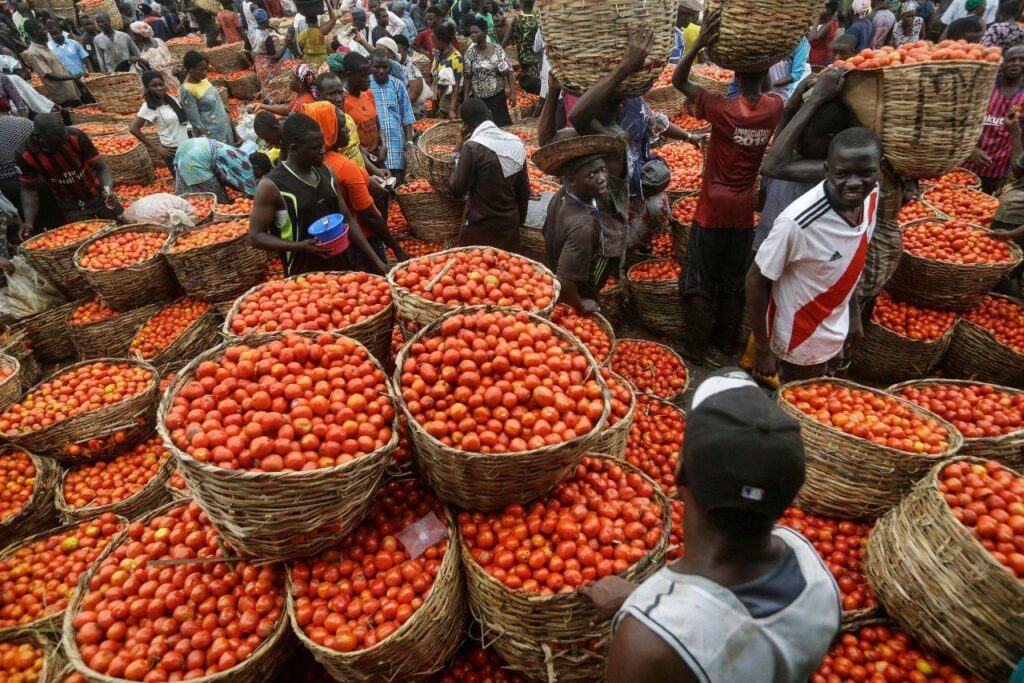
Despite signs of improvement in some inflation indicators and the arrival of a new harvest season, food affordability remains a major concern for Nigerian households.
A report published by The Guardian points to persistent challenges including insecurity in farming communities, high agricultural input costs, transportation expenses and inadequate storage facilities.
According to the latest National Bureau of Statistics figures cited in the report, headline inflation declined for the fourth consecutive month to 14.06 per cent in October 2026. However, food inflation remained considerably higher at 19.13 per cent, showing that the cost of essential food items continues to put pressure on households.
These pressures affect the movement of food from farms to markets. Economists also warn that expensive fertilisers, diesel, farm machinery and transportation are increasing production and distribution costs, limiting the benefits of improved harvest supplies.
The report also references a Food and Agriculture Organisation projection that approximately 34.7 million Nigerians could face acute food insecurity in 2026. This is a projection, not a confirmed count of people currently experiencing food insecurity.
The distinction between slowing inflation and falling food prices is important. A slower rate of price increases does not necessarily mean food has become cheaper.
For millions of households, the real test of economic recovery will be whether food becomes more affordable and purchasing power improves.
STORY 5: LAGOS FILLING-STATION FIRE DESTROYS SEVEN CLASSROOMS
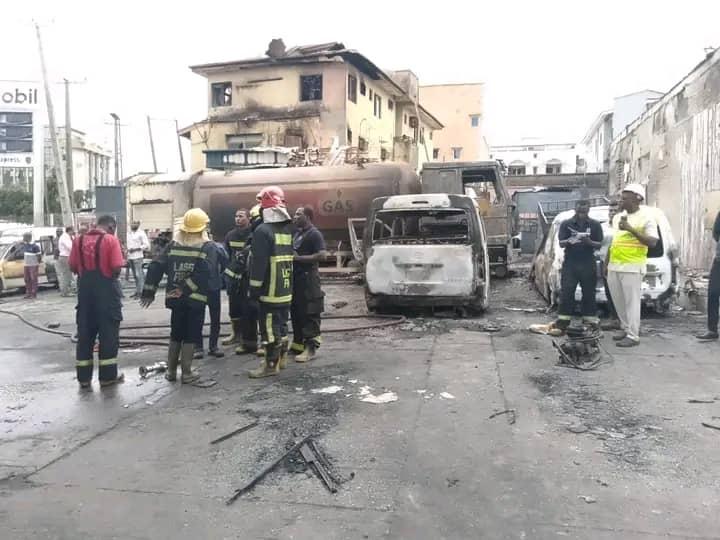
A fire outbreak at a filling station along Ekoro-Ajasa Road in the Alimosho area of Lagos State has destroyed seven classrooms and damaged several other properties, raising fresh concerns about fuel-handling safety and the protection of nearby public facilities.
According to The Punch’s report, the incident affected three fuel pumps and two vehicles, while the nearby school suffered significant damage.
The Lagos State Emergency Management Agency (LASEMA), in its preliminary account, said the fire started during the discharge of diesel from a tanker at the facility. Emergency responders were deployed to contain the blaze and prevent it from spreading to surrounding properties.
The Nigerian National Petroleum Company (NNPC) confirmed that the fire had been contained and announced a review of the incident. In its official statement, the company said no fatalities or injuries had been reported in the preliminary assessment.
The incident has drawn attention to the risks associated with fuel storage and tanker-discharge operations, particularly at filling stations located close to schools, residential buildings and other public facilities.
Investigators will need to establish the precise cause of the fire, determine whether established safety procedures were followed and identify any operational or regulatory failures.
The findings will be important in determining responsibility and whether additional safety measures or enforcement actions are necessary to prevent similar incidents.
CONCLUSION — WHAT THE DEVELOPMENTS REVEAL ABOUT NIGERIA
The developments reported on 17 November 2026 reveal a country confronting several important tests at the same time, particularly in security, governance, democratic accountability, economic welfare and public safety.
In security, the reported approval of the state police constitutional amendment by all 36 state assemblies represents a significant step in the country’s reform process. However, the continuing attack in Zamfara, alongside the redeployment of senior police officers, highlights the challenges that security institutions must still address. The real test will be whether proposed reforms translate into safer communities and more effective policing.
On governance and accountability, the ₦120.8 billion recorded in Lagos State’s professional fees expenditure raises questions about transparency, public procurement and the value delivered through government spending. The court proceedings concerning the five Okuama community leaders also bring attention to compliance with judicial orders and respect for the rule of law.
Politically, the proposed opposition alliance, INEC’s explanation of its electoral technology and the Court of Appeal’s warning to election tribunal officials underline the importance of credible institutions and peaceful political competition ahead of the 2027 general elections.
The economic situation presents another challenge. Despite slower inflation and the harvest season, food affordability remains a serious concern for households. Meanwhile, the Lagos filling-station fire demonstrates the importance of effective safety standards, regulatory oversight and accountability in facilities operating close to public institutions.
These developments are different, but they point towards a common measure of national performance: the ability of institutions to turn decisions, policies and official commitments into outcomes that Nigerians can see and experience.
For Nigeria, what happens next matters as much as the announcements already made. The implementation of security reforms, transparent management of public funds, credible electoral preparations, improved food affordability and stronger public-safety enforcement will all require sustained attention and measurable results.
That is the broader picture emerging from today’s Nigeria news: national progress must be measured not only by what institutions announce, but by what they ultimately deliver.
About the Author