Introduction
Nigeria’s major developments reported between 9 and 15 November 2026 brought renewed attention to five areas of national life: security, political participation, electoral administration, the petroleum industry, public health and football. Although the stories concern different institutions and sectors, each raises questions about the responsibilities of public authorities and the practical results of their decisions.
In the North-West, an attack in Zamfara State reportedly left 11 people dead and 13 abducted. In Sokoto, the Department of State Services reported intercepting a shipment of weapons, while police operational figures offered a wider picture of criminal incidents and security operations across the country.
Political developments also attracted attention. The disruption of a town hall meeting associated with the Nigeria Democratic Congress in Lagos raised concerns about the safety of political gatherings ahead of the 2027 general elections. The Independent National Electoral Commission announced a major clean-up of voter records, while a Federal High Court ordered the commission to reinstate Ladi Adebutu as the Peoples Democratic Party’s governorship candidate in Ogun State.
Elsewhere, Nigeria’s crude oil production remained above its OPEC quota, a proposed refinery in Edo State reached an administrative milestone, and regulators continued investigating gas seepage in the Niger Delta. Public-health authorities reported the completion of monitoring for all 62 identified contacts of an imported Bundibugyo virus disease case. The Super Eagles also defeated Tanzania 3–1 in their 2027 Africa Cup of Nations qualifying campaign.
This Nigeria news review examines the five developments, the evidence behind them and the questions that remained open at the end of the reporting period.
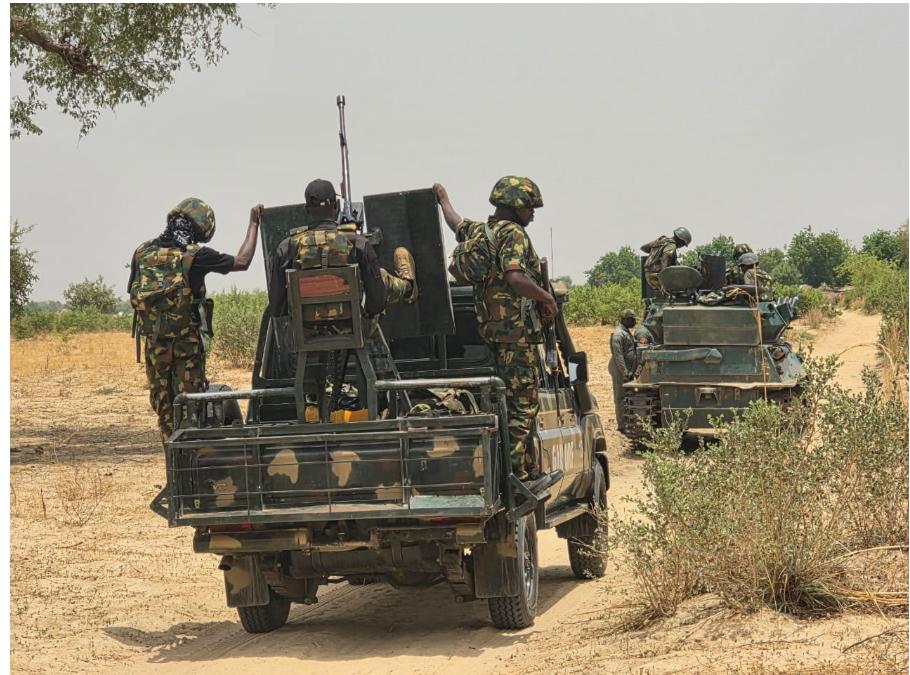
Story 1. Nigeria Security: Zamfara Killings, Sokoto Arms Interception and the State’s Response
Zamfara attack exposes the human cost of insecurity
One of the most disturbing security incidents reported during the week occurred in Gidan Taba, Maradun Local Government Area of Zamfara State. Gunmen killed 11 people and abducted another 13 in an attack on the community.
A Reuters report on the Zamfara attack, citing the police, provided further detail about the victims. It said the attackers killed a local security volunteer and 10 of his relatives, burned their bodies and set the family home on fire. Police spokesperson Yazid Abubakar said the volunteer had repeatedly helped security forces repel incursions by criminal gangs and that the attackers considered him an obstacle to their activities. Security forces were reportedly deployed to the area to work towards securing the release of the abducted people.
The incident illustrates the danger faced by communities where residents and local security volunteers are exposed to armed groups. It also demonstrates that insecurity has consequences beyond the immediate casualty figures: families are destroyed, homes are lost and residents face uncertainty over the safety of relatives taken away.
At the end of the review period, the fate of the 13 abducted people had not been established in the reporting examined. Their recovery remained an immediate concern.
DSS intercepts weapons in Sokoto
Another security development was reported in Dawakawa, Goronyo Local Government Area of Sokoto State, where the Department of State Services reportedly intercepted a consignment of weapons and ammunition.
The recovered items included 21 AK-47 rifles, four PKT machine guns and 825 magazines. Channels Television reported that the shipment was believed to have been smuggled into Nigeria from the Republic of Niger, citing a security source. The account also said the interception followed surveillance of suspected networks involved in moving weapons.
Voice of Nigeria subsequently reported that the DSS described the operation as part of efforts to disrupt the activities of armed groups and their suspected supply networks.
The number and type of weapons recovered make the interception a significant law-enforcement development. However, the recovery does not, by itself, establish the full identity of the suppliers, the intended recipients or the complete route through which the weapons were transported. Those questions depend on the outcome of the relevant investigations.
Police figures reveal the scale of reported criminal activity
Figures released by the Nigeria Police Force during a national security briefing provided another indication of the pressure on law-enforcement agencies.
According to the police performance report, 418 homicide incidents and 227 kidnapping cases were recorded across the country over an eight-week period. The report also listed 168 banditry incidents, 165 armed robberies, 73 cult-related clashes, 51 terrorism incidents and 49 cases of gender-based violence.
The police said 1,519 suspects had been arrested during the period. The report also recorded the recovery of 191 firearms and 3,873 rounds of ammunition, the rescue of 255 kidnapped victims, the recovery of 117 vehicles and the reported neutralisation of 56 armed criminals. These figures were reported by The Punch in its coverage of the police performance report.
These are police-reported operational figures. They should not be treated as independently audited national crime statistics or as a complete measure of every criminal incident in Nigeria. Their significance lies in what the police say their operations recorded over the specified eight weeks.
The police also announced that 17 kidnapped victims had been rescued during separate 72-hour operations across Kano, Adamawa, Ogun and Benue States. That figure relates to a different operational update and should not be added to the 255 victims reported rescued in the eight-week performance report without checking for overlap.
Plateau security commitments remain subject to implementation
In Plateau State, President Bola Tinubu announced additional security measures during an APC rally in Jos on 14 November. He said 1,000 forest guards recruited by the Federal Government were undergoing training and would begin work after completing it. He also said surveillance cameras promised for the state had arrived in Nigeria and would soon be installed. The announcements were covered in the State House report on Tinubu’s Plateau rally and security commitments.
The announcement is relevant to communities affected by violence, but the different stages of implementation must remain clear. Training is not the same as deployment, and the reported arrival of cameras does not establish that installation or operational use has been completed.
The wider security picture therefore contains both reported enforcement activity and unresolved public-safety concerns. Weapons have been intercepted, suspects arrested and victims rescued, but the Zamfara abductions remained unresolved, while the practical impact of the Plateau measures was yet to be established.
For affected communities, the central test of Nigeria security policy is whether government commitments translate into protection that people can experience in their homes, on their farms, on roads and in their daily activities.
Story 2. Nigeria Politics: 2027 Elections, Political Violence and Electoral Credibility
Lagos town hall disruption raises concerns ahead of 2027
Political activity ahead of the 2027 general elections was another major theme during the week. One incident that drew attention occurred in Lagos on 12 November, when a town hall meeting associated with the Nigeria Democratic Congress was disrupted at the Classique Event Centre in Oregun, Ikeja.
The gathering was scheduled to involve Peter Obi and Rabiu Kwankwaso, but the disruption occurred before they arrived. Reports from the venue said vehicles were damaged and some attendees sustained injuries. Channels Television’s report on the disruption said the circumstances that triggered the clash and the identities of those responsible had not been established at the time of its report.
The NDC accused the All Progressives Congress of responsibility. The APC denied involvement and condemned the disruption. The APC Presidential Campaign Council also called on security agencies to identify, arrest and prosecute those responsible. The party’s response was reported in Channels Television’s coverage of the APC condemnation.
The competing accounts require careful treatment. The NDC’s accusation does not establish the APC’s responsibility, while the APC’s denial does not identify those who carried out the disruption. The available reporting did not establish the perpetrators’ identities.
The incident nevertheless raises a significant question about the safety of political participation. Political parties and candidates must be able to organise meetings, address supporters and campaign without intimidation or violence. The ability of citizens to attend political gatherings safely is part of the wider democratic environment.
Tinubu calls for issue-based campaigns
On 13 November, President Bola Tinubu issued a statement condemning violence accompanying political events and urging politicians and their supporters to avoid thuggery.
He said campaigns should focus on issues and ideas that promote public welfare and national development. He also reiterated that security agencies should act firmly against those seeking to undermine public order and that political parties and candidates should be free to campaign across the country without fear. This position was set out in the State House statement on political violence and issue-based campaigns.
The statement followed reports of violence at political events in different parts of the country. Its practical significance will depend on how effectively security agencies protect political gatherings and investigate incidents when they occur.
The Lagos disruption therefore remains an important issue to follow, particularly for any subsequent police findings, arrests or prosecutions.
INEC removes more than 1.6 million invalid voter registrations
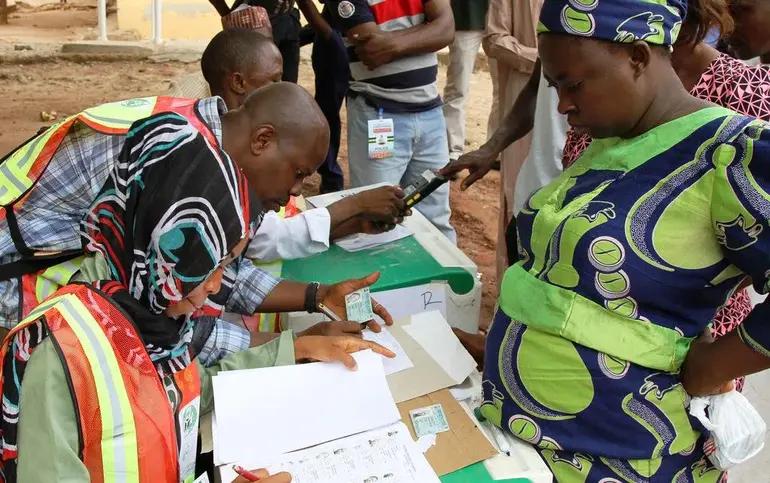
Beyond political gatherings, the credibility of the electoral process depends on the accuracy of the voter register.
The Independent National Electoral Commission announced on 9 November that it had removed 1,608,660 invalid voter registrations following a review of records from the 2025 and 2026 Continuous Voter Registration exercise. The commission also reported removing 873 verified records belonging to deceased persons, bringing the combined total to 1,609,533 records. These figures were reported in TheCable’s coverage of INEC’s voter-register clean-up.
INEC Chairman Joash Amupitan said the review used the Automated Biometric Identification System to identify registrations requiring examination. He explained that a record flagged by the system was not automatically invalid: the commission had to review the record and determine its status.
The commission also identified 54 personnel across 10 states for disciplinary action, including possible prosecution, over irregularities detected during the registration exercise.
The clean-up followed complaints, claims and objections raised after the preliminary register was displayed between 9 and 15 October 2026. INEC said some records were reviewed following public objections, while others were identified through additional screening.
The exercise is important because an accurate register is central to election administration. Invalid or duplicated registrations can undermine confidence in electoral records, but the process must also protect eligible voters from wrongful exclusion. The commission’s explanation that flagged records require further examination is therefore important: automated identification and a final determination of invalidity are not the same thing.
The 54 personnel identified for investigation should also not be treated as having been found guilty. Any disciplinary or legal action must follow the relevant procedures.
Court orders INEC to reinstate Ladi Adebutu
A further development came from the Federal High Court in Abuja on 13 November. Justice Peter Lifu ordered INEC to reinstate Ladi Adebutu as the Peoples Democratic Party’s governorship candidate for the 2027 Ogun State election within 24 hours.
The court held that INEC had no power to unilaterally disqualify a candidate after a party had submitted the candidate’s name, and that Adebutu’s right to fair hearing had been breached. The judgment followed a suit brought by Adebutu and the PDP challenging his exclusion from the commission’s candidate list. The ruling was detailed in Premium Times’ report on the Federal High Court judgment.
On 14 November, the PDP formally urged INEC to implement the judgment, according to The Guardian’s report on the party’s request to the commission. That development showed that the party was seeking compliance, but it did not by itself establish that the commission had completed the reinstatement.
Political engagements also continued in Plateau State, where Peter Obi held engagements on 10 November and Tinubu addressed an APC rally in Jos on 14 November.
Taken together, these developments show that Nigeria politics ahead of 2027 will involve more than campaign appearances. The safety of political participation, the accuracy of voter records, respect for judicial decisions and the impartial administration of elections will all shape public confidence in the process.
Story 3. Nigeria Oil and Gas: Production Gains, Oredo Refinery Plans and Niger Delta Risks
Crude production remains above the OPEC quota
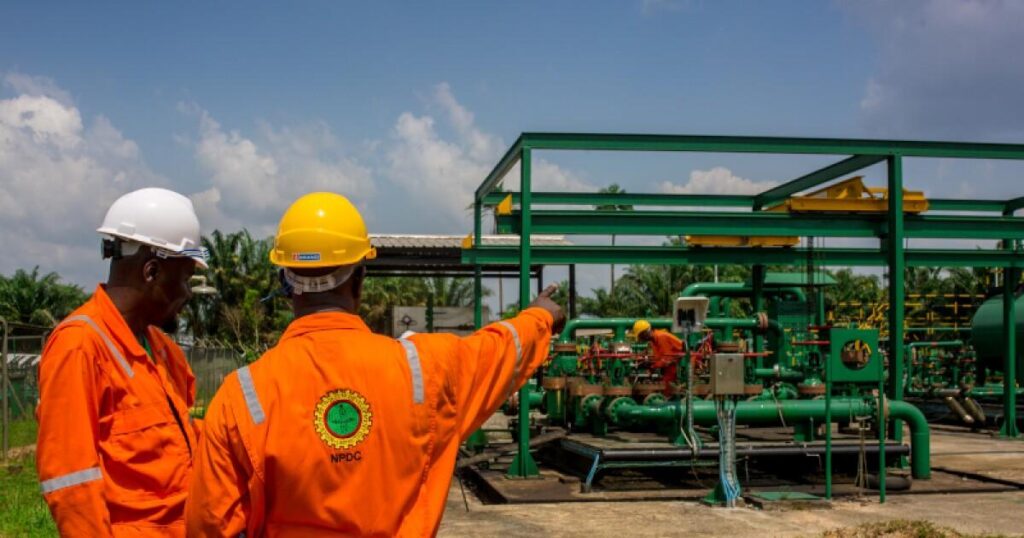
Nigeria’s petroleum industry recorded three distinct developments during the review period: crude oil production above the country’s OPEC quota, progress on the proposed Oredo Refinery in Edo State, and continued investigation into gas seepage in the Niger Delta.
The Nigerian Upstream Petroleum Regulatory Commission reported on 11 November that Nigeria’s crude-only production averaged approximately 1.51 million barrels per day in October 2026. That was slightly above the country’s OPEC crude production quota of 1.5 million barrels per day. The figures were published in the NUPRC’s October production update.
When condensates were included, total production averaged approximately 1.688 million barrels per day. The regulator reported that this combined figure had declined by 1.7 per cent compared with September.
The distinction between crude-only production and combined crude oil and condensate output is important. Nigeria’s quota comparison is based on crude oil excluding condensates. The 1.51 million barrels per day figure is therefore the relevant measure when assessing whether the country met its 1.5 million barrels per day quota.
The NUPRC said Nigeria had met its assigned crude production quota for six consecutive months, with monthly crude-only output reported at 1.53 million barrels per day in May, 1.55 million in June, 1.51 million in July, 1.50 million in August, 1.53 million in September and 1.51 million in October.
The regulator attributed the relatively stable performance to improved operational stability, production uptime and crude evacuation efficiency. However, the monthly decline in combined output shows that production levels remain subject to fluctuations. Meeting the quota for six consecutive months is a reported milestone, but it does not by itself establish that all the structural challenges affecting the sector have been resolved.
For Nigeria, the next question is whether production can be sustained while operators maintain infrastructure, improve reliability and address constraints affecting the movement of crude.
Proposed Oredo Refinery reaches an administrative milestone
A separate development concerned domestic refining capacity.
On 13 November, the Edo State Government presented NNPC Limited with a Certificate of Occupancy for the proposed Oredo Refinery and Petrochemical Company. The certificate was received on behalf of the company by NNPC’s Executive Vice-President, Downstream, Alhaji Mumuni Dagazau, during a visit to the Edo State Government House in Benin City. The presentation was reported by Channels Television.
The presentation of the land documentation is an administrative step towards the proposed project. It is relevant to the state’s efforts to attract investment and to the wider ambition of expanding domestic refining infrastructure.
However, the project’s status must be described accurately. The presentation of a Certificate of Occupancy does not establish that construction has started, that the project has reached financial close or that a refinery is ready to operate. The reports reviewed during the period did not provide a confirmed construction start date, project cost, processing capacity or completion date.
The next important evidence will be further information about implementation, including the project’s financing, construction arrangements and timetable. Until those details are established, the Oredo refinery remains a proposal that has reached an administrative milestone rather than an operating facility.
Niger Delta gas seepage investigation continues
The NUPRC also provided an update on its investigation into gas seepage in the Niger Delta.
The regulator said 28 wells had been screened based on their proximity to the seepage locations and the reservoirs they traversed. Investigators physically visited 14 wells, while three could not be accessed because they were submerged.
In its 13 November update, the commission said investigators had observed gas hissing from some wells, while some facilities were found to be corroded and others vandalised. It said the investigation was still seeking to establish whether the seepage originated from a particular well or from other nearby wells. The details were provided in the NUPRC’s technical update on the gas-seepage investigation.
The regulator said the first reported bubble was observed in October 2025. It also said independent laboratory work, including gas chromatography and isotope-ratio analysis, was expected to provide further evidence in the fourth quarter of 2026.
The NUPRC reported that relief support had been mobilised for affected communities. This included food supplies, medical outreach, efforts to provide potable water, fire vans and safety kits. The regulator also said that if the seepage were found to be a natural geological phenomenon, evacuation might need to be considered because tracing the gas migration pathways and designing underground interventions could be more difficult.
That possibility should not be interpreted as a confirmed evacuation decision. The source of the seepage had not yet been definitively established, and the regulator’s investigation remained ongoing.
Different measures of progress in the petroleum industry
These developments represent different stages of activity within Nigeria oil and gas. The production figures concern reported output during October. The Oredo development concerns land documentation for a proposed refinery. The Niger Delta investigation concerns an unresolved environmental issue.
They should not be treated as evidence of one common outcome. Each requires separate follow-up: sustained production performance, practical implementation of the refinery proposal, and a credible technical determination of the gas-seepage source.
The week’s developments therefore show why the petroleum sector cannot be assessed through production figures alone. Industrial investment, project execution and environmental responsibility are also important measures of performance.
Story 4. Nigeria’s Ebola Response: All 62 Contacts Complete Monitoring Without Secondary Infections
NCDC reports completion of the 21-day monitoring period
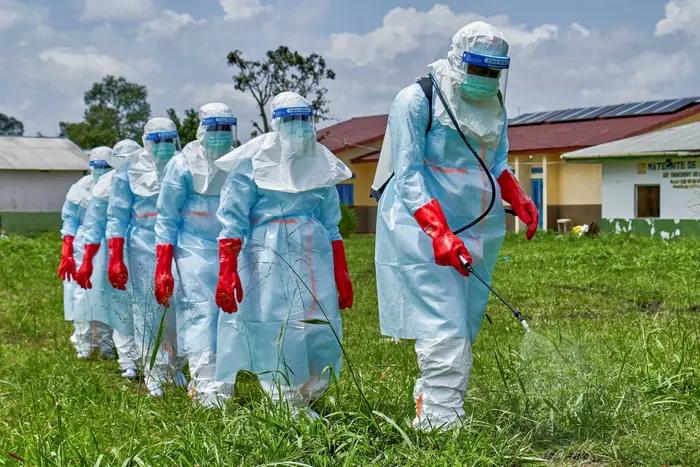
Nigeria’s public-health authorities reported an encouraging development in the response to an imported case of Bundibugyo virus disease, a disease within the group commonly referred to as Ebola virus disease.
The Nigeria Centre for Disease Control and Prevention announced on 13 November that all 62 identified contacts of the confirmed case had completed the required 21-day monitoring period without secondary infections being detected. The announcement was covered by TheCable’s report on the completion of monitoring.
NCDC Director-General Dr Jide Idris said the final contact had completed monitoring and was discharged on 13 November. The agency also reported that 13 of the 62 contacts had developed fever or other non-specific symptoms during the monitoring period, but all 13 tested negative for the virus.
The NCDC’s official Ebola disease situation report for Nigeria, dated 14 November, recorded one confirmed case, zero deaths, 62 contacts identified, all 62 contacts having exited follow-up, and no contacts remaining under monitoring.
These figures describe the status of the response at the end of the reporting period. The confirmed case was imported, and the monitoring exercise covered people identified as contacts of that case.
Why completion of contact monitoring matters
Contact monitoring is a central part of responding to an infectious disease case. It allows health authorities to follow people who may have been exposed and to identify symptoms during the relevant monitoring period.
In this instance, all 62 identified contacts completed the 21-day period. The fact that no secondary infections were detected among them represents an encouraging outcome for the contact-tracing and monitoring exercise.
The negative test results among the 13 symptomatic contacts are also important. Symptoms such as fever can require investigation during an outbreak response, but symptoms alone do not establish that a person has contracted the virus. The reported negative results meant that those 13 contacts were not confirmed as secondary cases.
The official situation report also showed that no identified contacts remained under follow-up as of 14 November. That marked the completion of monitoring for the group identified by the authorities.
Continued surveillance remains important
There is, however, an important distinction between completing contact monitoring and formally declaring an outbreak over.
The completion of the 21-day monitoring period does not, by itself, constitute an official declaration that the outbreak has ended. The NCDC’s situation page continued to identify the event as an outbreak on 14 November, while recording that all identified contacts had exited follow-up.
For that reason, the development should be described as the successful completion of monitoring without detected secondary infections, rather than as a declaration that Ebola has been eliminated from Nigeria.
The reported figures provide reassurance about the outcome for the identified contacts. Continued surveillance, public-health communication and further guidance from the NCDC remain important parts of the response.
The central development during the week was therefore clear: all 62 identified contacts completed monitoring, 13 symptomatic contacts tested negative, no secondary infections were detected among the group, and no deaths were recorded in the official situation report.
Story 5. Super Eagles Revive 2027 AFCON Campaign with 3–1 Victory Over Tanzania
Arokodare scores twice as Nigeria wins in Uyo
Nigeria’s Super Eagles revived their 2027 Africa Cup of Nations qualification campaign with a 3–1 victory over Tanzania at the Godswill Akpabio International Stadium in Uyo on Friday, 13 November.
The result gave Nigeria six points from three matches in Group L and restored momentum after the team’s reported 3–0 defeat to Guinea-Bissau in the previous qualifying encounter.
Alhassan Yusuf opened the scoring for Nigeria in the early stages of the match. Tanzania responded through Alphonce Mabuma Msanga, who equalised in the 32nd minute after capitalising on an error in the Nigerian midfield.
Nigeria went into the second half level at 1–1. Substitute Tolu Arokodare then changed the course of the match, scoring twice within eight minutes.
His first goal came in the 52nd minute, when he finished with a back-flick following a pass from captain Wilfred Ndidi. Eight minutes later, Arokodare scored again after a delivery from substitute Moses Usor, extending Nigeria’s lead to 3–1.
The Nigeria Football Federation’s match report described the result as an important response after the defeat to Guinea-Bissau.
Nigeria remains behind Guinea-Bissau
The victory moved Nigeria to six points from three matches in Group L. Guinea-Bissau remained ahead on seven points after drawing 1–1 with Madagascar in its own Day Three fixture.
That left Nigeria one point behind the group leaders. The win improved the Super Eagles’ position, but it did not secure qualification for the 2027 tournament.
The distinction is important because a victory in one qualifying match does not settle the outcome of the group. Nigeria still needed further results to strengthen its position and secure a place at the tournament.
The team’s earlier defeat to Guinea-Bissau had created pressure, making the response against Tanzania particularly important. The 3–1 result removed some of the immediate pressure and restored a measure of confidence, but the qualification campaign remained open.
Return fixture offers another opportunity
Nigeria’s next identified challenge was the return fixture against Tanzania in Zanzibar, scheduled for Tuesday following the Uyo match. The encounter offered another opportunity for the Super Eagles to collect points and improve their position in Group L.
Arokodare’s contribution was a major feature of the victory. His two second-half goals turned a level match into a Nigerian win, while Yusuf’s early strike gave the team its initial advantage. Tanzania’s equaliser had demonstrated that Nigeria could not rely on its early lead, but the response after the interval proved decisive.
For Nigerian supporters, the result provided renewed optimism. The more important test, however, was whether the team could maintain consistency across the remaining fixtures.
The Super Eagles had revived their 2027 AFCON campaign, but qualification remained undecided at the end of the review period.

Conclusion: What the Week Reveals About Nigeria
The developments reported between 9 and 15 November 2026 presented a varied picture of Nigeria’s national affairs. The security situation remained a major concern, with the fate of 13 people abducted in Zamfara unresolved despite reported weapons recoveries, arrests and rescue operations elsewhere.
Political developments highlighted the need to protect peaceful participation and strengthen confidence in electoral administration ahead of 2027. INEC’s voter-register clean-up and the Federal High Court’s order involving Ladi Adebutu were important institutional developments, but questions about investigations and implementation remained.
In the petroleum sector, crude production stayed above the OPEC quota, while the proposed Oredo refinery remained at an administrative stage and the Niger Delta gas-seepage investigation awaited further findings. Public-health authorities reported that all 62 identified Ebola contacts completed monitoring without detected secondary infections. In sport, the Super Eagles secured a valuable win, although qualification remained open.
These stories do not share a single cause, but each demonstrates why public announcements and institutional decisions must be assessed alongside their implementation. For Nigeria, the next measure of progress will be what follows: safer communities, credible electoral processes, functioning infrastructure, responsible environmental action, continued health surveillance and consistent results on the football field.
The week’s developments show that national progress is not measured by announcements alone. It is measured by the outcomes that people, communities and institutions can ultimately see.
About the Author