INTRODUCTION
Africa news during the latest review period has been shaped by developments involving regional security, migration policy, environmental enforcement, violent crime and public health. From growing tensions between Sudan and Ethiopia to the consequences of Guinea’s crackdown on illegal gold mining, the events reveal how decisions taken by governments can have consequences beyond their immediate borders.
In the Horn of Africa, both Sudan and Ethiopia have accused each other of supporting armed groups operating within their territories. The allegations have raised concerns about the possibility of domestic conflicts becoming increasingly interconnected, with implications for regional stability.
In West Africa, Guinea’s campaign against unauthorised gold mining has resulted in prison sentences for more than 200 people, following arrests, deadly clashes and the movement of miners and their families towards Mali. The operation has highlighted the difficult balance between environmental protection, control of natural resources and the livelihoods of communities dependent on informal mining.
Migration policy has also taken a new turn. Germany, Denmark, Austria, Greece and the Netherlands have announced plans for a migrant return facility in Rwanda, raising questions about the growing role of third countries in European immigration enforcement and the protection of rejected asylum seekers.
Meanwhile, South Africa is investigating two separate mass shootings that left 17 people dead, while the Democratic Republic of Congo continues to confront a serious Ebola outbreak.
These developments are not part of one single continental crisis. They reflect different national and regional circumstances. However, together they raise important questions about the ability of African institutions to protect lives, manage security challenges, regulate economic activity and respond to humanitarian emergencies.
STORY 1: Sudan and Ethiopia trade accusations as regional security tensions deepen
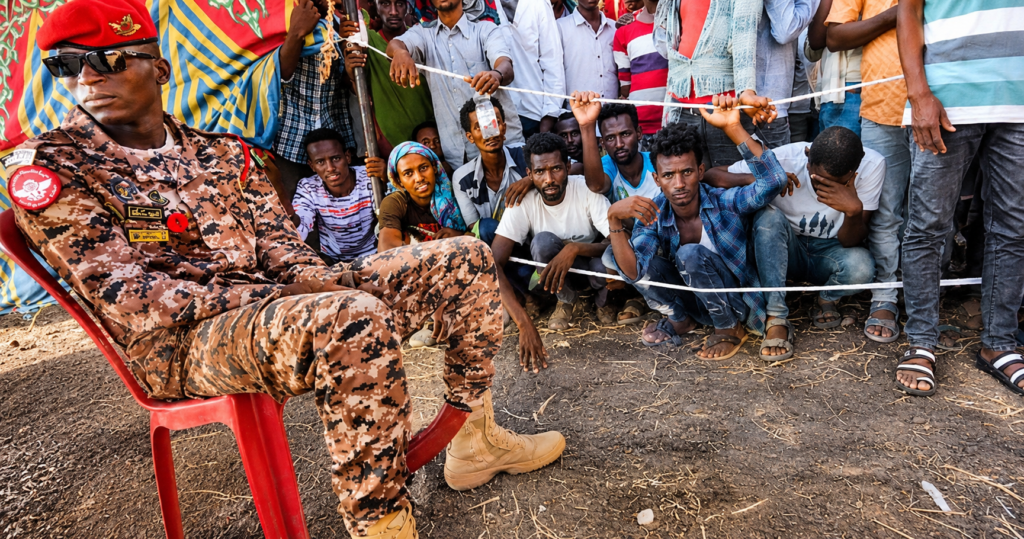
Relations between Sudan and Ethiopia have come under renewed pressure after both governments accused the other of supporting armed groups involved in conflicts within their territories.
The dispute is significant because both countries are already dealing with serious internal security challenges. Sudan remains engulfed in a devastating war between its national army and the Rapid Support Forces, while Ethiopia is facing renewed fighting in its northern Tigray region.
The latest accusations have raised concerns that these conflicts could become increasingly connected through cross-border support, regional alliances and competing security interests.
The allegations from Sudan and Ethiopia
Sudan’s military has accused Ethiopia of allowing the Rapid Support Forces, commonly known as the RSF, to use Ethiopian territory to establish camps, launch drones and conduct cross-border attacks.
According to the Associated Press report on the Sudan-Ethiopia accusations, Sudan’s military said it had submitted evidence in complaints to the United Nations Security Council and the African Union’s Peace and Security Council.
Ethiopia has rejected the allegations and accused Sudan of supporting rebels fighting Ethiopian federal forces in Tigray.
The Tigray region experienced a devastating conflict between 2020 and 2022. Fighting resumed in September 2026, undermining the peace agreement that had brought the earlier phase of the conflict to an end.
The accusations are therefore emerging in a context where both governments face significant internal security pressures.
An important qualification is necessary: the two countries deny the allegations made against them, and the Associated Press reported that it could not independently verify the claims.
The allegations should not be presented as established facts.
Diplomatic relations have already deteriorated
The tensions have moved beyond public statements.
Ethiopia expelled six members of Sudan’s consular staff and ordered the mission closed. Sudan’s military also took its complaints to international and regional institutions.
These developments illustrate how security disagreements can affect diplomatic relations, even before a direct military confrontation occurs.
The two countries also have longstanding disputes involving territory, water resources and regional influence.
The Al-Fashaga border area remains contested, while Ethiopia’s Grand Ethiopian Renaissance Dam has been a source of disagreement with downstream countries, including Sudan and Egypt.
These disputes form part of the wider relationship between the two countries, although they should not be confused with the specific allegations over armed groups.
The danger of conflicts crossing borders
Sudan’s war has already produced enormous humanitarian consequences.
The Associated Press cited at least 59,000 deaths, according to the conflict-monitoring organisation ACLED, and approximately 13 million displaced people.
The possibility of additional cross-border involvement raises concerns about further instability and displacement.
Analysts cited by the Associated Press warned that the conflict dynamics in Sudan and Ethiopia could reinforce one another if armed groups, weapons and external support move across borders.
The immediate issue is whether diplomatic channels can prevent the accusations from escalating.
The African Union and the United Nations have important roles in providing platforms for dialogue, although the effectiveness of such engagement will depend on the willingness of both governments to address the allegations through verifiable evidence and diplomatic processes.
The situation remains unresolved. The claims have not been independently established, and further reporting will be necessary to determine whether the accusations lead to concrete changes in security conditions along the border.
What to watch: Further diplomatic action, evidence presented to regional and international institutions, developments in Tigray and the extent to which the Sudan conflict affects neighbouring countries.
STORY 2: Guinea’s mining crackdown sends thousands towards Mali as 224 people receive prison sentences
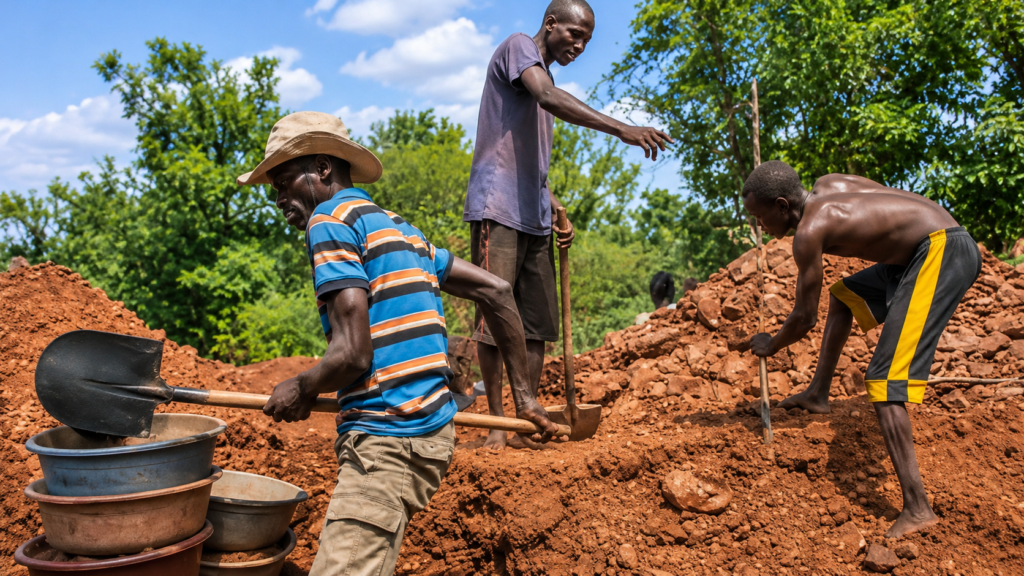
Guinea’s campaign against illegal gold mining has become a major environmental, economic and humanitarian issue, following mass arrests, prison sentences, deadly clashes and the displacement of miners and their families.
A court in the capital, Conakry, sentenced 224 people over illegal gold mining activities in the north-eastern Siguiri region.
The defendants included 22 former local officials and 202 miners. The sentences represent a significant development in the government’s effort to tighten control over unauthorised mineral extraction.
The court sentences 224 defendants
According to the Associated Press report on Guinea’s illegal mining sentences, the 22 former officials were sentenced to two years in prison for complicity in environmental degradation, destruction and water pollution. Each was also fined 10 million Guinean francs.
The 202 miners received three-year prison sentences for related environmental offences and illegal mining. They were ordered to pay a combined fine of 10 billion Guinean francs.
Foreign nationals involved in the case were also barred from Guinea for ten years.
The 224 defendants were among more than 1,200 people arrested in Siguiri earlier in November.
The government’s position is that unauthorised mining has caused serious environmental damage, including the destruction of farmland by heavy machinery and the pollution of rivers through the use of chemicals.
These concerns are significant in a country where gold mining is an important economic activity and where the government is seeking greater oversight of natural resources.
Enforcement has produced deadly consequences
The crackdown has not been without violence.
Clashes between protesters and security forces enforcing the mining restrictions in the Siguiri area last week left at least ten people dead and 13 injured.
The violence has raised questions about the conduct of enforcement operations and the way authorities manage resistance to restrictions affecting livelihoods.
The government faces the responsibility of enforcing environmental and mining regulations. However, the deaths also underline the need for transparent investigations and appropriate standards in the use of force.
Miners and families move towards Mali
One of the most significant consequences has been displacement across the Guinea-Mali border.
The Associated Press reported that tens of thousands of miners and their families, many originally from Burkina Faso, had fled towards Mali, citing Malian authorities.
The movement is particularly important because informal mining has provided livelihoods for large numbers of people.
The United Nations Environment Programme’s work on artisanal and small-scale mining provides wider context on the environmental and livelihood challenges associated with informal mineral extraction.
When enforcement operations remove access to those activities, the consequences extend beyond the miners themselves. Families, traders, transport operators and communities connected to mining activity can also be affected.
The arrival of large numbers of people in neighbouring Mali creates additional demands on border communities and public services.
Guinea’s wider resource-control strategy
The crackdown is also taking place as Guinea seeks to strengthen its control over the country’s mineral resources.
The government has an interest in reducing illegal extraction, improving environmental oversight and ensuring that more gold enters formal production and export channels.
However, achieving those objectives requires more than arrests and prosecutions.
The long-term challenge is to create a regulated mining environment that protects land and water resources while providing legal economic opportunities for people who depend on mining.
The government must also address the consequences of displacement and ensure that enforcement does not create further instability in communities along the border.
Guinea’s neighbours, particularly Mali and Burkina Faso, have an interest in how the operation is conducted because their citizens are among those affected by the movement of miners.
What to watch: The treatment of displaced miners, further court proceedings, environmental enforcement measures, relations with neighbouring countries and the development of legal mining opportunities.
STORY 3: Five European countries plan migrant return facility in Rwanda, raising human-rights questions
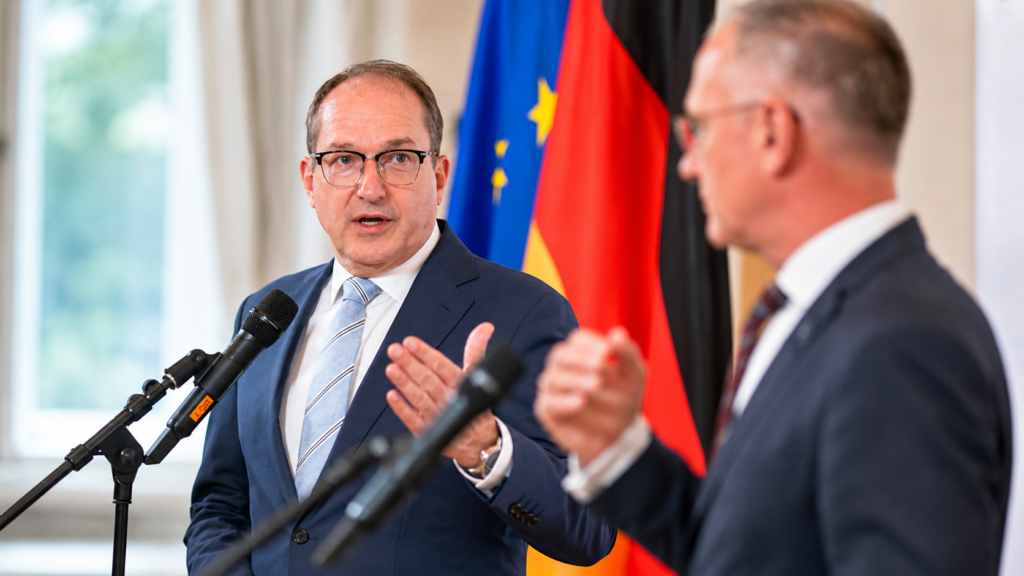
Rwanda has become the focus of a new European migration policy proposal after Germany, Denmark, Austria, Greece and the Netherlands announced plans to establish a migrant return facility in the East African country.
The proposal is part of a wider effort by European governments to strengthen the enforcement of immigration decisions and increase the removal of people whose asylum applications have been rejected.
It also reflects the growing willingness of some governments to pursue migration arrangements outside European territory.
What the five countries have proposed
The five European countries announced the plan on 16 November.
According to The Washington Post’s report on the proposed Rwanda return facility, the proposed facility could begin operating in 2027.
The arrangement is intended for people whose asylum claims have been rejected and who cannot or will not return to their countries of origin.
The governments involved argue that such a facility could reduce pressure on their immigration systems and discourage irregular migration.
However, the announcement did not provide a confirmed number of people who would be transferred to Rwanda.
The proposal should therefore be understood as a planned arrangement rather than an operating deportation centre.
Why Rwanda is central to the proposal
The proposal places Rwanda in a significant position within Europe’s evolving migration policy.
For the European countries involved, the arrangement could provide another mechanism for dealing with rejected asylum applications.
For Rwanda, it could create a new role in international migration management.
But the arrangement also raises important questions about the legal status, safety and protection of people transferred to a country where they may have no previous connection.
The debate is not simply about where rejected asylum seekers should be accommodated. It concerns the rights of individuals, the conditions under which they can be transferred and the legal safeguards available to them.
Human-rights concerns
The proposal has attracted criticism from human-rights organisations.
The Washington Post reported that more than 45 organisations had warned against arrangements that forcibly transfer asylum seekers to countries with which they have no connection.
Their concerns include the risk of serious human-rights violations and the vulnerability of people who may have been rejected by one asylum system but still face danger if returned to their countries of origin.
The debate also involves the principle of non-refoulement, which prohibits returning people to places where they face a real risk of persecution, torture or other serious harm. The United Nations Refugee Agency’s explanation of non-refoulement provides further context on this protection principle.
Any arrangement involving the transfer of people across borders must address the relevant legal obligations and provide meaningful protection.
A wider shift in migration policy
The proposal reflects a broader debate within Europe about how governments should manage asylum applications, irregular migration and the removal of people who have no legal right to remain.
The idea of establishing return facilities outside Europe has gained greater attention as governments seek additional enforcement mechanisms.
However, the practical effectiveness of the Rwanda proposal remains uncertain.
The number of people who could be transferred, the legal framework, the conditions of accommodation and the safeguards available to individuals will all determine how the arrangement works in practice.
It is also important not to confuse the new proposal with earlier migration arrangements involving Rwanda. The current announcement concerns a plan by five European countries and does not establish that transfers have already begun.
What to watch: The legal arrangements, the role of Rwanda, the rights of people who may be transferred and the response of human-rights organisations.
STORY 4: South Africa investigates two mass shootings that leave 17 people dead
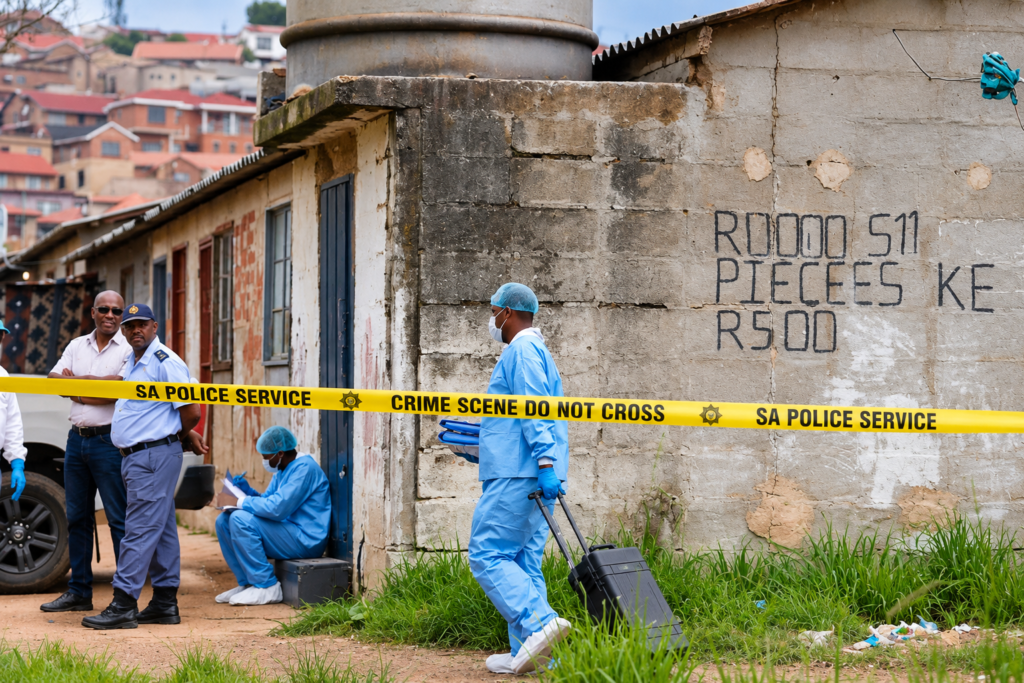
South Africa is facing renewed concern over violent crime after two separate mass shootings left 17 people dead in Gauteng and KwaZulu-Natal.
The incidents occurred on Sunday night, 15 November, and were reported by police on Monday, 16 November.
The killings have renewed attention on the proliferation of illegal firearms, the activities of criminal groups and the ability of law-enforcement agencies to protect vulnerable communities.
Nine people killed in Atteridgeville
The first incident occurred at the Jeffsville informal settlement in Atteridgeville, west of Pretoria.
Nine people, including six men and three women, were found dead inside a four-roomed shack.
According to the South African government’s SAnews report on the mass shootings, police were alerted at approximately 7:30 on Monday morning.
Investigators believe the shooting occurred between 10 and 11 o’clock on Sunday night.
National Police Commissioner Fannie Masemola described the killings as unacceptable and said a multidisciplinary team involving intelligence officers was following leads.
Gauteng police commissioner Tommy Mthombeni said investigators were examining whether the incident could be connected to an earlier shooting in a nearby settlement in 2025.
That earlier attack left 12 people dead and 13 injured. However, the possible connection had not been established as a confirmed motive for the latest shooting.
Eight men killed in Sweetwaters
The second shooting occurred in the Mabane Section of Sweetwaters, outside Pietermaritzburg in KwaZulu-Natal.
Police found eight men dead inside a bullet-riddled vehicle.
The victims had sustained multiple gunshot wounds and were certified dead at the scene.
Investigators were working to identify the victims and establish the circumstances and motive for the attack.
Police said the two shootings were separate incidents.
The motives remained unknown in the reporting available during the review period.
The wider challenge of violent crime
The two incidents have renewed attention on the continuing problem of violent crime in South Africa.
National Police Commissioner Masemola said 198 firearms and 3,770 rounds of ammunition had been seized during the preceding week.
He also reported that festive-season operations launched on 12 October had resulted in the confiscation of 750 firearms and 9,884 rounds of ammunition.
These figures demonstrate the scale of police enforcement activity, but the latest killings show that illegal firearms and organised violence remain serious challenges.
Mass shootings have affected communities across the country, and some incidents have been associated with criminal gangs, territorial disputes and other forms of organised violence.
The impact is particularly severe for families and communities where residents face the threat of armed attacks and have limited access to effective protection.
Accountability and the responsibility to protect communities
The immediate responsibility of the police is to establish what happened, identify the victims, determine the motives and bring those responsible before the courts.
However, the wider challenge involves preventing attacks before they occur.
This requires effective intelligence, investigations, control of illegal firearms and cooperation between communities and law-enforcement agencies.
The government has condemned the killings and promised that police will pursue those responsible.
The credibility of that response will ultimately depend on the progress of investigations and whether the authorities can reduce the frequency of similar attacks.
What to watch: Police investigations in Atteridgeville and Sweetwaters, the identification of victims, the possible links to earlier criminal incidents and further action against illegal firearms.
STORY 5: DRC Ebola outbreak continues as cases and deaths rise
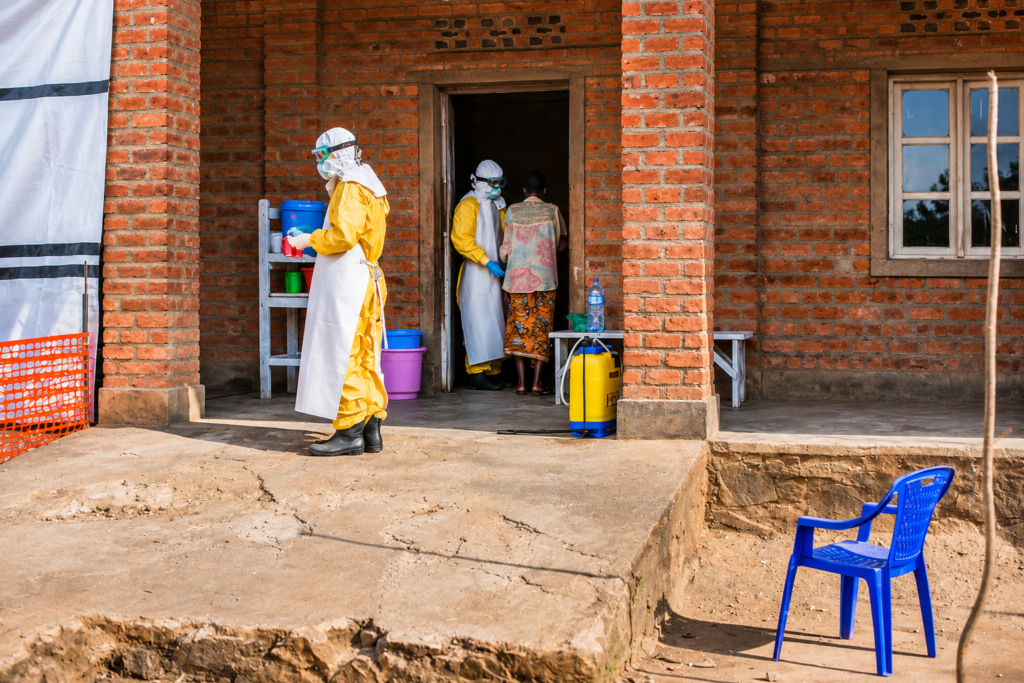
The Democratic Republic of Congo continues to confront a serious Ebola outbreak, with new figures published on 16 November showing an increase in confirmed cases and associated deaths.
The European Centre for Disease Prevention and Control’s 16 November Ebola update reported that the country had recorded 11,376 confirmed cases and 5,568 associated deaths as of 15 November, using data available up to 14 November.
The outbreak has affected eight provinces and continues to involve community transmission.
The figures underline the scale of the public-health challenge facing the DRC and the institutions supporting the response.
New cases and deaths reported
The ECDC’s 16 November update recorded an additional 179 confirmed cases and 97 deaths compared with its previous update published on 13 November.
The additional cases were reported in Ituri, North Kivu, Haut-Uélé and Tshopo.
Ituri remained the most affected province, with 7,858 cases and 3,715 deaths reported across 28 of its 36 health zones.
North Kivu had recorded 2,860 cases and 1,590 deaths across 17 health zones.
The outbreak has also affected South Kivu, Bas-Uélé, Sud Ubangi and Nord Ubangi.
The figures demonstrate that transmission has extended across a wide geographical area.
The ECDC also cautioned that the reported figures remain subject to continuous review and harmonisation.
Contact tracing remains important
One of the key challenges in controlling an Ebola outbreak is identifying people who may have been exposed to an infected person.
Contact tracing allows health authorities to monitor those individuals and identify possible new infections as early as possible.
The ECDC reported that 83.1 per cent of identified contacts were under follow-up in the affected provinces as of the latest update.
That figure highlights the continuing need to strengthen surveillance and ensure that people who may have been exposed can be identified and monitored.
Children are among the most affected
The outbreak has also had a significant impact on children.
The ECDC cited UNICEF data indicating that 2,959 children were among confirmed cases, based on information available as of 4 November.
That represented 28 per cent of confirmed infections in the data used.
The same figures recorded 1,737 deaths among children, representing 35 per cent of deaths in that dataset.
The figures underline the importance of ensuring that children and vulnerable households have access to health services and protection.
The regional picture: Kenya and Nigeria
The Ebola situation in the DRC should be distinguished from developments in other African countries.
Kenya recorded nine confirmed cases, including two deaths. Its last patient under treatment was discharged on 11 November, and all identified contacts completed the 21-day monitoring period.
Nigeria recorded one confirmed case on 20 October involving an individual who had travelled from Uganda. The patient was discharged from hospital in Switzerland on 11 November, while all 62 identified contacts in Nigeria completed monitoring on 11 November.
These developments do not mean the regional outbreak has ended.
The DRC continues to report community transmission, while Kenya and Nigeria have completed important stages of monitoring and follow-up.
The continuing test for public-health institutions
The response to Ebola requires more than treating confirmed patients.
It depends on surveillance, contact tracing, access to affected communities, cooperation with local populations and sustained support for healthcare workers.
The latest figures show that the DRC continues to face a serious challenge.
The increase in cases and deaths between the previous update and the latest report demonstrates why sustained attention is necessary.
The next stage will depend on the ability of health authorities and their partners to strengthen surveillance, improve follow-up and reduce transmission.
What to watch: Updated case and death figures, the proportion of contacts under follow-up, developments in affected provinces and the effectiveness of the response.
THE WIDER AFRICAN PICTURE
The developments reported during this review period show the different pressures facing African governments and institutions.
In the Horn of Africa, tensions between Sudan and Ethiopia have raised concerns about the possibility of regional conflicts becoming more closely connected.
In Guinea, efforts to regulate gold mining and protect the environment have been accompanied by violence and cross-border displacement.
In East Africa, Rwanda’s proposed role in a European migration arrangement has opened another debate about the relationship between migration enforcement and human rights.
In South Africa, the deaths of 17 people in two separate shootings have renewed attention on violent crime and public safety.
And in the Democratic Republic of Congo, the continuing Ebola outbreak demonstrates the importance of sustained public-health capacity.
The circumstances are different, but the responsibilities of institutions remain significant.
Governments must protect their populations, enforce laws responsibly, safeguard vulnerable communities and ensure that public institutions can respond effectively to emergencies.
The developments also show why African news must be understood beyond individual headlines. Decisions made in one country can affect neighbouring states, regional stability and the lives of people across borders.
As these stories continue to develop, attention will remain on diplomatic engagement between Sudan and Ethiopia, the consequences of Guinea’s mining crackdown, the proposed Rwanda migration arrangement, investigations into the South African shootings and the Ebola response in the DRC.
The central test is whether governments and institutions can turn their decisions into effective protection, security and better outcomes for the people they serve.
About the Author