Introduction
Nigeria’s public affairs agenda during the 48-hour reporting period from Friday, 20 November, to Sunday, 22 November 2026, was shaped by developments involving electoral administration, public safety, agricultural production and domestic manufacturing. Although these events concern different sectors, each has implications for the way public institutions perform their responsibilities and respond to citizens’ needs.
In politics, the Independent National Electoral Commission faced renewed scrutiny over the accuracy of the voters’ register and its proposed use of artificial intelligence in election administration. Former Vice-President Atiku Abubakar called for independent technical scrutiny of the commission’s proposed AI system, while a separate court ruling concerned his legal challenge to President Bola Tinubu’s eligibility to contest the 2027 presidential election.
Outside the political arena, a boat disaster in Bayelsa State reportedly claimed at least 24 lives, bringing renewed attention to passenger safety on inland waterways. In Ogun State, an attack on former Super Eagles captain Segun Odegbami prompted a police investigation. A separate disturbance involving electricity transmission lines also affected the power system.
Agricultural stakeholders used the 2026 National Agricultural Show to highlight the difficulties facing farmers, while the Federal Government commenced construction of a proposed $70 million passport manufacturing facility in Abuja.
This Nigeria news review examines these five major narratives, their significance and the outstanding questions that will require attention beyond the reporting period.
STORY 1— 2027 Nigerian Elections: INEC Register Decision, AI Audit Demand and Court Proceedings
Preparations for Nigeria’s 2027 general elections came under renewed scrutiny during the reporting period, with developments involving the voters’ register, election technology, presidential eligibility proceedings and opposition political activity.
One important distinction concerns the timing of INEC’s decision on the comprehensive revalidation of the national voters’ register. The commission had already announced in April 2026 that the proposed nationwide exercise would be postponed until after the 2027 general elections.
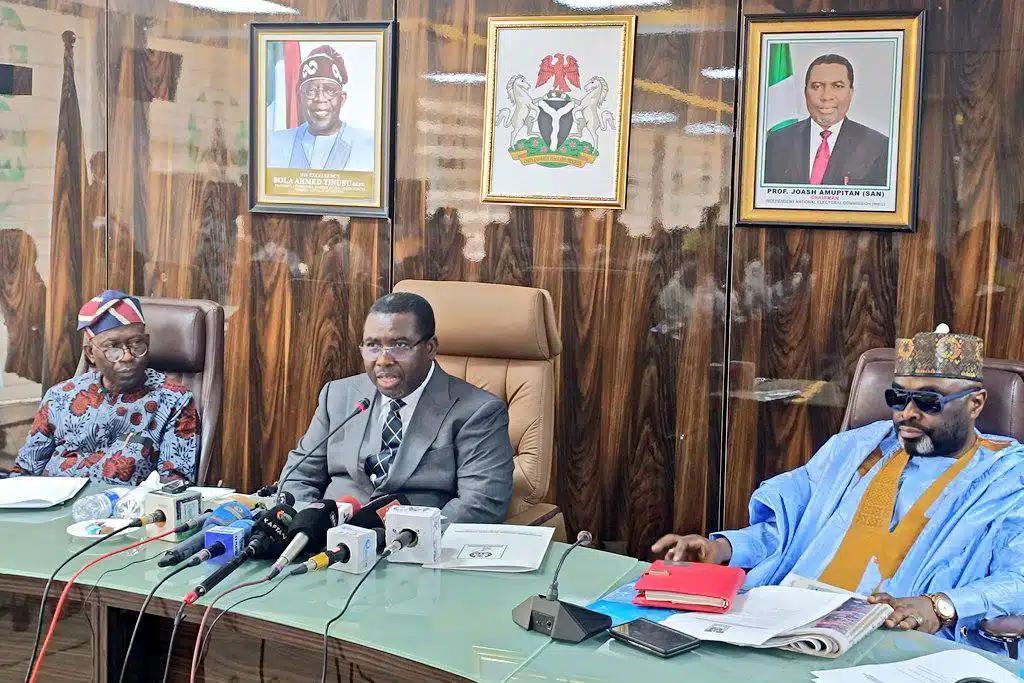
During the November reporting period, INEC chairman, Professor Joash Amupitan, provided further explanation. In an appearance on the Bereke Family television programme, he said the commission would not be able to complete a comprehensive clean-up of the register before the next general election, citing time constraints and public resistance to the proposed exercise.
According to his explanation, the commission had initially considered a six-month exercise to remove deceased persons, underage voters, incomplete registrations and duplicate entries. The plan was subsequently shelved following opposition to the exercise.
The November explanation was reported by PUNCH in its account of Amupitan’s comments.
The voters’ register is fundamental to election administration. It provides the basis for identifying eligible voters and organising the electoral process. Its accuracy is therefore important to the credibility of the election and the confidence of citizens and political stakeholders.
Amupitan’s explanation raises questions about the commission’s approach to addressing possible inaccuracies before the next election. However, postponing a comprehensive revalidation exercise does not necessarily mean that all existing verification measures have stopped. The commission’s ongoing procedures and the safeguards it intends to maintain before the election remain relevant.
Atiku seeks independent technical scrutiny of INEC’s AI system
Another development concerned the proposed use of artificial intelligence in the electoral process.
Former Vice-President Atiku Abubakar called for independent technical scrutiny of INEC’s proposed artificial intelligence system. He wants cybersecurity experts, political party representatives and other relevant stakeholders to have access to the system’s source code, training data and decision logs.
Atiku’s request followed INEC’s reported plan to integrate AI and intelligent document processing into the process linking its Data Verification and Authentication System with the INEC Result Viewing portal.
In his demand, he argued that the technical framework, operational procedures and decision-making processes should be open to examination. He also called for clear procedures for reviewing result sheets flagged by the technology and for human oversight of any decisions arising from the system.
The details of his demand were reported by Premium Times in its coverage of the proposed independent audit.
The issue is relevant because any technology used in election administration needs to be properly understood and subject to appropriate safeguards. Questions about how a system operates, how it processes information and how its decisions can be examined may influence public confidence.
However, Atiku’s request must be distinguished from evidence that the system has malfunctioned or been used improperly. A demand for an independent audit does not establish that electoral manipulation has occurred. Such conclusions would require separate evidence.
The commission’s explanation of the system, its intended purpose and the safeguards governing its use are therefore important matters for public understanding.
Court dismisses application to amend Tinubu eligibility case
The legal dimension of the 2027 election debate also featured during the period.
The Federal High Court in Abuja dismissed an application by Atiku Abubakar and the African Democratic Congress seeking to amend their existing case challenging President Bola Tinubu’s eligibility to contest the 2027 presidential election.
The ruling was delivered by Justice Inyang Ekwo.
According to Premium Times’ report of the court proceedings, the judge rejected the proposed amendment after finding that it sought to introduce new facts outside the constitutionally prescribed period for filing pre-election matters.
The precise nature of the court’s decision is important. The application dismissed was the request to amend the existing case. That should not automatically be interpreted as a final determination of every allegation in the underlying eligibility dispute.
The proceedings also draw attention to the constitutional provisions governing pre-election litigation, including Section 285(9) of the Constitution. The legal implications of the ruling must be assessed against the actual court decision and the relevant constitutional provisions.
Opposition summit rescheduled
Meanwhile, the opposition Coalition for Democracy rescheduled its second summit from 23 November to 30 November 2026.
The meeting is another development in political activity ahead of the next general election. Its eventual proceedings may provide further information about the coalition’s discussions and priorities, but the rescheduling alone does not establish any particular political outcome.
Two other dates were identified for attention: INEC’s reported nationwide mock accreditation exercise scheduled for 28 November and the rescheduled opposition summit on 30 November.
Taken together, these developments show that preparations for the 2027 elections involve more than the organisation of polling activities. The accuracy of electoral records, the transparency of technology, the handling of legal disputes and the public communication of institutional decisions are all relevant.
For INEC, the immediate challenge is to demonstrate that its preparations are sufficiently transparent and that the systems supporting the election can command public confidence. For political stakeholders and voters, the key issue is whether concerns can be examined through credible institutional processes rather than assumptions or unproven allegations.
STORY 2 — Bayelsa Boat Disaster: At Least 24 Reported Dead as Water Transport Safety Comes Under Scrutiny
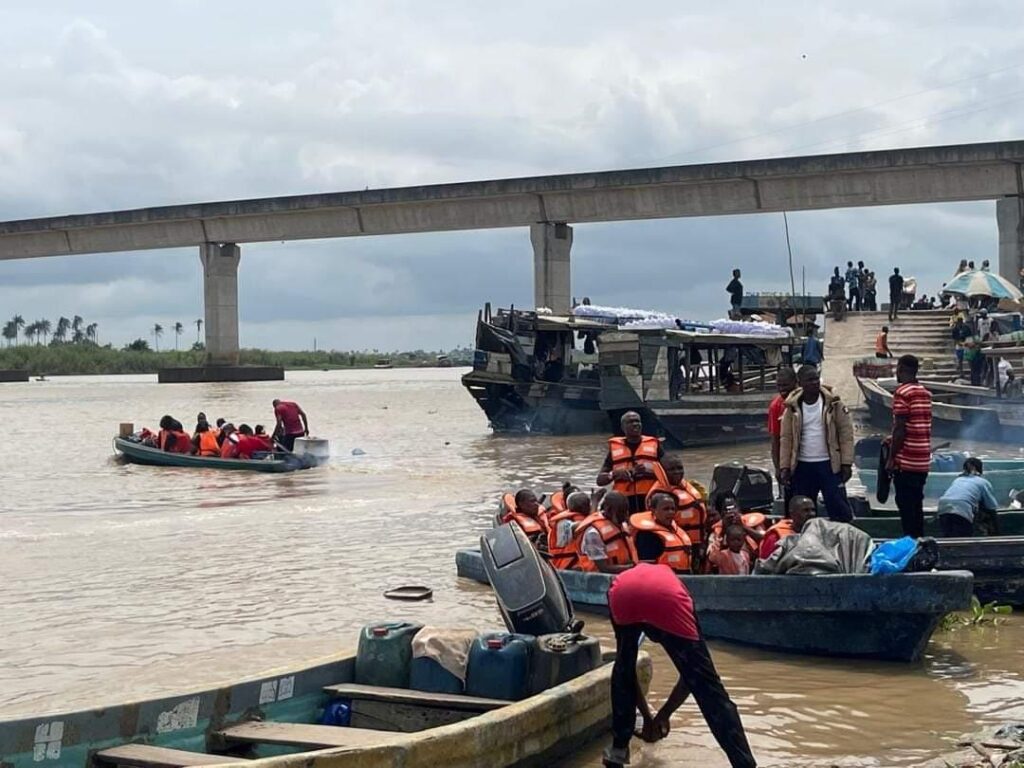
At least 24 people reportedly died after a passenger boat carrying mourners to a burial ceremony capsized in Bayelsa State on Friday, 20 November 2026. The incident has renewed attention on the safety of inland water transportation, particularly in communities where waterways are essential routes for everyday movement.
The casualty figures developed as search and rescue operations continued.
An initial report from the Bayelsa State Police Command on Friday said four bodies had been recovered and 24 passengers rescued. The police also reported that the survivors were taken for medical attention.
The National Emergency Management Agency subsequently reported that 24 bodies had been recovered, with search and rescue operations continuing. The updated toll was reported by The Associated Press in its account of the Bayelsa boat disaster.
The difference between the initial police report and the later NEMA update is important. The four deaths represented the initial recovery figure reported by police, while the figure of 24 reflected a later stage of the search operation. The figures should therefore be understood chronologically rather than treated as competing final totals.
The boat was travelling with mourners to a burial ceremony. The disaster consequently affected families and communities connected with the journey, while raising questions about the conditions under which passenger vessels operate.
Water transport and the safety of riverine communities
Water transportation plays an important role in parts of Bayelsa and other riverine areas. For communities where rivers and waterways form part of the everyday transport network, boats provide a means of connecting settlements, families and local economic activities.
That dependence makes passenger safety particularly important.
A boat journey may be a routine part of life for residents, but routine travel does not remove the risks associated with vessel condition, passenger capacity and safety arrangements. The Bayelsa disaster has brought these issues into public focus.
Preliminary reports pointed to a possible mechanical problem as a factor in the capsizing. The police said the boat developed a mechanical fault while navigating the waterways. However, the exact cause had not been conclusively established during the reporting period.
The distinction matters. A possible mechanical problem may be one area of investigation, but it should not be treated as the confirmed cause until the relevant authorities establish the circumstances of the accident.
Questions over the vessel and its operation
There were also reports that the boat operator fled after the incident, while the boat manager was taken into custody.
The Associated Press reported that passengers had allegedly asked the operator to steer towards land after the mechanical problem developed, but that he declined. The operator reportedly fled the scene, while the boat manager was taken into custody.
These reports raise questions about the circumstances surrounding the journey and the responsibilities of those involved in operating the vessel. However, the reported status of individuals connected with the incident should not be treated as proof of criminal responsibility.
An investigation must establish what happened, whether the vessel was being operated appropriately and whether any operational or regulatory failures contributed to the capsizing.
Several important details remained unresolved during the reporting period:
- The total number of passengers originally aboard the boat.
- Whether life jackets were available.
- Whether passengers had access to and used life jackets.
- Whether the vessel was operating within its authorised passenger capacity.
- The exact cause of the capsizing.
Each of these details could help establish the circumstances of the disaster. Without them, it would be premature to draw definitive conclusions about the immediate cause or the responsibilities of particular individuals.
The Bayelsa State Government also urged boat operators and passengers to observe safety regulations, warning against overloading, speeding, reckless conduct and travelling without life jackets. These warnings were included in the Associated Press report on the disaster.
What the investigation needs to establish
The immediate priority is to determine the cause of the capsizing and establish whether any operational or regulatory failures contributed to the tragedy.
Further information from NEMA and the Bayelsa State Police Command will be important in clarifying the circumstances. The investigation should also establish the number of passengers aboard and the condition and safety arrangements of the vessel.
For riverine communities, the wider concern is how passenger safety can be strengthened. Where boats are essential to everyday movement, the reliability and safe operation of passenger vessels are matters of public interest.
The Bayelsa boat disaster therefore raises questions that extend beyond the immediate accident. Establishing the facts will be necessary not only to understand the tragedy but also to determine whether preventable failures need to be addressed.
STORY 3 — Nigeria Public Safety: Segun Odegbami Attack and Electricity Transmission Disturbance
Two separate developments involving personal security and electricity infrastructure brought public safety into focus during the reporting period. In Ogun State, former Super Eagles captain and sports administrator Segun Odegbami was reportedly attacked at his residence. Separately, a disturbance involving four electricity transmission lines affected parts of the country’s transmission system.
The incidents concern different areas of public life and have no established connection. They should therefore be examined separately, with attention to what the relevant authorities have confirmed.
Segun Odegbami reportedly attacked in Abeokuta
Odegbami was reportedly attacked at his residence in Ibara GRA, Abeokuta, in the early hours of Friday, 20 November.
The 74-year-old reportedly sustained injuries and was later discharged from hospital.
The Ogun State Police Command confirmed that an investigation was underway. The Commissioner of Police, Bode Ojajuni, also ordered a thorough probe into the incident.
Odegbami is a former captain of Nigeria’s national football team and a prominent figure in the country’s sporting history. The report of an attack on him consequently attracted attention beyond the immediate circumstances of the incident.
According to Channels Television’s report on the attack, the incident occurred at about 2:30 a.m. at his home in Ibara GRA. The report also noted that the police had begun an investigation and were making efforts to identify and arrest those responsible.
The motive for the attack and the identities of those responsible had not been established during the reporting period.
The police investigation will be necessary to determine the circumstances surrounding the incident, identify those involved and establish whether criminal responsibility can be attributed to anyone.
The reported hospital discharge provides an update on Odegbami’s immediate medical situation. It does not, however, resolve the questions surrounding the attack.
Until further information is released by the police or other reliable sources, the incident should be reported with appropriate caution. No motive or identity of an alleged attacker should be inferred without evidence.
Transmission disturbance affects electricity infrastructure
In a separate development, Nigeria’s electricity transmission system experienced a disturbance involving four transmission lines.
According to the Nigerian Independent System Operator, the Omotosho–Ikeja West transmission line tripped at 12:34 p.m. on 20 November. Three additional lines — Ihovbor–Oshogbo, Benin–Egbin and Ihovbor–Ajaokuta — reportedly tripped at about 12:50 p.m., resulting in load losses in Lagos and other affected areas.
NISO subsequently confirmed that all the affected lines had been restored by 2:49 p.m.
The operator also clarified that the incident did not amount to a complete national grid collapse. Its explanation was published in a NISO statement on the transmission disturbance, while BusinessDay also reported the operator’s clarification.
That clarification is important. A disturbance involving transmission lines can affect electricity supply in areas served by the affected infrastructure, but it should not be described as a total national grid collapse when the system operator has expressly stated otherwise.
The reported sequence provides an account of the incident: an initial line trip, three additional line trips and subsequent restoration of the affected lines. Further technical information from NISO or the Transmission Company of Nigeria would help explain the circumstances and operational impact.
Two different responsibilities
The attack on Odegbami and the electricity transmission disturbance are separate incidents.
The first is a matter for criminal investigation by the Ogun State Police Command. The second concerns the operation and reliability of critical electricity infrastructure.
Their appearance within the same reporting period does not establish a common cause or relationship.
They nevertheless highlight different responsibilities expected of public institutions. In matters of personal security, citizens expect attacks to be properly investigated and those responsible to be identified through due process. In electricity supply, consumers and businesses depend on infrastructure that operates reliably and on timely restoration when disturbances occur.
The next developments to watch are the progress of the police investigation and any further technical explanation from NISO or the Transmission Company of Nigeria.

STORY 4 — Nigeria Food Security: Farmers Seek Affordable Credit, Security and Better Production Support
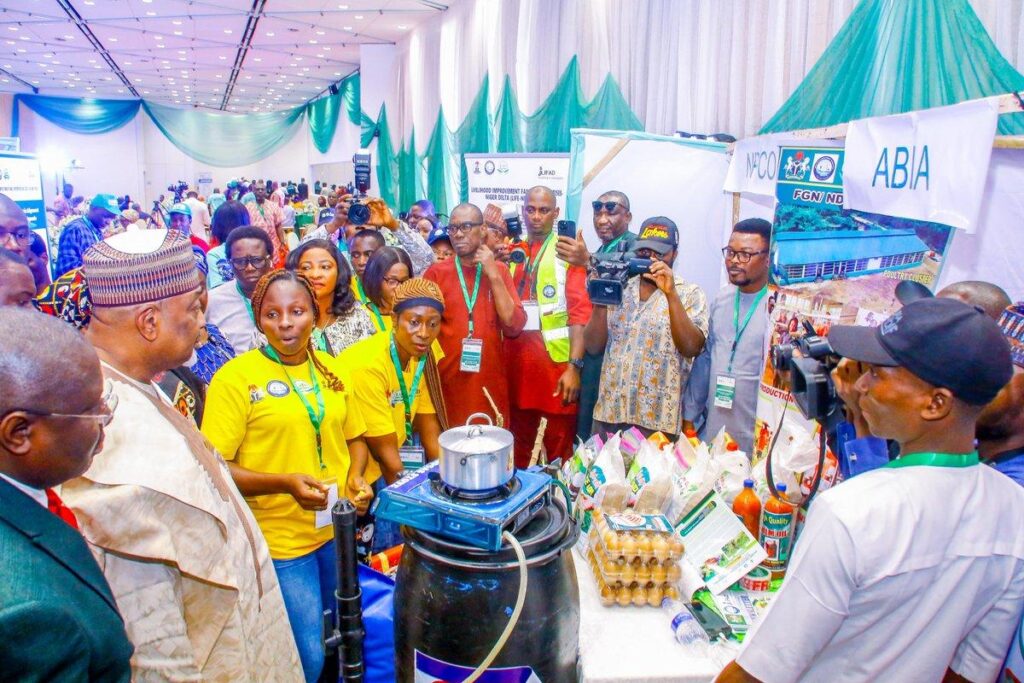
The challenges confronting Nigerian farmers, including high production costs, limited access to affordable credit, insecurity and inadequate infrastructure, were major subjects of discussion at the 2026 National Agricultural Show.
The event ran from 16 to 20 November 2026 at the National Agricultural Showground along the Abuja–Keffi Road in Nasarawa State. The National Agricultural Show’s official website identifies the event’s 2026 theme as building a resilient Nigerian agrifood system through farmer empowerment, investment and innovation.
During the show, agricultural stakeholders highlighted the structural challenges confronting farmers and called for a more coordinated response to improve the conditions for food production.
Financing and the cost of agricultural production
Access to affordable credit was among the concerns identified by stakeholders.
Farmers require financial resources to purchase inputs, maintain their operations and invest in production. When suitable financing is difficult to obtain, their ability to expand or improve production may be restricted.
The cost of farming was another concern. The expenses involved in agricultural production can affect the resources available to farmers and the decisions they make about planting, investment and the scale of their operations.
Stakeholders therefore called for practical measures that would improve agricultural financing and make resources more accessible to those engaged in production.
The availability of finance is only one part of the challenge. Farmers must also be able to work their land without facing unacceptable security risks.
Farm security, mechanisation and irrigation
Insecurity affecting farming communities was another issue raised at the National Agricultural Show.
Security matters because farmers need to access their land and carry out agricultural activities. Where insecurity interferes with farming operations, production may become more difficult.
Stakeholders also highlighted inadequate mechanisation and irrigation challenges. Machinery can support agricultural operations, while irrigation can help farmers manage water availability for production. Difficulties in these areas can constrain the ability to maintain or improve agricultural output.
Market access was another concern. Producing agricultural goods is not the final stage of the process. Farmers also need effective ways to move their produce to buyers and consumers.
These issues are connected through the practical requirements of agricultural production and distribution. Finance supports investment, security enables access to farmland, mechanisation and irrigation support production, and market access helps connect farmers with consumers.
A 12-month action plan, but implementation remains the test
The discussions at the show resulted in a communiqué outlining recommendations and a 12-month action plan intended to improve agricultural financing, mechanisation, irrigation, farm security and market access.
A report by Radio Nigeria on the 2026 Agricultural Show’s recommendations says the action plan also covers farmers’ capacity development, affordable inputs, inclusion, extension services, climate-smart agriculture and market development.
The report says the National Agricultural Foundation of Nigeria was urged to coordinate follow-up engagements, while relevant institutions were encouraged to designate focal persons, monitor commitments and report progress ahead of the next National Agricultural Show.
The action plan represents an effort to move beyond identifying the challenges towards proposing a structured response.
However, the publication of recommendations does not mean that the problems have already been addressed. The effectiveness of the plan will depend on implementation.
Important questions remain about the amount of funding committed, the institutions responsible for individual targets and the mechanisms that will be used to measure progress.
Without clear responsibilities and practical resources, it may be difficult to assess whether the recommendations are translating into improvements for farmers.
Economic indicators and the food affordability question
The Federal Government’s Economic Management Team also reported wider economic indicators during the period. These included second-quarter gross domestic product growth of 4.43 per cent, October inflation of 14.06 per cent and external reserves of approximately 55 billion US dollars.
The figures were included in the Federal Ministry of Finance’s economic update published on 20 November 2026.
These figures provide broader economic context, but they should not be treated as direct evidence of improvements in agricultural production or food affordability.
GDP growth does not automatically mean that farmers are producing more food. Similarly, a national inflation figure does not, by itself, establish that households are finding food more affordable.
Food security has several dimensions. Farmers need the resources and conditions required to produce. Agricultural businesses need effective ways to move products through the supply chain. Consumers need food to be available and affordable.
An improvement in one part of the economy does not necessarily mean that all these conditions have improved.
For farmers, the practical test will be whether access to affordable financing improves, whether security allows them to work their land and whether mechanisation, irrigation and market access become more effective.
For consumers, the outcome will be measured by whether improvements in production and distribution translate into better food availability and affordability.
The next 12 months will therefore be important in assessing whether the National Agricultural Show’s recommendations produce measurable changes. Nigeria’s food security challenge will require more than identifying the obstacles; it will require coordinated implementation and results that can be assessed.
STORY 5. Nigeria Passport Factory: $70 Million Project Targets Domestic Manufacturing Capacity
The Federal Government commenced construction of a passport manufacturing facility in Abuja during the reporting period, in a project valued at approximately 70 million US dollars.
The groundbreaking ceremony took place on 20 November 2026 at the headquarters of the Nigeria Immigration Service. The project was announced by the Minister of Interior, Olubunmi Tunji-Ojo, and involves IRIS Smart Technologies.
The stated objective is to establish domestic capacity for the production of Nigerian passport booklets.
Government figures indicate that the facility is expected to produce six million passport booklets annually by May 2027. There is also a plan to expand production capacity to ten million booklets annually.
Nigeria’s annual passport requirement was estimated at between 1.8 million and two million booklets.
The project places domestic manufacturing at the centre of a public service issue. Passport booklets are essential to Nigeria’s passport administration system, and establishing local production capacity could strengthen domestic supply arrangements if the facility is completed and operates as planned.
A privately funded domestic manufacturing project
An important detail in the project announcement concerns its financing.
According to the Nigeria Immigration Service statement reported by Nairametrics, the approximately 70-million-dollar facility is privately funded, with no financial commitment from the Federal Government.
The report also says the project is intended to have an initial production capacity of six million passport booklets annually, with plans to increase that capacity to ten million and a target commissioning date of May 2027.
The Premium Times report on the groundbreaking ceremony provides additional details about the facility and its proposed production capacity.
The project could create opportunities for technology transfer and the development of local technical expertise. However, these are potential benefits rather than established outcomes. Their realisation will depend on the project’s structure, the responsibilities of the technology partner and the level of local technical participation.
Construction is not the same as production
A key distinction in assessing the project is the difference between a groundbreaking ceremony and an operational manufacturing facility.
The commencement of construction does not mean that the factory is already producing passports. Before manufacturing can begin, the project must progress through construction, equipment installation, commissioning and the start of actual production.
The announced target is six million booklets annually by May 2027. The proposed expansion to ten million booklets annually is a further plan.
Both figures will need to be assessed against the facility’s actual operational performance once production begins.
The stated annual passport requirement of between 1.8 million and two million booklets provides a reference point for understanding the government’s targets. If the initial six-million annual capacity is achieved, it would be higher than the stated annual requirement. But projected production capacity is not the same as guaranteed output, and it does not automatically establish that all passport service challenges will be resolved.
Questions about investment and service delivery
Several questions remain relevant to assessing the project.
What exactly does the 70-million-dollar investment cover? What responsibilities will be undertaken by IRIS Smart Technologies? What level of local technical participation will be involved? And how will the facility improve passport availability and the service received by applicants?
These questions matter because the value of the project should ultimately be judged by what it delivers.
For Nigerians applying for passports, the practical outcome will be more important than the announcement itself. The facility must become operational, produce passport booklets reliably and contribute to an effective service arrangement.
The next major milestone is the announced May 2027 target for initial production. Until then, attention will remain on construction progress, equipment installation and preparations for commissioning.
The passport factory is a significant domestic manufacturing ambition, but its success remains dependent on completion and actual production. The project will be judged by whether it establishes reliable local capacity and improves the service citizens receive.

Conclusion
The five narratives in this Nigeria news review show the range of responsibilities facing public institutions and the challenges confronting the country’s development priorities.
Electoral preparations have brought renewed attention to the accuracy of the voters’ register, transparency around election technology and the handling of legal disputes ahead of 2027. The Bayelsa boat disaster has highlighted the human consequences of water transport safety failures, while the reported attack on Segun Odegbami and the separate electricity transmission disturbance have raised distinct questions about personal security and infrastructure reliability.
In agriculture, stakeholders have identified practical obstacles affecting farmers and food production. The proposed 12-month action plan will need clear responsibilities, resources and measurable implementation. In manufacturing, the passport factory presents an opportunity to expand domestic production, but its announced capacity remains a target dependent on construction, commissioning and actual output.
These developments are not evidence of one coordinated national problem. They are separate issues that require different institutional responses.
The broader test is whether decisions, investigations, recommendations and investment announcements translate into results that citizens can experience. Transparency, implementation and accountability will remain central to assessing progress.
About the Author