INTRODUCTION
Global News Review examines the major international developments shaping the world during this reporting period, highlighting changes in global power relations, international justice, climate negotiations, technological investment and security challenges.
The international news agenda was dominated by developments that exposed the changing balance of global power, the continuing struggle for international accountability, and the growing pressure on governments to respond to economic, environmental and security challenges.
In China, the leaders of the United States, Russia and China held an unprecedented three-way summit, producing a joint declaration on peace, nuclear risks and international cooperation. In Europe, the International Court of Justice delivered a landmark judgment holding Myanmar responsible for genocide against the Rohingya population.
Meanwhile, climate negotiations at COP31 faced serious divisions over fossil fuels and climate financing. The artificial intelligence industry experienced a defining moment in financial markets as Anthropic made a record-breaking stock market debut, even as the International Monetary Fund warned that rising AI demand could add to global inflationary pressures.
In the Caribbean, a major police operation in Haiti highlighted the continuing struggle against heavily armed gangs and the difficult balance between security operations and civilian protection.
Together, these developments tell a wider story about a world experiencing profound changes in political influence, legal accountability, technological investment, environmental responsibility and public security.
STORY 1 — THE NEW GLOBAL POWER EQUATION: TRUMP, XI AND PUTIN HOLD HISTORIC THREE-WAY SUMMIT
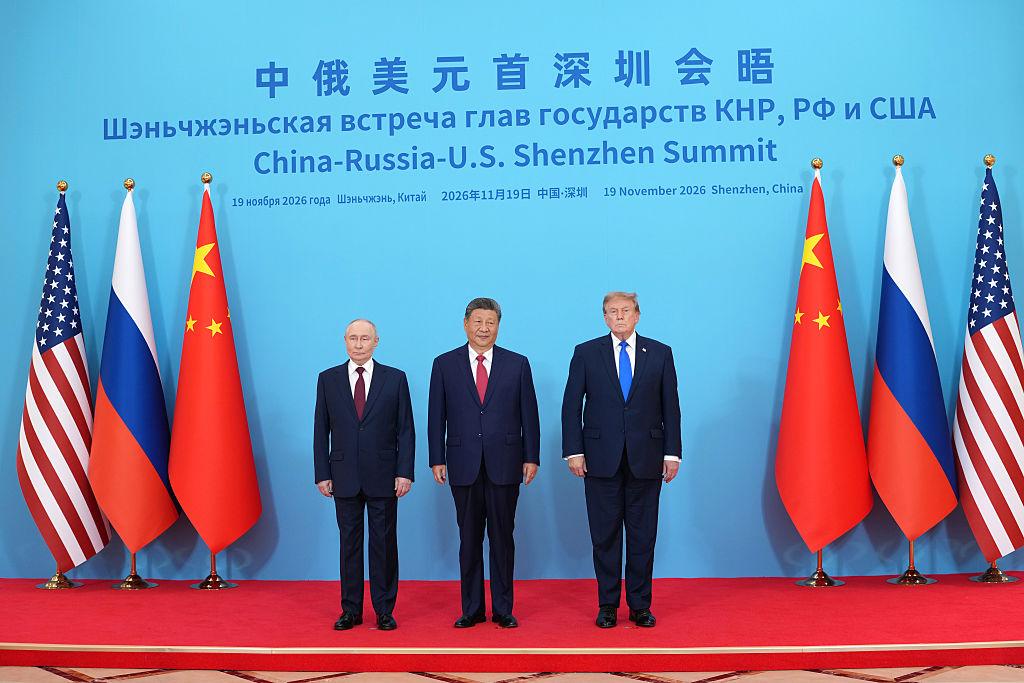
An unprecedented meeting between the leaders of the United States, China and Russia placed the future of international relations at the centre of global attention on 19 November.
Chinese President Xi Jinping hosted United States President Donald Trump and Russian President Vladimir Putin in Shenzhen, southern China, for the first face-to-face summit involving the three countries’ leaders.
The meeting was significant because the three countries occupy central positions in the international political and security system. They are permanent members of the United Nations Security Council and possess substantial military, economic and diplomatic influence.
Following the meeting, the three governments issued a joint document titled the China-Russia-US Heads of State Declaration Toward Peace.
The declaration reaffirmed that nuclear war cannot be won and must never be fought. It also committed the three countries to dialogue on reducing nuclear risks and preventing the proliferation of nuclear weapons.
Other areas identified in the declaration included United Nations reform, energy security and the importance of state sovereignty and immunity for government officials.
The leaders also expressed support for increasing the production and supply of refined petroleum products and maintaining stable energy flows.
The declaration was presented by the participating governments as a statement of common ground among three major powers whose interests frequently diverge.
However, the significance of the summit must be assessed against the issues it did not resolve.
According to Reuters’ report on the summit, the meeting produced no announced timetable for the arms-control negotiations that Washington had previously sought. There was also no major breakthrough on the war in Ukraine.
The summit nevertheless carried important diplomatic implications.
For Russia, Putin’s participation offered an opportunity to demonstrate that Moscow remains capable of engaging directly with the world’s most powerful political leaders despite Western sanctions and its continuing war against Ukraine.
For China, hosting the meeting reinforced Beijing’s ambition to position itself as a central diplomatic actor in an international system increasingly shaped by strategic competition.
For the United States, the meeting raised questions about Washington’s relationships with traditional allies and the direction of its foreign policy.
European governments have expressed concern about the possibility of being sidelined in discussions that could affect their security, particularly negotiations involving Ukraine.
The summit therefore demonstrated both the opportunities and the limitations of direct engagement between major powers.
A joint declaration can establish areas of agreement, but it does not automatically resolve disagreements over territorial sovereignty, military aggression, security guarantees or the international rules governing relations between states.
The central question is whether the Shenzhen declaration will lead to sustained diplomatic engagement or remain largely symbolic.
Its practical significance will depend on whether the three countries translate their commitments into measurable progress on nuclear risk reduction, energy cooperation and international security.
Why it matters: Decisions and agreements involving Washington, Beijing and Moscow can influence global security, international trade, energy markets and the future of diplomatic cooperation. The challenge is ensuring that discussions among powerful countries produce outcomes that also respect the interests and security of other nations.
STORY 2 — INTERNATIONAL JUSTICE: ICJ HOLDS MYANMAR RESPONSIBLE FOR GENOCIDE AGAINST THE ROHINGYA
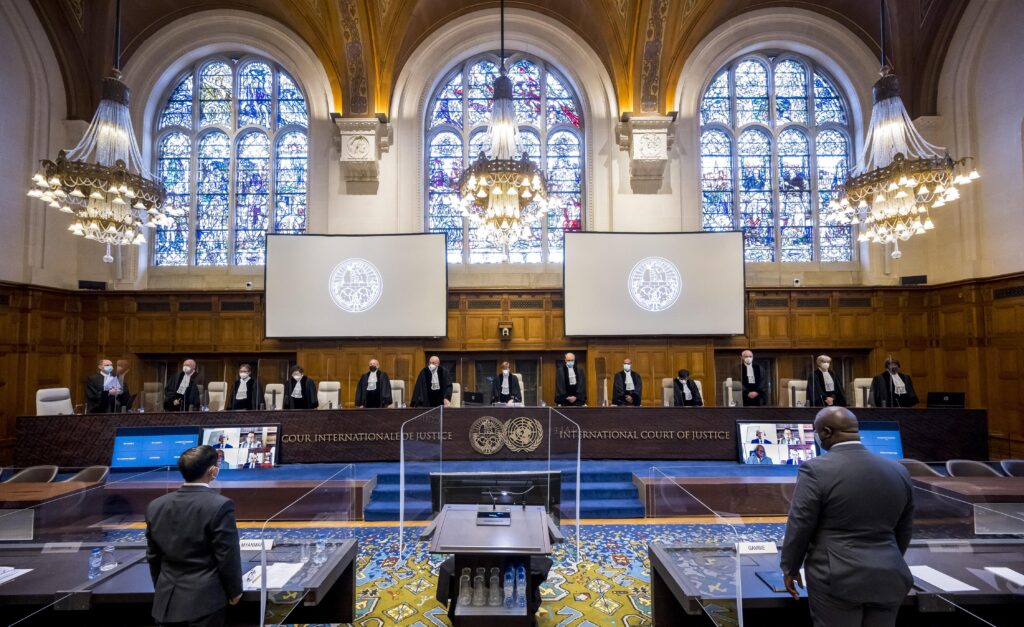
A landmark judgment by the International Court of Justice on 19 November marked a major development in the international legal response to the persecution of the Rohingya population in Myanmar.
The court ruled that Myanmar committed genocide against the Rohingya group in northern Rakhine State during the 2017 atrocities.
The judgment followed a case brought by The Gambia in November 2019 under the 1948 Convention on the Prevention and Punishment of the Crime of Genocide.
The case focused on allegations that Myanmar’s security forces committed widespread atrocities against the Rohingya Muslim minority, including killings, sexual violence and attacks on civilians.
In its judgment, the court found that Myanmar had violated its obligations under the Genocide Convention.
The ruling is particularly significant because it represents a major international judicial determination of state responsibility for genocide.
The court also addressed Myanmar’s obligation to prevent genocide, punish those responsible and provide appropriate remedies for the harm caused.
The full legal findings are contained in the International Court of Justice judgment of 19 November 2026.
The case has been closely watched by governments, international legal experts, human rights organisations and Rohingya communities because of its implications for the enforcement of international law.
The Gambia welcomed the judgment, describing it as a historic achievement for international justice.
In a statement issued on 19 November, the Gambian government called on Myanmar to comply with the judgment and urged the international community to support its implementation, as reported by The Gambia’s Office of the President.
The legal significance of the ruling extends beyond the immediate dispute between the two countries.
The Genocide Convention places obligations on states to prevent and punish genocide. The case therefore reinforces the principle that governments can be held accountable before international courts for violations of their obligations under the treaty.
However, a judgment does not automatically guarantee that victims will receive justice in practical terms.
Implementation remains a major challenge.
Myanmar must comply with the court’s decisions, while the international community faces the task of ensuring that the judgment leads to meaningful accountability and remedies for affected communities.
The court’s ruling also does not, by itself, resolve every outstanding question concerning individual criminal responsibility. Those questions may involve separate legal processes and jurisdictions.
For Rohingya survivors and displaced communities, the judgment represents an important recognition of the suffering they have endured.
But recognition is only one part of the process. The long-term questions concern accountability, compensation, safe conditions for displaced people and the possibility of a future in which the Rohingya can live without persecution.
Why it matters: The judgment strengthens the international legal framework against genocide and reinforces the principle that states must answer for violations of international obligations. Its lasting importance will depend on compliance, accountability and practical remedies for victims.
STORY 3 — COP31 CLIMATE NEGOTIATIONS: DEEP DIVISIONS OVER FOSSIL FUELS AND CLIMATE FINANCE
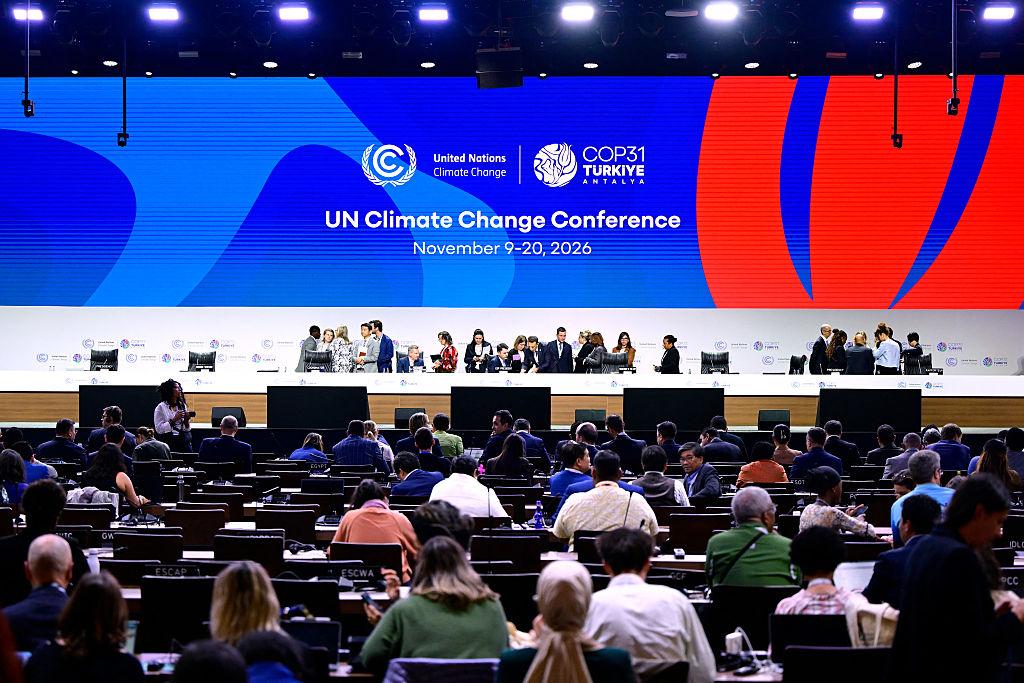
The United Nations climate negotiations at COP31 in Antalya, Türkiye, encountered serious obstacles as participating countries struggled to agree on the language and commitments required for a common climate outcome.
A revised draft agreement published on 19 November removed references to ending fossil fuel use and weakened proposals on climate finance and electrification.
The changes raised concerns among climate campaigners and countries seeking stronger commitments to reduce greenhouse gas emissions.
One particularly significant issue was the removal of a proposed target involving approximately $120 billion in adaptation finance.
Climate adaptation funding is important because many countries, especially developing and climate-vulnerable nations, face growing costs associated with floods, droughts, extreme heat, coastal erosion and other climate-related impacts.
For these countries, climate negotiations are not simply about long-term environmental targets. They are also about the financial resources required to protect communities, strengthen infrastructure and adapt to changing weather conditions.
The revised draft also removed explicit references to ending fossil fuel use.
That change became a major point of disagreement because coal, oil and gas remain central contributors to global greenhouse gas emissions.
Countries have different economic circumstances and energy requirements. Some depend heavily on fossil fuel production and exports, while others are seeking faster transitions towards renewable energy.
These differences have repeatedly complicated international climate negotiations.
According to Reuters’ coverage of the revised COP31 draft, the new text also acknowledged projections that global warming could exceed the 1.5-degree Celsius threshold established under the Paris Agreement.
The negotiations also exposed disagreements over the proposed expansion of electricity supply.
The draft included language encouraging electricity to reach 35 per cent of global energy consumption by 2035, compared with approximately 23 per cent at present.
However, the proposal was softened following concerns from developing countries about financing and implementation.
The disagreement reflects a broader problem in international climate policy: countries may agree on the need to address climate change but disagree sharply over who should pay, how quickly energy systems should change and what responsibilities should fall on developed and developing economies.
Climate campaigners criticised the weakening of the draft, arguing that removing explicit fossil-fuel language could undermine the ambition of the final agreement.
Türkiye and Australia defended the revisions, arguing that negotiators should concentrate on delivering existing commitments and achieving an outcome that can secure broad international support.
The negotiations therefore faced a difficult choice between securing a consensus agreement and maintaining sufficiently ambitious commitments.
A document accepted by nearly 200 countries may have diplomatic value, but its environmental effectiveness will depend on the strength of its commitments and the willingness of governments to implement them.
The most important issues remain unresolved: the future of fossil fuels, the financing of climate adaptation, the speed of the energy transition and the distribution of responsibilities between richer and poorer nations.
Why it matters: Climate agreements influence national energy policies, investment decisions, industrial development and the ability of vulnerable communities to respond to environmental threats. The credibility of COP31 depends not only on the final document but also on whether governments deliver measurable action.
STORY 4 — ARTIFICIAL INTELLIGENCE AND THE GLOBAL ECONOMY: ANTHROPIC’S RECORD IPO MEETS GROWING MARKET UNCERTAINTY
The artificial intelligence industry reached a major financial milestone on 19 November when Anthropic made its stock market debut in one of the largest public offerings in financial market history.
The company, which develops the Claude artificial intelligence system, raised approximately $81.3 billion through its initial public offering.
Its shares were priced at $83 each, giving the company an initial valuation of approximately $1.5 trillion.
During its first day of trading, the share price rose significantly, briefly placing the company’s market value at around $2 trillion on a fully diluted basis.
The shares later surrendered part of their early gains but closed at $97.17, approximately 17 per cent above the offering price.
The scale of the offering demonstrated the extraordinary appetite among investors for companies operating in the artificial intelligence industry.
Anthropic’s public listing also represented an important moment for the AI sector because it brought one of the leading developers of frontier AI models directly into the public markets.
The development comes amid intense competition between technology companies seeking to build more powerful AI systems, expand data-centre infrastructure and secure access to advanced computing resources.
However, the excitement surrounding Anthropic’s listing coincided with growing concerns about the sustainability of technology market valuations.
Major United States stock indexes fell during the same trading session, with the S&P 500 and Nasdaq both recording significant declines.
According to Reuters’ market report, the successful debut did not reverse the broader decline in US equities.
The market reaction highlighted an important distinction between investor enthusiasm for artificial intelligence and confidence in the wider technology sector.
Investors are increasingly examining whether the enormous capital being committed to AI infrastructure will eventually produce sustainable revenue and profits.
Questions surrounding data-centre costs, computing infrastructure, competition, energy requirements and the ability of AI companies to maintain their market positions are becoming central to the financial debate.
The economic implications extend beyond the stock market.
At the Asia-Pacific Economic Cooperation summit in Shenzhen, International Monetary Fund Managing Director Kristalina Georgieva warned that rising demand for artificial intelligence hardware and related technology products was contributing to global inflationary pressure.
She said the combined effects of energy supply shocks and AI-related demand were pushing global inflation towards 4.7 per cent and could require monetary policy tightening in several economies.
Her comments were reported by The Guardian’s coverage of the IMF warning.
The warning introduces a wider economic dimension to the AI debate.
Artificial intelligence is often discussed in terms of productivity, automation, innovation and future economic growth. But its expansion also requires substantial investment in semiconductors, electricity, data centres, networks and other infrastructure.
When demand for these resources rises faster than supply, costs can increase.
That pressure may affect businesses, consumers and governments, while central banks could face difficult decisions over interest rates and inflation management.
Georgieva also stressed the importance of preparing workers, labour markets and digital infrastructure for the rapid expansion of artificial intelligence.
The issue is particularly important for developing economies.
Countries that invest in digital infrastructure, technical education and reliable electricity may be better positioned to benefit from the technology. Those that lack these foundations risk becoming consumers of AI services without developing sufficient domestic capacity to compete in the emerging industry.
The challenge for governments is therefore not simply to adopt artificial intelligence but to create the economic conditions that allow businesses and citizens to benefit from it.
Anthropic’s market debut demonstrated the scale of financial confidence in AI. The IMF’s warning, however, highlighted the economic pressures that may accompany the technology’s rapid expansion.
Why it matters: Artificial intelligence is becoming a major driver of investment, competition and economic transformation. But its long-term contribution will depend on whether the industry can convert enormous financial commitments into sustainable productivity, employment opportunities and broadly shared economic benefits.

STORY 5 — HAITI’S SECURITY CRISIS: POLICE OPERATION KILLS 34 SUSPECTED GANG MEMBERS
A major security operation in Haiti highlighted the continuing challenge facing authorities as heavily armed gangs maintain influence over parts of the country’s capital and surrounding areas.
Haitian police said an operation conducted on 19 November in Martissant, an area south of Port-au-Prince, killed at least 34 suspected gang members.
The operation was carried out by the national police alongside a government task force.
Police reported that no officers or civilians were injured during the operation.
The targeted area has been associated with armed groups operating under the Viv Ansanm gang alliance, which has expanded its influence across parts of the country.
According to Reuters’ report on the police operation, the operation involved explosive drones and support from a private military contractor.
The Haitian security situation has deteriorated over an extended period, with armed groups controlling strategic neighbourhoods, disrupting transportation routes and threatening civilian communities.
The crisis has weakened the ability of public institutions to maintain security and provide essential services.
The United Nations has estimated that more than 2,250 people, including over 300 civilians, were killed during security operations in the first nine months of 2026.
These figures demonstrate the scale of the violence and the difficult environment in which security forces are operating.
The latest police operation represents an attempt to weaken the armed groups, but the killing of suspected gang members does not necessarily mean that the government has regained lasting control of the affected territory.
Security analysts have warned that operations which do not include a sustained plan to hold territory may fail to prevent armed groups from returning.
There are also continuing concerns about civilian protection.
Although police reported no civilian injuries in this particular operation, the use of explosive drones and heavy security tactics in densely populated communities creates risks that require careful monitoring.
The wider problem is that Haiti’s crisis cannot be resolved through security operations alone.
Long-term stability will require stronger public institutions, functioning justice systems, effective policing, economic opportunities and the restoration of basic public services.
The international community has also faced questions about how best to support Haiti without undermining national sovereignty or creating further security complications.
For residents of Port-au-Prince and surrounding communities, the central issue remains the ability to live, work and move without fear of armed violence.
Why it matters: Haiti’s security crisis demonstrates the difficulty of restoring state authority where armed groups have established territorial influence. The effectiveness of security operations must ultimately be measured by whether they make communities safer and allow public institutions to function again.

THE WORLD IN PERSPECTIVE
The five developments examined in this review reveal a world facing several interconnected tests.
The Shenzhen summit demonstrated the continuing influence of major powers and the importance of diplomacy in managing international security. But the absence of major breakthroughs on critical conflicts showed that declarations alone cannot resolve deep geopolitical disagreements.
The ICJ judgment against Myanmar reinforced the importance of international accountability, while raising the practical question of how legal decisions can translate into justice for victims.
At COP31, divisions over fossil fuels and climate finance exposed the difficulty of building a common response to a global environmental challenge.
Meanwhile, Anthropic’s record-breaking stock market debut showed the extraordinary financial momentum behind artificial intelligence, even as concerns about inflation, infrastructure costs and market valuations continued to grow.
In Haiti, the continuing struggle against armed gangs illustrated the human consequences of prolonged insecurity and weak public institutions.
These stories are different in geography and subject, but they share one central theme: the gap between global ambition and practical results.
International declarations must lead to cooperation. Legal judgments must lead to accountability. Climate agreements must produce action. Technological investment must create sustainable economic value. Security operations must make communities safer.
The world is not short of powerful institutions, ambitious plans or historic announcements. The real test is whether those institutions can deliver outcomes that improve the lives of people beyond the negotiating rooms, courtrooms, financial markets and political capitals.
This is the challenge shaping the international agenda.
About the Author