INTRODUCTION
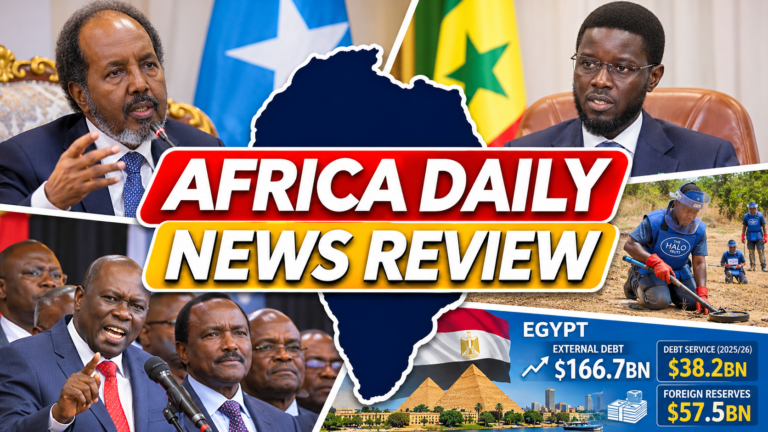
Africa news review: Africa’s political and economic landscape came under renewed scrutiny during the reporting period of 19 to 20 November 2026. This edition examines five major narratives covering diplomatic tensions, public finance, electoral preparedness, humanitarian development and economic obligations across the continent.
In the Horn of Africa, Somalia escalated its diplomatic confrontation with the United Arab Emirates, ordering the Emirati ambassador to leave the country and recalling its own envoy. In West Africa, Senegal’s political disagreement over public spending deepened after lawmakers rejected the first part of the proposed 2027 budget, raising further questions about the country’s negotiations with the International Monetary Fund.
East Africa also featured prominently, as Kenya’s Independent Electoral and Boundaries Commission warned that prolonged court cases could disrupt preparations for the August 2027 general election. Meanwhile, Zimbabwe recorded an important milestone in clearing landmines left from its liberation war, even as funding shortages threatened the completion of the programme.
The economic picture extended to North and Central Africa. Egypt reached a staff-level agreement with the IMF that could unlock approximately $2.3 billion, while the Democratic Republic of Congo certified more than $153 million in financial claims involving petroleum companies under its fuel-price stabilisation arrangements.
These developments are distinct, but they illustrate the range of responsibilities facing African governments: defending national sovereignty, managing political disagreements, protecting electoral processes, addressing the legacy of conflict and maintaining financial stability.
STORY 1 — SOMALIA-UAE DIPLOMATIC DISPUTE: MOGADISHU ESCALATES ITS SOVEREIGNTY CONFRONTATION
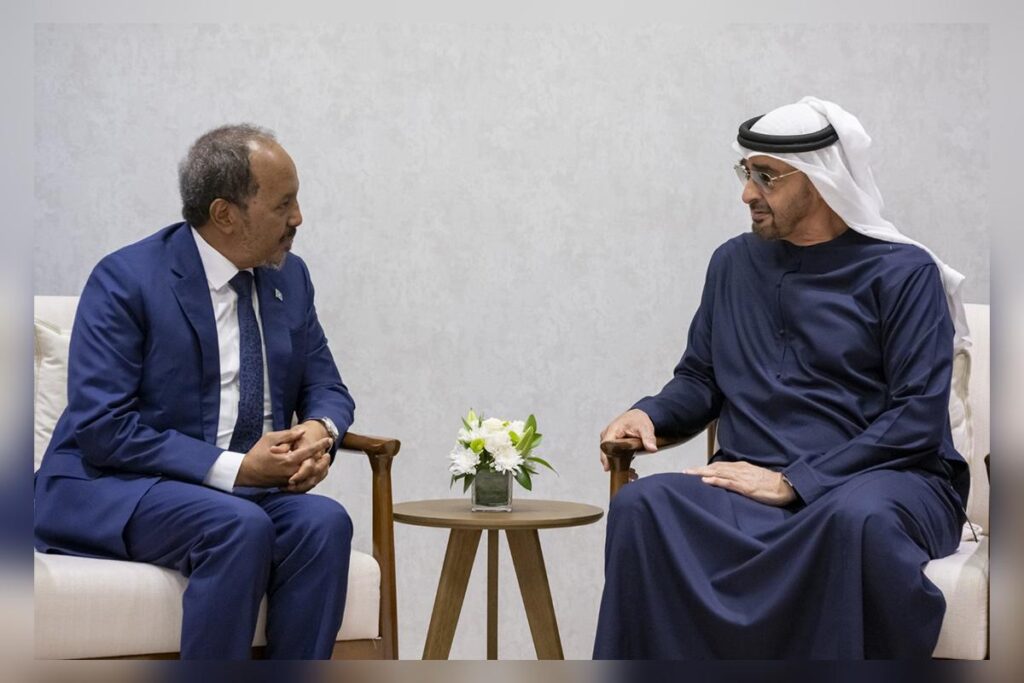
Somalia’s diplomatic confrontation with the United Arab Emirates reached another significant point on 19 November after the Somali government ordered the UAE ambassador to leave the country within 72 hours and recalled its own ambassador from Abu Dhabi for consultations, a development reported by Reuters and the Associated Press.
The decision, announced after a meeting of Somalia’s Council of Ministers in Mogadishu, represented a further deterioration in relations between the two countries. Somali officials accused the UAE of actions that threatened the country’s sovereignty, territorial integrity, national security and political unity.
The announcement was made by Information Minister Abdifatah Kasim Mohamud. The government described the alleged conduct as an infringement of Somalia’s sovereignty, with the minister using the expression “open invasion” in a statement broadcast through the state-run news agency.
The diplomatic measures followed comments by President Hassan Sheikh Mohamud, who had accused the UAE of providing political and economic support to regional administrations in ways that undermined the authority of the federal government.
The dispute is particularly sensitive because Somalia’s federal structure has long been affected by disagreements over the distribution of political authority between Mogadishu and regional administrations.
The dispute goes beyond diplomatic representation
The disagreement has roots in a series of earlier developments involving security cooperation, commercial interests and strategic infrastructure.
In January 2026, Somalia announced that it was ending agreements with the UAE, including arrangements covering ports, defence and security cooperation. The federal government argued that the agreements raised questions about national sovereignty.
However, three Somali regional administrations with close relationships with the UAE rejected Mogadishu’s decision, disputing the federal government’s authority to cancel agreements involving their territories.
The UAE has developed economic and security relationships across the Horn of Africa. Its involvement has included support for military training, security arrangements and investments in ports and coastal infrastructure.
According to Reuters, the UAE had previously trained hundreds of Somali troops between 2014 and 2018 and continued to provide financial and logistical support for some Somali security personnel. It also maintained relationships with regional governments and committed substantial resources to commercial and military infrastructure.
These relationships have become part of the wider disagreement over the balance of authority between Somalia’s federal government and its constituent regions.
UAE rejects Somalia’s accusations
The UAE rejected the Somali government’s allegations, describing its approach as escalatory and hostile.
Its foreign ministry said the Somali government was attempting to draw the Emirates into internal political disputes. The UAE also stated that it had closed its embassy in Mogadishu and withdrawn its diplomatic personnel in January 2026 following what it described as hostile actions by Somalia, including the cancellation of bilateral agreements.
This creates an important distinction in the diplomatic situation: Somalia announced a new order requiring the UAE ambassador to leave within 72 hours, while the UAE said it had already withdrawn its diplomatic staff months earlier.
The two governments therefore presented sharply different accounts of the dispute and its origins.
The allegations of interference made by Somalia have not, in the reporting covered here, been independently established as a legal finding against the UAE. The UAE’s rejection of those allegations must also be distinguished from the documented existence of its relationships with regional Somali administrations.
The diplomatic confrontation is taking place against a difficult domestic political background. Somalia continues to face security challenges, disagreements over federal authority and disputes surrounding its political transition.
For the Somali government, the issue is not simply the presence of a foreign diplomatic mission. It concerns the extent to which foreign governments can maintain direct political, security and commercial relationships with regional administrations without the agreement of the federal authorities.
For the UAE, the dispute raises questions about the future of its established economic and security relationships in the Horn of Africa.
The immediate diplomatic development is the order to expel the ambassador and recall Somalia’s envoy. The wider question is whether the two countries can establish a new basis for relations without further weakening cooperation in areas where both have maintained important interests.
STORY 2 — SENEGAL IMF DEAL: BUDGET REJECTION DEEPENS POLITICAL AND ECONOMIC CRISIS
Senegal’s continuing fiscal difficulties entered another critical phase after parliament rejected the first part of the proposed 2027 budget, deepening a political confrontation that could complicate the country’s efforts to secure a proposed $2.2 billion International Monetary Fund lending programme.
The parliamentary decision, taken on Wednesday, 18 November and reported by Reuters on 19 November, concerned the first section of the 2027 budget bill. It contained forecasts for government revenue, debt and public spending.
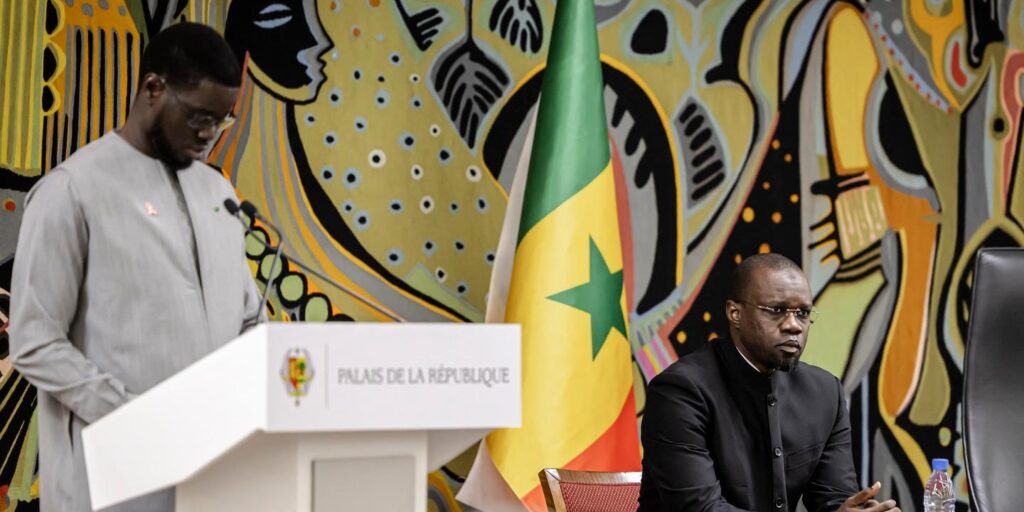
The rejection extended a disagreement between President Bassirou Diomaye Faye and his former prime minister, Ousmane Sonko, who now heads the National Assembly.
The dispute has become increasingly significant because Senegal’s ability to establish an agreed budget framework is closely connected to its negotiations with the IMF.
A budget dispute with wider consequences
The rejection of the 2027 budget did not occur in isolation.
Earlier in November, lawmakers had also voted against an amended 2026 budget bill. A parliamentary committee subsequently argued that the rejection undermined the assumptions on which the government’s 2027 budget proposal had been prepared.
The latest vote therefore extended an existing disagreement over the government’s fiscal direction.
Finance Minister Cheikh Diba warned lawmakers that failure to approve the 2027 budget could result in delays or funding constraints affecting social protection programmes and investment projects.
Those concerns are significant because government budgets determine how public resources are allocated across competing priorities, including social services, infrastructure, development projects and public administration.
When the approval process becomes uncertain, ministries and public institutions may face difficulties planning expenditure and implementing programmes within established timelines.
Following the rejection of the first part of the bill, Sonko indicated that there was no need to proceed with a vote on the second part.
His Pastef party controls the National Assembly and opposes the budget proposals in their current form.
The IMF programme remains a central concern
Senegal’s budget disagreement has consequences beyond the country’s domestic political environment.
The government is pursuing a proposed three-year IMF lending programme worth approximately $2.2 billion. The agreement reached at staff level in September 2026 is intended to support Senegal’s efforts to address its debt burden and strengthen public finances.
However, the programme still requires the necessary institutional approvals and policy commitments.
The IMF has emphasised the importance of implementing the agreed measures, including the completion of a credible budget framework.
The current political disagreement therefore creates uncertainty around the government’s ability to meet the conditions associated with the proposed financing.
Senegal’s financial difficulties became more pronounced in 2024 after authorities discovered that the previous administration had misreported public debt. Analysts have estimated the undisclosed debt at approximately $13 billion.
The discovery altered the country’s assessment of its public finances and raised questions about the accuracy of previous government borrowing disclosures.
It also increased pressure on the current administration to establish more credible fiscal reporting, strengthen debt management and restore confidence among international financial institutions and investors.
President Faye turns to a decree
A further development occurred on 19 November when President Faye said he would implement changes to the 2026 budget by decree after parliament rejected the revised budget, a move detailed in Reuters’ report on the presidential decree.
His office said the president had acted in his capacity as guardian of the Constitution and the proper functioning of the state.
The decision introduced another dimension to the disagreement between the presidency and parliament.
It also raised questions about the constitutional and political implications of using a decree to implement budget changes rejected by lawmakers.
The action should be understood separately from the rejection of the 2027 budget. One concerns the implementation of changes to the 2026 budget, while the other concerns the parliamentary process for the following year’s spending framework.
The economic consequences remain important. Senegal needs a functioning budget framework to manage public expenditure, address debt obligations and support its development priorities.
For ordinary citizens, the outcome could affect the timing and financing of public programmes. For businesses and investors, prolonged uncertainty over fiscal policy may complicate decisions involving government contracts, investment and economic planning.
The central challenge is now how the government resolves the disagreement while maintaining the fiscal commitments required for the IMF programme.
The rejection of the budget does not automatically mean the IMF programme has been cancelled. However, it creates a significant obstacle that the authorities will need to address.
STORY 3 — KENYA 2027 ELECTIONS: IEBC WARNS LEGAL DISPUTES COULD DISRUPT PREPARATIONS
Kenya’s preparations for the August 2027 general election came under renewed scrutiny after the Independent Electoral and Boundaries Commission warned that prolonged court cases challenging its operations could disrupt its ability to organise the polls, as reported by The Standard.
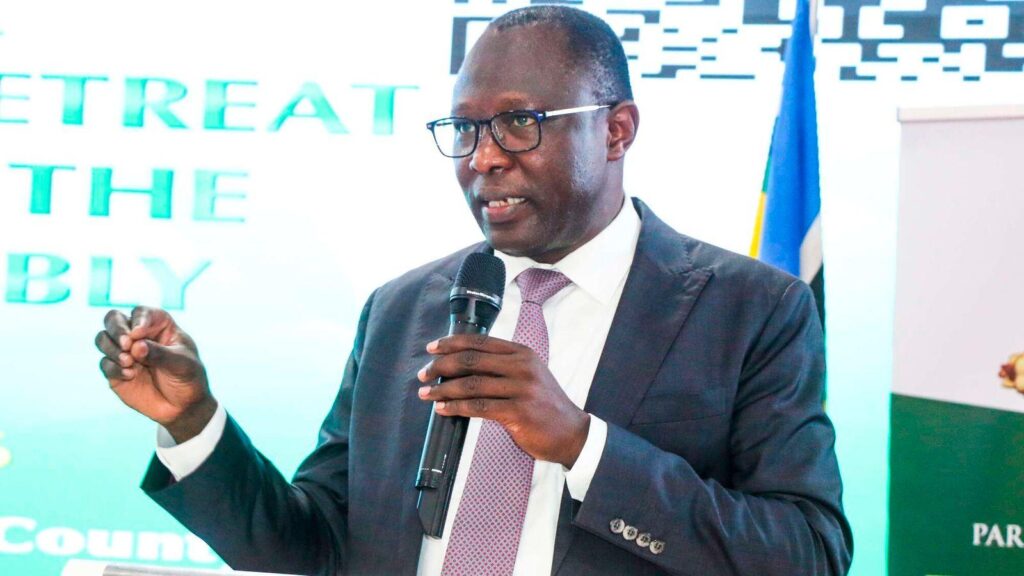
IEBC Chairperson Erastus Ethekon raised the concern during a consultative meeting with political party leaders and other stakeholders in Nairobi on 19 November.
The commission said delays in resolving legal disputes could affect procurement of essential election materials and technology. These include equipment required for mass voter registration, as well as ballot papers and other election-related supplies.
The warning comes as the electoral body works within a constitutional timetable that leaves limited room for delays.
Court cases and election procurement
According to Ethekon, the commission needs sufficient time to procure, configure, test and deploy biometric voter registration equipment across the country.
The process involves more than purchasing equipment. The kits must be prepared with the appropriate software, tested and distributed before they can be used in a nationwide registration exercise.
If procurement is delayed by court proceedings, the commission could face difficulties completing these stages before the next election.
The IEBC chairperson also identified the procurement of ballot papers and election technology as areas requiring timely decisions.
He urged the Judiciary and other institutions handling cases involving the commission to resolve relevant matters without unnecessary delays.
His warning was based on the relationship between legal certainty and the operational requirements of election administration. The commission must comply with court decisions, but it also has to prepare for an election date established by the Constitution.
The concern is therefore not simply whether the IEBC has begun preparations. It is whether the legal and administrative conditions will allow it to complete the necessary work within the available time.
Opposition leaders walk out of consultations
The consultative meeting also exposed disagreements between the electoral commission and opposition political leaders.
According to The Standard’s report, several opposition figures walked out of the meeting after objecting to the agenda presented by the IEBC.
Among those reported to have led the walkout were former Deputy President Rigathi Gachagua, Wiper Party leader Kalonzo Musyoka and Nairobi Senator Edwin Sifuna.
The opposition leaders argued that the meeting had not adequately addressed their concerns about electoral reforms and the conditions they considered necessary for credible elections.
The IEBC subsequently issued an official statement explaining its account of the meeting.
The commission said it had adjusted the programme to accommodate the opposition’s request to change the starting time. It also said the leaders left after making preliminary remarks and presenting their demands, before the commission could deliver its presentation on preparations for the 2027 polls.
The IEBC argued that the departure prevented the leaders from receiving its detailed account of the work already undertaken and the challenges facing the commission.
It also maintained that political parties have a legitimate role in raising concerns and proposing reforms. The commission said it remained willing to receive formal submissions and engage with stakeholders.
The disagreement therefore involves two distinct positions. Opposition leaders say their concerns were not adequately addressed by the meeting’s agenda, while the IEBC says they left before substantive discussions could take place.
Neither account should be treated as a substitute for the other.
The importance of public confidence
Kenya’s 2027 election is scheduled for August, making the remaining preparation period important for the electoral commission, political parties and voters.
The IEBC’s responsibilities include organising voter registration, procuring election materials, preparing technology systems and ensuring that the electoral process complies with constitutional requirements.
The credibility of an election depends not only on voting day itself but also on the preparations and safeguards established before the polls.
Political parties need confidence that the commission is operating fairly. Voters need assurance that registration and voting arrangements will be accessible, transparent and reliable.
The commission’s official statement reaffirmed its commitment to free, fair, credible, transparent, inclusive and peaceful elections. It also referred to the constitutional principles governing electoral administration and the commission’s independence.
However, public confidence cannot be secured through statements alone. It depends on sustained engagement, timely decisions, transparent procurement and the ability to demonstrate progress.
The next important issue is whether the IEBC and political stakeholders can maintain meaningful consultations while allowing the commission to carry out its constitutional responsibilities.
The legal cases facing the commission also remain relevant. Their resolution will be important in determining whether the electoral timetable can be maintained without disruption.
STORY 4 — ZIMBABWE’S LANDMINE CLEARANCE MILESTONE FACES A FUNDING CHALLENGE
Zimbabwe has reached an important milestone in its long-running effort to remove landmines left from the country’s liberation war, but the organisation leading much of the clearance work has warned that funding shortages could threaten the target of making the country mine-free by 2030.
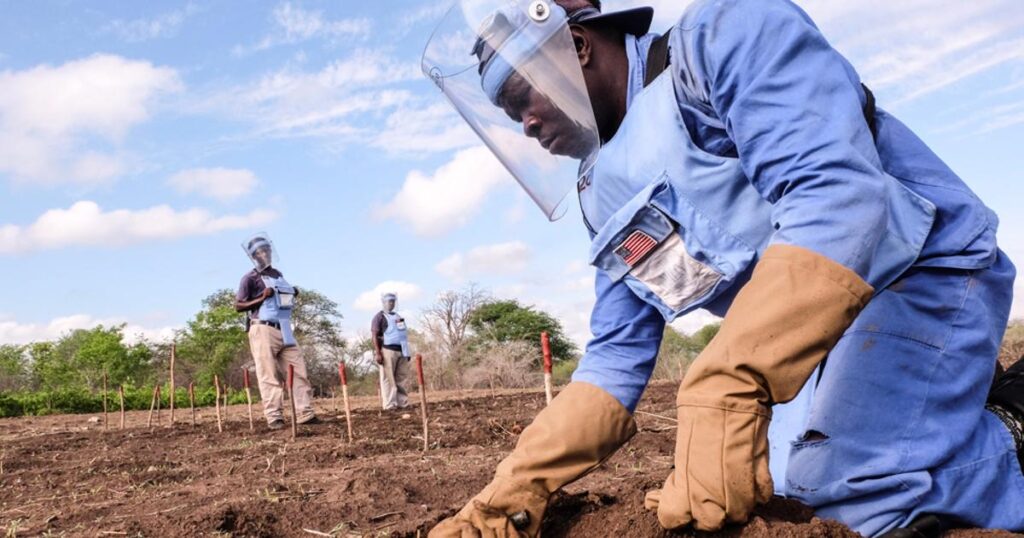
The HALO Trust announced on 19 November that its teams had destroyed 250,000 landmines in Zimbabwe since 2013, a milestone detailed in the organisation’s announcement.
The achievement represents more than a decade of work in areas affected by explosive devices laid during the liberation war of the 1970s.
The landmines were placed along Zimbabwe’s borders with Mozambique and Zambia. Their continued presence has restricted access to land, endangered people and livestock, and affected the ability of communities to use agricultural and public spaces safely.
A legacy of conflict remains
The landmine problem is one of the enduring consequences of Zimbabwe’s liberation struggle.
Although the country gained independence in 1980, explosive devices remained in several areas, creating risks for communities living near the affected border regions.
According to the HALO Trust, landmines have killed or injured more than 1,500 people and affected approximately 120,000 cattle since independence.
The organisation has concentrated much of its work in the north-eastern districts of Rushinga and Mount Darwin.
The clearance process is important because contaminated land cannot be used safely for normal economic and community activities. Farmers may be unable to cultivate certain areas, families may face risks when grazing livestock, and residents may be restricted from accessing water sources, schools, clinics and markets.
The removal of explosive devices therefore has implications beyond physical safety. It can help restore the use of land, improve local economic activity and reconnect communities with essential services.
The human and economic benefits
The HALO Trust said its work in Rushinga has directly benefited more than 14,000 residents.
The organisation reported that clearance has allowed families to reclaim farmland, graze livestock, grow cash crops and access water sources and public facilities more safely.
It also highlighted the economic consequences of landmine incidents for rural households. In one example cited by the organisation, losing a single cow to a landmine can cost a family the equivalent of six months of school fees.
In Mount Darwin, HALO reported that it handed over an entire district as landmine-free in 2021.
The organisation said deaths and injuries from explosives in the district fell to zero following clearance. It also reported that incomes rose by 90 per cent for nearly a third of local farmers, while land-owning families in six communities increased by more than 80 per cent.
These figures are based on the organisation’s account of its programme and should be understood in that context. They nevertheless illustrate the potential benefits of restoring access to previously contaminated land.
The programme has also created employment opportunities. HALO said it employs local residents and trains women to work as deminers, providing income in communities where employment opportunities can be limited.
Funding cuts threaten the 2030 target
Despite the milestone, the organisation warned that international aid cuts could slow the remaining work.
HALO estimated that only four per cent of Zimbabwe’s landmine-contaminated areas remained to be cleared. It said approximately $6.5 million in donations would be required to complete the work by the end of the decade, a funding shortfall also highlighted by Africanews.
The estimate places the remaining challenge in perspective. Zimbabwe has made substantial progress, but the final stages of clearance still require funding, equipment, trained personnel and sustained operational support.
HALO said it was using drones, advanced detection equipment and small excavators to improve the speed and safety of its operations.
However, technology cannot replace the financial resources needed to maintain teams, conduct field operations and complete the remaining clearance work.
The warning also illustrates a wider challenge facing humanitarian programmes that depend on international funding. A reduction in donor support can affect projects whose benefits extend beyond the immediate period of funding.
For communities in Zimbabwe, the consequences of incomplete clearance are practical and immediate. Land that remains contaminated cannot be treated as safe simply because most of the surrounding area has been cleared.
The 2030 target is therefore more than a national development ambition. It is a deadline connected to public safety, agricultural activity and the ability of communities to use their land without the threat of hidden explosives.
The 250,000-landmine milestone is a significant achievement. The next challenge is ensuring that the remaining work is not delayed by a shortage of financial support.
STORY 5 — EGYPT’S DEBT PRESSURES AND DR CONGO’S OIL-SECTOR LIABILITIES
Financial developments in Egypt and the Democratic Republic of Congo brought different aspects of public finance and economic management into focus during the reporting period.
In Egypt, a staff-level agreement with the International Monetary Fund could unlock approximately $2.3 billion in financing as the country’s existing loan programme approaches its scheduled conclusion, as reported by The National and Ahram Online.
In DR Congo, the government certified more than $153 million in claims involving petroleum companies under the country’s fuel-price stabilisation arrangements.
Although the two developments concern different financial systems and policy arrangements, both highlight the importance of managing public obligations while maintaining economic stability.
Egypt reaches an agreement with the IMF
Egypt reached a staff-level agreement with the IMF on the eighth and final review of its $8 billion Extended Fund Facility programme and the third review under its Resilience and Sustainability Facility.
The agreement could release approximately $2.3 billion, subject to approval by the IMF Executive Board.
The proposed financing comprises approximately $1.5 billion under the Extended Fund Facility and up to $800 million under the Resilience and Sustainability Facility.
If approved, the disbursements would bring the total amount released under the two arrangements to approximately $9.6 billion.
The agreement represents an important stage in Egypt’s ongoing economic reform programme, which was designed to strengthen macroeconomic stability, improve foreign currency reserves, reinforce public finances and encourage a greater role for the private sector.
The Extended Fund Facility was initially approved in December 2022 and expanded to $8 billion in March 2024.
The programme has been extended to conclude in December 2026, with both arrangements scheduled to expire on 15 December.
The agreement reached at staff level is therefore significant, but it should not be confused with the actual release of funds. Executive Board approval remains necessary before the proposed disbursements can be made.
Economic growth improves, but debt remains a vulnerability
Egypt’s economic performance has shown signs of improvement.
According to the IMF figures reported during the period, the country’s real economic growth reached 5.1 per cent in the 2025–2026 financial year.
The IMF attributed the performance to a recovery in Suez Canal and petroleum-related activity, alongside continued strength in manufacturing, tourism and communications.
Annual urban inflation also slowed to 12.7 per cent in October from 13.9 per cent in September, according to the Central Bank of Egypt.
However, the IMF warned that high debt and financing requirements remained major vulnerabilities.
The fund called for stronger efforts to reduce reliance on short-term borrowing and improve the country’s debt-management position.
Short-term borrowing can create refinancing pressure because governments must repeatedly replace maturing obligations. When financing conditions become less favourable, the cost of meeting those obligations can increase.
The IMF also emphasised the importance of exchange-rate flexibility as a way of responding to external economic shocks.
Egypt’s government has committed to achieving a primary budget surplus of five per cent of gross domestic product in the 2026–2027 financial year. A primary surplus measures government revenue against expenditure before interest payments on debt are included.
The IMF also called for fuel-price adjustments that reflect costs while recommending targeted social support to protect vulnerable households.
These recommendations illustrate the challenge facing the Egyptian authorities: maintaining financial discipline without ignoring the effects of economic adjustment on households.
President Abdel Fattah El Sisi has indicated that Egypt does not intend to seek a new IMF financing arrangement after the current programme ends. He has directed officials to prepare a national programme for the period 2027 to 2030, which was expected to be announced in December.
The transition will be important in determining how Egypt intends to sustain reforms and manage its financial obligations after the current IMF arrangements expire.
DR Congo certifies $153.95 million in petroleum-sector claims
In Central Africa, the Democratic Republic of Congo certified $153.95 million in losses and shortfalls claimed by petroleum companies for the third quarter of 2026, according to Actualite.cd’s report on the certification.
The certification followed meetings held on 17 and 18 November by the country’s Petroleum Products Price Monitoring Committee, known by its French acronym, CSPPP.
The assessment covered the country’s four petroleum supply zones: South, East, West and North.
The committee validated approximately $14.50 million for the southern zone and $139.45 million for the western and northern zones combined. The total certified amount was $153,951,330.09.
The claims relate to the government’s fuel-price stabilisation policy.
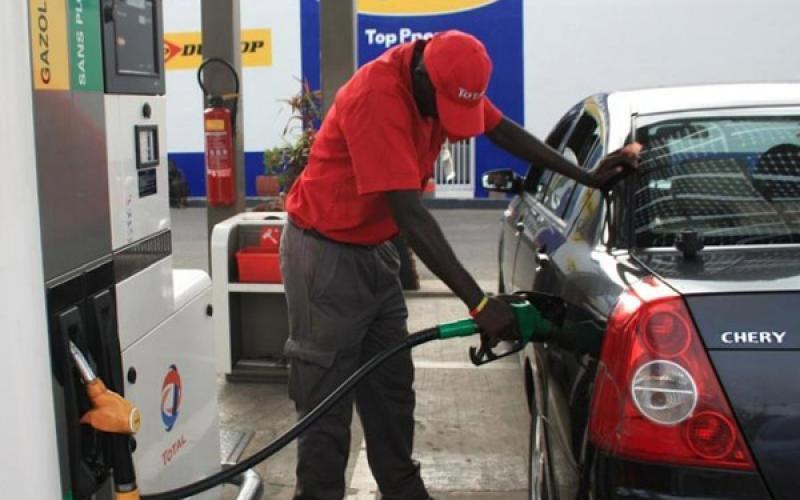
When international petroleum prices rise, a government that maintains regulated pump prices may create a gap between the cost of supplying petroleum products and the prices paid by consumers.
Under such arrangements, petroleum companies may accumulate claims for the difference between their costs and the regulated prices.
The Congolese government said it had maintained the price-stabilisation policy in response to international market pressures, with the stated objective of protecting household purchasing power and limiting the impact of higher petroleum costs on the domestic economy.
Vice-Prime Minister and Minister of National Economy Daniel Mukoko Samba said the government intended to pay the certified claims as soon as possible and provide advances for the fourth quarter of 2026.
The stated purpose is to support the financial position of petroleum operators, maintain their activities and protect the continuity of domestic supply.
The certification is an important development, but it is necessary to distinguish between claims that have been assessed and payments that have actually been made.
The government has announced its intention to settle the certified amounts. The announcement does not, by itself, establish that the payments have already been completed.
Different financial pressures, a common need for fiscal discipline
Egypt’s IMF agreement and DR Congo’s petroleum-sector claims should not be treated as the same type of debt.
Egypt’s development concerns sovereign financing, public borrowing, debt sustainability and the conditions attached to an international lending programme.
DR Congo’s certified amount concerns financial claims by petroleum companies arising from the government’s price-stabilisation arrangements.
Nevertheless, both developments highlight the need for governments to manage public financial commitments while maintaining essential economic activities.
For Egypt, the central issue is whether the country can sustain economic reforms, reduce its financing vulnerabilities and maintain growth after the current IMF programme concludes.
For DR Congo, the immediate concern is whether certified petroleum-sector claims will be paid in a timely manner while the government maintains its fuel-price policy and protects the domestic supply chain.
The outcomes will have different consequences for households, businesses and public institutions. But both cases demonstrate why the management of public obligations matters to economic confidence.
CONCLUSION
The developments examined in this Africa news review reveal the different pressures confronting governments across the continent.
Somalia’s diplomatic confrontation with the UAE has brought questions of sovereignty, federal authority and regional influence into sharper focus. Senegal’s budget dispute has exposed the difficulty of managing public finances when political disagreements threaten the policy framework required for international financial support.
In Kenya, the electoral commission’s warning has highlighted the importance of resolving legal disputes and maintaining timely preparations ahead of the 2027 general election. Zimbabwe’s landmine-clearance milestone demonstrates the human and economic benefits of long-term development work, while also showing how funding shortages can threaten progress close to completion.
Egypt and DR Congo, meanwhile, face different financial challenges involving sovereign debt, IMF-supported reforms and obligations arising from petroleum-price stabilisation.
These stories do not represent one common crisis. They demonstrate different national circumstances and different institutional responsibilities.
The wider lesson is that progress depends not only on policy announcements or political commitments, but on implementation, financial discipline, public accountability and the ability of institutions to deliver results.
For Africa, the coming months will provide further tests of whether governments can turn decisions and development plans into outcomes that strengthen public confidence and improve the lives of their citizens.
About the Author