Lagos Building Collapse Triggers Massive Rescue Operation
The Lagos Building Collapse that claimed the lives of nine people in the Alakija area of Lagos State has once again drawn attention to a question that extends beyond the immediate rescue operation: why do fatal building collapses continue to occur despite repeated warnings, regulations and previous disasters?
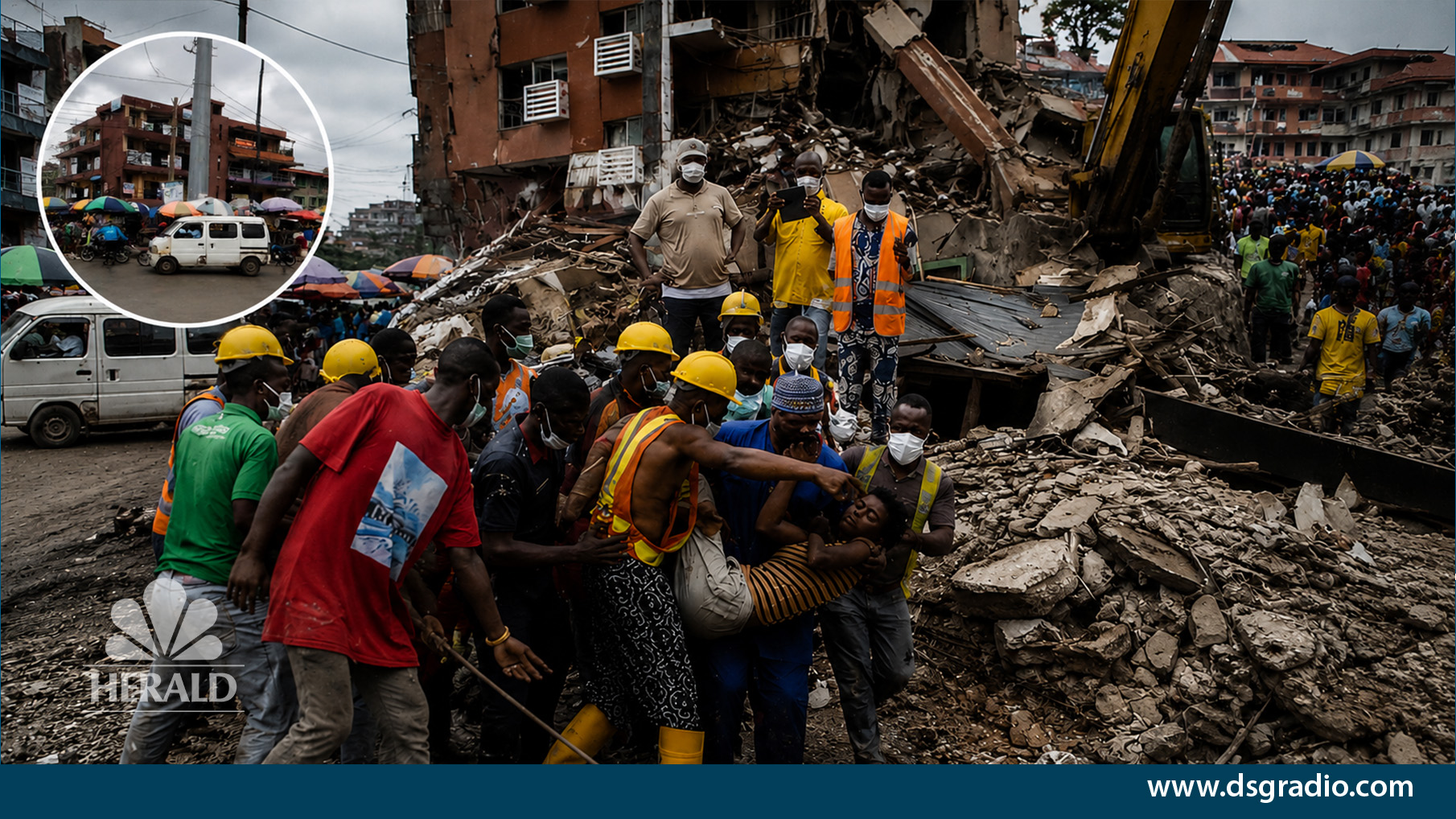
The three-storey residential building, located on Old Ojo Road near Alakija Bus Stop in Satellite Town, collapsed at about 11:37 a.m. on Thursday, June 25, 2026, trapping residents beneath the rubble. Emergency responders recovered nine bodies, including that of a baby girl, while rescuing 27 survivors who sustained varying degrees of injuries and were taken to government hospitals for treatment.
While rescue operations became the immediate priority, preliminary findings from emergency officials indicate that structural defects may have played a significant role in the disaster. Residents also alleged that visible warning signs—including shaking staircases observed days before the collapse—were not acted upon before tragedy struck.
Those developments have shifted public attention from the immediate loss of life to broader concerns over structural safety, regulatory compliance and the effectiveness of building oversight in one of Africa’s fastest-growing cities.
The Lagos Building Collapse has become one of the most closely watched infrastructure disasters in Nigeria this year, renewing calls for stronger enforcement of building safety regulations.
Lagos Building Collapse Triggers Massive Multi-Agency Rescue Operation
Within minutes of the collapse, emergency response agencies mobilised personnel and equipment to the disaster scene.
The Lagos State Emergency Management Agency (LASEMA) coordinated rescue efforts alongside the National Emergency Management Agency (NEMA), while the Lagos State Fire and Rescue Service, the Nigeria Police Force and the Federal Road Safety Corps (FRSC) secured the area and assisted in search operations.
Heavy-duty excavators were deployed to remove large sections of concrete as rescue workers searched for trapped occupants.
Authorities confirmed that the affected building housed several families and traders, increasing fears that the casualty figure could have been higher if the collapse had occurred at another time of day.
Emergency officials eventually confirmed:
- Nine fatalities.
- Twenty-seven people rescued alive.
- Several injured victims transferred to government hospitals.
- Continuous debris removal to ensure no victims remained trapped.
Officials also advised motorists to avoid the Alakija corridor along the Lagos-Badagry Expressway to allow emergency vehicles unrestricted access to the disaster site.
According to reports from The Guardian Nigeriaand Punch, emergency officials attributed the incident primarily to structural failure while investigations continued into the circumstances surrounding the collapse.
Although search operations have concluded, authorities have indicated that further engineering assessments will determine the full causes of the incident.
Structural Failure Emerges as Early Focus of Investigation
Initial assessments from emergency management authorities point toward compromised structural integrity.
According to Mohammed Olatunde, Head of Operations for NEMA in Lagos, preliminary investigations suggested that structural defects significantly contributed to the collapse.
Officials have not yet released a comprehensive engineering report detailing the precise technical failures responsible.
However, eyewitness accounts from residents have added another troubling dimension.
Several people living within the neighbourhood reportedly claimed that parts of the building had exhibited visible signs of distress before the collapse.
Among the concerns repeatedly mentioned were:
- Staircases shaking during use.
- Observable movement within parts of the structure.
- Fears expressed by occupants shortly before the incident.
These claims have attracted widespread public attention because they suggest that warning indicators may have existed before the building gave way.
At the time of publication, it remains unclear whether these concerns were formally reported to relevant regulatory authorities or whether any inspection had been conducted before the collapse. Those details were not specified in the original reports.
Investigators hope the Lagos Building Collapse will provide important lessons that can help prevent similar structural failures across Lagos and other rapidly growing Nigerian cities.
Why Warning Signs Matter
Structural engineers often describe buildings as systems that rarely fail without exhibiting some form of distress beforehand.
Warning indicators may include:
- Deep structural cracks.
- Uneven settlement.
- Deflecting floors.
- Vibrating staircases.
- Buckling columns.
- Water infiltration affecting reinforcement.
- Noticeable movement during occupancy.
While not every crack or vibration necessarily signals imminent collapse, persistent structural movement usually requires urgent professional inspection.
The reported claims that staircases had begun shaking before the Alakija incident therefore raise important questions regarding public awareness of structural risks and the speed with which suspected defects are investigated.
Without an official engineering report, however, it would be premature to conclude precisely how those reported warning signs related to the eventual collapse.
Lagos’ Long-Running Building Safety Challenge
The Lagos Building Collapse has revived an uncomfortable reality that extends far beyond a single neighbourhood.
Lagos remains Nigeria’s commercial capital and one of the world’s fastest-growing megacities.
Rapid urbanisation has fuelled enormous demand for housing, commercial developments and mixed-use properties.
That growth has transformed the city’s skyline but has also increased pressure on planning authorities, developers, engineers and regulatory agencies responsible for ensuring construction quality.
Over the years, Lagos has witnessed numerous building collapse incidents involving residential, commercial and institutional structures.
Each incident has generated renewed calls for:
- Stronger building inspections.
- Compliance with approved designs.
- Improved construction supervision.
- Accountability for developers.
- Enforcement against illegal construction.
- Routine structural integrity testing.
Yet similar tragedies continue to occur.
Urban development experts have repeatedly argued that sustainable city growth depends not only on constructing more buildings but also on ensuring that existing structures remain safe throughout their lifespan.
The Alakija tragedy therefore represents not only a humanitarian disaster but also another test of the effectiveness of Nigeria’s building regulation framework.
The Lagos Building Collapse is the latest reminder that rapid urban development must be matched by rigorous engineering oversight and regular structural inspections.
Heavy Rainfall Adds Operational Challenges
Emergency responders also faced adverse weather conditions during rescue efforts.
Officials noted that prolonged rainfall complicated debris removal operations and increased the risks associated with searching unstable structures.
Rainfall presents several operational difficulties after a structural collapse.
These include:
- Reduced visibility.
- Increased soil instability.
- Water accumulation beneath debris.
- Greater danger of secondary collapses.
- Slower deployment of heavy equipment.
Although officials mentioned rainfall as one of the operational challenges, they have not concluded that weather alone caused the collapse.
Instead, emergency authorities have continued to emphasise structural failure as the primary focus of ongoing investigations.
That distinction is important because poor weather may accelerate the failure of already weakened structures without necessarily serving as the original cause.
Accountability Beyond Rescue Operations
For many observers, rescue operations represent only the first phase of responding to a building collapse.
The more difficult phase begins afterward.
Questions likely to shape public discussion include:
- Was the building properly approved?
- Were construction standards followed?
- Had previous inspections identified defects?
- Were occupants aware of any official safety warnings?
- Did regulators receive complaints before the collapse?
- Could earlier intervention have prevented fatalities?
At present, official investigations remain ongoing.
Authorities have not publicly released findings addressing those questions.
Until such findings become available, conclusions regarding legal responsibility remain premature.
Nevertheless, the incident has intensified calls for greater transparency once investigations are completed.
Public confidence in regulatory institutions often depends not only on emergency response but also on whether lessons from disasters lead to meaningful policy changes.
For many Lagos residents, the Alakija collapse has become another reminder that building safety extends beyond engineering calculations—it directly affects families, livelihoods and public trust in urban governance.
Lagos Building Collapse and the Cost of Weak Enforcement
The Lagos Building Collapse has once again highlighted a recurring concern raised by engineers, urban planners and public policy analysts: Nigeria has building regulations, but enforcement remains one of the greatest challenges.
Across rapidly growing cities, compliance with approved building plans, material specifications and structural inspections is intended to reduce the risk of catastrophic failures. However, effective enforcement depends on regular inspections, professional supervision during construction, and prompt action when defects are reported.
While authorities have not concluded their investigation into the Alakija collapse, the tragedy has renewed public debate about whether warning signs in distressed buildings receive adequate attention before lives are placed at risk.
For many residents, the issue is no longer simply how buildings collapse, but whether some collapses could have been prevented through earlier intervention.
Urban Growth Brings New Infrastructure Pressures
Lagos is one of Africa’s largest economic centres, attracting thousands of new residents every week in search of employment and business opportunities.
That population growth has driven enormous demand for:
- Residential housing
- Commercial properties
- Mixed-use developments
- Rental accommodation
- Informal housing expansion
Rapid development creates economic opportunities but also increases pressure on planning authorities responsible for monitoring thousands of structures spread across the metropolis.
Urban planners have long argued that rapidly expanding cities require equally robust inspection systems, adequate staffing and modern technologies capable of identifying unsafe buildings before disasters occur.
As cities become denser, the consequences of structural failure become even greater because more lives and businesses are concentrated within smaller urban spaces.
The debate over stronger institutions also extends to security and governance. Read also: State Police in Nigeria Moves Closer to Reality.
The Human Cost Extends Beyond Casualty Figures
Official statistics confirmed nine fatalities and twenty-seven survivors.
Yet the true impact of the disaster reaches much further.
Families have lost loved ones.
Children have lost parents.
Businesses operating within or around the building face uncertain futures.
Neighbouring residents continue to deal with emotional trauma after witnessing rescue workers search through concrete debris for survivors.
For many of those rescued alive, recovery may involve weeks or months of medical treatment, financial hardship and psychological support.
Such disasters often leave lasting emotional scars on entire communities even after physical debris has been cleared.
Economic Consequences of Building Failures
Building collapses also impose significant economic costs.
Beyond the immediate loss of life, affected communities frequently experience:
- Loss of homes and personal property.
- Business interruption.
- Increased healthcare costs.
- Emergency response expenditure.
- Insurance claims where applicable.
- Reduced investor confidence.
- Higher reconstruction expenses.
In commercial cities such as Lagos, repeated structural failures may also influence public confidence in the real estate sector.
Although Nigeria’s construction industry continues to contribute significantly to economic development, incidents involving structural failure reinforce the importance of quality assurance throughout every stage of a project’s lifecycle.
Developers, engineers, architects and regulatory agencies all have roles to play in maintaining public confidence.
Beyond the humanitarian impact, the Lagos Building Collapse has also raised concerns among investors and property developers about public confidence in construction standards.
What the Investigation May Seek to Establish
As authorities continue examining the Alakija incident, investigators are expected to focus on several technical and administrative questions.
These may include:
- Whether the building complied with approved construction plans.
- The condition of its structural elements before collapse.
- Whether alterations were made after construction.
- The quality of materials used.
- Compliance with relevant engineering standards.
- Inspection history.
- Whether any previous complaints had been lodged.
The original reports did not specify the building’s construction date, ownership details or inspection history.
Those details remain unclear pending official findings.
Any conclusions regarding responsibility should therefore await the outcome of the relevant investigations.
Lessons from Other Cities
Building collapses are not unique to Nigeria.
Major cities around the world have experienced similar tragedies, often prompting reforms in construction oversight.
Following significant structural failures, governments in several countries have introduced measures such as:
- Mandatory structural audits for older buildings.
- Digital building approval systems.
- Independent engineering certification.
- Stronger penalties for regulatory violations.
- Improved construction monitoring.
- Public reporting mechanisms for unsafe buildings.
These examples demonstrate that meaningful reforms often emerge after serious incidents expose weaknesses within existing regulatory systems.
For Lagos, the latest collapse may further strengthen ongoing conversations about improving urban resilience and public safety.
Public Awareness Is Also Part of Prevention
Experts frequently note that building safety is not solely the responsibility of regulators.
Occupants, landlords, developers and community members also play important roles.
Residents who notice significant structural changes—such as widening cracks, unusual vibrations, leaning walls or persistent water damage—are generally encouraged to report such observations to qualified professionals or relevant authorities for assessment.
At the same time, it is important to recognise that not every visible defect necessarily indicates imminent collapse. Professional engineering evaluation remains essential before conclusions are drawn.
The reported concerns about shaking staircases in the Alakija building have nevertheless underscored the importance of taking unusual structural behaviour seriously.
Public Confidence Depends on Accountability
Large-scale rescue operations often demonstrate the capability of emergency agencies to respond quickly during disasters.
Indeed, the coordinated efforts by LASEMA, NEMA, the Lagos State Fire and Rescue Service, the Nigeria Police Force and the Federal Road Safety Corps helped save dozens of lives following the collapse.
However, many Nigerians increasingly expect accountability to extend beyond emergency response.
Questions about planning approvals, inspection procedures and regulatory compliance often become just as important as rescue statistics.
Transparent investigations and the publication of findings can help strengthen public trust while informing future policy improvements.
For many residents, the Lagos Building Collapse represents more than a single tragedy; it has become a symbol of the urgent need for stronger accountability in the construction sector.
Lagos Building Collapse Highlights a Broader National Conversation
Although the Alakija tragedy occurred in Lagos, the issues it raises resonate across Nigeria.
Growing cities continue to balance rapid urban expansion with the need to maintain safe infrastructure.
The challenge is not limited to constructing more buildings but ensuring that existing and future structures remain safe throughout their lifespan.
As Nigeria’s cities continue expanding, investment in stronger regulatory systems, qualified professionals, routine inspections and public awareness may prove just as important as investment in new housing developments.
The lessons emerging from the Lagos Building Collapse therefore extend beyond one neighbourhood or one building.
They concern how rapidly growing cities protect the people who live and work within them.
Conclusion
Ultimately, the Lagos Building Collapse should serve as an opportunity for policymakers, regulators and developers to strengthen systems designed to protect lives before another disaster occurs.
The collapse of the three-storey residential building in Alakija has left nine people dead, dozens injured and many families grieving.
Yet beyond the immediate tragedy lies a broader conversation about structural integrity, regulatory oversight and urban safety.
Preliminary findings pointing to structural defects, alongside reports of warning signs before the collapse, have intensified calls for thorough investigations and stronger enforcement of building standards.
Authorities have not yet released the final results of their investigation, and key questions surrounding inspection history, regulatory compliance and accountability remain unanswered.
Until those findings are made public, the Alakija collapse stands as both a humanitarian tragedy and a reminder that preventing future disasters requires more than emergency response. It requires consistent enforcement of building standards, timely action on safety concerns and a shared commitment to protecting lives in one of Africa’s fastest-growing cities.
Recommended Coverage
This analysis examines how proposed legislation could reshape vocational training, small business growth and economic opportunities for young Nigerians.
Explore the constitutional, security and governance issues driving renewed calls for state policing across Nigeria.
A detailed review of legislative achievements and what they reveal about accountability and constituency representation.
An explainer on the petition submitted to INEC, its legal implications and its relevance to Nigeria’s political landscape.
About the Author