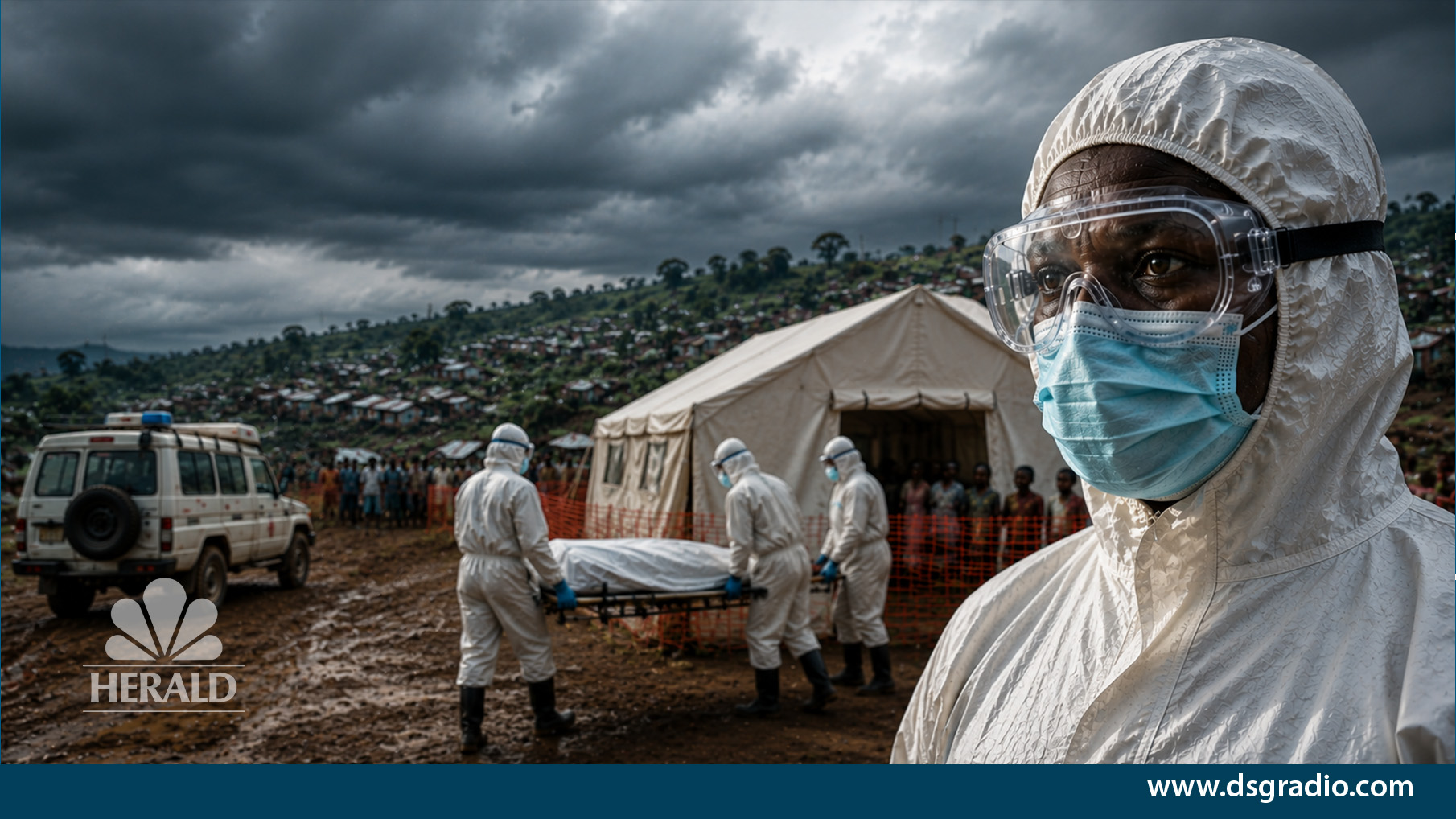
Bundibugyo Ebola Outbreak Sparks Global Health Alarm
The Bundibugyo Ebola Outbreak is rapidly evolving into one of Africa’s most significant public health emergencies in recent years, prompting global concern over the speed of its spread, the absence of an approved vaccine, and the growing risk of international transmission. According to health authorities, the outbreak—centred in the Democratic Republic of Congo (DRC)—has already spread beyond national borders, with Uganda reporting infections and France confirming its first imported case linked to the epidemic.
Unlike previous Ebola outbreaks that were largely driven by the Zaire strain of the virus, the current crisis involves the much rarer Bundibugyo virus species, a variant that remains less understood and for which there is currently no approved vaccine or standard treatment. That scientific uncertainty, combined with conflict in eastern Congo and widespread population displacement, is making containment efforts significantly more difficult.
Health agencies, including the World Health Organization (WHO) and the European Centre for Disease Prevention and Control (ECDC), have warned that the outbreak is expanding at an unprecedented pace, raising questions about whether Africa—and the wider global health community—is adequately prepared for a virus that is behaving differently from previous Ebola epidemics.
Rather than simply representing another Ebola outbreak, the current crisis has become a test of emergency preparedness, international cooperation, community trust and scientific innovation.
Why the Bundibugyo Ebola Outbreak Is Different
Every Ebola outbreak presents unique challenges, but health experts say the current Bundibugyo Ebola Outbreak combines several high-risk factors that make it particularly concerning.
First is the virus itself.
The Bundibugyo species is considerably rarer than the Zaire strain responsible for the devastating West African epidemic between 2014 and 2016. Because relatively few outbreaks have involved this strain, scientific knowledge remains limited compared with other Ebola variants.
Perhaps the most significant concern is that there is currently no approved vaccine specifically designed for the Bundibugyo strain.
While vaccines have transformed the response to outbreaks caused by the Zaire virus, health workers responding to the current emergency cannot rely on the same level of pharmaceutical protection.
Instead, authorities are depending primarily on traditional outbreak-control measures, including:
- Rapid diagnosis
- Isolation of infected patients
- Contact tracing
- Safe burial practices
- Public health education
- Cross-border surveillance
These strategies have successfully contained previous outbreaks but become substantially more difficult when health workers operate in areas affected by armed conflict and widespread displacement.
The absence of a licensed vaccine also increases pressure on researchers to evaluate experimental therapies that may reduce fatalities while scientists continue searching for more targeted medical interventions.
A Faster Outbreak Than Previous Ebola Emergencies
One of the strongest reasons international agencies are sounding the alarm is the remarkable speed at which the outbreak has expanded.
According to data cited by international health authorities, the outbreak crossed the threshold of 250 deaths in only 37 days, almost twice as fast as the timeline recorded during the major West African Ebola epidemic, which required approximately 78 days to reach the same milestone.
Health experts caution that speed alone does not necessarily indicate a more lethal virus. However, it often reflects a combination of factors including delayed detection, intense community transmission, limited healthcare access and challenges in rapidly identifying infected contacts.
As of the latest available figures:
- Democratic Republic of Congo: 1,118 confirmed infections and 291 deaths.
- Uganda: 20 confirmed infections and two deaths.
- France: One imported case involving a physician returning from humanitarian work in the DRC.
These numbers continue to place eastern Congo at the centre of the outbreak while highlighting the increasing importance of international monitoring.
The imported case in France has reinforced concerns that outbreaks occurring in one region can quickly become matters of international public health through modern travel and humanitarian operations.
According to reports from Deutsche Welle (DW) and the BBC, French authorities placed the infected doctor in strict bio-safety isolation after laboratory confirmation, demonstrating the importance of early detection systems even outside Africa.
The Numbers Tell Only Part of the Story
Although infection statistics attract headlines, public health specialists often argue that outbreak data alone cannot fully explain the seriousness of an epidemic.
Behind every confirmed case lies a broader humanitarian challenge involving families, overwhelmed healthcare workers, disrupted communities and fragile health systems struggling to maintain routine medical services while responding to a deadly virus.
The outbreak’s epicentre in Ituri Province illustrates this challenge clearly.
Already affected by years of insecurity and humanitarian crises, the province now faces the additional burden of containing an infectious disease requiring rapid isolation, laboratory testing and extensive contact tracing.
Each confirmed patient can generate dozens of potential contacts requiring daily monitoring over several weeks.
When infections occur in densely populated communities or among highly mobile populations, the workload for surveillance teams expands dramatically.
Health officials have repeatedly emphasised that successful Ebola control depends not only on treating patients but also on interrupting every possible chain of transmission before new infections emerge.
Why Children Are Facing Greater Risks
Among the most troubling findings emerging from the outbreak is its disproportionate impact on children.
According to information cited by international agencies, children account for approximately 15 percent of confirmed infections but more than one-quarter of reported deaths.
UNICEF attributes much of this disparity to social circumstances rather than biology alone.
Young children often depend entirely on parents or caregivers who may themselves become infected.
When families fall ill simultaneously, delays in recognising symptoms, seeking treatment or accessing healthcare can significantly increase the likelihood of severe illness.
In many affected communities, caregiving responsibilities also expose children to infected family members before diagnosis.
Health experts say this reinforces the importance of community education campaigns that encourage early reporting of symptoms while reducing fear and misinformation surrounding treatment centres.
Protecting children therefore depends not only on medical care but also on maintaining trust between communities and public health responders.
Conflict Is Making Containment Far More Difficult
Containing Ebola has always required speed, coordination and public cooperation.
The current outbreak, however, is unfolding against the backdrop of one of Central Africa’s most complex humanitarian crises.
Long-running violence involving Congolese government forces and the M23 armed group, together with wider insecurity in eastern DRC, has displaced millions of people over several years.
For outbreak response teams, this creates extraordinary operational challenges.
Health workers attempting to trace contacts may need to enter insecure areas where access changes rapidly because of ongoing violence.
Population movements caused by conflict can also make it difficult to identify everyone who may have been exposed to infected individuals.
Instead of remaining within one village or town, contacts may cross districts or national borders before surveillance teams locate them.
Every delay increases the possibility of further community transmission.
International health organisations have repeatedly stressed that disease control cannot be separated from broader humanitarian conditions.
Where conflict disrupts healthcare delivery, infectious diseases gain additional opportunities to spread.
That reality is once again shaping the trajectory of the Bundibugyo Ebola Outbreak.
Community Trust May Be as Important as Medical Treatment
While scientific research and emergency funding are critical to controlling the Bundibugyo Ebola Outbreak, public health experts say one of the greatest obstacles is community trust.
According to reports from international health agencies, rumours and misinformation have fuelled resistance in some affected communities. Some families have reportedly removed infected relatives from treatment centres after believing false claims that the disease was a hoax or that patients would not return alive.
Such incidents complicate outbreak control because Ebola spreads through direct contact with the bodily fluids of infected people. When infected individuals leave isolation or receive care outside appropriate medical settings, the likelihood of household and community transmission increases.
This challenge is not unique to the current outbreak. Previous Ebola epidemics have shown that misinformation can spread almost as quickly as the virus itself, undermining public health interventions and placing healthcare workers at greater risk.
Successful outbreak responses therefore depend not only on medical expertise but also on effective risk communication. Community leaders, religious organisations, local health volunteers and trusted public figures often play an essential role in encouraging people to seek treatment early, cooperate with contact tracing teams and follow infection prevention measures.
Experimental Treatments Offer Hope, But Questions Remain
Although there is no approved vaccine or standard treatment specifically for the Bundibugyo strain, scientists are exploring new options.
According toUN News, clinical trials have begun in the Democratic Republic of Congo to evaluate whether two antiviral therapies—MBP134 and remdesivir—can reduce deaths associated with the outbreak.
Researchers hope these studies will provide valuable evidence on whether therapies that have shown promise against other Ebola virus species can also improve outcomes for patients infected with the Bundibugyo virus.
Health experts caution, however, that clinical trials take time. Their success cannot be assumed, and any findings must undergo careful scientific evaluation before they influence standard treatment protocols.
For now, supportive medical care remains the cornerstone of treatment. Early diagnosis, hydration, management of complications and infection control continue to be the most effective tools available while researchers work to expand therapeutic options.
Why France’s Imported Case Matters Beyond Europe
The confirmation of France’s first imported case linked to the outbreak has attracted significant international attention—not because it signals widespread transmission in Europe, but because it highlights how interconnected global health has become.
According to reports byDeutsche Welleand BBC News, the infected individual was a French doctor returning from humanitarian work in the Democratic Republic of Congo. French authorities placed the patient in strict biosecurity isolation after laboratory confirmation.
Imported cases have occurred during previous Ebola outbreaks, and countries with strong surveillance systems have generally succeeded in preventing onward transmission through rapid diagnosis, contact tracing and infection control measures.
Nevertheless, the case serves as a reminder that infectious disease outbreaks are no longer confined by national borders. International travel, humanitarian missions and cross-border commerce mean that local epidemics can quickly become issues of global concern.
For governments worldwide, the priority is therefore not only supporting outbreak control in affected countries but also maintaining preparedness at ports of entry, hospitals and public health laboratories.
Lessons From Previous Ebola Epidemics
Africa has experienced several Ebola outbreaks since the virus was first identified in 1976, but each epidemic has presented different challenges.
The 2014–2016 West Africa epidemic remains the deadliest in history, affecting Guinea, Liberia and Sierra Leone before isolated cases appeared elsewhere. That crisis prompted major reforms in global outbreak preparedness, accelerated vaccine research and strengthened international emergency response mechanisms.
Subsequent outbreaks in the Democratic Republic of Congo demonstrated the effectiveness of vaccination campaigns against the Zaire strain, significantly improving response capabilities compared with earlier decades.
The current Bundibugyo Ebola Outbreak, however, illustrates that progress against one virus species does not eliminate risks posed by another. Scientific advances have improved surveillance and emergency coordination, but the absence of a licensed vaccine for this strain leaves health authorities relying heavily on traditional public health measures.
The outbreak therefore reinforces an important lesson: preparedness must extend beyond the most common pathogens to include rare but potentially dangerous virus variants.
What This Means for Africa
The outbreak carries implications beyond the immediate health emergency.
Many African countries have strengthened disease surveillance since the COVID-19 pandemic, investing in laboratory capacity, emergency operations centres and cross-border collaboration. These improvements provide a stronger foundation for responding to infectious diseases than existed a decade ago.
However, the current outbreak also exposes persistent structural challenges.
These include:
- Limited healthcare infrastructure in remote areas.
- Shortages of trained medical personnel.
- Humanitarian crises driven by conflict and displacement.
- Difficult terrain that slows emergency response.
- Community mistrust fuelled by misinformation.
- Limited access to advanced medical treatments.
Health experts argue that long-term investment in resilient healthcare systems remains essential if future outbreaks are to be contained more rapidly.
Why Nigeria and the Rest of Africa Are Watching Closely
Although no confirmed cases have been reported in Nigeria in connection with the current outbreak, the situation remains relevant across the continent.
Nigeria’s successful containment of Ebola in 2014 is frequently cited as one of Africa’s strongest public health achievements. Rapid contact tracing, coordinated emergency response and effective public communication helped prevent widespread transmission after an infected traveller arrived in Lagos.
That experience demonstrated how decisive leadership and strong surveillance systems can interrupt chains of transmission even in densely populated urban environments.
For Nigerian public health authorities, the latest outbreak serves as another reminder of the importance of border surveillance, laboratory readiness and continuous public education.
Across Africa, governments continue to monitor developments closely because infectious diseases can spread through regional travel networks if early detection systems fail.
The current outbreak therefore highlights the value of continental cooperation under institutions such as the Africa Centres for Disease Control and Prevention (Africa CDC) and continued collaboration with international partners.
The Economic and Humanitarian Cost of Outbreaks
Disease outbreaks affect far more than healthcare systems.
Communities experiencing Ebola often face disruptions to education, agriculture, transport, trade and routine healthcare services. Fear of infection may discourage people from visiting hospitals for unrelated illnesses, while restrictions on movement can affect livelihoods and local economies.
Humanitarian organisations operating in conflict-affected regions must also balance emergency medical work with food security, shelter and protection for displaced populations.
These indirect effects can continue long after infection numbers begin to decline, making recovery a prolonged process rather than a single public health intervention.
For governments and international donors, investing in preparedness is often significantly less costly than responding to uncontrolled epidemics after they escalate.
The Road Ahead
The coming weeks are likely to be critical in determining the trajectory of the Bundibugyo Ebola Outbreak.
Health authorities will continue expanding surveillance, strengthening laboratory testing, monitoring cross-border movement and evaluating experimental treatments.
Researchers will also closely monitor clinical trial results to determine whether new therapies can improve survival rates.
At the same time, rebuilding trust within affected communities will remain just as important as scientific progress.
Without public cooperation, even the most advanced medical interventions face significant limitations.
Ultimately, the current outbreak is more than another chapter in Africa’s history of infectious disease. It is a reminder that emerging health threats evolve alongside changing humanitarian, political and social realities.
The Bundibugyo strain has exposed vulnerabilities that extend beyond one virus or one country. It has shown that preparedness depends not only on vaccines and laboratories, but also on resilient health systems, stable communities and sustained international cooperation.
As reported by the European Centre for Disease Prevention and Control (ECDC), the World Health Organization (WHO), BBC News, and Deutsche Welle, health authorities continue to monitor the situation closely while urging rapid reporting of suspected cases, stronger surveillance and coordinated international support.
Recommended Coverage
https://dsgheraldnews.com/ethiopia-election-crisis-national-unity-africa/
Examines how political instability in Ethiopia could influence regional security, governance and continental unity.
https://dsgheraldnews.com/joseph-kabila-sentenced-to-death-for-war-crimes-and-treason/
Explores the wider political and security implications of the legal case involving the former Congolese president.
https://dsgheraldnews.com/fg-treason-charges-sylva-others-face-trial/
Provides context on Nigeria’s treason case, outlining the legal issues and their potential political significance.
https://dsgheraldnews.com/nnamdi-kanu-life-sentencing-what-todays-judgment-means/
Analyses the broader implications of the court proceedings and what they could mean for Nigeria.
https://dsgradio.com/dr-eberechukwu-uneze-the-rise-influence-impact/
Profiles the career and contributions of Dr. Eberechukwu Uneze and his impact within his field.
About the Author