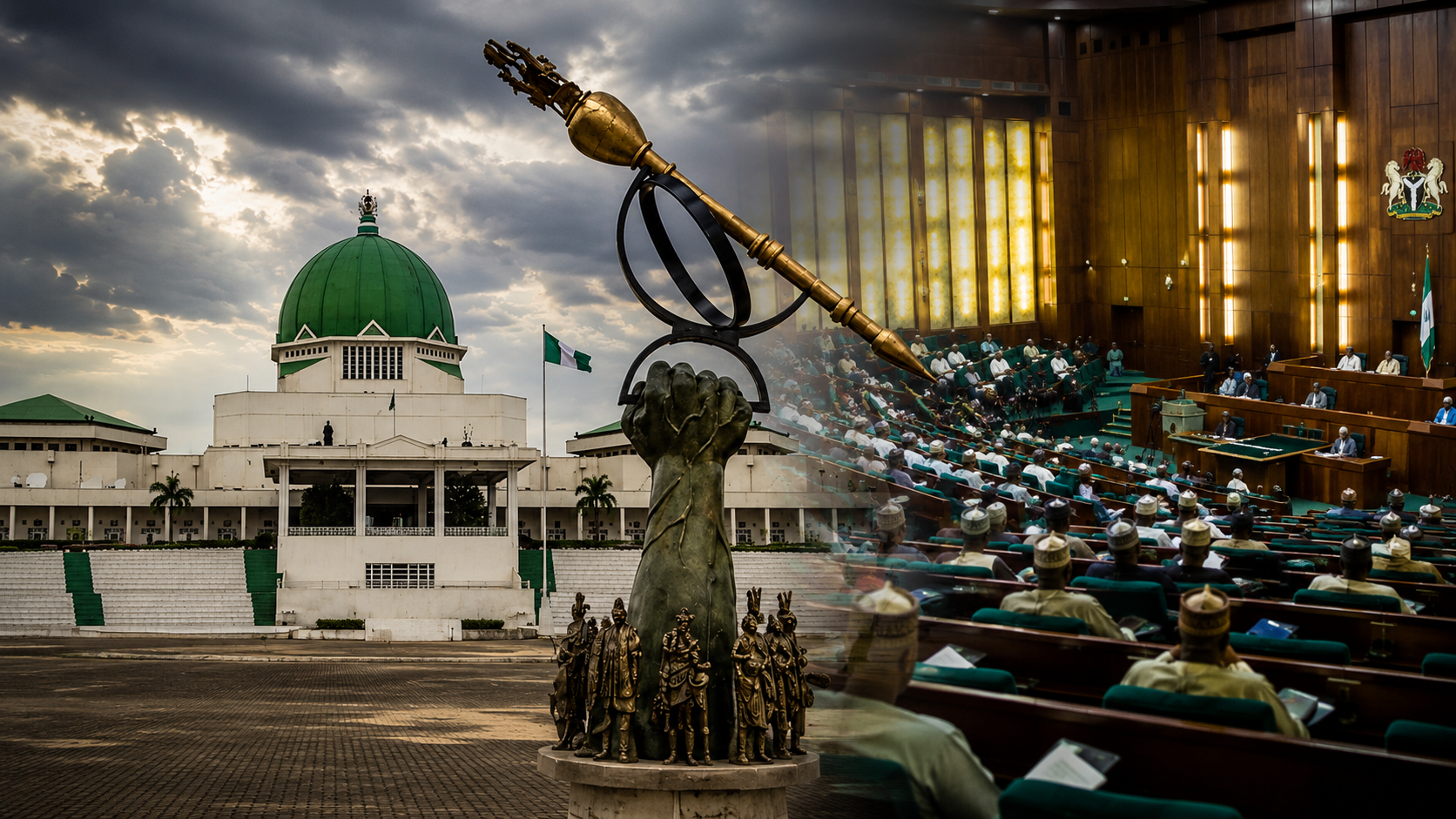
National Assembly Trust – Nigeria’s legislature has fallen to the bottom of the public confidence chart. The 2026 Nigeria Social Cohesion Survey – conducted by the Africa Polling Institute (API) and unveiled in Abuja on June 25 – reports that 77% of Nigerians now say they have little or no trust in the National Assembly, making it the least trusted public institution in the country. This means the National Assembly has just edged out even the Nigeria Police Force, which now has a 24% trust rating (or 76% low-trust). The survey also found that 72% of Nigerians distrust the presidency and 73% distrust the judiciary, underscoring a widespread crisis of confidence in government. The findings, released on June 25, 2026, signal that a year into President Bola Tinubu’s administration, public trust in Nigeria’s democratic institutions is in steep decline.
But the survey is not all gloom. It found for the first time a majority of citizens identifying primarily as Nigerians (rather than by ethnicity or region), and a notable level of resilience and optimism. “Nigerians continue to demonstrate resilience and a commitment to peaceful coexistence despite prevailing hardships,” notes API’s report. Still, analysts warn that low institutional trust can undermine governance and stability, making it urgent for Nigeria’s leaders to rebuild confidence – especially in the National Assembly.
National Assembly Trust Hits Record Low: Key Survey Findings
The API’s 2026 Social Cohesion Survey paints a stark picture of declining trust. Its key findings include:
- National Assembly (Legislature): 77% of respondents say they have little or no trust in the National Assembly – the highest distrust level recorded for any institution.
- Judiciary: 73% have little or no trust in Nigeria’s courts.
- Presidency: 72% have little or no trust in President Tinubu’s administration.
- Nigeria Police Force: Only 24% of Nigerians say they trust the police (meaning 76% have low trust), a significant drop from past surveys. This pushes the police to second-least trusted.
- Religious & Traditional Leaders: By contrast, a majority of Nigerians still trust non-political figures: 51% trust religious leaders and 45% trust traditional (local) leaders.
These figures indicate a deep trust deficit across government, with the National Assembly now at the absolute bottom. “This assessment places the National Assembly as the least trusted institution in the country, a position previously held by the Police,” the API report notes. In practical terms, only 23% of Nigerians say they trust the legislature at all – a dramatic decline from barely a few years ago.
The survey was based on 5,315 face-to-face interviews conducted between January and February 2025, covering all 36 states and senatorial districts. It produced a Nigeria Social Cohesion Index (NSCI) of 48.8% – up two points from the previous year, suggesting slightly more resilience – but still below the 50% threshold for a socially cohesive society.
Historical Context: A Crisis of Confidence
Nigerians’ skepticism toward the legislature has grown steadily over recent years. In the API’s 2025 survey, for example, only 18% of citizens said they trusted the National Assembly (meaning 82% had low trust). The 2026 survey shows a marginal improvement in the level of trust (rising to 23%), but this has not changed the fact that the Assembly remains the least trusted institution. In other words, whether 23% or 18% of people trust it, the National Assembly is still at the bottom of the list, indicating its recovery has lagged behind even the police.
Analysts say this trend reflects long-standing public disillusionment. Civil society groups and media reports have frequently criticized the legislature for perceived partisanship, corruption, and lack of productivity. A recent review of lawmakers’ work points to low attendance and modest legislative output as chronic problems. In the Senate, even the debate over internal rules has become controversial, with critics noting that existing procedures often favor long-serving or senior politicians. All of this contributes to a sense that the Assembly operates as an entrenched elite, rather than a responsive representative body.
Economic hardship has also intensified frustration. The 2025 API report noted that many Nigerians blame the so-called “Tinubu economy” – marked by high inflation, fuel price hikes, and subsidy removals – for their troubles. Citizens reported in focus groups that the rising cost of transport, food and services is a constant grievance. Under these conditions, even symbolic government initiatives may ring hollow. For example, shortly before this survey’s release the Senate passed a popular bill to establish state police forces (a longstanding demand of citizens), but trust in the legislature remained extremely low, suggesting actions alone have not yet restored confidence.
The decline in trust is not unique to Nigeria. A 2024 Afrobarometer report found that across Africa, religious and military institutions command far more trust than political bodies. “Only religious leaders, the army and traditional chiefs enjoy majority support,” the study reported, while trust in national parliaments hovers around 30-40%. Globally, scholars warn that low political trust can endanger democratic governance and social cohesion. In Nigeria’s case, the fact that 77% of citizens now distrust their legislature – up from about 70% just two years ago – sets an alarming benchmark for the country’s stability and unity.
Breakdown: Trust in Government and Police
While the National Assembly’s rating is the headline grabber, the survey shows distrust is widespread across the political system. The Presidency and the courts are almost as unpopular: 72% of respondents say they have little or no trust in President Tinubu’s government, and 73% have little or no trust in the judicial system. These figures reflect a broader governance confidence crisis. By contrast, barely half as many Nigerians distrust religious or traditional leaders, highlighting that faith in secular, partisan authorities is particularly weak.
This pattern reflects what many Nigerians have long complained about: voters often feel that politicians and institutions answer to vested interests rather than ordinary people. Observers point out that legislative throughput has been low: important bills (like the 2022 37 Constitution Amendment proposals) have languished for years. Meanwhile, the security agencies themselves are trying to respond to demands for reform, but have not reversed the public’s coldness – perhaps because improving trust usually takes time and visible results. The data suggest that incumbents in government, whether in the legislature or the executive, have yet to convince the public of their effectiveness or integrity.
Signs of Resilience: National Identity and Optimism
Despite the negativity about institutions, the survey found some bright spots in Nigeria’s social cohesion. A key finding is a shift in identity: for the first time since the survey’s inception, a majority of Nigerians say they identify themselves first and foremost as Nigerians, rather than by ethnic, regional, or religious group. The report calls this a “historic national identity breakthrough” and “an important milestone” in nation-building. In concrete terms, 44% of respondents say they are equally proud to be Nigerian and of their ethnic group, while only 29% identify more with ethnicity than nationality (and just 11% say their ethnic identity supersedes their national identity).
This rising sense of Nigerian identity has policy significance. Analysts suggest it may create a foundation for unity and collective action if properly harnessed. Prof. Bell Ihua of API emphasizes that “the majority Nigerian-first identification is the country’s most important social capital right now, and it must be protected and nurtured”. In other words, Nigerians’ shared national outlook could be a resource to overcome division, provided leaders build on it rather than exploit ethnic or religious differences.
Alongside identity, many Nigerians remain optimistic about the future. Though 55% say they would consider emigrating abroad with family if given the chance, a slightly larger share – 61% – believe that the country’s future will improve. In sentiment, this is “Jollof Politics”: a bit of patience mixed with hope. It indicates that even amid economic hardship and political frustration, a majority of citizens are not ready to write off Nigeria. This resilience is echoed in civic attitudes: over 70% of Nigerians say they are willing to sacrifice personal interest or cooperate with other groups to make the nation better.
Implications for Democracy and Governance
The erosion of institutional trust has profound implications. Political scientists note that institutional trust is the “cornerstone of social cohesion,” and without it a democracy can face delegitimization and unrest. In Nigeria’s case, the survey’s findings raise questions about how the government can effectively govern if citizens see their institutions as ineffectual or untrustworthy. A legislature that cannot command public support may struggle to implement reforms, raise taxes, or maintain order. It may also fuel apathy or radical alternatives: when people lose faith in voting or laws, they may be more drawn to protest movements, populists, or even violence.
Already, the survey highlights some warning signs. Political party affiliation – rather than national interest – was cited by 56% of respondents as the main source of division in their communities. Trust in courts and police is so low (around 25-30% trust each) that many citizens may not turn to official channels for justice or protection. Public reluctance to engage with institutions (while still willing to engage civically in general) suggests a fragmented state-society relationship.
On the other hand, the optimistic outlook held by 61% of Nigerians is a silver lining. It means many people are still willing to believe in progress. Policymakers and civil society leaders can seize on this optimism: the survey itself recommends that the government enact “inclusive citizenship frameworks” and reforms to match citizens’ resolve. Concrete proposals from API include establishing a National Social Cohesion Commission (modeled on Kenya’s) and creating social cohesion units in government ministries, all aimed at rebuilding trust.
Critically, the decline in National Assembly trust – the survey’s headline finding – could spur concrete changes in the legislature. Public pressure may push lawmakers to be more transparent, curb petty corruption, or prioritize citizens’ needs. The Assembly’s leadership might also take note; for example, Senate President Godswill Akpabio or other leaders may feel compelled to reach out to communities or highlight legislative achievements. Without such efforts, the downward trend is likely to continue.
Rebuilding Public Confidence
Restoring confidence in Nigeria’s institutions is now an urgent priority. For the National Assembly in particular, regaining trust may require both policy and perception changes. Passing key legislation on issues like security, economy, and anti-corruption – and then ensuring implementation – could demonstrate responsiveness. Equally important will be demonstrating accountability: public hearings, transparency in budgets, and engagement with constituents might help reverse the “rubber stamp” narrative.
Some reform steps are already in motion. For instance, the Senate’s recent passage of the long-sought State Police bill (empowering governors to establish state-level police forces) is a popular move that could enhance security. If implemented effectively, it may improve law enforcement trust over time. Meanwhile, civil society watchdogs are releasing more data on legislators’ performance – for example, a scorecard by Representative Kanayo Onyemaechi – which could keep pressure on lawmakers to perform.
At the national level, President Tinubu and his government will also need to address the confidence gap. The survey shows only 28% of Nigerians trust the federal government. Combined with legislative distrust, this could complicate the administration’s agenda. Effective communication, anti-corruption measures, and economic relief can help rebuild goodwill. In a recent move, President Tinubu requested a $516 million World Bank loan for drought relief, currently awaiting Senate approval. How the legislature handles such requests – transparently and effectively – may influence public perception.
Ultimately, the new survey is a wake-up call. It confirms that Nigerians’ trust in the National Assembly – and other pillars of democracy – is in crisis. Whether this trend is reversed depends on leaders’ actions in the coming months and years. For now, the message from the public is clear: they want the National Assembly (and all branches of government) to earn back their confidence. Rebuilding that trust is essential to Nigeria’s stability and its future.
Recommended Coverage:
-
https://dsgheraldnews.com/37-constitution-amendment-bills-in-national-assembly/– An in-depth look at the dozens of constitutional amendments currently before the legislature, illustrating the Assembly’s wide-ranging agenda. - Senate Rules Favoring Senior Lawmakers Under Scrutiny – Analysis of recent discussions about Senate procedures that critics say give extra power to veteran legislators, a factor in debates over accountability.
- Kanayo Onyemaechi’s Legislative Scorecard Tracks Lawmakers’ Performance – A report on the House member’s scorecard initiative, which rates federal lawmakers on attendance, bill sponsorship and other metrics to measure productivity.
- Tinubu’s $516m World Bank Loan Bill Heads to Senate – Coverage of President Tinubu’s proposed loan for drought and infrastructure, now before the Senate for approval, highlighting the relationship between the executive’s agenda and legislative oversight.
About the Author