DNEMIS Nigeria: Transforming Education Data and Planning
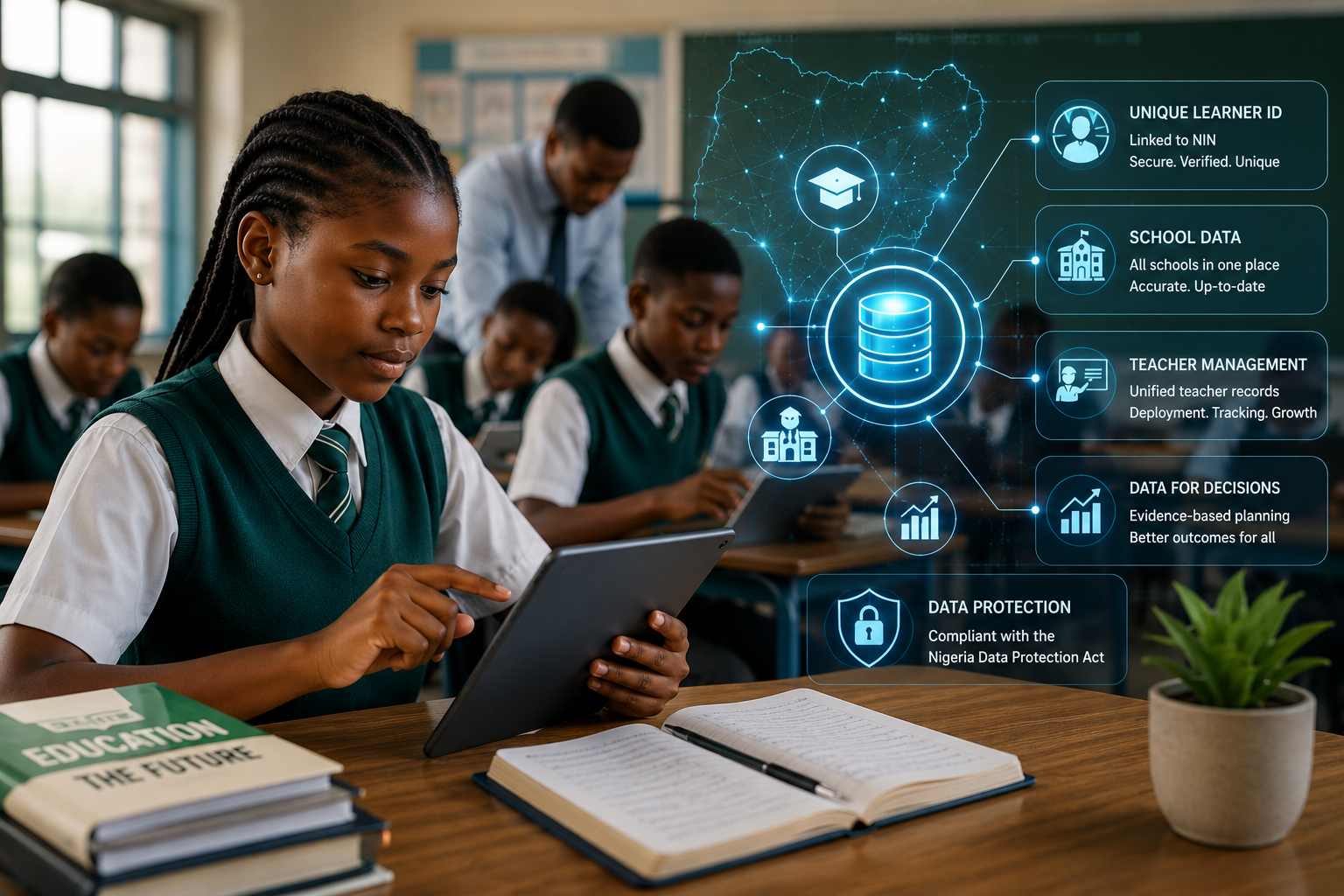
Nigeria’s Federal Ministry of Education will officially unveil the Digital National Education Management Information System (DNEMIS) on July 1, 2026. This nationwide platform will consolidate data on every school, teacher and student under one digital roof, aiming to end years of fragmented records. Officials say DNEMIS is designed to provide timely, reliable data for planning, budgeting and accountability across the education sector. By linking each learner to a unique ID (their National Identification Number) and integrating legacy systems, Nigeria’s leaders hope to “measure” and improve aspects of schooling that were previously invisible.
Nigerian officials emphasize that DNEMIS is more than a new website – it is a strategic platform for data-driven education reform. As education data specialist Adebayo Onigbanjo explained, “You cannot improve what you cannot measure”. The new system will play a key role in the government’s Nigeria Education Data Infrastructure (NEDI) framework, part of broader sector-renewal initiatives under Minister Tunji Alausa. In practice, DNEMIS will link millions of student and teacher records in one unified database, allow annual school censuses to be fully digital, and for the first time publish selected education statistics on a public portal. These features are intended to boost transparency and stakeholder engagement: data will be accessible to researchers, journalists and citizens to inform policy debates.
Longstanding Data Gaps in Nigerian Education
For decades Nigeria has struggled with patchwork data systems and unreliable education statistics. The existing Nigeria Education Management Information System (NEMIS) only covers part of the country, and reporting was inconsistent across states. Onigbanjo notes that the sector “has for years grappled with fragmented data systems, inconsistent reporting processes and limited access to accurate and timely information,” hampering effective planning and accountability. In fact, basic dropout and enrollment rates were unclear: only 21 of Nigeria’s 36 states had contributed to the last digital census, leaving millions of pupils uncounted.
The result has been huge unknowns in basic outcomes. In October 2025, Education Minister Tunji Alausa warned that only 6 million of the roughly 30 million pupils captured in the system actually reached senior secondary school. According to Alausa, this means about 20 million children “disappeared” between primary and secondary education. These figures align with broader UNESCO assessments: UNICEF data cited by UNESCO report only about 59% of Nigerian boys and 51% of girls complete primary school, with secondary completion rates even lower. In short, four out of ten children never finish primary, and nearly two-thirds fall out before secondary – a crisis of retention that DNEMIS aims to highlight and address.
This data vacuum has hampered sector funding and planning. For example, federal and state budgets for schools are often based on outdated or estimated student counts. As Alausa noted, planning without reliable data is like “shooting in the dark.” By digitizing records and enrollment forms, DNEMIS should clarify where infrastructure, teachers and resources are most needed. In the long term, better data may help agencies like the Universal Basic Education Commission (UBEC) allocate grants more efficiently, and ensure that aid and school feeding programs reach their intended beneficiaries.
What is DNEMIS and How It Works

DNEMIS stands for the Digital National Education Management Information System. Technically, it is a web-based platform built on the open-source DHIS2 software (originally developed for health systems). DHIS2 is widely used globally, and Nigeria has customized it for education. Key features of DNEMIS include:
- Learner Identity Number: Every student is assigned a unique Learner ID that is linked to their National Identification Number (NIN). This creates a persistent record of each child’s education journey, from nursery through secondary school. By tying data to NIN, the system helps eliminate duplicate or fake student records. In practice, this integration means exam results, promotions and transfers can all be traced unambiguously to one individual.
- Unified Database: DNEMIS brings together several previously separate systems. For example, the Teacher Management Information System (TMIS) – a database of public-school teachers – will be merged into DNEMIS, along with new data on private institutions. All entries on schools, classrooms, enrollments, exams and teachers now flow into one networked system. As Onigbanjo puts it, the goal is that “every learner, school, teacher and investment in education is captured” in a single national database. This contrasts sharply with the old paper-based or fragmented digital forms used by states and local districts.
- Annual School Census (Digital): The system will digitize the Annual School Census, replacing largely manual questionnaires. Officials highlight that DNEMIS (built on DHIS2) enables a “smart”, real-time census of all schools. Data such as student attendance, class sizes and facilities can be updated live, allowing government to see changes as they happen instead of waiting months for printed reports. DHIS2’s flexibility means local officers can even collect data on tablets offline, then sync to the central server.
- Public Data Portal: A major innovation is that DNEMIS will include a publicly accessible portal. For the first time in Nigeria, selected official education statistics (for example, school counts, state-level enrollment data, exam pass rates) will be made available to researchers, media and the public. The aim is to improve transparency and allow external analysis. According to officials, this open-data approach could encourage civil society and journalists to monitor trends and hold the system accountable.
Mojoyin Adebajo, Special Assistant on Digital Communications, emphasizes that DNEMIS is a “landmark innovation” for education data. Its development was guided by modern EMIS practices: DHIS2 provides a ready-to-use education toolkit with customizable census forms and dashboards. In fact, Nigeria’s DNEMIS team collaborated with the University of Oslo and UNICEF to adapt the platform. Together, they’ve ensured it can capture a wide range of metrics (from enrollment to dropout, and even asset inventories for classrooms) as part of the Nigeria Education Data Infrastructure (NEDI) framework.
Partnership and Coordination
DNEMIS is a collaborative effort. The Federal Ministry of Education leads the project under the Nigeria Education Sector Renewal Initiative (NESRI). UNICEF provided technical and financial support, as did Norway (through the University of Oslo and NORAD). NESRI’s Data & Digitization pillar drives this work, coordinating with state education ministries to train officials on the new system. In a pre-launch briefing, coordinator Onigbanjo thanked UNICEF and Oslo for “accelerating sustainable education reforms” through DNEMIS. He also called on state governments and school boards to cooperate fully; some states will host initial rollout teams to ensure nationwide adoption by 2027.
The involvement of multiple stakeholders is intended to keep DNEMIS on track. The Education Ministry stresses that the platform is part of planned reforms, not a stand-alone project that could be abandoned. Officials report regular technical workshops and pilot tests in selected states, to smooth out bugs before the July 1 launch. Media and civil society have also been invited to participate in the unveiling ceremony, reflecting an emphasis on external scrutiny.
Expected Benefits and Reforms
Evidence-Based Planning and Budgeting: By generating up-to-date data on schools and students, DNEMIS will let policymakers target resources more precisely. For example, if the system shows that one district has a high student-teacher ratio, the government can prioritize posting new teachers there. Alausa has noted that future school budgets could be linked to actual enrollment numbers and performance indicators, rather than just estimates. In short, education spending – from classroom construction to smart board projects – can be guided by real evidence of need.
Improving Student Retention: The high dropout rate is a top concern. With DNEMIS capturing individual learner records, officials will finally have a clear picture of where and why students leave school. Onigbanjo noted that Nigeria can now “start looking at evidence-based interventions and monitor outcomes” for dropouts. For example, if data show many students failing at a certain grade level, targeted mentoring or community-school programs can be introduced. Over time, trends in enrollment and graduation will be tracked closely to assess whether policies (like girl-child education incentives) are working.
Curbing Examination Malpractice: Nigeria’s education system has long been plagued by exam cheating and illicit “miracle centres” (unofficial tutoring sites that guarantee exam success). DNEMIS may help combat this. With every student linked to a national ID, exam results from bodies like WAEC or NECO can be cross-checked against registered candidates. Minister Alausa has said the government plans to integrate WAEC and JAMB databases into the platform. In practice, this could allow exam boards to immediately flag suspicious results or duplicates. Students caught cheating could be identified by their Learner ID and face penalties like exam bans. Real-time data might also expose new illegal centers: if a cluster of students from one school all cheat under similar patterns, the system could highlight the anomaly for investigators. While this is still speculative, education analysts say linking exam data to a national database is a major step toward reforming Nigeria’s testing system.
Transparency and Accountability: By making data public, DNEMIS introduces external accountability. Parents and communities, for example, could use the portal to verify whether funds given to a school match its reported enrolment. Policymakers hope that school administrators will also be held to account if, say, a facility report is never filed. The government touts DNEMIS as a “significant step toward entrenching transparency” in education. This mirrors moves in other sectors – for instance, recent DSG Herald coverage of government data policies has noted how open data can reduce corruption and inform citizens. In the education context, watchdog groups and media outlets may begin comparing official data with on-the-ground reports, potentially exposing underreporting or ghost schools.
Technical and Security Considerations
Building DNEMIS involves major technological changes. First, the system must connect thousands of schools, many in rural areas. Nigeria has some 1,200 local government areas and each has numerous schools, both public and private. Ensuring reliable internet access and training at all these points will be a challenge. However, Nigeria’s improving connectivity should help. (For example, the upcoming 6G technology launch in Nigeria is expected to boost network speeds and reach, which could eventually support platforms like DNEMIS.) The government is also investing in broadband for schools, part of a broader push covered in DSG reports on edtech infrastructure.
Second, data security is a critical concern. Education records contain sensitive personal information, especially now that they link to students’ NINs. Officials stress that DNEMIS follows Nigeria’s Data Protection Act (2023) to safeguard privacy. They say access controls and encryption are built in, and only aggregate data will appear on the public portal. Nonetheless, skepticism exists: in mid-2026, a warning message briefly appeared on the older NEMIS website, fueling fears of a cyberattack. Security experts noted that any breach of the education database would be serious, since it holds millions of identities. In response, the Ministry has reportedly stepped up cybersecurity audits. Observers note that DNEMIS administrators must implement robust safeguards (e.g. HTTPS, firewalls, routine security scans) to avoid compromises like those seen in other countries. Transparency about security measures could also help build public trust in the new system.
Third, coordination with states and private stakeholders is vital. Education in Nigeria is partly decentralized, with states and local governments running schools on the ground. Some states may have their own databases or legacy systems. The success of DNEMIS depends on state governments reliably uploading data to the federal platform. Similarly, private and faith-based schools must be registered and compliant, or else gaps will remain. The federal government plans a state implementation team in each state (to be inaugurated at the launch) to manage this. But if any state lags behind or refuses to share data (for political or logistical reasons), it could undermine the completeness of DNEMIS. Analysts will be watching how the federal and state agencies collaborate in the coming months.
Broader Impact and Comparisons
Nigeria’s push to use data in education echoes global trends. Many countries now consider education an “information economy” where learning analytics drive decisions. For instance, Kenya’s EMIS and Sri Lanka’s national education database serve as regional examples of similar efforts. Even UNESCO’s education strategy emphasizes data: UN Sustainable Development Goal 4 calls on countries to “use data to guide improvement in learning outcomes”. By adopting a modern EMIS, Nigeria is positioning itself among nations aiming to strengthen human capital with evidence-based policy.
Culturally, the project also reflects shifting expectations of governance. Younger Nigerians, many of whom are digital natives, increasingly demand transparency and efficiency. A report by DSG Herald noted how social media empowers citizens to challenge officials. DNEMIS’s public portal could amplify this trend by letting parents and NGOs see official figures instantly. Politically, the education sector is relatively noncontroversial but deeply important; improvements here can build public goodwill. This reform may earn the government credit if it leads to visible school improvements.
Economically, better data could improve Nigeria’s education investments. The World Bank and other donors often condition funding on performance metrics. With DNEMIS, Nigeria can potentially show more credible results for programs like the Universal Basic Education Programme (UBEC) and attract international support. Conversely, any failures (like persistent dropouts or unspent funds) will be harder to hide. The government hopes that this transparency will ultimately raise educational outcomes, contributing to a larger, more skilled workforce – a key goal for Nigeria’s development.
Future Outlook
After the launch, all eyes will be on DNEMIS’s rollout and early impact. In the short term, the July 1 event will generate headlines, but the real test is operational: getting every state and LGA to input accurate data. The Federal Ministry plans to monitor this: weekly or monthly dashboards will track submission rates and data quality. By 2027, Nigeria aims to have the system fully populated and integrated with exam bodies and international reporting (e.g. for UNESCO).
In the long run, DNEMIS could transform how Nigerians experience schooling. Imagine parents checking online to see their child’s attendance record, or local governments mapping out education hot spots for building schools. If implemented well, this system could become the backbone of many education innovations (like adaptive learning programs or targeted scholarships). It may also spur private education tech startups to build apps that plug into DNEMIS data.
However, challenges remain. Sustained political will is needed to keep the system updated and secure. The government must fund IT support and maintenance beyond the launch. Resistance may arise if people worry about data misuse. To avoid a half-baked deployment (as sometimes happens with big projects), transparency will be crucial: independent audits or NGO oversight could help ensure DNEMIS lives up to its promise.
In summary, DNEMIS Nigeria is a landmark step in the country’s education reform journey. By finally “putting numbers on the map,” Nigeria aims to modernize how it plans and funds schooling, and to tackle issues like dropouts and exam cheating with evidence. As one senior official noted, the unveiling of DNEMIS “is another significant step towards entrenching transparency, accountability and evidence-based governance across the education system”. If successful, it could make Nigeria a regional leader in data-driven education, setting an example for other countries grappling with similar challenges.
Recommended Coverage
CBN Data Localisation Rules Trigger New Era for Fintechs
Nigeria’s new data localisation policy is reshaping how fintech companies store, process, and protect customer information. Read how the Central Bank’s move could strengthen data security, drive local innovation, and redefine the country’s fast-growing digital financial sector.
Read more:https://dsgheraldnews.com/cbn-data-localisation-rules-trigger-new-era-fintechs/
INEC Voter Data Leak Raises Fresh Cybersecurity Concerns
As Nigeria expands the use of digital platforms across critical sectors, protecting sensitive personal information has become increasingly important. Discover what the alleged INEC voter data leak revealed about cybersecurity risks and why stronger safeguards matter for public trust.
Read more:https://dsgheraldnews.com/inec-voter-data-leak/
INEC Party Deregistration Order Shakes 2027 Political Landscape
Electoral reforms and digital governance continue to reshape Nigeria’s democratic process. Explore how INEC’s party deregistration order could influence political competition, electoral preparations, and the road to the 2027 general elections.
Read more:https://dsgheraldnews.com/inec-party-deregistration-order-shakes-2027-race/
About the Author