South Africa Anti-Migrant Protests Trigger Regional Humanitarian and Economic Crisis
South Africa’s latest wave of anti-migrant protests has evolved into a crisis whose effects now extend well beyond its borders. What began as coordinated demonstrations demanding the departure of undocumented foreign nationals has rapidly developed into a humanitarian, diplomatic and economic issue affecting several African countries. As demonstrations spread across major cities on June 30, 2026, thousands of migrants sought safer locations, businesses closed their doors, and governments moved to protect their citizens through emergency evacuation plans.
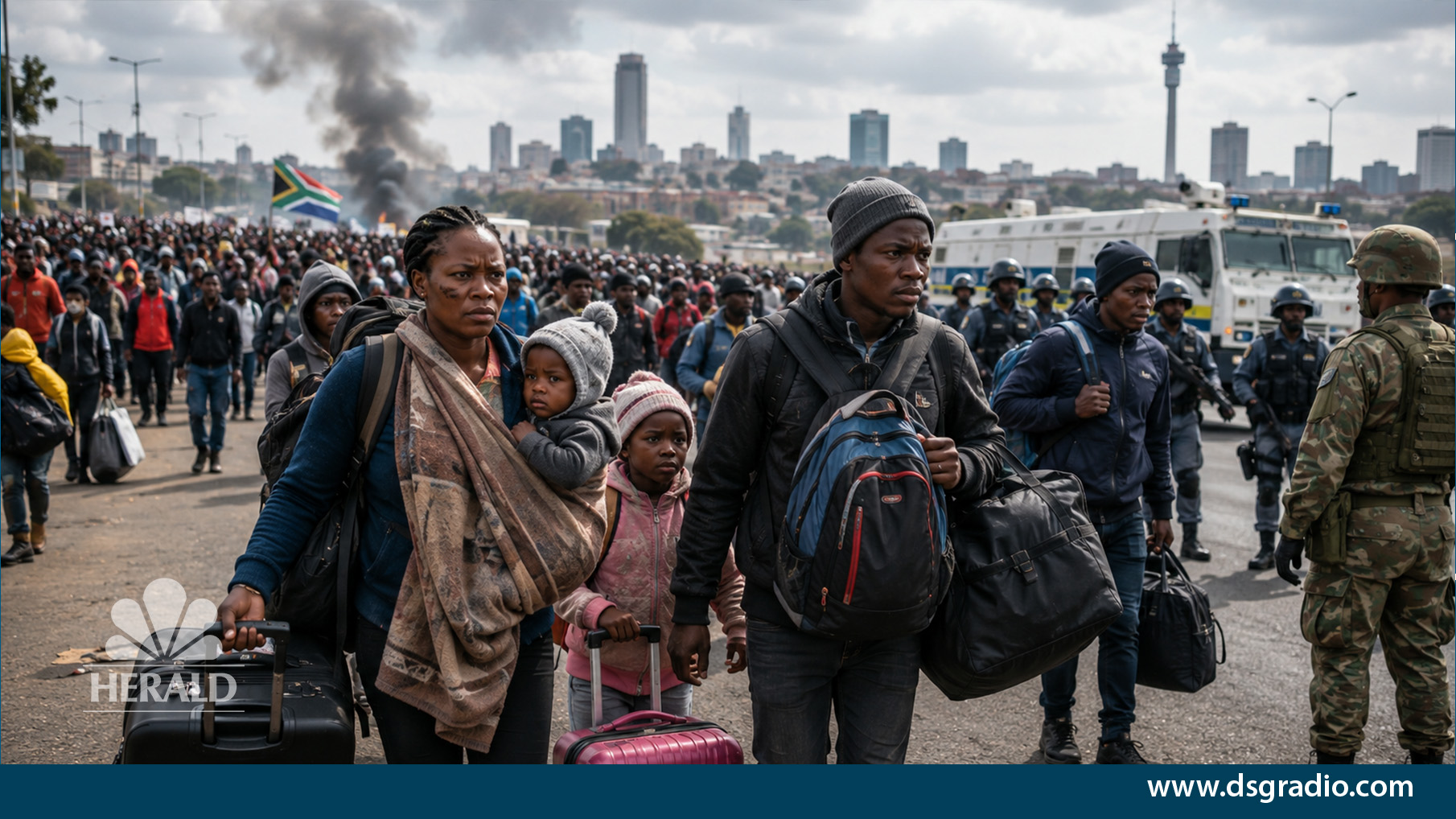
The demonstrations followed the expiry of an unofficial deadline issued by activist groups calling on undocumented foreigners to leave South Africa. According to the primary source material, organized marches took place in Johannesburg, Durban, Cape Town and other major urban centres, prompting extensive deployments by the South African Police Service (SAPS) and the South African National Defence Force (SANDF) to prevent violence, looting and attacks on businesses. A BBC report and other international media also reported heightened security measures as authorities prepared for the nationwide protests.
While immigration has long remained a politically sensitive issue in South Africa, the scale of the latest demonstrations has elevated the discussion from domestic politics to regional stability. Countries with large migrant populations in South Africa—including Nigeria, Zimbabwe, Ghana, Malawi and Mozambique—have begun responding to protect their nationals, highlighting the interconnected nature of migration, labour and trade across Southern Africa.
Why the South Africa Anti-Migrant Protests Matter Beyond South Africa
The current demonstrations are significant not only because of the number of cities involved, but also because they expose deeper challenges facing one of Africa’s largest economies.
South Africa continues to attract migrants from across the continent because of its relatively diversified economy, established industries and employment opportunities. For decades, workers from neighbouring countries have filled roles in construction, agriculture, hospitality, mining, retail and domestic services. Many also operate small businesses that serve local communities.
However, persistent economic pressures—including high unemployment, inequality and slow economic growth—have intensified public debate over immigration. Although economists generally attribute these challenges to multiple structural factors, immigration has increasingly become a focal point in political and public discourse.
The latest demonstrations therefore reflect more than frustration over undocumented migration. They reveal broader concerns about economic opportunity, border management, public services and confidence in government institutions.
Security Agencies Move to Prevent Violence
Unlike spontaneous outbreaks of unrest, authorities anticipated the June 30 demonstrations and mobilised security personnel before protesters gathered.
According to the primary report, SAPS officers and members of the SANDF were deployed across affected cities to discourage violence and maintain public order. Security operations focused on commercial districts, transport routes and locations considered vulnerable to unrest.
Authorities also prohibited protesters from carrying traditional weapons such as sticks and whips during the demonstrations. The restriction reportedly generated friction with some ethnic Zulu demonstrators who viewed such items as part of cultural expression. Officials maintained that the measure was necessary to minimise the risk of confrontation.
President Cyril Ramaphosa rejected the unofficial deadline imposed by pressure groups and warned that the government would not tolerate intimidation or vigilantism. His position underscored the constitutional principle that immigration enforcement remains the responsibility of state institutions rather than private groups.
That distinction has become central to the government’s response. While acknowledging public concern over illegal immigration, authorities have stressed that disputes must be addressed through lawful processes rather than threats or violence.
Growing Humanitarian Concerns as Migrants Seek Safety
Perhaps the most immediate consequence of the protests has been the movement of migrants away from communities perceived to be at risk.
The primary source indicates that thousands of documented and undocumented migrants relocated to temporary transit camps, shelters or border crossings amid fears that demonstrations could escalate into violence.
For many families, the decision to leave was driven by uncertainty rather than official evacuation orders. Memories of previous episodes of xenophobic violence have heightened anxiety among migrant communities, prompting precautionary departures before tensions could worsen.
This movement has transformed the protests into a humanitarian issue requiring cooperation among multiple African governments.
Nigeria, Zimbabwe, Malawi, Ghana and Mozambique are among the countries coordinating emergency transportation for citizens wishing to return home. According to the primary source, Nigeria evacuated another group of 271 citizens on emergency flights on Monday. While international media have reported ongoing evacuation efforts, some figures vary between sources, and not all totals could be independently verified at the time of writing.
Businesses Shut Their Doors Amid Rising Uncertainty
The economic consequences of the demonstrations became visible almost immediately.
Foreign-owned shops and commercial centres in several locations temporarily suspended operations amid concerns over potential attacks or looting. Although these closures were largely precautionary, they disrupted trading activities and affected livelihoods for both migrant entrepreneurs and South African employees.
The impact extends beyond retail businesses.
Industries that rely heavily on foreign workers are also reporting operational challenges. According to the primary report, employers in sectors requiring skilled and supervisory labour are already experiencing workforce shortages as some employees relocate or return to their home countries.
Should the disruptions continue, analysts say businesses could face additional costs associated with recruitment, reduced productivity and interruptions to supply chains. The longer-term economic impact, however, will depend on how quickly stability returns and whether displaced workers feel safe enough to resume their normal activities.
A Regional Story with Continental Significance
Although the demonstrations are unfolding within South Africa, their consequences are being felt across the region.
Migration within Southern Africa has historically supported economic integration by allowing workers to move across borders in search of employment while contributing to industries that depend on regional labour mobility. As a result, developments affecting migrant communities in South Africa often have wider implications for neighbouring economies.
The current situation illustrates how domestic political tensions can rapidly acquire regional dimensions. Governments now face the dual challenge of protecting their citizens abroad while maintaining diplomatic relations with Pretoria.
For Nigeria and other affected countries, the issue extends beyond emergency evacuations. It raises broader questions about labour migration, consular preparedness and the protection of citizens living and working elsewhere on the continent.
Historical Context Shapes Today’s Tensions
The latest demonstrations did not emerge in isolation. South Africa has experienced repeated outbreaks of anti-immigrant violence over the past two decades, often during periods of economic hardship or heightened political debate over unemployment and public services.
Previous incidents have seen foreign-owned businesses looted, homes attacked and migrants displaced, prompting criticism from African governments and regional organisations. Those episodes also raised concerns about the safety of millions of foreign nationals who contribute to South Africa’s economy through formal employment, small businesses and skilled professions.
Against that backdrop, many migrants interpreted the June 30 deadline as a serious security concern rather than a symbolic protest. That helps explain why thousands reportedly relocated to temporary shelters or border crossings before demonstrations gathered momentum.
While the current protests have largely been managed through heightened security deployments, memories of earlier violence continue to influence how migrant communities respond whenever anti-immigration campaigns intensify.
Ramaphosa Seeks to Balance Public Concerns and Rule of Law
President Cyril Ramaphosa has attempted to strike a careful balance between acknowledging public concerns over illegal immigration and rejecting vigilante enforcement.
According to the primary source, the President dismissed the unofficial deadline issued by pressure groups and warned that South Africa’s security agencies would show zero tolerance for intimidation, violence or lawlessness.
That position reflects an important constitutional principle: immigration enforcement is the responsibility of government institutions, not private organisations or community groups.
By deploying both the South African Police Service (SAPS) and the South African National Defence Force (SANDF), authorities sought to reassure residents, protect businesses and prevent isolated incidents from escalating into broader unrest.
International reporting also indicates that police increased their presence in affected cities and closely monitored planned demonstrations to reduce the risk of violence.
Labour Unions Warn Against Scapegoating Migrants
The demonstrations have also exposed deep divisions over how South Africa should address its economic challenges.
According to the primary source, the Congress of South African Trade Unions (COSATU) joined other organised labour groups in arguing that migrants are being unfairly blamed for structural problems, including unemployment, corruption, weak governance, and slow economic growth. Their position highlights a broader policy debate.
Supporters of tighter immigration controls argue that undocumented migration places additional pressure on jobs, healthcare, housing and public services. Labour organisations, however, contend that these challenges cannot be solved simply by targeting foreign nationals and instead require broader economic reforms, stronger governance and more effective border management.
This debate is likely to remain central to South Africa’s domestic politics long after the current demonstrations conclude.
Business Disruptions Extend Beyond Foreign-Owned Shops
Although much public attention has focused on foreign-owned retail stores closing as a precaution, the economic consequences extend much further.
The primary report notes that industries dependent on migrant workers are already experiencing operational shortages, particularly in skilled and supervisory positions.
This reflects the increasingly interconnected nature of South Africa’s labour market.
Across sectors such as construction, agriculture, logistics, hospitality and small-scale manufacturing, employers often rely on workers from neighbouring African countries. Sudden workforce disruptions can delay projects, increase operating costs and reduce productivity.
Should large numbers of migrants decide not to return, some businesses may face prolonged recruitment challenges, while others could experience interruptions in supply chains or service delivery.
At the same time, migrant-owned enterprises contribute significantly to local economies by creating employment opportunities, paying taxes where applicable and supplying goods and services to surrounding communities. Temporary closures therefore affect both migrant entrepreneurs and South African customers who depend on those businesses.
Regional Governments Face a Humanitarian Challenge
One of the defining features of the current crisis is its regional dimension.
According to the primary source, governments including Nigeria, Ghana, Zimbabwe, Malawi and Mozambique have coordinated emergency transport arrangements for citizens wishing to leave South Africa.
Nigeria’s reported evacuation of another 271 citizens demonstrates how quickly domestic unrest can require cross-border diplomatic and logistical responses.
For African governments, protecting citizens abroad has become an increasingly important aspect of foreign policy. Evacuation efforts require cooperation between immigration authorities, airlines, diplomatic missions and border officials, often under significant time pressure.
The situation also illustrates the importance of regional dialogue on migration management, particularly as labour mobility remains an essential component of economic integration across Southern Africa.
Why the Crisis Matters for Africa’s Future
Beyond the immediate security concerns, the protests raise broader questions about migration policy, regional cooperation and economic resilience.
The African Continental Free Trade Area (AfCFTA) seeks to promote greater economic integration among African countries by encouraging trade, investment and cross-border commercial activity. Although AfCFTA primarily addresses trade rather than immigration, business confidence is closely linked to perceptions of regional stability and the safety of workers and investors.
Large-scale displacement of migrant communities, even if temporary, may influence future decisions by workers considering employment opportunities elsewhere on the continent. Governments may also review their consular preparedness and contingency planning for citizens living abroad.
For policymakers, the current crisis underscores the need to balance effective immigration enforcement with the protection of human rights, constitutional freedoms and regional diplomatic relationships.
What Happens Next?
Several immediate questions remain unanswered.
Authorities will continue monitoring demonstrations to determine whether tensions subside or spread to additional communities. Governments conducting evacuation operations will assess whether further transport is required for citizens seeking to return home.
Businesses will also be watching closely. A rapid restoration of stability could allow many enterprises to reopen and employees to resume work. Prolonged uncertainty, however, may deepen labour shortages and reduce economic activity in affected sectors.
Much will depend on continued law enforcement, constructive political dialogue and the willingness of all parties to avoid actions that could inflame an already sensitive situation.
As events continue to unfold, officials across Southern Africa are likely to remain focused not only on restoring order within South Africa but also on managing the wider humanitarian and economic consequences for the region.
Conclusion: A Domestic Protest with Continental Consequences
The South Africa Anti-Migrant Protests have developed into far more than a national debate over undocumented immigration. They now represent a regional test of how African governments respond to migration, economic hardship and public security while protecting constitutional rights and maintaining diplomatic cooperation.
The demonstrations have already produced visible humanitarian consequences. Thousands of migrants have sought safer locations, businesses have suspended operations, and governments have begun assisting citizens who wish to return home. At the same time, South African authorities have sought to maintain public order through extensive deployments of police and military personnel while rejecting attempts by private groups to enforce immigration policy.
The crisis also exposes the difficult balance confronting policymakers. Governments must address legitimate concerns over border management and undocumented migration without encouraging vigilantism, discrimination or violence against lawful residents and foreign nationals.
For neighbouring countries, the events serve as a reminder that migration has become a shared regional issue rather than a purely domestic matter. Labour mobility, cross-border trade and economic integration mean that instability in one country can quickly affect communities and businesses throughout Southern Africa.
While the immediate priority remains preventing violence and protecting lives, the longer-term challenge will be developing immigration policies that combine effective law enforcement with economic opportunity, regional cooperation and respect for human rights.
As South Africa navigates the current tensions, the decisions taken by political leaders, security agencies, businesses and civil society may influence migration policy and regional diplomacy for years to come.
Why This Matters
The current unrest extends beyond immigration enforcement. It touches on some of Africa’s most significant policy questions, including unemployment, regional labour mobility, economic integration, border security and the protection of migrant communities.
For Nigeria and other African countries with large diaspora populations in South Africa, the situation highlights the importance of strong diplomatic engagement and emergency preparedness for citizens living abroad.
It also reinforces the need for sustained regional dialogue on migration management under existing African cooperation frameworks. As governments seek to expand intra-African trade and investment, maintaining stability and protecting lawful residents remain essential to building investor confidence and strengthening regional partnerships.
Whether the demonstrations mark a temporary episode or signal a broader shift in public attitudes toward migration will become clearer in the weeks ahead. For now, the events have already demonstrated how closely connected Africa’s economies and societies have become.
Recommended Coverage
Trump’s NATO Position Raises New Global Security Questions
Explore how changing United States defence policy could reshape international alliances and global security calculations.
Read our analysis of growing international concern over Pyongyang’s military posture and its implications for regional stability.
An in-depth examination of Nigeria’s economic direction, fiscal reforms and the challenges facing businesses and households.
Owerri West’s Rapid Growth Renews Calls for Better Leadership
Discover how population growth and urban expansion are increasing demands for infrastructure, governance and sustainable development.
Dr. Eberechukwu Uneze: Leadership, Influence and Public Impact
A profile examining the achievements, public service and growing influence of Dr. Eberechukwu Uneze.
About the Author