Africa in Motion examines four developments raising questions about public health, institutional accountability, humanitarian action and security across the continent.
Introduction
The Africa news review for 28 October 2026 examines four consequential developments involving public health, government accountability, humanitarian diplomacy and security. From the Ebola outbreak in the Democratic Republic of the Congo to an investigation into deaths in detention in Nigeria, the stories highlight the responsibilities of institutions responding to emergencies and protecting human lives.
International partners also renewed calls for urgent humanitarian action in Sudan, where conflict has disrupted livelihoods and complicated the delivery of assistance. Meanwhile, South Africa authorised the deployment of 510 soldiers to KwaZulu-Natal to support police operations following anti-migrant violence.
These developments are distinct, and they should not be interpreted as evidence of a single continent-wide problem. Their significance lies in the decisions being taken, the people affected and the questions that remain unanswered.
This edition of Africa in Motion examines what was reported during the review period, the context behind each development and why the difference between official announcements and demonstrable results matters.
DR Congo Ebola Outbreak Surpasses 10,000 Confirmed Cases
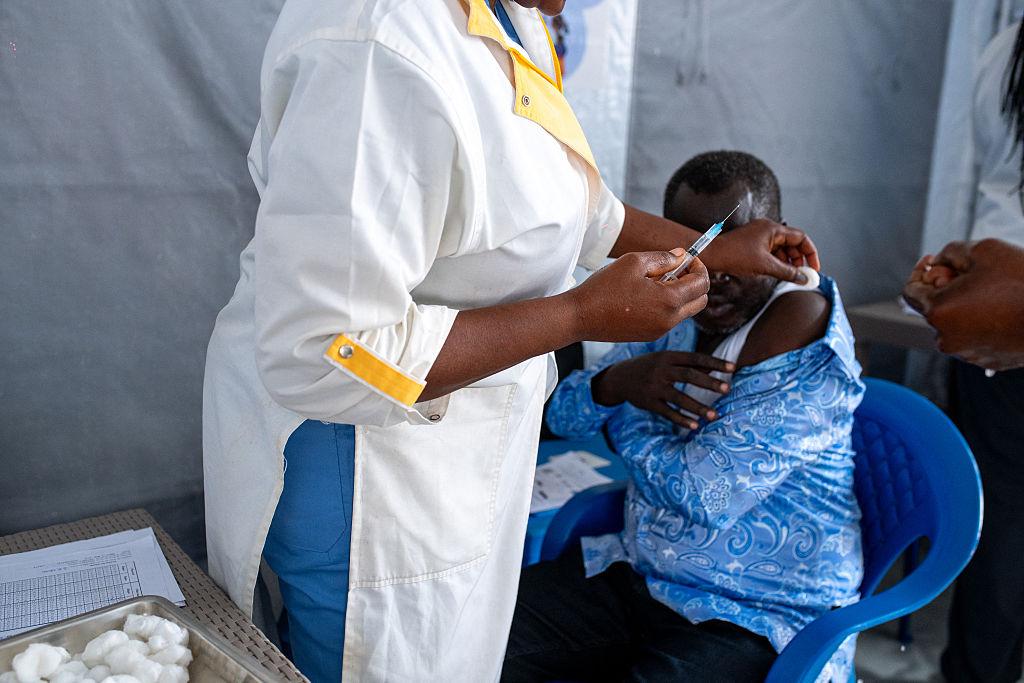
The Ebola outbreak in the Democratic Republic of the Congo (DRC) remained a major public-health concern, with figures reported by the European Centre for Disease Prevention and Control (ECDC) placing the number of confirmed cases above 10,000.
The agency reported 10,060 confirmed cases and 4,887 deaths in the DRC, based on data through 25 October 2026. It also reported confirmed cases in Kenya and Nigeria, indicating that the public-health response had implications beyond the DRC.
These figures must be interpreted according to their stated reporting period. They do not necessarily represent the latest totals available on 28 October.
Nigeria’s confirmed case adds a domestic dimension
The outbreak was particularly relevant to Nigeria because the Nigeria Centre for Disease Control and Prevention (NCDC) confirmed a case of Bundibugyo Ebola in the Federal Capital Territory on 20 October.
The NCDC’s 26 October situation report later reported that the patient had been medically evacuated to Switzerland and that contact tracing and monitoring were continuing.
This placed Nigeria’s response beyond the stage of preparing for a possible imported threat. Authorities were managing a confirmed case while monitoring for potential further transmission.
Effective public-health responses depend on early detection, isolation where appropriate, contact monitoring, accessible treatment and communication that enables affected communities to understand and respond to official guidance.
The scale of the DRC outbreak also underlines the importance of regional awareness and coordination. However, the circumstances in each country must be assessed separately. The much larger case total in the DRC does not, by itself, establish the extent of transmission or the effectiveness of containment measures in Nigeria.
What the outbreak figures do—and do not—show
The milestone of more than 10,000 confirmed cases demonstrates the scale of the reported emergency. It does not independently prove that containment efforts have failed.
Assessing the effectiveness of the response requires more detailed information, including the pace of new infections, how early cases are detected, the effectiveness of contact tracing and whether response teams can reach affected communities.
For Nigeria, updated information on confirmed cases, monitored contacts and the progress of the response is essential to understanding whether the situation has changed.
Two verification issues remain important for this edition: the original publication timestamp of the report announcing the 10,060-case milestone, and the latest official epidemiological information from the relevant health authorities.
The broader significance is clear. Public-health reporting must distinguish between the scale of an outbreak and the evidence showing whether interventions are working. Accurate figures, timely communication and continued monitoring remain essential to protecting lives.
Nigeria Detainee Deaths Inquiry Raises Questions About Accountability
A federal investigative committee in Nigeria reported that severe overcrowding, poor ventilation, extreme heat and dehydration contributed to the deaths of suspected illegal miners held in the custody of the Nigeria Security and Civil Defence Corps in Niger State.
According to the Federal Ministry of Information and National Orientation’s summary released on 27 October, the committee confirmed 33 deaths, including 14 minors, and identified 41 survivors. The committee also cited failures by officers to respond to distress calls.
The findings raised serious questions about detention conditions, supervision and the responsibility of public authorities to protect people in their custody.
Discrepancy in reported death toll remains unresolved
An important issue concerns the number of people who died.
Earlier government material and news reports referred to 37 deaths. The ministry’s later summary stated that the committee confirmed 33.
The available information does not fully explain the difference. The two figures should therefore not be treated as interchangeable, and the complete committee report is needed to establish the final breakdown.
Clear reporting on the discrepancy is important because casualty figures form a central part of the public record. Any final account should explain what the committee counted, how the figures were established and whether the different totals refer to different stages of the investigation.
Recommendations are not the same as completed justice
The committee reportedly recommended compensation and support for affected families and survivors, disciplinary action, possible prosecution and institutional reforms.
The government said the report would be forwarded to the Office of the Attorney-General of the Federation for further judicial action.
These steps could form part of a process of accountability, but recommendations and proposed referrals do not establish that prosecutions have begun, compensation has been paid or reforms have been implemented.
The distinction matters because people suspected of committing offences remain entitled to lawful treatment and basic protection while in custody. Where deaths occur under state supervision, the public interest extends beyond the immediate causes to include the conduct of responsible officers, the adequacy of detention procedures and whether preventable failures contributed to the outcome.
Important questions remain. Which recommendations will the government accept? How will individual responsibility be established? What arrangements will determine and deliver compensation? And what safeguards will prevent similar incidents?
The Nigeria Security and Civil Defence Corps should also have an opportunity to respond to the findings.
For affected families and survivors, the inquiry represents a step towards establishing what happened. Whether it will lead to effective remedies and lasting institutional change remains a separate question.
The full committee report and confirmation of subsequent legal or administrative action are therefore essential to the next stage of reporting.

International Partners Renew Calls for Humanitarian Action in Sudan
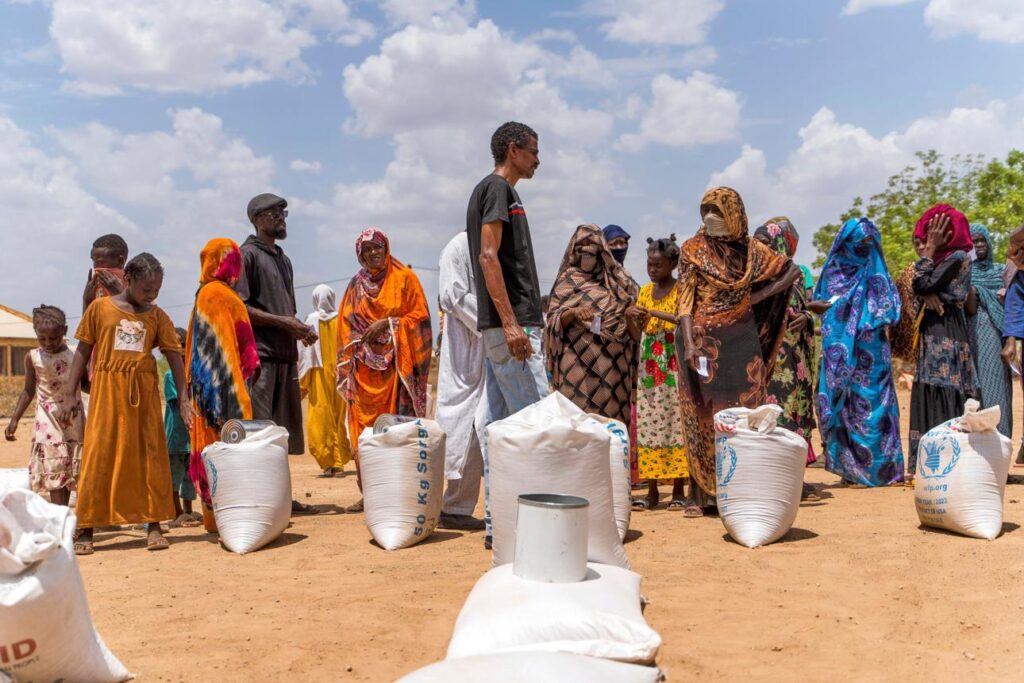
International partners renewed calls for urgent action over Sudan’s humanitarian crisis during the review period, urging the parties to the conflict to improve humanitarian access, protect civilians and aid workers, and increase funding for relief operations.
Reuters reported on 27 October that the United States and a group of international partners had issued a joint appeal calling for obstacles to humanitarian assistance to be removed.
The appeal also urged improved access through cross-border and crossline routes, including air access to Darfur.
The diplomatic intervention addressed a crisis rooted in the conflict between the Sudanese Armed Forces and the paramilitary Rapid Support Forces, which began in April 2023.
The war has disrupted livelihoods and agricultural activity, displaced millions of people and made the delivery of humanitarian assistance more difficult.
Although the appeal was a development reported during the review period, the humanitarian emergency it addressed had been building for years.
Food insecurity and displacement remain central concerns
Reuters cited an assessment indicating that 5.1 million people faced severe hunger in June 2026. This figure relates to the June assessment and must not be presented as a newly measured October total.
The report also cited more than 14 million displaced people. However, the precise data cut-off and definition behind that figure require confirmation against the relevant humanitarian source.
Updated assessments from the Integrated Food Security Phase Classification (IPC) and United Nations agencies are needed to establish the latest position.
These qualifications are important when reporting humanitarian emergencies. Figures can refer to different assessment periods, population categories and measurement methods. They should be attributed and dated so that readers can understand precisely what they describe.
The test is whether humanitarian access improves
The significance of the international appeal depends on what follows.
Diplomatic statements can increase pressure on the parties to a conflict, but they do not prove that aid routes have opened, humanitarian organisations can safely reach affected communities or additional funding has been delivered.
There is a difference between announcing financial commitments, disbursing funds and ensuring that food, medical supplies and other assistance reaches the people who need it.
For civilians facing hunger and displacement, the practical outcome matters more than the announcement alone.
The questions requiring further answers include which locations remain inaccessible, what obstacles are preventing aid deliveries, how much funding has actually been made available and whether the parties to the conflict are complying with demands to protect civilians and humanitarian workers.
The original joint statement also needs to be examined to confirm the participating governments and the precise terms of their appeal.
Sudan’s crisis has consequences beyond its borders, particularly where displacement places additional pressure on neighbouring countries and humanitarian organisations. However, specific claims about the impact on another African country require supporting evidence.
The most meaningful follow-up will be evidence of improved access, funding delivered, assistance reaching affected communities and updated assessments of food insecurity. Until those changes are established, the international appeal remains an important diplomatic development whose practical effects are unresolved.
South Africa Authorises 510 Soldiers for KwaZulu-Natal
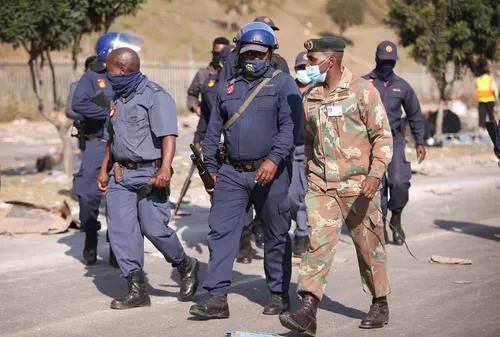
South African President Cyril Ramaphosa authorised the deployment of 510 members of the South African National Defence Force to KwaZulu-Natal to support the South African Police Service under Operation Prosper.
The Presidency’s announcement, published on 27 October, linked the deployment to violent actions associated with misinformation about a Constitutional Court judgment concerning the Refugee Act.
The official notice specified a deployment period from 9 October to 30 November 2026 and an expected cost of R34,082,720. It cited section 201(2)(a) of South Africa’s Constitution as the legal basis for the deployment.
The soldiers were intended to support police operations and remain available for possible incidents.
Government rationale requires independent examination
Reuters reported anti-immigration protests and violence in Durban, including looting of foreign-owned shops and a reported death during a march. Those details require attribution to the relevant reports and verification against police records and other reliable evidence.
The Presidency’s announcement establishes the authorised deployment and the government’s stated rationale. It does not, by itself, establish the full extent of the unrest or demonstrate that the military presence improved public safety.
The government’s reference to misinformation about a court judgment also requires further examination.
Reviewing the relevant Constitutional Court judgment would help establish what the court decided, which claims about it were inaccurate, how those claims circulated and what evidence connected them to particular incidents of violence.
The government’s explanation is an important part of the story, but it should not replace independent examination of the events and the evidence.
Public safety, expenditure and migrant protection
The deployment raises questions about the boundaries of military support for domestic policing, the use of public funds and the protection of people at risk.
Foreign nationals, local residents and business owners all have an interest in whether authorities can prevent violence, protect property and maintain public order while respecting legal rights.
Any specific account of Nigerian citizens affected by the unrest must be supported by verified information from the relevant authorities or the individuals involved.
The authorised deployment period runs through the end of November. However, the announcement does not establish that the violence has ended or confirm whether the deployment will be extended.
Its effectiveness will need to be assessed through evidence, including police reports, verified incidents, the safety of affected communities, oversight of the operation and actual expenditure against the stated cost.
South Africa’s decision is therefore both a security measure and a test of implementation. The central question is not simply how many soldiers have been deployed, but whether the operation protects people, counters misinformation and improves public safety while maintaining clear accountability.
Conclusion
The Africa news review for 28 October 2026 highlights four developments with distinct causes and consequences: an Ebola outbreak in the Democratic Republic of the Congo, an inquiry into deaths in detention in Nigeria, renewed international calls for humanitarian action in Sudan, and South Africa’s deployment of soldiers following anti-migrant violence.
These stories should not be treated as evidence of one uniform continental problem. They do, however, underline the importance of assessing public action through evidence rather than announcements alone.
Case totals describe the scale of an outbreak, but do not independently establish the effectiveness of containment. An inquiry does not complete the process of justice. A humanitarian appeal does not prove that assistance has reached civilians. A military deployment does not demonstrate that violence has ended.
The next developments will require accurate reporting, transparent decision-making and measurable outcomes. For Africa in Motion, the objective remains to explain not only what African governments and institutions announce, but what those decisions mean for the people affected.
RECOMMENDED ARTICLES
1. Global News Analysis: Elections, AI and Investment
Explore major global developments, from Brazil’s presidential election and political change in Serbia to an AI copyright lawsuit and Audi’s planned US investment. This analysis examines what the available evidence establishes—and what remains uncertain.
Category: Global News Analysis
2. Africa News Review: Ebola Preparedness, Regional Security and Political Accountability
Read about Uganda’s Ebola-related precautions, Algeria’s approved military deployment to Niger, Somalia’s political dialogue and a deadly road crash in Kenya. The report examines public safety, regional cooperation and the need to verify official actions.
Category: Africa News Review
3. Nigeria Daily News Review: State Police, Inflation, Ebola and 2027 Politics
Catch up on Nigeria’s latest developments in security reform, economic policy, public health, cybercrime enforcement and preparations for the 2027 elections. Discover what has been reported, what remains unresolved and what Nigerians should watch next.
Category: Nigeria News Review
4. Global News Review: October 19–25, 2026
Review the major international developments from the week and understand the political, economic and technological issues shaping the global agenda. This weekly roundup offers a broader perspective on the events and decisions making headlines around the world.
Category: Global Weekly Review
5. Africa News Review: Ebola Concerns, Conflict, Power Challenges and Political Decisions
From public-health concerns and conflict-related civilian risks to infrastructure ambitions and political decisions, this Africa review explores the developments influencing the continent. It separates reported claims from established facts and examines what needs to happen next.
Category: Africa Weekly Review
6. Nigeria’s Week in Review: Election Politics, Economic Pressure, Security Reform and Floods
Get a wider view of Nigeria’s week, including President Bola Tinubu’s campaign launch, labour tensions, economic uncertainty, proposed state-police reform, public-health concerns and flooding. The review explains the issues behind the headlines and the evidence needed to assess government responses.
Category: Nigeria Weekly Review
About the Author