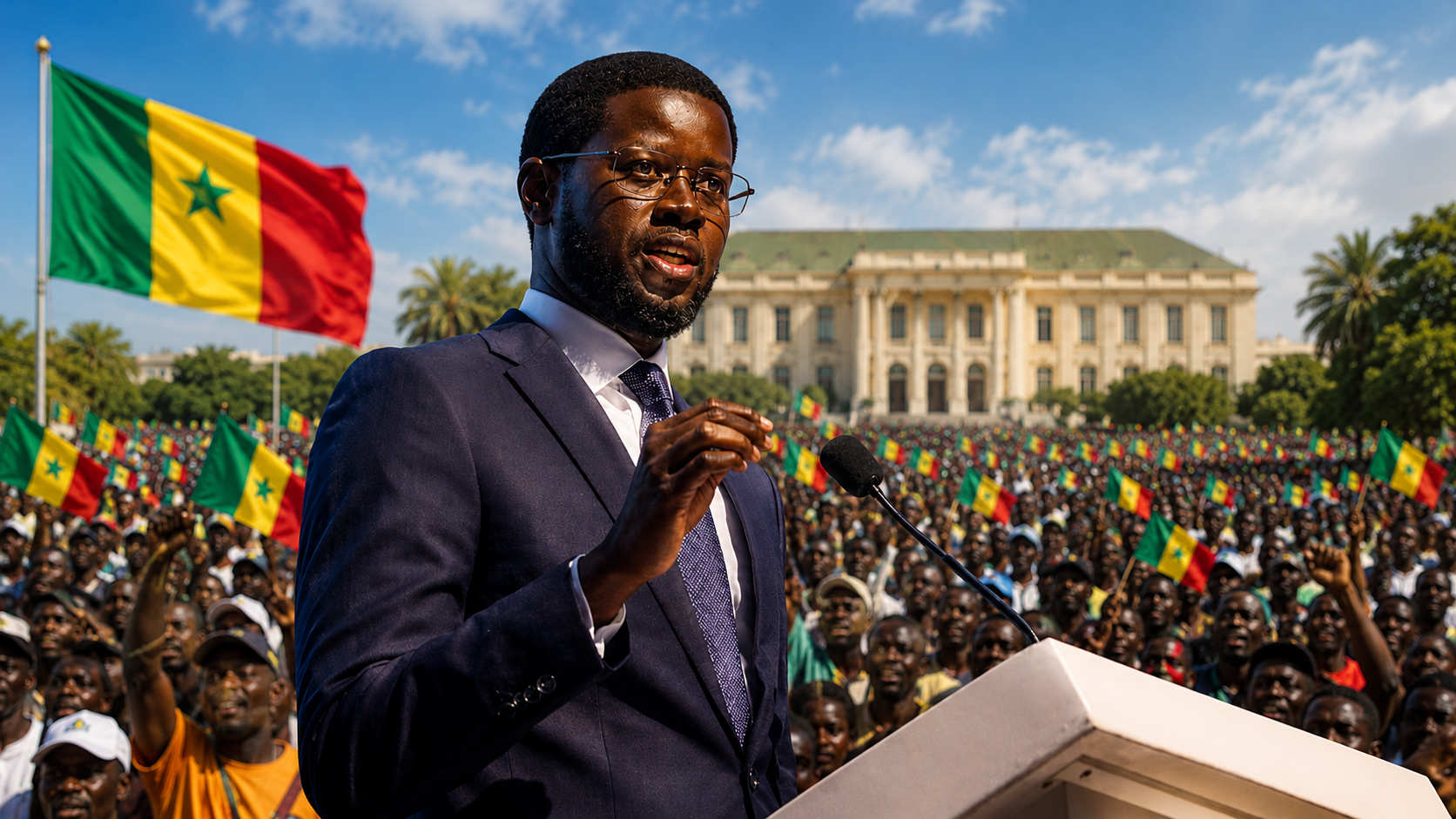
Bassirou Diomaye Faye Launches New Party as Senegal’s Political Alliance Unravels
DAKAR, Senegal — President Bassirou Diomaye Faye has taken a decisive step toward establishing his own political party, marking the most significant political break since he assumed office in 2024. The decision follows a widening leadership dispute with his former ally, Ousmane Sonko, whose political movement played a central role in Faye’s rise to power. The development signals a profound realignment within Senegal’s governing establishment and raises fresh questions about the country’s democratic trajectory.
Rather than remaining under the political structure that propelled him to the presidency, Faye is now seeking an independent national platform capable of consolidating support across Senegal. His decision reflects more than a disagreement between two influential politicians; it highlights the growing struggle over political authority, constitutional powers, and the future direction of one of West Africa’s most stable democracies.
According to information released by the presidential coalition, Faye instructed his senior adviser, Aminata Touré, to head a special task force responsible for laying the groundwork for the new political movement. The announcement came during a meeting with 306 mayors aligned with the president, where he emphasized the need to build what he described as “organic unity” capable of strengthening his nationwide political support.
Although the immediate announcement concerns the formation of a new party, the broader significance lies in what it reveals about the rapid transformation of Senegalese politics. Only two years after an election widely celebrated as a democratic milestone, the alliance that united reform-minded leaders has fractured into competing centres of political influence.
A Partnership That Changed Senegal’s Politics
The relationship between Bassirou Diomaye Faye and Ousmane Sonko was once regarded as one of the most influential political partnerships in modern Senegal. Together, they represented a new generation of leaders promising institutional reforms, anti-corruption measures, economic accountability, and greater opportunities for young people.
During the 2024 presidential election, Faye emerged as the presidential candidate under extraordinary circumstances after Sonko encountered legal and political obstacles that prevented him from contesting the election directly. Their alliance succeeded in mobilising widespread public support, particularly among young voters eager for political change after years of dissatisfaction with the country’s traditional political establishment.
The victory was widely interpreted as a turning point for Senegal’s democracy. Many observers believed the new administration would usher in an era of closer cooperation between reform advocates determined to reshape governance and public institutions.
However, governing a nation often presents challenges very different from campaigning for office.
As responsibilities expanded and competing visions for leadership emerged, underlying tensions within the alliance reportedly became increasingly difficult to manage. What initially appeared to be differences over governance gradually evolved into a broader contest over political authority, institutional control, and the future identity of the country’s ruling movement.
These tensions would eventually reshape Senegal’s political landscape in ways few anticipated when the two leaders celebrated their historic electoral victory.
From Political Allies to Institutional Rivals
The latest decision to establish a separate political party reflects months of growing divisions between the country’s two most influential political figures. While official statements have largely focused on organisational restructuring, the sequence of political developments suggests a much deeper struggle over leadership and constitutional authority.
One of the defining moments in the deteriorating relationship came when President Faye removed Sonko from the position of prime minister—a decision that fundamentally altered the balance of power within the administration. Following his removal, Sonko assumed the role of Speaker of the National Assembly, placing him at the centre of Senegal’s legislative process and creating a new institutional dynamic between the executive and the legislature.
The separation of these two powerful offices has transformed what was once an internal political partnership into a constitutional contest with implications extending well beyond the careers of the individuals involved.
Bassirou Diomaye Faye and the Constitutional Battle Redefining Senegal
The political disagreement between President Bassirou Diomaye Faye and Ousmane Sonko has evolved beyond a personal leadership dispute into a broader constitutional debate over how political power should be exercised in Senegal. At the centre of the disagreement is not only who leads the country’s reform movement, but also the legal framework governing the presidency, political parties and the balance of power between state institutions.
Following his appointment as Speaker of the National Assembly after leaving the prime minister’s office, Sonko advanced legislative reforms designed to prohibit a sitting president from simultaneously leading a political party. Supporters of the proposal argued that separating state leadership from party leadership would strengthen democratic institutions, reduce the concentration of power and encourage greater political accountability.
The proposed constitutional changes gained sufficient backing in parliament, demonstrating that Sonko retained significant political influence despite no longer serving in the executive branch. Instead of accepting the parliamentary route, however, President Faye chose a different constitutional path by announcing that the proposed amendments would be submitted directly to the Senegalese people through a national referendum.
That decision has become one of the defining moments of the current political crisis.
Rather than allowing parliament to determine the constitutional outcome, the president’s move shifts responsibility to voters, reinforcing his argument that constitutional reforms affecting the presidency deserve direct public endorsement. Supporters describe the referendum as an exercise in participatory democracy, while critics see it as evidence of an increasingly open institutional rivalry between the executive and the legislature.
Although the referendum process remains part of Senegal’s constitutional order, it has intensified debate over how competing branches of government should interact during periods of political disagreement.
Why Faye Wants His Own Political Platform
President Faye’s decision to establish an independent political movement appears closely connected to the changing balance of power inside Senegal’s governing coalition.
When he assumed office in 2024, much of his political legitimacy rested on the coalition assembled around Sonko and the broader reform agenda that united opposition forces. That coalition proved highly effective during the election campaign because it combined a shared message of political renewal with a nationwide grassroots mobilisation.
However, governing has introduced new realities.
A president must maintain stable relationships with parliament, regional leaders, local government officials and state institutions while simultaneously pursuing campaign promises. As internal disagreements widened, the practical challenges of relying on an increasingly divided political structure became more apparent.
By creating a separate political party, Faye is seeking to establish a political organisation whose loyalty is centred directly on the presidency rather than inherited alliances.
His address to more than 300 coalition mayors reflected that objective. Calling for “organic unity,” he signalled a desire to transform his existing network of supporters into a permanent nationwide political organisation capable of sustaining his administration beyond its original electoral coalition.
Political analysts often note that presidents across Africa eventually seek independent political structures to consolidate executive authority once coalition politics become difficult to manage. While every country’s political circumstances differ, Senegal now appears to be entering a similar phase of institutional realignment.
What the Split Means for Senegal’s Democracy
For decades, Senegal has earned international recognition as one of Africa’s more stable democracies, characterised by relatively peaceful transfers of power, active political competition and resilient public institutions.
The current dispute therefore carries significance beyond the immediate relationship between Faye and Sonko.
The disagreement tests whether Senegal’s democratic institutions can effectively manage political competition within the governing establishment without triggering prolonged instability.
Several important questions now confront policymakers and voters alike:
- Can constitutional disagreements be resolved through established democratic processes?
- Will competing political camps continue to cooperate on national priorities despite growing rivalry?
- Can government institutions function effectively while senior political figures pursue separate political agendas?
- How will voters respond if the coalition that secured victory in 2024 ultimately fragments into competing political parties?
These questions extend beyond electoral politics because they influence investor confidence, public trust and Senegal’s international reputation as one of West Africa’s democratic success stories.
Unlike countries where political disagreements have resulted in institutional paralysis or military intervention, Senegal has historically relied on constitutional mechanisms to resolve political disputes. Whether that tradition continues will be closely watched across the African continent.
A Wider Lesson for West African Politics
The developments in Dakar are unfolding at a time when democracy across West Africa faces significant pressures.
Several countries in the region have experienced military coups, constitutional controversies or prolonged political instability in recent years. Against that backdrop, Senegal has often been cited as an example of democratic resilience.
The emergence of competing political camps within the country’s reform movement therefore carries regional importance.
Neighbouring governments, regional organisations and international partners are likely to observe how Senegal manages this transition because its experience may offer lessons about coalition politics, constitutional governance and democratic succession in Africa.
Rather than viewing the current situation solely as a domestic political disagreement, many observers see it as a test of whether democratic institutions can withstand leadership conflicts without undermining public confidence in constitutional governance.
If managed peacefully and transparently, the dispute could ultimately reinforce Senegal’s democratic credentials by demonstrating that political competition can occur within constitutional boundaries. Conversely, prolonged institutional confrontation could create uncertainty at a time when regional stability remains a priority for West Africa.
How the Faye–Sonko Rift Could Influence Future Elections
While President Bassirou Diomaye Faye’s immediate objective is to establish a new political party, the longer-term consequences may become evident during Senegal’s next electoral cycle. Political parties are not merely campaign vehicles; they determine candidate selection, legislative priorities, coalition building and grassroots mobilisation. A divided reform movement could therefore reshape the country’s political landscape for years to come.
Should Faye successfully transform his presidential support base into a nationwide political organisation, he would gain greater control over policy direction, party discipline and electoral strategy. Such independence could reduce internal conflicts that often arise when presidents depend on political structures controlled by other influential figures.
However, building a new party also presents considerable challenges.
Creating a national political movement requires organisational structures, regional offices, local leadership, fundraising mechanisms and sustained public support. It also demands convincing voters that a separate political platform offers greater stability and effectiveness than the coalition that originally secured electoral victory.
For Sonko, the political equation is equally significant.
Despite leaving the executive branch, he remains one of Senegal’s most recognisable political figures. His continued influence within the National Assembly and among supporters of the reform movement means he is likely to remain a central actor in shaping legislative debates and national political discourse.
The emergence of two powerful political centres from what was once a united alliance could intensify electoral competition while also encouraging new political alliances ahead of future national and local elections.
Economic Confidence Often Follows Political Stability
Although the current dispute centres primarily on politics and constitutional governance, its implications extend into the economic sphere.
Political stability is a major consideration for domestic businesses, foreign investors and international development partners. Senegal has long positioned itself as one of West Africa’s more predictable investment destinations, benefiting from relatively stable institutions compared with several neighbouring countries.
Periods of political uncertainty can influence investor sentiment in several ways:
- Delays in implementing government reforms.
- Uncertainty over future economic policies.
- Slower legislative decision-making.
- Increased political risk assessments by international investors.
Conversely, if constitutional disagreements are resolved peacefully through democratic institutions, Senegal could reinforce its reputation as a country where political competition remains governed by law rather than instability.
Economists generally note that markets value institutional predictability as much as they value specific economic policies. For that reason, how Senegal manages the current political transition may ultimately prove as important as the dispute itself.
Lessons for African Coalition Politics
The political developments in Senegal also highlight broader questions about coalition governments across Africa.
Coalitions frequently emerge during election campaigns because they unite diverse political interests around common objectives. Yet once in government, maintaining unity often becomes more difficult as leaders confront policy disagreements, competing ambitions and differing visions for governance.
Across the continent, several administrations have experienced internal divisions after achieving electoral success. In many cases, disagreements have centred on cabinet appointments, constitutional reforms, succession planning or control of party structures.
Senegal’s experience illustrates a recurring political reality: alliances built to win elections are not always structured to govern effectively over the long term.
Unlike countries where political disputes have escalated into institutional crises, Senegal’s challenge will be to ensure that disagreements remain within constitutional and democratic boundaries. The country’s legal institutions, electoral bodies and civil society organisations will all play important roles in preserving public confidence during this period of political transition.
Nigeria and West Africa Are Watching Closely
For Nigeria and other African democracies, events in Senegal offer important governance lessons.
As Africa’s largest democracy, Nigeria has witnessed its own share of political realignments, party defections and coalition politics. Senegal’s unfolding experience demonstrates that even governments elected on promises of unity and reform are not immune to internal political tensions.
The situation also reinforces the importance of strong democratic institutions capable of managing disagreements without disrupting governance.
Political analysts across the region are likely to observe how Senegal balances executive authority, parliamentary independence and constitutional processes. The outcome could influence future debates about political reforms elsewhere in West Africa, where questions of party leadership, presidential powers and constitutional amendments continue to generate public discussion.
For regional organisations such as the Economic Community of West African States (ECOWAS), Senegal’s ability to navigate this dispute peacefully will serve as another indicator of democratic resilience at a time when parts of the region continue to grapple with political instability.
Can Reconciliation Still Be Achieved?
Despite the increasingly visible divisions between President Faye and Ousmane Sonko, political reconciliation cannot be entirely ruled out.
Political alliances often evolve in response to changing national priorities, public opinion and electoral realities. While both leaders currently appear committed to separate political paths, democratic politics has repeatedly shown that former rivals can cooperate again when circumstances demand.
At present, however, available information suggests that both camps are preparing for an extended period of political competition rather than reconciliation. President Faye’s directive to establish an independent political movement indicates a strategic effort to consolidate his own support base, while Sonko’s continued legislative influence positions him as a significant counterweight within Senegal’s political system.
Whether these parallel centres of influence ultimately strengthen democratic competition or deepen political divisions will depend largely on how institutions, political actors and the electorate respond in the months ahead.
One point is already clear: the partnership that transformed Senegal’s politics in 2024 has entered a new chapter. The decisions taken now by President Bassirou Diomaye Faye, Ousmane Sonko and Senegal’s democratic institutions will help determine not only the country’s immediate political future but also its reputation as one of Africa’s most resilient democracies.
Conclusion: A Defining Moment for Senegal’s Democracy
President Bassirou Diomaye Faye’s decision to establish a new political party marks far more than an organisational change within Senegal’s political landscape. It represents a defining test of how one of Africa’s most respected democracies manages internal leadership rivalry while preserving constitutional order and public confidence.
Although the immediate catalyst is the breakdown of the once-powerful alliance between Faye and Ousmane Sonko, the broader issues at stake involve presidential authority, parliamentary influence, constitutional reform and the future structure of political competition in Senegal.
The coming months are likely to determine whether the country experiences a peaceful political realignment or a prolonged institutional confrontation. Much will depend on the conduct of political leaders, the independence of democratic institutions and the willingness of competing camps to resolve disagreements through constitutional processes.
For the wider West African region, Senegal’s experience offers another important reminder that democratic transitions do not end with elections. Sustaining political stability requires institutions capable of managing competing ambitions without undermining governance or public trust.
For African democracies—including Nigeria—the unfolding developments in Dakar reinforce the enduring importance of strong institutions over individual political personalities.
As Senegal prepares for its next chapter, both citizens and international observers will be watching closely to see whether the country can once again demonstrate the democratic resilience for which it has long been recognised.
Recommended Coverage
President Diomaye Faye’s First Year: Progress and Challenges
Internal Link:https://dsgheraldnews.com/president-diomaye-fayes-first-year-progress-challenges/
Explore DSG Herald News’ in-depth assessment of President Faye’s first year in office, examining his reform agenda, governance achievements and the challenges facing his administration.
Kamdi Okeke Scholarship Opens Global Education Opportunities
Learn how a Nigerian student’s international scholarship success reflects Africa’s growing educational opportunities and youth potential.
Diezani Alison-Madueke Acquittal Ends 11-Year UK Case
Read DSG Herald News’ comprehensive report on one of the longest-running legal cases involving Nigeria’s former petroleum minister.
Nigeria’s Economy: Progress or Crisis Under Tinubu?
An analysis of Nigeria’s current economic direction and the policies shaping growth, inflation and public expectations.
Owerri West’s Growth Fuels Demand for Better Leadership
Discover why rapid urban expansion is increasing calls for improved governance and sustainable development in one of Imo State’s fastest-growing areas.
About the Author