Khamenei Funeral Signals Iran’s Political Transition
TEHRAN, Iran — The Khamenei Funeral has evolved beyond a national farewell into one of the most consequential political events in Iran since the end of the recent U.S.-Israel-Iran conflict. As six days of state mourning continue from July 4 to July 9, 2026, the funeral ceremonies for Iran’s assassinated former Supreme Leader, Ayatollah Ali Khamenei, are being carefully orchestrated to project national resilience, reinforce religious legitimacy and reassure allies that the country’s leadership remains firmly in control after months of war.
While millions have gathered across Iran to pay their respects, the funeral’s broader significance lies not only in honoring a leader who shaped Iranian politics for decades but also in signalling how Tehran intends to navigate a new political era following a devastating conflict that dramatically altered the Middle East’s strategic landscape.
Khamenei was killed alongside several members of his family during joint U.S. and Israeli airstrikes on February 28, 2026, an attack that triggered months of regional conflict before a preliminary ceasefire created the conditions for his delayed burial. The more than four-month postponement transformed what would normally have been a state funeral into a symbolic event marking Iran’s transition from wartime crisis to a new phase of political consolidation. According to Reuters, Iranian authorities have deliberately framed the ceremonies as evidence of the country’s endurance despite military and diplomatic pressure.
Khamenei Funeral Becomes a Statement of National Continuity
Rather than serving solely as a religious ceremony, the Khamenei Funeral has become a carefully choreographed demonstration of state authority.
The ceremonies began on July 4, when Khamenei’s body was placed inside a glass enclosure at Tehran’s Imam Khomeini Grand Mosalla mosque. Despite extreme summer temperatures, hundreds of thousands of mourners filed past the casket, reflecting the event’s religious importance and its role in reinforcing public solidarity after months of uncertainty.
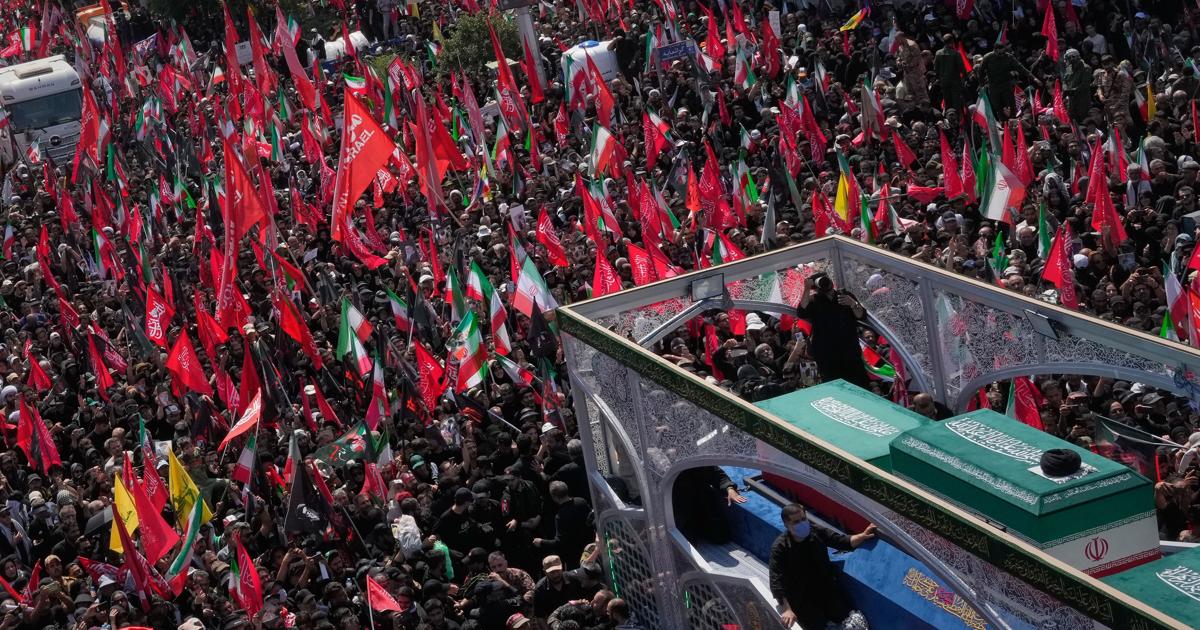
By July 6, the funeral had expanded into a massive procession stretching approximately ten kilometres through central Tehran. Crowds moved from Enghelab (Revolution) Square to Azadi (Freedom) Square, waving Iranian flags, carrying portraits of Khamenei and displaying banners calling for national unity.
State television portrayed the turnout as proof that Iran’s institutions remained intact despite the assassination of one of the country’s most influential leaders. While independent verification of attendance figures remains difficult, the images broadcast worldwide were clearly intended to communicate that the Islamic Republic continues to command significant domestic support.
Political analysts have long noted that major public ceremonies in Iran serve dual purposes: honouring religious traditions while reinforcing the legitimacy of the political establishment. This funeral appears to follow that longstanding pattern on an even larger scale because of the extraordinary circumstances surrounding Khamenei’s death.
Why the Delayed Burial Carries Extraordinary Significance
Under ordinary Islamic practice, burial generally occurs as soon as possible after death. The fact that Khamenei’s funeral was delayed for more than four months underscores the scale of disruption caused by the conflict that erupted following the February airstrikes.
The postponement reflects both practical wartime realities and political calculations. Conducting a national funeral during active military operations would have posed significant security risks while limiting the government’s ability to organise the large-scale ceremonies traditionally associated with senior religious leaders.
With a preliminary ceasefire now in place, Iranian authorities have been able to transform the burial into a national event intended to symbolise recovery after war.
For the government, the timing also allows the funeral to become the country’s first major post-conflict gathering, offering leaders an opportunity to present an image of stability both to domestic audiences and to the international community.
That message is particularly important as Tehran attempts to reposition itself diplomatically while continuing negotiations related to regional security and future peace arrangements.
A Carefully Planned Journey Across Iran and Beyond
The six-day funeral itinerary reflects the religious and political significance attached to Khamenei’s legacy.
After ceremonies in Tehran, the funeral cortege travelled on Tuesday, July 7, to the holy city of Qom, home to many of Iran’s most influential clerical institutions. Processions and prayers at the Jamkaran Mosque further reinforced the religious foundations of the Islamic Republic.
The schedule then extends beyond Iran’s borders.
On July 8, Khamenei’s remains are expected to be flown to Najaf and Karbala in neighbouring Iraq, two of Shiite Islam’s holiest cities. Holding public ceremonies there highlights the transnational religious influence Iran continues to exercise across the Shiite world despite the recent conflict.
The funeral will conclude on July 9 with burial at the Imam Reza Shrine in Mashhad, Khamenei’s hometown and one of the most revered religious sites in Shiite Islam.
Taken together, the route connects Iran’s political capital, its religious centres and the wider Shiite community, underscoring the leadership’s effort to frame Khamenei’s legacy as extending beyond national borders.
Leadership Questions Continue to Shape Public Discussion
Even as millions participate in mourning ceremonies, attention has increasingly turned to what the funeral reveals about Iran’s future leadership.
One of the most discussed aspects of the ceremonies has been the reported absence of Mojtaba Khamenei, identified in the supplied source material as Khamenei’s son and successor. Reports cited in the primary source state that he has remained out of public view throughout the funeral and was reportedly injured during the February 28 airstrike, although those claims could not be independently verified.
His absence has inevitably fuelled discussion among political observers about succession, internal security and how Iran intends to manage the transition following one of the most significant leadership changes in the country’s modern history.
However, Iranian authorities have released little official information explaining the circumstances surrounding his absence, leaving many questions unanswered.
The uncertainty illustrates the delicate balance Tehran faces between maintaining operational security and projecting confidence during a period of heightened regional tension.
Beyond succession, the funeral itself appears designed to reassure both domestic supporters and foreign partners that state institutions continue to function despite the unprecedented challenges created by the conflict.
Khamenei Funeral Reflects Iran’s Strategy Beyond Mourning
Beyond its religious significance, the Khamenei Funeral has become a platform through which Iran is communicating its priorities to both domestic and international audiences.
Throughout the ceremonies, state media have emphasized themes of resistance, sacrifice and national unity. Red banners associated with calls for vengeance have appeared prominently during public processions, while slogans such as “We must rise” have reinforced official narratives that Iran emerged from the conflict determined to preserve its political system and regional influence.
Images carried by mourners targeting U.S. President Donald Trump further underscored the extent to which the funeral has been intertwined with the geopolitical fallout of the war.
Rather than presenting the ceremonies solely as an act of remembrance, Iranian officials have framed them as a demonstration that the country’s political institutions remain intact despite the loss of their longtime leader.
For observers across the Middle East, the funeral therefore represents not only the closing chapter of Khamenei’s leadership but also the opening stage of Iran’s post-war political messaging.
Foreign Delegations Highlight Shifting Diplomatic Dynamics
The international attendance at the funeral has also become a barometer of Iran’s diplomatic standing.
According to the supplied source material, senior delegations from countries including India and China attended the ceremonies, reflecting continued engagement with Tehran despite heightened regional tensions.
At the same time, Iranian media reported that up to 13 countries either reduced or cancelled their participation, attributing those decisions to diplomatic pressure from the United States. Those claims have been reported by Iranian outlets but could not be independently verified.
The contrasting levels of participation illustrate the increasingly complex diplomatic environment surrounding Iran.
For countries seeking to balance relations with both Tehran and Washington, participation in such a high-profile event carries symbolic as well as political consequences.
China’s continued engagement reflects its broader strategic partnership with Iran, particularly in energy, infrastructure and regional security. India, meanwhile, maintains longstanding economic and geopolitical interests in Iran, including access to trade corridors linking South Asia with Central Asia and Europe.
The varied diplomatic responses suggest that, despite months of conflict, Iran continues to occupy an important position in regional and global strategic calculations.
Religious Symbolism Extends Beyond Iran’s Borders
The decision to include Najaf and Karbala in Iraq as part of the funeral itinerary carries considerable religious and geopolitical significance.
Both cities rank among the holiest sites in Shiite Islam and attract millions of pilgrims annually.
By transporting Khamenei’s remains there before his final burial in Mashhad, Iranian authorities reinforce the country’s longstanding effort to position itself as a leading voice within the global Shiite community.
This cross-border dimension also highlights the enduring religious networks linking Iran with communities across Iraq, Lebanon and other parts of the Middle East.
For supporters of the Islamic Republic, the funeral reinforces a narrative of ideological continuity despite military setbacks.
For critics, however, it serves as another reminder that religion and state power remain deeply intertwined within Iran’s political system.
Regardless of perspective, the ceremonies demonstrate that symbolism remains a central element of Iran’s domestic governance and foreign policy.
What the Funeral Could Mean for Iran’s Future
Although the funeral marks the end of one political era, it also raises questions about what comes next.
Iran faces multiple challenges in the months ahead, including rebuilding after war, navigating ongoing regional tensions, managing international sanctions and maintaining domestic political cohesion.
The leadership transition will likely remain one of the most closely watched developments.
Whether Iran’s next generation of leaders adopts policies that mirror Khamenei’s long tenure or adjusts to changing regional realities will influence not only the country’s future but also broader Middle Eastern stability.
Political observers are expected to continue monitoring:
- The consolidation of Iran’s new leadership structure.
- Relations with the United States and Israel following the ceasefire.
- The future of regional proxy alliances.
- Diplomatic engagement with China, India and other strategic partners.
- Domestic public sentiment after months of conflict.
While many of these issues remain unresolved, the funeral has provided Iran with its first major opportunity to present a unified national image since the war ended.
Why This Matters Beyond the Middle East
Although centred in Iran, the implications extend well beyond the region.
For African nations, including Nigeria, developments in Iran have indirect consequences for global energy markets, shipping routes and international diplomacy.
Periods of instability involving major oil-producing regions often influence global crude prices, which can affect fuel costs, inflation and government revenues in energy-producing countries such as Nigeria.
The conflict has also highlighted the growing influence of emerging global alliances involving China, Russia and other regional powers, developments that African governments continue to monitor as they diversify economic and diplomatic partnerships.
For Nigeria specifically, the story also illustrates how geopolitical crises can reshape international trade, investment flows and security priorities.
As the international community assesses the post-war landscape, the evolution of Iran’s leadership will remain an important factor in wider discussions on regional stability and global power dynamics.
Khamenei Funeral Marks More Than the End of a Leader
The Khamenei Funeral is likely to be remembered not simply as the burial of one of Iran’s most influential leaders but as a defining moment in the country’s modern political history.
The carefully planned ceremonies, the emphasis on national resilience and the participation of foreign delegations all suggest that Tehran views the funeral as an opportunity to shape perceptions of its future at home and abroad.
Whether that message succeeds will depend less on the scale of the funeral itself than on how Iran navigates the political, economic and diplomatic challenges that lie ahead.
For now, the six-day state funeral stands as both a farewell to a dominant figure in Iranian politics and an unmistakable signal that the Islamic Republic intends to project continuity despite the profound changes brought about by war.
Recommended Coverage
Mojtaba Khamenei’s Reported Injuries Raise Questions Over Iran’s Leadership
As Iran mourns Ayatollah Ali Khamenei, attention is shifting to his son, Mojtaba Khamenei. Explore the reported injuries, the succession debate and what his absence could mean for Iran’s future leadership.
G7 Summit 2026 Dominated by Iran and Ukraine Talks
See how world leaders at the G7 Summit placed the Iran conflict and the war in Ukraine at the centre of discussions, shaping global diplomacy and security priorities.
US-Israel-Iran War Escalates Across the Middle East
Understand the conflict that led to Ayatollah Ali Khamenei’s assassination, the regional military escalation and the events that ultimately culminated in Iran’s state funeral.
About the Author