INTRODUCTION
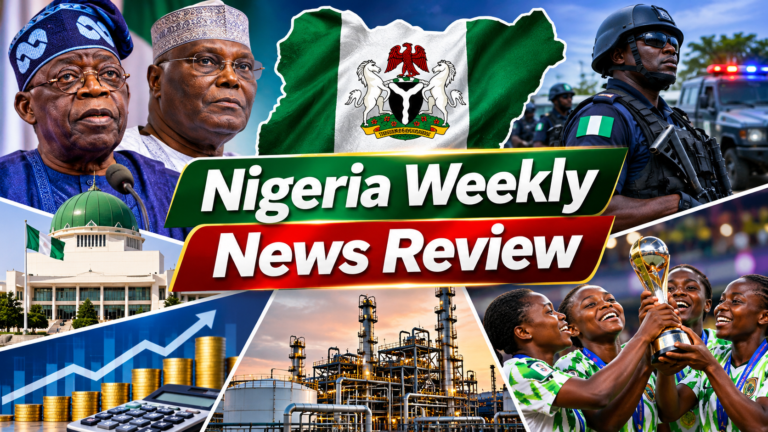
The Global Daily News Review for 9–10 November 2026 examines five major developments that raised important questions about international diplomacy, economic power, humanitarian assistance, climate-related financial risks and military strategy.
In Abu Dhabi, the United States, Russia and Ukraine began a new round of trilateral talks, creating another opportunity for diplomatic engagement over the war. In China, the goods-trade surplus reached approximately US$1.04 trillion in the first ten months of the year, renewing questions about the country’s manufacturing strength and its position in the global economy. Meanwhile, heavy rainfall intensified the shelter emergency in Gaza, where more than a million people were reported to be living in tents or makeshift accommodation despite substantial humanitarian supplies awaiting dispatch outside the territory.
The review also examines a report by the International Fund for Agricultural Development that estimated potential multi-year global income losses of approximately US$11 trillion associated with El Niño. Its methodology and limitations are central to understanding what that figure actually represents. Finally, United States President Donald Trump’s declaration that the war with Iran was militarily effectively over raised questions about the distinction between military success, a ceasefire and a formal political settlement.
These developments are not parts of one connected crisis. Their significance lies in the different ways they demonstrate the importance of examining evidence, institutional decisions and the consequences behind major announcements.
Story 1: Ukraine Peace Talks – What Is Washington Really Negotiating in Abu Dhabi?
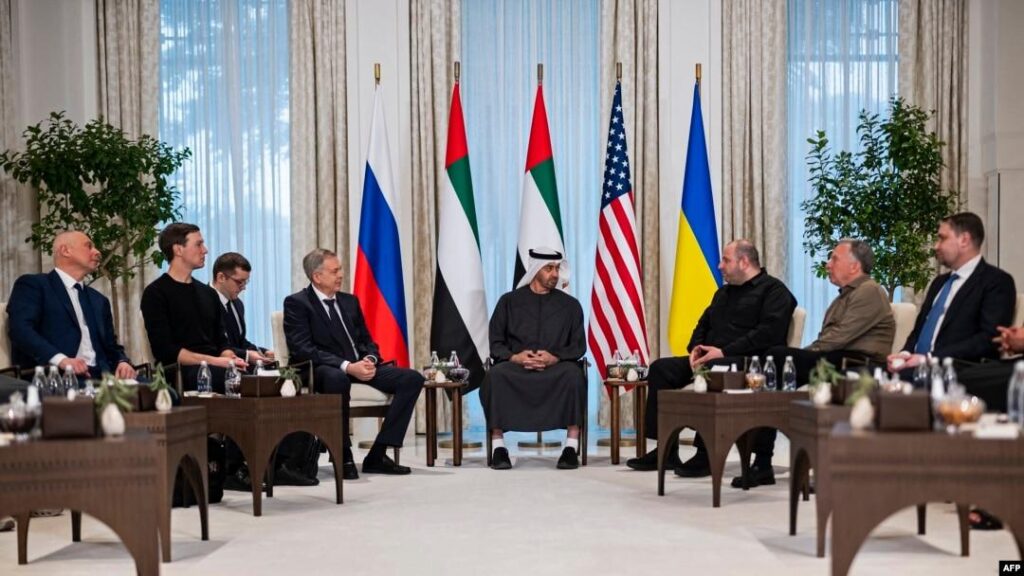
The diplomatic effort to end the war in Ukraine entered a new phase on 10 November 2026, when trilateral talks involving the United States, Russia and Ukraine began in Abu Dhabi, United Arab Emirates.
The meeting followed an announcement by Ukrainian President Volodymyr Zelenskyy on 9 November that Ukraine’s negotiating team was in the United Arab Emirates and that discussions were expected the following day. Zelenskyy had emphasised the importance of a fair and lasting peace, security guarantees and post-war recovery.
The UAE Ministry of Foreign Affairs subsequently confirmed the launch of the third round of trilateral talks in Abu Dhabi.
The confirmation established that the parties had moved beyond preparations and entered direct diplomatic engagement. However, the beginning of negotiations did not establish that an agreement had been reached to stop the fighting, resolve territorial disputes or determine Ukraine’s future security arrangements.
That distinction is essential to understanding the significance of the talks.
The territorial question remains sensitive
One of the most difficult issues in negotiations over Ukraine concerns territory.
Reuters reported that an unnamed United States official described both sides as privately showing some flexibility over territorial questions. The report attracted attention because territorial disagreements have been among the most difficult obstacles to a settlement.
However, the account was attributed to an unnamed official. The material available for this review did not contain a written territorial proposal or formal confirmation from either government that territorial concessions had been accepted.
Reported flexibility should therefore not be interpreted as an agreement.
Without formal proposals and confirmed positions, it remains difficult to establish whether the parties have moved closer to a compromise or are still testing the boundaries of their negotiating positions.
Ceasefire, political settlement and security guarantee are different things
The negotiations also highlight three concepts that are often used interchangeably but have different implications.
A ceasefire is an arrangement to stop or reduce fighting. It may provide an opportunity for humanitarian relief and further negotiations, but it does not necessarily resolve the political and territorial disputes behind the conflict.
A political settlement goes further. It addresses the conditions under which hostilities end and the outstanding issues between the parties.
A security guarantee concerns what happens after an agreement. It must establish who would respond if Ukraine were attacked again, what action participating countries or institutions would be expected to take and whether those commitments would be legally binding.
These distinctions matter because an agreement that stops fighting without credible security arrangements could leave the foundations of another confrontation in place.
The phrase “NATO-style security guarantee” also requires careful interpretation. It does not automatically mean NATO membership or an extension of the alliance’s Article 5 collective-defence commitment. The actual legal terms, participating countries and enforcement arrangements would determine what such a guarantee means in practice.
Why the negotiations matter beyond Ukraine
The consequences of any eventual settlement would extend beyond the immediate negotiating parties.
For Ukraine, the terms could affect national sovereignty, civilian security, displaced communities and the prospects for reconstruction. The country’s future security arrangements would also influence how it approaches defence and relations with its international partners.
For European governments and NATO members, a new security framework could affect defence planning and relations with Russia. The credibility of any commitments would matter as much as the announcement of an agreement.
These remain potential consequences, however. They depend on terms that had not been established in the material available at the close of the reporting period.
The most important outstanding questions concern whether written proposals have been exchanged, the parties’ formal territorial positions, the content of any security guarantee and the roles that European governments, the European Union and NATO might play.
The next meaningful evidence will not simply be another announcement that talks have taken place. It will be the publication or confirmation of a common negotiating framework, official communiqués and the actual commitments being considered.
The Abu Dhabi meeting marked a diplomatic development, but whether it would produce a durable settlement remained unresolved.
The central lesson is that the announcement of negotiations should not be confused with an agreed peace.
Story 2: China Trade Surplus – What Does the $1.04 Trillion Figure Reveal?
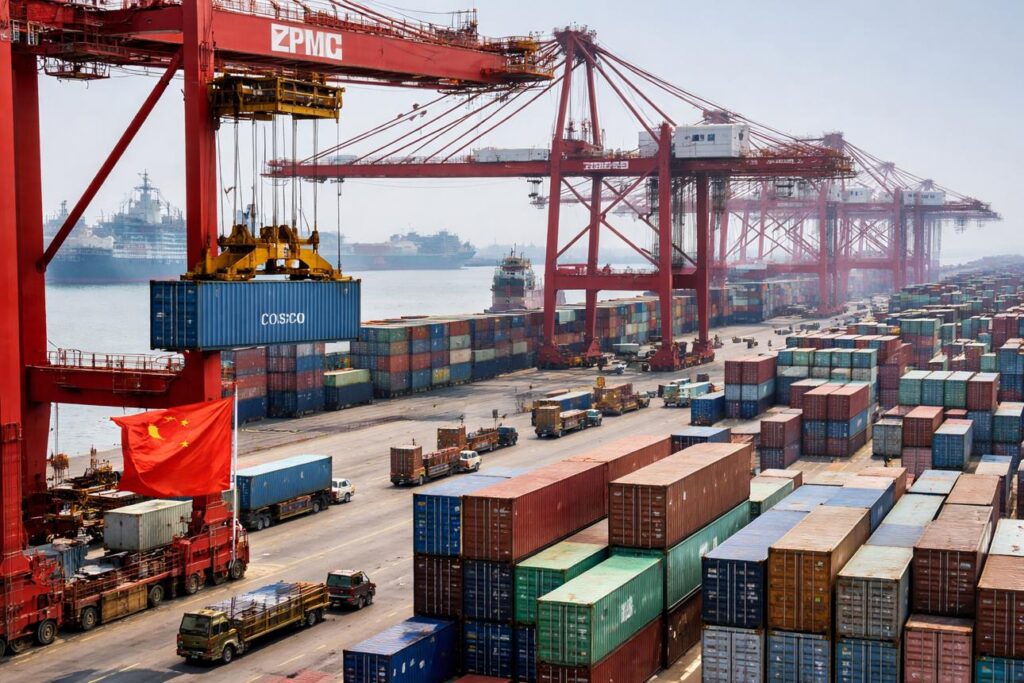
China’s goods-trade surplus reached approximately US$1.04 trillion between January and October 2026, according to figures released by the country’s General Administration of Customs on 10 November.
The figure represents a major development in international trade. It also raises questions about China’s manufacturing capacity, domestic demand, overseas markets and the wider balance of global economic activity.
A trade surplus occurs when the value of goods a country exports exceeds the value of goods it imports. Although the measure provides an important indication of trade performance, it is not a complete assessment of an economy.
To understand China’s latest figures, it is necessary to examine exports, imports, the monthly trade balance and the composition of the goods being exchanged.
October exports and imports both increased
In October, China’s exports increased by 35.2 per cent year on year in US-dollar terms. Imports increased by 41.6 per cent.
The October trade surplus was approximately US$105.3 billion, lower than the reported September surplus of about US$133.5 billion.
Reuters’ report on China’s October trade figures reported the export and import growth figures and the increase in the cumulative surplus beyond US$1 trillion.
The faster growth in imports is an important qualification. It complicates an interpretation that China’s expanding trade position is being driven solely by rising exports.
It also raises questions about what China is buying, which industries are contributing to import growth and whether domestic consumption is keeping pace with production.
A separate set of figures calculated in China’s domestic currency provides another perspective.
In yuan terms, total goods trade reached 44.81 trillion yuan, an increase of 20 per cent. Exports rose by 17.6 per cent, while imports increased by 23.6 per cent.
These yuan-denominated growth rates should be kept separate from the dollar-denominated October figures. They use different currency bases and measurement periods, and combining them without explanation could produce a misleading interpretation.
Export value is not the same as physical shipment volume
Another important issue concerns the difference between the value of exported goods and the physical quantity shipped.
Caixin reporting highlighted a distinction in technology-related trade: AI-related export value was increasing while integrated-circuit shipment volumes fell.
This illustrates why export value cannot automatically be interpreted as an increase in physical production or shipments.
Prices, product mix and the value of individual products can all influence the total value of exports. A country may record higher export earnings without shipping a corresponding increase in physical quantities.
The distinction becomes particularly important when examining high-value technology products and the changing composition of international trade.
Manufacturing strength or structural imbalance?
There are different ways to interpret China’s expanding trade surplus.
One interpretation is that it reflects manufacturing competitiveness, industrial capacity, technology, production networks and demand from overseas markets.
Under this interpretation, China’s industrial base continues to support its position as a major supplier of manufactured goods to international markets.
Another possibility is that production capacity is expanding faster than domestic demand, leaving manufacturers increasingly dependent on overseas buyers.
That second explanation is an important hypothesis, but the trade figures presented during the review period do not prove it.
Strong import growth also complicates a one-sided interpretation. A fuller assessment would need to examine the goods entering China, the sectors driving import demand and whether domestic consumption is keeping pace with production.
Detailed customs data by product and trading partner, physical shipment volumes, inventories, domestic consumption and manufacturing capacity utilisation would help establish the underlying trends.
What could China’s trade position mean for the rest of the world?
China’s trade performance could influence international trade relationships, tariffs, competition facing overseas manufacturers, supply-chain dependence and consumer access to manufactured goods.
However, the effects will differ across industries and countries.
For manufacturing economies, the implications may concern competition from Chinese producers and the ability of domestic industries to retain market share. For countries dependent on imported manufactured products, the availability and cost of goods may also be affected by changes in supply chains and trade policies.
For Nigeria, China’s trade performance is relevant to manufactured imports, local producers and industrial policy. However, the research available for this edition does not include the Nigerian import data required to quantify the effect on local industries or consumers.
It would therefore be premature to draw a definitive conclusion about the impact on Nigeria from China’s overall trade surplus alone.
The central finding is that China’s goods-trade surplus reached approximately US$1.04 trillion in the first ten months of 2026. But the figure alone cannot establish whether the economy is healthy, structurally imbalanced or engaged in unfair competition.
The composition of trade, the growth of imports and the conditions behind manufacturing activity matter just as much as the headline total.
Story 3: Gaza Shelter Crisis – Why Are Displaced Families Still Without Adequate Accommodation?
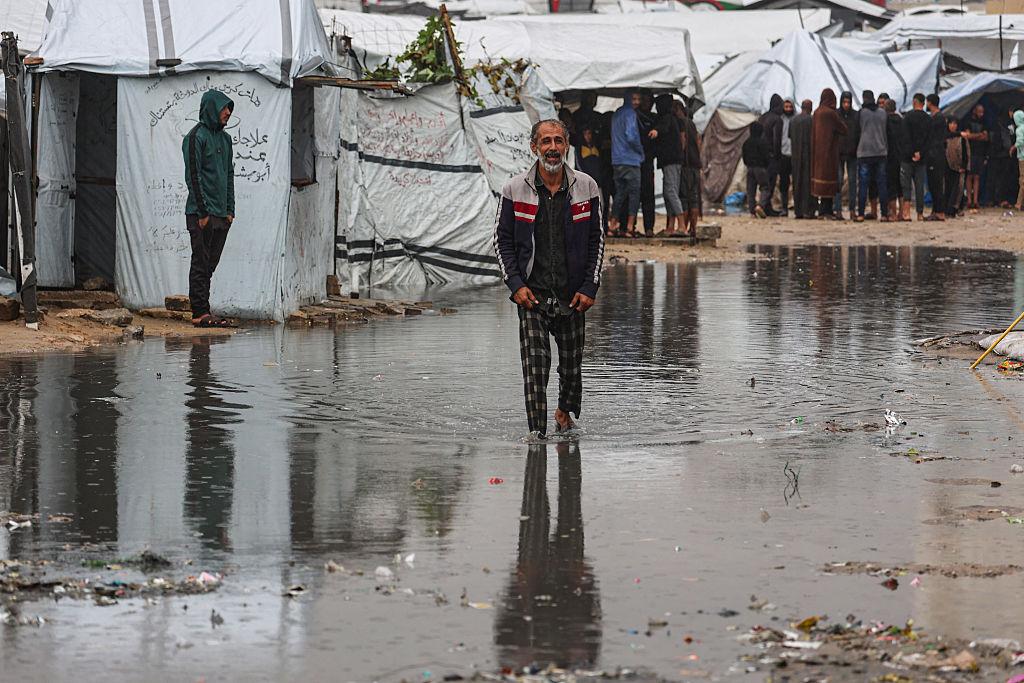
Heavy rainfall and strong winds during the reporting period intensified the humanitarian shelter emergency in Gaza, where a large proportion of the population was already living in tents or makeshift accommodation.
A humanitarian situation report from the United Nations Office for the Coordination of Humanitarian Affairs (OCHA), dated 8 November and published on 9 November, documented the effects of bad weather that began on 6 November. The OCHA report on heavy rains in Gaza provided details of the damage and the humanitarian response.
The report estimated that approximately 65 per cent of Gaza’s population—about 1.4 million people—were living in tents or makeshift shelters.
By 8 November, more than 26,000 households had appealed for assistance following damage to shelters or belongings. More than 6,000 family shelters were reported destroyed, while approximately 17,400 were reported damaged. More than 3,900 households were reported to have no shelter.
These figures were preliminary and subject to further assessment. They should not be treated as a final damage count.
Fatal incidents underline the danger facing displaced families
The OCHA report also documented a fatal incident at Al Berka Reservoir.
According to OCHA’s account of information from Civil Defence, five displaced people—three children and two women—were killed when a sandy hill collapsed onto tents. One person was injured.
An infant drowning was reported separately. The two incidents should not be combined into a single casualty figure.
The incidents illustrate the risks faced by displaced families living in temporary shelters exposed to severe weather and unstable conditions.
The consequences extend beyond the physical condition of tents. Exposure to rain and flooding can place children, older people and people with disabilities at particular risk. Emergency services also face additional pressure, while damaged infrastructure can disrupt education and other public services.
OCHA reported that at least 55 learning spaces serving approximately 55,000 children had been affected.
More than 150,000 tents outside Gaza: the delivery question
One of the most significant figures in the OCHA report concerned humanitarian supplies outside Gaza.
More than 150,000 tents purchased by humanitarian partners and Member States were reported to be awaiting dispatch outside the territory. This included approximately 117,000 tents from the Egyptian Relief Committee in Al-Arish.
The figure raises an important question: how many of those tents actually reached displaced families?
The existence of supplies outside Gaza does not establish that they have been approved for entry. Nor does it prove that they have crossed into the territory, reached warehouses, been allocated to distribution points or been received by households.
A tent awaiting dispatch is not the same as a tent received by a family.
That distinction is central to understanding the humanitarian delivery process.
Following the nine stages of humanitarian assistance
A complete assessment would need to trace the supplies through nine stages:
- Pledged: What assistance was promised?
- Funded: How much money was actually disbursed?
- Purchased: Who procured the supplies, and when?
- Approved: Which shipments were submitted for approval, and what decisions were made?
- Entered: How many supplies physically crossed into Gaza?
- Stored: Where were the supplies held after entry?
- Allocated: Which locations or households were designated to receive them?
- Distributed: How many supplies were handed out?
- Received: How many households can confirm receiving assistance?
At every stage, a reliable account would require a number, a date, a responsible institution and a documentary record.
This approach is important because a figure describing purchased supplies cannot establish the number of households that received assistance.
What constraints affect humanitarian operations?
The OCHA report identified several constraints affecting humanitarian operations.
These included Israeli approval requirements for supplies and machinery, funding needs, shortages of essential equipment and damaged infrastructure.
Damaged drainage systems, limited access to pumps and heavy machinery, and difficult conditions at affected sites could also complicate emergency work.
These factors may operate together. The evidence available for this review did not establish the relative contribution of each factor to the shelter shortage.
It would therefore be premature to assign responsibility for every delay or shortage without examining the relevant records and obtaining responses from the institutions involved.
A full investigation would require procurement contracts, funding and payment records, approval applications and decisions, crossing manifests, warehouse inventories and distribution registers. Responses from the institutions responsible for the different stages would also be necessary.
Interviews with displaced families and humanitarian workers could help establish what assistance people actually received. Such interviews would require informed consent and safeguards, particularly where children and other vulnerable people were involved.
An investigative question, not a completed accountability finding
At the close of the reporting period, the available material did not provide a complete reconciliation showing how many tents had moved through every stage of the delivery chain and reached households.
The evidence established the scale of the shelter emergency and the reported existence of substantial tent supplies outside Gaza awaiting dispatch. It did not establish how many of those supplies had reached displaced families.
This remains an investigative development rather than a completed finding of institutional responsibility.
The central question is not simply how many tents exist or have been purchased. It is how many people have actually received them.
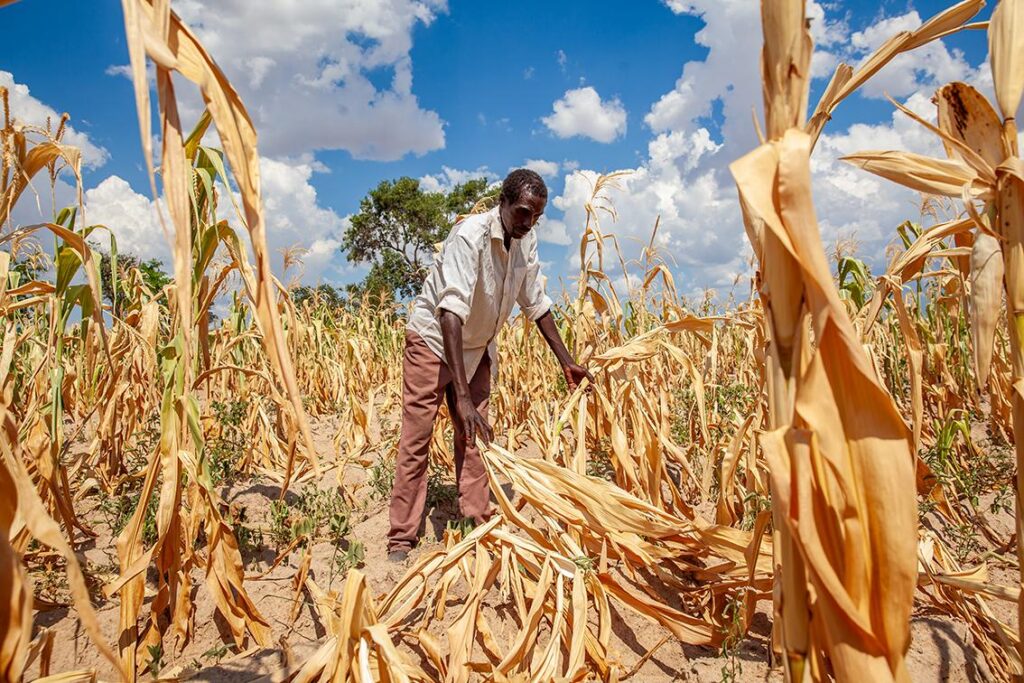
Story 4: El Niño Economic Impact – Examining the $11 Trillion Climate Warning
A report released on 9 November by the International Fund for Agricultural Development (IFAD), in partnership with Türkiye’s Ministry of Agriculture and Forestry, brought attention to the potential economic consequences of El Niño.
The report, Food Systems Under Stress: Building Resilience from the First Mile, presented an estimate of approximately US$11 trillion in potential lost global income.
The figure is striking, but its meaning depends on the methodology behind it.
The report presents the estimate as an order-of-magnitude scenario. It is not a guaranteed loss, an immediate economic bill or a precise prediction of damage that will definitely occur.
The central model result is approximately US$10.8 trillion, rounded to US$11 trillion.
According to Annex B of the report, the estimate represents lost global income in 2026 prices over a multi-year impact period. That period begins with the 2026–27 event year and extends approximately through 2031–32.
The estimate therefore describes a modelled cumulative impact over several years, not an immediate loss of US$11 trillion.
How was the estimate calculated?
The methodology is central to understanding the figure.
The report uses a linear regression linking peak El Niño intensity with multi-year global income losses.
The calculation draws on only three observations: the El Niño events of 1982–83 and 1997–98, and the 2023–24 event.
There is a significant qualification: the 2023–24 observation is an ex-ante projection, not a realised historical loss.
The model then applies NOAA’s August 2026 central intensity estimate of 2.66 degrees Celsius, producing the central estimate of US$10.8 trillion.
The report gives an illustrative range of approximately US$7.4 trillion to US$14.2 trillion, depending on the intensity range used.
The small sample is a major methodological limitation. Only three observations are used, and one is a projection rather than a realised historical outcome. The model also assumes a linear relationship between event intensity and economic losses.
The report acknowledges limitations involving the small sample, the linearity assumption, changes in the global economy since earlier El Niño events and forecasting uncertainty.
A different historical sample or model specification could produce a different result. Independent replication is therefore necessary before treating the estimate as a reliable measure of potential losses.
How El Niño can affect food systems
El Niño is the warm phase of the El Niño–Southern Oscillation. It can alter rainfall and temperature patterns across different parts of the world.
Some regions may experience increased drought risk, while others may face heavier rainfall, flooding or storms.
These changes can affect crop yields, irrigation requirements, food processing, transportation and market access. They can also interact with energy and fertiliser costs, credit, insurance and the ability of farming households to absorb financial shocks.
The consequences are not necessarily uniform. Different countries and agricultural communities have different levels of exposure and capacity to respond.
The IFAD report examines resilience across three connected areas: inputs, markets and finance.
It estimates that bundled interventions across those areas could avoid 18.7 per cent of net farm-income losses under a modelled compound shock, compared with 9.8 per cent for the strongest individual lever.
These figures are model outputs, not guaranteed results for every farmer or country.
Climate forecasts do not validate the economic estimate
The climate outlook and the economic-loss estimate must also be treated separately.
The World Meteorological Organization said in September that El Niño was established and likely to persist through February 2027. NOAA’s October outlook said a strong-to-very-strong event was likely through January to March 2027.
These are climate assessments. They do not independently validate the IFAD economic-loss model.
The report also discusses a separate energy and fertiliser shock associated with the Strait of Hormuz. That pressure should not be confused with economic losses attributed specifically to El Niño.
For agricultural communities, the practical concern is how climate conditions may interact with existing economic pressures. Small-scale producers, rain-fed farming communities, agricultural workers and food-import-dependent countries may face different forms of exposure.
What could the warning mean for Nigeria?
The report identifies possible drought exposure in the Sahelian belt, including Nigeria, but describes that forecast as lower-confidence.
This qualification is important. The available material does not establish a definitive estimate of Nigerian crop losses or the economic consequences for the country’s agricultural sector.
Country-specific conclusions would require assessments from Nigeria’s Meteorological Agency and national agricultural data.
The next stage of technical assessment should include obtaining the underlying research, independently replicating the calculation, testing alternative model specifications and examining what happens when the 2023–24 projection is excluded.
The IFAD announcement of its US$11 trillion El Niño warning and its full report on food systems under stress provide the primary materials for further examination.
The US$11 trillion warning deserves serious examination, but its credibility depends on the assumptions and evidence beneath it.
El Niño can create significant risks for food systems and rural economies. However, the US$11 trillion figure remains a modelled multi-year scenario, not a guaranteed global loss.
Story 5: Iran Conflict – Has the War Ended or Has the Military Strategy Changed?
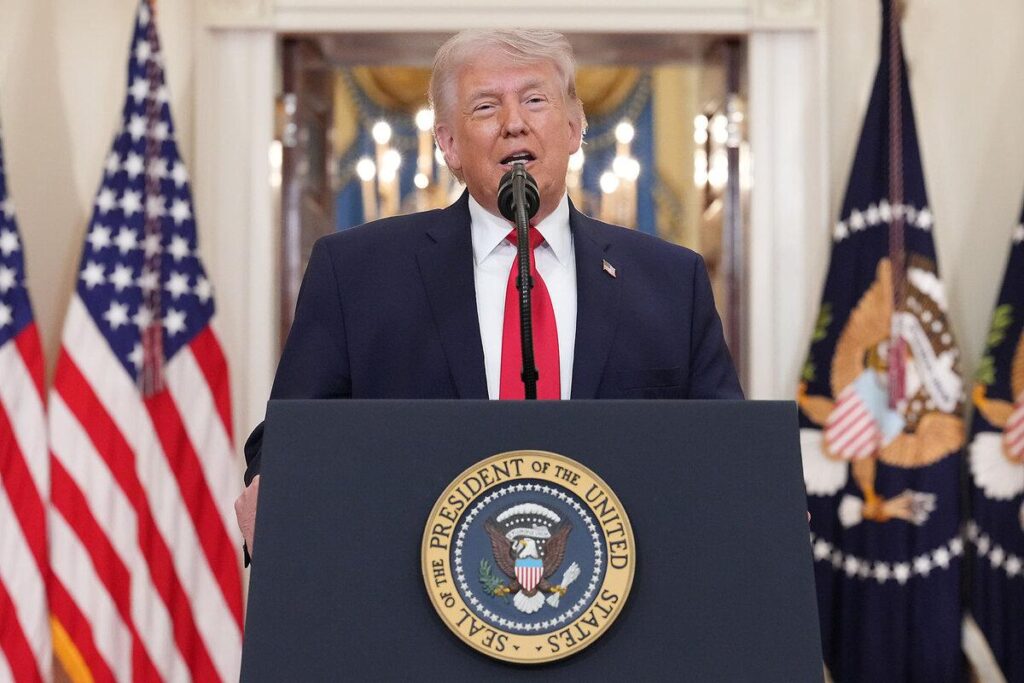
On 9 November 2026, United States President Donald Trump declared that the war with Iran was “militarily effectively over”.
The statement was consequential, but it did not establish that the conflict had formally ended.
The reporting available during the review period did not establish the existence of a signed peace agreement or a formal end to hostilities.
Trump made the declaration after meeting Qatar’s Prime Minister and Foreign Minister, Sheikh Mohammed bin Abdulrahman Al Thani, at the White House.
The Associated Press reported that thousands of US troops remained deployed near Iran, that a naval blockade of Iranian ports continued and that limited US strikes had taken place during the preceding week. The Associated Press report on Trump’s declaration also described the continuing military posture and diplomatic discussions.
AP also reported that the US military had disabled a commercial ship it said was attempting to breach the blockade.
These reports did not provide a complete operational record. However, they demonstrated why the President’s declaration should be treated as his assessment rather than independent confirmation that the conflict had ended.
Military operations, ceasefire and political settlement
Three separate questions are important when assessing the status of a conflict.
First, are military operations continuing?
Second, have the parties formally agreed to stop fighting?
Third, have they reached a political settlement addressing the issues behind the conflict and the arrangements needed to prevent another confrontation?
A reduction in major military operations could represent de-escalation. A government might also consider its immediate military objectives achieved while maintaining military deployments or other forms of pressure.
But neither development automatically constitutes a ceasefire. A ceasefire, in turn, is not necessarily a comprehensive political settlement.
The distinction is important because a government can declare that its military objectives have been achieved while the political and diplomatic issues behind a conflict remain unresolved.
Iran’s stated conditions and Qatar’s diplomatic role
Iran’s stated position also illustrated the distance that remained between the parties.
Reuters reported that Iranian Foreign Ministry spokesman Esmaeil Baghaei said Tehran wanted the blockade lifted, sanctions removed and the war ended on all fronts before negotiations could proceed. Reuters’ report on Iran’s proposed conditions for restarting peace talks outlined Tehran’s position and the disagreement with Washington.
Those were Iran’s stated conditions. The available material did not establish that Washington had accepted them.
Qatar continued to play a diplomatic role. Its Foreign Ministry publicly described efforts to facilitate exchanges of proposals between Washington and Tehran.
The Qatari Prime Minister’s engagement with the United States and subsequent diplomatic contacts showed that communication was continuing.
However, mediation is not the same as an agreement.
The available evidence left several possible interpretations of the situation.
One was that the United States considered its immediate military objectives achieved and was shifting towards diplomatic pressure.
Another was that the conflict had entered a different phase, with major military operations potentially reduced while the blockade and military readiness continued.
A further possibility was that public statements were intended to shape expectations around negotiations. However, the President’s motive could not be established from the statement alone.
The evidence available during the review period did not establish one of these explanations as a proven account.
The wider implications for the Gulf and international energy markets
The consequences could extend beyond the immediate parties.
The situation could affect Gulf security, maritime workers, shipping, energy markets, insurance, sanctions policy and nuclear diplomacy.
For countries dependent on energy imports, disruption to maritime routes and energy supply chains can be consequential. Nigeria’s exposure is a relevant question, but the material supplied for this edition does not quantify the effects on Nigerian revenue, fuel prices or inflation.
There are also important legal and diplomatic questions that remain unanswered.
These include the legal basis and precise scope of the reported blockade, the full terms of Iran’s proposal, the United States’ response and the arrangements, if any, that would govern nuclear restrictions and independent monitoring.
The available research does not resolve these questions or establish a date for a comprehensive peace agreement.
At the close of the reporting period, the evidence supported a limited conclusion: President Trump had declared that the war was militarily effectively over, while important military and diplomatic questions remained unresolved.
A declaration of military success is not the same as a formal end to a war. The status of a conflict must be assessed through evidence of military activity, an agreed cessation of hostilities and the existence—or absence—of a political settlement.
CONCLUSION
The five developments examined in this Global Daily News Review demonstrate why major international headlines require more than an immediate reaction.
In Ukraine, the beginning of trilateral talks in Abu Dhabi marked diplomatic engagement, but a durable peace agreement and enforceable security guarantees had not been established. In China, a goods-trade surplus of approximately US$1.04 trillion highlighted the scale of its international trade, but the figure alone could not explain the structure or health of its economy.
In Gaza, the reported existence of more than 150,000 tents outside the territory raised a critical question about humanitarian delivery: how many supplies reached displaced families? The El Niño report placed a substantial economic value on potential future losses, but its US$11 trillion estimate remained a modelled scenario with important methodological limitations. In Iran, a declaration of military success did not establish a formal end to hostilities or a comprehensive political settlement.
These developments are not causally connected. What unites them is the need to distinguish public announcements from verifiable outcomes.
Written agreements, detailed economic data, humanitarian delivery records, independent technical review and reliable military and diplomatic information remain essential to understanding what happens next.
The bigger story is often found in the distance between what is announced and what can actually be demonstrated. That is why the Global Daily News Review looks beyond the headline to examine the context, evidence and consequences.
About the Author