INTRODUCTION
Nigeria’s public institutions faced important questions during the 24-hour reporting period ending at 10:28 a.m. on 11 November 2026. Developments ranged from the humanitarian consequences of insecurity in northern Nigeria to election preparedness, electricity regulation, public revenue recovery and the implementation of government support programmes.
The latest Nigeria news today presents a picture of different institutions operating at different stages of responsibility. Humanitarian figures reported by UNHCR highlighted the movement of nearly 64,000 Nigerians into neighbouring Niger since the beginning of 2026. Separately, a custodial escape in Kogi State and a failed live television call to the national 112 emergency number raised questions about public safety and institutional readiness.
Attention also turned to preparations for the 2027 general elections, including reported breaches of the National Peace Accord, the availability of electoral technology in Osun State and a court case involving investigative journalist Daniel Ojukwu.
In the economy, the Nigerian Electricity Regulatory Commission approved a ₦30 billion metering fund, while the Federal Competition and Consumer Protection Commission discussed the expected relationship between falling international crude prices and domestic petrol costs. Other developments concerned an Osun transmission project, recovered statutory revenue, a proposed Oyo State budget and regional capital-market reforms.
The day’s developments also included a minimum pension guarantee, agricultural credit, changes in Lagos waste-management leadership, public financial-management reforms and specialist healthcare delivery.
Taken together, these stories do not establish one sweeping conclusion about government performance. They provide a more useful basis for examining what has changed, which institutions are responsible, what Nigerians can verify and what remains to be delivered.
STORY 1 — PUBLIC SAFETY AND NIGERIA’S EMERGENCY SERVICES
The humanitarian consequences of insecurity, a custodial escape and questions about access to emergency assistance placed different public-protection responsibilities under scrutiny during the reporting period. Although these developments concern public safety, they involve separate institutions and should not be treated as evidence of one common operational failure.
Nearly 64,000 Nigerians flee to Niger
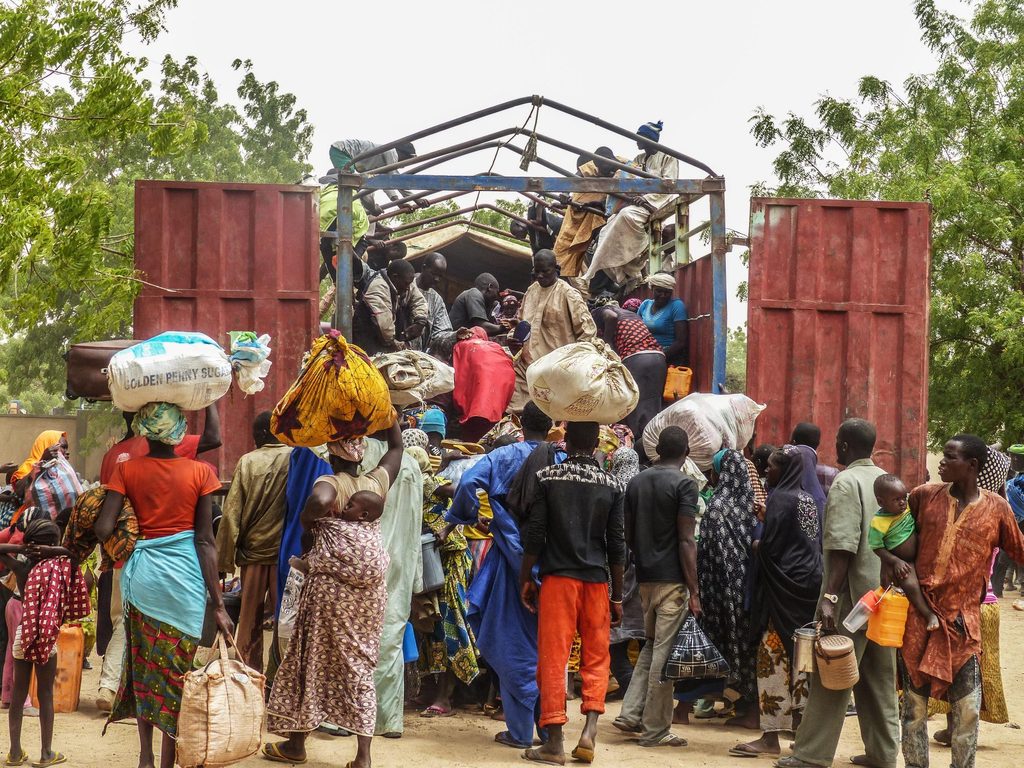
The scale of cross-border displacement remains one of the most significant humanitarian developments in the edition. Figures reported by UNHCR indicated that nearly 64,000 people had fled violence in northern Nigeria and crossed into neighbouring Niger since the beginning of 2026.
More than 23,000 of the reported arrivals were recorded in Niger’s Diffa region. More than two-thirds of those arrivals were children, highlighting the particular protection needs of young people among displaced families.
UNHCR also reported that only about five per cent of this year’s new arrivals had been formally registered. Registration is important because it helps humanitarian organisations identify displaced people, assess their needs and organise assistance. Limited registration can make it more difficult to establish who requires support and how that assistance should be delivered.
The agency appealed for $11.4 million to support its humanitarian response across Niger, Nigeria and Benin. That amount is a funding appeal, not confirmation that the money has already been received.
The nearly 64,000 figure must also be interpreted correctly. It represents reported arrivals from Nigeria into Niger, not the total number of Nigerians displaced within the country. It should not be used as a national internal-displacement estimate.
The figures underline the responsibilities of governments and humanitarian organisations. Security authorities have responsibilities for protecting communities, while humanitarian agencies work to identify and assist people who have been forced to leave their homes.
The next important evidence will concern registration, the assistance reaching affected families and the resources available to support the humanitarian response.
Kogi custodial escape raises institutional security questions
A separate public-safety issue emerged in Kogi State, where two inmates escaped from the Medium Security Custodial Centre in Okene.
The Nigerian Correctional Service confirmed that the escape occurred on 8 November 2026. Police and correctional authorities were reportedly working together to recapture the escapees, while a comprehensive report was awaited to establish the circumstances surrounding the incident.
The available information did not establish how the inmates escaped or confirm whether they had subsequently been recaptured.
That distinction matters. An escape is a confirmed institutional incident, but the explanation for how it occurred must come from the investigation. It would be premature to identify a particular security breach or operational failure without the findings.
The investigation should establish the circumstances of the escape and whether any weaknesses in supervision, facility security or operational safeguards contributed to it. A clear account is necessary both for public information and for determining what measures may be required to prevent a recurrence.
Nigeria’s 112 emergency number: what did the failed test establish?
The reliability of emergency access also came under scrutiny after a live television call to Nigeria’s 112 emergency number failed to connect during Channels Television’s Politics Today programme.
Presenter Seun Okinbaloye attempted the call following a challenge from Alwan Hassan, a member of the APC Presidential Campaign Council. When the call failed, Hassan suggested that a network problem could explain the outcome and maintained that the service was operational.
The available evidence establishes that the particular call attempt did not connect. It does not prove that the national emergency number had failed nationwide or that every emergency-response service in Nigeria was unavailable.
A single call cannot establish the technical condition of a nationwide service. Nevertheless, the incident raises a legitimate public-interest question: can Nigerians reach the appropriate emergency-response service quickly enough when they face an accident, fire, security threat or other urgent situation?
An effective emergency system depends on more than the existence of a telephone number. Calls must connect, reach the appropriate response centre and trigger an effective response. That requires functioning telecommunications networks, reliable call routing and properly equipped emergency-response authorities.
A technical assessment involving the relevant authorities and telecommunications operators would provide a more reliable picture. Such an assessment should be supported by call records and controlled tests across different networks and locations.
The three developments therefore raise separate questions about humanitarian protection, custodial security and emergency communications. They do not prove a single nationwide institutional breakdown. They do, however, demonstrate why public institutions must provide evidence about the performance of services and the actions taken when problems are reported.
STORY 2 — 2027 ELECTIONS NIGERIA, DEMOCRATIC CONDUCT AND THE RULE OF LAW
As Nigeria moves towards the 2027 general elections, the conduct of political actors and the preparedness of electoral institutions remain important public-interest concerns. The reporting period included a National Peace Accord monitoring report, figures on electoral technology in Osun State and a court proceeding involving an investigative journalist.
109 National Peace Accord breaches reported ahead of the 2027 elections
The National Peace Committee reported 109 breaches of the National Peace Accord across 26 states and the Federal Capital Territory. The monitoring period covered 19 August to 27 October 2026.
Former Head of State General Abdulsalami Abubakar leads the committee, which has been involved in efforts to encourage peaceful political conduct.
According to the reported findings, 33 incidents involved political violence and thuggery, while 29 concerned misinformation and disinformation. Other categories included intimidation, threats, attacks on political activities and campaign assets, restrictions on freedom of expression and assembly, inflammatory statements, intra-party conflict and voter inducement.
Kaduna, Edo and Enugu were identified as areas of concern.
The figures require careful interpretation. The 109 reported breaches were recorded over the monitoring period; they were not all incidents that occurred within the previous 24 hours. Nor should all of them be described as physical attacks, because the reported categories include different forms of political conduct.
Nineteen political parties signed the National Peace Accord on 18 August 2026. The agreement is intended to encourage peaceful campaigns and responsible political behaviour. Signing an accord, however, is not the same as demonstrating compliance with it.
The presidential and National Assembly elections are scheduled for 16 January 2027, while governorship and State Assembly elections are scheduled for 6 February 2027.
As the elections approach, political violence and deliberate misinformation can undermine public confidence, discourage participation and expose voters and campaign workers to risks. The committee’s reported findings therefore deserve further examination.
The full monitoring report and underlying incident records are important for understanding the cases and assessing the conduct involved. Individual responsibility must be established through evidence before a political party, candidate or individual is held responsible for a particular incident.
INEC’s Osun BVAS figures raise questions about electoral readiness
Beyond the conduct of political actors, the readiness of the electoral institution responsible for administering elections is another important consideration.
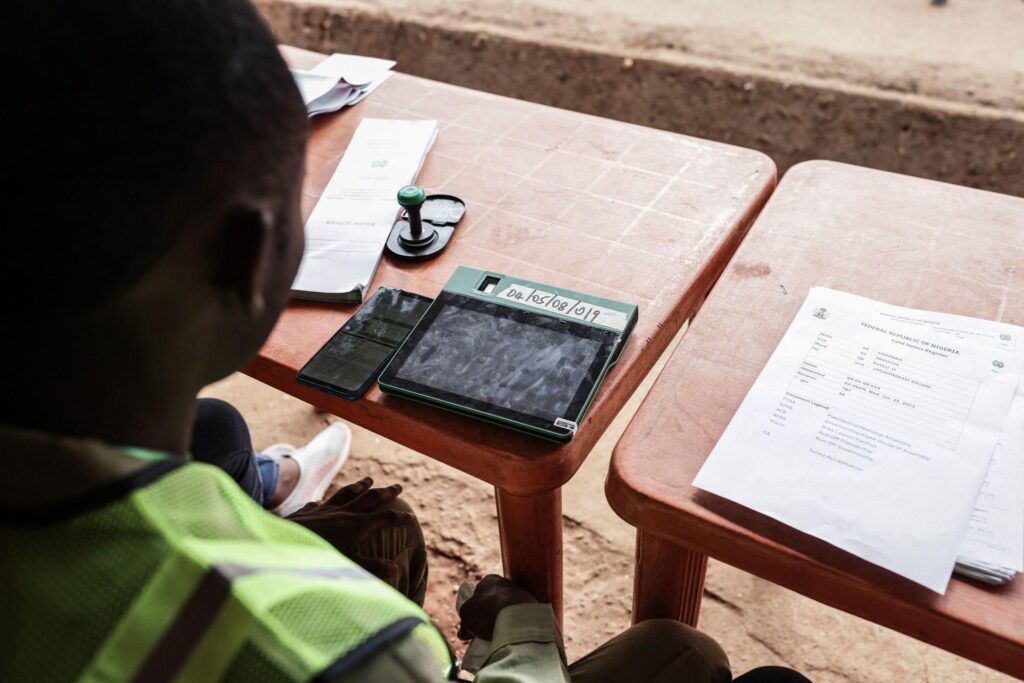
The Independent National Electoral Commission said it had 5,763 functional Bimodal Voter Accreditation System devices available in Osun State for the 2027 elections. The figure was provided by the state’s Resident Electoral Commissioner, Oluwatoyin Babalola.
BVAS devices are used to accredit voters and support the transmission of polling-unit results to INEC’s Result Viewing Portal, commonly known as IReV.
The commission’s Osun office also referred to 1,328 additional backup devices. However, the available information did not clearly establish whether these backup devices were included in the 5,763 figure or were separate from it.
The reported deployment figures related to 3,763 polling units and 38 split polling units.
The availability of functional devices is an important part of election preparation, but equipment totals alone cannot establish that an election is fully ready. Devices must be maintained, tested and properly deployed. Electoral officers also require training, while logistics, connectivity and technical support arrangements must be in place.
INEC therefore needs to clarify the relationship between the functional and backup device figures and provide information about maintenance and deployment arrangements.
For voters, the central issue is whether accreditation and result-upload systems will work reliably when required. The distinction between equipment availability and demonstrated operational readiness is important.
Daniel Ojukwu’s remand and the legal environment for investigative journalism
A Federal High Court in Abuja reportedly remanded Foundation for Investigative Journalism correspondent Daniel Ojukwu at Kuje Correctional Centre following his arraignment on a 12-count cyberstalking charge.
The case is connected to investigative reports published in 2024 concerning former presidential aide Adejoke Orelope-Adefulire. Ojukwu pleaded not guilty to the charges.
The reported proceedings included a bail hearing scheduled for 1 December 2026. There was also a discrepancy in media reports concerning the date on the charge sheet, making the original court document necessary to establish the correct date.
The legal distinction is important. Being charged with an offence does not mean a person has been found guilty. A remand order is a procedural decision, not a conviction. It does not by itself establish that the journalism in question was false or unlawful.
The court must consider the case through the applicable legal process, including the evidence and arguments presented by the parties.
The case also raises broader questions about the application of cybercrime legislation and the legal environment in which journalists investigate and report matters of public interest. Those questions deserve examination, but conclusions must be based on the court documents and legal arguments rather than assumptions about the motives of either party.
The next important development identified in the reporting was the scheduled bail hearing, subject to confirmation from the court record.
Together, the peace accord findings, BVAS figures and Ojukwu proceedings highlight different aspects of the democratic environment: political conduct, election administration and the operation of legal processes. Each requires evidence and institutional accountability, but none should be used to make conclusions beyond what the available records establish.
STORY 3 — ELECTRICITY METERING NIGERIA, PETROL COSTS AND INFRASTRUCTURE DELIVERY
Energy costs and electricity infrastructure remained important concerns for consumers and communities. The reporting period included a formal NERC metering order, the FCCPC’s comments on petrol prices and a reported site handover for a transmission project in Osun State.
NERC approves ₦30 billion for electricity metering
The Nigerian Electricity Regulatory Commission issued Order No. NERC/2026/121 for Tranche C of its Meter Acquisition Fund, involving ₦30 billion. The order became effective on 2 November 2026 and is intended to accelerate the provision of electricity meters to customers who remain unmetered.
The fund is to be distributed among 11 electricity distribution companies in proportion to their contributions. The programme is designed to cover all remaining unmetered Band A customers while accelerating metering for Band B customers.
A significant provision is that meters supplied under this particular scheme must be free to customers. Consumers should therefore not be charged for meters provided through the programme.
The order also establishes a staged payment arrangement for suppliers. Seventy per cent of payment is tied to verified delivery, while the remaining 30 per cent follows confirmed installation. The installation deadline is 31 May 2027.
For customers without meters, electricity bills may be based on estimated consumption. This can create disputes when consumers believe they are being charged for more electricity than they actually use.
Proper metering can improve billing transparency and help customers understand the electricity they consume. However, the approval of ₦30 billion does not mean that meters have already been procured or installed.
The real test is implementation. Distribution companies must procure the meters, meet regulatory requirements and install them within the approved timetable. NERC will also need to monitor delivery, installation and customer complaints to determine whether the programme is achieving its stated purpose.
Consumers should pay particular attention to the free-meter provision. It applies to meters supplied under this specific scheme and should not be confused with a claim that every customer in every category has already been metered.
FCCPC discusses expected petrol-price reductions
The Federal Competition and Consumer Protection Commission said lower international crude oil prices should eventually be reflected in domestic petrol prices.
The commission’s Executive Vice Chairman, Tunji Bello, said Brent crude had fallen from a September peak of $115 per barrel to below $90.
The commission also reported petrol prices ranging from ₦1,405 to ₦1,420 per litre in Abuja and between ₦1,325 and ₦1,370 per litre in Lagos.
These are price ranges reported by the commission, not a comprehensive survey of every filling station across Nigeria.
The expectation of lower petrol prices matters because fuel costs affect transport operators, households, manufacturers and businesses that depend on petrol for power and movement.
However, a decline in international crude prices does not automatically produce an immediate or proportional reduction at the pump. Other factors, including exchange rates, refining costs, freight, distribution expenses and other supply-chain charges, influence the final retail price.
The FCCPC monitors competition and consumer protection; it does not independently determine every pump price. Its expectation should therefore not be interpreted as proof that petrol prices have already fallen nationwide.
A dated price survey across different locations would help establish whether the expected reduction is reaching consumers. Transparent market information is also necessary to explain how changes in international crude prices affect domestic supply costs.
Osun’s 63MVA transformer project reaches site-handover stage
The Federal Government reportedly handed over the site for a 63-megavolt-ampere transformer project and an associated 132-kilovolt double-circuit transmission line in Ila-Orangun, Osun State.
The project is expected to benefit six local government areas, and a completion period of 14 months has been reported.
The proposed infrastructure is intended to strengthen transmission capacity and support electricity supply in the expected beneficiary areas. Additional transmission capacity can be important, but its practical value depends on construction, installation, commissioning and integration with the wider electricity network.
A site handover is a project commencement milestone. It is not evidence that the transformer has been installed, commissioned or that electricity supply has already improved.
The available information did not establish the total project cost, contract details, funding source, precise contractual start date or the identities of all six beneficiary local government areas.
Those details are important for public accountability. They would help residents understand the scope of the project, the institutions responsible for delivery and the timetable against which progress should be measured.
The next stage is to monitor construction against the reported 14-month period and obtain the relevant project and funding documentation.
The three energy developments are at different stages. NERC has issued a formal regulatory order, the FCCPC has expressed an expectation about market prices, and the Osun project has reportedly reached site handover. Treating all three as completed improvements would misrepresent the evidence.
STORY 4 — PUBLIC REVENUE, OYO’S PROPOSED BUDGET AND REGIONAL ECONOMIC POLICY
Public finance involves more than announcing spending plans. It also requires the collection and accounting of revenue, legislative scrutiny of expenditure and clear rules for economic activity. Three developments during the reporting period brought these issues into focus.
EFCC reports recovery of $3 million and ₦1.303 billion
The Economic and Financial Crimes Commission reported recovering $3 million and ₦1.303 billion from Aiteo Exploration and Production Limited and Newcross Exploration and Production Limited.
The EFCC said the recovered funds had been handed over to the Revenue Mobilisation Allocation and Fiscal Commission. The reported recoveries related to statutory payments, including stamp duties and pipeline transportation fees.
According to the EFCC, the investigation followed a petition from a consulting firm engaged by RMAFC.
The recovery is significant because statutory revenue owed to public institutions should be properly collected, recorded and accounted for. Public institutions and taxpayers have an interest in ensuring that amounts due are identified and that recovered funds are transparently handled.
However, the available information did not establish that every outstanding liability connected to the companies had been settled.
The full assessment of the liabilities, the amount recovered against the total amount owed and whether further payments remain outstanding still require clarification. RMAFC’s accounting records would also be important in confirming how the funds were received and recorded. Responses from the companies are necessary for a complete account.
The recovery announcement is therefore an important reported enforcement development, but it is not the complete accounting picture.
Oyo proposes a ₦1.115 trillion budget for 2027
In Oyo State, Governor Seyi Makinde presented a proposed 2027 budget of approximately ₦1.115 trillion to the State House of Assembly.
The proposal provides approximately ₦670.3 billion for capital expenditure and ₦445.3 billion for recurrent expenditure.
Capital expenditure generally covers projects and investments such as infrastructure, while recurrent expenditure covers the regular running costs of government, including salaries and other operational expenses.
Among the major proposed sector allocations are ₦236.15 billion for infrastructure, ₦190.6 billion for education and ₦93.01 billion for health.
These allocations indicate the priorities the administration intends to pursue in the coming financial year. But the proposal remains a proposed appropriation bill, not an approved budget. Its presentation does not mean that the money has been released or spent.
The Oyo State House of Assembly must scrutinise the proposal and consider it through the legislative process.
The full revenue assumptions, debt position and detailed project schedule are also necessary to assess whether the proposed spending is realistic and sustainable.
For residents, the important question is what the eventual budget will deliver. Proposed infrastructure spending must be assessed against completed projects; education and health allocations must be assessed against the services provided.
The next important development is the Assembly’s consideration of the proposal, followed by evidence of releases, expenditure and project delivery if it is approved.
Nigeria proposes regional capital-market reforms
Nigeria’s Finance Minister, Taiwo Oyedele, proposed reforms to make cross-border investment easier for businesses and governments across West Africa.
The proposals include a regional passport framework and a unified investor identification system.
Under the proposed regional passport arrangement, an issuer approved in one participating market could potentially raise capital in other markets without repeating every approval process. A unified investor identification system is also proposed to make it easier to identify and facilitate investment activity across participating markets.
The broader objective is to reduce fragmentation and improve access to long-term financing.
If adopted and properly implemented, a more integrated capital market could create opportunities for businesses seeking investment and for investors looking beyond their domestic markets.
However, these remain proposals, not an implemented regional framework. Their adoption would require cooperation among relevant governments, financial regulators, securities-market institutions and other stakeholders.
The technical details, regulatory safeguards and implementation timetable remain important questions. The next step is to establish how the proposals will be developed and whether regional regulators and participating markets are prepared to adopt them.
These three developments concern different parts of public finance and economic policy. The EFCC recovery concerns the collection and accounting of statutory revenue; the Oyo proposal concerns state spending priorities; and the capital-market proposals concern possible regional investment arrangements. They should not be presented as directly connected financial transactions.
Their common public-interest concern is the need for transparent processes, credible documentation and evidence of what decisions eventually achieve.
STORY 5 — PENSION SUPPORT, AGRICULTURAL CREDIT AND PUBLIC-SERVICE DELIVERY
Government programmes and public services affect Nigerians in different ways, from retirement income and access to agricultural credit to waste collection, public financial management and specialist healthcare. The developments in this section show why programme announcements and reported activity must be distinguished from evidence of practical outcomes.
Tinubu launches ₦52,500 minimum pension guarantee
President Bola Tinubu launched a minimum pension guarantee of ₦52,500 monthly for 173,209 eligible retirees under the Contributory Pension Scheme.
The announcement was made alongside PenCare, a healthcare initiative intended to support low-income pensioners.
The Director-General of the National Pension Commission, Omolola Oloworaran, said the Pension Protection Fund exceeded ₦400 billion. Voice of Nigeria also reported that premiums had been paid for nearly 30,000 retirees under the healthcare initiative.
These figures are important, but they measure different things.
The 173,209 figure represents the reported number of eligible retirees. It does not establish that every one of them has already received the new minimum pension.
Similarly, the reported payment of premiums for nearly 30,000 retirees does not automatically establish that all those beneficiaries have accessed or completed healthcare services.
A minimum pension guarantee is intended to provide income protection for eligible retirees, while the healthcare component seeks to address access to medical care in retirement.
The practical test is implementation. PenCom needs to provide clear information about eligibility, payment procedures and how retirees can confirm that they are receiving the support. Transparent records are also necessary to show how many eligible retirees have actually received the minimum pension and how many have accessed PenCare.
For older Nigerians, retirement security is not simply about an announcement. It depends on receiving the promised income and being able to obtain necessary healthcare.
FarmerMoni enumeration begins in Abia
Enumeration commenced in Abia State under the Federal Government’s GEEP 3.0 FarmerMoni programme, with the involvement of the National Social Investment Programme Agency and the Abia State Government.
Desk officers had reportedly been trained across the state’s 17 local government areas.
The programme is intended to provide eligible smallholder farmers with access to interest-free, collateral-free loans of up to ₦300,000. The loans are intended to support activities including crop production, poultry, livestock and fisheries.
Repayment is expected to begin between six and nine months after disbursement.
An important distinction for potential beneficiaries is that FarmerMoni is a loan programme, not a grant. The commencement of enumeration also does not mean that every farmer who registers has been approved or has received money.
Applicants must still pass through the relevant verification and approval processes before a loan can be disbursed.
Access to affordable credit can help smallholder farmers meet production needs, but the programme’s effectiveness will depend on transparent beneficiary selection, timely disbursement and clear repayment arrangements.
The next evidence needed includes the number of farmers verified, the number approved and the actual amount disbursed.
Lagos appoints a new acting LAWMA managing director
In Lagos State, Governor Babajide Sanwo-Olu appointed Olajuwon Akinyemi as acting Managing Director of the Lagos Waste Management Authority, replacing Muyiwa Gbadegesin.
The appointment was confirmed by the state’s Commissioner for Information and Strategy. Other changes involving senior operational officers were also reported as part of the management reorganisation.
The leadership change came amid complaints about refuse accumulation and waste collection in parts of Lagos.
Waste management is a critical public service in a densely populated city. Poor collection can affect neighbourhood conditions, public health and the quality of urban life.
However, a change in leadership does not by itself establish that the service has improved.
The important questions are whether collection schedules are being met, operational capacity is improving and residents are seeing a reduction in refuse accumulation.
The new management will need to demonstrate performance through measurable service records and a clear response to public complaints. The appointment is an administrative development; evidence of improved waste collection would need to be assessed separately.
HOPE Governance programme reports implementation activity
The World Bank-backed HOPE Governance Programme, valued at $500 million, reported implementation activity focused on improving the management of public resources in primary healthcare and basic education.
The programme is domiciled in the Federal Ministry of Budget and Economic Planning and is intended to support better management of financial and human resources across Nigeria’s 36 states and the Federal Capital Territory.
The latest report included the training of 388 officials in budget planning and execution for the 2027 fiscal year. That training had taken place over four weeks before the implementation update, so it should not be described as an event that occurred on the day of the review.
The programme’s national coordinator, Assad Hassan, spoke about the ambition to achieve implementation rates of 80 per cent and above.
However, the World Bank task team leader, Ikechukwu Nweje, also acknowledged early implementation challenges, including shortages of teachers and healthcare personnel.
This qualification is important. Better budget planning can help public institutions use resources more effectively, but training officials is an input, not proof that schools and healthcare facilities are already performing better.
The real measure will be whether budgets are executed, essential staff are available and services improve for pupils, patients and communities.
The programme should therefore be assessed through measurable state-level results, not simply the value of its funding or the number of officials trained.
Noma Centre reports 457 reconstructive surgeries
The Noma Centre at the National Hospital Abuja reported that it had carried out 457 complex reconstructive surgeries since its establishment.
The centre also reported that 321 patients had been treated, while more than 80 children were receiving care. Of the reported total, 208 surgeries were attributed to 2026.
The figures were reported during coverage of the 2026 Oral Health Week and Noma Day activities, with the Noma Aid Nigeria Initiative coordinator, Dr Charles Ononiwu, providing the information. Treatment at the centre was described as free.
Noma is a serious disease that can cause devastating damage, particularly among vulnerable children. Specialist treatment can play an important role in addressing its effects and helping affected patients.
The figures provide an account of the centre’s reported treatment activity, but the different measures should not be confused. The 457 figure refers to surgeries, the 321 figure refers to patients treated, and more than 80 children were reported as currently receiving care.
These numbers do not, on their own, establish long-term patient outcomes, nationwide access to treatment or the full scale of unmet need.
Questions remain about early detection, prevention, geographical access and the availability of long-term care. Further evidence would be needed to assess patient outcomes and establish how many people who need specialist treatment can reach facilities equipped to provide it.
The reported activity is an important service-delivery measure, but the quality of treatment, access and lasting outcomes remain essential parts of the wider picture.
CONCLUSION
The developments examined in this edition of Nigeria news today show why public announcements must be assessed alongside evidence of implementation and results.
The humanitarian figures from Niger underline the need for protection and assistance for displaced families. The Kogi custodial escape and failed 112 call raise separate questions about institutional security and emergency access. Ahead of the 2027 elections, the reported Peace Accord breaches, INEC’s BVAS figures and Daniel Ojukwu’s court case highlight the importance of political accountability, electoral readiness and due process.
In the energy sector, NERC’s ₦30 billion metering order establishes a framework whose value will depend on actual delivery and installation. The FCCPC’s comments on petrol prices remain an expectation, while the Osun transformer project has reached a reported site-handover stage rather than completion.
The recovery of public revenue, Oyo’s proposed budget and regional capital-market proposals also demonstrate the need to distinguish financial recovery, proposed expenditure and policy proposals from completed outcomes. Pension support, FarmerMoni, LAWMA’s management change, HOPE Governance and the Noma Centre each raise their own questions about access, delivery and measurable results.
The central public-interest test remains consistent: what has been done, which institution is responsible, what can Nigerians verify and what remains unresolved? Clear reporting and transparent records are essential to answering those questions.
About the Author