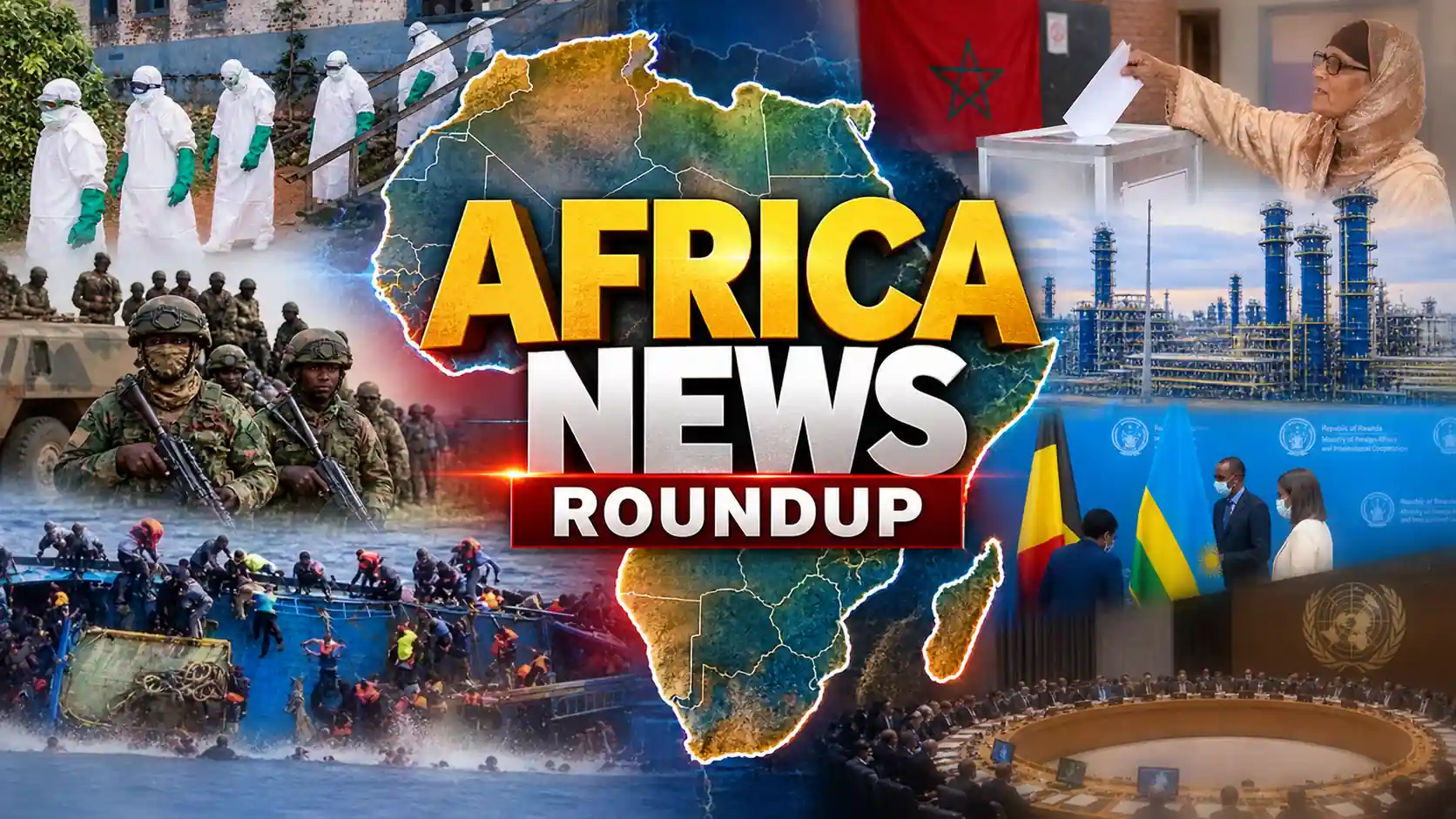
Africa's week in focus: conflict, political change, economic pressures and global diplomacy.
The week of September 20 to 26, 2026, produced a wide-ranging set of developments across Africa, with no single event defining the continent’s news cycle. Instead, several pressures unfolded simultaneously — from public-health and security emergencies in Central Africa to renewed conflict and displacement in the east, political changes in several countries, rising energy costs and efforts to attract new investment.
In the Democratic Republic of Congo, an expanding Ebola outbreak coincided with continued armed conflict, humanitarian challenges and two deadly disasters. Across Eastern Africa, renewed fighting in Ethiopia raised fresh concerns about the region’s security environment, while Sudan’s continuing war pushed more refugees into neighbouring Chad.
At the political level, Morocco held parliamentary elections, South Sudan changed aspects of its electoral framework, and Senegal moved into criminal proceedings connected to earlier political unrest. Meanwhile, Kenya saw protests linked to the detention of Ugandan opposition figure Kizza Besigye.
The economic picture was equally complex. Rising energy costs affected Nigeria, South Africa considered major refinery investment, Airtel Money prepared for a potential London listing, and Nigeria deepened discussions with the United States over mining investment.
Beyond immediate domestic challenges, African governments and institutions also continued to seek greater influence internationally. The African Union renewed its call for permanent representation on the United Nations Security Council, while countries including South Africa, Nigeria and Rwanda pursued important diplomatic and strategic engagements.
Taken together, this week’s Africa news points to a continent managing immediate pressures while simultaneously navigating longer-term questions about security, governance, economic resilience and its position in global decision-making.
Africa News: DR Congo Faces Converging Health and Security Crises
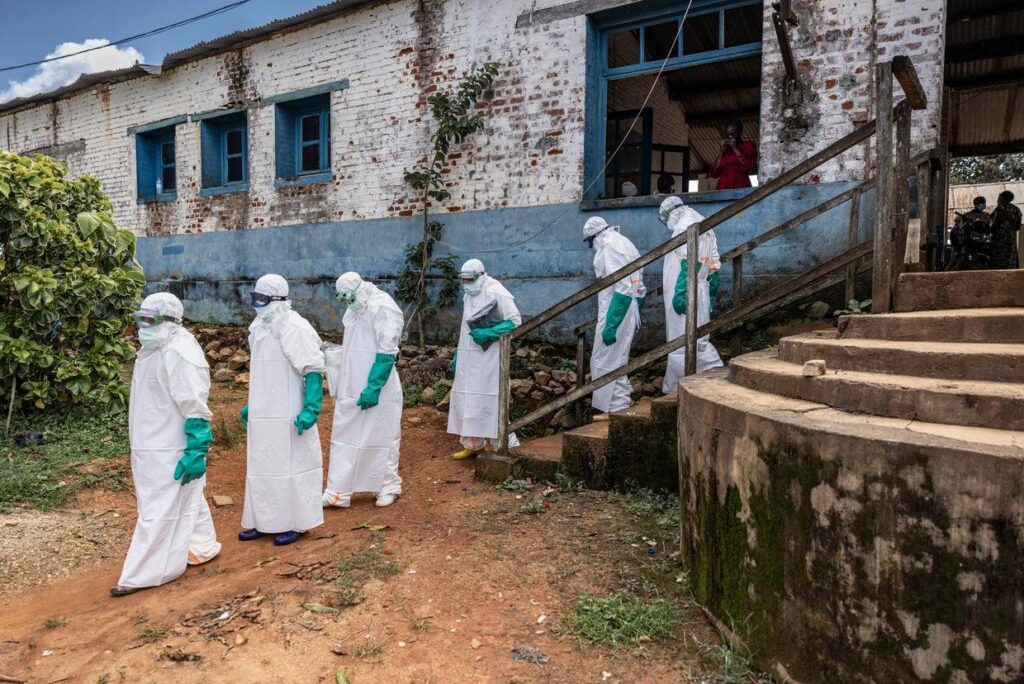
The Democratic Republic of Congo entered the final week of September facing several major pressures at the same time: an expanding Ebola outbreak, continued armed conflict, humanitarian challenges and two deadly disasters.
The health emergency remained one of the week’s most significant developments. The World Health Organization reported 7,890 confirmed Ebola cases and 3,799 deaths as of September 23, while the outbreak had expanded to seven provinces and 63 health zones.
The geographical spread added another layer of concern. Some affected areas are closer to South Sudan, meaning that cross-border surveillance and monitoring have become important considerations as health authorities respond to the outbreak.
But the DRC’s situation cannot be understood through the Ebola outbreak alone.
Amnesty International’s DRC investigation published allegations of human-rights abuses and mineral trafficking in areas controlled by M23. The allegations include claims involving abuses around mining sites. M23 and Rwanda have rejected allegations concerning their role, meaning those claims remain disputed and must be treated as allegations rather than established facts.
The week also brought two separate deadly disasters.
At least 41 people died in a boat disaster on Lake Tanganyika, while a military aircraft crash killed 17 people, including two senior generals. The causes of both incidents remained under investigation in the material available for this roundup.
These incidents were separate developments, but together they illustrate the range of pressures facing the country.
The public-health emergency requires surveillance, contact tracing and containment. The armed-conflict dimension continues to carry humanitarian implications, while the disasters have created their own search and investigation needs.
The combination makes the DRC one of the clearest examples in this week’s Africa news of how multiple pressures can converge inside a single country. A health emergency does not exist in isolation when security conditions, humanitarian needs and institutional pressures are already present.
The expansion of Ebola toward areas closer to South Sudan also gives the outbreak a regional dimension. Cross-border monitoring becomes increasingly important when an infectious disease is spreading geographically and neighbouring countries may need to prepare for potential transmission risks.
The immediate developments to watch include efforts to contain the Ebola outbreak, surveillance around affected areas, investigations into the two deadly disasters and developments surrounding the security and humanitarian situation.
The broader significance is that the DRC’s challenges are occurring simultaneously rather than sequentially. The country’s public-health response, security environment and humanitarian situation therefore remain closely important to the wider regional picture.
Africa Security: Conflict and Displacement Reshape Eastern Africa
The security picture across Eastern Africa also came under renewed pressure during the week, particularly in Ethiopia, where fighting was reported across Tigray, Amhara and Afar.
Seven armed groups announced an alliance on September 21, adding to concerns that Ethiopia’s security situation could deteriorate further following the 2022 Pretoria peace arrangement.
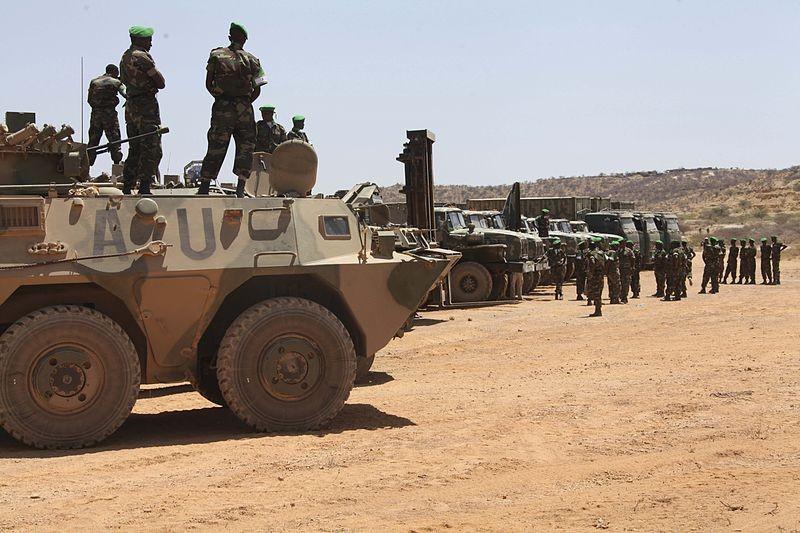
The Ethiopian military reported that more than 500 opposing fighters had been killed, wounded or captured. That figure was not independently verified in the supplied material and should therefore be understood as a military claim rather than an independently established casualty count.
The renewed fighting matters beyond the immediate areas where clashes were reported because conflict in Eastern Africa has repeatedly produced consequences that extend across national borders.
Sudan provides another example.
The country’s continuing war drove further refugee movements into neighbouring Chad. According to the supplied material, more than 55,000 Sudanese refugees arrived in Chad during 2026, while Chad was already hosting more than 900,000 Sudanese refugees.
The scale of those movements places sustained pressure on humanitarian operations and on communities receiving people fleeing the conflict.
The developments in Ethiopia and Sudan are not the same conflict and should not be treated as one connected military event. But they demonstrate a broader regional pattern in which insecurity can generate humanitarian consequences well beyond national borders.
South Sudan added another dimension to the region’s political and security picture.
The country removed requirements for a permanent constitution and a national census before elections. President Salva Kiir subsequently dissolved the transitional government, while the revised framework points toward elections in December 2026.
That date, however, represents the direction of the current framework rather than a guarantee that the election will take place as planned. Political and security conditions remain unresolved.
Kenya also featured in the regional political picture after activists protested over the detention of Ugandan opposition figure Kizza Besigye.
These developments involve different countries and different circumstances. Together, however, they illustrate how Africa security issues, humanitarian pressures and political developments can overlap across a region.
A conflict in one country can generate refugee movements in another. Political changes can affect regional diplomacy, while security developments can quickly become humanitarian and political questions beyond the borders where they began.
The coming period will therefore be important for Ethiopia’s security situation, humanitarian conditions affecting Sudanese refugees in Chad and preparations for South Sudan’s proposed December election.
For the region, the central challenge is not simply how individual governments respond to individual events. It is also how neighbouring states and regional institutions manage the cross-border consequences of conflict, displacement and political uncertainty.
Africa News: Elections, Political Reform and Accountability Enter New Phases
Political change across Africa this week was visible through elections, institutional changes, judicial proceedings and disputes over political rights.
Morocco held parliamentary elections on September 23, producing preliminary results for its 395-seat parliament.
The Authenticity and Modernity Party, known as PAM, took 97 seats in the preliminary results supplied for the roundup. The National Rally of Independents won 66, Istiqlal took 65, while the Justice and Development Party, or PJD, won 54.
These results were preliminary, meaning final results and subsequent government-formation discussions should not be treated as settled beyond what has been officially established.
South Sudan’s political process followed a different path.
The government removed requirements for a permanent constitution and a national census before elections. The revised framework points toward December 2026, although the date should not be interpreted as a guarantee that the election will occur as planned.
The change represents an important development in the country’s attempt to establish an electoral pathway after a prolonged transitional period. At the same time, unresolved political and security conditions remain relevant to what happens next.
In Senegal, the political story moved from allegations surrounding earlier unrest into formal criminal proceedings. Four people became the first defendants in cases connected to political unrest between 2021 and 2024.
The proceedings introduce a judicial dimension to a political story that had previously centred on unrest and disputes.
Kenya also saw political activity connected to the detention of Ugandan opposition figure Kizza Besigye, with activists protesting over his detention.
These developments should not be treated as a single political process. Morocco’s election, South Sudan’s electoral restructuring, Senegal’s court proceedings and the protests in Kenya involve different institutions, circumstances and political environments.
But together, they illustrate the range of political change taking place across the continent.
Africa news this week therefore included both electoral politics and broader questions about institutions, accountability and political rights.
The next developments will be important. In Morocco, attention will turn to final electoral results and the political discussions that follow. In South Sudan, the focus will be on preparations for the proposed December election and whether the revised framework can progress amid unresolved conditions.
Senegal’s court proceedings will provide another indicator of how cases connected to earlier political unrest develop, while developments surrounding Besigye will continue to attract regional attention.
The broader picture is one of political systems moving through different phases at the same time. Some are conducting elections, others are changing electoral rules, while others are dealing with the legal consequences of earlier periods of political unrest.
African Economy: Energy Costs, Investment and Infrastructure Shape the Week
For households, businesses and governments across Africa, the economic story this week was shaped by two competing forces: immediate pressure from energy costs and inflation, alongside longer-term efforts to attract investment, strengthen infrastructure and create new sources of capital.
Nigeria provided one of the clearest examples of the immediate pressure.
Petrol prices rose to roughly 1,400 to 1,500 naira per litre in parts of the country, while diesel moved above 2,000 naira per litre.
The Dangote Refinery fuel-price coverage on DSG Herald News provides additional internal context on Nigeria’s exposure to international crude-price movements. The Dangote Refinery was operating at full capacity, with a stated capacity of 700,000 barrels per day. However, domestic refining has not completely insulated the Nigerian market from movements in international crude prices.
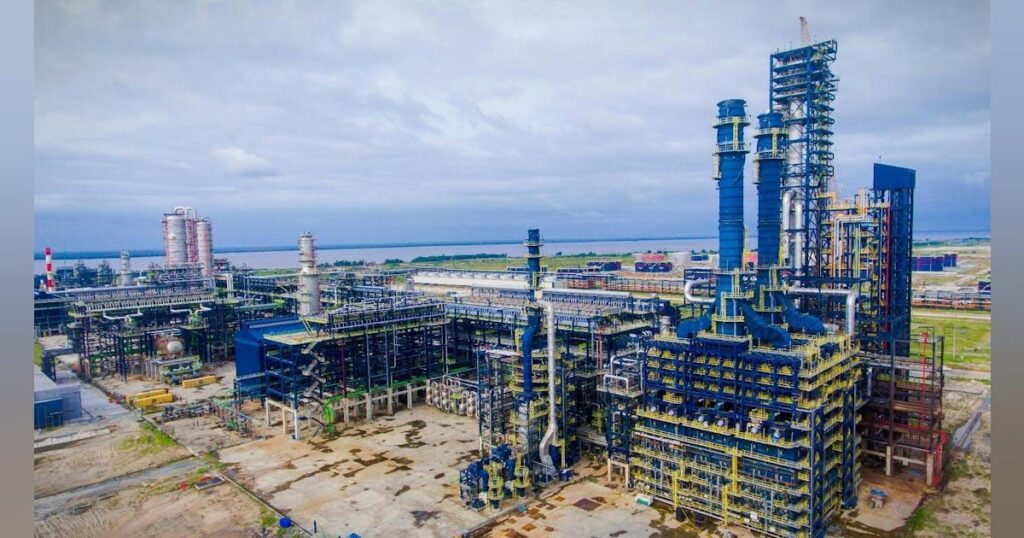
That means energy costs continue to affect transport, production and household spending.
South Africa faced a different combination of economic and energy pressures. The South African Reserve Bank raised its policy rate by 25 basis points to 7.25 percent.
At the same time, the country outlined plans requiring more than $8 billion to revive state-owned refineries.
The refinery question forms part of a wider energy and infrastructure challenge. Investment in refining capacity is being considered alongside efforts to strengthen the country’s energy system.
There was also a contrasting development in South Africa’s electricity sector. Eskom reported more than 490 days without power cuts and a second consecutive profit.
Elsewhere, Airtel Money was preparing for a potential London initial public offering. The company was targeting approximately $800 million in proceeds and an estimated valuation of between $8 billion and $9 billion.
Those figures represent potential transaction targets rather than completed results. The company has more than 56 million customers, according to the supplied material.
Nigeria was simultaneously seeking greater international investment in its mining sector.
Nigeria and the United States established a framework covering geological data, exploration, development, processing, infrastructure and technical capacity.
Nigeria has estimated the value of its mineral resources at approximately $700 billion. That is an official estimate of mineral resources and should not be interpreted as realised investment or current market value.
The week’s economic picture therefore involved both pressure and response.
Higher energy costs create immediate challenges for consumers and businesses, while governments and companies are pursuing longer-term investments in refineries, electricity, digital financial services, mining and infrastructure.
Botswana also reported an improved fiscal outlook, while the World Bank highlighted continuing economic vulnerabilities in Malawi.
Across these developments, the African economy is being shaped by the tension between immediate costs and longer-term investment requirements.
The developments to watch include movements in oil and domestic energy prices, monetary-policy decisions, infrastructure financing and the implementation of investment initiatives.
The key question is how effectively countries can convert investment plans into practical improvements while managing the immediate pressures faced by households and businesses.
Africa Diplomatic Relations: The Continent Pushes for Greater Global Influence
Africa’s international position was another major theme of the week, with governments and regional institutions pursuing greater representation, stronger partnerships and deeper strategic relationships.
During the United Nations General Assembly period, the African Union renewed its call for permanent African representation on the United Nations Security Council reform process.
Africa has 54 UN member states but no permanent seat on the Council.
The African Union’s position calls for at least two permanent African seats, alongside five additional non-permanent seats.
The issue goes beyond the number of seats. It concerns Africa’s representation in one of the world’s most important institutions dealing with international peace and security.
But the continent’s external engagement during the week extended beyond the United Nations.
South Africa remained engaged with the United States despite visa restrictions and policy disagreements. The two countries continued to have areas of engagement even as tensions remained.
Nigeria and the United States also moved forward with a framework designed to expand American investment in Nigeria’s mining sector.
The framework covers exploration, processing, infrastructure and technical capacity, connecting economic investment with wider strategic engagement.
The mining relationship therefore sits at the intersection of the African economy and Africa diplomatic relations. Strategic resources can influence not only investment decisions but also the broader relationships between African states and international partners.
Rwanda and Belgium also resumed diplomatic relations during the week, with the African Union welcoming the development.
The development represents another example of diplomatic engagement following a period in which relations had been strained.
Taken together, these developments show several dimensions of Africa’s international position.
There is the continent-wide push for greater representation in global institutions. There are bilateral relationships with major international powers. There is increasing attention to strategic resources and investment. And there are efforts to restore diplomatic relationships where they have become strained.
The individual developments are different, but they share a broader context: African states and institutions are seeking to shape their external relationships while managing immediate domestic and regional pressures.
The next steps will include continued negotiations over reform of the UN Security Council, further African Union coordination, additional engagement between South Africa and the United States, specific projects emerging from Nigeria-US mining cooperation and implementation of the restored Rwanda-Belgium diplomatic relationship.
The strategic significance of these developments will depend on what happens after the announcements and frameworks are established.
For Africa, influence in global affairs is not only about formal representation. It is also connected to economic partnerships, access to strategic resources, diplomatic relationships and the ability of countries to coordinate around shared interests.
The Africa news cycle from September 20 to 26, 2026, was defined less by one dominant event than by several pressures unfolding simultaneously.
In the Democratic Republic of Congo, an expanding Ebola outbreak developed alongside armed conflict, humanitarian challenges and two deadly disasters. Across Eastern Africa, renewed fighting in Ethiopia and continued displacement from Sudan demonstrated how security crises can produce consequences that cross borders.
Political systems were also moving through different stages. Morocco held parliamentary elections, South Sudan changed elements of its electoral framework, Senegal entered a new phase of criminal proceedings connected to earlier unrest, and political-rights tensions remained visible in Kenya.
The African economy faced immediate energy and inflation pressures while governments and businesses pursued longer-term responses through refinery investment, electricity improvements, digital finance and strategic minerals.
At the international level, African institutions and governments continued to seek greater representation and stronger partnerships, from the African Union’s Security Council reform campaign to bilateral engagement involving South Africa, Nigeria, Rwanda and international partners.
The developments to watch now include Ebola containment in the DRC, Ethiopia’s security situation, South Sudan’s election preparations, energy and economic developments, major investment initiatives and the continuing campaign for reform of the UN Security Council.
Together, these developments capture the complexity of Africa news this week: immediate crises remain urgent, but governments and institutions are also making decisions that could shape the continent’s longer-term security, economic resilience and global position.
About the Author