Nigeria's week was marked by developments across energy, monetary policy, security, investment and politics.
The latest Nigeria news cycle, covering September 20 to 26, 2026, was marked by several changes unfolding at the same time across the economy, energy sector, security environment, international engagement and political organisation.
Nigeria’s petroleum supply structure continued to shift toward domestic sources, yet consumers still faced high petrol prices and the country continued to approve imports. At the same time, the Central Bank of Nigeria made one of its most significant monetary-policy moves of the week, cutting the Monetary Policy Rate from 26.5 percent to 23 percent.
The week’s Nigerian economy story extended beyond interest rates. New initiatives involving critical minerals, ports and gas moved forward, while electricity-sector figures continued to highlight the financial and operational challenges facing the power system.
Security also remained a major concern. Reports about people still being held after the August mass kidnapping in Niger State were accompanied by a separate investigation into the deaths of 37 suspected illegal miners while in NSCDC custody.
Beyond Nigeria’s borders, the country advanced economic partnerships and renewed its call for greater African representation on the United Nations Security Council. Domestically, Nigeria politics also entered a more organised phase as campaign structures began taking shape ahead of the 2027 electoral cycle.
Across these developments, one question connects much of the week’s Nigeria news: what will move from announcement, framework or organisation into actual implementation and measurable consequences?
Nigeria News: Fuel Supply Changes While Petrol Prices Remain High
Nigeria’s fuel system is undergoing a significant structural change, but the experience at filling stations shows that a shift in supply sources does not automatically translate into lower prices for consumers.
Figures supplied by the Nigerian Midstream and Downstream Petroleum Regulatory Authority showed that domestic petrol receipts reached approximately 35.9 million litres per day in August, compared with about 14.6 million litres per day from imports.
Domestic receipts increased by 39 percent, while imports declined by 26 percent.
The figures point to a growing role for domestic sources in Nigeria’s petrol supply system. Yet petrol prices remained elevated during the week, at around ₦1,400 per litre in Lagos and Abuja and about ₦1,500 per litre in parts of northern Nigeria. Diesel prices were also reported above ₦2,000 per litre.
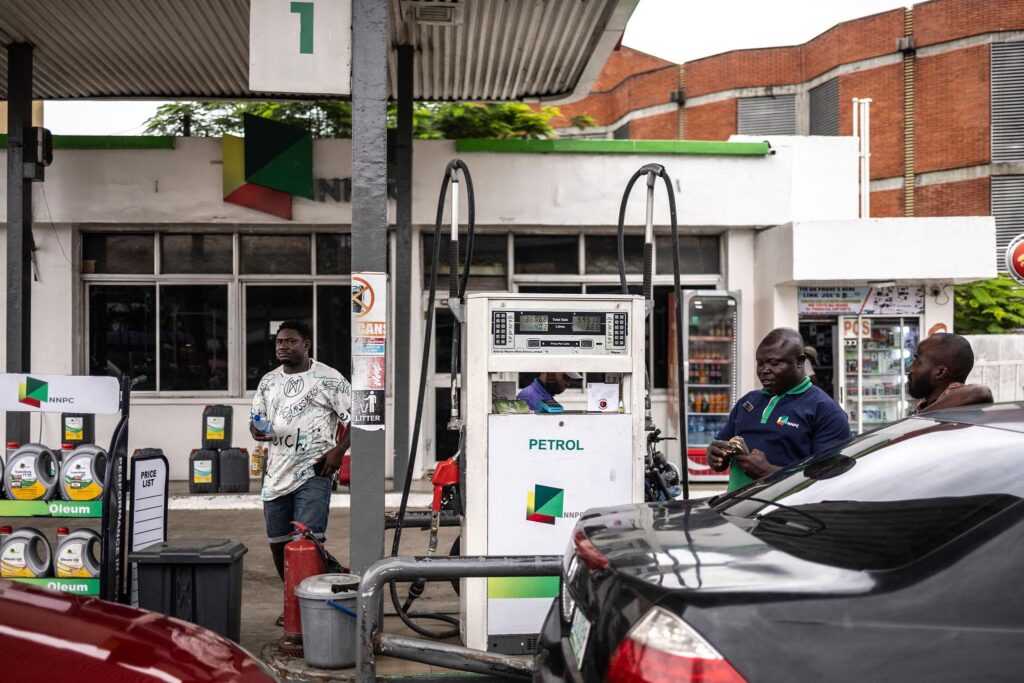
That contrast is central to this week’s Nigeria news: domestic supply is increasing, but consumers are not automatically seeing the same change at the pump.
Nigeria also remains dependent on imported petrol to supplement domestic supply. NMDPRA approved approximately 830,000 tonnes of petrol imports for the fourth quarter, demonstrating that imports continue to form part of the country’s supply structure even as domestic refining expands.
The emerging system is therefore not simply a transition from imported petrol to zero imports. Rather, Nigeria is moving toward a supply mix in which domestic production carries a greater share while imports continue to supplement the market.
The difference matters because petrol prices are influenced by more than where the product is refined. The broader petroleum market remains exposed to international energy prices and other costs affecting the sector.
The energy story is also expanding beyond petrol.
The approximately $800 million Ima Gas project reached Final Investment Decision during the week. The project is expected to produce between 300 million and 350 million cubic feet of gas per day from 2028.
That development adds another dimension to Nigeria’s effort to expand domestic energy capacity. But as with the petrol story, timing matters. A project reaching Final Investment Decision is not the same as an operating facility already supplying the market.
The developments to watch include fourth-quarter petrol imports, refinery output, movements in pump prices, progress on the Ima Gas project and associated pipelines, as well as Nigeria LNG’s Train 7 development.
For consumers and businesses, the immediate issue remains the cost of energy. For the wider economy, the longer-term question is whether greater domestic energy capacity can eventually reduce some of the country’s exposure to external supply pressures.
The week’s Nigeria news therefore presents two realities at once: the structure of fuel supply is changing, while the economic pressure felt by consumers remains significant.
Nigerian Economy: CBN Rate Cut Meets Investment and Power-Sector Challenges
The biggest monetary-policy development in this week’s Nigerian economy story was the Central Bank of Nigeria‘s decision to cut its Monetary Policy Rate from 26.5 percent to 23 percent.
The reduction amounted to 350 basis points, representing a substantial change in the policy environment.
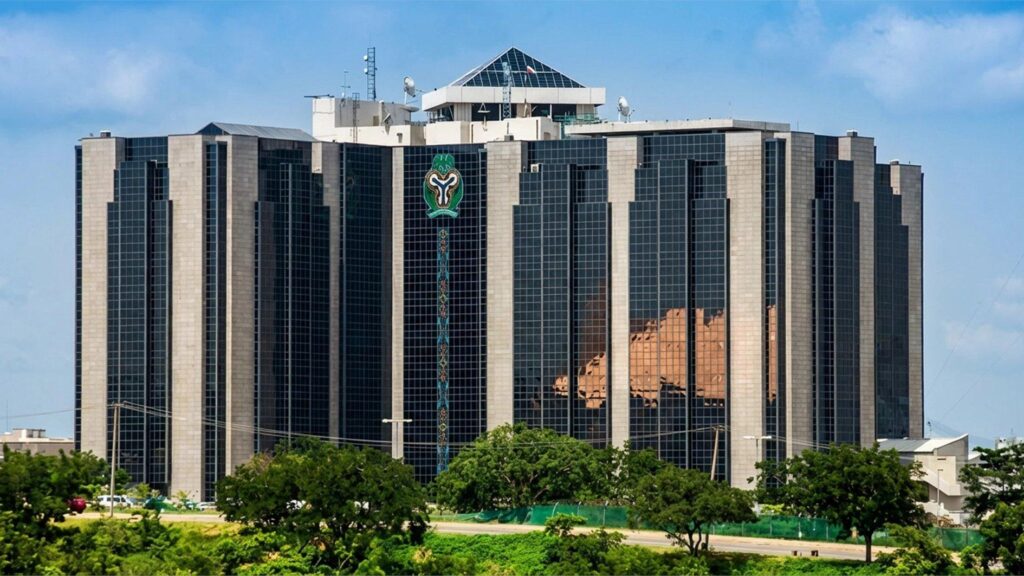
For businesses, investors and consumers, however, the significance of the decision will depend on what happens beyond the CBN’s benchmark rate.
A lower policy rate does not automatically mean that commercial banks will immediately offer significantly cheaper loans. The transmission of monetary policy depends on how banks respond and how lending conditions develop across the economy.
The rate cut came alongside several investment initiatives involving mining, ports and gas.
Nigeria and the United States advanced a framework aimed at encouraging investment in critical minerals and the mining value chain. Ogun State and DP World also signed memoranda relating to the Gateway Deep Sea Port and the Blue Marine Special Economic Zone, while the Ima Gas project reached Final Investment Decision.
These developments provide important context for the week’s Nigerian economy story because monetary policy and investment are operating alongside one another. But they should not be treated as identical developments.
A policy-rate cut changes the financial environment.
An investment framework creates a basis for cooperation.
A memorandum of understanding establishes an agreement.
A Final Investment Decision marks another stage in a project.
None of those developments, by themselves, means that new production, completed infrastructure or cheaper credit has already reached the economy.
The electricity sector illustrates why implementation remains important.
The Nigerian Electricity Regulatory Commission reported an ₦83.15 billion electricity billing gap in July. August operational data also showed average available generation capacity of about 4,758 megawatts, with an average load factor of 86 percent.
These figures underline the fact that Nigeria’s economic challenge is not confined to monetary policy.
The economy also depends on whether infrastructure works effectively, whether electricity-sector finances remain sustainable and whether investment initiatives progress from agreements into construction and operations.
Nigeria’s reported foreign reserves stood at approximately $55.25 billion, while the second-quarter current-account balance recorded a surplus of $7.54 billion in the supplied material.
The Ogun State and DP World agreements were valued at more than $7 billion, but the value attached to those agreements should not be confused with money already spent.
That distinction will remain important as the projects progress.
The developments to watch now include commercial lending rates, credit growth, inflation, exchange-rate conditions, financing and construction of the Ogun projects, implementation of announced investments and electricity-sector performance.
The central question for the Nigerian economy after this week’s monetary-policy shift is therefore broader than whether interest rates have fallen.
It is whether the policy environment and investment initiatives translate into greater productive capacity, functioning infrastructure and measurable economic activity.
Nigeria Security: Kidnapping Concerns and Questions Over State Custody
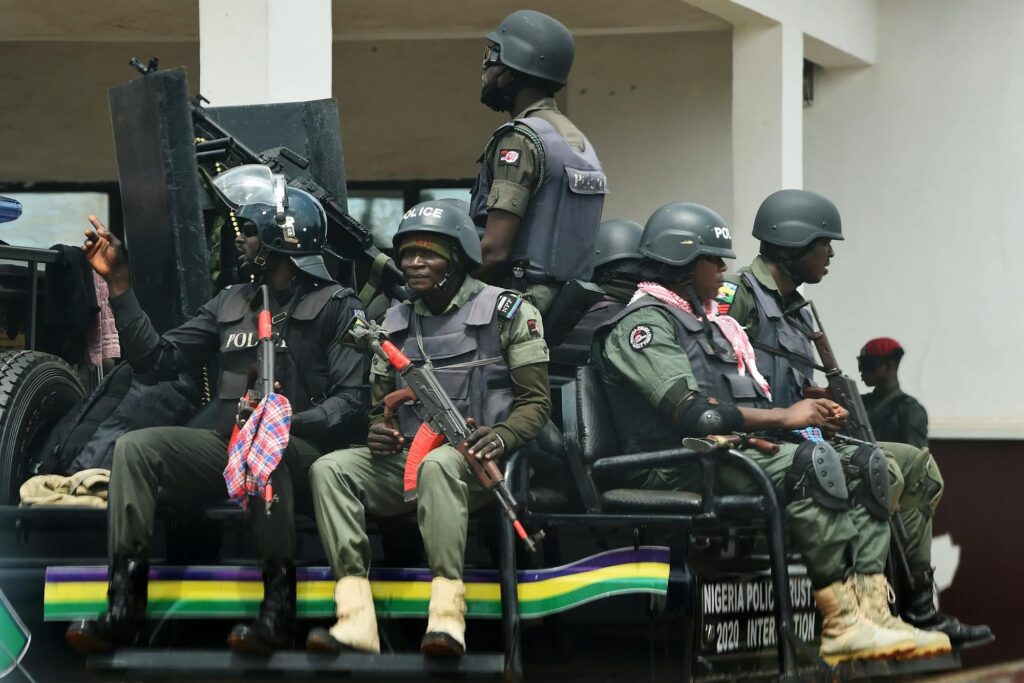
Security remained a major part of this week’s Nigeria news, with two separate developments placing public protection and institutional accountability in focus.
The first involved people reportedly still being held after the mass kidnapping in Niger State on August 21.
Residents of New Bussa protested on September 22 over the continuing captivity. Reuters cited local estimates that nearly 700 people remained captive more than a month after the abduction.
That figure requires an important qualification. It is a local estimate reported by Reuters, rather than a definitively verified national headcount.
For communities affected by the kidnapping, however, the uncertainty surrounding the number does not make the underlying concern less serious. Families need reliable information about who remains in captivity and what actions are being taken to secure their release.
The second development was separate: the deaths of 37 suspected illegal miners while in NSCDC custody in Minna, Niger State.
The Federal Government opened an investigation and established a 10-member investigative committee.
The circumstances and cause of the deaths had not been conclusively established in the supplied material.
That distinction is essential to responsible Nigeria security reporting. The fact that 37 people died while in custody is one matter. Determining exactly how and why the deaths occurred is another.
The investigative process is expected to examine available evidence, including medical and autopsy findings, identification of victims and other relevant information. The committee’s conclusions could inform any disciplinary or legal action that may follow.
The two incidents should not be treated as one connected event. They are separate developments. But together they place attention on two different responsibilities of state institutions.
The state has a responsibility to protect civilians from criminal violence.
When people are held in state custody, institutions are also expected to account for what happens to them.
This makes the week’s Nigeria security story one not only of violence and captivity, but also of information and accountability.
The next developments will be important.
In the kidnapping case, verified information about people still being held and further information from government and security agencies about rescue operations will be closely watched.
In the detainee-death case, the investigative process, medical and autopsy evidence, identification of victims and eventual committee findings will be central.
For affected families, these are not simply institutional or statistical issues. They involve safety, information and accountability.
The week’s Nigeria news therefore leaves two major security questions unresolved: what will happen to those still reportedly held after the Niger State kidnapping, and what will the investigation establish about the deaths in state custody?
Nigeria News and International Partnerships: Minerals, Ports, Gas and UN Reform
Nigeria’s international engagement during the week developed along two distinct but related tracks: economic partnerships aimed at expanding domestic capacity and diplomatic efforts aimed at strengthening the country’s position in global decision-making.
On the economic side, Nigeria and the United States signed a framework aimed at encouraging investment in critical minerals and the mining value chain.
The development comes against the backdrop of the Nigerian government’s estimate that the country’s mineral resources are worth approximately $700 billion.
But the figure needs to be understood correctly.
The $700 billion estimate represents the value of mineral resources. It is not $700 billion in committed or already-spent investment.
That distinction is particularly important as the new US-Nigeria framework moves forward.
A resource estimate describes potential. Turning that potential into economic activity requires financing, mining operations, processing facilities, infrastructure and production.
The same principle applies to the agreements involving Ogun State and DP World.
The Gateway Deep Sea Port and Blue Marine Special Economic Zone agreements were valued at more than $7 billion. But the value attached to the agreements should not be treated as money already deployed.
Implementation will require financing, construction and development before the projects become operating infrastructure.
The $800 million Ima Gas project, meanwhile, reached Final Investment Decision and is expected to produce between 300 million and 350 million cubic feet of gas per day from 2028.
Taken together, these developments form a significant part of the week’s Nigeria news because they show the country seeking international partnerships around sectors that could expand domestic economic capacity.
But the immediate significance lies in the stage each development has reached. Frameworks, memoranda, investment decisions and operating projects are different stages of the development process.
The diplomatic side of the week’s international activity was different.
Nigeria renewed its call for at least two permanent African seats on the United Nations Security Council, alongside five non-permanent African seats.
This remains a diplomatic position rather than a decision by the United Nations.
The call forms part of the broader debate over reforming the Security Council and the representation of African countries in the institution.
For Nigeria, the issue is connected to its stated position on strengthening African representation in global decision-making.
But diplomatic positions require negotiation among member states before they can become institutional reforms.
That makes implementation relevant here too, although in a different form.
On the economic side, the question is whether frameworks and agreements lead to financing, construction and production.
On the diplomatic side, the question is whether Nigeria’s position gains sufficient support to contribute to actual reform negotiations and eventual decisions.
The week’s international Nigeria news therefore combines economic ambition with diplomatic engagement, while leaving the next stage dependent on implementation, negotiations and measurable outcomes.
Nigeria Politics: 2027 Campaign Structures Begin to Take Shape
The week’s Nigeria politics story showed political organisations moving from individual positioning toward more formal organisational structures ahead of the 2027 electoral cycle.
One of the clearest developments was the announcement of an ADC campaign council associated with Atiku Abubakar, with six major directorates and 30 directors.
The Federal Capital Territory Minister, Nyesom Wike, also announced plans concerning campaign structures for President Bola Tinubu in the FCT and Rivers State.
These developments demonstrate the emergence of identifiable political machinery, but they do not establish the outcome of the election.
That distinction is important in reporting Nigeria politics.
Campaign organisations are political structures. They are separate from the formal administration of elections by the Independent National Electoral Commission.
The supplied electoral timetable identifies the general election for January 2027, with governorship and State House of Assembly elections scheduled for February 2027.
As the electoral cycle progresses, attention is likely to turn increasingly toward concrete and verifiable developments: campaign appointments, party and candidate policy announcements, formal INEC preparations and further organisational changes.
For voters, the distinction between political activity and electoral administration is particularly important.
A campaign council represents the organisational machinery of a political campaign. INEC, by contrast, has responsibility for the formal administration of elections.
The formation of campaign structures therefore tells us something about how political organisations are preparing to operate, but it does not determine what voters will ultimately decide.
The week’s Nigeria politics developments also illustrate how early campaign organisation can become a major part of the political news cycle before the formal election period reaches its decisive stages.
The six directorates and 30 directors announced for the ADC campaign council represent a specific organisational structure. Wike’s announcement concerning campaign structures in the FCT and Rivers represents another development.
Beyond these announcements, the broader political process remains open.
Candidates and parties may announce policies. Organisations may adjust their structures. Coalitions may develop. INEC preparations will continue. Additional political appointments and formal announcements may follow.
For news consumers, the most useful information will increasingly be concrete: who has been appointed, which structures have been established, what policies have been formally announced, how the electoral process is being administered and what changes are officially confirmed.
The week’s Nigeria news therefore records an important organisational phase in the approach to 2027, while leaving the eventual political choices to voters and the formal electoral process.
The week of September 20 to 26, 2026, brought several major developments across Nigeria news, but many of them remain at different stages of a longer process.
The country’s fuel system is moving toward greater domestic supply, yet petrol prices remain high and imports continue to supplement the market. The Central Bank has reduced its benchmark rate significantly, but the effect on actual borrowing and productive activity will depend on how the financial system responds.
The country’s security environment remains under pressure, with continuing concern over people reportedly held after the Niger State kidnapping and an investigation into the deaths of 37 detainees in custody.
Internationally, Nigeria is pursuing investment partnerships in critical minerals, ports and gas while renewing its position on African representation at the United Nations Security Council. At home, political organisations are building campaign machinery ahead of the 2027 electoral cycle.
These stories are different, but they share a common theme: the distance between announcement and implementation.
A rate cut must move through the financial system. Investment frameworks must become projects. Resource potential must become production. Security investigations must produce evidence and answers. Diplomatic positions require negotiations. Political organisations must eventually operate within a formal electoral process.
For Nigeria news in the weeks ahead, the important developments will therefore not only be what is announced, but what is built, financed, delivered, investigated, implemented and formally decided.
That is where the consequences of this week’s developments will become clearer.
About the Author