Gambia FGM Ban: Mothers Fear Court Ruling on Girls’ Safety
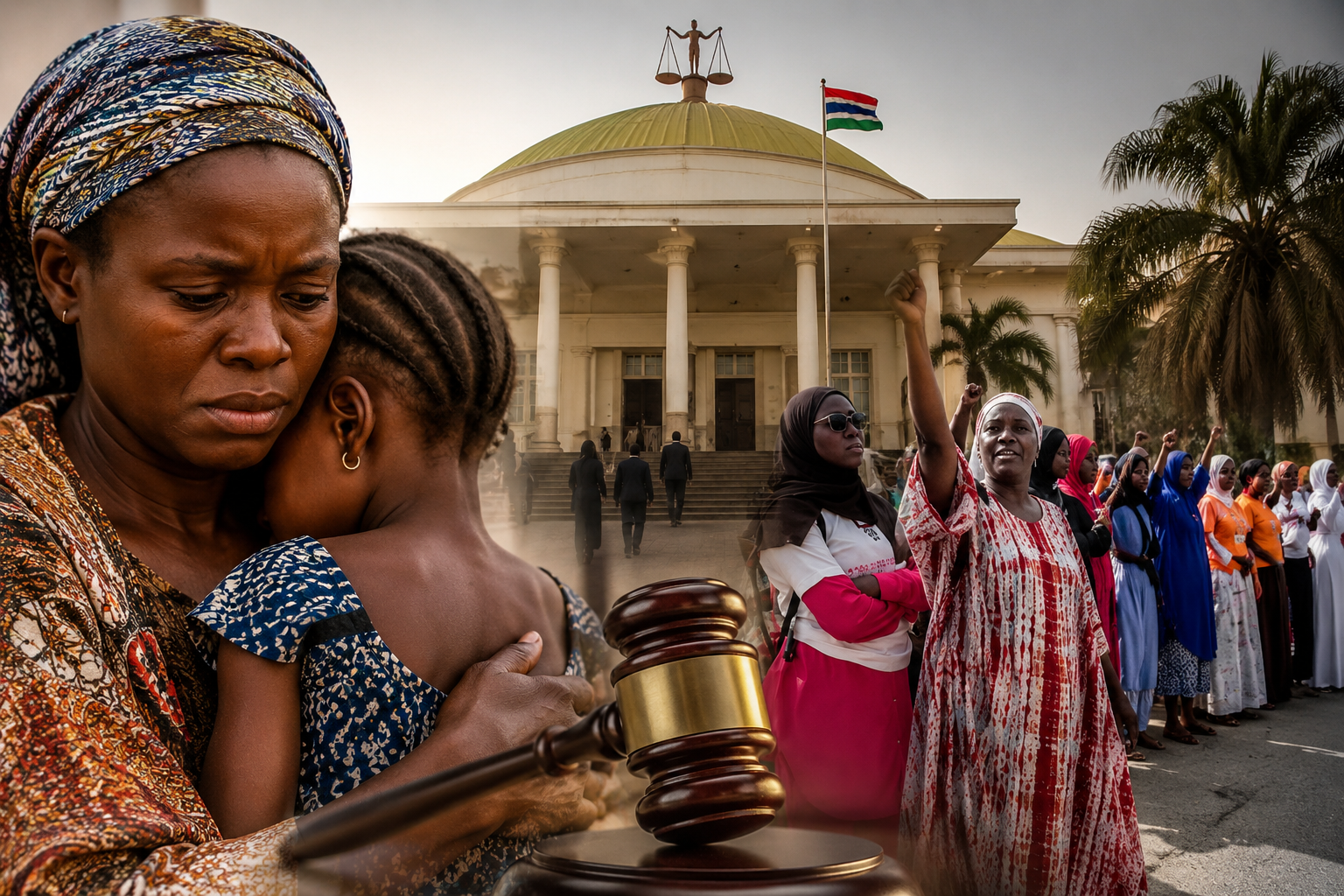
BANJUL, The Gambia — Thousands of Gambian mothers are anxiously awaiting a landmark Supreme Court ruling that could reshape the country’s fight against female genital mutilation (FGM), with campaigners warning that overturning the nation’s 2015 prohibition could expose more girls to a practice widely condemned as a violation of human rights. The legal challenge has evolved beyond a constitutional dispute into a national debate over child protection, religious freedom, cultural identity and the future of women’s rights in one of Africa’s most affected countries.
At the heart of the case is whether The Gambia’s Supreme Court should strike down legislation that criminalised FGM more than a decade ago. If the court rules against the existing law, The Gambia would become the first country in the world to reverse a national ban on the practice after previously outlawing it—an outcome that human rights organisations say could influence legal and political debates well beyond its borders.
Rather than calming tensions, the court proceedings have heightened fears among many families, particularly mothers who oppose FGM but say they often struggle to protect their daughters from pressure within extended family networks. Women’s rights advocates argue that the case has become a defining test of how constitutional rights should be balanced against the state’s responsibility to safeguard children from harmful traditional practices.
Gambia FGM Ban Faces Its Biggest Legal Test Since 2015
The legal dispute centres on the Women’s (Amendment) Act of 2015, legislation that made female genital mutilation a criminal offence in The Gambia. The law provides prison terms of up to three years for anyone convicted of carrying out the procedure, while cases resulting in death can attract life imprisonment.
The legislation represented a significant policy shift for a country where FGM had long been practised across many communities. Supporters of the ban argued that criminalisation was necessary to protect girls from irreversible physical and psychological harm, while also aligning the country with international human rights obligations relating to women and children’s welfare.
However, despite the legal prohibition, enforcement has remained a persistent challenge. Rights groups say prosecutions have been relatively rare, while the practice has continued in many communities, often becoming more secretive as families sought to avoid criminal penalties.
That enforcement gap now forms part of a wider national conversation. Opponents of the ban argue that criminalisation has failed to eliminate FGM and instead pushed the practice underground. Child protection advocates counter that weak enforcement should prompt stronger implementation of the law—not its repeal.
From Parliament to the Supreme Court
The current legal challenge follows an earlier political battle that unfolded in 2024 when lawmakers considered legislation that would have repealed the ban altogether.
That proposal generated intense debate across Gambian society, drawing strong reactions from religious leaders, women’s organisations, health professionals and international human rights bodies. After months of controversy, the National Assembly ultimately rejected the repeal effort, allowing the 2015 prohibition to remain in force.
With the legislative route unsuccessful, supporters of repeal shifted their strategy to the judiciary.
The Supreme Court is now hearing arguments from plaintiffs led by independent National Assembly member Almameh Gibba and prominent Islamic cleric Abdoulie Fatty, who contend that the law infringes constitutional protections relating to religious practice and cultural expression.
The plaintiffs argue that many Gambians regard FGM as an important cultural or religious tradition, maintaining that criminalising the practice interferes with freedoms guaranteed under the country’s Constitution. Given that roughly 96 percent of The Gambia’s population is Muslim, supporters of the legal challenge insist the court must carefully consider questions surrounding religious liberty alongside public policy.
The case has therefore become more than a legal dispute over one statute. It now represents a broader constitutional test involving competing interpretations of individual rights, community traditions and state obligations toward children.
Why Mothers Say They Fear the Consequences
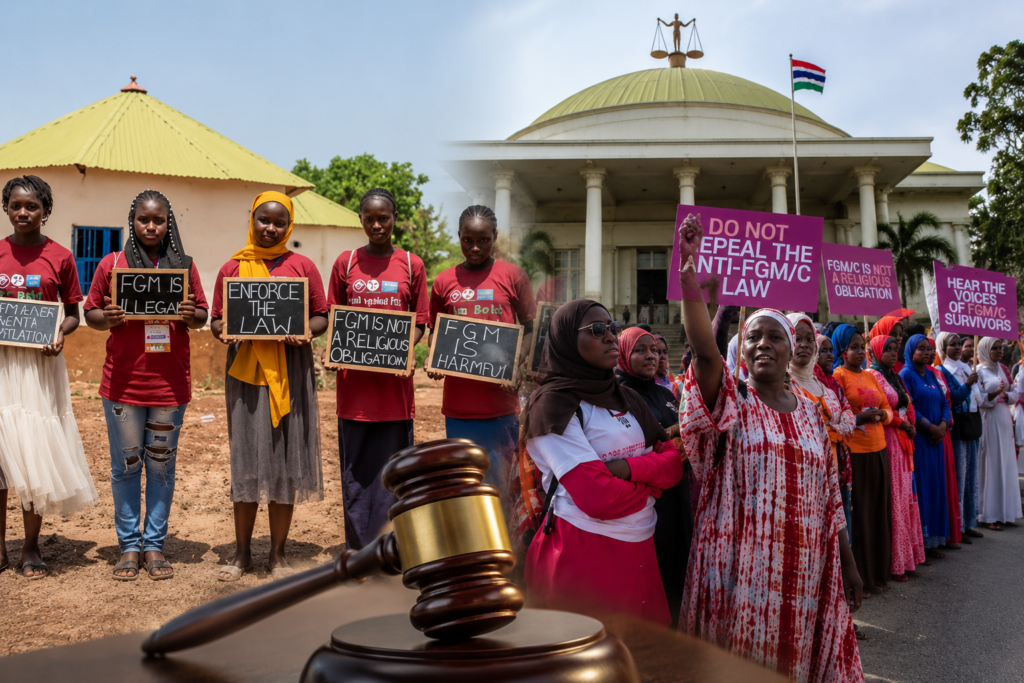
For many Gambian mothers, the courtroom arguments are deeply personal.
Women’s rights campaigners report that many parents who oppose FGM already face considerable pressure from relatives determined to preserve long-standing customs. In communities where extended families often play a central role in raising children, mothers sometimes find themselves unable to prevent daughters from being taken to undergo the procedure without their knowledge or consent.
Campaigners say grandmothers, aunts and other relatives have occasionally arranged cutting ceremonies in secret, creating conflict within families and leaving mothers with little legal or practical protection.
Those fears have intensified because the existing ban has not completely eliminated the practice.
Instead, activists say many procedures are now carried out clandestinely, often involving increasingly younger infants in an effort to reduce the likelihood of detection by authorities. According to campaigners, secrecy has complicated efforts by police, healthcare workers and child protection agencies to identify victims before irreversible harm occurs.
For mothers opposed to FGM, the Supreme Court case has therefore become about far more than legal interpretation. They fear that any weakening of the current law could embolden supporters of the practice, making it even harder for parents seeking to shield their daughters from family and community pressure.
Underground Procedures Continue Despite Criminal Penalties
Human rights organisations have repeatedly warned that criminalisation alone cannot eliminate deeply rooted cultural practices.
Instead, they argue that successful prevention requires a combination of legal enforcement, public education, community engagement, healthcare support and sustained advocacy involving religious and traditional leaders.
Campaigners point to reports that some procedures are now conducted in increasingly secret locations, reducing opportunities for medical intervention when complications arise.
These concerns were reinforced following reports that a three-month-old infant died after suffering severe bleeding linked to a clandestine FGM procedure last year. The incident renewed calls from child protection organisations for stronger enforcement measures and wider public awareness campaigns aimed at discouraging the practice.
Healthcare professionals have long warned that FGM can lead to immediate complications—including severe bleeding, infections and intense pain—as well as lifelong reproductive and psychological consequences.
For many campaigners, these risks underscore why the Supreme Court’s eventual ruling is being closely watched not only in The Gambia but across Africa and the wider international community.
Gambia FGM Ban Raises Questions About Law Enforcement
While the Supreme Court considers the constitutional challenge, another issue has emerged at the centre of public debate: whether existing laws designed to protect girls are being adequately enforced.
Women’s rights advocates argue that legislation alone cannot eliminate a practice that has been embedded in parts of Gambian society for generations. They say many families continue to perform FGM despite criminal penalties because community traditions, social expectations and misinformation often outweigh fear of prosecution.
Some mothers and survivors have also expressed frustration over what they describe as inconsistent responses from local authorities. According to campaigners, women seeking legal action after girls were allegedly subjected to FGM without parental consent have sometimes encountered reluctance from law enforcement officers, with some cases reportedly dismissed as private family matters rather than criminal offences.
If accurate, rights groups argue, such responses weaken public confidence in the legal system and reduce the deterrent effect intended by the 2015 legislation.
Legal experts observing the case say the debate therefore extends beyond whether the law should remain in force. It also raises broader questions about implementation, institutional capacity and whether governments can effectively enforce legislation designed to change long-established cultural practices.
Health Experts Continue to Warn About the Risks
Medical organisations, including the World Health Organization (WHO), have consistently stated that female genital mutilation has no health benefits and can result in lifelong physical and psychological harm.
Depending on the procedure, girls may experience:
- Severe bleeding
- Acute infections
- Chronic pelvic pain
- Urinary complications
- Childbirth complications
- Infertility in some cases
- Emotional and psychological trauma
Health professionals also warn that procedures carried out in secret or by untrained individuals can significantly increase the likelihood of life-threatening complications because victims often lack immediate access to emergency medical care.
For many healthcare advocates, these medical realities reinforce the argument that FGM should be viewed primarily as a public health and child protection issue rather than solely through political, cultural or constitutional lenses.
Why the Supreme Court Decision Matters Beyond The Gambia
Although the legal challenge concerns one country’s domestic legislation, observers say its implications could extend across West Africa and beyond.
According to UNICEF, approximately 73 percent of Gambian women and girls aged between 15 and 49 have undergone female genital mutilation, making the country one of the regions where the practice remains highly prevalent.
Because of that prevalence, any judicial reversal could attract close attention from governments, lawmakers and advocacy groups throughout Africa.
Human Rights Watch has warned that overturning the law could create an important legal precedent, potentially encouraging similar constitutional challenges in countries that have introduced legislation banning FGM. Rights organisations fear such developments could slow decades of international efforts aimed at reducing violence against women and protecting children’s rights.
Conversely, supporters of the legal challenge argue that constitutional protections relating to religious freedom and cultural practice deserve judicial scrutiny regardless of international opinion, insisting that the court should determine whether Parliament exceeded its constitutional authority when criminalising FGM.
The outcome is therefore expected to influence future legal debates over how African constitutions balance individual freedoms with state responsibilities to protect vulnerable citizens.
Regional Implications for Africa
Across Africa, governments have increasingly strengthened laws aimed at eliminating harmful practices affecting women and children.
Several countries—including Senegal, Nigeria, Kenya, Uganda and Burkina Faso—have enacted legislation prohibiting FGM, although enforcement levels differ considerably between jurisdictions.
The Gambian case is therefore being monitored by policymakers, legal scholars and civil society organisations throughout the continent.
Should the Supreme Court uphold the existing ban, campaigners believe it could reinforce regional efforts to strengthen child protection laws and improve enforcement mechanisms.
However, if the court strikes down the legislation, governments elsewhere may face renewed constitutional challenges from groups seeking to revisit similar laws.
That possibility explains why international organisations have described the case as one of the most closely watched women’s rights legal disputes currently unfolding in Africa.
Lessons for Nigeria and Other African Nations
For Nigeria and other African countries, the Gambian case offers broader lessons that extend beyond one courtroom.
Many nations continue to confront the challenge of balancing constitutional freedoms with public health policies and child protection obligations.
The case also highlights the importance of ensuring that laws are accompanied by sustained public education, community engagement and effective enforcement. Without those complementary measures, legislation alone may struggle to change practices rooted in generations of social tradition.
For policymakers, the Gambian experience illustrates that legal reform is only one component of broader societal transformation. Lasting progress often depends on collaboration among governments, religious leaders, traditional institutions, healthcare professionals and civil society organisations.
Readers interested in broader discussions about governance, justice, and public accountability can also explore Kanayo Onyemaechi Scorecard Sparks Debate on How Legislators Should Be Measured for related coverage.
Similarly, DSG Herald News has previously examined legal reforms, public policy and governance developments in Africa through Dr Eberechukwu Uneze: The Rise, Influence, Impact in African Economic Policy and Development
What Happens Next?
The Supreme Court’s decision is expected to determine whether the 2015 prohibition remains one of The Gambia’s principal child protection laws or whether Parliament may need to revisit the issue once again.
Whatever the outcome, the judgment is unlikely to end the national conversation.
Supporters of the ban maintain that protecting girls from irreversible harm should remain a national priority backed by strong enforcement and public education.
Opponents continue to argue that constitutional rights relating to religion and culture deserve greater judicial protection.
For many Gambian mothers, however, the legal arguments unfolding inside the country’s highest court ultimately come down to one question: whether future generations of girls will be afforded stronger protection or face renewed uncertainty.
As reported by Human Rights Watch, Al Jazeera, and supported by UNICEF data, the case has become a defining moment in the ongoing global debate over women’s rights, child protection and the role of constitutional courts in resolving deeply contested social issues.
Conclusion
The Gambia FGM Ban case is no longer simply a domestic legal dispute. It has evolved into a defining test of how African democracies reconcile constitutional freedoms with the responsibility to protect women and children from harmful practices. The Supreme Court’s eventual ruling will be closely watched not only by Gambians but also by governments, legal experts and human rights organisations across Africa and the wider international community, where its implications could shape future debates on child protection, women’s rights and constitutional law for years to come.
Recommended Coverage
Boko Haram Attack in Chad Exposes Regional Security Gaps
Read how renewed insurgent violence is highlighting persistent security concerns across the Lake Chad Basin.
Nigeria Senate Rules in Favour of Ranking Lawmakers
Learn how recent Senate decisions are shaping legislative priorities and governance in Nigeria.
Nigeria Political Realignment Deepens as NDC Rises
An analysis of changing political alliances and what they could mean for Nigeria’s democratic landscape.
SERAP Defamation Case Fuels Free Speech Debate
Explore how the case is influencing conversations around constitutional rights, accountability and freedom of expression.
Yahaya Bello Trial Faces Fresh School Fees Controversy
Catch up on the latest developments in one of Nigeria’s closely watched court cases involving public accountability.
About the Author