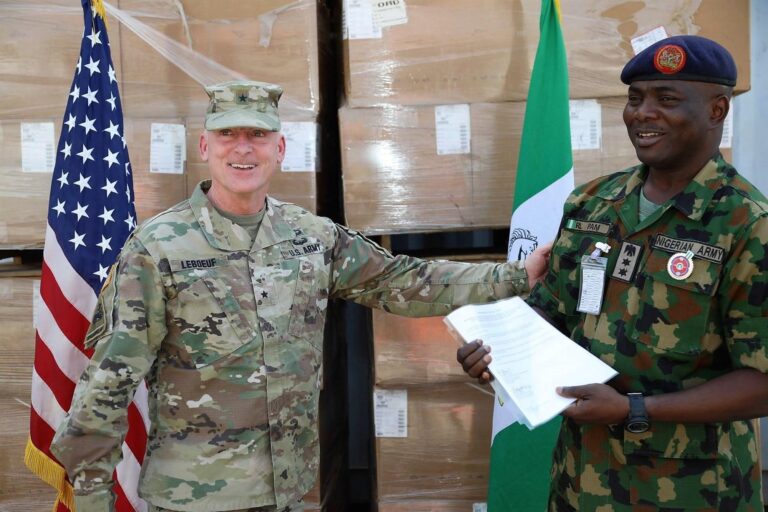
NATO leaders are reshaping NATO Defence Spending priorities as the alliance prepares for new global security challenges.
NATO Defence Spending: Why the Alliance Is Raising Security Goals
NATO defence spending has emerged as one of the defining security issues of the decade as the world’s largest military alliance pushes member nations to invest significantly more in their armed forces. What was once considered a voluntary benchmark has evolved into a strategic priority driven by a rapidly changing geopolitical landscape, renewed military threats in Europe, and growing concerns over global stability.
The alliance’s decision to move beyond its long-standing 2% of Gross Domestic Product (GDP) defence spending guideline reflects more than an accounting exercise. It represents NATO’s assessment that the international security environment has fundamentally changed, requiring members to strengthen both military capabilities and critical infrastructure over the coming years.
For governments, defence planners, and international observers, the shift signals that NATO is preparing for a prolonged period of heightened security competition rather than a temporary response to regional conflicts. The implications extend far beyond Europe, influencing defence budgets, diplomatic relationships, military industries, and global strategic calculations.
Why NATO Is Once Again at the Centre of Global Security
For decades after the Cold War ended, many Western governments gradually reduced defence spending as the perceived threat of large-scale conflict diminished. Resources increasingly shifted toward domestic priorities, while NATO expanded its focus to include peacekeeping operations, crisis management, counterterrorism, cyber defence, and maritime security.
However, recent geopolitical developments have dramatically altered that outlook.
Russia’s invasion of Ukraine in 2022 fundamentally reshaped security thinking across Europe. The conflict demonstrated that conventional warfare between states remains a significant risk, prompting governments to reconsider whether existing military capabilities are sufficient for emerging threats.
As a result, NATO members have accelerated efforts to modernise their armed forces, replenish depleted military stockpiles, strengthen collective deterrence, and improve readiness for potential future crises.
The alliance argues that maintaining peace increasingly depends on demonstrating credible military strength capable of discouraging aggression before conflict begins.
Understanding What NATO Is
The North Atlantic Treaty Organization, commonly known as NATO, was established on April 4, 1949, following the signing of the Washington Treaty. The organisation was created in the aftermath of the Second World War to promote collective security among democratic nations in Europe and North America.
Beginning with just 12 founding members, NATO has expanded over the decades into a 32-member alliance that brings together countries committed to political cooperation and collective defence.
Unlike a single unified military force, NATO functions as a partnership of sovereign nations. Each member maintains control over its own armed forces while agreeing to cooperate politically and militarily whenever common security interests are at stake.
This model enables countries with different military capabilities, economic strengths, and political systems to coordinate their defence planning without surrendering national sovereignty.
The Principle That Defines NATO
The cornerstone of the alliance remains Article 5 of the North Atlantic Treaty, widely regarded as NATO’s most powerful commitment.
Article 5 states that an armed attack against one member shall be considered an attack against all members. Rather than leaving any nation to respond alone, the alliance commits its members to assist the country under attack using measures they consider necessary, including military force where appropriate.
Although Article 5 has become synonymous with NATO’s deterrence strategy, it has been formally invoked only once in the alliance’s history.
That occurred after the terrorist attacks of September 11, 2001, when NATO allies expressed solidarity with the United States and supported operations related to counterterrorism, including missions in Afghanistan.
Security analysts often argue that the true value of Article 5 lies not in how often it is used but in its ability to discourage potential adversaries from testing the alliance’s collective resolve.
How NATO Makes Decisions
Despite its military reputation, NATO is fundamentally a political alliance.
Its highest political authority is the North Atlantic Council (NAC), where ambassadors representing every member nation meet regularly to discuss security matters, formulate policy, and approve collective decisions. The council is chaired by the NATO Secretary General.
One of NATO’s defining characteristics is that decisions are reached through consensus rather than majority voting.
This means every member country must agree before the alliance adopts a policy or undertakes a significant operation. No nation possesses veto power over others through weighted voting because every ally holds equal political standing within the decision-making process.
While consensus can sometimes slow decision-making, supporters argue that it strengthens political unity and ensures all members remain committed to agreed actions.
How NATO’s Military Structure Supports Collective Defence
Operational responsibility rests with NATO’s Military Committee, which provides strategic military advice and oversees planning across the alliance.
The Supreme Allied Commander Europe (SACEUR), traditionally a senior United States military officer, directs NATO’s military operations and coordinates multinational forces when required.
Importantly, NATO does not maintain a permanent standing army composed of its own soldiers.
Instead, member countries contribute military personnel, equipment, aircraft, naval forces, intelligence assets, and logistical support whenever alliance operations require collective action.
This arrangement allows NATO to mobilise significant military capability while respecting each country’s constitutional processes and political decision-making.
Expansion Reflects Changing Security Priorities
NATO’s membership has expanded significantly since its creation in 1949.
From its original 12 founding nations, the alliance has grown through multiple rounds of enlargement to include countries across Central and Eastern Europe following the end of the Cold War. Finland officially joined in April 2023, followed by Sweden in March 2024 after both countries abandoned decades of military neutrality in response to the changing European security environment.
The expansion illustrates how NATO has evolved from a Cold War alliance focused primarily on deterring Soviet influence into a broader security organisation addressing conventional warfare, cyber threats, terrorism, maritime security, and emerging technological challenges.
Beyond current members, several European countries continue to pursue closer relationships with NATO under its open-door policy, highlighting the alliance’s continued strategic importance in contemporary international affairs.
Why NATO Defence Spending Has Become a Strategic Priority
For much of its modern history, NATO encouraged member countries to spend at least 2% of their Gross Domestic Product (GDP) on defence. The benchmark, formally adopted during the 2014 Wales Summit after Russia’s annexation of Crimea, was designed to ensure that every ally contributed fairly to the alliance’s collective security.
Initially, the target served more as a political commitment than a binding obligation. Many governments struggled to meet it, often citing domestic economic pressures, competing public spending priorities, and the absence of an immediate military threat after the Cold War.
That situation has changed dramatically.
Russia’s invasion of Ukraine in 2022 fundamentally altered security calculations across Europe. Governments that had previously delayed military investment accelerated defence budgets, while NATO leaders increasingly described the 2% benchmark as the minimum acceptable level rather than an ambitious goal.
According to NATO’s framework, the spending target consists of two major components:
- At least 2% of national GDP devoted to defence expenditure.
- At least 20% of defence budgets allocated to major equipment purchases, research, and military modernisation.
The objective is not simply to spend more money, but to ensure armed forces remain technologically advanced and operationally prepared for modern warfare.
The Shift Toward a 5% Defence Spending Target
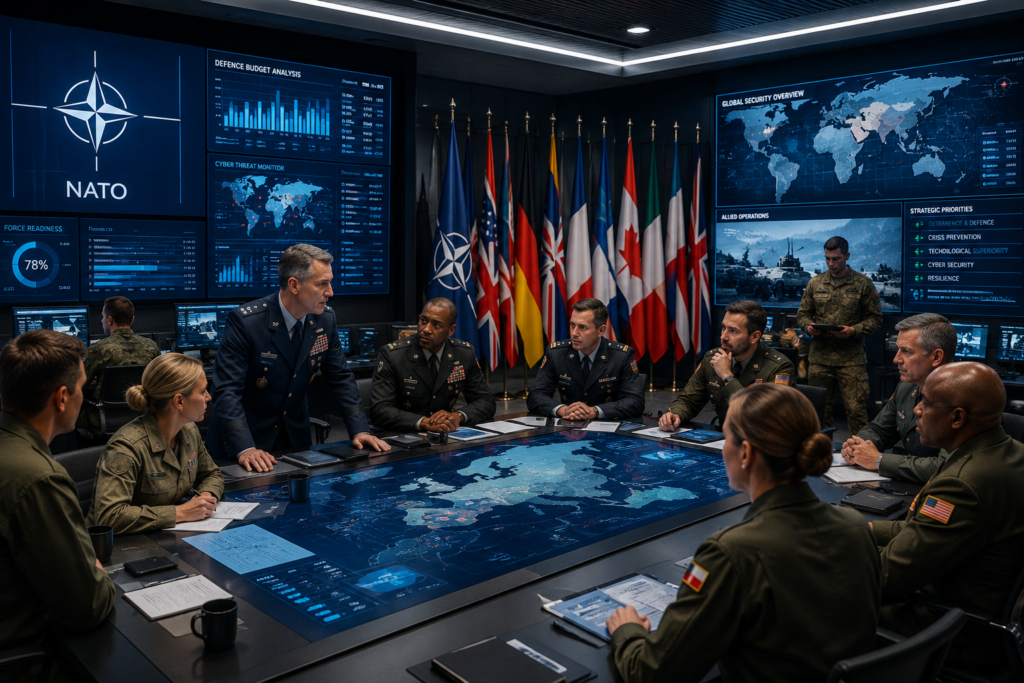
As security challenges continue to evolve, NATO leaders have concluded that even the long-standing 2% benchmark may no longer be sufficient.
At the alliance’s summit in The Hague, member countries endorsed an ambitious long-term objective of investing 5% of GDP in security and defence by 2035, reflecting a broader reassessment of Europe’s strategic environment.
Under the proposed framework:
- Approximately 3.5% would be directed toward traditional military capabilities, including personnel, weapons systems, ammunition, air defence, and combat readiness.
- The remaining 1.5% would support critical infrastructure essential to modern defence, such as cybersecurity, transport networks, ports, logistics, and resilient communications systems.
This approach reflects the understanding that future conflicts may involve cyberattacks, disruptions to energy networks, digital infrastructure, and supply chains alongside conventional military operations.
Countries situated closest to Russia’s borders, including Poland, have already emerged among NATO’s highest defence spenders, arguing that stronger military preparedness remains the most effective deterrent against potential aggression.
Why Countries Continue Seeking NATO Membership
Membership in NATO remains attractive for many European nations because it provides access to the alliance’s collective security guarantee, political cooperation, military planning, intelligence sharing, and joint training exercises.
However, joining NATO is neither automatic nor quick.
Article 10 of the North Atlantic Treaty outlines an “Open Door Policy,” allowing eligible European democracies to seek membership if they are capable of contributing to Euro-Atlantic security. Candidates must complete a rigorous accession process that evaluates democratic governance, civilian control of the military, defence capabilities, and political stability.
The process generally includes:
- Participation in a Membership Action Plan.
- Formal accession negotiations.
- Signing accession protocols.
- Ratification by every existing NATO member according to national constitutional procedures.
- Formal accession after depositing the required legal instruments.
This unanimous approval process ensures that enlargement reflects a collective political decision rather than unilateral action by any single member state.
How NATO Has Changed Since the Cold War
Although NATO was originally created to deter Soviet expansion during the Cold War, its mission has expanded significantly over the past three decades.
Following the collapse of the Soviet Union, the alliance increasingly focused on peacekeeping operations in the Balkans, counterterrorism initiatives after the September 11 attacks, maritime security, cyber defence, disaster response, and cooperation with partner countries outside the alliance.
This transformation reflects the changing nature of international security.
Today’s threats extend beyond conventional military invasions to include:
- Cyber warfare.
- Disinformation campaigns.
- Terrorism.
- Hybrid warfare.
- Space security.
- Critical infrastructure attacks.
- Emerging technologies such as artificial intelligence.
As these challenges evolve, NATO continues adapting its military doctrine, operational planning, and strategic partnerships to maintain collective defence capabilities.
What NATO’s New Strategy Means for Africa and Nigeria
Although Nigeria is not a NATO member and lies outside the alliance’s geographical treaty area, NATO’s strategic decisions often have broader international consequences that extend well beyond Europe.
Higher defence spending among major economies could influence global arms production, defence technology, cybersecurity investment, and international security cooperation. African countries that partner with NATO members on peacekeeping, intelligence sharing, maritime security, or counterterrorism may also experience indirect effects.
For Nigeria, the implications are particularly relevant in areas such as maritime security in the Gulf of Guinea, counterterrorism cooperation against extremist groups, cybersecurity resilience, and defence technology partnerships.
Increased defence expenditure by NATO members may also reshape global defence markets, potentially affecting procurement costs, military innovation, and international security assistance programmes.
At the same time, many analysts argue that Africa must continue strengthening its own regional security institutions, including the African Union and sub-regional organisations, to address conflicts specific to the continent.
Political and Economic Implications
NATO’s increased defence ambitions extend beyond military planning.
Governments allocating larger portions of national budgets to defence may face difficult political choices regarding healthcare, education, infrastructure, and social welfare spending.
Supporters argue that national security forms the foundation upon which economic development depends.
Critics, however, caution that sustained increases in military expenditure could place additional pressure on public finances, particularly during periods of economic uncertainty.
The debate therefore extends beyond defence ministries into broader questions about fiscal policy, industrial development, technological innovation, and long-term national priorities.
For defence manufacturers, however, higher spending commitments are expected to stimulate investment in advanced weapons systems, aerospace technologies, cybersecurity solutions, and military research and development across NATO member states.
The Future of NATO Defence Spending
The evolving NATO Defence Spending strategy has become one of the defining indicators of how the alliance intends to respond to future military, technological and geopolitical challenges.
More than seventy-five years after its creation, NATO remains one of the world’s most influential political and military alliances.
Its ability to adapt—from deterring Soviet expansion during the Cold War to confronting cyber threats, terrorism, and renewed interstate conflict—has helped sustain its relevance despite profound geopolitical changes.
The alliance’s evolving defence spending strategy demonstrates that NATO is preparing for an era characterised by long-term strategic competition rather than short-term crisis management.
Whether the ambitious 5% target is fully achieved by 2035 will depend on political will, economic performance, and continued cooperation among member governments.
What appears increasingly clear, however, is that NATO no longer views defence spending as merely a budgetary issue. Instead, it has become a central pillar of the alliance’s strategy to preserve deterrence, reassure allies, and respond to an increasingly unpredictable global security environment.
For policymakers, businesses, and citizens alike, NATO Defence Spending will remain one of the most closely watched indicators of Europe’s evolving security strategy and the future direction of global defence cooperation.
Recommended Coverage
China’s AI Push Signals a New Global Technology Race
Explore how China’s expanding investment in artificial intelligence is reshaping technological competition and influencing global strategic priorities alongside military modernisation.
China Expands Trade Influence Across Africa with Tariff-Free Access
Learn how Beijing’s growing economic engagement with Africa is transforming international trade relationships while major powers compete for geopolitical influence.
Why China and Djibouti Matter in the Global Power Competition
Discover why the Horn of Africa has become a strategic focal point for global powers seeking greater military and economic influence.
About the Author