Introduction
Nigeria’s public affairs agenda on 29 October 2026 raises questions about how public money is managed, how government commitments are implemented, how electoral institutions prepare for national polls, how security operations are assessed and how investment reaches technology businesses. These developments involve different institutions and groups, but they share a central public-interest concern: the difference between a reported figure or announced plan and evidence of what has actually been delivered.
In this edition of Nigeria news today, a report citing ₦264.12 billion in unspent Universal Basic Education Commission matching grants renews attention on basic education funding. The figure, however, relates to historical reporting and should not be mistaken for a confirmed current balance. Separately, a reported Federal Government agreement to provide eligible workers with a temporary transport allowance raises questions about eligibility, funding and actual payments.
Preparations for the 2027 general elections are also under legislative scrutiny, with the House of Representatives requesting a briefing from the Independent National Electoral Commission. In the security sector, a senior military commander’s visit to troops around Old Oyo National Park highlights the need to assess operations through measurable public-safety outcomes rather than activity alone.
Meanwhile, startup funding figures reported by Propel Africa offer a view of recorded investment activity, while raising questions about how much capital reaches early-stage businesses. A separate ₦3 billion target pipeline for investment and pilot-contract opportunities must be distinguished from money already invested or disbursed.
Taken together, these five narratives do not establish a single national trend. They instead show why careful examination of records, implementation and outcomes is essential to understanding Nigerian affairs.
UBEC Education Grants: Nigeria’s Reported ₦264.12 Billion Balance Requires Updated Records
A report by The PUNCH has renewed attention on basic education funding after citing ₦264.12 billion in unspent matching grants from the Universal Basic Education Commission (UBEC). The PUNCH report on the unspent UBEC funds says the figure was drawn from UBEC’s 2025 Annual Report and financial monitoring conducted on 21 July 2025.
The reporting period is crucial. The ₦264.12 billion figure is a historical reported balance, not confirmation of how much remains unspent as of October 2026. Without updated records, it cannot accurately be presented as the current amount available, outstanding or unused.
The report listed several state balances: Benue at ₦19.18 billion, Imo at ₦14.12 billion, Osun at ₦14.02 billion, Kwara at ₦13.99 billion and Delta at ₦13.40 billion. These figures draw attention to the relationship between funding arrangements and the delivery of public education services. However, they must be interpreted within the reporting period and alongside the relevant state responses.
UBEC’s published matching-grant guidelines explain the federal-state funding arrangement. The commission also provides information about the purpose of matching grants in its official frequently asked questions. These resources help explain the funding structure, but they do not independently establish the current unspent balance reported for each state.
The matching-grant arrangement involves responsibilities for states, including counterpart funding and implementation of approved projects through their education structures. Where counterpart funding or other necessary steps are delayed, access to grants or delivery of intended projects can also be delayed. That may affect the timing of improvements to school facilities, learning materials and other approved services. The available reporting does not establish the extent to which any specific school or community experienced such consequences.
The PUNCH report also recorded different responses from state officials. Osun’s education commissioner reportedly cited difficulties with counterpart funding that affected access to fresh grants. Kwara’s State Universal Basic Education Board chairman disputed the reported balance for the state. These positions are important because the reported figures cannot be treated as uncontested current accounts. They require examination against updated UBEC and state financial records.
The central accountability question is not simply whether a historical balance was reported. It is what the latest records show, which projects were approved, how funds were accessed and what has actually been completed. A financial balance alone cannot establish whether money was stolen, diverted or misused. Such conclusions would require additional evidence.
For pupils, parents and teachers, the public-service question is whether funding translates into functional classrooms, appropriate learning materials and better school conditions. Answering that question requires more than an aggregate financial figure. Project-level information would be needed to connect particular funds to specific schools and completed work.
This is why UBEC education grants should be assessed through current, reconcilable financial records and evidence of delivery. The reported ₦264.12 billion figure provides a basis for further scrutiny, but it does not establish the current position. Until updated records clarify the balance and the status of approved projects, the historical figure should retain that qualification.

Federal Workers Transport Allowance: A Reported Commitment Awaits Implementation
The Federal Government has approved a reported monthly transport intervention of ₦70,000 for public-service workers for six months, beginning in November 2026. The announcement followed conciliation discussions involving the Nigeria Labour Congress (NLC). The agreement and its stated terms were reported by The PUNCH and Channels Television.
The announcement is a reported policy commitment; it is not evidence that payments have already started. Actual implementation will need to be established through the applicable rules, funding arrangements and payment records.
The agreement did not settle the wider disagreement over workers’ welfare. The Trade Union Congress (TUC) rejected the allowance as adequate relief and called for salary increases and the implementation of outstanding labour agreements. Its position was reported by TheCable.
The distinction between a temporary allowance and a permanent salary increase is important. A payment designed to provide short-term transport support has a different duration and purpose from a lasting adjustment to salaries. The reported agreement involving the NLC also should not be interpreted as evidence that all organised-labour concerns have been resolved.
The potential cost of the allowance has attracted attention. The PUNCH estimated that the programme could cost approximately ₦465.7 billion, using 1,108,800 payroll records in its calculation. That figure is an estimate, not a confirmed final budget or a record of money already spent. The number of payroll records used in the calculation has not been established as the final number of eligible beneficiaries.
These qualifications matter when assessing public expenditure. An estimate can help frame the possible scale of a programme, but it does not replace an approved budget, confirmed eligibility rules or expenditure records. Similarly, a reported agreement does not establish that every administrative and funding requirement has been completed.
For eligible workers, the practical value of the allowance will depend on the rules governing eligibility, the availability of approved funding, the reliability of payments and the transport costs workers face. The available reporting does not quantify how much the allowance would offset individual workers’ transport expenses. It therefore does not support a conclusion about the extent of relief that recipients would experience.
The policy also sits within a broader disagreement over workers’ welfare. The TUC’s reported position shows that the temporary allowance does not address every demand raised by organised labour. Calls for salary increases and implementation of outstanding agreements represent separate issues that cannot be treated as resolved by the allowance alone.
The next stage is implementation. The relevant evidence would include the final agreement and its conditions, eligibility criteria, approved funding arrangements and payment records. Those documents would help establish who qualifies, what the programme costs and whether the commitment has been delivered.
For Nigeria news today, the central point is that a reported commitment must be kept distinct from confirmed implementation. The federal workers transport allowance may provide temporary support to eligible workers, but its actual delivery cannot be assessed from the announcement alone. Until payment records and the applicable rules are available, the story remains one of a reported commitment awaiting evidence of delivery.

2027 Election Preparations: House Oversight Puts INEC’s Readiness Under Examination
Preparations for Nigeria’s 2027 general elections have come under legislative scrutiny following a directive from the House of Representatives asking the Chairman of the Independent National Electoral Commission (INEC), Professor Joash Amupitan, to brief the House Committee on Electoral Matters. The request reportedly gave the commission seven legislative days to provide the briefing, according to The PUNCH’s report and Channels Television.
The areas identified for scrutiny include voter registration, Permanent Voter Card management, election technology, staffing, logistics, security and funding. Together, these areas concern the practical requirements of administering elections and enabling voters to participate.
The House’s request is an oversight action. It creates an opportunity for lawmakers to examine INEC’s plans and ask what evidence supports the commission’s readiness. It does not, on its own, establish that INEC is unprepared. The distinction matters because the existence of a request for information is not proof that an institution has failed to meet its responsibilities.
INEC’s official election calendar lists 16 January 2027 for the presidential and National Assembly elections, and 6 February 2027 for governorship and State House of Assembly elections. These are the dates currently displayed on the commission’s published calendar; readers should consult the official source for any subsequent changes or additional election-specific information.
Another development concerns the Nigeria Election Data Observatory (NEDO), which reportedly announced plans to deploy more than 4,000 election observers and use technology to coordinate election information. This is a planned initiative, not confirmation that all the observers have been deployed. The distinction between a declared plan and a completed deployment is especially important in reporting on election preparations.
Claims of election postponement should not be presented as established fact without reliable evidence. Any change to an official election timetable would require confirmation from authoritative records, including an official notice from INEC where applicable.
For voters, the questions are practical. Can eligible citizens access registration? Are voter credentials managed effectively? Are the required systems, personnel and logistics being prepared? Are security arrangements and funding adequate for the planned operations? These are among the issues that help explain why legislative oversight can matter, while leaving the assessment of actual readiness dependent on evidence.
The next reported step is the briefing requested by the House. The precise date and outcome of that briefing should be confirmed through official records. A substantive assessment would depend on what INEC presents, what lawmakers examine and what the relevant records establish about operational preparations.
The public-interest test for 2027 election preparations is therefore not simply whether meetings have been requested or plans announced. It is whether INEC can demonstrate readiness against the official timetable and the practical requirements of election administration. The House’s request provides an oversight mechanism, but the request alone does not establish the outcome of that process.
Nigeria Security Operations: Old Oyo National Park Visit Raises Questions About Measurable Results
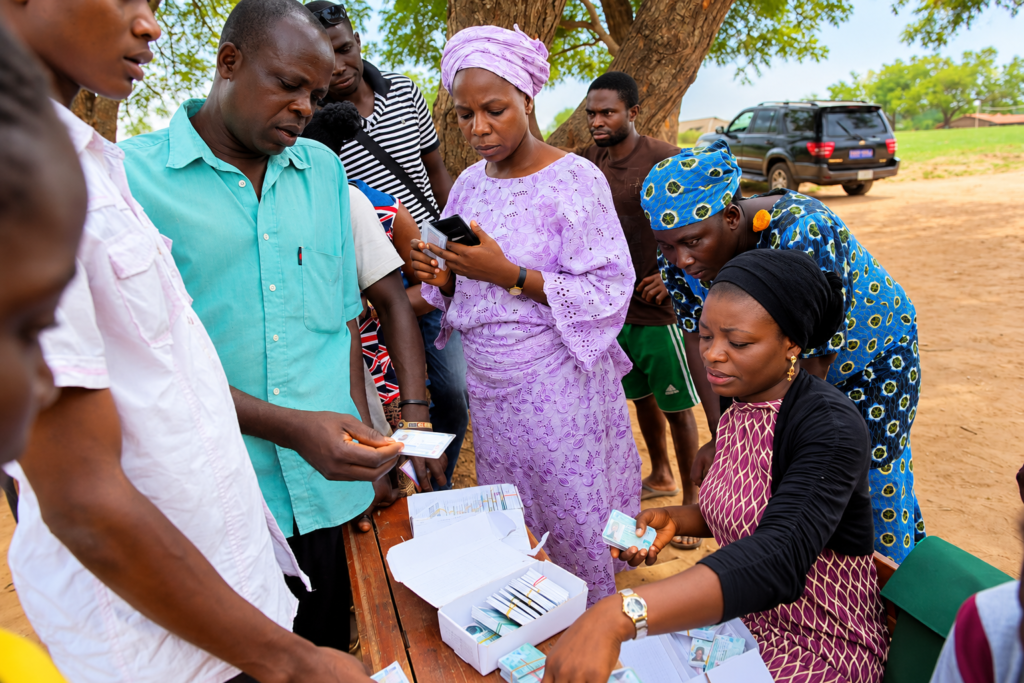
A visit by a senior military commander to troops around Old Oyo National Park has drawn attention to ongoing security operations in the area. Major General Auwalu Mahmuda, General Officer Commanding the Nigerian Army’s 2 Division, visited troops at the Forward Operating Base in Igbeti, Oyo State, on 28 October 2026. The visit was reported by The PUNCH and Tribune Online.
The reports said Mahmuda urged troops to sustain operations against bandits, terrorists and other criminal elements around the park. The Army’s account also emphasised coordination with other security agencies and local vigilantes. The formations mentioned in the coverage included 8 Brigade and 242 Reconnaissance Battalion.
The reported visit and instructions establish that the commander reviewed the operation and urged continued action. They do not, by themselves, establish that attacks have declined, that criminal activity has been reduced or that surrounding communities are safer. Those are separate questions requiring evidence about outcomes.
Assessing the results of security operations requires information that can be compared over time. Relevant evidence would include comparable incident records, credible information about security conditions and corroborated accounts from affected communities. The available reports do not provide independent before-and-after figures that would demonstrate whether security conditions improved following the reported activity.
This distinction is important because operational activity and public-safety outcomes are not interchangeable. A visit, instruction or continued deployment may form part of an operation, but it does not alone show what changed for people living or working in the surrounding area. A defensible assessment must distinguish what the military account says took place from what can be established about the resulting security conditions.
The consequences of insecurity can include constraints on movement, farming, trade and everyday activities. These are relevant public concerns, but the reports reviewed do not quantify the scale of those effects during the period. It would therefore be inappropriate to attach specific economic losses, levels of disruption or claims about community experiences to this development without further evidence.
The accountability question is whether sustained operations are producing measurable improvements in public safety. Answering it requires evidence beyond the fact that a commander visited troops or instructed them to continue operations. It also requires care not to assume that the absence of data proves either success or failure.
For Nigeria news today, the Old Oyo National Park development illustrates why security reporting should distinguish between reported military activity and demonstrated results. The available information establishes the visit and the stated instruction to sustain operations; it does not establish a measurable reduction in attacks or a confirmed improvement in community safety.
The next relevant information would be credible, comparable records of incidents and security conditions, supported where possible by corroborated accounts from affected communities. Until such evidence is available, the outcome of the operation should remain an open question rather than a conclusion inferred from the visit.
Nigerian Startup Funding: Headline Investment Figures Do Not Show How Widely Capital Is Distributed
Startup financing featured in discussions around the Moonshot technology conference in Lagos, raising questions about access to capital for African technology businesses and Nigerian founders in particular. Figures reported by Propel Africa provide one view of recorded funding activity, but they do not by themselves establish how evenly investment is distributed across the market.
According to Propel Africa’s H1 2026 African Venture Report, African startups announced $1.15 billion across 224 deals in the first half of 2026. Its Q3 2026 report recorded $712 million across 114 deals between July and September. The tracker also recorded fewer early-stage deals in the third quarter than in the second.
These figures come from one funding tracker and should not be combined with other datasets without checking their definitions and reporting periods. They describe announced funding activity as captured by Propel Africa, rather than every financing transaction across the continent.
For Nigeria, Propel Africa reported $326 million in startup funding during the third quarter. A substantial share of that total was concentrated in one large transaction. The report identifies a $250 million Series C round by Moove as a major contributor. That concentration is important to interpreting the headline figure: a large aggregate total does not necessarily mean that smaller businesses or early-stage founders have easier access to investment.
The figures describe recorded funding activity according to the tracker. They do not establish that capital is distributed evenly among startups, that every stage of business development has equal access to funding or that the sector as a whole is either collapsing or recovering. Those broader conclusions would require evidence beyond the totals supplied.
A separate Builders Festival initiative identified a target pipeline of ₦3 billion in investment and pilot-contract opportunities. The target was reported by The Guardian in its coverage of the NITDA and Tech Revolution Africa initiative. The programme is intended to connect technology businesses with investors and institutions that have defined operational or technology needs.
A target pipeline is not a guarantee that funding or contracts will materialise. Nor does the target establish that the money has already been invested or disbursed. The official Builders Festival website describes the opportunity as a pipeline involving funding and contract opportunities.
The difference between a pipeline and completed investment is consequential. A target may identify opportunities that organisers hope to develop, while a completed transaction or disbursement would provide evidence of delivery. Similarly, reported funding totals are more informative when readers can understand the transactions included and the distribution of capital across businesses.
For founders, investors and institutions, the central question is whether capital and commercial opportunities reach Nigerian startups and help them build viable businesses, deploy products and sustain employment. The reported figures do not provide a complete breakdown showing how many individual Nigerian startups received the funding, how the funds were distributed across company stages or what measurable commercial outcomes resulted.
Those gaps limit what can responsibly be concluded. The $326 million figure is a reported total from Propel Africa, not evidence that investment is accessible to all businesses. The ₦3 billion pipeline is a target, not proof of completed investment. Actual transactions, signed agreements, completed disbursements and commercial deployments would help clarify what opportunities have been converted into delivery.
The wider issue is how to evaluate technology-sector financing without confusing headline values with broad access to capital. The reported numbers offer a view of activity, but they do not answer every question about who benefits or what businesses achieve after funding.
For Nigeria news today, the startup-funding narrative reinforces the importance of examining both the scale and the distribution of investment. The next meaningful evidence would show which businesses received support, how much was delivered and what that capital helped them build. Without those details, neither the headline totals nor the announced pipeline establishes the overall condition of the startup ecosystem.

Nigeria’s Public Decisions Must Be Judged by Evidence of Delivery
The five developments examined in this edition of Nigeria news today concern different parts of national life, from education and workers’ welfare to electoral administration, public safety and technology investment. They do not establish one common national trend. They do, however, demonstrate why reported figures and announced plans must be distinguished from verified results.
For basic education, the reported UBEC balance needs to be checked against updated financial records and evidence of completed projects. For the transport allowance, the relevant tests are eligibility, approved funding and actual payments. For the 2027 elections, public confidence in preparedness depends on demonstrable operational readiness, not simply the existence of meetings or plans.
In security, the significance of a command visit must be assessed separately from evidence about public-safety outcomes. In startup funding, headline totals and target pipelines need to be distinguished from the distribution of capital and completed transactions.
Across these issues, accountability requires evidence appropriate to the claim being made. Historical figures should not be presented as current balances; commitments should not be treated as completed programmes; and operational activity should not be mistaken for proof of improved outcomes.
The next steps are therefore concrete: reconcile records, confirm implementation, examine official plans and seek reliable evidence of results. The value of public decisions cannot be established by their announcements alone. It must be assessed through what the available evidence shows has actually been delivered.
RECOMMENDED ARTICLES
1. Global News Analysis: Elections, AI and Investment
Explore major global developments, from Brazil’s presidential election and political change in Serbia to an AI copyright lawsuit and Audi’s planned US investment. This analysis examines what the available evidence establishes—and what remains uncertain.
Category: Global News Analysis
2. Africa News Review: Ebola Preparedness, Regional Security and Political Accountability
Read about Uganda’s Ebola-related precautions, Algeria’s approved military deployment to Niger, Somalia’s political dialogue and a deadly road crash in Kenya. The report examines public safety, regional cooperation and the need to verify official actions.
Category: Africa News Review
3. Nigeria Daily News Review: State Police, Inflation, Ebola and 2027 Politics
Catch up on Nigeria’s latest developments in security reform, economic policy, public health, cybercrime enforcement and preparations for the 2027 elections. Discover what has been reported, what remains unresolved and what Nigerians should watch next.
Category: Nigeria News Review
4. Global News Review: October 19–25, 2026
Review the major international developments from the week and understand the political, economic and technological issues shaping the global agenda. This weekly roundup offers a broader perspective on the events and decisions making headlines around the world.
Category: Global Weekly Review
5. Africa News Review: Ebola Concerns, Conflict, Power Challenges and Political Decisions
From public-health concerns and conflict-related civilian risks to infrastructure ambitions and political decisions, this Africa review explores the developments influencing the continent. It separates reported claims from established facts and examines what needs to happen next.
Category: Africa Weekly Review
6. Nigeria’s Week in Review: Election Politics, Economic Pressure, Security Reform and Floods
Get a wider view of Nigeria’s week, including President Bola Tinubu’s campaign launch, labour tensions, economic uncertainty, proposed state-police reform, public-health concerns and flooding. The review explains the issues behind the headlines and the evidence needed to assess government responses.
Category: Nigeria Weekly Review
About the Author