Youth Movement Returns Two Years After Historic Uprising
Two years after Kenya witnessed one of the most significant youth-led political movements in its modern history, the country’s streets have once again become the stage for demonstrations that underline a deeper national conversation about governance, accountability and economic opportunity.
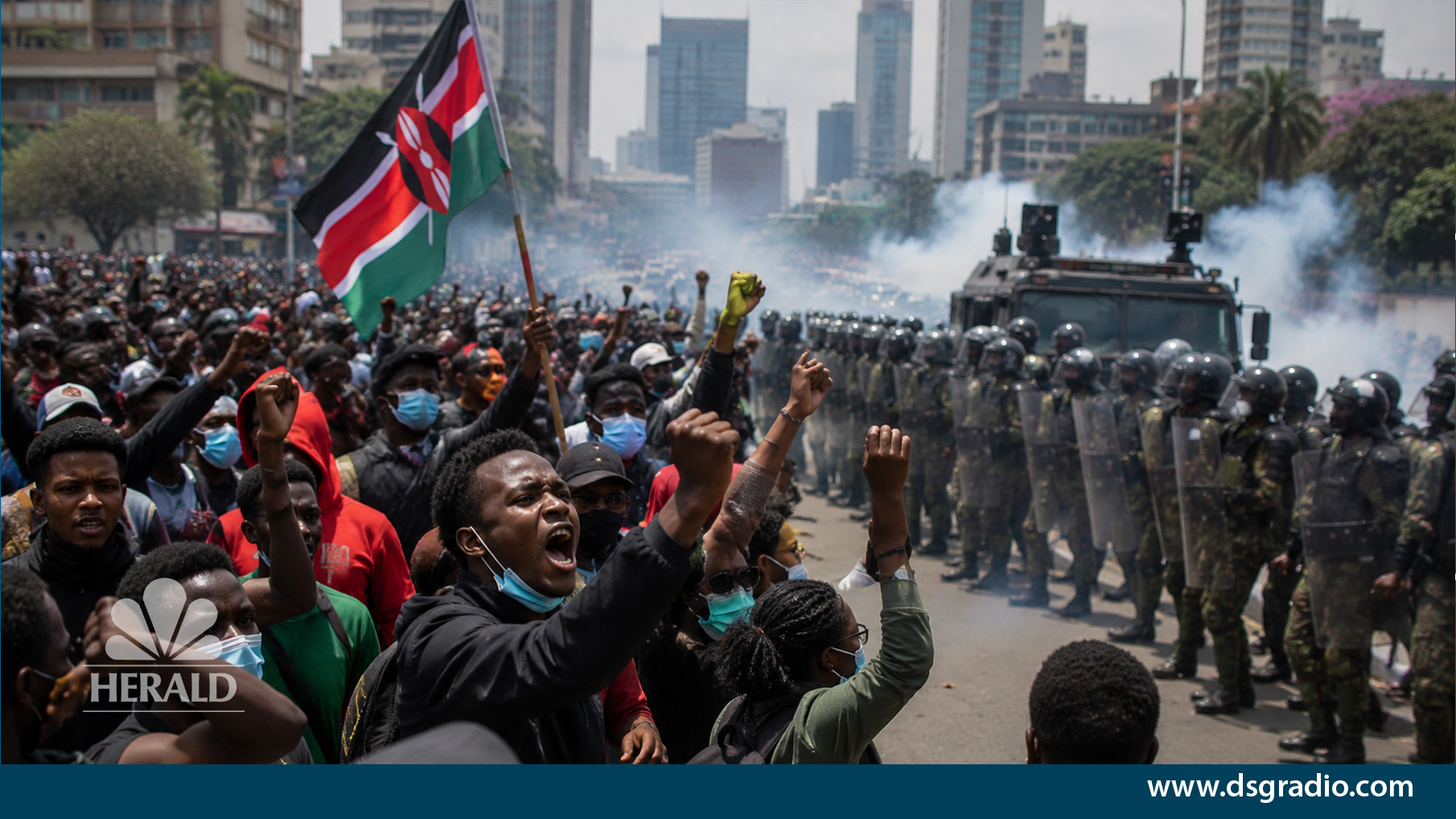
The latest Kenya Gen Z Protests culminated in the arrest of 355 people during nationwide demonstrations marking the second anniversary of the June 2024 anti-government movement. While the government described many of those arrested as criminals, organizers and many participants viewed the demonstrations as a reminder that the issues which ignited the original protests remain largely unresolved.
Rather than representing an isolated day of unrest, the anniversary rallies illustrate the continued resilience of a generation that has increasingly used civic action to express dissatisfaction with rising living costs, unemployment, corruption and government policy. The events also highlight the delicate balance Kenya faces between maintaining public order and protecting democratic freedoms.
The demonstrations therefore carry significance well beyond the number of arrests recorded. They represent an evolving political movement whose influence continues to shape national debate and whose impact is being watched across Africa.
Kenya Gen Z Protests Show an Unfinished National Conversation
Unlike many demonstrations that fade once immediate demands are addressed, Kenya’s youth movement has continued to evolve.
The original protests in 2024 began as opposition to proposed tax increases but rapidly expanded into a broader campaign against economic hardship, corruption and perceived failures in governance.
Those demonstrations became historic after protesters stormed Parliament, an unprecedented moment that symbolized widespread frustration among young Kenyans. More than 60 people were reportedly killed during the unrest, making it one of the deadliest periods of civil protest in recent Kenyan history.
The June 25 anniversary demonstrations were intended not only to remember those who lost their lives but also to reinforce demands for reforms that many participants believe remain outstanding.
This broader context helps explain why thousands returned to the streets despite knowing there was likely to be a significant police presence.
For many participants, the anniversary represented both remembrance and renewed activism.
Heavy Security Reflects Government Concerns
Kenyan authorities responded with one of the largest security deployments seen since the original protests.
Interior Cabinet Secretary Kipchumba Murkomen confirmed that 355 people had been arrested nationwide following the demonstrations.
According to official statements, security agencies acted to prevent violence, protect public infrastructure and maintain order.
Murkomen described those detained as criminals while also apologizing to residents for the disruption caused by extensive roadblocks and barricades across Nairobi.
As reported by Al Jazeera, police deployed heavy numbers of officers throughout the capital alongside tear gas and newer crowd-control technologies, including acoustic dispersal devices.
The visible security operation reflected official concern that anniversary demonstrations could escalate into violence similar to that witnessed in 2024.
Authorities also increased restrictions around strategic government buildings and commercial districts to limit movement during the protests.
Changing Police Tactics Draw Attention
Beyond the number of arrests, one of the most discussed aspects of this year’s demonstrations was the apparent evolution of policing tactics.
Witnesses reported seeing unidentified operatives travelling in high-end unmarked vehicles intercepting demonstrators in various locations.
These observations have generated public discussion about how Kenyan security agencies are adapting their operational strategies when responding to large-scale demonstrations.
While authorities have not publicly detailed every operational measure used during the protests, the deployment of acoustic crowd-control equipment also attracted attention.
Such technologies have increasingly been adopted in different parts of the world as governments seek alternatives for dispersing large crowds.
However, human rights advocates frequently argue that any crowd-control measure should remain proportionate, transparent and consistent with both domestic law and international standards governing peaceful assembly.
The precise operational guidelines governing the reported deployment of these technologies during the demonstrations were not specified in the original reports.
Youths March Toward Central Police Station
Another defining moment came when large groups of demonstrators marched toward Nairobi’s Central Police Station.
Their objective was straightforward: demand the release of individuals who had been detained during the demonstrations.
The symbolic significance of this action should not be overlooked.
Rather than dispersing after arrests began, protesters sought to publicly challenge what they viewed as excessive police action by gathering outside one of the city’s most important law enforcement facilities.
The incident reflected growing confidence among sections of Kenya’s youth movement, whose activism increasingly combines organized street demonstrations with social media mobilization.
Observers note that digital communication has become central to how the movement organizes protests, disseminates information and maintains public engagement.
Unlike earlier political movements that relied heavily on established political parties, Kenya’s Gen Z activism has largely emerged from decentralized online communities.
That structure has made it more difficult to identify singular leaders while simultaneously making the movement more resilient.
Why the Movement Continues
Perhaps the most important question surrounding the latest Kenya Gen Z Protests is why they continue despite extensive security operations and repeated arrests.
Several underlying issues continue to resonate with many young Kenyans.
These include:
- High unemployment among young people.
- Rising cost of living.
- Concerns about corruption.
- Economic inequality.
- Public frustration over governance.
- Perceptions that promised reforms have progressed too slowly.
Although individual demonstrators may prioritize different issues, these themes have consistently appeared throughout public discussions surrounding the movement.
This consistency suggests that the demonstrations are driven less by isolated political events than by structural economic and governance concerns.
Such movements often persist when participants believe underlying causes remain unresolved.
For Kenya, this presents a continuing challenge for policymakers seeking to maintain stability while addressing public expectations.
President William Ruto Faces Continuing Political Pressure
President William Ruto’s administration has faced sustained scrutiny since the original 2024 demonstrations.
Although the government has defended many of its economic policies as necessary for long-term fiscal sustainability, critics argue that ordinary citizens continue to shoulder the immediate burden through higher living costs.
This tension has become one of the defining political issues of the current administration.
Supporters of government reforms argue that difficult economic decisions are unavoidable in order to stabilize public finances, improve investment confidence and strengthen long-term development.
Opponents counter that reforms must also address youth unemployment, affordability and public trust.
The anniversary protests therefore illustrate not simply opposition to specific government decisions but broader debates over economic priorities and political accountability.
As Kenya continues implementing economic reforms, maintaining dialogue between government institutions and citizens may become increasingly important in reducing tensions.
Beyond Kenya: Why Africa Is Watching
The significance of the Kenya Gen Z Protests extends beyond Kenya’s borders.
Across Africa, governments are confronting similar pressures arising from youthful populations, rising living costs, unemployment and increasing digital political engagement.
Kenya’s demonstrations have become one of the continent’s most closely watched examples of how Generation Z is reshaping civic participation.
Unlike earlier political eras dominated by established parties and traditional activist organizations, many younger Africans now organize rapidly through digital platforms, allowing protests to emerge with unprecedented speed.
The Kenyan experience therefore provides valuable lessons for governments, civil society organizations and policymakers across the continent.
For countries including Nigeria, South Africa and Ghana—where youth populations also represent significant political constituencies—the developments in Kenya reinforce the importance of responsive governance, economic opportunity and constructive public engagement.
As African democracies continue evolving, the relationship between governments and increasingly connected younger citizens is likely to remain one of the continent’s defining political questions.
Kenya Gen Z Protests and the Future of African Youth Activism
The latest Kenya Gen Z Protests have reinforced a broader reality across Africa: young people are becoming increasingly influential in shaping political discourse. With one of the world’s youngest populations, many African countries are experiencing growing demands for transparent governance, economic inclusion, and greater accountability from public institutions.
Kenya’s experience illustrates how modern youth movements differ from traditional political campaigns. Instead of relying on established political parties or influential political figures, many participants are connected through social media platforms, online communities, and grassroots civic networks.
This decentralized model has made the movement more difficult to suppress through conventional political means. Even after the arrests of hundreds of demonstrators, the anniversary protests demonstrated that the movement continues to attract supporters motivated by long-standing concerns rather than a single political event.
For policymakers across Africa, this represents an important lesson: sustainable political stability increasingly depends not only on maintaining security but also on addressing the socioeconomic conditions that drive public dissatisfaction.
Economic Pressures Remain at the Centre of the Debate
Although the anniversary demonstrations focused on commemorating those who died during the 2024 protests, the underlying economic issues remain central to public discourse.
Many young Kenyans continue to express concern about:
- Youth unemployment.
- Rising food and transport costs.
- Housing affordability.
- The cost of doing business.
- Perceived inequality.
- Public sector accountability.
These concerns are not unique to Kenya. Similar debates are unfolding in several African economies where governments face the difficult task of balancing fiscal reforms with public expectations for improved living standards.
Economic reforms often require difficult policy choices, including taxation and spending adjustments. However, when citizens do not experience visible improvements in their daily lives, public frustration can intensify.
The anniversary protests therefore reflect more than dissatisfaction with individual policies—they highlight broader questions about economic inclusion and whether growth is benefiting younger generations.
The Evolution of Protest Policing
One notable feature of the latest demonstrations was the apparent evolution in security operations.
Reports indicated that authorities deployed extensive police presence, tear gas, and acoustic crowd-control devices. Witnesses also described the use of unmarked, high-end vehicles by unidentified operatives to intercept demonstrators. These accounts were reported by Al Jazeera. Details regarding the operational guidelines for these tactics were not fully specified in the original reports.
Around the world, governments have increasingly adopted new technologies to manage large public gatherings. Supporters argue that such tools can help reduce violence and improve operational efficiency. Critics, including many human rights organizations, maintain that any crowd-control measures should be proportionate, transparent, and consistent with legal protections for peaceful assembly.
As security technologies continue to evolve, debates over civil liberties, accountability, and public trust are likely to become more prominent across democratic societies.
Democracy Beyond Election Day
One of the enduring lessons from the Kenya Gen Z Protests is that democratic participation extends beyond voting during elections.
Many participants have framed their demonstrations as an exercise of constitutional rights, arguing that peaceful assembly remains an important mechanism for expressing public concerns. Governments, on the other hand, often emphasize the responsibility of security agencies to maintain order and protect lives and property during large public gatherings.
Balancing these two objectives remains one of the most difficult challenges facing democratic governments worldwide.
Political analysts frequently note that societies tend to become more resilient when governments maintain open channels of communication with citizens, especially during periods of economic hardship.
Whether the latest demonstrations will encourage broader dialogue between Kenya’s government and sections of its youth population remains uncertain.
Lessons for Nigeria and the Rest of Africa
Although Kenya’s political environment differs from Nigeria’s, several themes resonate across the continent.
Many African nations share common demographic and economic realities:
- Large youth populations.
- High graduate unemployment.
- Rising urbanization.
- Expanding internet access.
- Increasing political engagement through digital platforms.
These trends suggest that governments may increasingly encounter issue-based civic movements driven by young citizens seeking policy reforms rather than traditional party politics.
For Nigeria, where millions of young people are active on digital platforms, Kenya’s experience highlights the importance of building trust between institutions and citizens while addressing persistent socioeconomic challenges.
The events also demonstrate how domestic developments in one African country can quickly attract continental and global attention in an interconnected digital environment.
Readers interested in broader governance trends across Africa may also find [Insert DSG Herald internal links] relevant for additional analysis.
International Attention on Kenya’s Democratic Institutions
Kenya has long been regarded as one of East Africa’s most influential democracies and economic hubs. Political developments in Nairobi often attract close attention from regional governments, investors, diplomatic partners, and international organizations.
The anniversary protests therefore carry implications beyond domestic politics.
Investors generally value political stability, predictable governance, and social cohesion when making long-term decisions. While peaceful demonstrations are a feature of democratic societies, prolonged instability can influence perceptions of economic risk.
At the same time, Kenya’s institutions continue to face scrutiny over their ability to protect constitutional freedoms while maintaining public order.
How these competing priorities are managed could shape both domestic confidence and Kenya’s international reputation in the years ahead.
Media, Technology, and the New Generation of Civic Engagement
Technology has become one of the defining characteristics of Kenya’s youth movement.
Social media platforms have enabled rapid information sharing, real-time updates, and decentralized coordination among participants. Unlike earlier generations of political activism, modern movements often develop without formal organizational hierarchies.
This evolution has also changed how news organizations cover public demonstrations.
Journalists increasingly rely on verified digital content alongside on-the-ground reporting while carefully distinguishing between confirmed facts and unverified claims circulating online.
The growing role of digital communication underscores the need for responsible journalism, particularly during fast-moving events where misinformation can spread rapidly.
For audiences, accurate reporting remains essential for understanding complex political developments beyond viral social media narratives.
What Comes Next?
The immediate demonstrations may have concluded, but the broader issues raised during the anniversary remain unresolved.
Several key questions will likely shape Kenya’s political landscape in the months ahead:
- Will the government introduce additional measures to address youth concerns?
- Can economic reforms deliver tangible improvements for ordinary citizens?
- How will future demonstrations be managed by security agencies?
- Will dialogue between government and civil society expand?
- Can trust between institutions and younger citizens be rebuilt?
The answers to these questions will influence not only Kenya’s domestic politics but also broader discussions about governance, accountability, and democratic participation across Africa.
At present, there is no indication that the movement’s central concerns have disappeared. Instead, the anniversary protests suggest that many participants continue to view civic engagement as an important avenue for seeking political and economic change.
Conclusion
The latest Kenya Gen Z Protests demonstrate that the story is no longer simply about one day of demonstrations or the arrest of 355 people. It is about a generation that continues to demand greater accountability, economic opportunity, and responsive governance despite heightened security measures.
While Kenyan authorities maintain that law enforcement actions are necessary to preserve public order, many protesters argue that the anniversary serves as a reminder that the underlying grievances which sparked the 2024 demonstrations remain unresolved.
As Kenya moves forward, the challenge will not be measured solely by the number of arrests or the size of security deployments. It will also be measured by the country’s ability to address the concerns of a politically engaged generation whose influence is likely to shape national discourse for years to come.
For Africa as a whole, Kenya’s experience offers an important case study in how youth activism, digital communication, and democratic participation are redefining the relationship between governments and citizens in the twenty-first century.
Recommended Coverage
This analysis explores how political tensions in Ethiopia could influence governance, democratic stability, and regional cooperation across Africa.
Read about the legal and political implications of the landmark ruling involving former President Joseph Kabila and what it means for Central Africa.
An in-depth report examining the allegations, legal proceedings, and constitutional issues surrounding one of Nigeria’s major political cases.
A detailed explainer on the court’s ruling, its legal implications, and what it could mean for Nigeria’s security and political environment.
Explore the professional journey, achievements, and influence of Dr. Eberechukwu Uneze in leadership and public service.
About the Author