Africa in Motion — Reporting the Changes Shaping Africa and Its Future
Introduction
Africa’s major developments during the reporting period highlighted the importance of public-health preparedness, due process, civilian protection and economic resilience. Nigeria’s confirmed case of Bundibugyo virus disease renewed attention on disease surveillance and cross-border preparedness. In Tanzania, a reported treason charge against opposition official John Justine Pambalu raised questions about the relationship between criminal proceedings and political rights.
Elsewhere, fighting around Moyale reportedly drove hundreds of Ethiopians into Kenya, while a fatal assault in Durban renewed concerns about migrant safety and the need for evidence-based investigations. On the economic front, a regional summit of the Common Market for Eastern and Southern Africa (COMESA) focused on trade integration, while Uganda’s reported export earnings highlighted the growing importance of gold.
These developments are distinct and do not share a single cause. Together, however, they illustrate why an Africa news review must look beyond announcements and headlines to examine what has been established, what remains uncertain and what outcomes institutions must demonstrate.
Story 1: Nigeria’s Bundibugyo Ebola Case Raises Questions About Surveillance and Preparedness
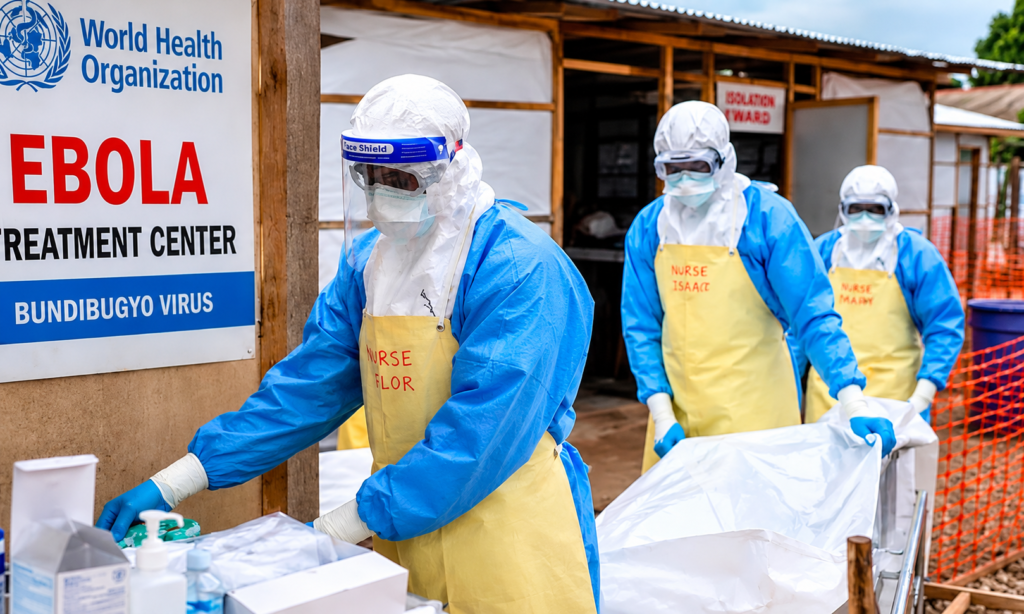
Nigeria’s confirmed case of Bundibugyo virus disease has drawn attention to the importance of timely diagnosis, contact tracing and regional disease surveillance.
According to an assessment by the European Centre for Disease Prevention and Control (ECDC), the patient was a woman who had travelled from Uganda. She developed symptoms on 7 October, sought medical care in Abuja on 11 October and tested positive on 20 October.
By 22 October, 44 close contacts had been identified and were being monitored.
The timeline provides important information about the reported case, but it does not independently explain why confirmation occurred on 20 October. Nor does it establish that medical care was inadequate or that further transmission took place. Those questions require findings from the investigation and updated information from public-health authorities.
A wider regional public-health concern
Nigeria’s case was reported against the background of a wider regional outbreak. In an assessment published on 22 October, the ECDC reported nine confirmed cases in Kenya, including one death, linked to the first case there. The assessment also described a larger outbreak in the Democratic Republic of the Congo, using data available through 20 October.
These figures represent a specific reporting update rather than a final count of all cases across the region.
The developments underline the importance of cooperation between public-health authorities, particularly when travel connects countries affected by an outbreak. Surveillance, infection prevention, contact tracing and appropriate clinical care remain essential parts of outbreak response.
Experimental vaccine research is not proof of protection
Uganda has also been pursuing research into an experimental vaccine candidate targeting Bundibugyo virus. The early-stage Phase One trial is intended to assess safety and the immune response.
Such a trial does not, by itself, establish that a vaccine prevents disease in the wider population.
The World Health Organization (WHO) has stated that there is no licensed vaccine specifically for Bundibugyo virus disease. The existing licensed Ebola vaccine targets a different virus species, and its effectiveness against Bundibugyo virus in humans has not been established.
The distinction matters because scientific research and immediate outbreak control serve different purposes. An experimental candidate may contribute to future preparedness, but it cannot replace the public-health measures needed during an outbreak.
The key outstanding questions following Nigeria’s case concern the likely source of exposure, the results of contact monitoring and the findings of the investigation into the diagnostic timeline. Updated surveillance information is necessary to establish whether the situation has changed since the reporting period.
Story 2: Tanzania Treason Charge Against CHADEMA Official Raises Due-Process Questions
A reported treason charge against Tanzanian opposition official John Justine Pambalu has renewed attention on due process and the treatment of political activity under the law.
The Chanzo reported on 22 October that Pambalu, CHADEMA’s director for organisation, training and elections, had been charged at the Kisutu Resident Magistrate’s Court in Dar es Salaam. The report referred to a charge sheet that had reportedly become public a day earlier.
According to the report, prosecutors allege that Pambalu formed an intention between 1 September and 29 October 2025 to persuade the public to obstruct the general election held that October. The prosecution reportedly characterised nationwide protests as attempts to intimidate the executive. CHADEMA has denied the allegations.
The chronology is important. The alleged conduct relates to 2025, while the reported legal development was covered in October 2026.
What is established—and what still requires confirmation?
The report stated that a conviction under the cited provision of Tanzania’s Penal Code could carry the death penalty. Given the seriousness of that potential consequence, the precise charge, applicable legal provision and current procedural position require confirmation against primary court records.
Pambalu’s case is separate from the treason proceedings involving CHADEMA national chairperson Tundu Lissu. The two cases have different allegations and procedural histories and should not be treated as a single proceeding.
The wider issue concerns the relationship between national security, political protest and participation in public life. Treason is a serious criminal accusation, and the prosecution must establish its case through evidence. The accused is entitled to a fair hearing and the presumption of innocence.
The reported allegations do not, on their own, establish that the prosecution is politically motivated. Any such assessment requires examination of the court proceedings, the defence’s response and independent legal scrutiny.
Important details remain to be confirmed, including the full charge sheet, Pambalu’s current procedural status, the evidence relied upon by prosecutors and the next court date.
The central principle is straightforward: a charge is not a conviction. The legal process must determine what the evidence establishes.

Story 3: Moyale Clashes Reportedly Drive Ethiopians Across the Border Into Kenya
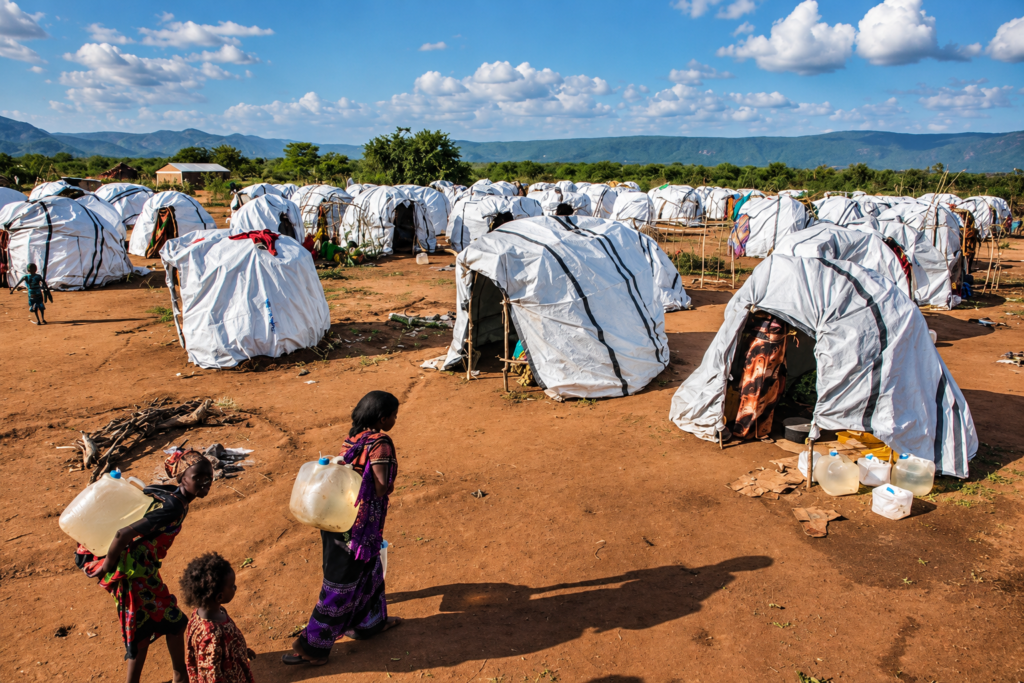
Fighting around Moyale reportedly forced hundreds of Ethiopians to cross into Kenya, highlighting the humanitarian consequences of insecurity near the two countries’ border.
Reuters reported on 22 October that the fighting began on Wednesday and gunfire continued into Thursday. Kenyan officials said displaced people were seeking refuge with relatives and local residents on the Kenyan side.
The Kenya Red Cross was assessing humanitarian needs and working to establish how many people had been affected. At the time of the report, no official refugee camp had been established.
Humanitarian needs and an uncertain cause
The immediate concern was the welfare of people who had left their homes. Authorities and humanitarian organisations needed to assess access to shelter, food, clean water, medical care and other essential assistance.
However, the final scale of the displacement had not been established in the reporting.
The cause of the fighting also remained uncertain. Other reporting described tensions involving Oromo and Somali communities, a dispute over a regional flag and earlier violence. These accounts may provide context, but they do not conclusively establish what triggered the clashes or who was responsible.
Premature attribution can deepen divisions and make it harder to establish what happened. The circumstances of the violence therefore require careful investigation and corroboration.
Several questions remained open at the end of the reported period: whether the fighting had stopped, whether more civilians had crossed the border, how many people needed assistance and whether displaced families could return safely.
For Kenya, the immediate challenge was assessing needs and coordinating assistance for people arriving across the border. For Ethiopia, the unanswered questions concerned civilian protection, the circumstances of the fighting and the conditions required for a safe return.
The reported crossings established a cross-border humanitarian concern, but updated information from authorities and humanitarian organisations was needed to determine the full scale of the situation.
Story 4: Fatal Assault in Durban Raises Concerns About Migrant Safety
South African police were investigating the fatal assault of a foreign national in Durban’s central business district, according to reporting published on 22 October.
The South African Broadcasting Corporation (SABC) reported that police said the man had been attacked by a group of about 50 people after two men reportedly approached him. He was declared dead at the scene.
Investigators were pursuing leads to identify those responsible. However, the victim’s nationality and the motive for the killing had not been established in the reporting.
Why the motive must be established through evidence
The incident occurred amid wider anti-migrant tensions in South Africa, where demonstrations and attacks directed at foreign nationals have raised concerns about discrimination and public safety.
That context is relevant to understanding the wider environment, but it does not prove that this particular killing was motivated by xenophobia. Police also warned against the circulation of unverified information.
A responsible investigation must establish the sequence of events, identify those involved and determine whether the assault was connected to anti-migrant mobilisation or arose from other circumstances.
The incident also raises broader questions about the safety of people living and working outside their countries of origin. Violence against migrants can affect personal security and raise concerns about equal protection and peaceful community relations. The specific effects and motive in this case, however, require further evidence.
The outstanding questions include the victim’s identity and nationality, whether suspects have been arrested and whether investigators have established a connection with wider anti-migrant activity.
The immediate priority is accountability for the fatal assault. Conclusions about motive should follow the investigative findings, not precede them.

Story 5: COMESA Trade Ambitions and Uganda’s Export Earnings Highlight the Challenge of Economic Diversification
Two separate economic developments highlighted different aspects of Africa’s efforts to strengthen trade and productive capacity: a regional integration summit in Zimbabwe and Uganda’s reported export earnings, in which gold accounted for a substantial share.
Although the developments do not establish a direct causal relationship, both raise questions about how African economies can improve market access, strengthen production and retain more value from economic activity.
COMESA summit focuses on integration and industrialisation
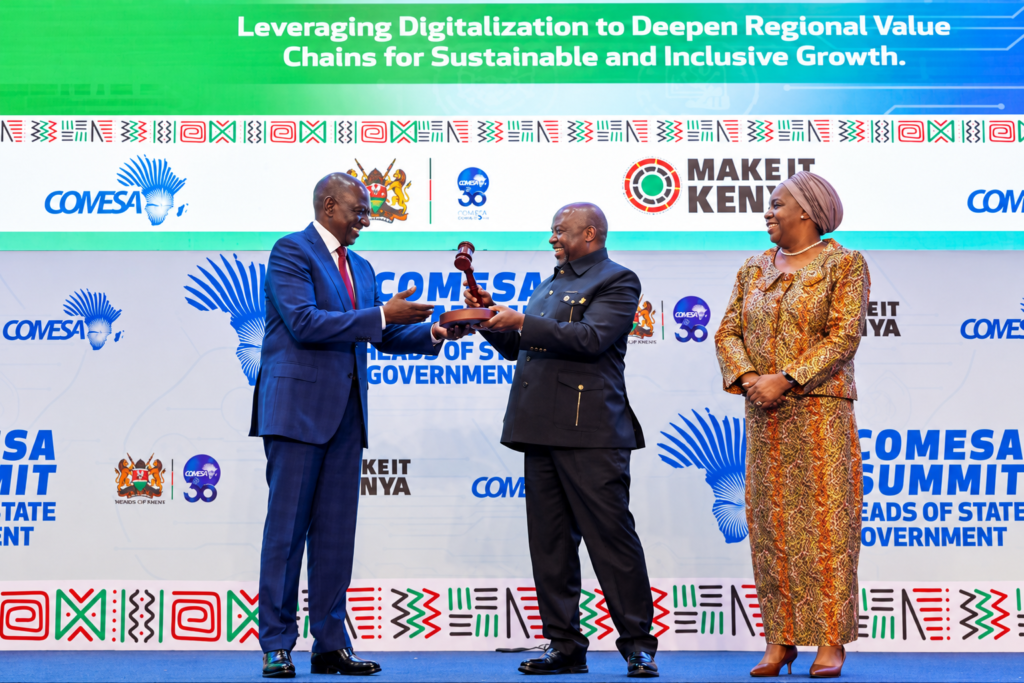
The Common Market for Eastern and Southern Africa (COMESA) held its 25th summit in Harare, Zimbabwe, on 22 October.
The bloc brings together 21 member states. The summit focused on inclusive industrialisation, investment and regional integration.
Leaders emphasised the need to reduce tariff and non-tariff barriers, strengthen regional value chains and make cross-border trade easier for businesses. The meeting also marked the launch of COMESA’s Medium-Term Strategic Plan for 2026–2030.
The ambition is to deepen regional markets and create stronger opportunities for production, investment and trade.
However, a summit declaration or strategic plan does not by itself demonstrate that trade barriers have been removed or that businesses have gained easier market access.
Businesses need reliable infrastructure, access to finance, workable customs procedures and predictable rules for moving goods across borders. Unnecessary delays and costs can undermine the benefits of regional integration.
The practical test for COMESA’s member states will be implementation: whether commitments lead to more efficient border procedures, fewer barriers and stronger links between regional producers and markets.
Uganda’s export receipts show gold’s importance
A separate development in Uganda highlighted both the opportunities and risks associated with export growth.
Daily Monitor, citing Bank of Uganda data, reported that merchandise export receipts reached approximately US$1.5 billion in August 2026.
Gold accounted for US$889 million, or about 59.6 per cent of the reported total. The report put gold’s share at 53.2 per cent in June.
The figures demonstrate the importance of gold to Uganda’s reported export earnings. They also raise questions about commodity concentration and the resilience of export receipts when one product accounts for such a large share.
Changes in gold prices, export volumes or trading conditions could significantly affect total receipts. But the reported figures alone do not establish how vulnerable the economy is to any particular change.
Export earnings also do not reveal how much value remains within the domestic economy. That depends on factors including the origin of the gold, the extent of local processing, production costs and the income retained by domestic businesses.
The reported figures do not provide a complete answer to those questions. Nor does one month’s export total establish a sustained long-term trend.
From export earnings to lasting economic value
COMESA’s regional integration agenda and Uganda’s export figures concern different developments. One relates to regional policy, while the other describes the export performance of a single country.
Their broader economic significance lies in the challenge of converting economic activity into stronger productive capacity.
Wider regional markets can create opportunities for African producers, while local processing and diversification can help countries capture more value from exports. Achieving these outcomes requires more than higher receipts or regional commitments; it depends on implementation and the structure of domestic production.
For COMESA, the key test is whether member states translate the summit’s ambitions into practical improvements in regional trade. For Uganda, the questions concern the resilience of export earnings, the concentration of receipts in gold and the extent to which domestic businesses retain value.
Higher export receipts are important, but they do not by themselves establish that an economy has diversified or that the benefits of trade are broadly retained at home.
Conclusion: Evidence, Accountability and Measurable Outcomes
This Africa news review covered five distinct developments involving public health, political rights, cross-border displacement, migrant safety and economic development. They do not share a single cause, but each illustrates the importance of examining evidence and measuring outcomes.
In public health, the questions concern surveillance, contact tracing and the findings of the investigation into Nigeria’s confirmed Bundibugyo Ebola case. In Tanzania, the reported treason charge must be assessed through a legal process that preserves the presumption of innocence. Around Moyale, the scale of displacement and the circumstances of the fighting require further confirmation. In Durban, investigators must establish who was responsible for the fatal assault and whether a specific motive can be supported by evidence.
On the economic front, COMESA’s commitments will be measured by implementation, while Uganda’s reported export earnings raise questions about commodity concentration and domestic value creation.
The wider lesson is not that these challenges have the same solution. It is that reliable information, accountable institutions and demonstrable results are essential to understanding the forces shaping Africa.
Africa in Motion will continue to look beyond the headlines to examine what developments establish, why they matter and what remains unresolved.
RECOMMENDED ARTICLES
Continue Reading on DSG HERALD NEWS
1. Nigeria News Review: Safety, Policy and Accountability
Explore the major security concerns, government policy decisions and accountability questions shaping Nigeria’s public affairs. Read the review for a closer look at the issues affecting citizens and national governance.
2. Africa News Review: Ebola, Abyei and Investment Risks
Discover the key African developments involving public health, regional tensions and investment uncertainty. This review examines important stories and their wider implications for communities, governments and economic prospects across the continent.
3. Global News Analysis: Cybersecurity, Jobs and AI
Explore how cybersecurity threats, changing employment patterns and artificial intelligence are shaping the global landscape. This analysis considers the wider implications of technological change for workers, businesses and the digital economy.
DSG HERALD NEWS — Independent reporting, informed perspectives and stories that matter.
About the Author