Africa News Review: five major narratives shaping public health, security, economic development and political affairs across Africa.
October 2026 brought a wide range of developments across Africa, placing public health, civilian protection, regional security, infrastructure and political decision-making under renewed scrutiny. From a reported Ebola case in Nigeria to a deadly reported drone strike in Abyei, the developments highlighted the challenges facing governments and institutions as they respond to emergencies, manage regional relationships and pursue economic ambitions.
The continent’s public-health response featured prominently, with reports from different countries raising questions about surveillance, contact tracing and cross-border coordination. For related coverage, read DSG Herald News’ Africa report on Ebola, political rights, security and trade. In Sudan, reports of heavy civilian casualties from a market strike underscored the risks faced by communities affected by the continuing war. Meanwhile, developments in Ethiopia’s Tigray region and strained relations between Ethiopia and Eritrea kept attention on the uncertain security environment in the Horn of Africa.
Economic development formed another major part of the week’s story. Guinea’s plans for alumina refineries and Burundi’s reported electricity-distribution partnership illustrated the scale of infrastructure ambitions, while South Africa’s reported inflation figures pointed to continuing cost pressures.
Political and diplomatic developments added a further dimension. Burkina Faso’s reported penal-code changes, negotiations between the Alliance of Sahel States and ECOWAS, Libya’s maritime decision involving Türkiye, and opposition leader Tundu Lissu’s announced protest in Tanzania each raised questions about legal status, implementation and the consequences of official decisions.
Taken together, these five narratives form a broad Africa news review of a week in which the distinction between announcements and outcomes remained central. The significance of each development depends not only on what was reported, but also on what can be confirmed, what remains unresolved and what happens next.
1. Africa News: Ebola Concerns Test Cross-Border Health Preparedness
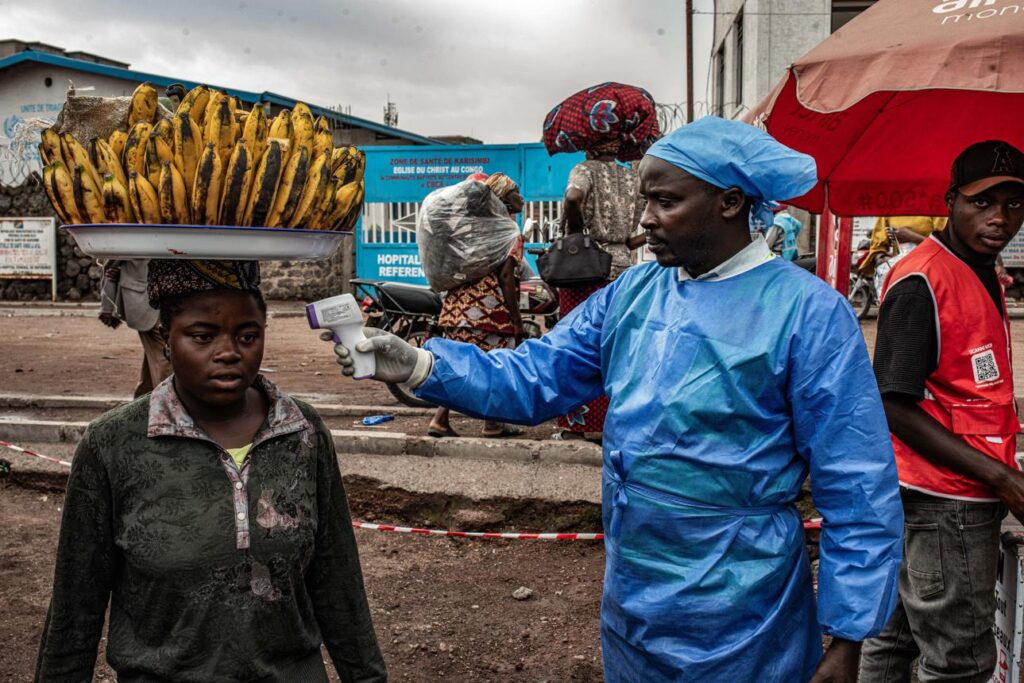
A reported Ebola case in Nigeria placed public-health preparedness and cross-border coordination among the key issues in Africa news during the week ending 25 October 2026. The development raised questions about case identification, contact tracing, the verification of information across countries and the capacity of health authorities to respond when a reported infection attracts regional attention.
Nigerian authorities reportedly announced the case on 20 October. The patient was described as a Ugandan-born woman in Abuja, and authorities initially identified 44 contacts for follow-up.
The precise source of the patient’s infection has not been established in the reporting reviewed for this roundup. The relationship, if any, between the cases reported in different countries also remains unclear. Reports of cases in several countries do not, by themselves, establish that those cases are connected or that an outbreak has spread along a particular route. Such conclusions require epidemiological evidence and reliable information from the relevant public-health authorities.
Reported cases highlight the need for reliable information
Reports from Kenya put the country’s total at nine confirmed cases and two deaths as of 23 October. Compare these figures with the World Health Organization’s Ebola outbreak update, because case totals and reporting dates can change. The Democratic Republic of the Congo has also been dealing with an Ebola outbreak, although its cumulative figures require confirmation against the latest official situation report.
These figures should be interpreted according to their reporting dates and official status. In an evolving public-health situation, totals can change as additional cases are investigated, confirmed or ruled out. Comparisons are meaningful only when the dates, definitions and reporting methods are clear.
For health authorities, immediate priorities include identifying suspected cases, tracing contacts, communicating accurate information and taking appropriate measures to limit further transmission. These activities depend on timely reporting and the ability to distinguish confirmed findings from preliminary information.
Public communication is equally important. Incomplete or conflicting information can create confusion about the scale of a health emergency, the countries affected and the steps people should take. Premature conclusions about the source of an infection or links between cases can also misrepresent what investigators have established.
The initial identification of 44 contacts in Nigeria indicates a follow-up effort, but the figure alone does not establish whether transmission occurred among those contacts or what the final outcome of the tracing process will be.
Vaccine research continues in the Democratic Republic of the Congo
Scientific research formed another part of the public-health picture. The World Health Organization announced the Tumaini clinical trial in Bunia, in the Democratic Republic of the Congo. The trial is investigating whether the Ervebo vaccine can protect against the Bundibugyo virus.
A clinical trial is designed to investigate a question under defined conditions. Its announcement does not prove that a vaccine is effective against the virus being studied, and the existence of the trial should not be presented as confirmation that the question has already been answered.
The development places scientific research alongside surveillance and emergency response as part of the broader public-health effort. Results, when available and appropriately assessed, may help clarify options for responding to the disease. Until then, the trial’s purpose and status must be described accurately.
The Africa Centres for Disease Control and Prevention also scheduled a virtual meeting of African health ministers for 28 October. The meeting fell after the review period, so its outcome was not established by the end of this roundup.
The next developments to follow include updated information from Nigeria’s health authorities, verified case figures from Kenya and the Democratic Republic of the Congo, and further information on the Tumaini trial. The outcome of the scheduled Africa CDC meeting may also provide insight into regional coordination.
For Africa’s public-health institutions, the immediate test is whether information is accurate, contacts and cases are followed up appropriately, and responses are guided by evidence. The reported case in Nigeria renewed attention on those responsibilities. DSG Herald News has also covered related developments in its Africa report on Ebola, Abyei and investment risks. In Sudan, the central concern during the same period was the reported loss of civilian life amid continuing armed conflict.
2. Africa Security: Sudan’s War and the Threat to Civilian Life
A reported drone strike at a market in Abyei brought renewed attention to the risks facing civilians amid Sudan’s continuing war. Reporting by Reuters, as cited in published coverage of the Abyei market strike, put the death toll from the market strike at at least 153 people, citing figures attributed to local sources.
The reported toll is grave, but it should not be mistaken for a final, independently verified count. The attribution matters because the scale of a deadly incident must be assessed through reliable reporting and, where possible, independent confirmation.
Abyei is a disputed territory between Sudan and South Sudan. The reported attack therefore drew attention to civilian safety in an area with a sensitive political and territorial context. However, the account of the incident must be distinguished from broader conclusions about responsibility, the circumstances of the strike or its relationship to other attacks.
Local officials reportedly blamed Sudan’s military for the market strike. That attribution has not been independently established in the reporting reviewed for this article. It should consequently remain a claim attributed to those officials rather than a confirmed finding about who carried out the attack.
A separate report described a drone attack in West Kordofan. That incident should be assessed on its own evidence. The reporting reviewed does not establish that the Abyei and West Kordofan attacks had the same perpetrator or were part of a single operation.
Why casualty figures and attribution matter
In conflict reporting, casualty figures help communicate the potential scale of harm, but early numbers can be incomplete or disputed. Reliable assessment may require additional information about deaths, injuries, the locations affected and the circumstances in which casualties occurred.
The distinction between a reported toll and a verified count is particularly important when a figure is based on local sources and independent confirmation remains outstanding. Repeating an attributed figure as if it were definitive can give audiences a misleading impression of what investigators or journalists have established.
Responsibility requires the same discipline. An allegation by an official or a party to a conflict is relevant to the story, but it does not automatically settle the question of who conducted an attack. A responsible account identifies the allegation, explains what is known about its attribution and avoids treating an unresolved claim as proof.
The two reported drone incidents also illustrate why separate events should not be merged without evidence. Similar methods of attack or a shared geographic context do not establish that incidents had the same perpetrator, motive or operational purpose.
Civilian protection remains central
Beyond the immediate reported death toll, the broader issue is the danger facing people living in areas affected by the conflict. Understanding the humanitarian consequences requires reliable information about deaths, injuries, displacement and damage, as well as the needs of communities affected by violence.
Such information is important for determining the scale of an emergency and identifying what assistance may be required. However, the reporting reviewed for this roundup does not provide a complete, independently verified assessment of all those consequences from the incidents discussed.
The wider war in Sudan remains the context for the reported violence, but the available account does not justify drawing conclusions about the precise military purpose of either drone attack. Nor does it establish what subsequent investigations will determine.
The immediate questions are whether the reported casualty figures can be independently confirmed, whether credible investigations establish responsibility, and whether humanitarian organisations can assess conditions and needs in the affected areas.
Further credible reporting on the Abyei market strike will be important in determining the casualty toll and clarifying responsibility. The separate West Kordofan incident also requires its own verified account.
For audiences following Africa security developments, the central distinction is between the seriousness of the reported harm and the evidence available to establish exactly what happened. See DSG Herald News’ Africa security, flooding and debt pressures review for related regional coverage. A grave allegation deserves careful investigation, not premature certainty. Elsewhere, in the Horn of Africa, the central issue was whether political and military developments could produce greater security or leave major uncertainties unresolved.
3. Africa Security: Tigray Uncertainty and Ethiopia–Eritrea Tensions
Developments in Ethiopia’s Tigray region and strained relations between Ethiopia and Eritrea kept regional security in focus during the week. Reports of competing positions on disarmament and continued resistance highlighted uncertainty over the situation in Tigray, while wider tensions raised questions about security and Ethiopia’s ambition to secure access to the Red Sea.
Reports described a regional administration calling on Tigrayan fighters to disarm and return to civilian life. A Tigrayan military commander, however, reportedly vowed to continue resisting government forces.
The opposing messages point to a gap between a stated objective and conditions on the ground. A call for fighters to disarm is not proof that weapons have been surrendered, just as a declaration of continued resistance does not by itself establish the scale or location of ongoing fighting. The actual security situation requires independent, reliable reporting.
The Pretoria agreement and questions over stability
The developments follow the 2022 Pretoria peace agreement, which sought to end the Tigray war. Contemporary reporting on renewed tensions and reported developments in Mekelle is available from the Associated Press. The agreement is an important part of the background to current questions about disarmament and the prospects for stability.
Reports also described a change in control of Mekelle earlier in October and the establishment of a caretaker administration intended to restore services, assist displaced residents and prepare for elections. These are consequential claims because they concern political authority, public services and the circumstances facing people affected by conflict.
Those reported developments require confirmation against current, reliable reporting before they can be treated as established facts. The details of a change in control, the authority of a caretaker administration and its responsibilities should not be inferred from a general description alone.
Even where an administrative arrangement has been announced, its existence does not automatically establish that security has improved across the region, that displaced people can return safely or that essential services have been restored. Those questions depend on conditions and actions that can be independently assessed.
Disarmament is similarly more than a political declaration. Verifiable progress would require evidence that the relevant process is taking place and that the security conditions allow it to proceed. The reporting reviewed for this roundup does not provide enough evidence to conclude that a durable peace has been achieved.
Ethiopia and Eritrea: tension without unsupported conclusions
The wider regional picture includes strained relations between Ethiopia and Eritrea, including disagreements surrounding security and Ethiopia’s ambition to secure access to the Red Sea.
These tensions are relevant to the Horn of Africa’s security environment, but they must not be confused with proof that a new full-scale war began during the week. The reporting reviewed does not establish that such a war started between the two countries during the period.
Nor is there sufficient evidence to conclude that developments in Tigray and bilateral tensions between Ethiopia and Eritrea are components of one coordinated confrontation. The situations may form part of the wider regional context, but a direct operational or political connection cannot be assumed without evidence.
Treating these issues as a single conflict could obscure the different actors, circumstances and developments involved. Each requires its own chronology and supporting evidence.
Further reliable reporting will be needed to establish the status of disarmament efforts in Tigray, clarify the reported administrative changes in Mekelle, and assess conditions for displaced residents and the restoration of services. Developments in relations between Ethiopia and Eritrea also require careful monitoring, particularly any documented diplomatic initiatives or independently verified security incidents.
For Africa security, the key measure is evidence of what is happening on the ground, not simply the language of official statements or the expectations attached to them. Security and political stability are central to development, but economic ambitions also depend on the infrastructure needed to power homes, businesses and industry. That challenge was evident in the week’s reports on Guinea, Burundi and South Africa.
4. African Economy: Electricity Infrastructure and Industrial Ambitions
Plans to expand industrial capacity and electricity access highlighted a recurring challenge in the African economy during the week: development targets depend on whether essential infrastructure can support them.
In Guinea, plans to establish five alumina refineries by 2030 illustrated the scale of the country’s mineral-processing ambitions. Reuters’ reporting on mineral-processing ambitions and energy constraints provides additional context. Reporting reviewed for this roundup cited electricity generation of approximately 1,000 megawatts, compared with an estimated requirement of between 5,000 and 10,000 megawatts for broader industrialisation ambitions.
The comparison suggests a substantial challenge, but the figures require careful interpretation. The assumptions behind the estimated electricity requirement have not been confirmed in the reporting reviewed. It is therefore important to establish whether the estimate refers to the anticipated demand of the planned refineries, wider industrial development or a broader national industrialisation scenario.
Generation, available capacity and projected demand are not interchangeable measures. A meaningful comparison needs a clear definition of what is being measured and the period to which the figures apply.
Even with that qualification, the reported plans raise a clear infrastructure question: how can energy-intensive industries expand if dependable electricity supply does not keep pace with demand?
Guinea’s refinery plans put power requirements in focus
The proposed refineries represent an industrial ambition connected to mineral processing. Their significance will depend not only on the stated target of five facilities by 2030, but also on whether the necessary supporting infrastructure and other implementation requirements can be met.
The reporting reviewed does not establish that all five refineries have been completed or are operating. The target should therefore be treated as a plan, not an achieved industrial outcome.
Reliable electricity is one of the issues that must be assessed in relation to that ambition. However, the available figures alone do not establish the precise amount of additional generation that will be required or how the country intends to meet it. Those questions need more detailed, verified information about the project plans and energy assumptions.
Burundi’s electricity-distribution partnership
Burundi’s reported approach focuses on expanding electricity distribution. The Weza Power project announcement describes the partnership’s stated investment and connection targets. Reports described a US$1.4 billion partnership with Weza Power, with targets that include connecting more than 1.2 million households and businesses over 25 years.
The scale and duration of the stated targets make the project a development to follow, but the distinction between commitments and delivery remains essential. The reported figures do not establish that the full investment has been delivered, that all financing has been secured or that the planned connections have already been completed.
The practical results will depend on implementation. Relevant milestones include confirmation of the project’s financial and contractual arrangements, construction of the required networks, completion of connections and measurable improvements in electricity access.
The target of more than 1.2 million connections should therefore be understood as a planned outcome over the stated period, not a count of households and businesses already connected.
Guinea’s refinery ambitions and Burundi’s reported distribution partnership concern different parts of the electricity challenge. One focuses on the power requirements associated with industrialisation; the other centres on extending distribution connections. They should not be treated as the same type of project, but both underline the need to measure infrastructure ambitions against actual implementation.
South Africa’s inflation figures provide a separate economic picture
Meanwhile, reported September inflation figures from South Africa offered another view of economic conditions. Check the figures against the official Statistics South Africa release. The headline inflation rate was reported at 4.5 per cent, up from 4.4 per cent in August. Transport inflation reportedly rose from 8.8 per cent to 10.8 per cent.
These figures need to be confirmed against the relevant official release before publication. Subject to that verification, the reported increases point to price pressures that may affect household purchasing power and the costs faced by businesses.
Transport costs can matter to households and commercial activity, but the figures alone do not explain the causes of the reported changes. The reporting reviewed does not establish that electricity constraints in Guinea or Burundi caused South Africa’s inflation figures to rise. The developments concern different national economies and must be assessed in their own contexts.
The next developments to follow include updates on Guinea’s refinery plans and the assumptions behind its reported electricity requirements, confirmation of Burundi’s project financing and implementation milestones, and the latest official economic data from South Africa.
Across these cases, the wider lesson for the African economy is that a target or investment announcement is only one stage of a development process. The practical significance depends on what is financed, built, connected and delivered. Political and diplomatic decisions provide another test: whether formal announcements lead to clear legal arrangements, workable cooperation and documented results.
5. African Political Developments: Legal Changes and Regional Relationships
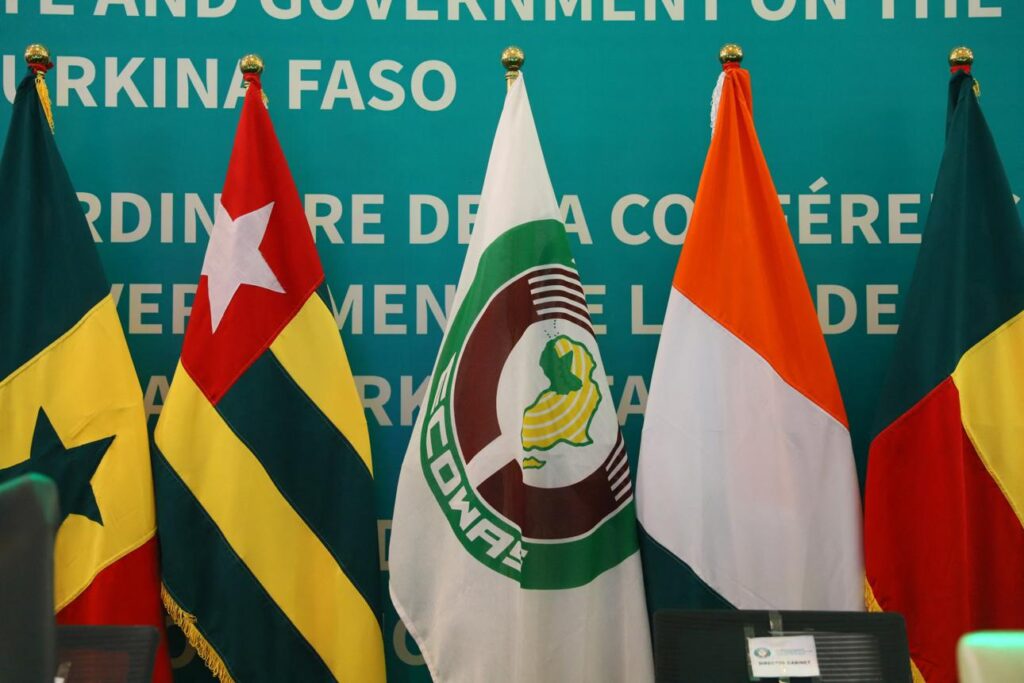
A series of reported decisions and negotiations across Africa brought criminal law, regional cooperation, maritime diplomacy and political rights into focus during the week ending 25 October 2026. The developments in Burkina Faso, West Africa, Libya and Tanzania were distinct, but each raised questions about the consequences of official decisions and the difference between an announcement and an implemented outcome.
In Burkina Faso, the transitional parliament reportedly approved a new penal code reinstating the death penalty for specified offences, including terrorism, treason and espionage. See the Associated Press report on the revised penal code for additional reporting. The reported vote took place on 21 October, with 71 legislators said to have supported the measure.
The full legal consequences depend on the final text, its publication and its implementation. The reporting reviewed does not establish precisely when the new provisions take effect. Parliamentary approval should therefore not be treated as confirmation that every provision has entered into force. The final legal status requires confirmation through official records.
AES–ECOWAS negotiations raise questions about regional cooperation
In West Africa, the Alliance of Sahel States, comprising Burkina Faso, Mali and Niger, reportedly began formal negotiations with the Economic Community of West African States, known as ECOWAS, on a framework for continued cooperation.
The talks were reported to have begun on 17 October, with 18 proposed priority sectors identified. See the report on the AES–ECOWAS discussions for further context. The discussions concern the future terms of engagement between the three countries and the regional organisation.
However, the reported negotiations do not amount to a final agreement. The identification of priority sectors does not establish that binding arrangements have been concluded, and the start of talks does not demonstrate that the three countries have reversed their withdrawal from ECOWAS.
The status of the discussions must be assessed through subsequent statements, documented agreements and practical arrangements confirmed by the parties. Until then, it is more accurate to describe the development as a negotiation process than as a settled change in regional relations.
Negotiations can indicate an effort to establish or maintain channels of cooperation, but their ultimate significance depends on the terms agreed and what follows.
Libya’s maritime memorandum involving Türkiye
In Libya, the eastern-based House of Representatives reportedly approved a maritime memorandum signed with Türkiye in November 2019. The Libyan News Agency report on the parliamentary decision provides a source for the reported vote. The same report said the parliament repealed two earlier resolutions that had rejected the memorandum.
The decision represents a change in the eastern parliament’s position, according to the reporting. Its broader legal and diplomatic implications, however, cannot be determined from the parliamentary decision alone.
Questions remain about the agreement’s status, the positions of the relevant parties and any subsequent official action. Approval by one institution should not automatically be interpreted as resolving every legal or diplomatic dispute surrounding a memorandum.
The development therefore requires follow-up on the precise terms of the decision and how the relevant authorities and parties respond. Without that information, it would be premature to draw a definitive conclusion about the memorandum’s wider effect.
Tanzania: Tundu Lissu’s planned hunger strike
In Tanzania, opposition leader Tundu Lissu announced plans to begin a hunger strike on 26 October. The Associated Press report on Lissu’s announced protest provides further context. He said the protest was intended to challenge alleged restrictions on private consultations with his lawyers.
The date is important for the chronology of this roundup. The review period ended at midday on 25 October, meaning the announced start of the protest fell outside the period covered. The announcement can be reported as a planned action, but it does not establish that the hunger strike had begun.
The allegation concerning access to legal counsel must remain attributed to Lissu. It should not be presented as an independently established finding without corroborating evidence.
The reporting reviewed also gave 6 November as the scheduled date for a judgment in his case. That date requires confirmation against updated court records or reliable reporting before publication. Court schedules can change, and a previously reported date should not be presented as current without checking its status.
Lissu’s announcement and the reported court timetable are separate developments that require their own verification. The protest’s actual status after the announced start date and any subsequent developments in the legal proceedings would need to be established through later reporting.
Why implementation and legal status matter
These four developments should not be treated as parts of one coordinated political movement. Burkina Faso’s penal-code changes, the AES–ECOWAS negotiations, Libya’s maritime memorandum and Lissu’s legal dispute have different institutions, actors and circumstances.
Their common editorial significance lies in the need to establish what happens after a formal decision or announcement.
For Burkina Faso, the questions concern the final legal text and its implementation. For the AES and ECOWAS, the key issue is whether negotiations produce a documented framework and practical arrangements. In Libya, the implications depend on the memorandum’s status and subsequent official action. In Tanzania, the status of the announced protest and the court proceedings requires updated confirmation.
These questions are best answered through official records and reliable reporting rather than assumptions about political motives or anticipated outcomes.
The next stage in each case will help clarify whether the reported decisions lead to changes in law, formal agreements, altered diplomatic arrangements or further legal developments. Until then, the responsible approach is to distinguish the decisions and statements already reported from their unresolved consequences.
Conclusion: Africa News and the Difference Between Announcements and Outcomes
The five narratives in this Africa news review reveal a continent facing different but consequential challenges in public health, civilian protection, regional security, infrastructure and political decision-making.
The reported Ebola case in Nigeria highlighted the need for accurate information, contact tracing and effective coordination among health authorities. In Sudan, the reported toll from the Abyei market strike underlined the importance of civilian protection, reliable casualty figures and evidence-based assessments of responsibility.
In the Horn of Africa, competing positions on disarmament and tensions between Ethiopia and Eritrea left important security questions unresolved. Meanwhile, Guinea’s industrial ambitions and Burundi’s reported electricity partnership illustrated the need to match development targets with reliable infrastructure and measurable implementation. South Africa’s reported inflation figures offered a separate reminder of the economic pressures that households and businesses may face.
Political developments in Burkina Faso, negotiations between the AES and ECOWAS, Libya’s maritime decision and Tundu Lissu’s planned protest in Tanzania also demonstrated why legal status, attribution and chronology matter.
Across all five narratives, the distinction between a reported development and a confirmed outcome remains essential. A health case must be investigated. A casualty count must be substantiated. Security claims must be assessed against verifiable conditions. Infrastructure commitments must be measured against delivery, while political decisions must be examined through their legal and practical consequences.
The next stage of these stories will depend on new evidence, official records and actions that can be independently assessed. For audiences following Africa news, the task is to understand not only what was announced during the week, but also what has been established, what remains uncertain and what happens next.
About the Author