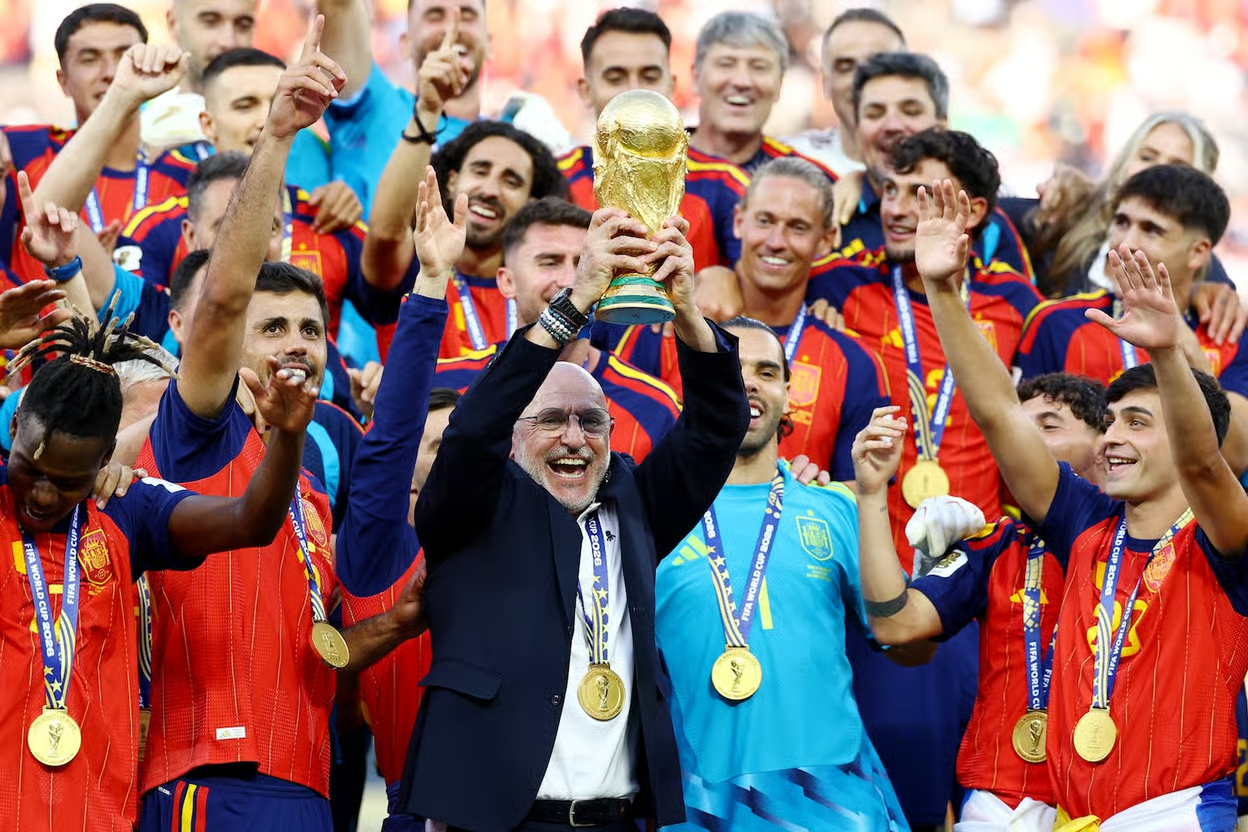
Spain World Cup Champions: How La Roja Ended Argentina’s Reign
Spain’s Tactical Masterclass Ends Argentina’s Title Defence
Spain are world champions once again after defeating defending champions Argentina 1–0 following extra time in the 2026 FIFA World Cup Final, producing a disciplined and tactically dominant performance that ended Argentina’s reign at the summit of international football.
Played on Sunday, July 19, at the New York New Jersey Stadium, the final remained scoreless throughout regulation before substitute Ferran Torres struck in the 106th minute to hand Spain only their second FIFA World Cup title.
While Torres scored the decisive goal, Spain’s triumph was built on far more than one moment. Luis de la Fuente’s side controlled possession, dictated the rhythm of play and gradually wore down an Argentine team that relied heavily on defensive resilience and the brilliance of goalkeeper Emiliano Martinez.
The victory also marked an emotional conclusion to Lionel Messi’s World Cup career, denying the Argentine captain the opportunity to finish with consecutive world titles after leading his country to glory four years earlier.
Spain Didn’t Simply Win — They Controlled the Final
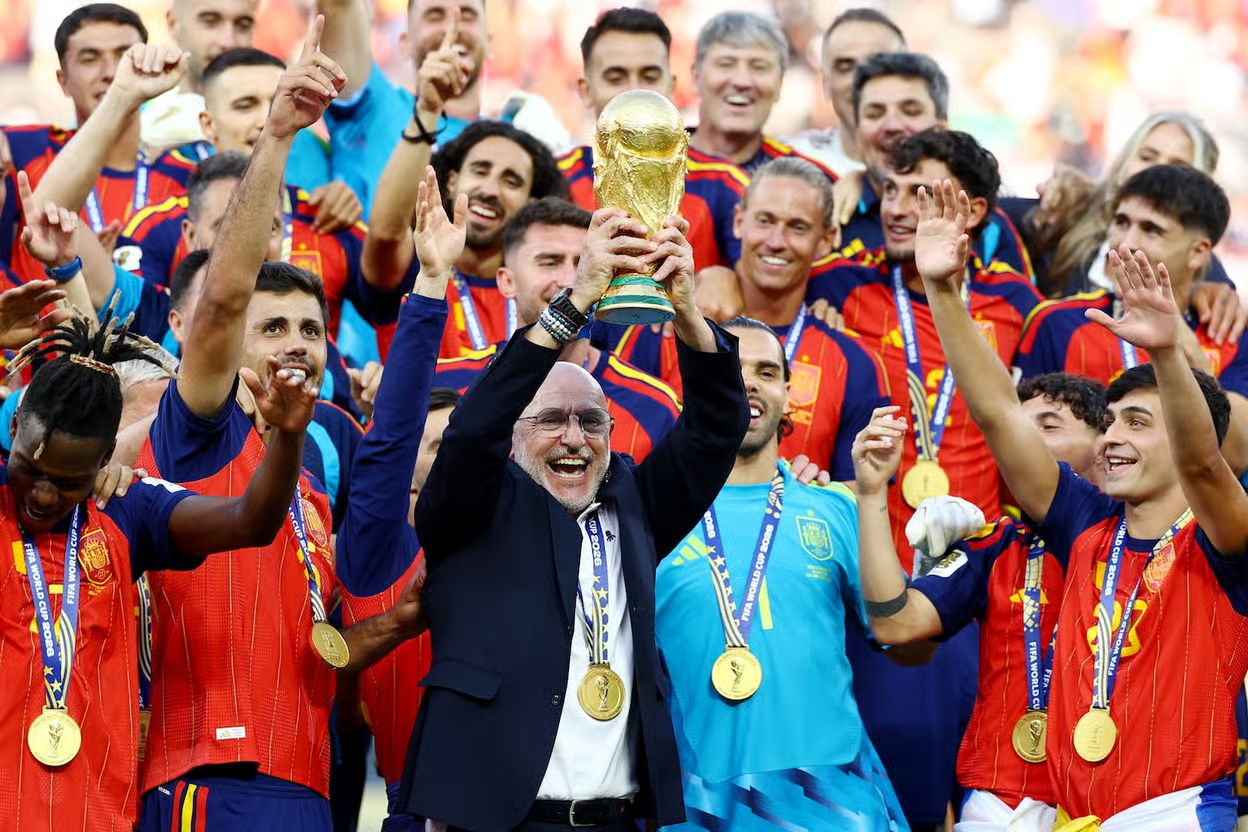
Many World Cup finals are remembered for dramatic goals or controversial incidents.
This one will likely be remembered for Spain’s complete control.
Although the scoreboard remained unchanged for more than 100 minutes, Spain consistently looked the more likely side to break the deadlock.
The European champions monopolised possession, patiently circulating the ball across midfield while forcing Argentina to spend long periods defending deep inside their own half.
Rather than rushing attacks, Spain demonstrated remarkable patience, repeatedly stretching Argentina’s defensive shape before looking for openings through Lamine Yamal, Nico Williams and Dani Olmo.
That control prevented Argentina from developing any sustained attacking rhythm.
By the end of normal time, the defending champions had failed to register a single shot on target, highlighting Spain’s exceptional organisation without the ball.
The Tactical Battle That Defined the Match
The contest evolved into a fascinating chess match between two highly organised teams.
Argentina entered the final unbeaten throughout the tournament and carrying the confidence of defending champions.
However, injuries disrupted Lionel Scaloni’s defensive plans.
Lisandro Martinez left the field before half-time before Cristian Romero was also forced off during the second half, requiring Argentina to reorganise their back line against relentless Spanish pressure.
Spain recognised those vulnerabilities but continued to prioritise patient possession over reckless attacking.
Their midfield repeatedly recycled the ball, drawing Argentina deeper before attempting to exploit spaces created along the wings.
Lamine Yamal constantly stretched Argentina’s defensive line, while Nico Williams offered width that forced the South Americans to defend across the entire pitch.
Although Spain created numerous chances, Emiliano Martinez repeatedly denied them with outstanding saves that temporarily kept Argentina alive.
Without those interventions, the contest might have been settled long before extra time.
Emiliano Martinez Almost Changed the Story
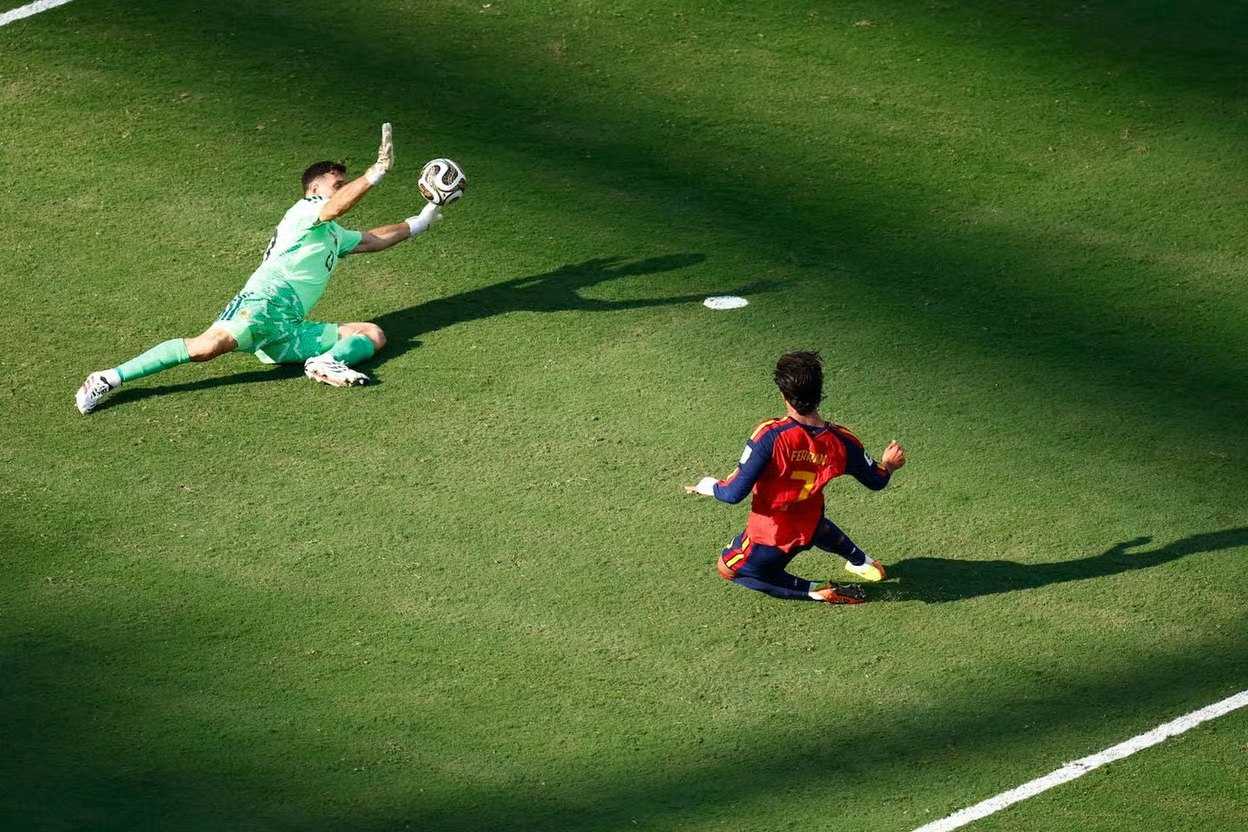
If Ferran Torres ultimately became Spain’s hero, Emiliano Martinez was unquestionably Argentina’s.
The Aston Villa goalkeeper produced one of the finest individual performances seen in a World Cup final.
Throughout the evening he frustrated Spain’s attackers with outstanding reflex saves, denying efforts from Yamal, Torres, Pau Cubarsi, Pedri and Nico Williams.
His commanding display ensured Argentina remained within touching distance despite spending much of the match under sustained pressure.
Each save increased the belief among Argentine supporters that one decisive counterattack might eventually arrive.
Instead, Spain simply continued applying pressure.
Martinez delayed defeat.
He could not prevent it.
The Turning Point Came Before the Winning Goal
Although Ferran Torres scored the only goal, many observers will point to events late in normal time as the decisive turning point.
Argentina midfielder Enzo Fernandez received his second yellow card during stoppage time, leaving the defending champions with ten players entering extra time.
Already exhausted after spending long periods chasing possession, Argentina suddenly faced an even greater challenge.
Spain immediately increased the intensity of their attacks.
With an extra player and fresher legs, they moved the ball more quickly, forcing Argentina’s reshuffled defence to cover increasing amounts of space.
The numerical advantage did not automatically guarantee victory.
However, it significantly shifted momentum toward Spain at precisely the moment the match entered its decisive phase.
Ferran Torres Delivered the Defining Moment
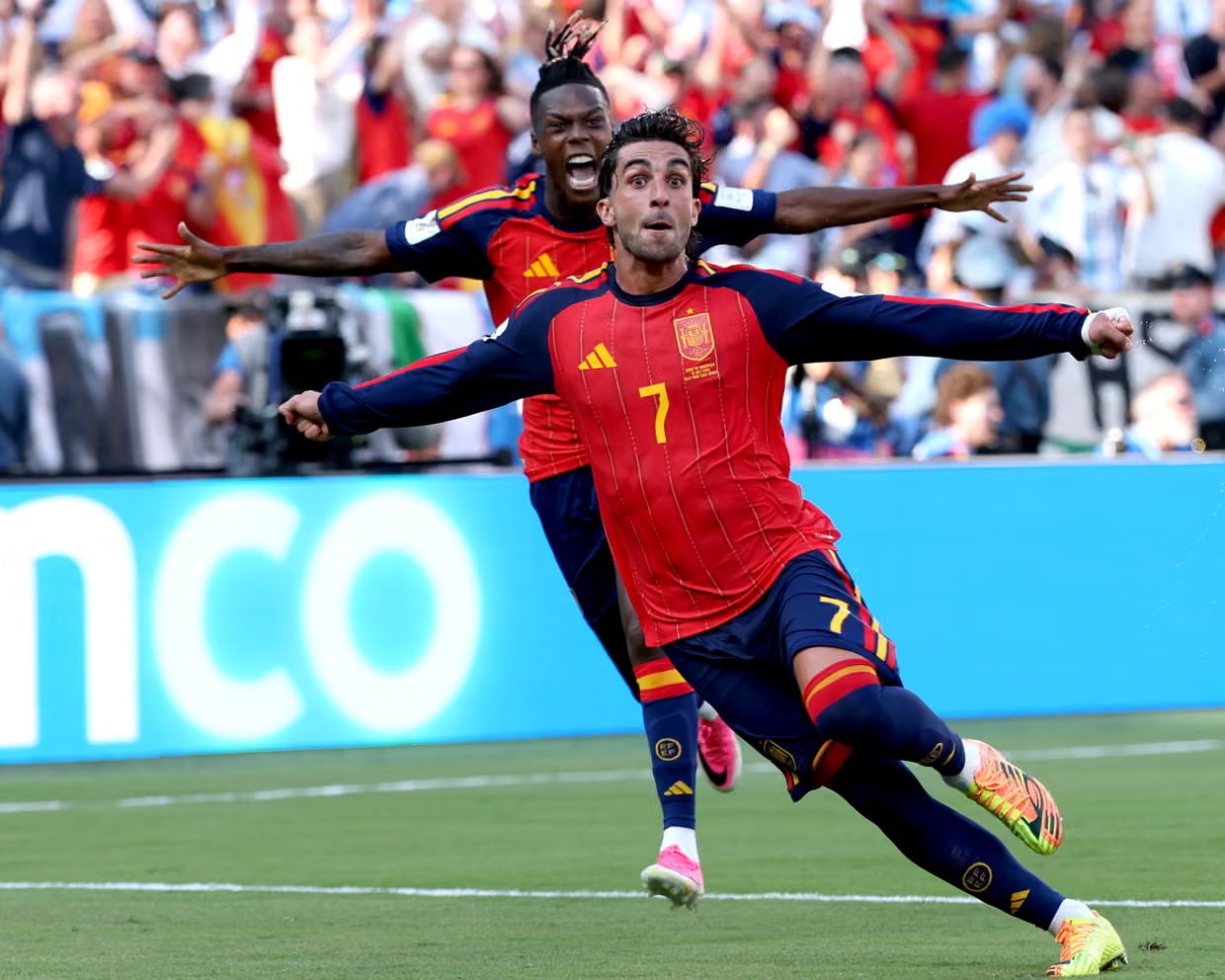
Great finals often produce unexpected heroes.
This final belonged to Ferran Torres.
Introduced from the bench, the Spanish forward remained patient while teammates continued probing for openings against Argentina’s stubborn defence.
His opportunity finally arrived in the second period of extra time.
Pedro Porro delivered an inviting cross before Nico Williams intelligently redirected the ball into Torres’ path.
Without hesitation, Torres struck first time, sending his finish beyond Martinez and into the roof of the net.
After more than 100 minutes of frustration, Spain finally had the breakthrough they deserved.
The goal instantly transformed Torres from impact substitute into national hero.
It also secured his place in Spanish football history.
Spain’s Victory Was Years in the Making
While the winning goal arrived in the 106th minute, Spain’s return to the summit of world football began years earlier.
Following periods of inconsistency after their historic successes between 2008 and 2012, Spanish football invested heavily in youth development, technical coaching and tactical continuity.
That long-term philosophy is now producing another outstanding generation.
Players such as Lamine Yamal, Nico Williams, Pau Cubarsi and Pedri represent a team capable of competing at the highest level for many years.
Their triumph in New Jersey may prove to be the foundation for another era of sustained international success rather than a one-off achievement.
Messi’s Final World Cup Ends in Heartbreak
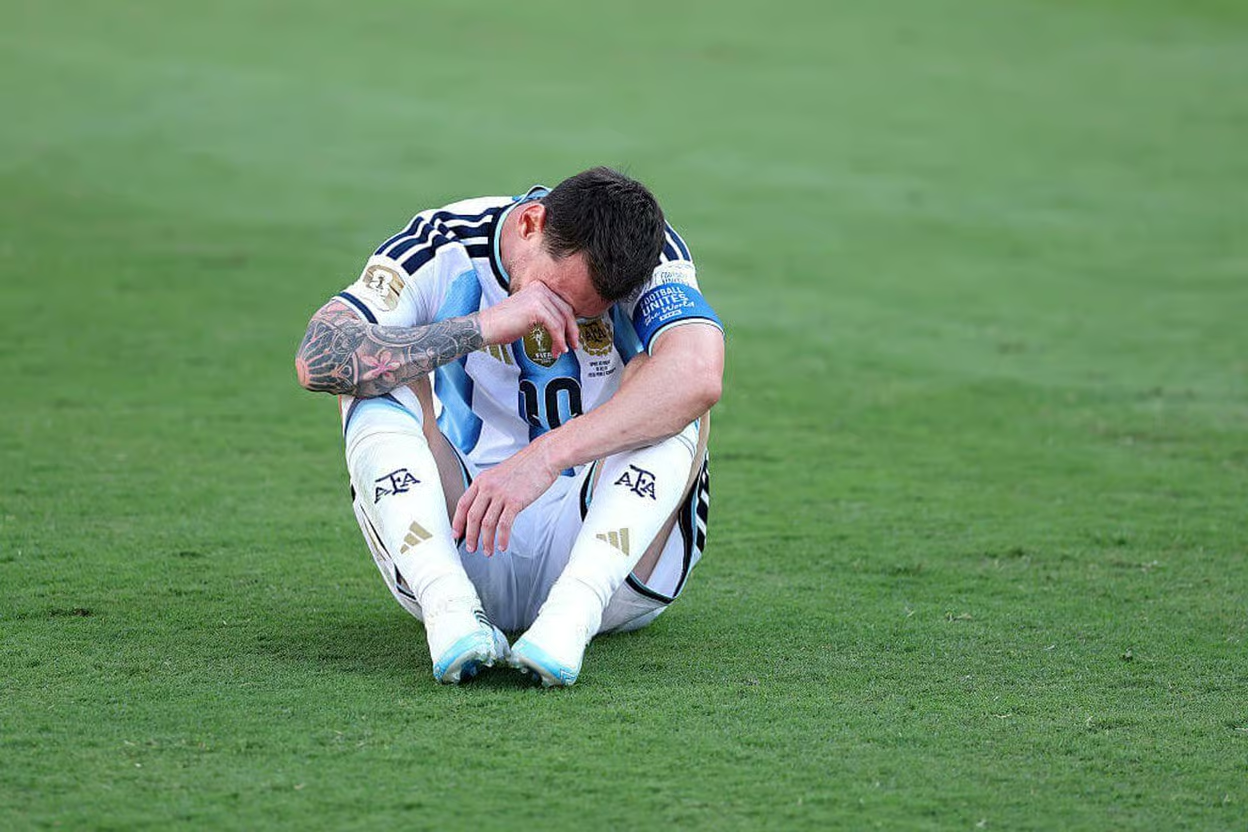
For Lionel Messi, the final whistle represented far more than the end of a football match.
It brought the curtain down on one of the greatest World Cup careers in history.
Having inspired Argentina to the 2022 FIFA World Cup title, Messi returned four years later hoping to lead his country to consecutive championships—an achievement that would have further cemented his legendary status. Instead, Spain’s disciplined display denied him a dream farewell.
At 39 years old, Messi became the oldest outfield player to feature in a World Cup final, adding another remarkable milestone to an extraordinary international career. He also became only the second player, after Brazil’s Cafu, to appear in three World Cup finals.
Despite the defeat, Messi’s influence on Argentine football remains unquestionable. His leadership transformed a talented generation into world champions, Copa América winners and one of the most respected national teams of the modern era.
Although his final World Cup appearance ended without another trophy, his legacy will be measured by far more than one result.
Spain’s Defensive Excellence Defined Their Tournament
Much of the attention after the final centred on Ferran Torres’ winning goal.
Equally impressive, however, was Spain’s extraordinary defensive consistency throughout the tournament.
According to the official tournament statistics, Spain conceded only one goal during their entire World Cup campaign—an achievement that underlines the team’s balance between attacking creativity and defensive organisation.
Rather than relying solely on individual brilliance, Spain defended collectively.
Every player contributed.
Midfielders tracked back quickly.
Wide players pressed aggressively.
Defenders maintained their structure.
Goalkeeper Unai Simón was rarely called upon because the players in front of him limited opponents to very few clear opportunities.
Against Argentina, that organisation was particularly evident.
The defending champions struggled to build sustained attacks, and they failed to register a shot on target during normal time despite entering the final as one of the tournament’s highest-scoring teams.
For Luis de la Fuente, that defensive discipline may prove to be the greatest achievement of all.
Championships are often remembered for spectacular goals.
They are usually won by outstanding defensive teams.
Luis de la Fuente’s Project Reaches Its Peak
Spain’s victory also represents a personal triumph for head coach Luis de la Fuente.
Since taking charge, he has consistently trusted younger players while maintaining Spain’s traditional commitment to possession football.
Rather than abandoning that philosophy under pressure, he refined it.
The result is a squad capable of controlling matches without sacrificing attacking intent.
The final demonstrated those qualities perfectly.
Spain remained patient despite missing several opportunities.
They never panicked.
They continued circulating possession, stretching Argentina’s defensive shape until the decisive opening finally appeared.
At 65 years of age, de la Fuente also became the oldest coach to win the FIFA World Cup, surpassing the previous record held by fellow Spaniard Vicente del Bosque.
That achievement further strengthens his place in Spanish football history.
Ferran Torres Seizes Football’s Biggest Moment
Every World Cup creates new national heroes.
In 2026, that player is Ferran Torres.
Introduced as a substitute, Torres changed the course of the final with one clinical finish.
His movement inside the penalty area, anticipation and composure under immense pressure reflected exactly why Spain continued attacking until the final whistle.
Beyond scoring the winning goal, Torres was named the Michelob Ultra Superior Player of the Match, recognising both his decisive contribution and his impact after entering the contest.
Although Spain’s triumph resulted from a collective effort, history will forever remember the forward who delivered the goal that restored the World Cup to Madrid.
A New Generation Announces Itself
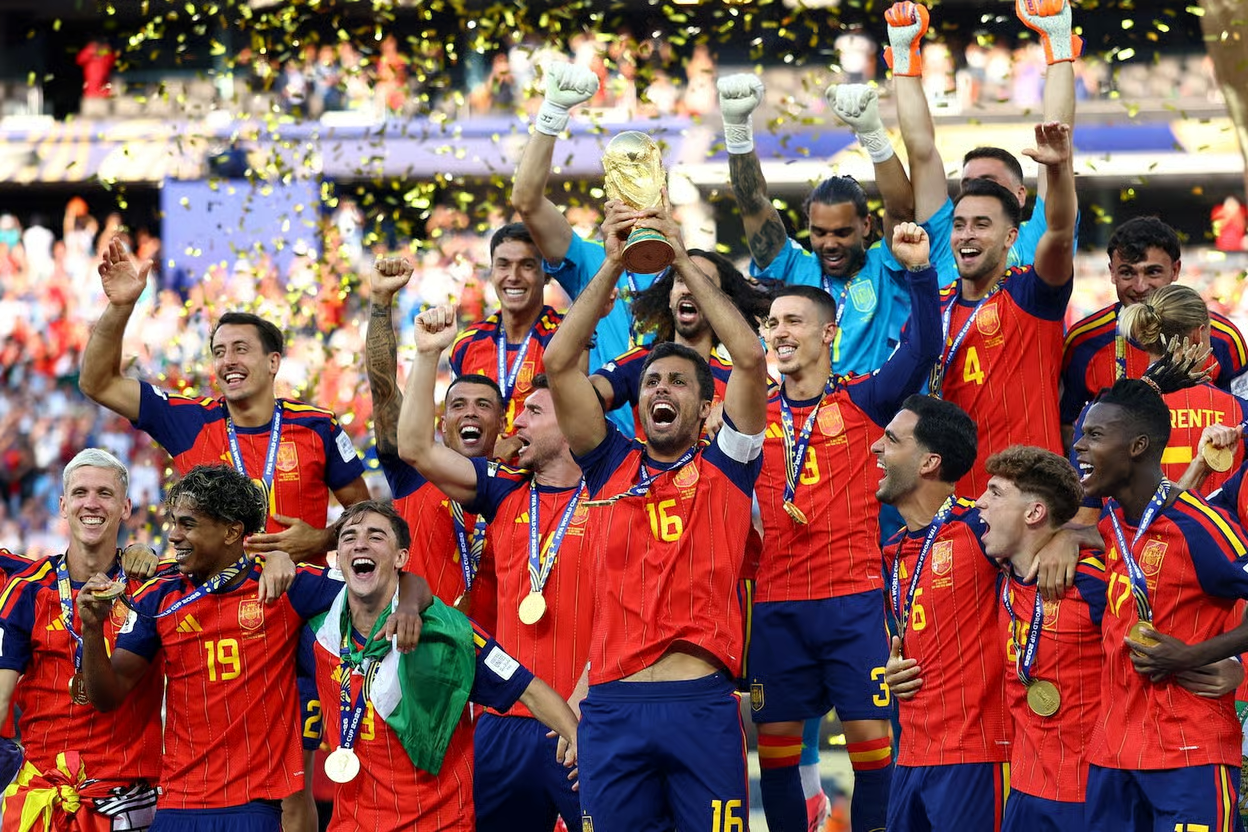
Spain’s victory was not simply about reclaiming a trophy.
It announced the arrival of a new generation capable of dominating international football for years to come.
Teenagers Lamine Yamal and Pau Cubarsí joined a select group of young players—including Pelé, Giuseppe Bergomi and Kylian Mbappé—to play in and win a FIFA World Cup final before turning 20.
Alongside Pedri, Nico Williams, Gavi and other emerging talents, Spain now possesses one of the youngest elite squads in world football.
Unlike many successful national teams that rely heavily on experienced veterans nearing retirement, Spain appears built for sustained success.
The 2026 title may therefore represent the beginning of another golden era rather than its peak.
What Argentina Must Learn
Although Argentina leave the United States without defending their title, the tournament should not be viewed as a failure.
Reaching consecutive World Cup finals remains an extraordinary achievement.
However, the final exposed several challenges the team must address before the next World Cup cycle.
Among them are:
- Managing the transition beyond Lionel Messi’s era.
- Strengthening squad depth after injuries disrupted the defence.
- Improving attacking creativity against teams that dominate possession.
- Developing younger players capable of assuming leadership roles.
Lionel Scaloni acknowledged after the match that Spain deserved victory while praising his players for their resilience throughout the tournament.
His comments reflected the dignity with which Argentina accepted defeat.
For a nation with one of football’s richest traditions, rebuilding will begin immediately.
Global Significance Beyond Football
The 2026 FIFA World Cup final carried significance beyond the sport.
Hosted across the United States, Canada and Mexico, the expanded tournament showcased football’s growing commercial and cultural influence across North America.
Spain’s triumph reinforces the strength of European football development systems, while Argentina’s run to another final demonstrates the continued competitiveness of South American football.
For African nations, including Nigeria, the tournament also offers valuable lessons.
Long-term investment in youth academies, coaching education, tactical identity and player development remains essential if African teams hope to compete consistently for football’s biggest prize.
Countries such as Morocco have already demonstrated what sustained planning can achieve, and Spain’s latest success further highlights the importance of building football structures rather than depending solely on individual talent.
Why This Final Will Be Remembered
Not every World Cup final becomes an instant classic because of goals.
Some are remembered because they redefine football.
Spain’s victory belongs in that category.
It was a triumph built on patience rather than panic.
Control rather than chaos.
Collective discipline rather than individual improvisation.
While Ferran Torres delivered the decisive finish, the victory represented years of planning, player development and tactical evolution.
Argentina fought courageously until the final whistle, but Spain consistently looked the more complete team.
The scoreline may have been narrow.
The performance was convincing.
Conclusion
Spain’s return to the summit of world football represents much more than another international trophy.
It confirms that La Roja have successfully rebuilt after more than a decade of transition, blending experienced leadership with one of the most exciting young squads in modern football.
For Argentina, defeat ends a remarkable era but does not diminish what Lionel Messi and his teammates achieved over the past decade.
Their journey has already secured a permanent place in football history.
Ultimately, the 2026 FIFA World Cup final will be remembered for one defining image: Ferran Torres celebrating beneath the lights of New York New Jersey Stadium after delivering the goal that ended Argentina’s reign and crowned Spain world champions once again.
Recommended Coverage
2026 World Cup Final: Messi, Spain and a Night for History
Discover the unforgettable moments that made the 2026 FIFA World Cup Final one of football’s most historic nights. Explore the emotions, defining performances and legacy beyond the final whistle.
World Cup 2026 Semifinals: Elite Four Chase Glory
See how Spain and Argentina earned their places in the final after overcoming elite opponents. Relive the dramatic semifinal battles that set the stage for football’s biggest showdown.
2026 FIFA World Cup: Messi, Mbappé Rewrite History
Explore the biggest records, iconic performances and legendary moments that defined the 2026 FIFA World Cup. Find out how football’s biggest stars reshaped tournament history.
About the Author